Press ESC or click the X to close this window

Susan’s Bookshelves: A Manual for Cleaning Women by Lucia Berlin

I had never heard of Lucia Berlin or her posthumous collection of 43 short stories, A Manual for Cleaning Women until it was mentioned, a few weeks ago, by someone in my U3A Zoom gardening group (I am not making this up). My gardening friend was about to read it for the book club she belongs to and was joking with the rest of us about the title. I was intrigued and bought it – and I have now learned a great deal about Lucia Berlin, mostly from her stories, many of which are transparently autobiographical, but also from a bit of supplementary research.

She was an American short story writer who died in 2004 and that’s interesting in itself. Some authors (Katherine Mansfield, Saki) make the short story their own single means of expression. Others (Roald Dahl, Daphne du Maurier) wrote some powerfully memorable short stories but also lots of good novels.  Berlin, it seems, was firmly in the former camp. And anyone who can come up with “Our leg chains made the sound of oriental instruments and the prisoners in orange jumpsuits swayed together like Tibetan monks”  gets my vote.

Her colourful, often troubled, life ranged across New Mexico, Texas, California and Mexico – among other places. She married three times and had four sons. She suffered from scoliosis  – like Richard III and Princess Eugenie. In Berlin’s case there was a double bend in her spine which meant wearing a painful back brace. It also led to a punctured lung so that for many years towards the end of her life she was never seen other than attached to an oxygen cylinder. She came from a family of alcoholics and it took her decades to overcome her own alcoholism. (I had to look up “Jim Beam” which she frequently refers to in the stories: Kentucky bourbon whisky, like Jack Daniels, apparently.) Along the way, between 1971 and 1994, Lucia Berlin worked variously as a high school teacher, a switchboard operator, a hospital ward clerk, a physician’s assistant – and, briefly, as a cleaning woman.

The title story is a witty, rueful account, written in the first person. from the point of view of a newly widowed cleaner in financial need, about working in other people’s houses bearing in mind that  your employer has no idea what you’re thinking.”Try to work for Jews or black. You get lunch” she says sardonically. Her accounts of the bus journeys between jobs are colourful and sad – and it’s all part of raw anguished grieving for her husband.

The stories range across nursing a dearly loved sister through terminal cancer, childhood with an appalling dentist grandfather, chatting in launderettes, going to huge lengths to get alcohol and consorting with “alkies” on the street. At other times she’s describing humane work with very sick people and  cheerfully managing awkward doctors. She has a habit of alternating narrators in stories, which once you’ve tuned into it,  makes for perceptive characterisation.

The story which moved me most was “Mijoto” about an abused young Hispanic girl with almost no English, alone, misunderstood, pregnant and terrified. The narrative switches between her and a medical professional (probably Berlin herself or closely modelled on her) and it’s clear that the baby is in great danger. The writing is so vivid that you ache to reach into the pages and take both Amelia and her sick, crying baby to a place of safety.

Berlin published several books of short stories in her lifetime which achieved only modest success. This volume published in 2015, with a foreword by Lydia Davies and introduction by Berlin’s friend Stephen Emerson, is a collection drawn from her earlier books. And it seems to have taken off – rave reviews in newspapers such as the New York Times, and on this side of the Atlantic The Guardian have led to high sales and many personal recommendations. Including this one.

Next week on Susan’s Bookshelves: The Chrysalids by John Wyndham



Show: Good Grief

Society: Special Events (British Isles & Eire)

Venue: Online Stream

Credits: by Lorien Haynes. Produced by Platform Presents and Original Theatre Company, in association with ATG Tickets, Time Out and Finite Films

Type: Sardines

Author: Susan Elkin

Perfomence Date: 10/02/2021

Lorien Haynes’s piece about grieving for a much missed loved one is a hybrid.

Susan Elkin | 12 Feb 2021 00:01am

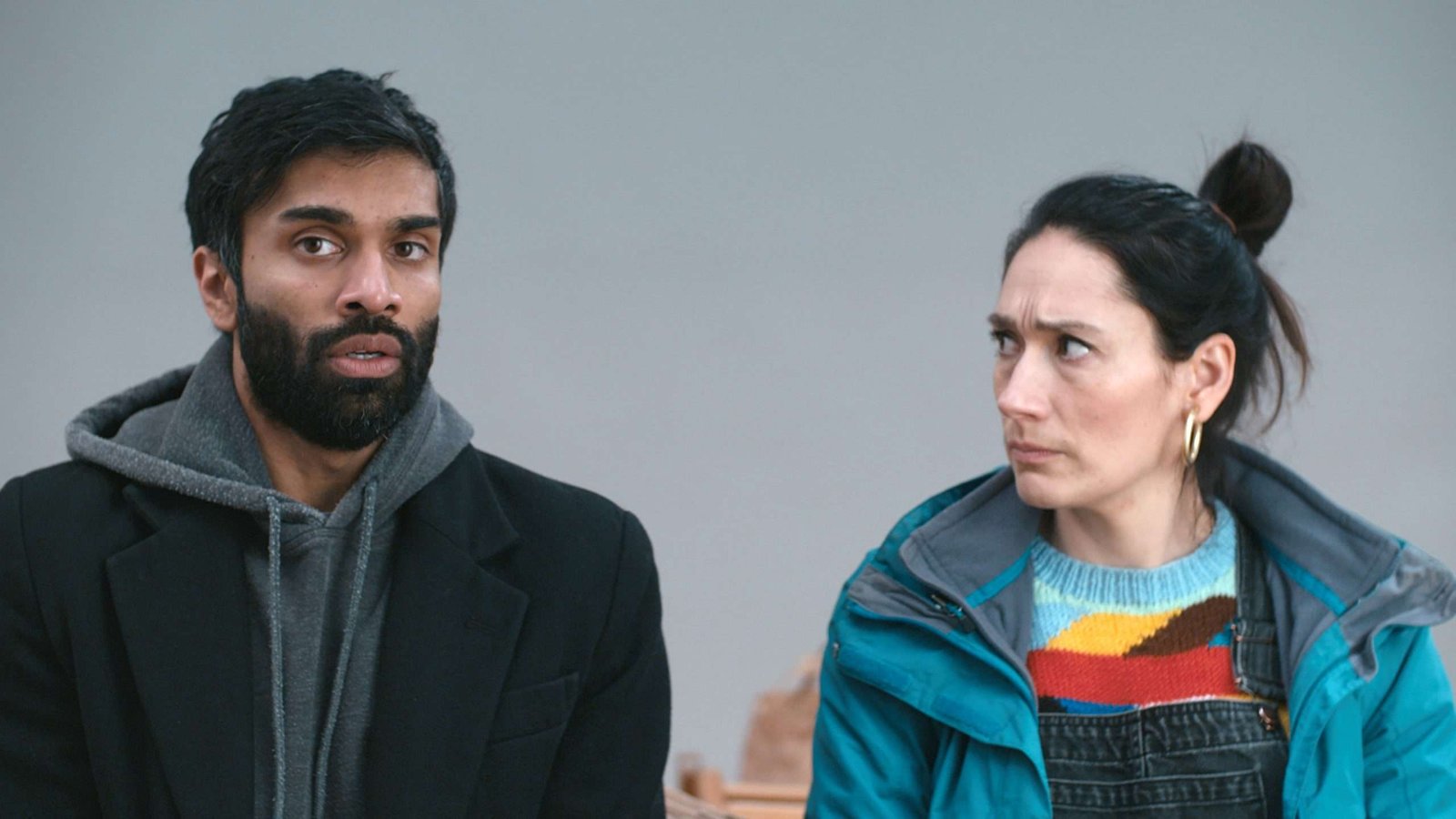
Image: Nikesh Patel and Sian Clifford


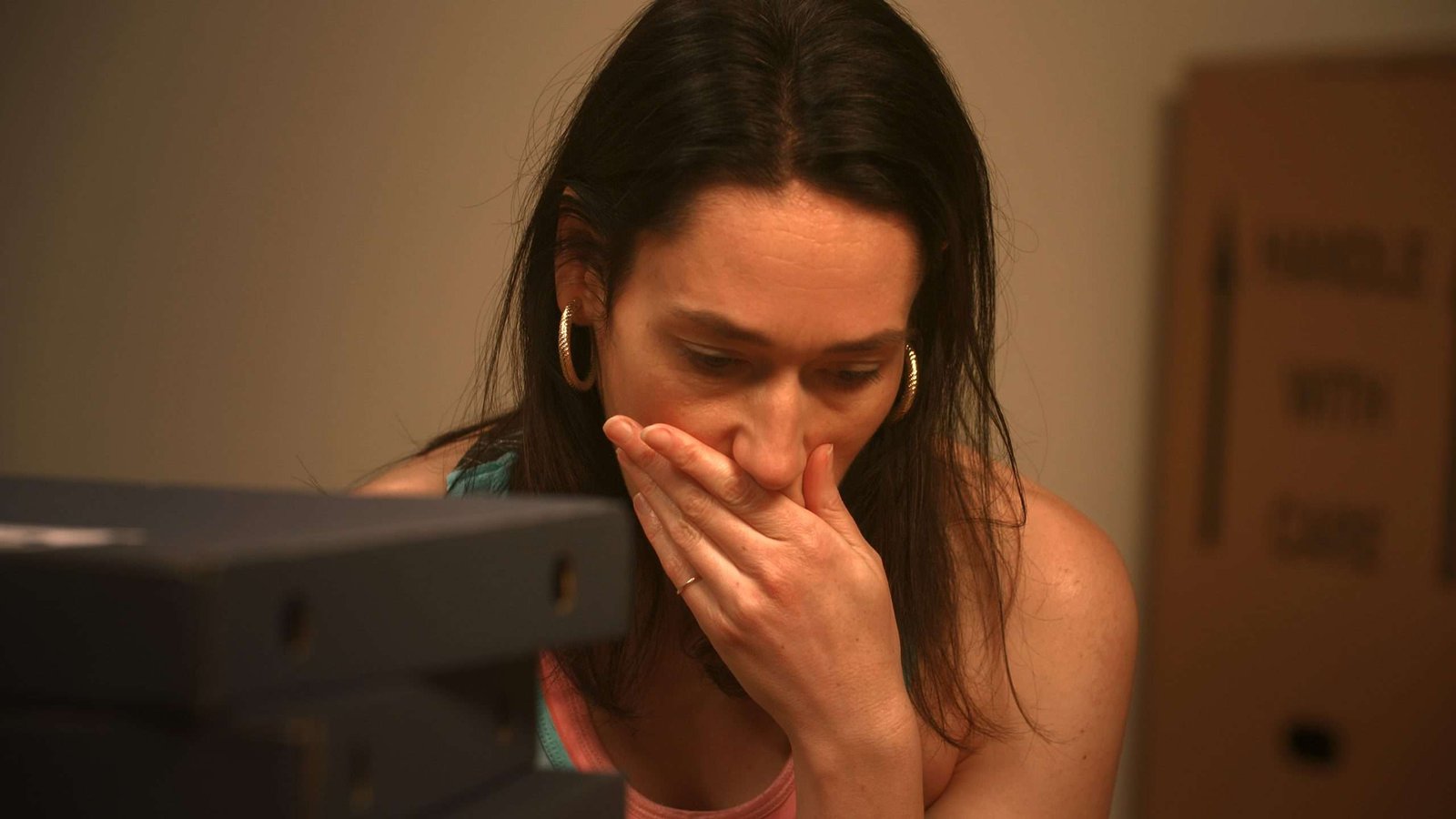
It’s a two hander play – in discrete scenes – presented as a fairly arty short film. Sian Clifford, who plays Cat, calls it “our plilm” which sums it up fairly neatly.

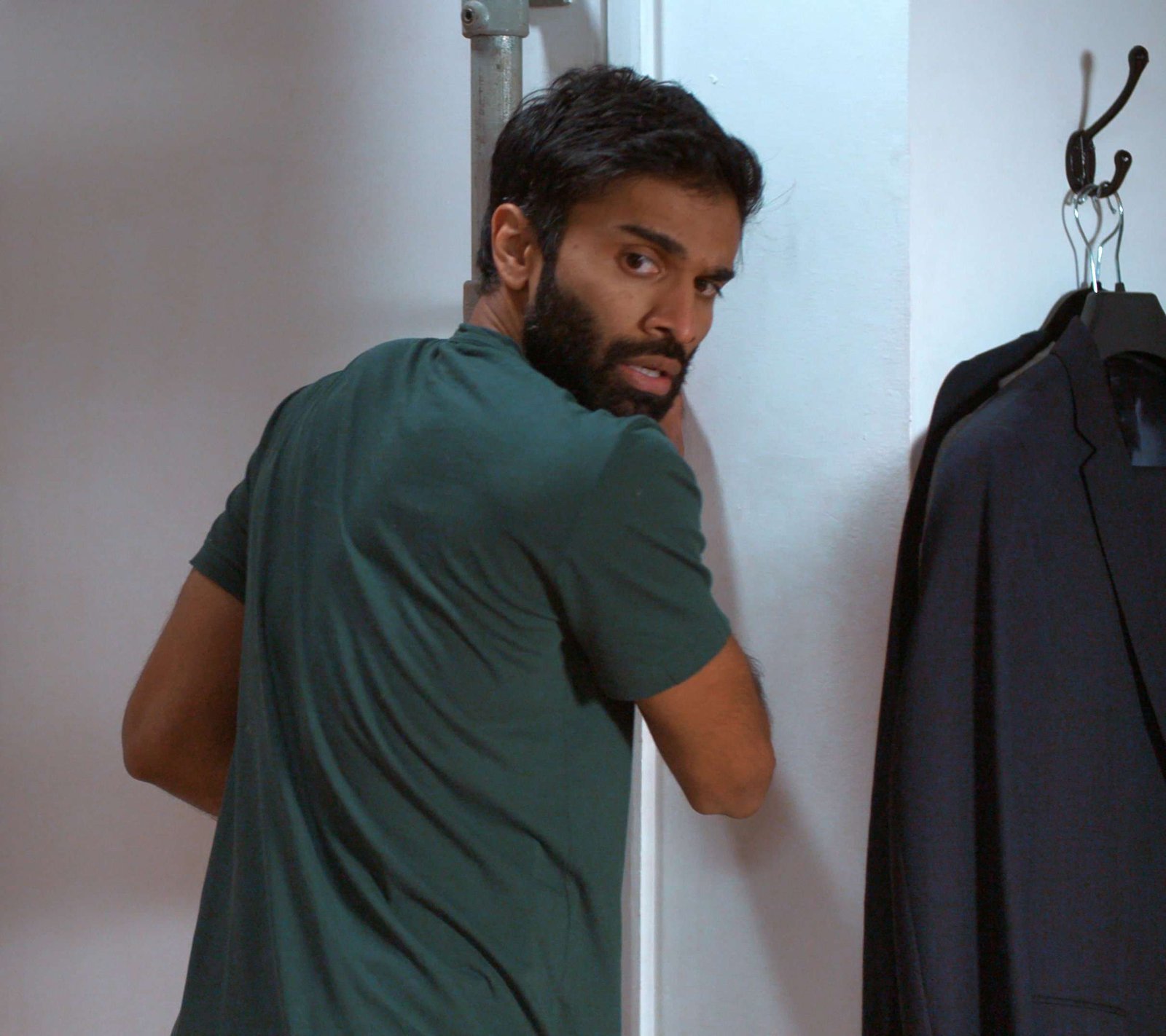
We start with Nikesh Patel as Adam and Cat returning – brittly cheerful –  from the funeral of his partner Liv, who, we soon learn, had cancer. From there on we unravel the complex web of Liv’s sexual relationships and the three way tensions she and Adam had with their friend Cat. In the present, the emphasis is on how Adam and Cat are grieving and supporting each other – in a tortured way, full of guilt and regrets. I found some of the back story is, in truth, implausible but the rapport you’re watching feels truthful enough.

Patel and Clifford work impressively together. The scene in which Adam reads a  posthumous letter from Liv is powerful. His quiet shock, anguished  eyes and pitch of his voice with a catch in the throat are totally convincing. This is televisually close-up stuff and, directed by Natalie Abrahami, nicely done. I shan’t forget Clifford’s face when he puts Liv’s coat round her shoulders for warmth either – a really natural reaction. The scene when they have to share a hotel room is sensitive too.

The piece is episodic with a series of short scenes shot in colour and we’re given the time frame at the start of each. The scenes are linked by a speeded up, very filmic black and white shot of masked stage hands setting up to an accompaniment of Isobel Waller-Bridge’s music. Then once each scene starts, suddenly, we feel as if we’re in a theatre rather than on a film set because the two actors are working together in the same room for much of the time.

It’s a worthwhile play. Could it work in the theatre, staged conventionally, if we are ever permitted such a thing again? Yes, I think it could because the sets are pretty simple – much of it takes place in the flat Adam shared with Liv. It’s barely the length of a single act though so it would probably need to be paired with another short play to make a viable evening of theatre. And, since this is a new way of working I can’t help wondering whether the “plilm” technique will soon be taught in drama schools as a safeguard against future lockdowns and because it’s cheaper than live theatre

Star rating: three stars ★ ★ ★ ✩ ✩

Chickenshed has done a commendable, steady job during the pandemic. Unable to mount new shows and open its doors to audiences for most of the last 10 months,  it has instead released a series of  earlier shows via YouTube.

Peter Pan, the Christmas 2014 show, is the latest of these. What a good job, as things have turned out, that someone had the foresight to record and archive these shows. It means that Chickenshed can go on showcasing the magnificent work it does with participants of all abilities.

As usual this show combines the talents of a core of professionals with large scale ensemble work involving hundreds of Chickenshed members in four “rotas” or teams.

I have – as you might expect – seen many, many versions of Peter Pan over the years. This one stands out, not least, for its loyalty to Barrie’s original text …

Read the rest of this review at https://musicaltheatrereview.com/peter-pan-chickenshed-theatre/

I am a sucker for good detective fiction. It ticks every box for me when I want something not too demanding but interesting, well written and with something new, topical, witty or thoughtful to say – preferably in good long series so that I can gobble them up as eagerly as I once did the Famous Five.  I’m a great fan, therefore, of Elly Griffiths  (Ruth Galloway series), Peter May (Roy Grace) and Val McDermid (Karen Pirie) among many others.

Black River is the third in a series. And it might be best to read the preceding titles –  Dark Pines and Red Snow – first although they each work perfectly well as standalones. Will Dean, the author, is a Brit who lives in Sweden the extreme north of which – where he author lives in the heart of an elk forest –  provides the setting for these novels. I’ve never been there but I find his atmospheric account of the freezing, unforgiving ever-dark winter forest totally convincing. In Black River it’s midsummer – a national holiday amidst much celebration in Sweden, apparently. The light is as relentless as the dark six months earlier and it can be sinister.

Dean’s protagonist is a journalist named Tuva Moodyson. At the opening of Black River she has recently left the local paper in the fictional northern town of Gavrik for a bigger job in  Malmo. Then she hears that her friend Tammy is missing and immediately drives hundreds of kilometres north to try to find her. Tammy was born to  Thai parents but she is Swedish as Tuva repeatedly reminds people who tend to racist thoughts.

Black River is studded with strange people and events in, or near, this small, insular town where everyone knows everyone else except that they don’t really. There is a woman who breeds snakes, both constrictors and venomous ones. She produces snakeskins, does taxidermy and eats the by-products. But does that make her a kidnapper or murderer? Then there are the sisters who live in the forest where their business is carving deeply disturbing trolls and the taxi driver who once tried to rape Tuva – and who is a single parent raising a very troubled little boy. The whole town bristles with suspicion, meance and, apparently, untrustworthy people, although Tuva has a wonderfully warm relationship with her former boss and with the local frontline police officer. Then there’s Noora, another police officer to whom Tuva is drawn in a different way and Dean handles this with understated delicacy.

The other thing I really like about Black River and its prequels is that Tuva is deaf and uses hearing aids. Dean presents this with such sensitivity and understanding – I’d be surprised if he doesn’t have first hand experience of it. She is never defined by her deafness she just gets on, undaunted with what she has to do but as a first person narrator she quite often comments casually to the reader that a particular conversation or situation was difficult and explains why. It’s pretty affirmative writing.

Tuva is also gloriously, determinedly passionate, Not everything she does is sensible.  But Tammy simply must be found, dead or alive – along with another young woman who has disappeared at about the same time. Sometimes Tuva struggles to make people understand that Tammy matters as much as the other girl. Then there’s news from a search in the forest … no spoilers.

You really can’t travel at present but if you fancy an armchair trip to Sweden, Will Dean is the person to take you.

Next week on Susan’s Bookshelves: A Manual for Cleaning Women by Lucia Berlin


Readers of my memoir, Please Miss We’re Boys, will know that I have history with Deptford. I taught in a boys’ school there in the late 1960s and early 1970s, just before the last of the old, arguably slummy, community housing was swept away to make room, eventually, for glittering blocks of yuppy flats with river views.

For all that, I did not know, until I read Laura Shepherd-Robinson’s enlightening, compelling novel (published in 2019), that after Liverpool and Bristol, Deptford was Britain’s busiest slave trade port. I suppose it isn’t something that Deptfordians want to shout about.

We start in 1781 where Shepherd Robinson’s characters lurk near, stride along, work and live in streets I knew and which are still there today such as Deptford Broadway (elegant and full of “little black pageboys and towering African footmen”) and of course Thomas Archer’s St Paul’s Church has already been up for 50 years. Deptford Reach, a mile from the tasteful Broadway is full of sails, ships, and slavers’ inns. The author is good at setting scenes and building atmosphere.

Captain Henry Corsham, a veteran from the wars in America, is summoned from his Mayfair home to Deptford which gives him, as narrator, a chance to describe it all. He is searching for his lawyer friend, Thaddeus Archer, who has disappeared.  A body has been pulled out of the Creek and it’s been beaten, tortured and branded as if this (white) man were a slave. Corsham identifies it in horror. Archer was an anti-slavery campaigner and has paid a heavy price for opposing such a lucrative industry.

“Forgive my bluntness sir, but you’d need to work a spell upon the English people if you ever hoped to end slavery. They like cheap sugar in their tea and cheap tobacco in their pipes. No amount of handwringing will ever change that” Lucius Stokes, mayor of Depford, casually tells Corsham. One is reminded of present day debates about  sweat shops or the environment – providing cheap goods at massive cost. Sugar was, in many ways, the 18th century equivalent of 21st century oil.

The novel turns into a complex “whodunnit” immaculately researched and very convincing. It is predicated on a slave ship called The Dark Angel which, appallingly, dumped its “cargo” in an insurance scam – a thinly disguised take on the real life, infamous Zong massacre in 1781 when 130 enslaved Africans were thrown overboard.

One of the most interesting characters is Cinnamon, a mixed race woman living with Stokes as a quasi-wife figure. She’s dressed like a Georgian lady, educated and sits in the parlour but, to Corsham’s horror, Stokes brutalises her. She was on board The Dark Angel and there’s much more to her than first appears.  Scipio, Stokes’s black secretary becomes a key character too.

Blood and Sugar is a fine read even if it does make your own blood run cold at times. These stories need to be told and reworked so that people understand the almost unthinkable truth of what really happened. And given the current Black Lives Matter campaign it’s pretty timely.

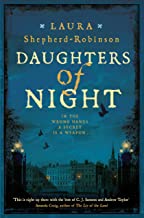
The good news is that there’s a sequel, Daughters of the Night, publishing this month.

Daughters of the night


Next week on Susan’s Bookshelves: Black River by Will Dean

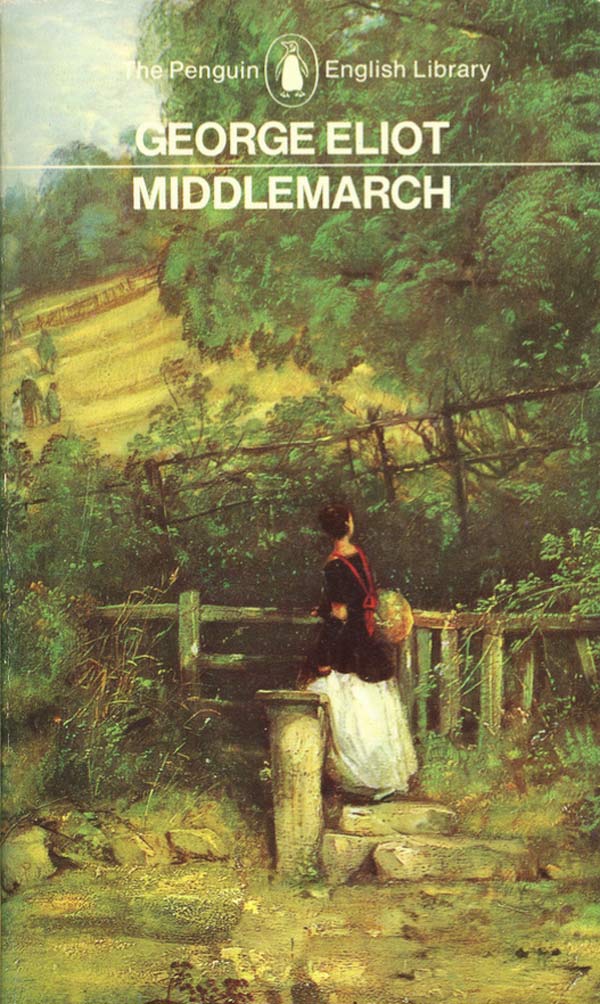
I remember exactly where I was when I completed my first reading of George Eliot’s magnum opus. I was in a caravan on a family holiday in South West France in 1966. It was one of half a dozen substantial novels which had to be read during the summer holiday for the Bishop Otter English course and that summer I was between my second and third years of teacher training there. With hindsight I think I may have been a more conscientious student than many others because I dutifully read each and every one – a series of discoveries for which I am very grateful. I still have my original copy of Middlemarch, well thumbed now because I’ve read it five or six times since. I chose the 1960s Penguin cover to illustrate this piece because, although there have been many chirpier ones since, this is the one I am very familiar with. It’s like an old friend and really does – literally – sit on my bookshelves.

Virginia Woolf famously remarked that Middlemarch is “one of the few English novels written for grown up people” and I think, at 20, I wasn’t quite grown up enough because I was daunted by the length and intensity and, I’m sure, missed many of the finer points. I was heartily relieved (and pleased with myself) when I finished it which is why that moment stands so clearly in my memory. It has, however, grown on me as I have grown up and I’ve found myself admiring it more each time I’ve reread it – most recently as a pandemic pastime.

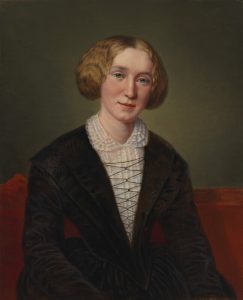
The titular Middlemarch is a provincial town in the Midlands, loosely based on Coventry. The novel which has a huge cast of characters consists of a complex web of intersecting stories. George Eliot (pseudonym for Mary Anne Evans, pictured below, writing in an era when novels by men were more likely to be taken seriously) starts with the innocent, earnest, intelligent Dorothea Brooke and her misguided marriage to the much older, crusty cleric, Edward Casaubon. Using this as an entry point, she gives us nine chapters in which Dorothea feels like the novel’s main protagonist before branching out and gradually introducing the rest of the Middlemarchians with whom we are to spend the next 800 pages. They include Bulstrode, the puritanical banker with a murky past, Vincy the successful middle class tradesman and Lydgate the progressive doctor and newcomer to Middlemarch. Families are widely intermarried and undercurrents and back stories are everywhere.

The novel was published in eight volumes as a serial in 1871/2. I don’t want to belittle it by mentioning soap operas because it’s incomparably better than that but there are structural similarities as it darts between intersecting stories. It was, and is, a historical novel set in 1829/32 against the background of the Great Reform Act of 1832 so Eliot was looking back 50 years to a time which was in living memory for some: a bit like writing a novel today about events of 1970 when Richard Nixon sent troops into Cambodia and the Beatles broke up.

So which characters linger in the mind? I have a soft spot for poor Fred Vincy whose gambling habit very nearly does for him but who is saved, ultimately, by land agent Caleb Garth, one of the most likeable people in the novel. I’m also fond of plain speaking Mrs Garth, a teacher by profession who efficiently homeschools a large family of children. I identify with feisty Mrs Cadwallader too, who doesn’t believe in speaking only when she’s spoken to or taking second place to her rector husband.

Middlemarch bubbles with interesting contrasts and parallels: Worldly Rosamund Vincy (later Lydgate) highlights Dorothea’s religiosity by being so different. Casaubon’s will is, in its way, as spiteful and far reaching as Featherstone’s.  Celia Brooke’s single-minded maternal pride is comic but we can’t help soberly comparing her good fortune with Rosamund’s miscarriage.

Characters evolve, develop and change too as Lydgate recognises his mistakes and tries to rectify or live with them in disillusionment. The maturing of Fred Vincy is masterly and, of course, Dorothea’s trajectory is presented as beautifully as the Italian painting Eliot mentions in the novel’s opening paragraph. There are no stereotypes. Every character is rounded and recognisable 150 years later. The details might change. Human nature does not.

There was a pretty dire Middlemarch TV adaptation in 1994. It  meant, of course, that once Andrew Davies got his hands on it there was a great deal more dishy doctor (Douglas Hodge as Tertius Lydgate) and much less focus on ethereal Dorothea compared by Eliot in her prelude to St Theresa of Avila famed for religious ecstasy – not now very fashionable.  Juliet Aubrey does get a smidgin of Dorothea’s naïve otherworldliness but the emphasis is a long way from Eliot’s intentions. The late great Michael Hordern – one of his last appearances – is good as the curmudgeonly, dying Peter Featherstone, though.

But like all fine novels, Middlemarch is better read – in all its multifarious glory – than watched. And while lockdown looks likely to continue in some form for some time, I can think of few meatier novels to climb into than the work which Eliot subtitles “A study of provincial life.”

Next week on Susan’s Bookshelves: Blood and Sugar by Laura Shepherd-Robinson

George Eliot 1850 NPG


Most books remind you of something else and that comparison becomes starting point for your response. Miss Benson’s Beetle by Rachel Joyce  is unlike anything I’ve ever read and it was the startling originality and quirkiness which got me –  hook, line and sinker.

Published in 2020, it’s a quest novel like The Odyssey, The Wizard of Oz, Watership Down and  Joyce’s earlier The Unlikely Pilgrimage of Harold Fry (2012). But beyond that structure Miss Benson’s Beetle (isn’t Joyce good at titles?) has a flavour all of its own.

Margery Benson is the daughter of a rector who shows her some pictures of “incredible creatures” in one of the books in his study. After his mysterious,  sudden death in 1914 she is forever haunted by her loss and by the idea of a rare golden beetle on the other side of the world in New Caledonia. Fast forward three decades and Miss Benson is a frumpy domestic science teacher in a girls’ school where she is a frustrated misfit with discipline problems – until she flips. “Beetles she understood. It was people who had become strange.”

Some might call it a midlife crisis. Others would declare it a feminist break for freedom when Miss Benson, suddenly unemployed, sells everything she has, advertises for an assistant, and plans to travel to New Caledonia to find the beetle. Whichever way you look at it her scheme is manically bonkers and I love the image of her packing her Izal toilet paper, a second hand pith helmet shaped like a cake tin and awaiting her assistant at Fenchurch Street Station “holding her insect net like an oversized lollipop”.  Joyce’s style is both tender and witty.

The assistant – Enid Pretty –  is about the most unsuitable person imaginable for this role. She is florid, forthright, eccentric, sparing with the truth, seriously dyslexic and brings with her (no spoilers) a pretty major issue which … err … changes the dynamic between her and Miss Benson dramatically once they arrive in the sensuously evoked Indonesian jungle after their long sea voyage. But Joyce subtitles this glorious novel – in the manner of the Victorian books Miss Benson has grown up with – “An uplifting and redemptive story of a glorious female friendship against the odds” and that’s exactly what it is. It’s a crazily unlikely pairing but in the end each woman saves the other at many levels.

And in the background to all this there’s another person trying to influence events. The reader knows he’s there but for a long time Miss Benson and Enid do not. And that’s neatly done too.

I think Miss Benson’s Beetle was probably the best new novel I read in 2020. I hope someone has snapped up the film rights because it could be sensationally colourful, full of warmth and wit. Imelda Staunton for Miss Benson and Jodie Comer for Enid, please.

Next week on Susan’s Bookshelves: Middlemarch by George Eliot

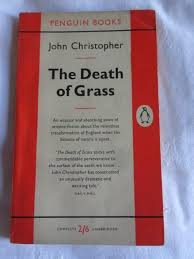
My mother was very taken with John Christopher’s The Death of Grass. Fascinated by the idea that a grass-attacking virus could destroy civilisation, she talked about it a lot. I suppose she must have read it when it was first published in 1956. I came to it a few years later as a teenager. Then, it turned up in the stock cupboard of at least one of the secondary school English departments I worked in so I found myself teaching it as a text. Memories of it – the virus from China which couldn’t possibly reach Britain, government mishandling, public panic – have haunted me during the last year for obvious reasons. So I reread it.

I was bowled over. “Remarkably prescient” as Robert Macfarlane writes in his preface to the 2009 Penguin Classics edition. He also refers to living “in an age of epidemics” and that was eleven years before anyone had heard of Covid19.

At the beginning people in The Death of Grass are dismissive of the virus. It’s a long way away and it attacks only certain sorts of grass. Then it mutates (sound familiar?) to affect all grasses including wheat, barley, rice, rye and anything cattle might graze on. And of course it spreads rapidly. John Custance and his friend Roger – who gets a government tip-off about imminent terror – decide to take their families to the perceived safety of John’s brother’s farm in an enclosed valley in the north of England. What follows is a quest novel – and yes, I do subscribe to the theory that there are really only seven basic stories. Inevitably things get more and more difficult as they near their destination.

It’s a pretty violent novel. John, Roger and the other men who eventually join their party have fought a war only a decade earlier. They are used to combat, lines of command and accepting that the end justifies the means. So these civilised, educated men, and those who obey them,  single-mindedly kill and pillage in their determination to get their wives and children to safety. Civilisation breaks down incrementally as you turn the pages. You are never, moreover, quite sure how it will end and I’m not giving anything away here.

Macfarlane compares it with William Golding’s Lord of the Flies, published two years earlier in 1954. It too studies the way in which the veneer of civilised behaviour and what might have once been called human decency, often driven by religious conviction and altruism, disappears almost overnight when the going gets really rough. Constraints disappear at terrifying speed. Both these books were written when the horrors of Nazi Germany and the Nuremberg trials were very fresh in public memory. And it shows.

So, 65 years later, does The Death of Grass stand the test of time? Yes, very much so especially at present when we are seeing mob violence, alarming hospital ward scenes and “reassuring” (not), draconian Government spokespeople on our TVs every night.  And I can’t resist pointing out that although there is justified  very real fear of starvation and the destruction of everyday life in The Death of Grass, it’s the chilling Government reaction to the virus which drives the real terror. Their policy is far, far worse than anything our current lot have yet dreamed up in real life but, as you read in horror, it makes you think …

I’m also struck by how short important novels used to be. The Death of Grass stands at just 195 pages in the Penguin Classics edition. It’s a while since I’ve read anything published in recent years which is quite so succinct, And I like that.

John Christopher (real name: Sam Youd, 1922-2012) never wrote another bestselling adult title but went on the rework similar ideas several times in a lot of speculative young adult fiction including The Guardians, Empty World and The Tripods trilogy which was serialised by the BBC in 1984.  He lived in Rye and once came to talk to teachers at a conference I attended.  Sadly, he was a poor speaker. But I don’t hold that against him. The power of The Death of Grass is enough for me.

Next week on Susan’s Bookshelves: Miss Benson’s Beetle by Rachel Joyce

Death of grass old