Press ESC or click the X to close this window

Moby Dick (Susan Elkin reviews)

Moby Dick – Tower Theatre, London

Reviewer: Susan Elkin

Writer: Herman Melville

Adaptors: Paul Graves and Angharad Ormond

Director: Angharad Ormond

Community theatre at its very best, this vibrant show would grace any theatre anywhere. It bubbles with energy and imaginatively evoked passion.

Herman Melville’s famous 1851 novel presents Ishmael (Tony Sears – compelling) signing up to sail from Nantucket on a whaling ship. Captain Ahab (Nick Hall – good) is on a personal mission to avenge himself on a particularly vicious whale, named  Moby Dick because he blames this animal for biting off his leg. Actually, of course, there’s a lot of metaphor here because in real life, whales are neither aggressive nor vengeful, and the calm, informative voice of David Attenborough at the beginning reminds us of this while the cast stands impassive behind a gauzy screen.

Authoritarian Ahab is fighting demons of his own, and this production stresses that he has a wife, “widowed when I married her”, and child at home. In modern parlance, he has mental health problems.

The delightfully clear storytelling makes rich use of imaginative physical theatre. When Ahab is beset by inner terrors, the white clad, heavily made-up female ensemble surrounds him menacingly to the sound of discombobulating violin and flute glissandi. As a whale is killed, the ensemble gasps, wilts and gradually falls to the floor, flooded with red light (excellent lighting design by Samuel Littley). Then one of the ensemble is suspended to represent a dead whale. It’s both ingenious and effective, and the whale bone crinoline frames worn most of the time by these women make a thoughtful statement. And how – in live theatre – do you create another ship coming alongside? The solution is neat, physical and convincing.

The set consists mostly of six big yellow oil drums, which, when turned to the audience, spell the ship’s name PEQUOD. It’s a versatile device. These drums are rolled about to suggest rough seas and inner torment. They are also used as acoustic drums in several different ways and, at one point, one becomes a blacksmith’s furnace for the fashioning of ever stronger harpoons.

Integrated into the piece is Colin Guthrie’s rather marvellous and near-continuous music. Led by Guthrie on accordion, it is played by seven actor-musos. It ranges from muscular sea shanties to folksy dance music to classical allusions and organ music for a quasi-funeral funeral, along with musical sound effects to connote disquiet or despair. It’s a rich score with some exceptionally impressive work from Kate Conway on violin, who rarely leaves the stage with her ethereal high notes, fine timing and evocative melodies. The piece also includes some strong whole-cast singing, especially when it starts from a solo and builds to full choral unaccompanied part singing at the end.

Best headphones deals

It’s a strong cast too, with particularly moving performances from Femi Davies as Ishmael’s charismatic friend and from Mayank Adlakha as Pip, the young crewman who is initially excited to be on board but gradually despairs – and suffers. Many minor characters emerge from the ensemble, and that’s done with witty aplomb and much skill.

It’s a pity this production uses brown, smelly, cough-inducing stage smoke instead of the usual dry ice, but it’s a minor gripe. Overall, this show is outstanding.

Runs until 6 July 2025

The Reviews Hub Score

Visceral, vibrant, adventurous

Marie and Rosetta

George Brant

Directed by Monique Touko

Minerva Theatre, Chichester


Star rating: 4


Sister Rosetta Tharpe (1915-1973) was an extraordinary guitarist, singer and performer who broke the barriers between gospel and secular music and effectively invented rock and roll. As a black southern woman on tour, she had to eat what the white coach driver brought her because she wasn’t allowed in the restaurants. She had a high profile career and influenced Johnny Cash,  Elvis Presley and Jimmy Hendrix among others. Yet she is largely forgotten today.

George Brant’s two hander play seeks to rectify that. We’re in a funeral parlour where Rosetta (Beverley Knight) has just met talented younger singer Marie Knight (Ntombizodwa Ndlovu) and wants to work with her, Marie is doing Rosetta’s make up as the back story gradually emerges and time moves on. Eventually it becomes clear why they’re where they are.

Both actors are superb. Knight gives a bravura performance as the brittle, sassy, witty but vulnerable Rosetta – moving round the circular stage with her usual elastic fluidity and, of course, she sings as if these numbers were written for her. Ndlovu is younger and less well known but, my goodness, what a voice! When she sings “Were You There” she has every member of the audience hanging on every note. And she develops her character’s voyage of self discovery beautifully. There is real chemistry between these two actors as Rosetta encourages Marie and brings her on. It’s often funny but there’s tragedy there too.

The third star in this show is guitarist and musical director Shirley Tetteh who plays some fabulous guitar sequences to represent Rosetta’s virtuosity. She works from a stage left recess and at one point comes centre stage. The other three band members (all black and female – appropriately) do a fine job from a recess opposite Tetteh and two spots on an over-stage mezzanine. And the sound is terrifc.

Marie and Rosetta is a play with songs –  a lot of them because Rosetta and Marie are rehearsing – rather than a musical as such. It’s intensely vibrant and interestingly informative. The southern accents are very heavy (voice and dialect coach Joel Trill) and take a few minutes to tune into but they’re convincingly authentic.

Marie and Rosetta premiered in New York City in 2016. This revival is a co production with Rose Theatre, Kingston (where it had a run in May) English Touring Theatre and Chichester Festival Theatre.

Assassins

Stephen Sondheim

Book by John Wiedman

Directed by Bruce Guthrie

Royal Academy Musical Theatre


If you assassinate an American president, you change the world and will always be remembered. We’ve all heard of John Wilkes Booth and Lee Harvey Oswald. And look at Brutus – it’s over two thousand years since he murdered Julius Caesar but his fame lives on.

It all depends how much fame matters to you. Dating from 1990, and not one of Sondheim’s best known shows, Assassins wittily explores the concept of fame through the stories of nine assassins – four who succeeded in killing American presidents and five who failed. It’s clever, poignant and thrusting as you’d expect from Sondheim who, in this show, includes a couple of music-free episodes although there’s also a great deal of his trademark text set to music which runs impeccably with the rhythms.

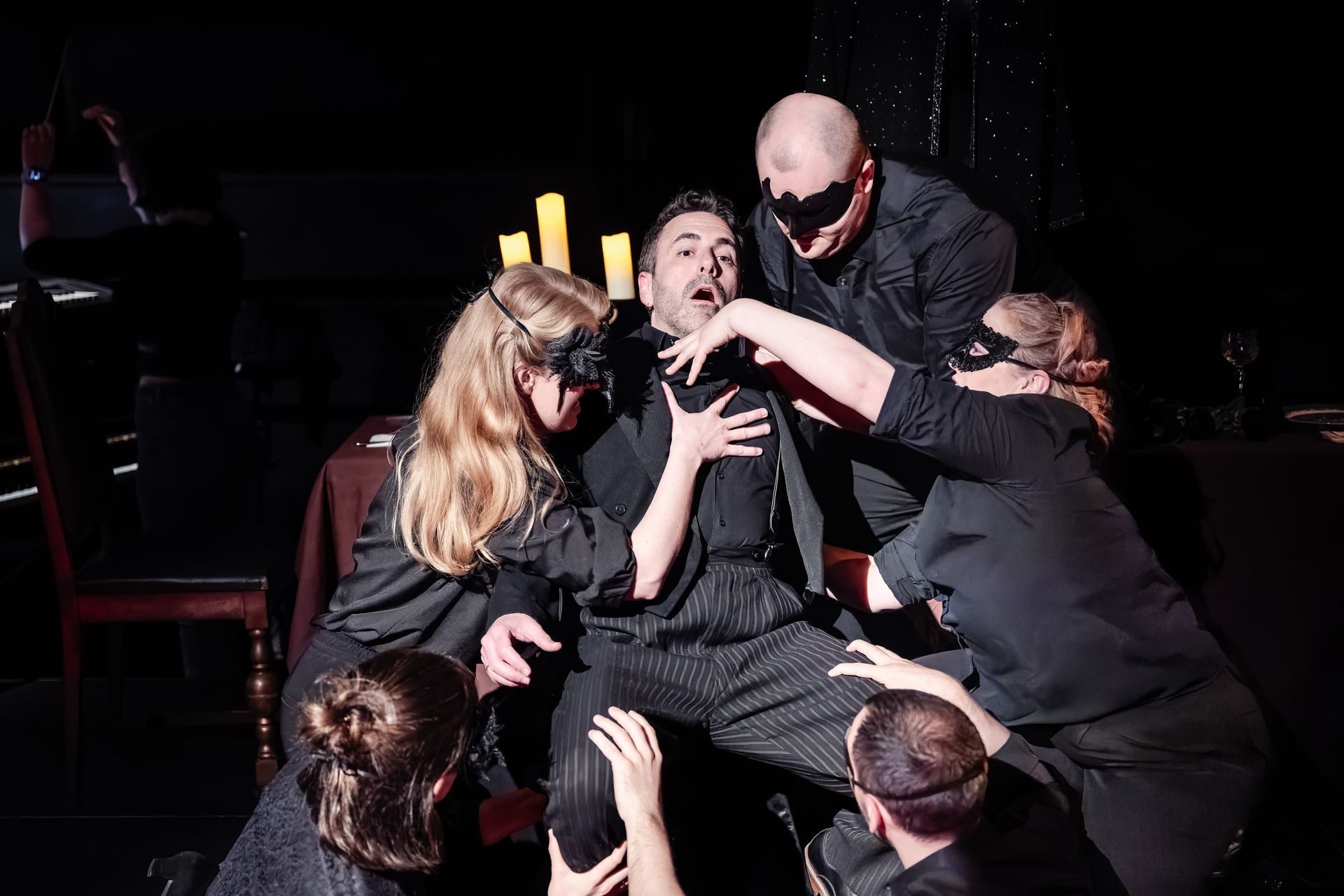
This revival is flamboyantly staged and energetically choreographed (Ben Hartley) with a fine cast  of sixteen. Two casts do two performances each so a total of 32 students are involved. At the performance I saw, Issac Wray shone as Samuel Byck, Matthew Arnold excelled as Charles Guiteau and Jelani Munroe commanded the stage both as Balladeer and then as Lee Harvey Oswald in a wonderfully done, almost-Biblical temptation scene. And we get a splendid theatrical tour de force when he finally pulls the trigger – noise, projected headlines, balloons, light and smoke as the world changes, in an instant, forever.

This is a richly talented company, all of whom, have strong careers ahead of them if that’s what they go on wanting. Also doing a fine job, as usual, is the Musical Theatre Orchestra in the pit delivering all those cross rhythms and timing the entries when the music cuts across speech.

Before the show, I spoke briefly in the RAM café to a couple who were about my age. We chuckled about the all-bases-covered trigger warning in the programme: “sexual violence, violence including guns and gunshots, death, suicide, self-harm, strong language and flashing lights”. We septugenarians reckoned we had seen and heard it all before and could cope. Joking apart though, it quickly became mildly irritating that the students in the audience – keen to support their friends – tittered every time anyone on stage said “fuck”. Time for a bit of growing up?


I recently had the pleasure of interviewing Stella Powell-Jones, artistic director of Jermyn Street Theatre. This was for Ink Pellet – the bi-monthly arts magazine for teachers for which I write most of the copy. In passing, Stella told me that her Scottish/German husband, Alexander Starritt, is a novelist. His debut novel We Germans, inspired by his own grandfather, was published in 2020. It tells, she explained, the story of a German army conscript. I thought it sounded interesting and told her I would read it. So I did and here we are. We obsessive readers find interesting books via many routes: they come out and demand to be read wherever we are and whatever we’re doing.

Normally I shy away from anything involving WW2 and or cruelty/torture/violence but I’m really glad I read this one because it comes at events from a totally unfamiliar point of view. We are a very long way, in every sense, from digging for victory, Vera Lynn and the Dambusters March in this novel.

It takes the form of a long letter, written in old age, from Meissner to his grandson Callum with occasional interjections and reflections from the latter in present day. Meissner serves on the Eastern front and is for a long time part of a tiny feral group working its way across Eastern Europe between Russia and Germany without a commanding officer. It’s ugly and it’s dangerous.

Meissner witnesses, and is sometimes party to, some appalling atrocities. He is long haunted, for example, by arriving at a settlement to find all the inhabitants, irrespective of age or sex, hanged in the trees like bats or pendulous fruits. And the horizontal crucifixions, the victims’ bodies arching like pinned frogs as they scream, will stay with me for a very long time as they do with him. Sometimes Meissner and the men he’s with, shoot people for food. It’s not personal. It’s sauve-qui-peu. Callum tells us that when his “opa” was finally released from camp imprisonment after the war, he’d been away eight years and weighed seven and a half stone despite his six foot two height and broad shoulders.

Having had many years to reflect on what happened and what they did, Meissner – who served in the Wehrmacht, or Nazi combined forces, but was never a Nazi or Nazi sympathiser – ponders the gulf between personal and collective responsibility. And that’s the nub of what this novel is about. He sees himself as a good man. Once he’d planned to go to university and become a scientist. After the war he married a woman who worked in the office at the prison camp, with whom he enjoyed a fine marriage which he believes offset some of the horror which preceded it. He has raised a family, has always been kind and decent to others and has achieved financial success. But is any of this enough to atone for some of the evil he was once part of? After all he was there even if he was never an instigator. There is, of course, no answer.

It is well known that, in real life, most people who’ve lived through such horrors simply don’t talk about them to their loved ones. My grandfather served in France from 1914 and my father piloted aircraft in RAF’s Coastal Command in the 1940s. Neither talked much about the nitty gritty and how I wish now that I’d attempted to draw them out. What is unusual about Starritt’s character, Meissner, is that he is telling his grandson exactly what happened, what he saw and what he did without fudging any of the dreadful details – as if he wants to cleanse himself by getting it off his chest as one might to a confessor.  And Callum, meanwhile, channels and processes it as he recalls visits to his grandparents in Germany as both child and adult and tries to relate his Opa’s experience to his own. It’s a moving, thoughtful, unusual novel – and one of those books which dents you so that you will always look at certain things differently.

Next week on Susan’s Bookshelves: How Not To Be A Political Wife by Sarah Vine

Twelfth Night

William Shakespeare

Directed by Chris Avery

Shakespeare at the Towers

Buckden Towers, St Neots


Star rating 4


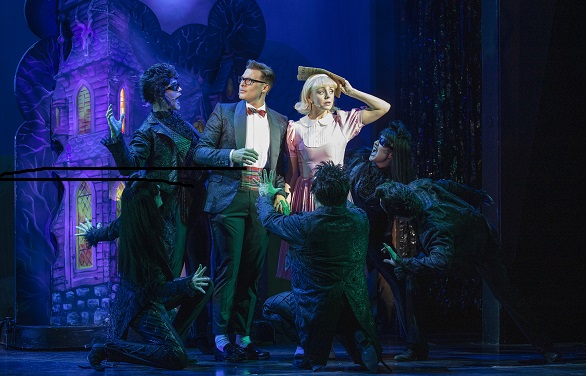
Well, this respected, 65 year old company formerly known as Shakespeare at the George, has fallen squarely on its feet. Following the unexpected termination of its contract with Greene King to stage annual shows at the George Hotel in Huntingdon last year, it has moved to the gloriously scenic Buckden Towers which has nearly 1000 years of history seeping out of every brick. It is now a conference and retreat centre run by the Clarentian missionaries and its knot garden is the perfect setting for Shakespeare – with a bigger playing area and more seating. Newly rebranded as Shakespeare at the Towers, the company has a decidedly fresh spring its step.

A quick recap of Shakespeare’s most sexually ambiguous plot in case you’re new to it: Viola and her twin brother Sebastian are shipwrecked off Illyria and each thinks the other dead. Viola disguises herself as a young man and goes to work for Count Orsino who thinks he’s in love with unobtainable Olivia. Viola has by now fallen in love with Orsino and, when she’s sent with messages, Olivia falls in love with her. Then Sebastian turns up so Olivia can marry him and eventually Orsino realises where his affections really lie. It’s situation comedy and mistaken identity for which disbelief has to be willingly suspended because of course Viola and Sebastian couldn’t possibly really be confused with each other. In parallel we get shenanigans in Olivia’s household involving her pompous steward, Malvolio and her drunken uncle Sir Toby Belch.

There are a number of new faces in the generally strong cast. Sally le Page commands the stage as Olivia, finding petulance and impatience in the character and rueful humour when she finally recognises the feelings which are assailing her unbidden. It’s a nice directorial touch to bring her out of mourning in the second half too. And Tiffany Charnley really nails Viola – feisty, determined, angry, anxious and very keen on Orsino although, as always, it’s hard to fathom why. He is a very “wet” character although in this production Ryan Coetsee does his best to endow him with some charisma.

Familiar faces include Richard Sockett who gives us a richly accomplished Sir Toby Belch – incorrigible but somehow loveable and Sockett really makes us understand why Maria (Alex Priestly – good) is so fond of him. And there’s a finely nuanced performance from Ashton Cull as Malvolio. He makes him self-important and tiresome but resists caricature which somehow highlights the tragedy of the gulling and the madhouse imprisonment.

It’s good (and relatively unusual these days) to see Shakespeare in general, and Twelfth Night in particular, done in a traditional, gimmick-free way. And the setting lends itself to that, especially when the side lights illuminate the dusk after the interval and we see all that nicely coloured velvet and satin to good effect. And director Chris Avery uses two auditorium side entrances and a centre stage archway – more or less as was the norm at the George although the scale is bigger now.

There could have been a problem with sound in this space but for the most part there isn’t. It took five minutes to settle at the performance I saw. After that every word was clearly audible. And that’s quite an achievement without any mic-ing up.

Congratulations to everyone involved in this very pleasing production. An enormous amount ot hard work has gone on behind the scenes to make this move the success it is. Here’s to the next 65 years.


Twelfth Night runs until 05 July

Next year’s show is The Comedy of Errors 23 June – 04 July, 2026

www.saat.org,uk

Historical Bassoons

Directed by Peter Whelan

Royal Academy of Music

25 June 2025


I booked this concert with glee. Bassoons make me beam. I just adore that mellow creaminess and the instrument’s range which means that in its bottom register it can sound like a wistful cello and at the other end like a saxophone. Yet, there’s something about the bassoon’s bounciness which nearly always sounds good humoured.  Moreover, as a string player, I have no understanding of the techniques required to achieve those effects. I just admire them.

It’s also a pleasure to note that the RAM can field nine promising bassoonists. I read recently that conservatoires are now finding great difficulty in recruiting bassoon players because, children are not taking the instrument up. So this was rather an encouraging ensemble.

Led by Peter Whelan,  bassoonist with parallel careers as a conductor and keyboard player, this concert featured five works from seventeenth century Germany, Italy and France. Whelan introduced each with humour and it was evident that, Professor of Historical Bassoon at RAM, he has an inspirational rapport with these smiling young players.

The opener was part of a Telemann cantata which Whelan quipped was probably a world premiere because it was hidden away when he found it. It featured the whole group and I was immediately struck by the clarity of the acoustic in the David Josefowitz Recital Hall, a room at RAM I haven’t been in before. I was also impressed by the musicality of Fergus Butt who played a declamatory bass line in this work. His rhythmic expressiveness and tone are outstanding. And he visibly lives the music he’s playing. Definitely one to watch.

This view was confirmed when he then gave us a four movement Vivaldi concerto for recorder (Gabriel Alves Candido da Silva – good)  and bassoon with Whelan playing harpsichord continuo. It’s a piece full of virtuosic colour and I liked the way these two players delivered the plaintive recorder melody over pretty stunning bassoon semiquavers in the third movement followed by lovely bassoon work and recorder “knitting” in the last. It’s surprising how well this arguably unlikely combination of instruments works.

Sadly, the arrangement of Quoniam Tu Solus from JS Bach’s B Minor Mass which came next was the least successful item in the concert. It featured all five bassoons and the best that can be said is that it was a brave effort. It lacked cohesion and wasn’t always in tune.

Moving quickly on we then got part of a suite by Joseph de Boismortier (1689-1755) who was, apparently, a prolific composer of bassoon music. This work gave each of the five players time in the spotlight. It was cheerful, tuneful and competently delivered.

The  50 minute concert ended with Michael Corrette’s Concerto for Four Bassoons. Again it was Fergus Butt who drew the eye and ear as the parts wove round each other in the first movement. Working seamlessly with the other three, he then produced all the soulfulness the instrument is capable of in the short middle movement. His quasi-cadenza in the third movement was quite something too.

Whelan told the audience that this was the first historical bassoon concert presented by RAM in a very long time – and perhaps ever. I think it’s a lovely idea and smiled all the way home. Please do it again soon.

First, two David Copperfield-related anecdotes: When I was teaching part-time in the English department of a girls’ boarding school, our Head of Department decided that we should prepare a module of “off-piste” work for our 40 incoming A level students in the first week of the autumn term based on a book which they would all be required to read over the summer. I suggested David Copperfield and got the job of preparing the work which I duly did, after joyfully rereading the text. Then Sir, who had a personal loathing of anything longer than a novella, patronisingly decided that we couldn’t possibly ask our students to read a 950-page novel. “It’s not even on the syllabus. The parents wouldn’t wear it.” So that was the end of that. And I was outraged.

A few years later I was interviewed on the Radio 4 Today programme about children’s reading and the importance of the so-called classics along with author Melvyn Burgess who was there to argue for modern “relevance”. At the end of it, John Humphrys, renowned for putting interviewees through the mangle, turned to me kindly and said. “Well Susan, one final word: Name one book everyone should have read” I shot back David Copperfield and he terminated the interview with the warm comment: “Well no one could disagree with that.” Game, set and match to Susan (and Mr Humphrys).

David Copperfield (1850) is a gloriously meaty novel, definitely one of the 19th century’s greatest and, in my view, Dickens’s best. Narrated by the eponymous David (also known in the novel as Davy, Trot, Trotwood and Daisy among other things) in autobiographical format it owes some of its material to Dickens’s own life: the horrendous spell in a factory when he was still a child, the debtors’ prison and the success as a novelist are all there. It is written like a soap opera because it was first published in serial form and Dickens knew exactly how to keep his readers panting for more.

It’s also full of colourful minor characters who tend to get omitted from the frequent bland dramatisations, adaptations and spin-offs. It’s worth going back to the novel every ten years or so, as I do, to meet Dickensian wonders such as Miss Mowcher, the dwarf who tells David, in a very 21st century way, that he shouldn’t assume that because she’s short of stature she’s short of brain. Then there’s the appalling “respectable” (not) Littimer and the poor girl Sarah who turns in desperation to prostitution. Or think of the carrier Mr Barkis who is “always willing” (to marry Peggoty) and leaves her and others a surprising amount of money when he dies. Or what about Mrs Gummidge? She’s profoundly depressed but give her a purpose and she can rise to an occasion with aplomb.  It’s a rich, three dimensional tapestry whose main theme is, I suppose, parents/quasi parents and children who feature in many forms.

At the heart of the novel is a whole cast of characters who are so famous that they have somehow acquired a life beyond their context in the 175 years since David Copperfield first landed.  Meet Peggoty, David’s old nurse, dear friend and mother substitute and Betsey Trotwood, his forthright, decisive aunt with her hilarious loathing of donkeys. Mr Micawber, whose loquaciousness belies his fecklessness, and said to be based on Dickens’s father, who was imprisoned for debt, is a magical creation. So, in a completely different way, is kind, caring, decent Mr Peggotty – the sort of man we’d all like in our lives. Uriah Heep, characterised by his feigned humbleness and clammy handwringing, is a calculating crook and so it goes on.

David, orphaned young and virtually abandoned thanks to his step-father the cruel Mr Murdstone, eventually finds love but he doesn’t get it right the first time. Dora, his boss’s daughter is a silly goose and never likely to pull her wifely weight although she’s sweet. The reader can see ruefully past the narrator’s passion. He or she can also see where David’s affections are likely to end up and Agnes is one of the more convincing of Dicken’s virtuous women. In general he tends to be better at flawed females.

The most interesting character in this long, free flowing but utterly compelling novel, is James Steerforth. David meets first meets him at Salem House, the appalling Blackheath school he is banished to by Mr Murdstone. Steerforth is older, good looking, highly charismatic and takes David under his protection. We know he’s bad news almost from the start because he tricks David into parting with his money at first encounter but the younger boy is entranced. Years later their paths cross again and David introduces him to the Peggotys, and, fatally, to their pretty little niece, Emily. Steerforth behaves appallingly and David comes to recognise what his old friend is really like from the injury to Mrs Steerforth’s companion, Rosa, onwards. On the other hand, Steerforth is a rounded, complex character and David’s feelings are very mixed because this is a man he actually adores like a beloved older brother. In a way it’s yet another take on parent/child relationships and it’s quite nuanced.

Notice the way Dickens evokes places in this novel too. He travelled a lot on book tours and dramatised readings so he really does know Canterbury, Dover, Yarmouth and rural Suffolk and Kent – as well, obviously as London which was rapidly expanding to include former villages such as Highgate where the narrator buys a house. The backdrop is anything but bland.

Of course David Copperfield is studded with coincidences. It’s a Dickensian trademark that his huge cast of characters should encounter each other quite by chance in unlikely places. In general  the complex plotting is immaculate although there are flaws. For example, when she recovers her fortune, Betsy Trotwood cannot move back to her Dover house because she sold it for £70 hundreds of pages earlier but that’s a very minor criticism in a novel which races along. Despite the length, I reread it this time in ten days (while, as always, reading other things concurrently). It’s a page turner like no other. If only those 40 students had been led to discover it. Let’s hope many of them have found their own way to it since.

Next week on Susan’s Bookshelves:  We Germans by Alexander Starritt

Love, Conflict, Renaissance

Monteverdi, Strozzi and Jonathan Dove

Directed by Sir Thomas Allen

Britten Theatre, Royal College of Music


Some might deem this material obscurely esoteric so it’s a real treat to be in an environment where it’s mainstream. And, of course, it’s richly encouraging to see and hear young, emerging performers running with it and achieving excellence.

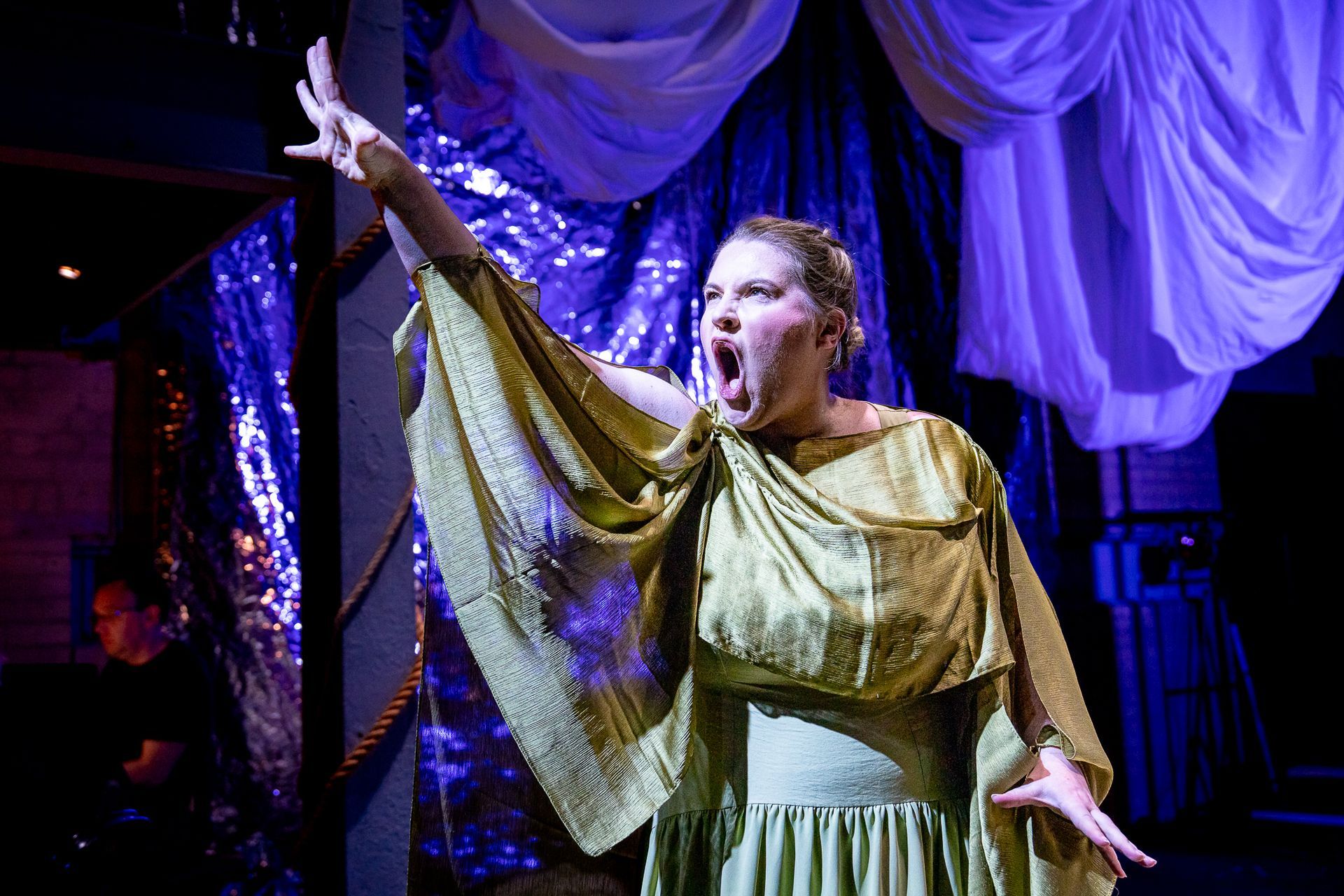
The opening work, programme devised by Nick Sears, links songs by Monteverdi and Strozzi to provide a loose narrative about joshing young men and wistful women. The “plot” (such as it is) doesn’t matter much. The important thing is the sound and that soars with aplomb. Cecilia Yufan Zhang, mezzo, currently studying at RCM Opera Studio gives an especially arresting performance, her voice every shade of nuanced claret.

This is followed by a short account of  Monteverdi’s scene. Tancredi e Clorinda in which a Sarcen woman and a Christian knight fight, masked, to her death and a love revelation. All three items in this programme are visually illustrated by dancers from Rambert School, choregraphed by Anna Smith and Harry Wilson. It works especially effectively in Tancredi e Clorinda in which the dancers enact the fight while the singers freeze behind them.

After the interval we get Jonathan Dove’s mini-opera, Angels. It tells the story of Piero Della Francesca (died 1492)  who was inspired by Angels and painted them – a lot. With libretto by Alistair Middleton, this version is for harp, counter tenor and soprano. Will Prior, counter tenor, as Piero is splendid. He has a mellifluous voice and really catches his character’s wistful uncertainty and vulnerability. It’s staged against three arches at the back in which his soprano angels (Bella Marslen and Maryam Wocial – both good) often stand, looking like paintings.

The RCM Opera Orchestra does a fine job in a small pit only just below the stage – historical instruments carefully tuned to A=415 for Monterverdi and Strozzi. The lay out means that conductor, Michael Rosewell is clearly visible to all.   For me, it was an unexpected bonus to see and hear that wonderful instrument the theorbo played live (by Kristiina Watt)  and from row D, I was close to it.

And what a delight to see octogenarian, Sir Thomas Allen who directs this show so ably, on stage with the students and cheerfully taking part in the Monteverdi number which concludes Love, Conflict, Renaissance. His engagement and pleasure at what has been achieved are warmly clear.