Press ESC or click the X to close this window

Lovers’ Vows (Susan Elkin reviews)

Lovers’ Vows

Elizabeth Inchbald

Historia Theatre Company at Jack Studio

Directed by Kenneth Michaels

Star rating 3

I pounced on this 1798 play with glee because it features prominently in Jane Austen’s Mansfield Park (1814) a novel I know very well. In the novel it serves as a symbol of decadence as the bored young people decide to stage a play while the master of the house is away. It must have been very popular in its day because Austen clearly expects her readers to be familiar with it as her characters argue about casting and begin to rehearse.

In fact the “shock horror” factor created by Austen is even more ironic than I had ever previously realised because it’s a very harmless little play – written at a time when people were more frank and less much less prudish than they were fifty years later once the Victorian age was firmly underway.

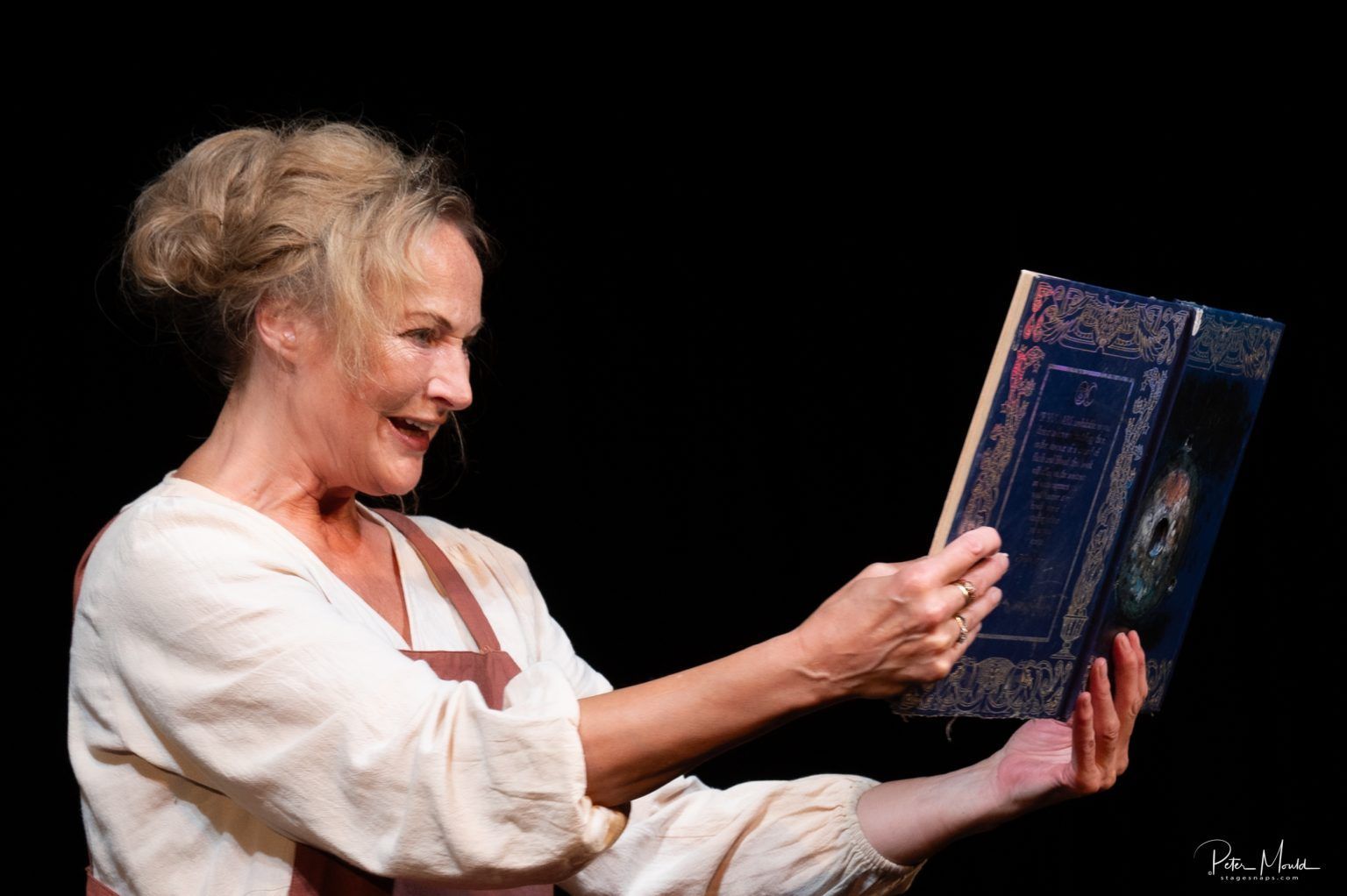
We’re in Germany and Europe is at war. Agatha (Kate Glover, who founded this company in 1997 to stage historically interesting plays) is destitute because she once bore an illegitimate child to a local nobleman who abandoned her. Then, after a five year absence her soldier son, Frederick (Matthew Thomason) turns up and they are reunited. He does what he can to make her comfortable with the assistance of a cottager (Richard Ward) and his wife (Hilary Field). Inevitably, then the, conveniently widowed, Baron (Harry Saks) moves back to his nearby castle with his daughter Amelia (Emma Riches). He plans to marry her to Count Cassel (John Craggs) who is absurd and hilariously undesirable in the tradition of a Shakesperean comic but she is in love with the local cleric (Edmund Digby Jones). The count and his household are served by a butler (Gareth Pilkington) who writes poetry. Of course, after a few hitches, we get a Mozartian “suo padre” moment because Frederick is the product of that long ago liaison between the Baron and Agatha who are reunited to give us a happy ending. It would make a good comic opera. Has anyone, I wonder, ever done it?

This production feels wooden and pedestrian at the beginning – although I saw it very early in the run so there may have been nervousness which showed. There is too much standing still and speaking lines. It gets better as it settles though, especially in the second half. Amongst its quite large (for fringe theatre) cast there are some strong performances. Digby Jones stands out as Mr Anhalt, passionately in love but suppressing it and trying to help others as a decent clergyman would. And Emma Riches gets exactly the right tone and body language for an early eighteenth century young woman who knows her own mind.

I’m very glad to have seen Lovers’ Vows, at last. Next time I reread Mansfield Park I shall see it in a whole new light.

First published by London Pub Theatres Magazine

Although Noel Streatfeild’s best known (and first) novel was published back in 1936, I didn’t read it in childhood. I was not a “ballet child”. My mother loathed what she called “little girls showing off” so there was never any question of it. I was in my twenties before I saw my first ballet although I had long been familiar with much of the music.

I discovered Ballet Shoes in the 1970s when I began teaching in girls’ schools and it made a good Year 7 class reader at a time when we had no National Curriculum shoving us towards “relevant” texts featuring death, multiculturalism, sexuality and the like. But I hadn’t read it, or even thought about it, for a long time. Then, earlier this month I saw and enjoyed Kendall Feaver‘s imaginative adaptation for the National Theatre which sent me scuttling back to the novel to remind myself of what Streatfeild actually wrote.

My first observation is that, although to some it might seem datedly “twee” and white, this is actually a pretty gritty novel. Here we have three adopted girls growing up in an unconventional family headed by a young woman and an older one. The youngest child, Posy, has actually been abandoned/relinquished at birth which is a difficult issue for any child at any time. Two of the lodgers are a female gay couple. This is clear but not overt in the novel. Nearly 90 years later Feaver can, and does, run with it openly in her adaptation.

Then there are the feminist issues. Petrova is not interested in the performing arts other than as a means of shoring up ailing family finances. She wants to be an engineer and we recognise that she probably will be. Pauline, a talented actor, is determined on a career of her own, as is the sometimes tiresomely single-minded Posy who dances: exactly the sort of child my mother would have detested and put down promptly. On the other hand, she too is focused on her own development and success. Yes, they are dependent on a man, sort of. The missing Great Uncle Matthew (GUM) is a palaeontologist who has been gone a very long time and no one knows whether he’s dead or alive. The money he left has run out. Each of them, therefore, has to pull her weight and it’s empowering and uplifiting for the reader. Considering the date of this novel, Ballet Shoes is remarkably progressive.

It’s also beautifully written and a good read. Every character is colourfully realistic. Moreover, I enjoyed the theatre references when I first encountered it and did so again now. There’s a production of A Midsummer Night’s Dream in which Petrova, who’s not a natural, really struggles with Peaseblossom’s “I too” and a Richard III in which Pauline excels, as she does in a film where she plays Charles II’s sister which turns out to be her “break”. This was actually Noel Streatfeild’s own world. She was a RADA trained actor herself which is why rehearsal scenes and the like are so convincingly presented.

Ballet Shoes has never been out of print and is now, justifiably, regarded as a classic. Any young person reading it today could be the fifth or sixth generation in his/her family to enjoy the ups and downs of Pauline, Petrova and Posy as they grow towards their respective destinies. And there’s something special about a parent or grandparent handing on a book they remember with affection. My mother led me to a number of books which became lifelong favourites but, of course, none was about ballet. We’re all different, thank goodness.

Next week on Susan’s Bookshelves: The Mercies by Kiran Millwood Hargrave

Belly of the Beast

By Saana Sze

Finborough Theatre


Star rating 3.5


Schools are political organisations. And we are almost all have experience of them as pupils or parents. Many of us, moreover, have worked in them as teachers or in another capacity. But what, exactly, are schools for?   Saana Sze’s play, set in a school in the East End in the present time, takes us to very familiar territory.

A richly written two hander, Belly of the Beast presents Martha, who has a troubled education history of her own, now enrolling as a trainee teacher. Sam Rampoe-Parry plays the teenage Martha, mostly at one end of the traverse space, and Shiloh Coke plays her at 30 something, mostly at the opposite end of the playing area. Their alternating speeches are aimed knowingly past each other until eventually they meet face to face as one merges into the other.

The issues come thick and fast. Martha arrives at the school on her first day, with another trainee to find that the Head of English isn’t expecting them – oh yes, a situation I can identify with. Communication within schools has never been foolproof. YoungMartha, meanwhile, is in trouble at school, and trying to deal with an evangelical mother who knows Martha’s head teacher through church. And it’s so easy, and such fun, to go on Facebook and access personal information about your teachers.

We also share NowMartha’s early attempts to teach Macbeth to Year 9, and as a former teacher, I can feel (shudderingly!) the pupil sneering, mistrust and insolence as they test her out – nicely done.  Both actors tell stories by acting the voices and stances of the people they have conversations with and they’re good at it although when Rampoe-Parry gets really intense and talks very fast there is a tendency  to stumble over the script.

The real issue at the heart of this play, though, is transgenderism. Martha is non-binary and just beginning to think about and come to terms with that in her YoungMartha incarnation, when it isn’t making her life any easier. In adult life she is married to Claire – “white and straight-passing” who gives her plenty of advice and support. How much should she tell the school authorities? She doesn’t want to be addressed as either Miss or Sir but eventually, reluctantly settles for Miss and keeps quiet. For school she symbolically removes her breast binder – incidentally, trying to fasten such a fiddly garment under your vest in front of an audience must be pretty stressful but she manages it after a tense few moments.

Then there’s an incident. A student named Q has recognised what Martha is and sent her a coming out email. Of course Martha, assisted by her mentor, tries to be supportive. Then the you-know-what hits the fan. The Head tells her “We don’t have any of that nonsense here”. The mentor loses her job and Martha’s position is on the line.

I have rarely seen a play which provided quite so much food for thought relating to an environment I know so well. I’m just sorry that there were only ten people in the audience at the performance I saw. It deserves better than that.


Fresh Mountain Air

Michael Eichler

Directed by Penny Gkritzapi

Drayton Arms Theatre


Star rating: 3

This tight little thriller should never have been interrupted by a tension-damaging interval, just 35 minutes in. If the intention was to enable the pub to sell more drinks then it really doesn’t work because most people simply stayed put at the performance I saw.

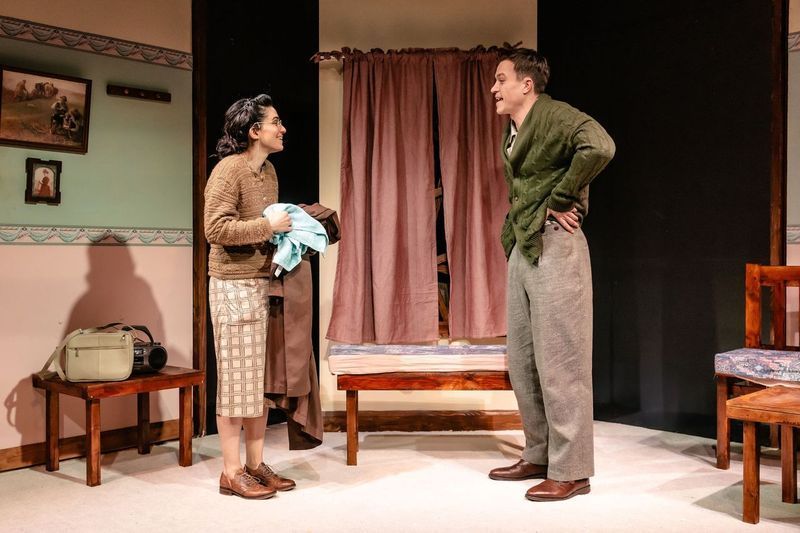
Three middle class, well educated American women, who don’t know each other, arrive at a well equipped and comfortable hiking lodge somewhere in the remote forests of Washington State.  Kayla is from California, Leslie is from Colorado and Alyssa from Texas so their backgrounds are very different. They are teamed to hike together for the next three days while the landlady provides meals. There is no wifi and they’re 20 miles from the nearest town.

Then the landlady unaccountably disappears as do the three hire cars in which they’ve driven themselves there from the airport in Seattle –  and they realise there’s a lot more to worry about than possible encounters with bears. Suddenly we’re in the realms of tension and mystery with some pretty alarming news on the old fashioned transistor radio, the only link with the outside world because someone has cut the landline cable. It’s quite a treat to watch an edge-of-the piece like this when you have no idea where it’s going.

Olivia Cordell is outstanding as Leslie, the brittle clever cynic. She prowls round the set not tolerating the shortcomings of the other two (except when she’s terrified) and is richly convincing.  Julianna Galassi’s character Alyssa, a hiking first-timer, is a gentler soul who suffers from xylophobia (fear of woods) but, since she has grown up in Houston, is the only one who has ever seen a gun. Galassi finds all Alyssa’s nuances, terrors and inner turmoil amd makes sure we share them. Kayla (Julia Thurston) is a brasher character who speaks very loudly and feels a bit false which may, of course, be a deliberate directorial decision to contrast Kayla with the other two.

Michael Eichler’s dialogue pounds along naturalistically, especially when the chips are down and two characters do an outrageous volte-face.   And director Penny Gkritzapi makes imaginative use of every inch of the roomy playing space and set. This enjoyable 70 minute piece is pretty well paced too – or it would be if we didn’t have that glaringly unnecessary break.


This 1960 novel and I have a long history together. Of course I used to teach it. Then I wrote a GCSE study guide for Philip Allan Updates (now absorbed into Hodder) along with a big A4 folder of photocopiable resources, both of which I rewrote in new versions when the syllabus changed. I have reread it again now, in connection with a fiction project I’m working on, and it was like spending time with a very much loved old friend. And it’s incredible how I can still spot things in it which I’ve never noticed before but perhaps that’s one of the criteria which marks a masterpiece.

It is set in 1935 in Maycomb, a fairly remote, small town in Alabama based on Monroville where Harper Lee grew up. Scout (Jean Louise) Finch, who narrates, is presented as an adult looking back at events in her childhood. She and her older brother, Jem, are the children of lawyer Atticus Finch who is a widower. Atticus is assisted in the raising of the children by his housekeeper Calpurnia, a black woman, whom he treats with great respect and as an integral part of the family – which goes against the grain of the prevailing racism amongst many other townspeople. The plotting is complex with various, immaculately observed and skilfully woven tangential strands, but at the heart of the novel is the trial of Tom Robinson, a disabled black man, for the rape of a white woman, Mayella Ewell. The point is that Tom is a decent family man while pitiful Mayella is “white trash” – that is: poor, put-upon abused and out of her depth. Of course Tom, defended in court by Atticus, is inarguably innocent but an all-white local jury in 1935 Alabama is never going to find in favour of a black man under these circumstances.

One of the (many) joys of this novel is the subtlety of the characterisation. Of course Atticus, kind, wise and fair is a fine father and advocate. And Miss Maudie, whom he has known all his life, is a colourful ally. We emerge from the novel very fond of Calpurnia too, not to mention the children’s rather troubled friend Dill, whom Lee based on her friend Truman Capote.  But there are some fascinating peripheral characters too. Link Deas is a white man who believes in the equality which the black community was supposed to have been granted after the end of the Civil War in 1865  but, in practice, wasn’t. He employs them, treats them decently and takes care of Tom’s wife, Helen. Heck Tate, the sheriff, is a man of integrity too in contrast with Bob Ewell, who is effectively the villain of the piece but Atticus tries hard to make the children understand the problems faced by such men. Miss Stephanie Crawford, meanwhile epitomises the comfortable local belief in the segregation laws. Then there is the children’s fascination with the mysterious Arthur “Boo” Radley, damaged and reclusive but ultimately one of the novel’s several mockingbirds.

The point of the title is that mockingbirds sing beautifully but do no harm. The saying therefore is “ ‘Tis a sin to kill a mockingbird.” As Atticus teaches the children these truths, we, with Scout, gradually, learn a great deal about tolerance and redemption. At one point, Scout – puzzled by the way her father is criticised for defending Tom – observes presciently that “Folks are just folks” which has been my personal mantra ever since I first read To Kill a Mockingbird in the late 1960s.

Next week on Susan’s Bookshelves:  Ballet Shoes by Noel Stratfeild

The Pirates of Penzance

WS Gilbert and Arthur Sullivan

Directed by Donna Stirrup

Conducted by Martin Handley

Pirates (Penzance) Ltd in association with Tarantara Productions Ltd

Chichester Festival Theatre


Star rating 4


It’s a real pleasure to see a G&S production in which both the director and the conductor trust the material and allow it to shine in its own way. Stirrup has moved the scene forward 40 years so that we’ve in 1919 which adds some nuances. Otherwise this is a delightfully “faithful” take on Pirates, a very old friend to me and, I’m sure, to many of the Chichester audience. Yes there were many walking sticks and silver heads but there were also quite a few children in the audience at the performance I saw. As someone who was taken to her first G&S show at age 5 and fell in love with it for life, there and then, I’m always thrilled to see children embarking, I hope, on the same journey.

The first pleasure is the orchestra.  Seated on a raised platform behind the action on CFT’s thrust stage, under conductor Martin Handley, they play Sullivan’s tuneful score beautifully. The sound is always well balanced with the singing, possibly because the musicians are upstage rather than in a pit.  Many directors these days feel obliged to bolt fussy, unecessary action on to the overture but Donna Stirrup allows us to listen – really listen –  to it  in the stillness it deserves. I liked Handley’s nippy tempos too. And it’s a splendid idea to bring every player to the front at curtain call. I’d like to see more of that wherever it’s possible.

The only visual extra during the overture is an enigmatic figure sat in the shadows contemplatively smoking. This was Sioned Taylor as Ruth who, once emerged and involved in the action, sings with rich warmth and looks like Helena Bonham-Carter playing Queen Mary – wonderful feathered hat in the second act. It is one of Laura Jane Stanfield’s many delightful costumes.

This production is staged on a raked dais in the middle of the space. It’s made of planks and surrounded by posts so that it works both as a ship and as the beach with breakwaters or the ruined abbey in the second act. Because it’s half a metre or so off the ground, characters can leap or crawl on and off it and it provides a hiding place for various people at times when the action needs it. It’s simple but ingenious. The set is also by Stanfield.

A small chorus – just two or three to each part – means that every note, harmony and word are clear and  there’s some very convincing action. The pirates (presumably World War One leftovers and misfits) are a motley crew of individuals with Jonathan Eyers as a magnificent pirate king, very tall and looking like the mafia in brown suit, dark glasses and trilby hat.

The women are, for once, plausible as the Major General’s daughters because with Mabel (Ellie Laughharne – excellent) there are only six of them – in their gingham frocks and cardies, keen to get their stockings off and paddle.

In a production full of strengths, Guy Elliot, with his fine tenor voice, brings Frederic to life and Benjamin Bevan runs to good effect with that gift of a part: the Sergeant of Police.

Barry Clark is very funny at the Major General but a few of the words in his famous big number “I am a very model …”were lost from Row F – and bear in mind I already know every word. It would be better, perhaps, if he and Handley were to negotiate a very slightly slower tempo.

This production is touring to Eastbourne (15-18 January) and Cheltenham (28 January to 01 February).

Sancho and Me

Written and Performed by Paterson Joseph

Music by Ben Park, associate director

Co-directed by designer, Michael Vale

Chichester Festival Theatre

 Star rating: 3.5

This enjoyable, educative and often witty show is an unusual blend. It weaves Paterson Joseph’s own North London background as the fifth child of Caribbean immigrants with the story of Charles Ignatius Sancho. He was an unusual eighteenth century former slave who became a musician, author, householder and British voter – rubbing shoulders with the likes of Samuel Johnson,  Hogarth and Handel on the way as well as meeting George II.

We start with Joseph in a casual T shirt and trousers addressing the audience as himself and referring to Sancho, alongside musician Ben Park who provides almost continuous music, some live (electric double bass and more) and some recorded and cued to accompany Joseph’s words. In the second half Joseph is dressed as Sancho in a pretty accurate representation of the clothes worn in the Gainsborough portrait, a copy of which is displayed on stage. As Sancho, he refers to “Mr Joseph” and the things he has discovered, including the 2022 novel The Secret Diaires of Charles Ignatius Sancho, which is – of course – on sale in the foyer. It’s quite a conceit to pull off but Joseph has all the charisma needed to carry the audience with him. After all, his status is such that he gets a round of applause simply for arriving on stage as the beginning so there’s plenty of warmth in the room.

One of the most accomplished actors of his generation, Joseph demonstrates some fine voice work in this show from his own father’s heavily accented St Lucian accent to the strange hybrid voice of Anne Osborne, whom Sancho adores and marries, and the rather clipped RP of Sancho himself. He also talks with his body and eyes to such an extent that he changes almost beyond recognition as he shape-shifts from role to role. Moreover, self-deprecating as he is about his musicianship, he’s a passable singer and ukulele player and his high-speed turn on the hand-held drum is quite a show stopper.

After the interval Joseph invites questions from the audience to him as Sancho which requires a certain amount of adept ad-libbing but mostly he deftly turns the questions to relate to his prepared script. It works reasonably well and creates a sense of immediacy as he walks up the Minerva’s aisles to address individuals.


I read Joseph’s novel when it was first published and interviewed him last year in connection with it, so I was keen to see this show which has already toured extensively.  So I was familiar with this extraordinary story of boy born and orphaned on a slave ship, taken in by three spinster sisters in Greenwich and then befriended and sponsored by John Montague who had all the connections needed to launch Sancho into society, but this show presents it in a new light.

As himself, Joseph stresses that black people have always been there –  obviously. And they weren’t all slaves and servants although, until recently, that’s how they tended to appear in the theatre and in public imagination.  He didn’t discover Sancho until he was in his 30s when he started reading extensively. He uses a pile of books on stage to stress this. Thus, this pleasing show gently helps to promote black history and raise awareness in a predominantly white audience, although it wears its political agenda very lightly.


The Mirror Crack’d

Agatha Christie, adapted by Rachel Wagstaff

Directed by Dan Usztan

Tower Theatre Stoke Newington


Star rating: 4

This sparky adaptation of one of Agatha Christie’s best novels is ideal for Tower Theatre’s spacious triangular stage. It allows characters to sit downstage, stationary and listening while scenes are “recounted” – acted out – behind them, sometimes several times in different versions as the story unfolds.

A local woman dies at a drinks party, given by Hollywood film star, Marina Gregg (Lucy Moss), who has recently bought the local manor house and is filming nearby. It soon transpires that she has been poisoned and Chief Inspector Craddock (Sebastian Chrispin) arrives to investigate. At the same time he visits his quasi-aunt, Miss Jane Marple (Alison Liney), who is laid up with a sprained ankle. No prizes for guessing who eventually solves the mystery.

It’s quite a challenge for an actor to make Miss Marple convincing and loveable because we are so used to iconic TV adaptations and several very famous faces. Alison Liney more than nails it. She is gentle, feisty and mentally indefatigable – every inch the sharpest of brains pretending, when it suits her, to be a mildly batty tea-obsessed old lady with a twinkle in her eye. It’s moving at times too because Liney finds real depth and warmth when, for example, Miss Marple discusses childlessness with Moss’s troubled Marina Gregg.

There’s admirable work from Chrispin too. His lanky, raincoated, bespectacled Craddock is trying hard to do a professional job and really could do without interjections from his elderly “aunt” –  except that he can’t because her intuition and observation are more effective than his formal procedures. Chrispin and Liney work well together with a lot of active listening and naturalistic conversation.

There’s a competent support cast of nine, some of whom double in minor roles in the party and film-set scenes. Sangita Modgil, for instance, is fun as the absurdly snobbish Dolly Bantry and Paul Isaacs good as the dead woman’s husband who tries so hard to be heard.

Haidee Elise’s costumes are a 1950s delight. The tangerine suit and hat worn by Lauren Budd as Lola Brewster and Miss Marple’s elegant blouse with brooch at the neck are richly evocative of the period.

You have to hand it to Agatha. She still brings in the punters. The Tower Theatre was fuller for this show than I’ve seen it in a long time and I was pleased for everyone involved in this enjoyable show.