Press ESC or click the X to close this window

Changing Rooms (Susan Elkin reviews)

Writers and Directors: Tabitha Kenworthy and Nadia Heap

Drayton Arms Theatre

Genevieve, who is 15, sees herself as a writer. Her forte is fan fiction, and she is hiding in a school changing room because she has lost her all-revealing notebook. So, from that vantage point, she tells us about her concerns – especially the four girls who don’t understand her and the boy, Jack, she fancies.


Tabitha Kenworthy, who is a convincing, naturalistic actor, presents three of these herself, so it feels like a one-person play – except that, 35 minutes in, Nadia Heap appears as Lara, who briefly takes Genevieve to task for self-absorption. This structure makes the play seem uneven.

There seems to be a fashion for plays with a menstruation theme at present, such as Nilgün Yusuf’s much better play Nine Moons, which played at the Old Red Lion and the Lion and Unicorn earlier this month. Genevieve has yet to menstruate and is desperate to reach this adolescent right of passage, so it’s an obsession which she returns to frequently, leading to a mildly amusing but predictable ending.

There is a lot of wry humour in this play because it’s well-observed. Any teenage girl who noted down her sex fantasies and inner thoughts and then lost them would be stressing like mad. And the writing is very apt. It isn’t, however, the comic romp which the young, support-your-mates, laugh-at-every-line audience wanted it to be.

There is also an issue with length. Changing Rooms is billed at 60 minutes. In fact, it runs barely 40 minutes and feels very slight.

Reviewed on 25 November 2024

The Reviews Hub Score  3.5 stars

Slightly amusing

This review was first published by The Reviews Hub: https://www.thereviewshub.com/changing-rooms-drayton-arms-theatre-london/

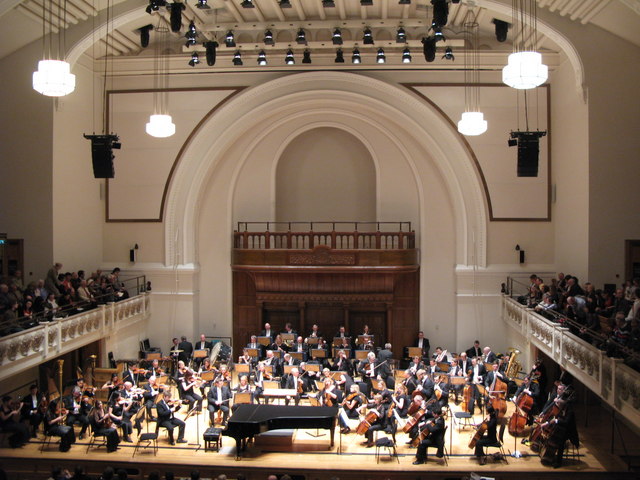
Royal Philharmonic Orchestra

Cadogan Hall

28 November 2024

Conductor: Alexander Shelley

Piano: Janos Balazs


After a breathtaking sprint through Smetana’s Bartered Bride overture featuring some lovely work from second violins, it was time for the centre piece of this concert which provided the overall title: Tribute to a Hungarian Legend.

I am not usually a fan of being talked at during concerts. I prefer to let the music do the speaking. I have to admit, however, that Alexander Shelley does it very well and given the newness of the next piece, it probably benefited from a verbal introduction. Moreover, getting a piano into position with a large orchestra on Cadogan Hall’s relatively small stage is a fiddly operation so it made sense to provide the audience with something else to focus on:  Shelley talking, as he also did at the beginning of the concert and after the interval.

The work features, directly and indirectly, three Hungarians so, unsurprisingly, there were many Hungarian people in the audience for this interesting UK premiere. Gyorgy Cziffra (1921-1994) was a renowned pianist, composer, conductor and teacher whose difficult life included imprisonment by both the Nazis and Stalin. Peter Eotovos (who died earlier this year) composed this four movement piano concerto, Cziffra Psodia, as a tribute to Cziffra and dedicated it to Janos Balazs who was at Cadogan Hall to play it.

                                                                       Gyorgy Cziffra

It’s an immensely complex work, quite hard to take in at a single hearing. No wonder Balazs needed the music up and was evidently reading it, while there were many brows furrowed with concentration in the orchestra.  Overtly intended to be programme music it “describes” some of the ups and downs of Cziffra’s life and includes dissonance, tranquillity and many unsettling passages. Balazs played it with loving care and phenomenal technique, listening carefully to the leader’s solo passages, which often use quarter tones and interrogative glissandi. Almost the best thing, though, was the cimbalom (Anna Bradley), effectively a second solo line,  representing Cziffra’s father who played it with his son. It has a glorious twangy, haunting sound which fits the piece perfectly.

Balazs played a Lizst Hungarian Rhapsody as his encore, telling the audience that it provided some of the ideas for the concerto we’d just heard. It was a well-warmed-up, bravura performance. His fingers moved so fast in the final variation that they blurred.

The concert was completed, after the interval, with a performance of Brahms’s second symphony, as familiar as the concerto had been otherwise. Shelley, however, now conducting without a score, highlighted the delicate darkness in the opening Allegro non troppo with tender, plaintive work from lower strings and warm horn solos. I also liked the balance in the second movement with nicely played wind parts. Shelley digs out and runs with every melody –  and this is Brahms so there are plenty of those – but he never wallows.

The sunny uplands of the allegretto featured some impressively percussive string work followed by contrasting elegant lyricism and I was astonished by the speed of the final movement which was “con spirito” in every sense. If you can do it at that speed the music dances off the page. Shelley also ensured we also heard the nifty timp work and gave us spectacularly rousing last few lines.


Beauty and the Beast

Marlowe Theatre, Canterbury

Written and directed by Paul Hendy

Evolution Pantomimes

 Star rating: 4

Over its 20 years of partnership with Evolution Pantomimes the Marlowe Theatre has developed a panto brand all of its own. I have seen almost all of them and it just goes on getting better – in terms of casting, production values, energy and an indefinable element which makes every single audience member feel part of the action – like an annual family party.

Since taking over as Dame from the late great Dave Lee (who always gets an honourable mention and has a statue outside the theatre) sixteen years years ago, Ben Roddy has built a very personal persona. And he’s in fine form in this Beauty and the Beast – simpering, pouting, grinning looking hurt and gleeful and timing the jokes with effortless near-military precision. His outfits (designed by Michael J Batchelor) are joyfully entertaining too.

Phil Gallagher is another Marlowe regular and he and Roddy work well together enjoying the joke about the former being three years older than the latter but regularly being cast as her son. Their trolley-of-themed-puns routine which has become a Marlowe Pantomime fixture is, as ever, slickly funny

Maisie Smith, as Belle, is a lot more than an ex-soap opera/Strictly Come Dancing celebrity glad of a job over Christmas. The Marlowe Pantomime does not do that. Rather, she is a talented stage performer with real personality, kindly and assertively determined to tame the beast aka Prince Henri (Joseph Hewlett – lots of gravitas) because, as she keeps saying in a very 21st century way, looks don’t matter. It’s personality which counts. Smith sings well and, of course, she’s good in the dance routines.

Among the strong cast of support actors (including a fine ensemble of eight) Richard David-Caine impresses as Danton with his lithe, aggressively sexy body, risque looks at the audience, skilled voice work (that cod French accent!), stage presence and energy.

The music. which jokily references many genres, is splendid too with veteran MD, Chris Wong in charge. Wong has been at the musical helm of the Marlowe Pantomime for thirty years having originally worked with the company with preceded Evolution. He and one other band member work from a box above stage right with two more above stage left. And the sound pounds seamlessly on, whether it’s Ghostbusters for the ghost scene for which they brought Wong on stage and pointed out that he must have played the chorus sixteen thousand times, or a lyrical duet between Smith and Hewlett.

Having said all that Beauty and the Beast is not an ideal story for pantomime treatment because its themes are, at heart, serious. This means that in this production you get a faintly uneasy mix of comic scenes with wonderful costumes, lighting and special effects interspersed with interludes which become pure musical theatre. It, therefore, feels at times slightly bitty but that’s a minor gripe about a show which really does tick the boxes for the people of Kent and beyond.

Incidentally I haven’t seen the backstage crew brought onstage and acknowledged at the curtain call since His Dark Materials at National Theatre. The cast thanked the front of house staff at the end too. All very civilised and such a good example to the many children in the audience.

Napoleon, Un Petit Pantomime

By John Savournin and David Eaton

Directed by John Savournin and Benji Sperring

Jermyn Street Theatre/Charles Court Opera

Star rating: 5

You can always rely on Charles Court Opera for musical excellence and lots of wit. And as last year, their pantomime sits happily and hilariously in Jermyn Street’s bijoux space with an accomplished cast of five and enough energy to launch a rocket.

All the traditional pantomime elements are in (Oh yes they are!) including a repetitive rhyme for the audience to respond to, rhyming couplets and a scene in which two audience members compete. We also get a quest, disguises and Brexit jokes. It’s a long way from your run-of-the-mill Cinderellas and Aladdins, however, and feels sparkily fresh.  The puns are delicious, for example and include plays on Bonaparte (blown-apart, bone-apart and the rest) and a clever series of George Orwell jokes. And who could resist a pair of cows called Souffle and Sue Gray?

It’s the music, however, which makes this show special. Accompanied by David Eaton, MD and composer, on piano stage right and some fine guitar playing from stage left, the show works ingeniously through a whole range of musical styles.  Amy J Payne as feisty, feminist Georgina (the future George IV – sort of)  sings Cherubino’s aria from The Marriage of Figaro with very funny new words. There’s a beautifully harmonised and sung anthem-like quintet based on the EastEnders signature tune, a reference to Elton John, a reworking of Petula Clark’s Down Town as Beef Pie and lots of pop parodies. And the point is that these are real singers so it all sounds terrific.

Matthew Kellett as Napoleon the villain (lots of traditional cackling laughter), has great fun hamming it up and then singing in his glorious baritone voice. He’s assisted in his anti-British villany by the ghost of Marie Antoinette (Rosie Stobel – good) who clambers out of her picture frame to do her bit.  Elliot Broadfoot is a larger-than-life nightshirted George III richocheting between clumsy madness and incongruously nimble dancing. And Jennie Jacobs is mannishly ridiculous and highly entertaining as the stage-commanding Duke of Wellington

All in all this is an outstanding show which ably demonstrates that excellence is nothing to do with size or scale. It was even educational. Who knew that Napoleon was responsible (offered a prize for development of non-dairy spread, apparently) for the invention of margarine? I certainly didn’t and had to Google it to check the way home.

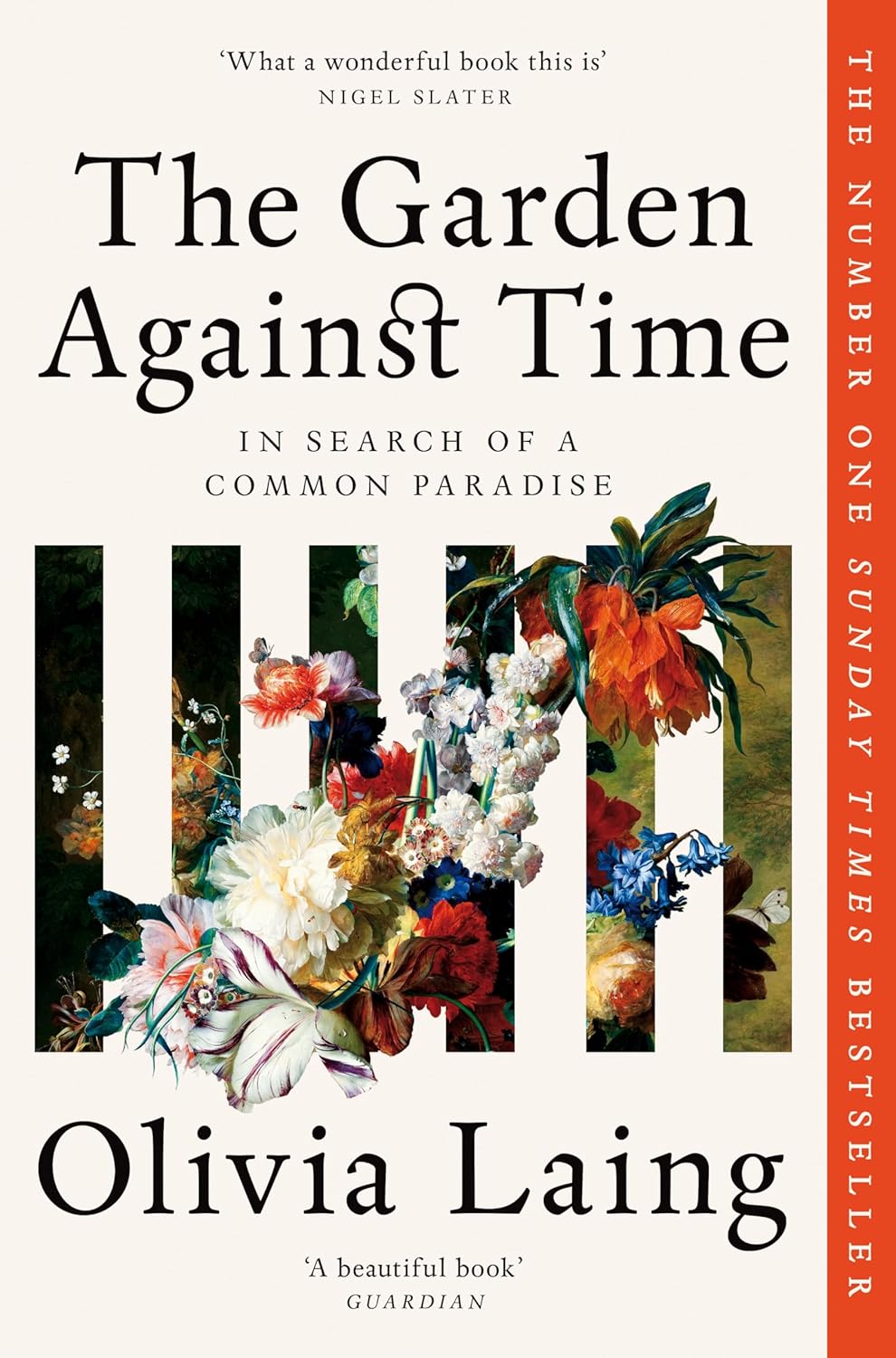
I’m not sure who recommended this book to me. I found it lurking on my Kindle, in my digital TBR list. But someone must have done, or maybe I read a review when it was published earlier this year, because I evidently bought it. Reading it now was an unexpected, stumbled-upon treat and one of my occasional flights into non-fiction.

Laing, clearly a knowledgeable gardener, and her husband Ian, bought a house in Suffolk not long before the Pandemic. The overarching narrative in this book is her autobiographical account of how she rediscovered, worked hard at, and revived the garden originally created by landscape garden, Mark Rumary, who once lived there with his partner. She has one third of an acre divided into a series of “rooms”. Her descriptions are beautifully sensuous – you can see the colours, smell the soil and feel the rhizomes of the honey fungus which she digs up and dumps. Jackdaws live noisily in the garden along with different sorts of bees and you can almost smell the dizzying pollen as the garden re-emerges and develops.  In part, it’s a book for gardeners but you don’t need to be technical about it (I’m not) to get drawn in.

The best thing about The Garden Against Time, however, is her informed eclectic, reflections on what gardens mean, stand for and symbolise now and in the past. Gardens are closely linked culturally and etymologically with paradise and she’s so good on Milton, especially Paradise Lost that she has inspired me to reread it. Interesting isn’t it how reading is a lifelong, unending treasure hunt with every book pointing gently to another one?

She writes evocatively about gardens she visits, and is inspired by, all over the UK and elsewhere: Great Dixter, Belsay, the great gardens of Suffolk and many more. And she meets and talks to people who knew Mark Rumary. At the same time there are Pandemic restrictions which confine her to her garden and trigger more thoughts about the functions of gardens in the past, present and future – pointing out that huge tranches of the population became first time gardeners in 2020 and 2021 because as Voltaire wrote in Candide, when all else fails, “Il faut cultiver le jardin”.

Laing has a passionate political agenda which sometimes becomes a bit wearing. Yes, I know slavery was an appalling concept by 2024 standards, but it happened and we can’t undo it. We do well to remember, moreover, that every single one of us is the beneficiary of slavery because it created British wealth across the board. It’s far too simplistic to single out individual, “wicked”  plantation owners (such as the fictional Sir Thomas Bertram in Mansfield Park) with their country piles, parks and gardens. If you don’t know about the work of landscapers Capability Brown and Humphry Repton, you will once you’ve read this book although Laing is scathing about how they “reworked” huge acreages which often meant displacing whole villages and communities.

And, occasionally, her historical interpretations exasperated me. Charles II did not “seize” the throne in 1660. He was restored very carefully, partly because there was no republican successor. His powers were strictly limited compared with those of his father who’d been executed in 1649. I was fascinated though, by her account of the famous Enclosure Acts which we all learned about (sort of) at school. She deems them a “land grab” and maybe that’s accurate. Suddenly the ordinary people who lived, on and by the land, no longer had a place to grow their own produce. Should all land, in fact, be “common”, Laing wonders as she debates communism and socialism and ways in which they’ve been practised or abused down the generations?  Laing, of course, owns her own Suffolk garden although she is delighted to fulfil her aim of opening it to the public through the National Gardens Scheme.

It’s not an easy book to categorise. Garden Against Time , subtitled “In search if a common paradise”, is variously an autobiography (death of her stepmother, her father’s illness and inheritance problems are another concurrent thread), a gardening book, literary criticism, history of land ownership, political treatise and a lot more. That is probably why it’s such a compelling, sometimes provocative, read. It’s also rather beautiful.

Next week on Susan’s Bookshelves: The Portrait of Dorian Gray by Oscar Wilde

Philharmonia

Herbert Blomstedt

Leonidas Kavakos

Royal Festival Hall, Southbank Centre

21 November 2024

A concert in two very different halves began with much reduced forces and violinist Leonidas Kavakos leading an elegant chamber music account of Mozart’s fourth violin concerto in D K218. This is almost certainly how it would have been done in 1775 when it was written and conductors, in the modern sense, were unknown.

Kavakos relied heavily on the leader (Zsolt-Tihamer Visontay), catching his eye to coordinate entries when he turned to the audience to play his solo passages.  It was an affectionate, but crisp, account of a much-loved work with lots of lightness and attention to dynamics. The andante cantabile was played with commendable clarity and balance and highlighted Kavakos’s formidable technique in that simple but beautiful cadenza. The rondeau was sparky with the passage in which the soloist duets with the first violins delightfully warm.

And so after the interval to an orchestra so large (eight double basses, six percussionists, two harps, double brass and twice as many upper strings as formerly) it filled the stage. As the orchestra found their places the diminutive, white haired Herbert Blomstedt (97) was, without fuss, assisted by Visotay to his seat on the podium where he signalled decisively that he was ready, thanks, and needed no more help. I was reminded of seeing Otto Klemperer conduct late in life or of Daniel Barenboim at this year’s Proms. Some conductors have such charisma and authority that even when they can make only minimal gestures their very presence draws miracles from the orchestra and totally enraptures the audience.

Mahler’s Ninth Symphony (1909) is a gargantuan work in every sense and every single person on stage rose to the challenge. Blomstedt brought out all the elements of the strange, grieving sound world Mahler creates in the first movment with its clattery muted brass, and the repeated harp motif which gradually softens as the brass and other instruments enter. The mysterious flute and horn duet was a treat too.

In the second movement Blomstedt ensured (excellent bassoon work and very tight rhythms) that we were aware that this was much more than a jolly jape. When we got to the rondo-burleske I was struck yet again by what strange, wild, angry distressed music this is and how fiendishly difficult it must be to play, not to mention exhausting. This is a work which requires huge levels of stamina as we share with the composer his anguish and grief at the recent death of his daughter.

Then, as if that weren’t enough, they have to play the final movement in D flat (five flats). No wonder amateur orchestras rarely, if ever, tackle Mahler. It’s not for the faint-hearted. In this performance we got a stunning account of the chorale and the ending – which dies away, very slowly, to nothing was breathtakingly moving. Yes, Blomstedt was in fine form. Age is just a number.

‘Powerful play featuring four fine actors’ ★★★★

Kindliness is a powerful play which packs a lot of tension and includes a couple of narrative surprises. Daniel Chaves, playwright who has also produced this show and plays Malcolm, is evidently a man of many talents.

We first meet Malcolm and his presumed partner Mimi (Lucy Kean) who is rather irritatingly trying to distract him from his work. He’s an architect designing a bridge on his laptop. Then we see him with his wife, Amara (Fia Houston-Hamilton) and son, Little Thing (Victoria Chen) and realise that he’s two-timing.

But this much more than a three way love tussle. We’re in an unnamed – but totally plausible – place where two communities hostile to each other live on either side of a river. Malcolm’s idealistic view is that his bridge will enable the two sides to come together – a symbol of reconciliation. What actually happens is the diametric opposite.

And added into the mix is that Mimi, who is pregnant, is one of “them” although she has lived in the opposing community for a long time, while Amara, Malcolm and Little Thing are definitely “us” so, when the going gets rough, Malcolm has to choose. It’s a gripping exploration of exclusion, prejudice, war, peace and what makes a family – among other things.

All four actors are outstanding and very well directed by Jenny Eastop in the tiny crucible which is Baron’s Court Theatre. Chaves gives us smooth talking, guilt, anger, panic and a lot more. Houston- Hamilton is terrific as the rational, sensible Amara desperately worried about her child who has asthma. She evinces grown up, steely calm when the other adults are, with good reason, becoming hysterical.

Kean does a wonderful job first, of a flirty girl friend, later of a woman screaming in terror and ultimately a tranquil new mother. The Mimi she creates is a nuanced character. And Chen, who is suitably petite, is a completely believable child, charging about in excitement when not lying prone in illness.

KINDLINESS by Daniel Chaves

Part of VOILA Festival

At Barons Court Theatre

17 – 22 November 2024

Box Office https://www.voilafestival.co.uk/events/kindliness/

Directed by: Jenny Eastop (2024 Ovation Award Winner for Best Director and 3 Time Offie Nominee)

Written & Produced by: Daniel Chaves

Designed by: Jasmine Kint

First published by London Pub Theatres Magazine https://www.londonpubtheatres.com/review-kindliness-by-daniel-chaves-at-barons-court-theatre-17-22-november-2024

Hansel und Gretel

Englebert Humperdinck arr Derek Clark

Conductor: Johann Stuckenbruck

Director: Jack Furness

Susie Sainsbury Theatre. Royal Academy of Music

19 November 2024


Hansel und Gretel, as originally told by the Brothers Grimm is a terrifying tale of selfish, ruthless parents and cannibalism. So disturbing is it that when I was a child, my mother refused to read it to us or encourage us to read it because she said it was totally unsuitable for children. Adelheid Wette’s libretto for her brother, Englebert Humperdinck’s 1893 opera, tones down the horror somewhat but in this startlingly dark production, Jack Furness highlights the macabre as much as he can mainly though Gretel’s nightmares set to long orchestral interludes. It’s quite effective in places but the trigger warning is spot on. Don’t take anyone under 13.

The acoustic of the Susie Sainsbury Theatre and the position of the pit means that we hear every note and nuance of Humperdinck’s colourful score played impressively by Royal Academy Sinfonia. High spots included the overture, which introduces all the work’s threaded-through main melodies although I wish, as usual, that we were simply allowed to listen to it without pointless, distracting on-stage business with candles. Another good orchestra highlight comes when soprano Gertrud, the children’s mother (Zixin Tang – good) is angry and the lower strings are churning beneath her. And there’s a wonderful moment when the children are finally lost in the forest, the set opens out and the timp menacingly evokes their fear. Johann Stuckenbruck balances all these elements impeccably and, of course, the prayer sung, at the performance I saw by Erin O’Rourke as Gretel (who doesn’t look the part but sounds terrific) and Clover Kayne as a lively Hansel, was the tear-jerking, show stopping moment as it always is.

Alex Bower-Brown is strong as Peter, the children’s father – all good cheer and bottom notes –  and we get pleasing contributions from sopranos Charlotte Clapperton and Abigail Sinclair as Sandman and Dew Man respectively.

The real star of the show, however, is Zahid Siddiqui as the Witch. He glitters in a black lace dress and uses physical theatre, as well as his silky voice, to convey charismatic evil. It’s an outstanding performance and one is almost sorry when he finally disappears into the oven.

There is a double cast for this show and all these roles are sung by different performers on two of the four nights in the run.

Meanwhile we are left wondering about some of the directorial decisions – or at least this audience member was. Of course there’s a lot of emphasis on food – this family is starving, after all. The gingerbread house is connoted by a scarlet screen of perspex strips which descends to surround all three sides of the stage. The ensemble (pretty good) at one point stand silently behind it, presumably representing the children the witch has already eaten. There’s a hint that Gretel is growing up and that her father doesn’t like it which doesn’t seem to relate to anything else. And the happy ending doesn’t seem to fit in with all this darkness and horror.

Ultimately, though, it’s Humperdinck and the quality of the singing and playing which count. And this production delivers those with plenty of  promising, youthful aplomb.