Press ESC or click the X to close this window

Susan’s Bookshelves: The Bookbinder of Jericho by Pip Williams

I enjoyed The Dictionary of Lost Words (2020) so much that I pounced with glee on this “companion” novel, published earlier this year. It features some of the same characters and we’re still in Oxford.

Peggy Jones, who narrates, lives with her twin sister Maude, on a narrow boat on the canal and works in the Oxford University Press bindery where Maude, who is neuro-divergent and speaks mostly in echoes, has a remarkable talent for folding. Their much missed late mother, also a “bindery girl” was, we infer, in a relationship with Tilda a suffragist who remains a close “relation” to  Peggy and Maude and writes wonderfully graphic letters from Belgium when she goes off to be a VAD alongside Vera Brittain. Yes, this is a novel which quite often features real people. I enjoyed “meeting” Mr Horace Hart of Hart’s Rules fame too.

Once the war starts in 1914, most of the men and boys enlist. Then carnage in Belgium leads to the arrival of Belgian refugees as well as British casualties. Peggy volunteers to help at the hospitals in Oxford which is how she meets, and eventually falls in love with Bastiaan, a character who delights.

This is not, however, a straightforward love story in the conventional sense. Rather, it’s a book about books, information, education, loss and inequality.  Peggy yearns to read the books she’s folding or stitching and like her mother before her she collects the discarded sections from work and brings them home so that the main room on her boat is lined with books or sections of them. Maude catalogues their boat library. Across the road from the bindery is Somerville College where privileged young women, like Gwen who becomes a good friend, are entitled to study. But Peggy, desperately hungry for learning, is barred – or is she? Could there be a way? I’ll spare you the spoilers.

There is a great deal to reflect on in this meaty, multi-layered novel. At the simplest level it’s immaculately and admirably researched although Pip Williams, who lives in Austrailia, has visited Oxford just three times. From her detailed account I learned a lot about traditional book making. As I often say, people who read fiction soak up extraneous information unconsciously. It’s a bonus side-effect that we greedy readers enjoy.

I also liked the way Williams weaves the futility of war in with the Suffragist movement and the frustration of someone in Peggy’s position. Even when the vote is granted to (some) women in 1918, she’s still excluded because she’s under 30 and not a householder. Williams paints the whole town/gown divide (which still exists) accurately too.

The characterisation is interesting. The librarian at Somerville Colleg is a case study in enlightened thinking and kindness. So, in a completely different way, is Mrs Stoddard, Peggy’s supervisor at the Bindery. She may be firm, and with a job to do, but she’s also empathetic. Then there’s Maude who depends on Peggy. Or is it the other way round? Maude is gradually revealed as being more capable and less needy than Peggy assumes and should, perhaps, be allowed a life of her own as witnessed by her intense friendship with the troubled Belgian, Lotte.

Then there’s the depiction of life on the canal – by coincidence this is the second book I’ve read in the last fortnight in which the main characters live on boats. (See last week’s Ashore by Penelope Fitzgerald). Here we get a strong sense of community with the family “next door” as close friends, worried about Jack who’s in France and lovingly looking after a very elderly mother. Pip Williams has a knack of making it all both human and humane.

At the heart of this enchanting and moving novel lies a homage to books. And that, of course, gets my vote.

Next week on Susan’s Bookshelves The Garden Against Time by Olivia Laing


Frank’s Closet

Stuart Wood

Directed by Sasha Regan

Arts Theatre


Star rating: 4.5


I first saw this revival of Stuart Wood’s wonderfully camp and warmly affectionate show earlier this year at Union Theatre. It has now matured into something quite special. It’s witty, poignant and bears all the hallmarks of Sasha Regan’s high-octane, muscular direction.

The plot gives us Frank (Andy Moss, outstanding performance) about to marry Alan but having cold feet as he packs up his costume collection, which is going to the V&A, with a mixture of pride, reluctance and a lot of nostalgia.

His imagination conjures up four Gaiety Girls, two of whom are men, whose choreography (Jo McShane in fine form) is fast, furious, funny and fabulous. Best of all though, is the summoning of a diva to give him, and us, a turn by seven iconic women of the stage and screen.

All these are played by Luke Farrgugia who is the real star of this entertaining show. Each appearance is almost literally a show stopper. He really does look and sound like Marie Lloyd, flirting with the audience, dropping double entendres and singing in a gloriously gravelly voice. As Julie Andrews – with some of the best comic timing I’ve seen in a long time – he’s in full soprano falsetto. His Judy Garland turn is sexily authoritative and quite poignant. It’s a showcase for a very versatile talent

The costumes are terrific too (designed by Indy Rivers). If I owned that stunning apricot velvet dress worn by Farrugia as Marie Lloyd, then I wouldn’t want to give it away either.

Stuart Wood’s songs are a joy too. Many are in 3|4 or 6|8 and trip along tunefully sounding completely authentic for the periods they represent. Anto Buckley leads a four piece band (keys, trumpet, trombone, percussion) which sits on stage. Wood’s writing for tombone is especially memorable and played, at the performance I saw, with humour and panache by Peter Crocker.

The show is framed by a solo singer in a sailor suit. Paul Toulson sings his yearning numbers well enough but as a device it doesn’t add much to the narrative and feels like a bolt-on.


A Carry On in Krakow

Joe Facer

Directed by Sam Daltry

Bridge House Theatre Penge

 Star rating: 3.5

Two men are part of a stag weekend in Krakow. One, Leo (Michael Schenck) is at the station, clearly distressed and leaving the party early. The other, his old friend Greg (Joe Facer), who is dressed as Kate Bush and has followed him, is trying to get to the bottom of Leo’s reasons. There is a lot of joshing and mood changes in this two hander which eventually gets quite serious when we finally learn what is troubling Leo. He is a decent sort often teased as Saint Leo by Greg. He is running away from the possibility of deeply hurting another friend – enough said. No spoilers.

It’s a nuanced piece. Greg has problems of his own  but Facer, who also wrote the play, makes him pretty rounded and complex. He was worried that Leo was contemplating suicide or secretly gay and in denial – both wrong. But he is right that Leo is deeply troubled. These two actors work very well together and their dialogue feels completely natural.

There is a slight problem with Facer’s diction however. His northern accent is so strong that some of the word endings disappear and from the corner I sat in he was sometimes inaudible when he had his back to me in the Bridge House Theatre’s in-the-round set-up. The other mildly amusing issue is that we get a sound track with trains and it isn’t always possible to distinguish them from the real life trains which rumble regularly past the Bridge House which is almost next to  Penge West station.

On the whole though, this is a strong 60 minutes of quite hard hitting theatre.

Kleio Quartet
Levinsky Hall, Plymouth University
 09 November 2024

I have had the pleasure of seeing and hearing the Kleio Quartet before. Since then they have become
increasingly well-known and have won awards all over Europe as well as the UK. Recently they have
been chosen by Radio 3 to join the New Generation Artist programme .

This is no surprise. This all-female quartet, featuring Juliette Roos, Katherine Yoon, Yume Fujise and
Eliza Millett take on challenging works and this concert was no exception. As promised by Robert Taub at last
month’s concert, Bela Bartok is honoured throughout this season’s programme. Joining Bartok in this
programme were Henry Purcell and Maurice Ravel, whose work featured here would probably have been
the most familiar to the audience.

Purcell’s Fantasia No 4 in F major, No 6 in E major and No 7 in G major opened the programme. All
of these are relatively short works, with multiple movements and changes of pace and mood. The
togetherness of the musicians, their total concentration as they steer through those changes, show how
sensitively alert to their companions they are. Each section of the music itself has its own shape,
separating the sounds of the four instruments and then coming together in unison to mark an ending.
There are wonderful chromatic climbs, instruments interweaving cleverly and then coming together in
delicious closure in the pacier sections, with tender dwelling on the lengthier sounds in the slower ones.
The quartet’s balance of the instruments is superb, enhanced by their obvious enjoyment and empathy
with their fellow musicians.

Bartok’s String Quartet No 5 followed the Purcell. Not as strange a coupling as it may seem since both
composers, though centuries apart in time, feature counterpoint and moments of deliberate crunching
dissonance.

I have found that listening to Bartok requires enormous concentration and this pays off as it reveals so
much of his method, of the extraordinary swing between his background of Hungarian peasant songs
and rhythms and his broad understanding of Western European harmonies plus the brasher, jazz
influenced music of the United States.

The piece is tremendously testing for the four musicians, who rose to the challenge wonderfully, their
whole bodies responding to the strong bowing required and the changes of pace and mood. The
hobbledehoy peasant rhythms give way to wistful melodies; the scurrying speed of some sections,
climbing and falling, give way to urgent emphatic single notes. Concentration from the players, necessary
always of course, here shows in the alert tension of their bodies, the give and take between all four, as
the piece is taken over first by one instrument, then by another – each having its say. The result of this
give and take between the four is playful and the contrasts in the whole work are breathtaking and
memorable. The second movement, for instance, is atmospheric, mysterious, both sad and beautiful,
even other-worldly in mood and the fourth movement, also slow as opposed to the first, third and fifth,
which are full of those scurrying runs, is like a wander through a glade, darkened by trees, full of bird-like
twitters, animals listening with twitching ears and running to escape danger till we are returned to peace.
It is certainly because of the skill of the musicians themselves that I was drawn into a memorable
experience which will stay with me for a long time and which has created an interest and perhaps a
deeper understanding of Bartok as a composer.

Ravel’s String Quartet, written in 1903, ended the evening’s programme, after the interval. A total
contrast to the first two pieces, we are instantly immersed in the image of a lush sunny meadow, full of
burgeoning flowers. The mood is idyllic as the baton of peaceful beauty passes from one instrument to
another, with similar melodic phrasing. Even the occasional ripple of unrest that stirs the mood does not
last long for each instrument in turn insists on imposing peace against the stirring of unrest that the other
three project. Strokes of the bows become longer and deeper as the dream takes hold. In this piece,
whereas with the Bartok a fierce concentration among the players dominated, the player’s faces reflect
the beauty of the phrases they have been given. The second movement features plucked notes against
beautiful melodies which lead into a slow and dreamy third movement, gradually speeding up until it ends
with a flourish. Finally the last movement begins with a sombre viola against tremolos from all three of
the others. This movement is more restless, full of delightful little hiccupping phrases that interrupt the
flow and ending with a lumpy uneven rhythm that perhaps mimics the ecstatic uneven running of a small
child, exploring the natural world around him.

To be there at this concert with these young talented players was a truly wonderful experience. I loved
the way they finished each movement with a slow or fast (depending on the pace of the previous
movement)  flourish of their bows. This enabled the audience to remain in the mood they had just
created. Go and see this quartet if you possibly can. They are clearly destined for a great future.

Nuremberg Symphony Orchestra

Jonathan Darlington (conductor)

Federico Colli (piano)

Cadogan Hall

14 November 2024

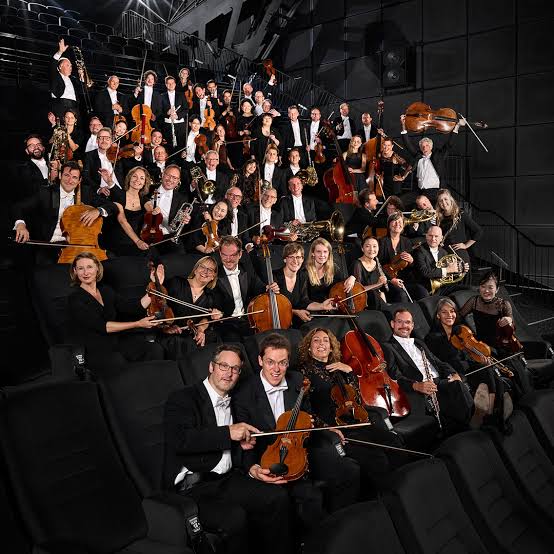
Part of Cadogan Hall’s  Zurich International Orchestra Series, this concert presented three glorious nineteenth century masterpieces played by a German orchestra with a British conductor and Italian soloist so the spirit of European internationalism was alive and well.

And the atmosphere was festive. Nuremberg Symphony Orchestra favours a formal entrance and taking a bow before they sit down unlike most British Orchestras which tend to drift on piecemeal and then do last minute snippets of practice on stage while they wait. That party spirit was further enhanced by Colli’s witty choice of encore (Mozart’s delightful 12 Variations on Ah! Vous Dirai-je Maman aka Twinkle Twinkle Little Star) and the orchestra’s final end-of-concert bon-bon: an orchestral arrangement of Elgar’s Salut D’Amour with a gorgeously nostalgic solo from leader, Anna Reszniak. Marvellous, by the way, to hear a German orchestra affectionately playing Elgar. Sir Edward had many German friends and was heartbroken when war broke out in 1914.

The concert began with Weber’s Overture to Der Freischutz. It’s a jolly piece of many parts and moods and this performance was distinguished by some fine horn playing and lots of interestingly exaggerated dramatic contrasts. Darlington is an excitable conductor, often shaking all over in rhythm, his thick white hair bouncing but it gets him the results he wants.

Then came Grieg’s famous piano concerto played by Federico Colli, an exceptionally charismatic pianist to watch, on an instrument – sensibly – already in position from the start of the concert. It’s quite a challenge to make a hoary old warhorse of this sort sound fresh and arresting but this performance rose to it in spades. Colli played the first movement cadenza with sparkling originality including unusual stresses and very fluid rubato which created a stunned stillness, as everyone present (including the players) listened so actively you could feel it in the air. Colli is a visible listener too as we saw at the beautifully played opening to the adagio before his own melody cuts across the legato strings. The end of the adagio was lovely too – it leads ataca into the Allegro third movement but Colli and Darlington carefully let the sound linger in the air before the mood change. Colli played all those chirpy contrasts in the last movement with weight and colour too especially when we reached the grandiloquent conclusion.

And so to Brahms 4, arguably his finest symphony, which came after the interval. The opening allegro abounded with Brahmsian melodic warmth and some incisve pizzicato. Darlington is very good at coaxing exceptional richness from lower strings. He also did well with the delicate lyricism of the adagio making sure we heard the counterpoint in the strings which often slips past unnoticed.

The third movement, a scherzo in all but name, was delivered with all the lively joy it requires, with triangle and piccolo prominent. The principal bassoon (Jappe Dendievel), whose part is quite prominent was almost dancing. It’s infectiously uplifiting to see professional players evidently enjoying – really enjoying – their work.

I once heard the late Antony Hopkins (the musicologist, not the actor), a great educator, leading a concert hall full of children through this symphony. The opening chords in the final movement, he suggested with mild irreverence, might be saying B-R-A-H-M-S-Spells-Brahms. And I’ve never been able to listen to it since without thinking of that. (It works. Try it.) The Nuremberg Symphony Orchestra and Darlington probably weren’t intoning Hopkins in their heads but played it with verve.


Royal Philharmonic Orchestra

City of London Choir

Daniel Hyde (conductor)

Rachel Nicholls (soprano), Marta Fontanals-Simmons (mezzo), Michael Lafferty (tenor), Thomas Humphreys (baritone)

With Mozart’s Requiem as its post-interval centre piece, this was an imaginatively programmed concert. The first half comprised two takes on Goethe’s Calm Sea and Prosperous Voyage poems: first the familiar Mendelssohn overture and then the much less familiar Beethoven cantata which inspired the young Mendelssohn. Tucked in between them was Mozart’s Exultate, jubilate so there was plenty for the choir to do.

Mendelssohn’s overture is a challenging concert opener because the first section is so understated and exposed but it was played here with attractive sweetness and a lot of control while still sounding fluid. And when the ship really set sail, Hyde delivered all those  cheerful Mendelssohn-ian melodies with plenty of joie de vivre. Full marks to timps and trumpets.

Exultate, jubilate is effectively a concerto for voice and it’s a treat to hear all three movements because so often we just get the third movement extracted. Rachel Nicholls, who is also City of London Choir’s voice coach, sang it with operatic warmth although the orchestra was sometimes too loud so that some of her lower notes were drowned out. She is a richly communicative singer and the musical rapport between her, Hyde and the choir was palpable.

City of London Choir is a fine ensemble – with seating in Cadogan Hall’s fairly limited space, spread onto the side balconies as well as behind the orchestra which helped to create a rounded sound. The singing in both Beethoven’s movements was enjoyably incisive.

And so the glories of Mozart’s Requiem. This was quite a large orchestra for a Mozart piece and, arguably, Sussmayr’s orchestration is too thick for the text in places. Nonetheless it was a real joy to hear the usually unnoticed trombone work cutting though the fugal Kyrie. And in general Hyde balanced choir and orchestra so that it felt coherent.

High spots included lots of pointed-up loving detail in the off-beat string passages in Tuba Mirum and nicely blended quartet singing. Thomas Humphreys and Marta Fontanals-Simmons work particularly well together especially in Recordare which also shone for the cello solo. Hyde found appealing choral colour in Confutatis too particularly from the sopranos whose gentle vulnerability was a good dramatic contrast to the men’s opening.

All in all it was pleasing performance of a well known and much loved piece. And does it matter that the dying Mozart didn’t write most of it? No, I’m just thankful someone did.

photograph of Rachel Nicholls by David Shoukry

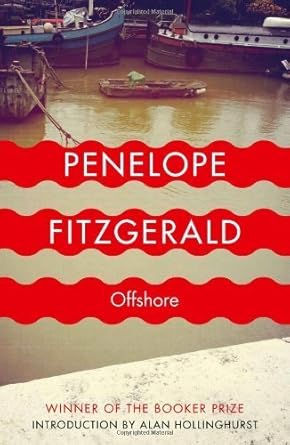
Penelope Fitzgerald, greatly admired as a novelist and biographer, died in 2000. She hadn’t had an easy or straightforward life having had to work indefatigably, in a range of jobs, to maintain her family after her husband’s return from the war as an alcoholic – all of which is detailed in Hernione Lee’s 2013 biography Penelope Fitzgerald: A Life.

I had read some of her later fiction but, Ashore which won the Booker Prize in 1979 (when I was up to my eyes in two small children, a full-time teaching job and maybe not as attuned to current fiction as I was later) had completely passed me by. I have now put that right in response to a recent conversation with a visiting friend who expressed first, admiration for this novel and second, astonishment that I’d never read it.

Ashore is set amongst a small community living on boats on the Thames close to Chelsea in 1961. Of course, as most writers do, Fitzgerald is trawling her own experience, because yes, she did live on the river for a while so she knows this nautical world very well from the gangways which lead from vessel to vessel, to the danger of leaks, the significance of the tide and a lot more. She is also good on what happens if a boat actually sinks.

Her characters are a bunch of misfits and quasi drop-outs with their troubled marriages, feral children and, in one case, criminal activity. In places it’s laugh aloud funny but there are tragic undertones. Richard, for example,  has a “proper” job, war-time officer experience and the only boat which is kitted out safely and comfortably. He is the natural leader and puts himself out constantly for others but his wife is unhappy. He’s a sweetly drawn stereotype of vulnerability concealed by stiff upper lip. We’ve all met him.

Then there’s Nenna whose feckless, useless husband has left her because he doesn’t want to live on the boat which is her only asset. She desperately wants him back and ricochets aimlessly from day to day while her – delightful – children are more competent at most things than she is. They don’t bother to go to school much but know the river and how to manage the boat to the manner born. Then the son of a friend of Nenna’s sister turns up – all Germanic courtesy and charm – and there’s a wonderful account of him and Martha, hormones pounding, going exploring in the “swinging” Kings Road and sending Tilly the resourceful, unwanted younger sister back to the boat.

It’s a novel about friendship, coping strategies and making do under difficult circumstances, complete with a vivid enough storm to make Benjamin Britten or Vivaldi envious, and a powerfully evocative image of the Thames and London.  What more could you want?

Next week on Susan’s Bookshelves: The Bookbinder of Jericho by Pip Williams

The Modern Image of Dorian Gray

By Aimee Riddell from Oscar Wilde

Directed by Kieron Riddell

Spotlites Theatre, Chatham


Star rating: 3


I suppose the thematic parallels between Oscar Wilde’s 1891 novella and today’s obsessive concern with image and social media are irresistible. This is the second thoughtful update I’ve seen on the story of this self-obsessed man whose deeds eventually catch him up. The other was Selfie by Brad Birch which the National Youth Theatre commissioned in 2016. In both cases the action is dominated by phones, photographs, sharing and “followers”.

Aimee Riddell’s version is neatly contrived as a three hander and features young, quite accomplished actors at the beginning of their careers: Jamie Hubbard as Dorian, Dominic Chinery as Basil and Jennifer Erobame as Henry. It’s  imaginative, intense and engaging as the play moves towards its dark outcome.

Chinery’s Basil is warm, reasonable and a good dramatic contrast to the other two. He does, however, need further voice work training. Hubbard develops Dorian from an innocent, nice looking lad to a media-obsessed monster, as the role requires. The stylised bondage scene is really quite nasty.  At the same time he also manages to maintain some sense of roundedness. His Dorian feels remorse and seeks redemption although it isn’t going to happen.

Erobame is the finest actor of the three. Every line she speaks is beautifully nuanced, she really inhabits the role and listens actively.  But there’s a problem. If you cast a women in a male role, then either you have to feminise the character and rework him as female or the actor has to act like a man. Either can work well.  But here we have an attractive and charismatic female actor speaking male lines, doing male things (decadent drinking, debauchery, getting married, becoming a grandfather) with male name and pronouns. It feels awkwardly incongruous and my disbelief remained firmly unsuspended.

On the whole it is well directed although there’s too much walking about for the sake of not standing still, especially in the early scenes and I found the relentless barrage of “appropriate” pop music from various eras a bit trying. There is, moreover, a tension between naturalism and audibility. These young actors still have a lot to learn about projection without losing the rhythms of convincing dialogue.

Spotlites Theatre is an old haunt of mine and it’s rather good news.  It has been offering theatre training for nearly thirty years and is now run by Keiron Riddell who has spruced it up very pleasingly. Two thirds of the cast for The Modern Image of Dorian Gray began their theatrical journeys as children at Spotlites.

www.spotlites.co.uk