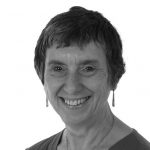
Margaret Atwood is sparklingly good company. She’s witty, affable, down to earth and personable. I’ve always sensed this from her novels, short stories and poetry but never more so than in this delightfully engaging memoir published last month (November 2025).
Now 86, Atwood is one of the world’s most famous novelists and she has almost single handedly put her native Canada firmly on the global literary map. I’ve long admired her work especially Cat’s Eye (which I taught to several A level Classes). Surfacing (another A level class), The Robber Bride. The Blind Assassin, Alias Grace and Old Babes in the Wood. Apart from The Handmaid’s Tale, which is an inarguable masterpiece, I am generally less taken with her speculative, dystopian, sci-fi work although that probably says more about me than it does about her.
So why does she call her memoir a “book of lives” in the plural? Because she has done many different things at different points in her life and been many things to many people. She also contends that every writer has at least two lives: the one they adopt when they write and the everyday one who makes coffee, paints walls, bears children and lives “real” life to the full. And, in my relatively minor writerly corner, I can certainly identify with that.
Born in Ottowa to an entomologist father and a feisty, no-nonsense mother, Atwood spent all her childhood summers, often camping, in the northern wilderness in connection with her father’s insect-related projects – usually government funded. Otherwise Carl Atwood was an academic at University of Toronto. This is familiar information to readers of her novels because much of this way of life gets into them. Reading Book of Lives confirms that Atwood has always plundered her own life experience for situations, characters, issues and problems. A most notable example is the bullying and the dynamics of relationships between ten year old girls which occurs in Cat’s Eye. Yes, she is now prepared to admit because the woman in question is dead, that there really was a “Cordelia” who made the young Atwood’s life hell. I’m not surprised. Even though it’s fiction the writing in the novel is so raw and painful that you know it has to be, in some sense, rooted in reality. Truth is a slippery concept sometimes.
Writing more or less chronologically, Atwood’s richly compelling memoir takes us from assembling a self-illustrated poetry book at age 16 all the way to her state of health today and her determination to hang on in there for as long as she can – thus it spans her 70 year-long professional life as well as her childhood. Had she not been determined to make a career out of writing she would – super bright, of course – have been a biologist. She invents herself as “Peggy Nature” supervising children at a summer camp when she is still a teenager. Decades later, she uses her Peggy Nature skills to clean up a skunk’s skull for her grandson. There are boyfriends and eventually an amiable but lacklustre marriage. Then she meets novelist/bird watcher/cook/traveller, Graeme Gibson, who becomes the love of her life until his death in 2019 while they were in London on a press tour for Testaments. He had dementia and had been ailing for some time – something else I can empathise with strongly, especially as she, as I did, had to deal with the misery of lockdown hard on the heels of her bereavement.
We meet Atwood’s elder brother and much younger sister – still very present and supportive at the time of writing. Then there are Gibson’s two sons from his first marriage, whom Atwood pretty much takes on, and their own daughter, Jess. We also meet the characters, eccentrics and one-offs who people Atwood’s world and, more often than not, wander thinly disguised into her fiction – along with the mythology, jokes and cheerful insouciance. She spares us false modesty. She is, after all, spectacularly successful. But she wears her achievement lightly
Atwood is more than just a writer. She also has a lot of artistic talent and has often, for instance, illustrated her work or designed posters for the charity work to which she and Gibson were committed. She is also the sort of person who listens to Beethoven while she scrubs the floor. She’s handy in other ways too – interested in clothes, and often makes or adapts them. She cooks as well. All of this too I had long suspected from the novels.
This is a brick of a book: 624 pages. I was, however, sad to finish it because it felt as if I’d been at a hugely entertaining party which I really didn’t want to leave.
Next week on Susan’s Bookshelves: The Librarian by Sally Vickers