Press ESC or click the X to close this window

Cinderella (Susan Elkin reviews)

Cinderella

James Rushbrooke

Directed by Rory Hobson

Judi Dench Playhouse, Questors Theatre


Star rating: 3


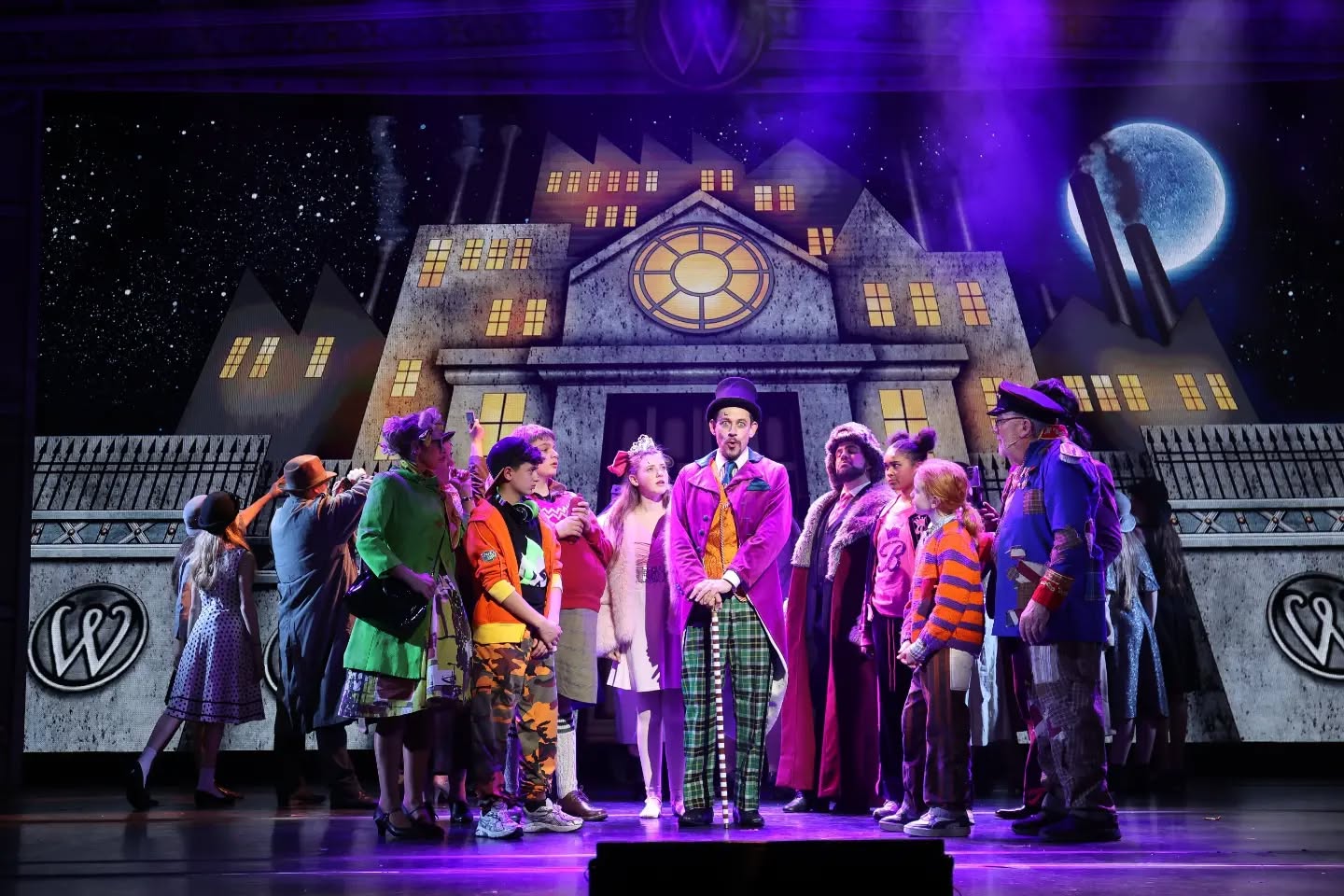
James Rushbrooke sets Cinderella firmly in the 1980s: a song title or song line in almost every sentence. And he works in a completely original sub plot and plot twist. Usually in pantomime you know exactly what will happen. In this one you have no idea. So there’s plenty of freshness and novelty here.

It’s a colourful show (set by Juliette Demoulin and costumes by Carla Marker) which kicks off with a rap number – which seems to be this year’s panto trend.  And director Rory Hobson makes imaginative use of the aisles and annular playing space created by placing a small block of seating where the thrust stage might normally be.

Bernie (Derek Stoddart – louche, 80s vibe), assisted by his daughter Cindy (Julice Liecier)  is an impoverished launderette owner. They are terrified of the landlady, Gloria von Glitz (Samantha Boffin) and her two appalling daughters (Rory Hobson and James Rushbrooke). Then a personable chap, on a quest of his own – his little sister has disappeared –  falls out of the largest washing machine. Of course Cindy fancies this man she calls Buttons (Adam Watt) but her father needs her to marry money. Meanwhile there’s a narrating fairy (Sally Parker) floating about ubiquitously, narrating in calculatedly excruciating couplets and trying to improve everyone’s lot. And so it winds on …

This is a “community” company so of course some actors are stronger than others. All the principals, however, give pleasing performances and Samantha Boffin, glamorous but not grotesque in animal prints, is outstanding. She lights up the stage whenever she appears. Hobson and Rushbrooke play pleasingly off each other and Tom Wolley has fun with a Prince who is a great deal less charming than he is in Charles Perrault’s famous story. Meanwhile there’s a large, hard working, well drilled juvenile ensemble (alternating teams) ably supporting the action. At the performance I saw Enid Hall was good as Buttons’s missing sister.

There are many clever jokes in this show and puns I’ve never heard before. “Shall we hire a choir? They’re always good investments.” Or “I’m a fictional character so my mind is completely made up”. Unfortunately most such lines were so badly timed that they failed to land – possibly partly because the cast were trying to negotiate a relaxed performance.

The first half is well paced but the second half is too long and drawn out, especially for a “relaxed” audience. Generally, though, this Cinderella is a pretty enjoyable, and potentially very funny, show.

The Nutcracker


Written and devised by Clare Beresford, Dominic Conway & Alexander Scott in collaboration with Lakesisha Lynch-Stevens, Caroline Partridge, Edith Tankus and Shamira Turner


Little Bulb, originally co-produced by Polka Theatre

St Martins Theatre


Star rating: 3


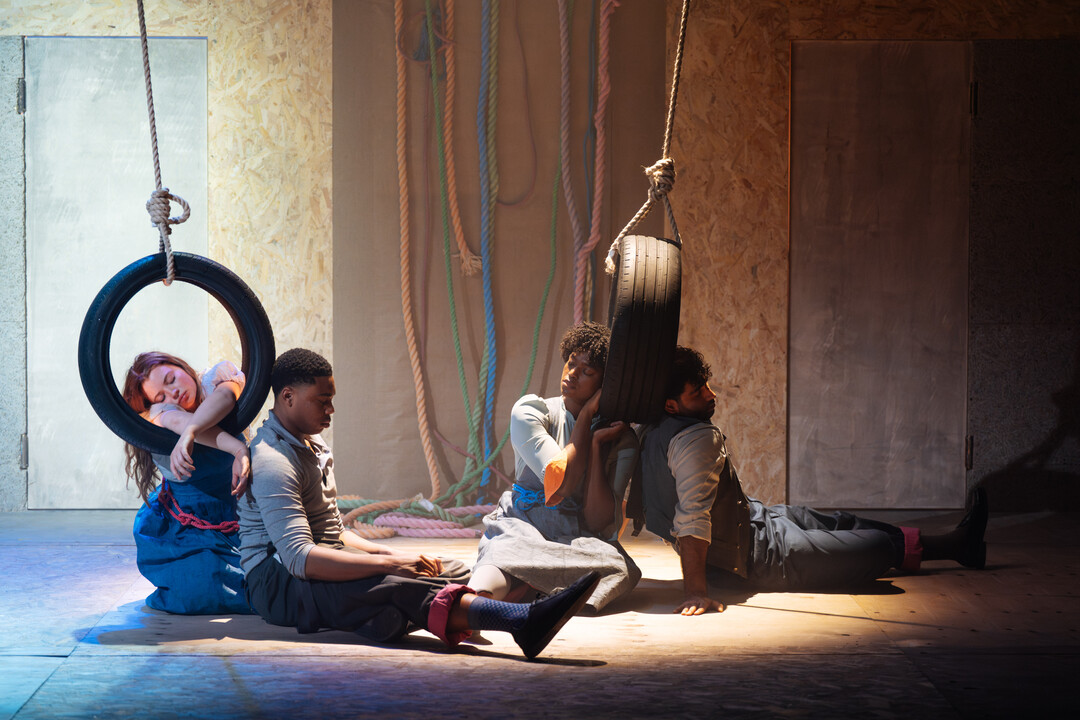
A very far cry from ETA Hoffmann’s original story, this 60 minute children’s show seeks to create magic of its own with emphasis on sibling bonding, kindness, forgiveness – and cheese.

A strong cast of five, all of whom were involved in the development of the piece, presents two modern-ish children arriving, with their single-parent father, at a mysterious new house. It is populated (infested?) with mice. And everyone in the audience is co-opted to membership of the musine community.

Clare Beresford leads the cast as narrator and a cackling, menacing Mouse King until she finds redemption and recognises the error of her ways. She’s feisty and full of energy from the “Christmouse” slushy, pre-show songs, when the cast forms a band, through to the piece’s final moments. This isn’t really a musical but Beresford gets a few songs as part of the action and she really is quite a singer.

The other four double extensively with Lakesisha Lynch-Stevens as a pleasing Clara and Dominic Conway suitably boyish as Fritz. Caroline Partridge is less prominent in some minor roles but there’s a fine turn from Shamira Turner as the Sugar Plum Fairy. Not that there’s any dance in this show. Don’t go expecting ballet although there are few Tchaikovsky references in the sound track, along with other music which is often too loud.

Sam Wilde’s set, props and costumes are generally effective and the puppets are nice. Wilde’s spider costume for Caroline Partridge is great fun but does he really think that spiders have only six legs?

I’ve never understood why people who stage children’s theatre think excrement jokes are essential. They are not. The turd scene in the sewer adds nothing to this production.

This version of The Nutcracker is a decent enough show of its type although it’s not likely to set fires alight. I was pleased, however, to see an unusual number of men and boys in the audience. The Nutcracker, whatever form it is presented in, is definitely not a “girly” thing.

The Liar, the Bitch and the Wardrobe

Joshua Bailey

Directed by Sasha Regan

Union Theatre


Star rating: 3.5


A cheekily irreverent, and often funny, spoof on CS Lewis’s 1950 classic, this show more or less lives up to its strapline: “A Very Adult Pantomime”

Two East End mothers decide to send their two boys into evacuation. Once they reach their destination the boys find, of course, a big wardrobe … Thus this talented cast of four embarks on some outrageous doubling which sends itself up as it goes along.

Joe Pieri who plays Eddie, among other roles, is a camp, half-knowing, overgrown schoolboy one minute and an otherworldly Mr Topless (the faun, naturally). James Georgiou as Peter captures boyish innocence coupled with burgeoning knowledge perfectly. And they play off each other pleasingly.

These boys are passionately in love with each other and the explicit  sex jokes come thick and fast as the Narnia story (witty burst of Richard Strauss every time the word is mentioned) wends its way. Loosely.

Tom Duern and Katie Ball are even better. Both use their physicality to maximum effect and director Sasha Regan rarely misses a trick. Duern is tall and willowy.  Ball is under five feet and they look hilariously incongruous even  just standing side by side. Duern, first as the boys’ richly exaggerated Madam-like landlady, and then as the titular Bitch – not quite a panto dame but close – commands the stage. He is good at embarrassing the audience and thinking on his feet too.

Ball has a gift for funny faces and voices. She is wonderful as the deadpan trolley pusher on a train and later as Arselan, the bottom-wiggling lion, who is definitely not Christ-like here, whatever CS Lewis’s intentions might have been. Fortunately The Lion, the Witch and the Wardrobe is out of copyright. Does she, I wonder, deliberately mime playing the violin the wrong way round or did nobody notice?

It isn’t quite a panto despite its claim although many of the elements are in (“Oh yes they are”).  And there are some strong songs in a range of styles. Eighty per cent of the shows I’ve seen this season have been heavily dependent on rap so it’s good to see one which does something different, especially the hillbilly number about evacuation.

The Liar, the Bitch and the Wardrobe is an amusing, boundary-pushing romp which celebrates gay-ness. There’s a nice twist at the end too. The whooping, excited audience I saw it with gave the impression they could hardly believe what they were hearing fom the moment the lights went down.

Alice in Wonderland

Geoff Aymer (inspired by Lewis Carroll)

Directed by Suzann McLean

Theatre Peckham


Star rating: 4


Reimagined and re-sited in Peckham, Geoff Aymer’s take on Alice is fresh, original, topical and funny. Actually, Alice’s Adventures in Wonderland has never been my favourite book but this show really presses the buttons. And I particularly like the idea of a talented, well directed young company ensemble supported by, or in support of, four strong professional adults.

Alice (Carma Hylton) is a brash, Peckham thirteen year old, wedded to her phone and the despair of her geeky older brother Stefan (Oscar Sinclair). “You’re so confident in your own ignorance” is one of the script’s best lines. Then he confiscates  her phone and she finds herself somewhere else and feels like a foreigner – cue for a lot of subtle but perceptive thoughts about immigration, belonging, inclusivity and rejection but there’s nothing off-puttingly “worthy” about this script.

And once Alice is in Wonderland we get a lot of familiar (sort of) episodes and some highly adept doubling.  Felicity Ison gives us a “sarf London” Snowy B (the White Rabbit character) racing about in a panic, the haughtiest imaginable duchess, and an eccentric Van-Goo painting roses. Her voice work delights and she commands the stage for every moment she’s on it. Siphiwo Mahlentle’s Chesh (aka the Cheshire Cat) is laid back, camp and funny and his turn as authoritarian Ignatius is fun. And Oscar Sinclair is fabulous as the louchest possible, pendantic caterpillar – whose name, gloriously, is GSCE – and a scarlet-clad, ruthless but vulnerable, Queen of Hearts. Chess as a substitute for croquet works a treat.

The young company is outstanding too. On press night I saw Team Cerasee which alternates with Team Oolong. Alexander Joseph is a fabulous Hatter who won’t allow the usual adjective but wants to be referred to as “mentally unshackled”. His “tea jams” are fun and I was still laughing when I left the theatre. At first we think he’s selling dope and he’s afraid Alice is a spy. Once he’s “cleared” her he opens his jacket to reveal his wares and it’s lined with  … a range of teabags. Alexander times all this to perfection.

Flo Swann is so strong – terrific singing voice –in several roles that for a while I thought she was a fifth pro. And Theo Esson is an ensemble delight – her dancing is as vibrant as any I’ve seen anywhere and her somersaults get a spontaneous round of applause.

Seeing this engaging show was, however, a bit like watching an excellent school production at which I was very much an outsider – in terms of age, ethnicity, background and more.  The very excited, exuberant audience whooped and clapped every time someone they knew appeared on stage which, with a cast of 19, got distractingly tedious. It’s odd that Theatre Peckham which works so hard, and so successfully, at community integration can sometimes feel just a tiny bit exclusive.

I usually try to feature at least one seasonal book each December. Having now run though all the obvious stories known to me, I did a bit of trawling for something new and this title jumped out at me. It obviously fitted the seasonal requirement although I didn’t know Beth Moran’s work at all and, to be honest, feared I might find it a bit “pulpy.” In the event I enjoyed it a lot – original idea, strong characters with whom I liked spending time, some darkness offset by plenty of “feel good” which stops short of sentimentality.

Mary is alone in a dingy cottage in Sherwood Forest (apparently most of Moran’s books are set in or around Nottinghamshire’s famous woodland). It is late October.  She is heavily pregnant and we realise immediately first, that dreadful things have happened to put her in this position and second, that she is actually in labour for which she is completely unprepared. She calls a taxi and the driver, Beckett can see instantly what’s happening because he happens to have trained as a doctor. They end up in a rather wonderful new age church because they get stuck in traffic and things are happening too fast to make it to the hospital. The baby, Bob, is born there and suddenly Mary is surrounded by some of the loveliest, most caring, least judgemental people I’ve ever met in fiction (or in real life for that matter).

Like Mary, Beckett is damaged by things which have happened to him. He too is friendless and in desperate need of support. Why isn’t he working as a doctor?  At home he is single-handedly  trying to look after his pretty difficult grandfather who brought him up. Gramps is an engaging character although I’m not totally convinced by his calculatedly feigned dementia. The post-stroke disinhibition is plausible, though.  Gradually Beckett and Mary become friends, helping each other in practical ways, and one senses that eventually it will be more than that. And in a book of this sort, all set in the run-up to Christmas, the happy ending is a given although, of course, there are many tantalising lets, hindrances and misunderstandings along the way.

Moran uses a quite interesting split narrative technique between Mary and Beckett, telling his story in the third person and hers in the first so we see things marginally more vividly from her point of view. The reader, of course, is curious to learn what on earth has happened to them both in the past and Moran drip feeds information so that you keep turning the pages. I devoured this book in two days.

I loved the idea of the supportive Coffee Mums Club and was moved by the sobering back stories of these stoical women, all so different but so determined to be there for each other, come what may.  Moses, the pastor at the church is a delight –  sensible, reliable, understanding and never preachy. He and his wife Sofia have adopted five traumatised children. Then there’s the jolly New Life Community Church Christmas Carol Concert, for which Mary makes the costumes (fashion is her background) thereby finding herself a purpose and making new friends at the same time as caring for Bob.

And the novel works towards reconciliation – with caveats – as the season of goodwill approaches. Mary is estranged both from her chilly parents and the two lifelong friends with whom she developed a highly successful business. Beckett really can’t cope with Gramps any longer not least because hiring in care (I empathised with this – been there, done that) is so fraught with difficulty. Things have to change and they do. The new year promises lots of moving on.

In short this is a thoughtful novel which tells a good yarn and ranges over a wide range of serious issues. One of its themes is forgiveness and that’s spot on for this time of year.

I wish, though, that publishers (Boldwood Books, in this case) would drop the concept of “women’s fiction”. This book has lots of characters of both sexes and isn’t in any sense a book that a man couldn’t read and enjoy. Yes, the leading view point is female but nobody describes Pride and Prejudice, Jane Eyre or To Kill a Mockingbird as “women’s fiction” so for goodness sake let’s stop categorising.

Next Week on Susan’s Bookshelves: Book of Lives by Margaret Atwood

Brighton Philharmonic Orchestra

07 December 2025

Joanna MacGregor

Accordionist: Alise Silina

Alise Silina is a highly charismatic and responsive performer to watch and it’s a terrific treat to see an accordion concerto played live. Latvian born, and currently studying for a Masters at Royal Academy of Music, Silina sits almost next to conductor, Joanna Macgregor, rather than in front her and looks continually to her left and right so that the piece becomes effectively a grand scale trio between the two of them and BPO’s leader, Ruth Rogers,

Vaclav Trojan’s Fairy Tales: A Concerto for Accordion (1959) comprises seven colourful, descriptive movements full of narrative. In the first, Let us Dance into Fairy Tales, I enjoyed Selina’s chatty chirrups and the The Magic Box is fun almost in the manner of Jingle Bells as Selina moved with seamless, insouciant elegance between moods on her very versatile instrument. The highlight of this enjoyable performance was, for me, the Wagner-esque dragon menacingly unwinding itself in the fourth movement in a rather splendid cadenza.

After the interval we got Thomas de Hartmann’s Koliadky: Noels Ukrainiens. You have to hand it to MacGregor and her team for finding unusual repertoire. This piece premiered in Paris in 1940, was performed on BBC radio in 1946 and, as far as anyone knows, nowhere else since and certainly not in Britain. The melodies – all eight of them – sound like carols but are, in fact, original compositions. I admired the bassoon work in Les rois mages and the trombones and tuba were magnificent in La veille de l’épiphanie. It’s an atmospheric piece which the orchestra played with commitment.

And so to the familiar warmth of Tchaikovsky’s eight-part Nutcracker Suite delivered here with warm affection but without wallowing. There was pleasing precision in the overture and beautiful celeste work in Dance of the Sugar Plum Fairy, Xiaowen Shang rocking gently in time with her playing. It’s good to hear such immaculate pizzicato from the strings too. The accelerando at the end of Trepak was as joyfully exaggerated as I’ve ever heard it and Waltz of the Flowers came at a nippy speed so that it felt invigorating rather than slushy.

All in all, then an interesting Christmas concert  (sort of) for which the hall was fuller than sometimes which is good to see.

It had, however begun with Eventyr: Once Upon a Time which, despite MacGregor’s valiant attempt to big it up before we heard remains distinctly dreary, as work by Delius so often is.  It did nothing to launch the concert in any sort of festive mood. Of course, though, it showcased some fine playing especially from the percussion department, including good xylophone work. The performance was, inevitably, supported by the Delius Trust. I sometimes irreverently think that if this well meaning organisation didn’t pay up on these occasions nobody would ever choose to play or listen to the work of Frederick Delius. And I’m afraid that I, for one, wouldn’t miss it.

Concerto Budapest Symphony Orchestra

Conductor  Andras Keller

Pianist Paul Lewis

Cadogan Hall, 04 December 2025


At a time when you’re lucky to get two works in a programme, this concert felt like a richly generous offering: two symphonies, a concerto, a substantial orchestral piece and topped off with two encores.

First up was Shostakovich’s ebullient ninth symphony, regarded as disrespectfully trivial when it premiered in 1945 and banned in Russia for several years from 1948. The Concerto Budapest Symphony orchestra delivered it with a nice blend of gusto and wistfulness. The brass work in the first movement was crisp and exciting and the beautifully played bassoon solo in the third movement over viola pedal note was movingly arresting.

Then it was reduced forces, a different leader and a complete change of mood for the arrival of the piano and Paul Lewis to play Beethoven’s Piano Concerto no 3. Keller gave us a creamy orchestra sound – lots of the composer’s favourite C minor – and there was mellifluous playing from Lewis especially in the first movement. The sound balance was interesting too. From the balcony I heard a second violin entry which usually passes completely unnoticed. Lewis’s expansively free cadenza was enjoyable too. There was real tenderness in the E major largo and the third movement romped home with lovely hard stick timp work. It isn’t, incidentally, until you notice one that you realise how regrettably rare it is to see a female timpanist. Bravo CBSO.

Of course there had to be a good Hungarian piece in the mix so the second half started with Liszt’s Les Preludes which presents the familiar recurrent theme in an imaginative range of guises. At its conclusion this performance achieved glorious grandiloquence with snare drum, cymbals and bass drum all giving their all.

Finally it was back to Beethoven for a pretty nippy account of his fifth symphony. The first movement, adhering, I think, to Beethoven’s metronome markings, gave us an opening as incisive as it needs to be and masses of energy. Keller is an unshowy conductor who coaxes stupendous contrasts from his players. The andante came with a lovely cello sound and witty insouciance in the shared rising arpeggios in the winds. The horns excelled in the third movement but the final allegro was mildly disappointing. No matter how many times I hear this symphony (and of course I’ve heard it hundreds of times and played in it too)  the piccolo in this movement  usually makes me beam in delight. On this occasion I could, however, hardly hear it which may be down to the acoustics of Cadogan Hall or perhaps Andras Keller doesn’t love its climactic contribution as much as I do.

And then, orchestra thoroughly warmed up and in party mood we got a couple of orchestral encores, the second of which was, appropriately, Brahms Hungarian Dance no 5 played with all the excitement and  loving exaggeration it needs.

This concert was – pleasingly – the sort of unapologetic pot-pourri I grew up with. There was no attempt to theme the works or give the concert some waffly (silly, even)  title as is now fashionable. And that is a welcome change. Thank you CBSO.

Fallen Angels

Noel Coward

Directed by Christopher Luscombe

Menier Chocolate Factory


Star rating: 4


A century-old comedy of manners – a lesser known Noel Coward play –  could easily feel dated.  But in the hands of Christopher Luscombe and his talented cast of six, it doesn’t. Instead it glitters energetically.

At the heart of the play are two middle-aged middle class couples. The chaps are off to play golf in Chichester (love those socks and plus fours) and the women are about to have lunch. Then the women learn that an old flame, with whom they each enjoyed an affair in Italy when they were single, is in England. He is French, all twirling moustaches and sexual glamour. The very thought of him sends them into orgasmic heaven. And so begins a very funny play which explores the sexual mores of 1925, female lust, double standards and marriage once the gloss has worn off. And it does it in classic drawing room style with plenty of cheerful farce elements.

Jane (Alexandra Gilbreath) and Julia (Janie Dee) get drunk together in the second of the three acts while waiting for their glamorous paramour to arrive or telephone –  via a nice candlestick job, of course.  It’s arguably slightly too drawn out but both actors become increasingly and subtly glassy-eyed as the evening wears on and they fall out with each other. They play off each other beautifully just as they do with Christopher Hollis as  Bill and Richard Teverson as Fred in the final confrontation, both men horrified, angry and easily duped. Luscombe has ensured that every word, nuance and knowing look is timed to perfection and it’s hilarious – especially as, if you don’t know the play, you were probably assuming that we weren’t going to meet M. Duclos but …

In the midst of all this is a terrific performance from Sarah Twomey as the maid – an over-familiar know all, who plays Rachmaninoff to concert standard, knows about Peruvian hangover cures and trained with Ballet Ruse among many other accomplishments. At the end of Act 1, she gives us the funniest scene change I’ve ever seen, courtesy of Tchaikovsky and a lot of imagination.

Menier Chocolate Factory’s space (other facilities constrained at present owing to a dispute with the landlord) is configured as thrust with seating on two sides. So it feels pretty intimate and Simon Higlet’s 1925 set  works perfectly – with one door apparently leading into a vestibule and another into the rest of the flat. It spaciously accommodates plenty of furniture without being fussy

Fallen Angels is a jolly good antidote to pantomime at this time of year. I haven’t laughed so much in the theatre for months.