Press ESC or click the X to close this window

Susan’s Bookshelves: How I Became an Englishman by John Peter as told to Judith Burnley

I met John Peter, who died last year, once or twice at Critics’ Circle events in London and of course I read his outstandingly well informed and perceptive theatre reviews in The Sunday Times.

I had no idea, however, of his dramatic and dangerous Hungarian background and his arrival in Britain as a teenaged refugee after the 1956 Uprising. His widow Judith Burnley, herself a writer, has now set down the whole story as a first person narrative. One presumes he talked about all this a lot and/or that she coaxed it out of him with a view to recording it. Either way the book, published earlier this year, reads very well.

John – that’s his Anglicised name – lived his entire childhood in danger,  under the fiercely totalitarian Soviet regime. His father had been murdered (tortured, shot and then pushed into the river next to the Chain Bridge in Budapest) by the Nazis in 1944. His mother led a flighty life of comings and goings and her young son was often left in orphangages and convents or with family in the country where he did some manual jobs. Narrow escapes were commonplace. Eventually, after he’d nailed his colours to the mast in the Uprising he really had to leave – heading for Austria concealed in a hay wagon with his mother and other family members including a pretty useless ex of hers and his current girlfriend.

The thing which strikes me most forcibly about all this is that there was a time – not all that long ago – when refugees were made welcome in this country and willingly supported. The WI made them cups of tea when they arrived at an RAF base on Salisbury Plain. They were given clothes, food and a small allowance along with a lot of help in learning English and getting jobs. There were even free places at university set aside for them.  It was very enlightened.

John Peter was a bit late to get one of those university places but although he’d arrived knowing only two words of English: “Cowboys” and “Times” he was soon accepted – maybe because of his native Catholicism – at Campion Hall, Oxford. He read history but then switched to English Literature “paying” for his place by helping out in the kitchen and waiting at table. And of course, he started seeing plays and writing about them during the seven years he remained at Oxford.

Given where his future lay it’s a nice touch that “Times” was one of his two English words. He arrived already knowing that The Times one of Britain’s most respected newspapers.

I was sent this book, complete with foreword by Jeremy Irons, by its author who wanted me to read it along with the poems she wrote about her husband’s decline into Alzheimer’s. I’m so glad she contacted me because it’s as uplifting as it is informative. It’s available via Amazon as a paperback or Kindle download.

La Nuova Musica Monteverdi Vespers Brighton Dome -Brighton Festival 23 May

It was a real joy to be back in an indoor space listening to live music again for the first time since before Christmas. And I have to say that distanced seating in Brighton Dome had an interesting effect on the acoustic which suited the ethereal Monteverdi sound very well as conductor David Bates carefully allowed every echo and harmonic to die away in the lofty cathedral-like space.

This, however, was not quite the Vespro della Beata Vergine as we know them. Rather it was a concert based around most of the Vespers – no plain chant between movements – with other contemporary pieces which deliberately blurred the sacred/secular divide and gave us a mix of Latin and Italian. Thus we got Pur ti miro from L’incoronazione di Poppea tucked in after Laetutus Sum and, sung with warm passion by Julia Doyle and Joanne Lunn, it was an electrifying, show stopping moment.

One of the strengths of this performance is the authencity of its small size. Ten singers stood, distanced at music stands around the back of the stage behind the eight piece band. They reconfigured their postions for each number so that the sound varied rather effectively. Sololists sang with the ensemble. High spots included the precision and colour of Dixit Dominus with an immaculately controlled amen, the jolly folksy theatricality of the madrigal Vogilo di vita uscir and the otherworldly echoes in Audi coelum.

Ot course all this was accompanied on original instruments with all the drama of two fetching theorbos and organ as well as David Bates conducting from the harpsichord. It’s quite an education too to see a period harp played standing up (Joy Smith – her opening Toccata seconda was arresting) and double bass (Judith Evans) played seated.

Perhaps this wasn’t the Vespers for the purists as you might hear it in, say, an Italian cathedral but full marks for highlighting the eroticism of this music and for drawing attention to the way in which musical boundaries were rather less absolute in the seventeenth century. And the sound was terrific.

This review was first published by Lark Reviews: https://www.larkreviews.co.uk/?p=6438

Show: Anton Chekhov

Society: West End & Fringe

Venue: Jermyn Street Theatre, 16b Jermyn Street, London

Credits: Written and performed by Michael Pennington. PART OF THE CLASSICS, FOOTPRINTS FESTIVAL

Type: Sardines

Author: Susan Elkin

Performence Date: 21/05/2021

Anton Chekhov

Susan Elkin | 21 May 2021 23:22pm

Michael Pennington is, as always, a joy to watch and listen to. One of at least three fine one man shows he has toured and revived many times, Anton Chekhov dates from 1984. It’s a glorious monologue in which he depicts the aging Chekhov, reflecting on his life.

Of course it’s autobiographical. We learn that Chekhov trained as a doctor but wrote as a sideline. Even when he’d made enough money to buy an estate in the Crimea he still practised medicine – the only doctor available for “his peasants”. He talks of his boyhood and his grandfather who was a serf. There’s a horrifying, chilling account of witnessing a flogging when he spent some time in a Siberian prison camp observing and writing a report. And he’s witty about people and life – and his own plays which he claims not to like much. He wrote 600 stories too.

What I really like about Pennington in this role is the mellifluous crispness of his voice and the accomplished way – dressed as a shambling old man – he manages mood changes including the occasional youthful grin at some memory. Often such flashes relate to women Chekhov has known – in every sense. It’s odd though that Pennington has a book in his hand which he uses as a prop as he leads us to imagine that Chekhov is reading his own work. In fact this is the play script which he is constantly referring to. It doesn’t matter too much but at times we could do with a bit more eye contact. I find it hard to believe that this fine actor has always done Anton Chekhov like this and wonder whether, now 78, he isn’t finding it quite as easy to remember lines as he once did. Not that it detracted from my enjoyment. It’s still a masterclass in measured, intelligent acting.

This production is part of the Footprints Festival with which Jermyn Street Theatre has feistily re-opened. Hats off to Tom Littler and Penny Horner for the way they manage their reduced socially distanced audience with cheerful, rueful good humour. The serving of interval drinks to seats is almost as entertaining as the show.

This review was first published by Sardines: https://www.sardinesmagazine.co.uk/review/anton-chekhov/


Show: The Last Days of Judas Iscariot

Society: Drama Studio London (student productions)

Venue: The Playground Theatre, 8, Latimer Industrial Estate, Latimer Road, London

Credits: by Stephen Adly Guirgis

Type: Sardines

Author: Susan Elkin

Performence Date: 04/06/2021

The Last Days of Judas Iscariot

Susan Elkin | 04 Jun 2021 21:10pm

Stephen Adly Guirguis’s witty, thoughtful 2005 play is a good choice for a drama school. Its episodic structure uses a large number of actors in some pretty colourful roles. Including a bit of doubling these thirteen graduating actors all have something interesting to do with lots of moments in the spotlight. And director Ishwar Maharah has ensured that everyone really gets the chance to show what he or she can do.

Although this play has been revived many times in its 16-year life, this was the first time I’d seen it and I’m glad I did. The premise is that Judas Iscariot is in purgatory – still. Other characters, all of them dead, are either in heaven or hell but summoned to take part in a trial to decide what should be done with Judas. In places it’s very funny because we’re in the present day and some of the anachronisms and incongruities are great fun – Diavian Galloway, for example, as a very blousy, sassy, fur-coated St. Monica fond of words such as “motherfucker” goes down well with the audience.

In court Luke Walter is an irascible, irresponsible judge with a suitably load bellow when he’s not getting his own way. Jade Lane as the defence council and Hayden Mampasi for the prosecution take a while to find dramatic balance but Lane, in particular, really finds her feet in the second half, especially in the scene with Henry Rousso as Sigmund Freud.

Best of all the witnesses is Henry Boston as Pontius Pilate. He shifts mood instantly from insolence to determination and from anger (wonderful crescendo) to grudging sympathy. Boston is also a fine on-stage listener and a very charismatic actor to watch. I hope we see more of him very soon. Another very fine performance is Georgina Goodchild as Mother Teresa, deaf, flirting with the prosecutor and visibly responding to every word spoken.

As a newcomer to the play, I was intrigued about how it could possibly end. The answer is with an argument which changes the mood and becomes a stunningly beautiful – reverent, almost – scene between Judas and Jesus. It leaves us with a lot to reflect upon because this is not Horrible Histories. Beneath the jokes it’s a telling play for our times which asks serious questions about responsibility, forgiveness and self esteem. The final scene could hardly fail to be moving but as played by Robbie Young and Ben Strang it is arrestingly poignant.

One point about voice work: This production is staged in the round, When inexperienced actors are required to do American accents there is a tendency to get too fast and get the pitch wrong. Sometimes it can become shrill and clarity is lost especially when actors need to reach audience members on three sides. Maybe voice coaches should make more of the fact that most real-life Americans speak quite slowly unlike Brits who tend to speak quickly with a lot of elision. If you try to deliver American English as if it were British English there are audibility problems. This applied to several (but not all) of the cast members in this production.

This review was first published by Sardines: https://www.sardinesmagazine.co.uk/review/the-last-days-of-judas-iscariot-2/

Show: Twelfth Night

Society: Half Cut Theatre

Venue: Touring – including The Red Lion & Cellar Room, Betchworth; The Isis Farmhouse, Oxford; The George Inn at Vernham Dean; The Cunning Man, Burghfield; The Jolly Waggoner, Ardeley; The Jolly Waggoner, Ardeley; The Rising Sun at Ickford; The Unicorn, Cublington; The Woolpack, Fornham St Martin; The Willow Tree, Bourn; The Lodge, Duxford; The Kentford, Newmarket; The Crown Inn, Broughton; The Finchingfield Lion, Essex; Challis Garden, Sawston

Credits: William Shakespeare. Presented by Half Cut Theatre

Type: Sardines

Author: Susan Elkin

Performence Date: 05/06/2021

Twelfth Night

Susan Elkin | 06 Jun 2021 21:52pm

There are few more congenial places to be on a sunny Saturday afternoon than a spacious Cambridgeshire pub garden watching a sparky take on a Shakespeare comedy – notwithstanding the woofy dog who clearly isn’t fond of blank verse and had to be taken out!

Half Cut Theatre’s 80-minute, six-hander Twelfth Night is ingeniously abridged by Alex Wilson, who also plays a gloriously hedonistic Sir Toby Belch. I admired, for example, the opening scene which intercuts Orsino’s “food of love” speech with Viola’s arrival in Illyria using Feste (Grace Liston – good) as quasi narrator speaking most of the Captain’s speeches against a recurrent sea shanty.

In a production full of versatility and energetic talent, James Camp is outstanding as a deliciously effete, wimpish Sir Andrew Aguecheek in a ridiculously OTT red silk jacket. He then morphs, frequently and convincingly, into Malvolio whose pained grimace and tortured West Midlands accent is a comic delight.

Francesca Baker’s Viola is feisty, passionate and plausible. And her doubling as her twin brother Sebastian works much better than I though it would with a reversible jacket, a deepening of voice and adjustment of body language. The story telling here – as throughout this production – is unerringly clear.

There is also a fine performance from George Readshaw as a self-interested Orsino of ambiguous sexual leanings. And Verity Kirk does well doubling the lofty, frustrated Olivia with a delightfully attractive, intelligent Maria who gulls Malvolio with panache.

It’s a production which respects Shakespeare without being fussy so we get the occasional substitute line or word and some very funny asides as well as songs by Ollie King (several actor-musos in this cast) setting part of Shakespeare’s words but adding more.

It is a warmly enjoyable show (unless you’re a dog). Catch it if you can.

This review was first published by Sardines: https://www.sardinesmagazine.co.uk/review/twelfth-night-7/

Show: Othello

Society: National Youth Theatre of Great Britain (NYT)

Venue: Royal & Derngate, Northampton… Workshop Theatre,National Youth Theatre Holloway Road, London… Bolsover Castle, Derbyshire

Credits: William Shakespeare, abridged and dramatised by Dzifa Benson. Co-produced with Royal & Derngate. Performed by NYT REP Company

Type: Sardines

Author: Susan Elkin

Performence Date: 07/06/2021

Othello

Susan Elkin | 08 Jun 2021 08:18am

All photos: Helen Murray


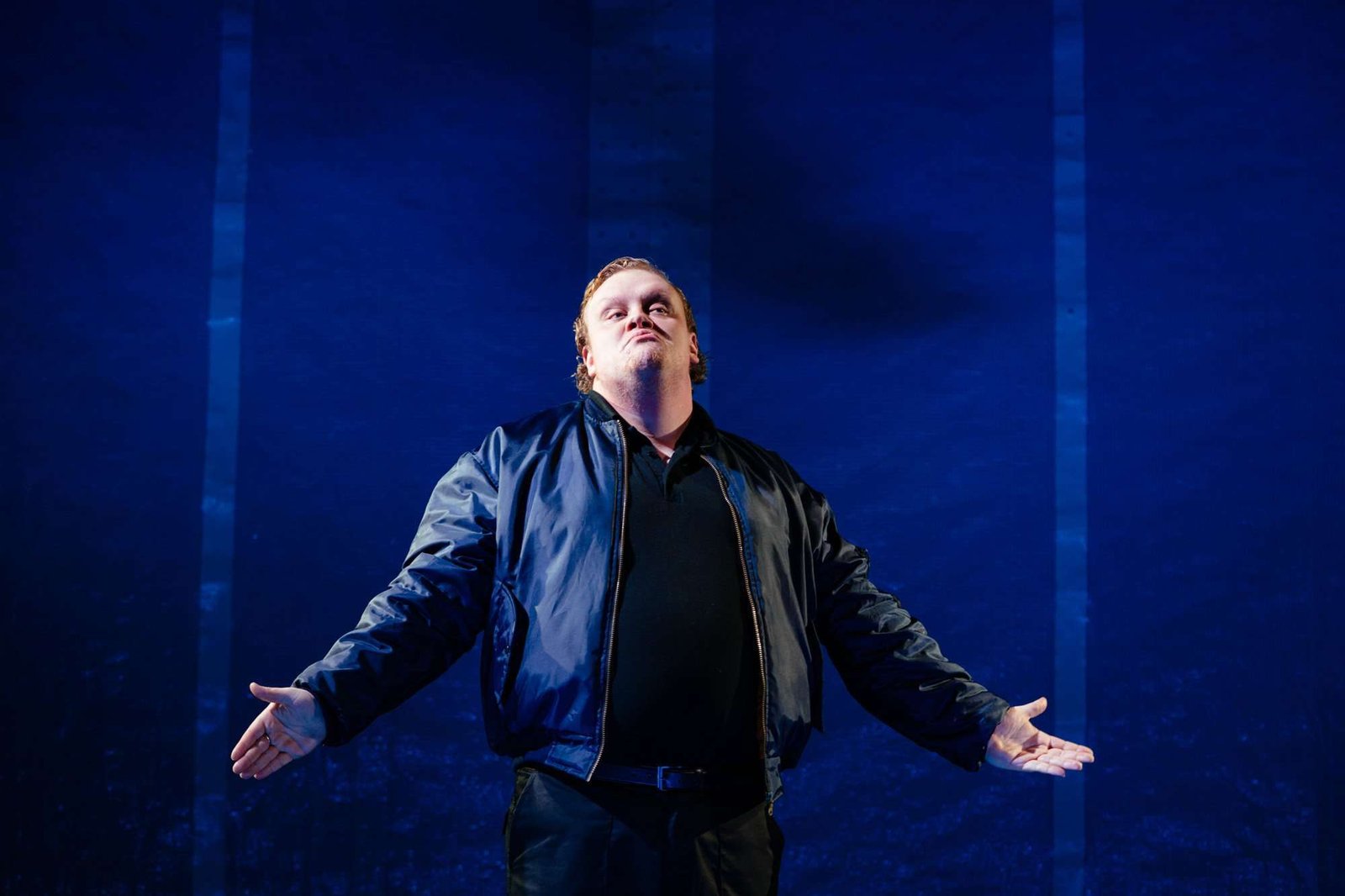
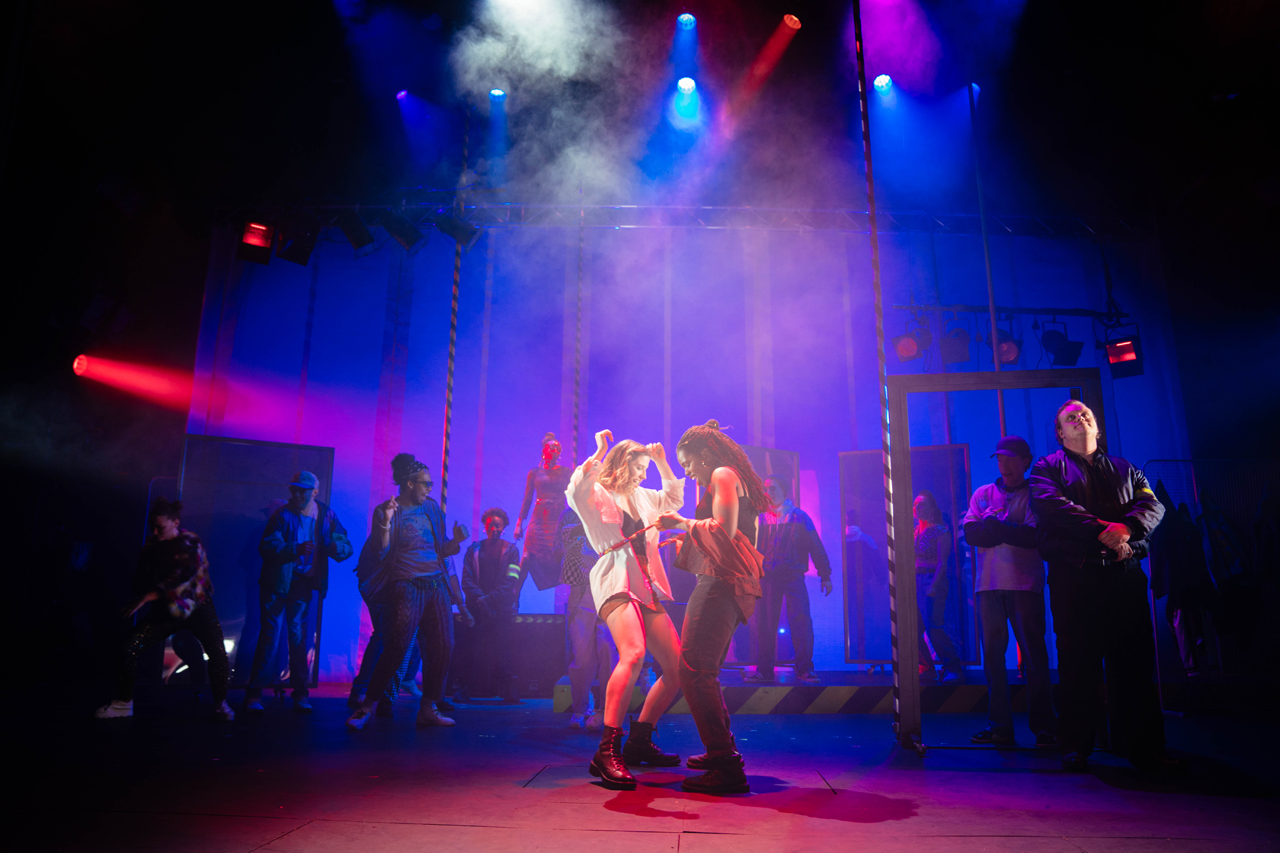
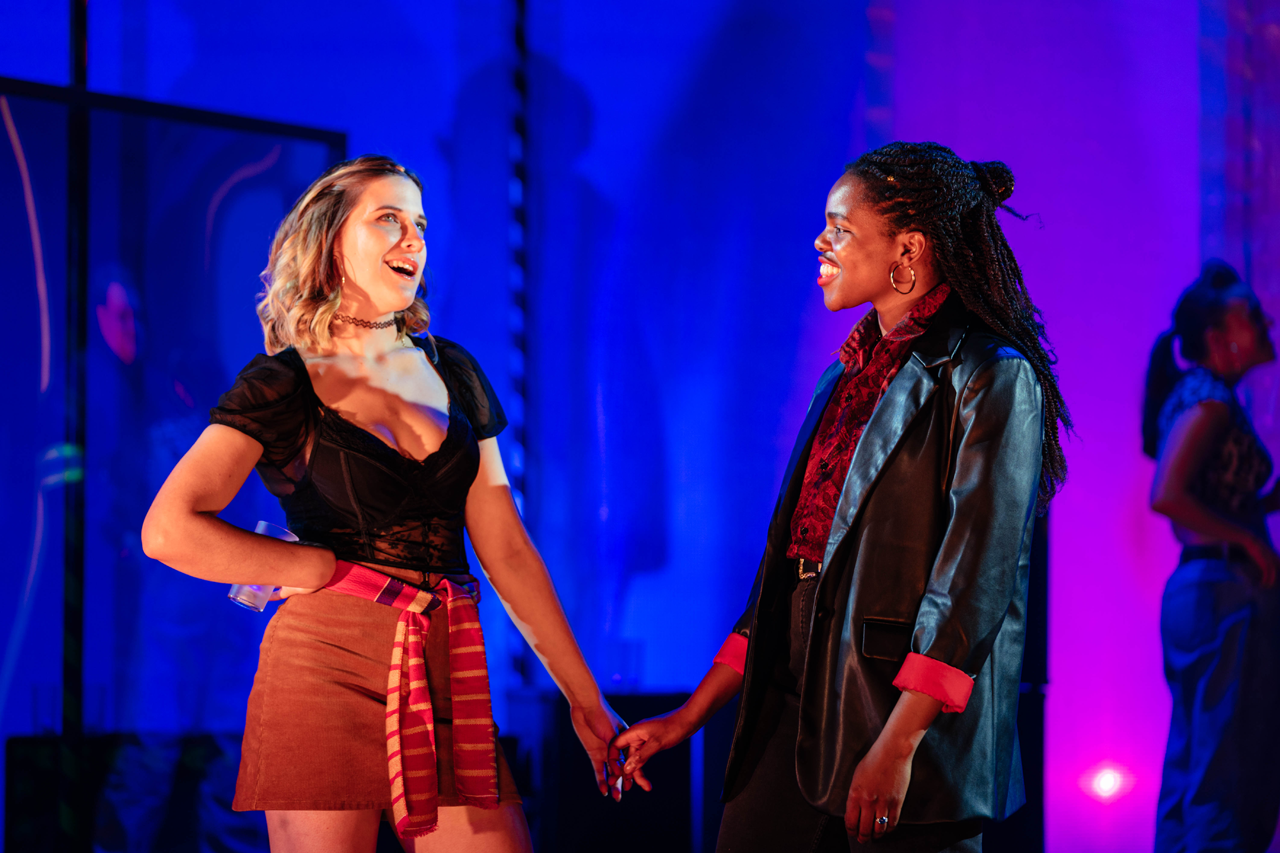
The combination of Dzifa Benson’s abridgement/adapation, Miranda Cromwell’s direction and – I infer – a great deal of intelligent cast workshopping has resulted in a very thoughtful, contemporary take on Othello.

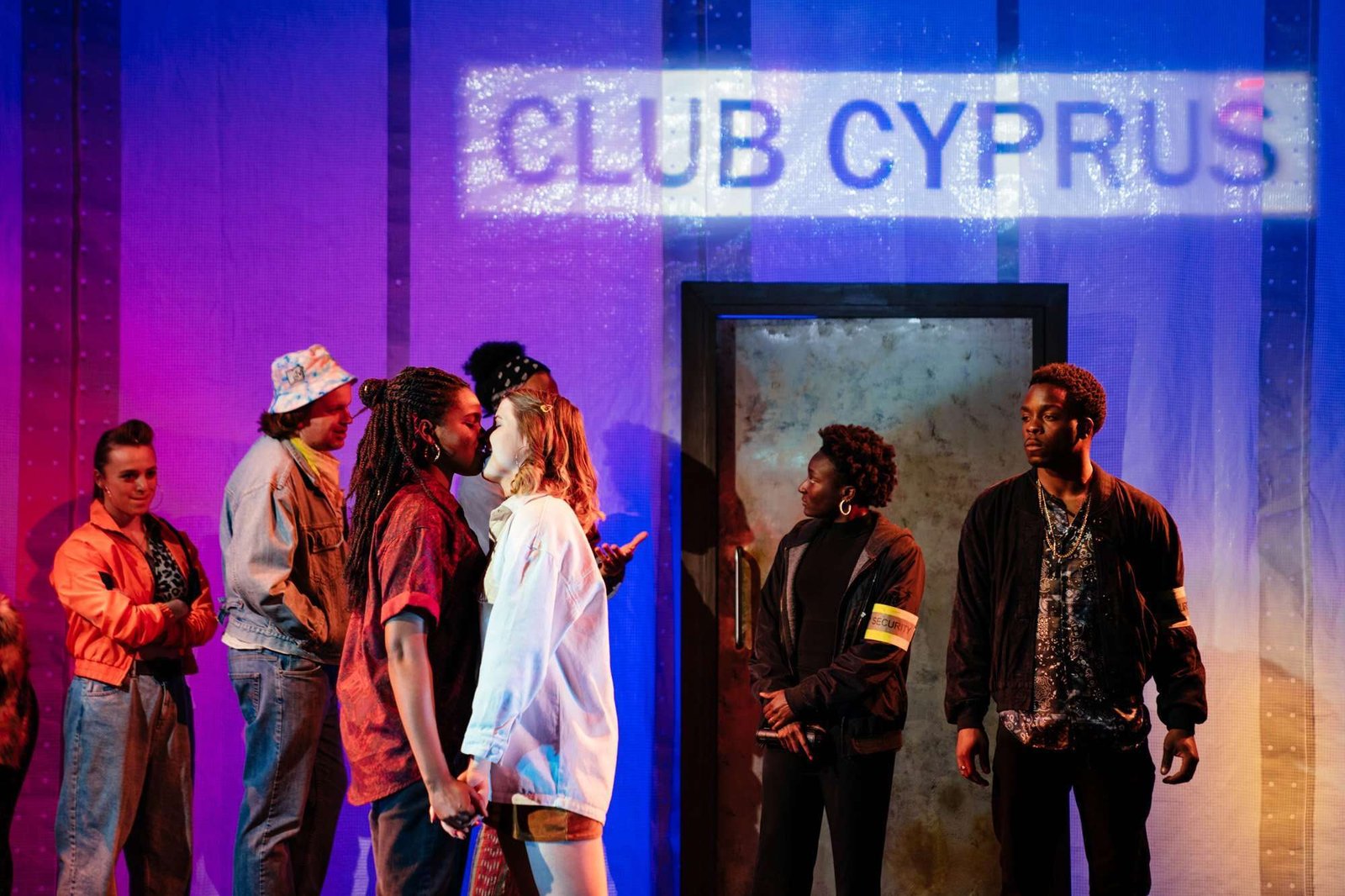
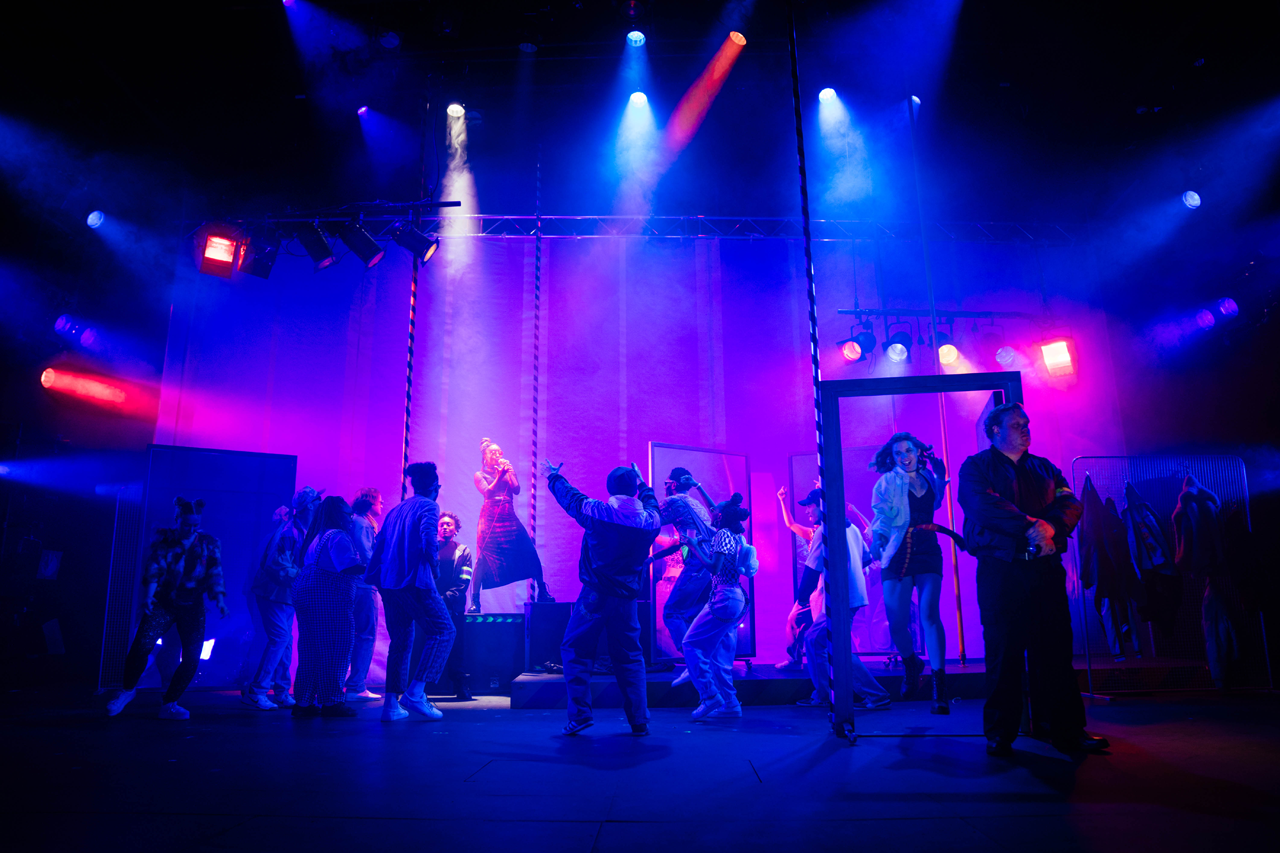
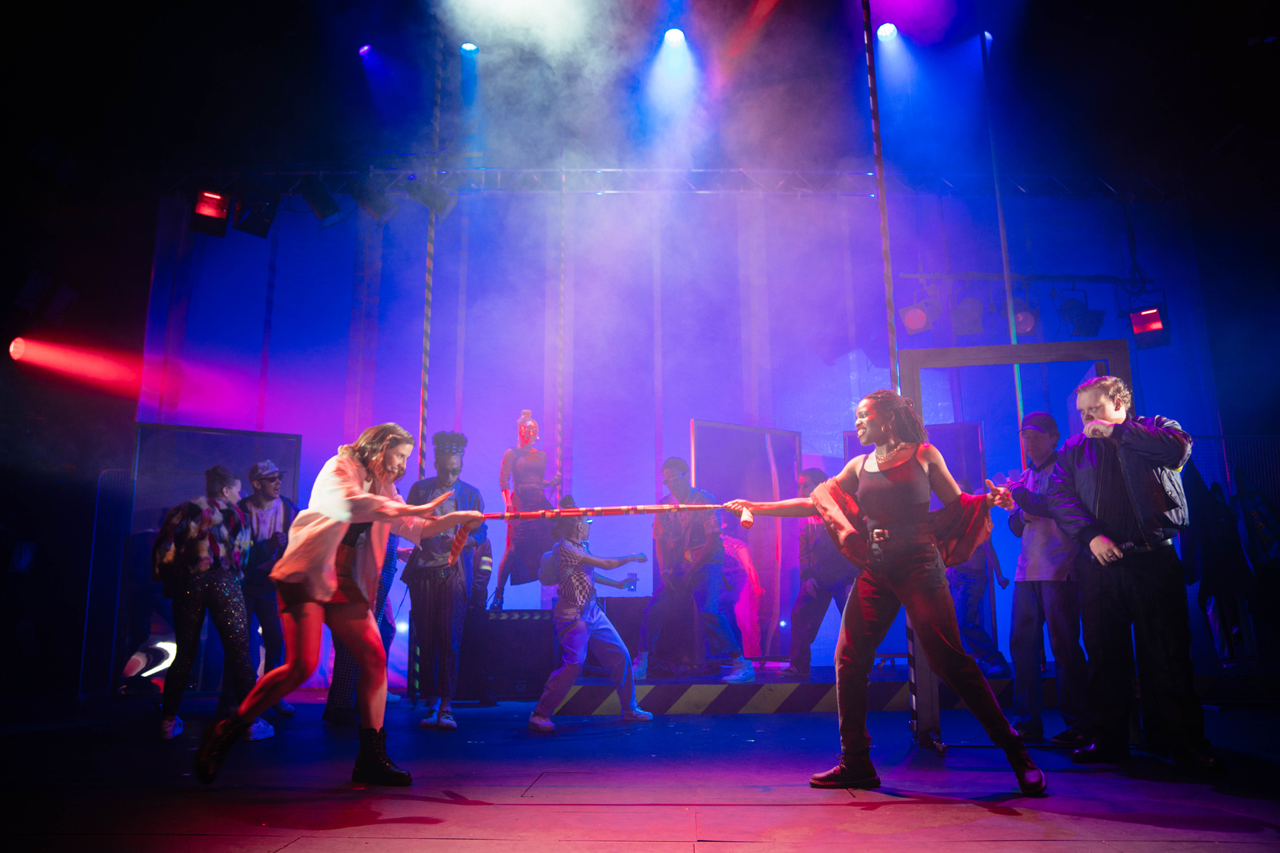
We’re in a nightclub or outside it. Screens are manually moved to change the space with a lot of play on shadows and light playing through the screens. Rennell Shaw’s sound design at times provides music to dance to. At others the dance is aurally so distant that all we hear is a menacing drum beat adding tension to the dialogue it sits beneath.

Did I say dialogue? It’s very clever. Benson has got one of Shakespeare’s longer tragedies down to a nifty 90 minutes without cutting anything important. Most of the words are Shakespeare’s but they’re often intercut with a modern phrase. Several times, for instant, she pops in the word “fu**ing” which really makes it sound as it these people are arguing in a 2021 Manchester night club.

Yes, we’ve seen a female Othello before but not very often so casting Francesca Amewudah-Rivers feels pretty fresh. She has all the right confident gravitas at the beginning and then – manipulated by Iago (Connor Crawford and repugnantly good in the role) – she falls apart very effectively as she is consumed first by jealousy and then by remorse.

Amongst a generally strong cast I was also especially impressed by Julia Kass as Emilia – at first agreeing to do what Iago tells her and then realising the horror that she has caused and explaining. Her control as she becomes more and more impassioned is both convincing and noteworthy. And Adeola Yemitan’s spikey movement work and singing is so charismatically fascinating that it is almost a distraction.

The other really distinctive feature about this production is the imaginative chorus work. Several actors are on the stage in the background as an ensemble much of the time. When, for example, Othello is deeply troubled they become the voices in her head.

This Othello is the most radically reimagined I’ve seem since I saw the one at Intermission Theatre several years ago. And it works – especially as we emerge from the pandemdic still trying to confront issues of racism and abuse. The topicality is remarkable. It was also a treat to go the NYT’s newly refurbished premises on the Holloway Road and experience its new onsite theatre.

LondonNational Youth TheatreNYTShakespearesocial distancingSusan ElkinTheatreYouth

The Comedy of Errors – Maltings Theatre, St Albans

Picture: Pavel Goneski

The Comedy of Errors continues at the Maltings Theatre, St Albans as part of the Roman Theatre Open Air Festival.

Star rating: three stars ★ ★ ★ ✩ ✩

Imagine one of Shakespeare’s crazier comedic romps set in a Greek karaoke bar and you have a good vehicle for a funny play with songs.

This is The Comedy of Errors as you’ve probably never seen it before: a lot of fun and inching towards musical theatre as we hop from Sinatra to Queen to Abba to ‘I Do Like to Be Beside the Seaside’ and more. The incongruity is part of the joke.

Nothwithstanding the worry of the distressed Egeon (Matthew Parker, who also directs) condemned to death for turning up to search for his lost family, this play is mainly a sit-com about two sets of identical twins separated in infancy and now the victims of a great deal of mistaken identity …

Read the rest of this review at Musical Theatre Review: https://musicaltheatrereview.com/the-comedy-of-errors-maltings-theatre-st-albans/

Forever Plaid continues at Upstairs at the Gatehouse, London until 27 June 2021.

Star rating: four stars ★ ★ ★ ★ ✩

Stewart Ross’ 1992 musical gives us four young men who met at high school somewhere in America in the 1950s. They form a part-time harmony group called Forever Plaid. En route to their first proper gig they are killed by a coach carrying a party of nuns on their way to a Beatles concert. That’s the back story.

Now in 2021, they are back from the dead, landed like aliens in what to them seems like a foreign country, surprised to find they can still sing and, of course, they have a show to do – if they can remember it.

So they don their tuxedos and plaid cummerbunds and get started. It’s a quirky, witty vehicle for what is effectively, a concert of 1950s music.

The four young actors are an impressive, immaculately choreographed (by Racky Plews) quartet. They sing beautifully with impeccable diction and near perfect intonation …

Read the rest of this review at Musical Theatre Review: https://musicaltheatrereview.com/forever-plaid-upstairs-at-the-gatehouse/