Press ESC or click the X to close this window

Maidstone Symphony Orchestra – 01 December 2018 (Susan Elkin reviews)

A slightly less populist concert than MSO often presents, we began with Kodaly’s Dances of Galanta. Brian Wright observed in his introduction that the concert’s three works all have folk themes and origins. That was very clear in the opener which the orchestra played, after a rather exposed shaky start, with rich vibrancy. The fast and furious string work and the flute solos were especially noteworthy.

Gordon Jacobs’s 1955 trombone concerto may not be a great work (somewhere between Eric Coates and Vaughan-Williams on an off day with an awful lot of predictable arpeggios) but it’s a rare treat to see the trombone take centre stage. It was also delightful to see the grown up Peter Moore back in Maidstone to play it. In 2008 he was the youngest ever winner of the BBC Young Musician of the Year and played with MSO soon after. Still looking barely old enough to have left school, Moore found lyrical clarity in every note during a thoughtful performance which demanded to be listened to very attentively.  And the Sarabande by Bach which he played as an encore was stunningly beautiful.

And so to a Mahler marathon. His long first symphony is very demanding and it was played here with unflagging energy. Personally I’ve always found the opening indecisive, disparate and wishy-washy with its cuckoo-ing woodwind and offstage brass but Wright held it together competently. There was some elegant playing in the second movement including nice string glissandi in the trio.

The third movement is, of course, one of Mahler’s best. Jasmine Otaki played the double bass solo – the memorable minor key Frere Jacques theme which dominates the movement – with real mystery. We heard MSO at its best here, as other instruments and sections gradually picked up the theme and intensified the texture. The contrasting Klezmer-like section led by the brass with percussive col legno from the violins was excellent too.

The final movement is momentously manic in nature and calls for much intensity. That is not to say it should let rip and in places this performance sounded less controlled than it needs to be although I really liked the grandiloquence achieved by the brass section.

It’s a symphony which batters its listeners and demands enormous stamina from its players. No wonder Brian Wright looked exhausted at the end.

http://www.larkreviews.co.uk/?cat=3

On a personal level this was a very much a “been-there-done-that” sort of concert. Mozart’s Haffner symphony was the very first whole symphony I played in public (Lewisham Philharmonic – never mind how long ago) and I hold it in great affection. And I did Beethoven 7 only last week with the South London Community Orchestra I now play second violin in. The intimate knowledge – including with the Beethoven being able to visualise the music in my head and knowing where the page turns come – certainly makes for a different listening experience.

In Ben Gernon’s interpretation of the Haffner – a succinct symphony – I admired his control of dynamics and lightness of touch in the opening movement, followed by an elegant andante, a wittily executed minuet and trioand a rousing presto taken at an impressive pace.

Then came the centrepiece: violinist Tamsin Wayley-Cohen and the Mozart K291, the 5th concerto known as the Turkish.  It’s one of those works which makes you smile at every fluent bar of Mozartian playfulness including the pianissimo solo entry in the first movement which Wayley-Cohen carefully underplayed on her mellow toned Stradivarius instrument. She had fun with the “Turkish” section leaning gleefully on exotic harmonies and she played the decorations in the finale with insouciance.

She’s an interesting musician to watch because she played this concerto as if it were chamber music, leaning in to the conductor and leader with lots of eye contact, her body angled away from the audience. She also often joins in with the orchestral sections – commendably un-diva like in her dramatic flowing white dress and silver heeled shoes. Then she stunned the audience with her flamboyant encore. I have absolutely no idea how you do double stopping and left hand pizzicato at the same time and her account of the second section of Kreisler’s Recitativo and Scherzo Caprice was dazzling.

And so to the delights of Beethoven’s glorious Seventh Symphony played here with all the repeats respected so it was a meaty rendering. Gernon, who works without a baton, kicked off at a very slow speed so that every note in the gentle rising scales between the big chords was clear. Then he shot off like a romantic era rocket when he reached the vivace all the way to that wonderful moment when the horn does its white water rafting blasts at the top of the texture just before the end of the movement – just one example of lovely work from principal horn at several points in this symphony.

Gernon’s allegretto was crisper and less self indulgent that some conductors and it felt refreshing as did the supple, agile dance he created in the presto while still allowing plenty of weight in the middle section with sustained notes and horn melodies. His fourth movement – very fast indeed – was powerful too because despite the speed every detail was attended too and there was some excellent trumpet playing – bags of the requisite brio.

I thought that a programme like this would pack the Dome to the gunwhales. Sadly it didn’t. Of course there were a lot of people there but there were also far too many empty seats. Come on, folks. Brighton Philharmonic needs big audiences to survive. And you missed a treat this time.

http://www.larkreviews.co.uk/?cat=3

A Christmas Carol
Charles Dickens’ classic story adapted and updated by Chickenshed
society/company: Chickenshed
performance date: 30 Nov 2018
venue: Chickenshed Theatre, Chase Side, Southgate, London N14 4PE
 
This imaginative show is Dickens as you’ve never seen it before.

Director/writer Lou Stein and composer Dave Carey have shifted it to the 1930s so that the story of Scrooge as an exploitative textile factory owner is set against the depression, campaigns for equal pay for women and rumblings of an impending war. And they manage to do all this while still retaining some of the most iconic lines and scenes in the original. It’s neat, clever and effective.

And because this is Chickenshed it’s ensemble, ensemble, ensemble with some talented adults (mostly former Chickenshed members who have stayed on as staff) glueing the production together. Each performance features 200 cast members with an emphasis on diversity and inclusivity. This is, after all, “Theatre changing lives”. I saw the “Blue rota” but there are also red, yellow and green rotas who appear on other nights. In total Stein and his colleagues are working with 800 performers on this show which is crazy but with supremely efficient organisation and discipline they make it work extraordinarily well

The advantage, of course, of having such huge numbers is that with skilled choreography (by a team of five) you can create some stunning scenes and tableaux – and, by golly, they do from the jolly dance scene in Mr Fezziwig’s to the darkly lit ghost scenes with actors dressed in William Fricker’s fabulous greenish grey chain-festooned rags. It also means you can create lots of “bit” parts so we hear lots of these performers singing just a solo verse or two. Of course they’re not professionals but they’re well trained and achieve, generally a high standard.

Carey’s enjoyable music – played live but out of sight from an over-stage gallery and led by him on keys – is firmly in period with lots of jazzy rhythms. Once or twice it feels as if we’re about to waltz off into Me and My Girl but all music is imitative to a greater or lesser extent.

Ashley Driver is a fine Scrooge: gruff, irascible, scowling outrageously unreasonable and then gradually softening as the visitations work their transformational magic. At one point, having stomped about crossly for a long time, he does a little dance of glee and it’s a lovely moment. Michael Bossisse, looking wonderful in white fur, is a vibrant Ghost of Christmas Present and Gemilla Shamruk sings beautifully as the Ghost of Christmas Past. I liked Paul Harris’s richly voiced Marley too.

This show is integrally signed which is always a joy to see. Belinda McGuirk is a wonderfully expressive signer and she’s often joined, or replaced, by other cast members sometimes from side stage and sometimes from within the action. I admire both the inclusivity and the way it’s so fluidly integrated so that the signing becomes an enjoyable part of the show in its own right.

Chickenshed triumphs yet again. And “A Merry Christmas to us all” as Tiny Tim puts it.

First published by Sardines: http://www.sardinesmagazine.co.uk/reviews/review.php?REVIEW-Chickenshed-A%20Christmas%20Carol&reviewsID=3414


★★★
by Anthony Neilson. Presented by Citric Acid Productions, in association with Arden Entertainment
society/company: Southwark Playhouse
performance date: 30 Nov 2018
venue: Southwark Playhouse, 77-85 Newington Causeway, London SE1 6BD

★★★

Dan Starkey, Douggie McMeekin and Unique Spencer. Photo: Darren Bell

Anthony Neilson’s 60-minute one-act play, first staged at The Read Room in 1995 is a clever idea for a seasonal play and it sits quite happily in the Southwark Playhouse configured in the round. It asks, in a light-hearted way, some quite significant questions about what Christmas is, why we feel about it as we do and about the complexity and messiness of relationships.

Gary (Douggie McMeekin) is running a mildly dodgy warehouse business when, on Christmas Eve, he catches what he takes to be a burglar (Dan Starkey). The intruder claims he’s a Christmas Elf and is certainly dressed as one. Incredulity, some of it quite funny, follows especially from Gary’s friend Simon (Michael Salami) and later from the prostitute Cherry, (Unique Spencer) clearly a regular caller. None of them believes a word of it really but, in their different ways, they are all unhappy people who’d really like some joy in their lives and, eventually, in a sense find it.

There’s some intelligent acting especially between McMeekin and Salami who spark well off each other and are visible listeners. Starkey’s Elf is a much more middle class type and the contrast adds a bit of dramatic friction. Spencer’s character is very angry and has plenty of presence although her accent is unconvincing.

On the whole, though, the pacing of the piece is a bit samey. There’s an awful lot of loud expletive-laden shouting and “attitude” which isn’t balanced by enough reflective discussion Yes, it’s naturalistic dialogue, but no one talks like this at such length because it would be so exhausting. It’s certainly wearing to listen to. When characters stop to think and desist from shouting and start thinking we see real sensitive vulnerability and the production needs a bit more of that.

Douggie McMeekin and Dan Starkey star in The Night Before Christmas at Southwark Playhouse. Photo: Darren Bell

 
 First published by Sardines: http://www.sardinesmagazine.co.uk/reviews/review.php?REVIEW-Southwark%20Playhouse-The%20Night%20Before%20Christmas%20-%20%E2%98%85%E2%98%85%E2%98%85&reviewsID=3413


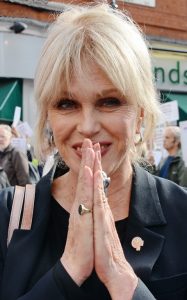
Dear Joanna (if I may)

You and I don’t have much in common, apart maybe, from a love of, and involvement with theatre. I don’t have your sexy voice, lovely figure or that infinitesimal something which seems to drive apparently level headed chaps bonkers.

But we are definitely at one when it comes to lavatories for women in theatres. They are often demeaningly appalling. There aren’t usually enough of them and the plumbing is frequently substandard which leads to blockages, failure to flush and … well we both know what it’s like, don’t we? Unlike the men who design and manage but never use them.

I’ve written about this so many times that other journos and theatre people often send me links and jokes about it … “Here’s one on theatre lavatories for Susan”.

So: warmest congratulations on your The Old Vic campaign (with Glenda Jackson and Bertie Carvel who presumably doesn’t frequent the ladies’ loos but is sympathetic) to double the number there. I gather that the theatre has launched a £100,000 public fundraising campaign to help it carry out major works which will include more lavatories for women. Hurrah and thank you.

What we need, of course, is plenty of properly plumbed roomy cubicles but for goodness sake don’t let anyone site wash hand basins and mirrors inside because it makes the queues even slower. Communal handwashing is much niftier.

But please don’t stop at The Old Vic, Joanna. What about Fortune Theatre which has, in my view, the worst theatre ladies’ toilets in London? And facilities are appalling at Ambassadors Theatre. Now that the deal for ownership of the latter to pass from Stephen Waley-Cohen to Cameron Macintosh has fallen through I worry even more about those lavatories because they are no longer likely to be on anyone’s priority list. Ladies’ loos aren’t much cop at the Vaudeville either. And I could go on. I won’t though because you know all this as well as I do.

Now, given all your aforementioned useful qualities, Joanna, you could get attention from lots of influential blokes and get this thing off the ground in a way that I can’t. How about a Joanna Lumley Theatre Loos Campaign? (JLTLC)? I’ll be your number one supporter.

Best wishes
Susan
Joanna_Lumley_2014
CREDIT See Li from London

20 November, St Michael’s Church, Highgate

This imaginatively programmed chamber concert opened and closed with substantial works (Beethoven String Trio in G Op 9 no 1 and Schubert Piano Quintet in A D.667 Op 114 ‘Trout’) and sandwiched other slighter – but interestingly varied – pieces in the middle. It meant that we heard seven talented musicians in a range of contexts including duets which showcased a great deal of pretty stunning virtuosity.

Kenneh-Mason, as we’re rapidly realising, can play anything and wow an audience with it. If he gave us a one octave G major scale he’d make it sing. His rendering, in this concert, of Bloch’s Prayer from Jewish Life (immaculately accompanied by Irina Botan) brought out all the mournfully, soulfully evocative minor key richness in the piece and I loved the way he leaned on that dramatic quarter tone moment just before the end.

He and Ashok Klouda had fun with the South American dance rhythms and that catchy refrain in Jose Elizondo’s Autumn in Buenos Aires for two cellos too – lots of smiling eye contact and evident pleasure both in music and in working together.

It’s also good, to hear a live performance of Mahler’s 1876  single movement A Minor piano quartet written while he was still a student. It’s an evocative piece, very familiar from radio but I don’t recall ever hearing it in concert before. It was played here with lots of youthful emotion exactly as the young Mahler probably intended.

The Beethoven trio, with which the concert opened  is, of course, a pretty little gem. I admired the handling of  incisive contrasts in dynamic and tempi, especially in the Allegro con Brio which were well supported by the acoustic in the cavernous Victorian space of St Michael’s Church. The concert was sold out and the church full to the rafters so all those bodies softened the echo rather well. Another high spot in the trio was the finely judged melodic weaving by the first violin (Alexander Sitkovetsky) in the Adagio Cantabile.

And so to the utter joy of the Trout quintet with Simon Callaghan on piano and the very charismatic Chi-chi Nwanoku reading her double bass part from an iPad and dancing her way communicatively though the music. I admired the apparently effortless, graceful work in the variations which comprise the  famous andantino – especially Alexander Sitovetsky on violin. This lovely performance was also graced by an exceptionally slick scherzo.

The gallery at St Michael’s is cursed by some of the most uncomfortable seating it has ever been my misfortune to spend time in. Fortunately the quality and exuberance of the music superseded it – mostly. How about some reserved ground floor seating for the press next time?

First published by Lark Reviews: http://www.larkreviews.co.uk/?p=4771

Plaid Tidings (Forever Plaid) – ★★★★
Produced by Bridge House Productions SE20
society/company: West End & Fringe (directory)
performance date: 26 Nov 2018
venue: Bridge House Theatre SE20, 2 High Street, Penge, London SE20 8RZ

★★★★

This tunefully jolly Christmas show presents four talented singer/actors – Kris Marc-Joseph, Laurie Denman, Alex Bloomer and Joshua Da Costa – who really know how to work well together in a small space. Stuart Ross’s play is billed as a ‘holiday sequel’ to his earlier Forever Plaid and features – mostly in short bursts and slick medleys – almost every Christmas song, carol or tune you can think of.

The Plaids are a close harmony group who died in a Pensylvania road crash in 1964. Now, for reasons they don’t quite understand, the celestial powers-that-be have sent them back to do one more show on earth. Cue for much interplay between the four of them and puzzlement over, for example, mobile phones and other 2018 issues.

Musically directed by versatile (good falsetto too) Laurie Denman on keyboard, the singing is splendid. Whether it’s Gregorian chant or Santa Baby these four sing beautifully together with almost every harmony accurately nuanced. There is a handbell sequence which is fun too (I wonder how long it took to rehearse?) and sometimes the quartet play percussion instruments as they sing.

Joshua Da Costa, who sings the bass parts with warmth, is especially impressive. Twice he started a number ‘cold’ and unaccompanied – but perfectly in tune as we can all hear when the accompaniment joins him. Alex Bloomer’s Sparky is a gentle, wide-eyed character in whom the actor finds plenty of feisty vulnerability. Kris Marc-Joseph brings lots of personality and charisma to the quartet especially in his well controlled solo number.

Director Guy Retallack clearly knows how to make the best of his modest but delightful SE20 (there’s always a Penge joke and this show is no exception) pub theatre space. The quartet dance, create formations and use the podium edge as well as making masses of eye contact with the very close audience. Retallack also ensures that we react to each man as an individual as well as part of the group.

The fresh originality of this show is a welcome antidote to seasonal theatrical saccharine and pantomimes.

 First published by Sardines: http://www.sardinesmagazine.co.uk/reviews/review.php?REVIEW-West%20End%20&%20Fringe-Plaid%20Tidings%20(Forever%20Plaid)%20-%20%E2%98%85%E2%98%85%E2%98%85%E2%98%85&reviewsID=3412


Cinderella – ★★★★
By Paul Hendy. Co-produced by Marlowe Theatre and Evolution Pantomimes.
society/company: Marlowe Theatre (professional) (directory)
performance date: 23 Nov 2018
venue: Marlowe Theatre, Canterbury
 
Photo: Pamela Raith

★★★★

My first 2018 pantomime, as always, sets a high standard for the rest to meet. Paul Hendy’s take on Cinderella glitters (often literally) with high production values and enough innovation to make it feel fresh without denting the traditional flavour.

This Cinders, for example (Cara Dudgeon) is a feisty feminist and there are a lot of quite funny stereotype-busting jokes in the first half hour or so. She fails to keep it up once she sights Oliver Watton’s Prince Charming but it doesn’t matter much in this context. Dudgeon, incidentally has a fine singing voice and is a vibrantly accomplished dancer. We also get a pair of exquisitely cute white Shetland ponies to pull the carriage, a stunning aerial turn by Duo Fusion (Connor Byrne and Tiffany Gaine) and excellently choreographed (Jono Kitchens) dancing by a team of eight professionals with a small group of local children. Then there’s the very talented child, said in the script to be aged eight, who chips in with terrific flair and aplomb. She is not credited by name in the programme so presumably there is one who can carry this off in each of the three rotating children’s teams.

The best thing of all in this show is the skill with which Ben Roddy and Lloyd Hollett, both Marlowe regulars who are known and loved by the audience, work together as the ugly sisters. They simper, mince, flirt with the audience and play off each other perfectly – two men who’ve worked together many times before and know exactly how to nuance every word and every toss of the head. Watching them is like a panto dame-ing masterclass.

Phil Gallagher is a reliable Buttons with all the right insouciance tempered with a bit of pathos and Harry Reid’s gor-blimey Dandini from Gravesend is good value. The local jokes, as always at the Marlowe, come thick and fast as the script pokes gentle fun at most of the other local towns.

There are, however, a few things in this show which are not quite right. It is a directorial misjudgement to run the aerial sequence while Dudgeon and Watton are singing. Both pairs deserve full focus. Neither should act as an accompaniment to the other.

Chris Wong’s band does its usual excellent job. He is a breathtaking guitarist so when he stands on the main stage to play a sort of showpiece cadenza it should be for more than a few bars. As it is there is barely time to register what he is doing before he is gone – an opportunity thrown away. And I won’t dwell on the weak singing by several cast members because, in the context of this high octane show it didn’t distract much. Suffice it to say they were evidently cast for their other skills.

Generally though this is a panto which zips pacily along managing to be wittily subversive without ever resorting to smut and that makes it a bit of a treat.

Photo: Pamela Raith


First published by Sardines: http://www.sardinesmagazine.co.uk/reviews/review.php?REVIEW-Marlowe%20Theatre%20(professional)-Cinderella%20-%20%E2%98%85%E2%98%85%E2%98%85%E2%98%85&reviewsID=3409