Press ESC or click the X to close this window

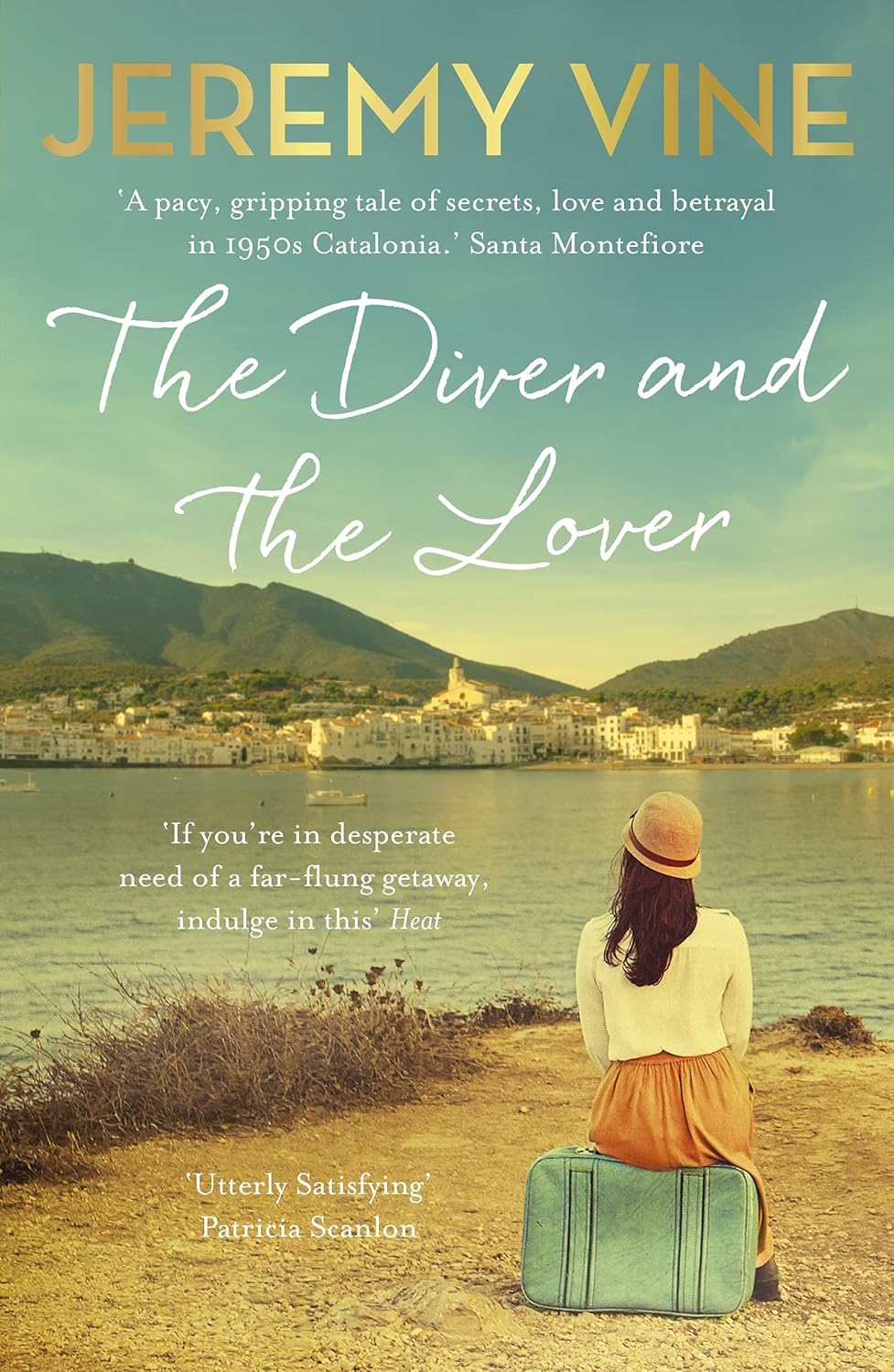
Susan’s Bookshelves: The Secrets of Wishtide by Kate Saunders

I’m delighted to have met Mrs Laetita  “Letty” Rodd having stumbled upon her by chance. Sadly our acquaintanceship will be shortlived bacause her creator, Kate Saunders (lots of children’s and young adult titles), died in 2023 aged only 62. So there are only three titles in the series.

It’s 1850. Mrs Rodd, who narrates, is the impoverished widow of a clergyman. We feel we know her late husband, Matt, because she thinks about him a lot and theirs was a very happy marriage. Now living simply in Hampstead with her landlady and friend Mrs Mary Bentley (wonderful character) she works occasionally as a sleuth for her lawyer brother, Fred. Mrs Rodd, you see, has Marple-esque powers of perception and Mrs B, who stays at home, is a terrific contributor of sensible suggestions, good food and obliging grown up children. They make a formidable pair.

Now Fred – tiresome wife, lots of children and shared happy childhood memories with Letty – has a case involving a proposed unsuitable marriage between wealthy young Charles Calderstone and Helen Orme.  And he wants his sister to go to Wishtide, a grand house in Lincolnshire as governess to Sir James Calderstone’s daughters. This she does, travelling by smutty train, although the disguise doesn’t hold up for long. She meets Helen, and her sister Winifred, who are living nearby and eventually hears the story which renders the marriage out of the question.

What follows at this point is a homage to David Copperfield (as Saunders acknowledges at the end). I recognised it instantly because Little Emily features in a current project of my own so I’ve thought a lot about her lately.  Poor Helen, like Emily has succumbed to a glamorous but unscrupulous cad and wrecked her marriage chances for ever. But someone, apparently, needs to shut her up.

Then – no spoilers – we are suddenly in whodunnit country. There are some pretty gruesome deaths and the culprit must be found. The intrepid Mrs Rodd isn’t fazed by dead bodies because she has, in her years as a clergy wife, had to lay so many out.

Eventually, of course, she susses out the truth after a few red herrings. I like Mrs Rodd a lot. She’s feisty and often funny. And Saunders is good at period detail while also making all these people seem a lot more human than they sometimes are in mid nineteenth century novels. I look forward to the other two titles which followed The Secrets of Wishtide (2016) in 2019 and 2021.

Next week on Susan’s Bookshelves: The Collected Works of AJ Fikry by Gabrielle Zevin

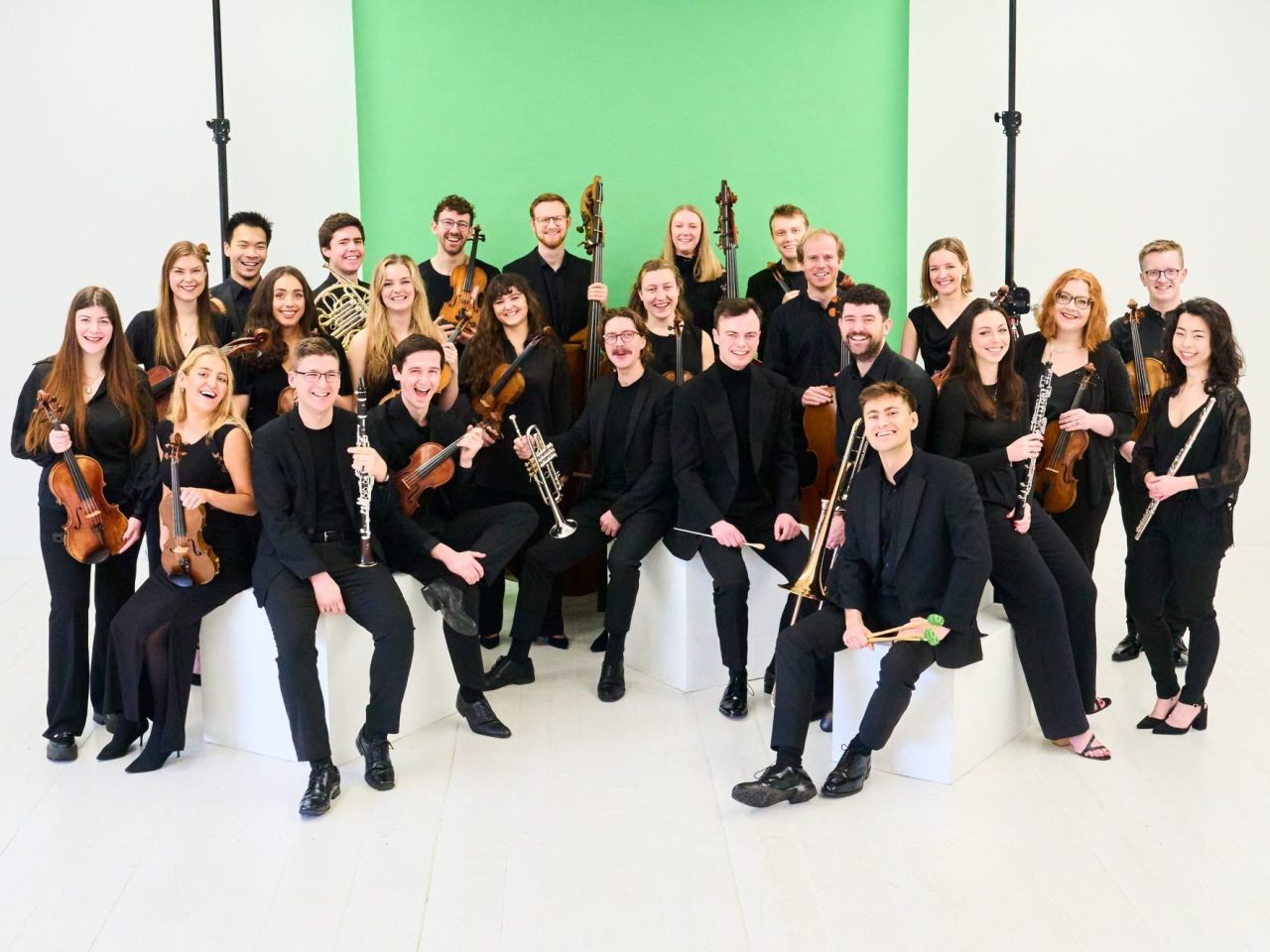
Brighton Philharmonic Orchestra

Conductor: Joanna MacGregor

Pianist: Junyan Chen

Brighton Dome, 28 September 2025

Entitled “A New World” the opening concert of BPO’s new season featured three works by 20th century composers, all delivered with the orchestra’s usual panache. MacGregor beats time firmly but expressively with commendable clarity and complete lack of histrionics. She must be good to work with.

First up was the notoriously challenging Rachmanoff Piano Concerto no 3 with the charismatic, gloriously talented Junyan Chen at the piano. You can see her breathing and feeling every note of the music even when she’s not playing. And she made the  first movement cadenza sound like a series of passionate but effortless improvisations until the flute, oboe and clarinet solos lead to the tender conclusion. The middle movement brought lush lyricism interspersed with drama and jazzy insouciance – and a great deal of palpable, careful concentration in the orchestra because, although it has gone mainstream in recent years, this concerto is still less familiar than the composer’s second one. As we segued into the finale the chemistry between MacGregor and Chen shone though as, between them, they balanced the grandiloquent piano passages with the woodwind entries which included some lovely oboe work. The many dramatic contrasts in the piece were highlighted right through to the high octane final pages.

Chen concluded her fine performance by whisking us off to a totally different sound world in her encore: a short Gershwin arrangement.

After the interval came the always unsettling La Valse which Ravel began before the 1914/18 war and finished after it so it connotes the collapse of the old Viennese world. In this performance MacGregor and the BPO stressed the sense of a musical way of life  breaking down even as we admired all those virtuosic solo parts – especially notable work from bass trombone and percussion section – and the well managed rubato.

The final work was Bartok’s Suite from The Miraculous Mandarin which tells a  story very descriptively just as, for example, Paul Dukas’s The Sorcerer’s Apprentice does.  Famously, the ballet was performed only once in Bartok’s lifetime because the critics slated it. But he salvaged a narrative suite from the score. BPO made the busy beginning – not a million miles from Gershwin’s An American in Paris – sound vibrant. Other high spots included the clarinet solo which depicts an old man lured in to be robbed, followed by off beat col legno from the strings and snappy trombone work as the crime is committed.

Generally speaking I loathe talks by conductors at concerts. Anyone who wishes can read the programme notes. Otherwise let the music do the talking. Joanna MacGregor, however, is exceptionally good at it. So I’ll forgive her.

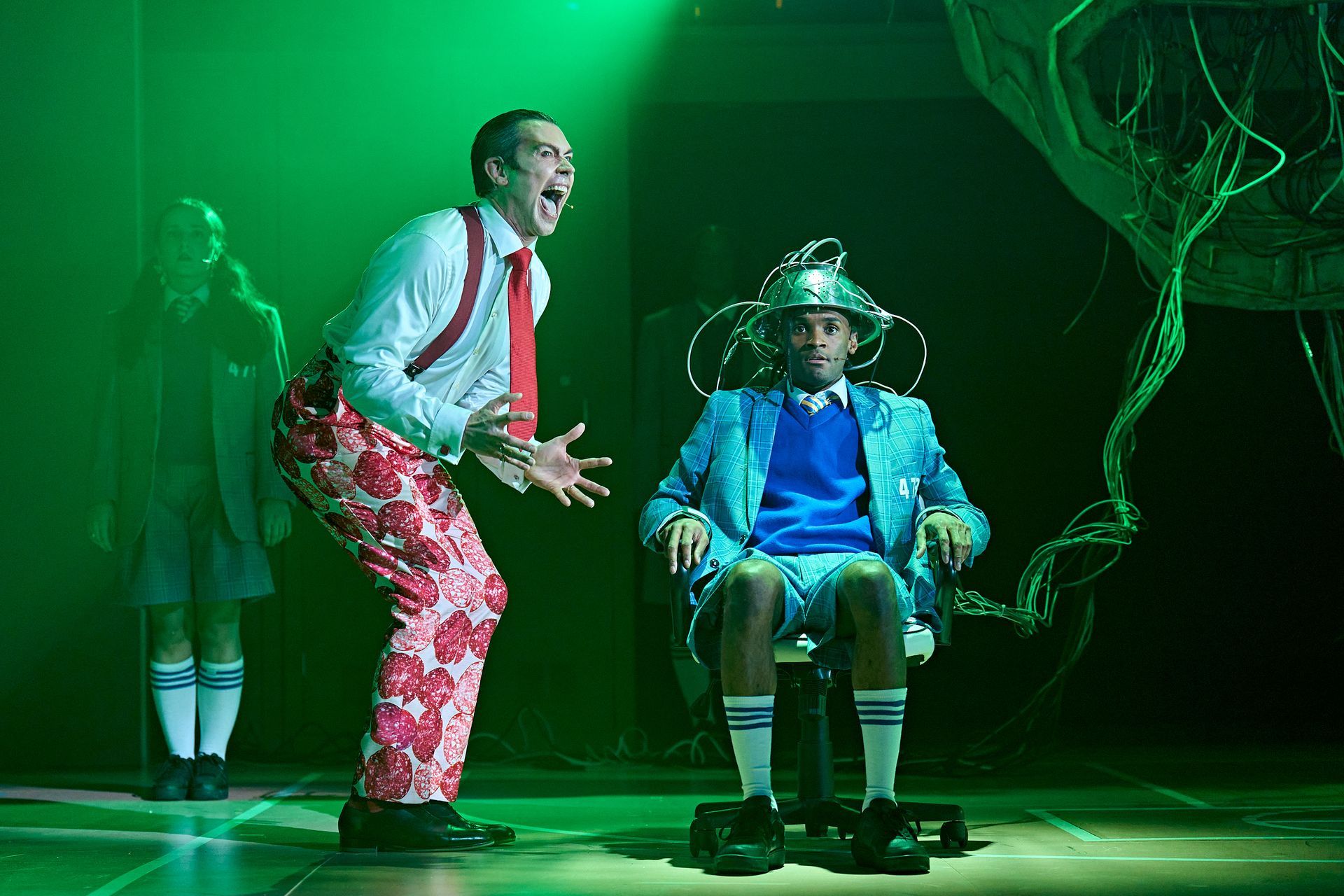
Lord of the Flies

Adapted from William Golding by Nigel Williams

Directed by Anthony Lau

Chichester Festival Theatre


Star rating: 3.5


Lord of the Flies is about much more than a group of boys from different backgrounds, air-wrecked on a remote island, tying to sort themselves out. I have always read William Golding’s 1954 novel as an allegory for a post-war world in chaos. As such it touches on huge issues such as democracy, leadership, religion, fear, power and division of nations.

Nigel Williams’s adaptation is more visceral and disturbing than any dramatisation I’ve seen before which is, perhaps, appropriate for these troubled times. 72 years after the novel was written, things are arguably even worse today than they were then.

Georgia Lowe’s dramatic design gives us the unadorned stage in all its massive depth:  a cavernous thing of bare scaffolds and gantries. And there’s no attempt at realism. The conch, a symbol of democracy which has to be held in order to speak – at least until democracy breaks down – is here represented by a microphone and there’s an upright piano on stage along with several prop trunks.

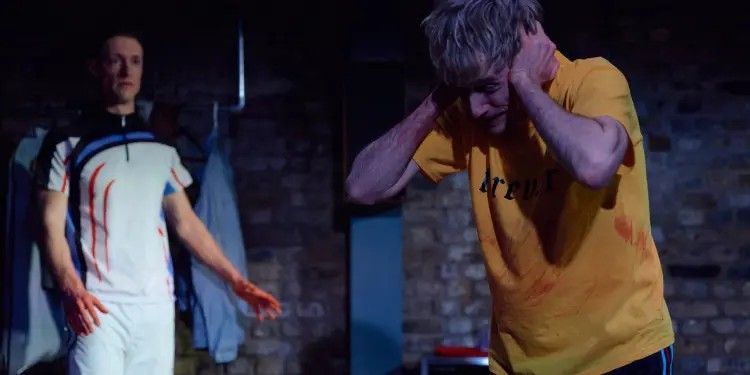
Director Anthony Lau makes good use of silences, very loud explosions and sudden house lights – there’s nothing predictable about this show. And he goes to town for the end of the first half as the boys run amok and kill one of their number who is somehow conflated with the pig.  We get strobe lighting, a lot of chanting, mounting tension and so much blood that it takes the stage crew the whole interval to clean up the mess. If there’s a point to a 1950s pop song being played on piano and sung at this moment, I’m afraid it passed me by. Similarly why do we get recordings of “Shake, Rattle and Roll”, “Blue Moon” and the like as we take our seats?

It’s a young, all male cast and there’s much strength here.  Sheyi Cole commands the stage as the troubled, decent Ralph struggling with unlooked for responsibility. Alfie Jallow delights as Piggy, the boy who comes from a much humbler family and represents the voice of reason and commonsense. And Tucker St Ivany is terrific as Jack,  who leads the breakaway group and goes native. St Ivany has unusually expressive feet.

Sound design by Giles Thomas adds to the menacing atmosphere by providing near continuous, unsettling music under the dialogue. Moreover, it’s effective when it stops suddenly in one of the production’s silent moments.

It’s a nice touch to have Jallow deliver a send-up trigger warning at the beginning and I liked the way Lau deals with the arrival of the British Navy at the end – but I won’t give it away here.

It’s interesting theatre and an imaginative reworking of the novel although I’m not totally convinced by some of its departures. The model pig is far too jokey for something so serious, for example. and the ripping up of the floor in the battle is a bit daft. In places it feels as if everyone, including Lau, is trying slightly too hard.

Photographs: Manuel Harlan

Writer: Ava Pickett

Director: Christopher Haydon

Take tissues to mop the tears of laughter.  This show succeeds in spades as long as you take it on its own terms: Ava Pickett’s very funny comedy is loosely based on, or inspired by, an idea by Jane Austen rather than being adapted from her 1815 novel, whatever the programme claims.

Thus, we’re in a gaudy, loud, flashy stereotyped Essex where Emma (Amelia Kenworthy – terrific) has just returned from Oxford. She’s very bright but has failed her history degree because she didn’t bother to turn up for the exams. She keeps this to herself, and situation comedy swirls around because everyone assumes she’s got a First, although no one else in the room has been to university.

All the young people have been to school together, and there’s a lot of shared history and bantering. Emma’s friend Harriet (Sofia Oxenham) works in the local co-op. George Knightley (Kit Young – delightful) is a builder, and the plot is centred around the imminent, vulgar wedding of Isabella Woodhouse (Jessica Brindle – spot on) to John Knightley (Adrian Richards – good fun).

Two hours and thirty-five minutes of misunderstanding and subterfuge follow as self-deluding Emma tries to manipulate everyone with fake news and misguided plans. Eventually, of course, it all comes right, “Anyone would think we were in a period drama”, quips Lucy Benjamin as Mrs Bates, raucously towards the end.

Nigel Lindsay is a joy to watch as Mr Woodhouse. He is one of our most versatile actors, and although he can do serious (The Lehman Trilogy, for example), he really excels at these cor blimey, wheeler-dealer roles. His Mr Woodhouse owns a comfortable home, sounds like an Essex man and is making good money buying and selling dubious goods. Lindsay drops every hilarious line with panache, although there’s a warm and relatively serious scene with Kenworthy in the second half, which is surprisingly moving.

And in Ava Pickett’s crazy take on Emma, widowed Mr Woodhouse has a thing going with garrulous, gravelly Mrs Bates (Lucy Benjamin), who is a beautician. She is brassily coarse, forthright, and her drunk scene is terrific. There are misunderstandings between them, too, as Emma secretly tries to abort the house sale that would enable them to live together.

All the cast of nine do a fine job, although the shape of the Rose makes for some minor audibility problems from the side of the auditorium when an actor is facing away. A particular shout-out, though, for Sofia Oxenham, whose stage debut this show is. Her Harriet is initially gullible, tearful, immature – and she plays it perfectly. Then, eventually, she begins to grow up and takes charge of her own life, and it’s convincing. She, too, delivers the comedy with impeccable timing.

Lily Arnold’s set is a self-parodying homage to the traditional drawing room comedy. We’re in Mr Woodhouse’s main room, at the back of which is a diagonal staircase leading to a first-floor balcony. There are six doors, which means much speedy dashing in and out to further the confusion, as in a Brian Rix farce. It worked then, and it works now in this happy, slick show.

Runs until 11 October 2025:

The Reviews Hub Star Rating: 4 stars

When I was an A level geography student, our inspiring teacher, Miss Diana Raine, would talk seriously about the lives of rivers. She taught us that when they rise they’re youthful and bubbly in narrow fissures and valleys. Then they become staidly middle aged as they meander across flood plains.  When they finally slow to flow into the sea they have reached stately old age. I had long since dismissed this as a fanciful bit of personification, albeit a useful way of explaining the changing nature of rivers to young people.

Then I read Robert Macfarlane’s moving, inspiring book, published earlier this year. I now realise that Miss Raine had a point. Rivers are a life force and we kill them at our global peril as we allow heavy industry to build massive damns, pollute the water and ride roughshod over communities and habitats. They are alive. They have what Macfarlane calls “animacy” which is not, of course, the same as sentience.  Rivers are an integral part of nature.  Directly or indirectly all other life is woven into a tight web of interdependence with rivers.  And that’s why there are now movements all over the world fighting hard, and in some cases succeeding, to establish the rights of rivers (and forests and mountains). They should, indeed they must, have legally established rights – like human rights – to ensure that they are not destroyed. Macfarlane gives them pronouns to stress this. Rivers, he argues, deserve “who” rather than “which”. He calls it the grammar of animacy.

Macfarlane’s compelling book falls roughly into three sections – a trip to the cloud forests of Ecuador, another to South East India and a third to Quebec. In each he meets local people and takes part in expeditions in order to gather information. He marvels, experiences, wonders and joins the struggle against further destructive industrialisation. The stories of the people he works with are warmly fascinating. Guiliana for example (whom I’ve “met” before, courtesy of Melvyn Sheldrake’s fine book Entangled) is a mycologist whose father has just died and somehow she finds closure in the high peaks of Ecuador as she finds rare fungi through an inexplicable sixth sense. Then there’s Yuvan in South India who has come through an appalling, abusive childhood to become a knowledgeable, passionate, beloved teacher. I loved the account of Macfarlane accompanying him and his students on a school trip. Wayne whose carapace isn’t easy to penetrate,  joins the author on the hazardous kayak trip in Northern Canada (with three experts)  and he’s a bundle of complexities. And then there’s water – magical, life giving, beautiful, bubbling, calm, sunlit, turbulent or terrifying. Macfarlane compares the Canadian river he’s following to the sea with the cataract of Lodore and quotes Coleridge extensively (although it was Robert Southey who wrote the more famous poem which is in many school anthologies).

In my teens and twenties I worshipped at the shrine of Gerald Durrell for his ability to bring far-flung places to life. Re-reading The Bafut Beagles recently I found I  hated it because it now feels racist, colonialist and disrespectful of wildlife. In places though Macfarlane’s perfectly crafted prose reminds me of Durrell at his best. He describes a paw print in Ecuador on a heap of fresh dung as “cookie-cutter crisp”, the River Yamuna in India is “mintcake-white” and I love the swallows who “sit like musical notes on the staves of telephone wires.”

In between the trips Macfarlane talks about his own local river and its source near his home in Cambridge. He visits thoughtfully with his children, especially the youngest, Will, who’s only ten and already learning about nature, the environment and life’s rich complexity. The final section of the book is arguably fanciful, sentimental even, but it makes a powerful point about safeguarding nature because it will outlast us all.

While I was reading this suprisingly spiritual book I spent a happy weekend with my cousin and her husband in East Sussex where they live. We went to Cuckmere Haven and walked from the car park down to the river estuary – the only undeveloped one in the south of England. The last time I looked at it properly was, oddly enough, on a field trip with Miss Raine.  We stood for several minutes gazing at the Cuckmere who [sic] flows energetically, neatly but determinedly and full of life into the sea a few yards away where it creates whorls and cross currents. “Well?” I said to my companions whom I’d been telling about my current reading. “Is a river alive?” After a moment’s thought, still looking at the Cuckmere, they answered “Yes”. Thank you, Mr Macfarlane. Reading your book was like being given new glasses. I see the world differently now.

Next week on Susan’s Bookshelves: The Secrets of Wishtide by Kate Saunders

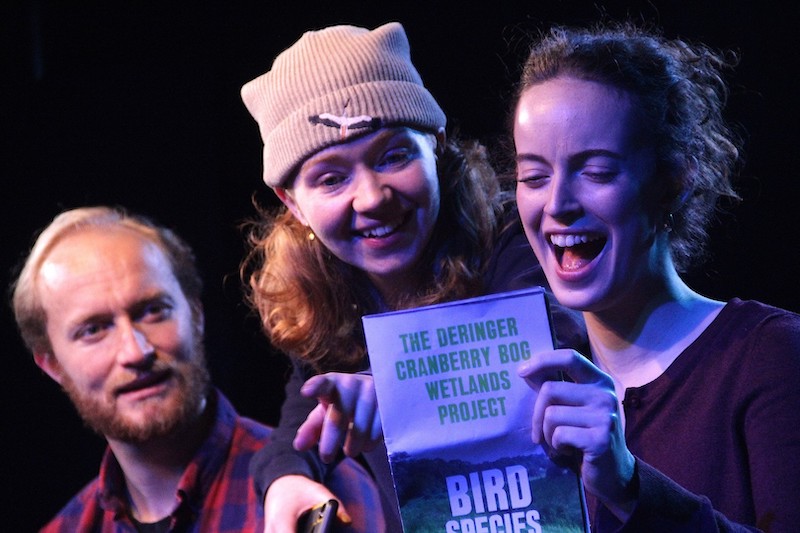
English Kings Killing Foreigners

Nina Bowers and Philip Arditti

Soho Theatre


Star rating: 3


Written and performed by Nina Bowers and Philip Arditti, this show is pleasingly original and has as many layers as an apple strudel although there’s nothing sweet about it. At one level it’s a critique of Henry V. At another it’s about a friendship between two actors both of whom see themselves as outsiders. It also explores immigration, colonialism and xenophobia. And it’s pretty funny. They pack a lot into 75 minutes.

Nina and Phil (they use their real names in order to shuffle the layers still further) meet outside the rehearsal room on the first day. He is to be Chorus while she is third soldier. They’re late and they can’t get in so there’s a lot of sparring and bantering. The scene in which he tries to teach her everything he learned at RADA is funny and Nina role-playing the director while Phil works on the Act 1 Chorus is well observed. Finally there’s some emergency recasting and they do the play of which we see fragments with a lot of asides.

So is Henry V a zenophobic play? Nina – mixed race and queer – argues that she does the St Crispin speech for her ancestors because they own it. Phil tries to sabotage her performance and we get a lot of contrary views about entitlement and possession. It’s effectively a deconstruction of the play for our times which manages to be both witty and thoughtful.

There’s a lot of theatrical in-house humour. The audition scene  goes down well, as does the whole daftness of some directors. This Henry V is to be set in a Kebab shop in which the counter is swathed in St George flags. It’s the sort of humour which goes down very well on press night when most of the audience have theatre connections. I’m not so sure it would work quite so well with a less attuned audience. And the warm up prologue in which they pretend to audition for the Soho Theatre audience doesn’t add much.

Writer: Oscar Wilde

Adaptor and director: Cecilia Thoden van Velzen

Star rating: 3.5

This play is a theatrical curiosity. It was Oscar Wilde’s first play, first staged in 1883, when it flopped. This is the first London revival.

It tells the story of Vera Sabouroff, who leads the Nihilists to the murder of the Tsar, Ivan, initially because she is incensed at the cruel imprisonment of her brother. It is loosely based on the life of Vera Zasulich (1849-1919), although the play is set earlier.

Wilde is trying to interrogate the nature of democracy in conflict with totalitarianism, which is, of course, as topical now as it was 142 years ago. And he was adamant that, political cynicism notwithstanding, this is a serious play and not a comedy, although there are some witty Wildean aphorisms in this text. And “I’d not intended to die” as the Prime Minister’s last words feels more like panto than tragedy.

The language style is peculiar too, although it’s not clear whether this is down to Wilde or to Cecilia Thoden van Velzen’s adaptation. It rattles along in modern English, interspersed with awkward Elizabethan borrowings such as “Methinks…”, “Wherein are they different from us?”, “You shall not escape vengeance” or “I loved him not”.

Ruth Varela’s simple but effective set consists of five white triangular screens moved into various positions and configurations as walls or towers. When George Airey (very good), as the new Tsar, produces a white crown and offers it to Vera (Natasha Culzac), with whom he has complicated history, the shape mirrors the set. It’s ingenious cross-referencing. All weapons are made of white paper, too.

The best thing about this show is the quality of the acting. All seven actors are strong, with especially noteworthy work from Jonathan Hansler as the autocratic Tsar who is sick, stumbling, trembling and ruthless.  Natasha Culzac brings steely determination to Vera, and Finn Samuels is a talented multi-roler. Most of the cast have to play more than one part, which is sometimes momentarily confusing, and there are minor ensemble roles, all done quite neatly.

At 85 minutes without interval, this take on Vera; Or, the Nihilists is quite gripping theatre, not least because it’s such a novelty that few audience members know where it’s going, so there’s suspense. And it just about stops short of being too wordy. It gains little, however, from a voiceover to introduce scenes and certainly doesn’t need a mini lecture about Oscar Wilde at the end.

First published by The Reviews Hub https://www.thereviewshub.com/vera-or-the-nihilists-jack-studio-london/

The Full English

Written and Performed by Melanie Branton

Barons Court Theatre


Star rating 2.5


This account of the development of the English Language is an animated lecture rather than a piece of theatre. Melanie Branton, a lively and clever poet, takes the audience on a whistle-stop tour which starts with the Celts and ends with Covid.

She’s a former English teacher and would, I think, have been inspirationally enthusiastic in the classroom but sadly her acting skills are not great. For nearly two hours we listen to her speaking too fast, often stumbling over words, nodding her head forcefully and same-ily sawing the air for emphasis. And it wears pretty thin.

The poems she incorporates are fun, though, from the opener in which she uses as many of her favourite words as she can through to the final one which works in many words and phrases which have come into common usage in the last ten years. There’s a poem rooted in Covid, making the point that some of the vocabulary has already been and gone. Remember when we were all talking about “lateral flow”? American English, she contends, was deliberately steered to be different from British English and treats us to an illustrative poem. Along the way we also get Robert Lowth who wrote the first prescriptive grammar book and William Caxton, on whom Branton tells us she has a crush, because he established the first English printing press with moveable type.

Well, I’m a former English teacher too and I used to teach a lot of this stuff so as far as I was concerned most of it it was pretty familiar territory. I didn’t know, however, that the Chinese invented printing in the 9th century and had moveable type by the 11th so they were well ahead. Moreover the Muslims had highly developed knowledge of science and mathematics which is why most of the vocabulary (zero, algebra etc) is derived form Arabic. We are also lectured about the great vowel shift, the shame of colonialism and told that the Normans were men of the North (that is Vikings) rather than French – among many other things at high speed.

I was surprised, though that Branton barely mentions Shakespeare and ignores the King James Bible, both of which had a major effect on the evolution of the English language. So, in recent years, has immigration and that doesn’t feature in this show either. Wherever people come from they bring words which find their way into the melting pot of English.

It’s mildly entertaining and faultlessly informative but I’d hesitate to call it theatre. It is, however, a commendably original idea.  The childish audience participation (shouting out when she puts on a Viking Helmet, having to answer questions and more) makes it feel like Horrible Histories  spliced with pantomime and did nothing for me.

Photo credit: Lidia Crisafulli