Press ESC or click the X to close this window

Susan’s Bookshelves: Tricked by the Kippers’ Knickers by Dick Dixon and Reine Mazoyer

I met Dick Dixon at interval drinks for the Great and the Good (not sure which I am) at a recent Brighton Philharmonic concert which I was reviewing. Instead of “Have you come far?” his opening gambit was “Are you interested in books?” And that, of course, hooked me instantly.

We chatted for a while, swapped business cards and the next day I looked at his website (www.dick-dixon.com). Then I ordered his latest book. His claimed genre is humorous poetry although as soon as began to read I noticed that, of course, there’s a wistful undertow in many of them. “The Witching Hour” for example is a sardonic reflection on the process of dying and, while amusing in concept, is quite thoughtful. And “Borrowed Time” is about grief and regret, movingly done.

He uses a range of verse forms and rhyme schemes – some of the latter are sometimes a bit forced but generally it flows effortlessly especially when he’s in Hilaire Belloc mode. I admired “Cousin Prue’s Lament” which comes in six-line stanzas with a technically accomplished ABCCCB rhyme scheme.

And sometimes his writing gleams. I’ll forgive the anti-vegetarian stance of “Bone Cuisine” because he can come up with “Do you harbour inner fires / That stimulate your wild desires / To hoover up pink pork and ham  / Fat duck and chicken, shanks of lamb?” Or take “What’s your poison?” in which we’re invited to get “frisky with whisky” or “with sherry make merry.” There’s a hint of Pam Ayres here spliced with, say, a bit of John Betjeman.

I liked “A Mistaken Identity” which is about Helen of Troy and the poet’s search for her. It ends with a pun so groan-worthy that it’s hilarious. “Lazy Susan” (of course it caught my eye) celebrates the whizzy cake stands which are named for people like me. The poem “Appraisal” is effectively an ode to an apple. And as an English teacher how could I not like “Modern Parlance” which wittily hooks together all those ghastly, meaningless expression now favoured by most vernacular speakers  and language manglers– innit?

Moreover this jolly book is sumptuosly and liberally illustrated by French artist, Reine Mazoyer.  Every one of her full page, brightly coloured interpretations is arresting but I liked her koalas the best – as Dixon reflects on their strange diet or eucalyptus leaves which would poison human beings and other mammals.

Yes, Dick, I AM interested in books. They are the main driver in my life, actually. Witness this eclectic weekly blog now well into its fifth year and my 2023 book  All Booked Up which details my personal reading journey and celebrates everything bookish.

Next week on Susan’s Bookshelves: The Choice by Michael Arditti

Brighton Philharmonic Orchestra

Conductor: Alice Farnham

Violin: Elena Urioste

Brighton Dome, 19 October 2025


Entitled “The Romantics” this concert presented two works written within in a few years of each other in the early twentieth century: the final flowering of romanticism with modernist twists.

Despite its early success Samuel Coleridge-Taylor’s violin concerto has long since ceased to be mainstream repertoire. Enter Elena Urioste who champions it enthusiastically. After the decisive opening orchestral statements she sailed into the complexities of the first movement right through to the mysterious, captitvating cadenza played over a sustained timp roll. Like all good soloists she makes it look effortless as well as energetic. The middle movement is gently attractive and played with warmth by Urioste, in her bright floral dress, with a stunning harmonic at the end. And the many moods of the last movement – Elgar meets Dvorak – were nicely nailed.

Urioste’s witty, poignant, encore: variations on “Somewhere Over the Rainbow” then came as a miniature delight.

Throughout this concert I was struck by Alice Farnham’s conducting style. It’s big-scale but business like with clear attention to beating time. It’s also lively: at times both her feet leave the ground. And there’s a clear rapport between her and the orchestra’s charismatic leader, Ruth Rogers.

Now I have to admit that most Mahler is not quite to my taste. In general I find it too fulsomely self-indulgent. This, however, was as good an account of the gruelling fifth symphony as I’ve ever heard. I do wish, however, that it hadn’t been populistically advertised as the “Death in Venice” symphony. Yes, the famous fourth movement Adagietto, scored for strings with harp, is stunningly beautiful but it works much better played in context, after the third movement’s troubled waltz as here, than when it’s extracted or cheapened.  Alice Farnham allowed it to emerge like the mist clearing from a shimmering lake with masses of vibrato and elasticity.  And I, for one, certainly wasn’t thinking about Visconti and Dirk Bogarde as I listened, in awe at the quality of control.

Other highlights in this performance including noteworthy work from the tuba, some terrific trumpet playing especially in the first movement and a pleasing bassoon solo at the opening of the final movement. Nonetheless I left thinking first, that after 70 minutes or that intensity every BPO player must be exhausted and second, that I am still not greatly enamoured of much of Mahler’s music.


Maidstone Symphony Orchestra

Conductor: Brian Wright

Mezzo soprano: Susan Legg

Mote Hall, Maidstone

18 October 2025

This imaginatively programmed, quite full, concert made a pleasing start to MSO’s 115th season.

It’s a delightful change to have a song cycle in lieu of a concerto and a treat to hear Elgar’s Sea Pictures live because it doesn’t get out as often as it should.  Susan Legg is a warm singer who communicates with her eyes as well as her voice. She gave Slumber Song  all the tenderness it needs while Wright balanced the accompanying orchestra, especially the harp, behind her impeccably.  Sabbath Morning came with requisite Elgarian grandiloquence. The off-beat orchestra work in Where Corals Lie, the best known number in the cycle, was crisp and witty. But the crowning moment was probably Legg’s encore: Blow the Wind Southerly which she sang with haunting poignancy. Katherine Ferrier would have approved.

The concert began and ended in nineteenth century Russia. Tchaikovsky’s Romeo and Juliet – with its heart-in-mouth exposed wind opening – got careful attention to detail. All those upward scales rose rousingly to Tchaikovsky-ian melodic climaxes as the drama twists and turns: a competent enough performance although it never quite soared.

Smetana’s Vltava, which launched the second half, is an attractive, busy little pot boiler and surprisingly difficult to bring off, not least because it calls for much stamina especially from the strings. It was a commendable effort but the tension was palpable. I could actually see some string players counting frantically in order to place the pizzicato accurately and almost heard the relief when they reached one of Smetena’s most evocative big tunes and the titular river surged on. Full marks to brass and cymbal at the end.

Possibly because players were still on a high from having got though Vltava decently, the opening of Borodin’s second symphony was ragged although it soon settled rather well into its grandiose, mysterious mood. Like Wright, who said so in his introduction, I remember when this symphony was frequently performed and recorded but it has unaccountably slipped into semi-obscurity in recent years. So well done MSO for reviving it. Highlights of this performance included the insouciant horn part played with aplomb in the Scherzo and, in the Andante the beautiful harp and oboe duet, picked up by horn and nestled over string continuo: the quality of lyrical sound at that moment was exceptionally well nuanced. Then the Finale gave us lots of cohesive melody and drama with particularly fine work from trombones, piccolo and tambourine.

I drove home from this pleasant concert with my head happily rattling with competing melodies.


Brno Philharmonic

Conductor: Dennis Russell Davies

Pianist: Maki Namekawa

Cadogan Hall

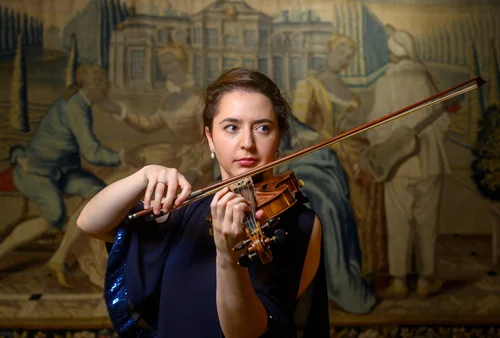
Photograph: Sisi Burns

Part of Cadogan Hall’s Zurich International Orchestra series, this concert presented an unusual programme in which two Czech composers bookended something very different from America.

First up was Janacek whose Lachian Dances, a very early work (1876), set the Czech scene. It was a bit odd, however, that six dances were detailed in the programme while Davies informed us, in his otherwise completely unnecessary introduction, that we were to hear just four. The opening “Old time dance” was tunefully businesslike  and the minor key horns were good in “A Blacksmith’s dance”. Davies has an unshowy but incisive conducting style and is strong on dynamic contrast.

The most interesting item of the evening was Philip Glass’s Mishima Piano Concerto (2024). Soloist Maki Namekawa, who is married to Davies, has been involved with the development of this concerto which originated in a film score. She played this, its London premiere, bare footed with her music on an iPad. More or less in three movements it begins with lots of rippling arpeggios,  impassioned playing by Namekawa, followed some nicely pointed trombone work and nifty snare drum. The middle section comes with wistful lyricism and an ethereal quality, reminiscent of Holst’s Neptune. She’s a player who communicates palpably with the orchestra, frequently turning left for eye contact. Her duet with cello, then picked up by woodwind was a high spot as were the cadenza of many moods and much rubato and the final chords with tubular bells. I look forward to hearing this concerto again and getting to know it better.

Thence, after the interval and the clearing away of the piano, to the rich familiarity of Dvorak’s seventh symphony played as competently as you’d expect from a Czech orchestra because this stuff is in their blood. Nonetheless it never quite packed the fresh fizz that I was hoping for possibly because the tempi were generally gentle. I liked, however, the vibrant double basses in the opening Allegro maestoso and the strings achieved real tenderness in the Poco adagio. The scherzo was fairly sparky and the unexpected mysterious “tip toe” moment in the final Allegro worked well. Davies brought out the major/minor tension and the brass section, especially trumpets, were allowed a field day.

Not, however, until the encore – a Dvorak Slavonic dance of course – did the Brno Philharmonic sound like a crack Czech orchestra enjoying itself. And it was glorious: loud, high octane and crazy.

Zurich International Orchestra Series 2025-26


EIGHT: The One (Wo) Man Drag King Musical Parody

Written, performed, designed and produced by Hannah Clift

Bridge House Theatre, Penge


Star rating: 3.5


Imagine Henry VIII back 478 years after his death to defend himself against the slurs cast by those women pretending to be his queens in a theatrical piece called “Six.” It’s a clever idea for a show and Hannah Clift is an accomplished performer, working her audience to the manner born and managing to sing in a wide range of spoof styles including Meatloaf, Celine Dion and Ed Sheeran.

She does sexy male hip thrusts perfectly and delivers her script’s many double entendres with impeccable timing. She also gets three audience members up to dance a gloriously silly galliard. She nips in and out of role to good effect too.

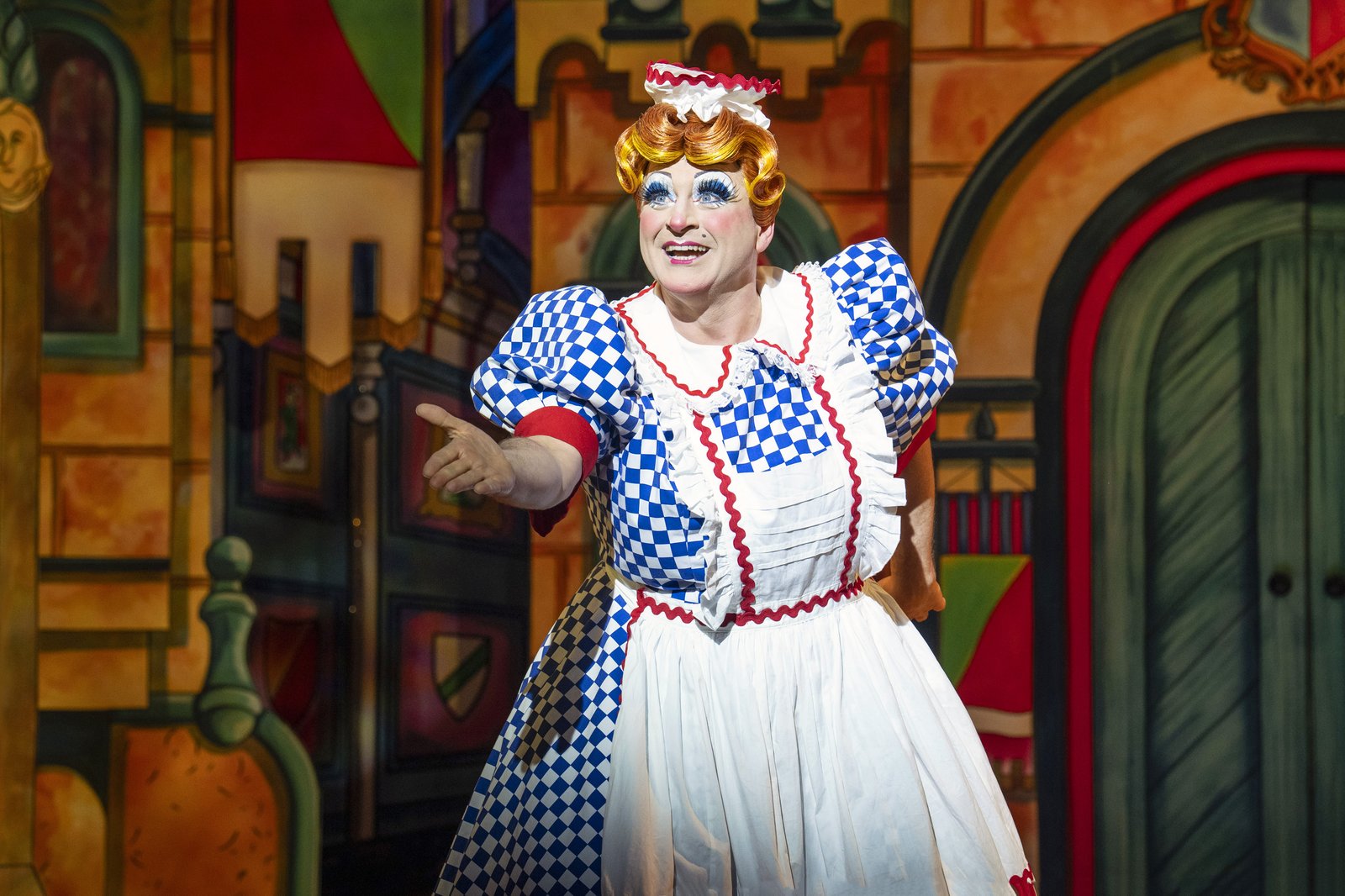
Her costume is neat. It’s a dress (sort of) which looks like armour complete with codpiece, over which she wears a swirling red cloak and really does look the Henry we know from portraits. When the cloak comes off and she discards the cap it makes a point about different moods.

In general it’s a very funny, pretty original show which has already been to Edinburgh, Brighton Fringe and other venues.

The problem with it, however, is that it must – by convention for this sort of show – run for 60 minutes but seems to run out of ideas about 45 minutes in. It needs another song or two about some of the other Queens – maybe poor 17 year old Katherine Howard who was effectively pimped to 49 year old Henry by her uncle, The Duke of Norfolk and then set up for adultery and beheaded. Clift could have a field day with Henry’s take on this.

Nonetheless I drove home still chuckling at Clift’s playful anachronisms. Her Henry would send his 21st century victims to the Tower but it would be tourists – shock horror –  they’d have to face as punishment rather than beheading. And of course, Henry was born second in line and only became heir after the death of his elder brother Arthur – cue for a whole routine about heirs, spares and a different Prince Harry.

I have long argued that you have to separate artists from their art. I can admire the Eric Gill frieze above the entrance to Broadcasting House without for a second condoning the sexual abuse that appalling man subjected his daughters to. Gesualdo murdered his wife but that doesn’t stop me liking his madrigals. Henry Williamson was a member of the British Union of Fascists but Tarka the Otter is still a good book. The Siegfried Idyll is a charmingly beautiful piece but its composer, Wagner, was so virulently antisemitic that the Nazis saw him, and his music, as their inspiration. I could go on.

Beethoven was a difficult, troubled, misguided unlikeable man but almost every note of his music is sublime. Think of the finale of the fifth symphony (with the piccolo!) or the opening of the Pathetique piano sonata or any bar of the violin concerto. And the odd thing as, John Suchet finds, is that the more appalling the composer’s behaviour got the more celestial Beethoven’s music became.

Suchet, who has written extensively about Beethoven in the past, and delivered hundreds of talks on the subject, calls this eminently readable 2024 book a “personal journey”. Although it is, in part, a biography of the composer it also discusses Suchet’s own discoveries about, and relationships with, Beethoven from his childhood to the present day. The Eroica symphony, in particular,  provided inspiration, solace and courage on more than one dangerous, war zone mission in his ITN reporting days.

He travels to many places  associated with Beethoven in Germany and Austria and, by sheer serendipity, manages to hook up with several descendants of Beethoven’s sponsors and supporters. Any Beethoven lover, for instance, knows the Waldstein piano sonata (and Suchet explains how it got its name). Then 200 years later we are almost as moved, as he clearly is, when he catches up with Countess Waldstein in 2024 along with several others from families who had links with the composer.

Beethoven was a sick man for most of his life. His hearing, as everyone knows, went in his twenties although no one knows why. He also suffered all his life from debilitating gastric problems. Recent DNA analysis from hair samples suggest that he had cirrhosis of the liver and kidney failure resulting from mercury poisoning. Almost unbelievably to us in the 21st century, the wine was routinely sweetened with mercury which would also have been all around him in eating utensils, paint and so on.

Feeling permanently unwell does not, however, excuse his behaviour and Suchet eventually admits that while he adores the music in which he is steeped, he finds Beethoven the man hard to understand or like. The composer cared for nothing but music and had no empathy. Repeatedly he took money and other help from influential people and then lost his temper with them and walked away. He had a massive sense of entitlement and no concept of gratitude. Performers were treated with disdain when they tried to negotiate about “unplayable” or “unsingable” passages. Parts were often delivered only at the very last minute so there was no time to rehearse properly, if at all. Working with Beethoven was like teetering on the rim of a volcano.

Worse, however, is the very well documented treatment of his widowed sister-in-law, Johanna, whom he relentlessly sought to separate from her son Karl. She may (or was it exaggerated?) have been a bit free with her favours but, as Suchet observes, she was also a mother who naturally wanted to be with her son. Beethoven disapproved of her with venomous passion and fought for years through the courts to prevent Johanna and Karl from meeting, while, astonishingly, also composing some of his best work. It resulted in turning Karl into a very screwed up teenager. Eventually the young man tried to take his own life and, really, Beethoven was to blame.

Suchet has a pleasantly chatty style which includes conversations with his wife Nula and his late wife Bonnie, both fellow enthusiasts and active supporters as he goes about his research. As you read you can hear the music that sustains him (as it does me although I’ve never had to report from a war zone). And it’s like a mysterious alchemical process. How one earth did this irascible, awkward, misguided, ruthless genius produce this exquisite stuff? It feels like a massive contradiction but it proves my point: appreciate the art irrespective of what the artist was or did.

I’d now rather like to hear one of Suchet’s talks which he says have changed over the years because Beethoven research never stands still.

Next week on Susan’s Bookshelves: Tricked by the Kippers’ Knickers by Dick Dixon and Reine Mazoyer

This book, first published in 2014, has been grinning beckoningly at me from my digital TBR pile for several months. I simply cannot remember who recommended it but someone must have done or I wouldn’t have bought it. Anyway, whoever you are, if you’re reading this, thank you very much. I loved it.

It’s the most bookish book I’ve read in a while but that doesn’t mean it’s remotely abstruse. Rather, it’s a sparky work of fiction that celebrates the power, importance and joy of books and reading – with much warmth, affection. wit and, sometimes poignancy.

The titular AJ Fikry owns and runs a bookshop on fictional Alice Island which is off Cape Cod. We first meet him at the point when he has turned to hard drinking in a search for oblivion to blot out the agony of his wife’s recent death. He can’t run the shop without her so he’ll probably retire on the proceeds of his most valuable possession – a rare, early copy of Edgar Allan Poe’s Tamerlane. One night, while he’s blotto, the book is mysteriously stolen. Once you remember Silas Marner’s golden guineas there are no surprises at what comes next. Yes, that’s right:  A toddler is abandoned in his shop.

What follows is a joyful story about AJ’s rehabilitation,  born of the need to look after Maya. You have to suspend disbelief a bit and accept that the authorities permit him first to foster, and then to adopt her. She is bright and engaging and AJ talks to her as if she were at the very least a post-doc intern so she becomes highly articulate. Each chapter is headed with an introduction to another (real) book addressed to Maya. Eventually he finds a love interest too with books and the book trade always underpinning everything he does and lives for. I chuckled at AJ’s fury when his mother turns up with e-readers for Christmas. Of course I understand his position but there’s room for both. I read The Collected Works of AJ Fikry on Kindle after all.

It’s a gloriously positive book. I relished, for instance the character of Lambiase,  local Police Chief who becomes a friend to AJ and godfather to Maya. He doesn’t read much but starts a crime fiction book club for his colleagues. Ever more hooked, he has evolved into an irrepressible bibliophile by the end of the novel which spans a couple of decades.

An affectionately affirming novel, it never stoops to banal sentimentality. We do learn, eventually, what happened to Maya’s mother and she doesn’t get a happy ending. And the end of the novel itself is bitter-sweetly rooted in realism rather than resorting to anything chocolate-boxy.

You don’t need to adore books and bookshops to enjoy this novel but if you do, it adds an extra dimension. And why “collected works”? Well, the literary reference is obvious but it’s also how AJ sums up life. Our lives, he thinks, are simply our collected works and I rather like that.

Next week on Susan’s Bookshelves: In Search of Beethoven by John Suchet

Blessings

Sarah Shelton, who also directs

Riverside Studios


Star rating: 2


It’s like a time warp in every sense. Very clearly set in 1969 (clunky topical references aplenty), Sarah Shelton’s new play is also the most straightforward drama I’ve seen in decades. It’s family dynamics without any sort of theatrical innovation. That could be refreshing but in reality it feels oddly flat although you can’t fault it for story telling.

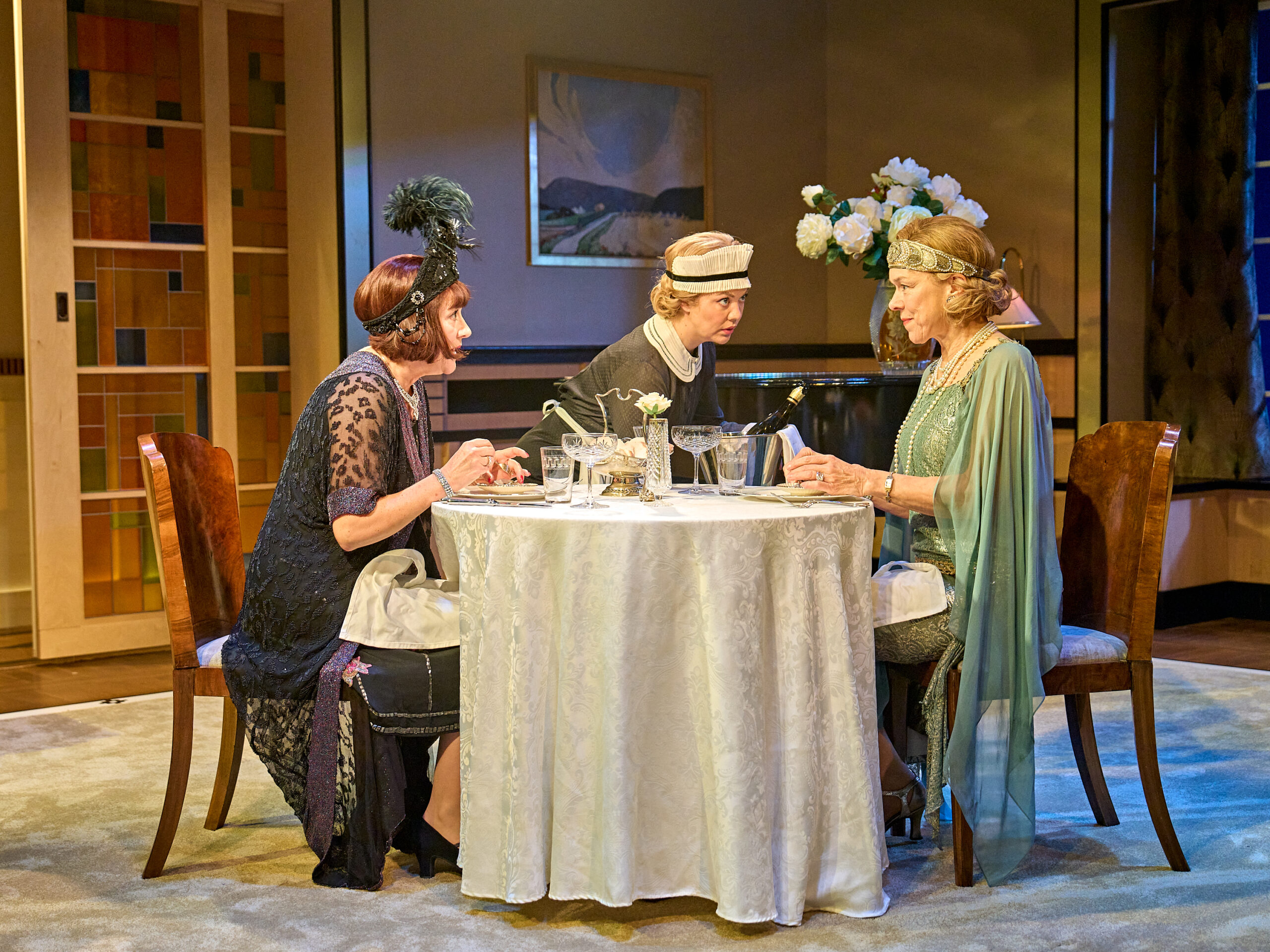
Frank and Dorie Deacon are the parents of four children in a town somewhere in England: Martin and Penny have flown the nest and are working in London. Frances and Sally are still at home. It’s a Catholic family and Dorie is a staunch devotee. As soon as we see Frances (Hannah Traylen – strong performance) we know that the boat is about to be rigorously rocked.

Arguably it’s a play which, in acknowledging the rapidly changing social mores of the late 1960s, tries to cover too many bases in 90 minutes. We ricochet from teenage pregnancy and the “unmarried mother” stigma to the status of women, education, parenting and the questionable role of some “celibate” Catholic priests in some communities along with a bit of drunkenness and domestic violence. There’s a nod to recently legalised abortion too. Odd, come to think of it, that the new and controversial contraceptive pill isn’t in the mix given that this is a Catholic setting.

Some of research is inaccurate. No one was telling pregnant women not to drink alcohol in 1969.  Moreover at that time the minimum entry requirement to teacher training college was 5 O Levels and maths and English were not specified. You didn’t need A levels although many students had them.  Trust me. I was there. These are very minor details but things like this somehow dent the credibility of the whole play.

There is, however, some fine acting in this show from an accomplished cast of six. Emily Lane, as the youngest daughter Sally who absorbs all the flack while trying to develop a life plan of her own, is excellent. She’s a very versatile performer. I last saw her in the banal, all-singing, all-dancing Anne Boleyn at Hever Castle in August where her talents were somewhat wasted but she’s gets her head in Blessings.  Milly Roberts doubles pleasingly as the acidic older sister and as Sally’s rather more likeable school friend.

Both men (father and son in real life) are accomplished multi-rolers, switching so convincingly that you almost don’t notice it’s the same actor. Thus Gary Webster is compelling as the angry, troubled but sinned against pater familias and then as the over-friendly, Father O’Brien. And Freddie Webster gives us a patronising, bossy older brother and doubles nicely as Sally’s gentle boyfriend, Peter.

Anna Acton presents Dorie as a put-upon, middle aged woman, pulled in every direction. And it’s powerful on the whole. I am not, however, remotely convinced by the earlier liaison with Father O’Brien and the “suo padre” story (strange how so many stories hang on that). Neither actor conveys that sort of illicit chemistry.

Moreover, the ending of this play is a cop out. It simply tails off as if the playwright has run out of ideas.