Press ESC or click the X to close this window

Pan (Susan Elkin reviews)

Pan – Rayne Theatre, Chickenshed. London

Reviewer: Susan Elkin

Writers and Composers: Dave Carey, Jo Collins, Hector Dogliani, Ashley Driver, Phil Haines, Will Laurence, Cara McInanny, Paul Morall, Sebastian Ross and Aine Smith

Directors: Michael Bossisse and Louise Perry

4 stars

This powerful show opens with one of Chickenshed’s trademark large ensembles of storytellers, one of several groupings in this strong and moving show. They resemble refugees and come from all over the world, eager to tell, share and adapt their stories, so we’re immediately and firmly on Chickenshed’s inclusive wavelength.

Then Cara McInanny, as Grandmother, begins to unravel the story of Peter Pan with her grandchild, a narrative to which the show returns from time to time to remind us that this is a story about stories. It’s a successful and rather neat device which stresses the ownership of stories.


Chickenshed, currently celebrating its 50th anniversary, is a theatre company which trains (from infancy to degree level), nurtures and employs children and adults of all backgrounds and abilities using theatre as a development tool. For a show like Pan, it casts in the lead roles a core of talented, experienced adults, most of whom have come up through the Chickenshed training route and now work for the company as teachers, mentors, leaders or developers.

Children and young adults form the huge supporting ensembles. There are five rotas (Purple rota at the performance reviewed on 05 December) at different performances, each comprising over 150 young people. This means that Chickenshed directors are working with a cast of 800. It sounds an unlikely enterprise, but with imaginative, phenomenally well-disciplined choreography, it works astonishingly well. And along with cartwheels and some beautiful down-stage balletic lifts, it sometimes includes a wheelchair or a child who has to be led by other actors. We get a whole stage of pirates and another of lost boys, making good use of all the levels on Andrew Caddies’s set. It all fits together with seamless professionalism.

Jonny Morton is excellent as Mr Darling and Hook, snarling, cackling, plotting, and then collapsing whenever he hears the reptilian ticking. Bethany Hamlin delights as the ever-reasonable, caring, distraught Mrs Darling, and Ashley Driver has the vulnerable but hilarious Smee perfectly. Tristan Manzi, the only character who actually flies on wires, is one of two alternating Peters. He’s perfectly petulant and a very lithe performer.

Shiloh Maersk is charismatically good to watch, too. Integral signing, by most cast and ensemble members at different points, is a given in a Chickenshed show. Maersk, however, is rarely off stage and signing almost continuously, as well as taking part in complex choreographed sequences.

Meanwhile, in a cage above upstage left is a rotating band with over 40 youth members. Skilfully directed, they make a wonderful sound and, along with powerful singing, the music drives the show.

Runs until 11 January 2025

I am a lapsed high Anglican: or rather someone who had suddenly saw light at about 18 and walked decisively away from it, a self-declared unbeliever. I retain, though, an affection for traditional hymns, the King James Bible and the Book of Common Prayer and that’s probably why I enjoy (The Reverend)  Richard Coles’s Canon Clements novels. Set in the early 1990s they are full of nostalgia for a time when canons still lived in big drafty rectories, were pally with the local gentry and, because there was only a single parish to run, knew everyone in the community. The end of an era.

They are murder stories with Daniel Clements, who is quietly and inactively gay, solving mysteries alongside his friend Neil who’s a local police officer. Of course the plots are wildly, gloriously implausible but I’ve never read a work of detective fiction with a believable narrative.  That’s not the point. The puzzle element is fun and Coles has created a totally believable cast of characters – the sort of people I’m delighted to spend time with, After all Sherlock Holmes, Hercule Poirot and Miss Marple are as unlikely as they are engaging. In our own time you could say the same for Roy Grace, Ruth Galloway or Karen Pirie but my goodness they’re entertaining. So is  Daniel Clements.

In the ongoing world that Coles has created so evocatively, Daniel’s mother, Audrey, is busy with her cooking, mild snobbery, dotty pride, kindness and competence. Slightly more distant is her other son Theo, a mildly successful actor who visits, especially at Christmas. Honoria, daughter of the irascible Bernard,  outmoded Lord of the Manor, is down to earth, modern, attractive and fun

This new Canon Clements story is a seasonal novella which gives us Audrey cooking Christmas dinner for ten, at short notice, because there’s an issue at the big house so she invites four extra people including the De Floures family’s rather ghastly cousins from America. It’s an ultra traditional occasion (although Audrey has secretly bought ready-made mincemeat from the Cash & Carry) with crackers, charades, strained group dynamics and Audrey’s “famous” bread sauce. Coles  helpfully gives us the recipe at the end.

But before we get to any of that we attend the Christmas Eve afternoon service, Midnight Mass and the service on Christmas morning – all shot through with Daniel’s thoughts and observations and very funny as well at catapaulting me back to my childhood and adolescence.  Coles’s witty observations often make me laugh aloud “… and after everyone had resolved the peculiarly English challenge of managing side plate, forks, cups and saucers and teaspoons while sitting on a sofa …”

It’s arguably the gentlest murder mystery ever because one is four fifths into the book before anyone dies and then it’s assumed to be natural causes until Neil and Dan spot something amiss and come up with a theory.

Just the job for a winter’s evening in the run-up to Christmas.

Next week on Susan’s Bookshelves: A Short History of Tractors in Ukrainian by Marina Lewycka

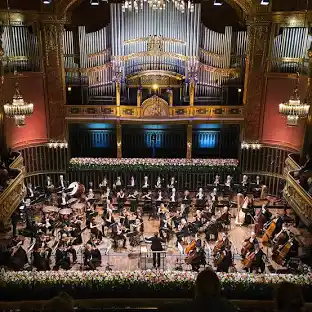
Hungarian Radio Symphony Orchestra

Conductor: Riccardo Frizza

Piano: Jeneba Kanneh-Mason

Cadogan Hall

09 December 2024

Part of Cadogan Hall’s Zurich International Orchestral Series 2024-25, this concert featured three warmly popular but contrasting works and made each of them sound arrestingly fresh.

There is something distinctively Hungarian about the sound quality of the orchestra and it rang out clearly in the opening piece: Liszt’s programmatic Mephsito Waltz No I. The muscularity of the playing in the frisky scene-setting section contrasted well with the soulful cello melody, the violin and cello solos and the harp glissandi. Riccardo Frizzi had it well balanced (with, unusually, violas sitting opposite first violins) notwithstanding the lack of orchestral raking at Cadogan Hall which means that there is occasional orchestral fuzziness from stalls seats.

The heart of this concert was a stunning performance of Rachmaninov’s Piano Concerto by Jeneba Kanneh-Mason. Probably the best loved and best known of all piano concertos, it takes a pretty special pianist to diffuse the cliché element. Kanneh-Mason, still only 21, played it with astonishing assurance and poise and I heard left hand work in this performance which I have never before noticed. Her account of the adagio was achingly beautiful without ever being saccharine and it blended perfectly with the wind solos, especially flute and bassoon. The incisive string work in the finale and Kanneh-Mason’s apparently effortless fluidity of interpretation brought the concerto to a resounding and powerful end. No wonder the audience applauded so enthusiastically.

The second half of the concert took us back a century to Beethoven’s ground breaking third symphony, Eroica. Frizza gave us a first movement full of tension and excitement and let us feel all the contrasts and moods with some fine horn work. He laid his baton down and conducted the Funeral March with his hands. There were some exquisite pianissimo passages and wonderfully clear triplets under the wind solos. The contrasting third movement was admirably crisp. One can always judge the finale by the quality of the pizzicato at the beginning and this performance  delivered it with incisive elegance. It was good, moreover, to hear the violas so clearly especially in the fugal passage as we worked towards the ending which was, as it must be to work, a subtle blend of gentleness and grandiloquence.

And then, after raputurous applause, Frizza slipped back on stage with a few extra players to play a perfect encore: the most wittily exaggerated account of Brahms’s Hungarian Dance No 5 that I’ve ever heard – with long notes snatched off and the intervening passages at breakneck speed. It was a delicious lollipop at the end of an exceptionally interesting, enjoyable concert.

Dick Whittington And His Cat

By Anthony Spargo

Directed by James Haddrell

Greenwich Theatre


Star rating: 3


A no-frills, low budget panto for family audiences, this Dick Whittington ticks most of the boxes. You don’t actually need a dozen different costumes for the Dame (Phil Yarrow as Meggs) or an ensemble of six or eight professional dancers because children won’t notice. It’s also good to offer work to beginners. The three-person ensemble in this show are all second year Trinity Laban students in their first professional job.

The opening is a bit flat but the show picks up as soon as we meet the baddies: the very talented and funny Louise Cielecki as Muffy, the mouse who wants to be a rat (and my word, can she sing!)  and Anthony Spargo as King Rat. Spargo, who has also written this show set firmly in the 1960s, is glitteringly good in his caddish red and white striped suit and comic malevolence. He is also a casino owner who cheats and that works a treat too as does his very competent rendering of a jazz number at the club he owns. One is sorry every time the pair of them exit.

It’s a musically colourful show with numbers ranging from, among other things, Sinatra to a version of These are a Few of My Favourite Things and I’m a Dedicated Follower of Fashion although the Last Post joke in the rather understated slosh scene (in which nobody gets wet or dirty) is puzzlingly inappropriate.  Musical director Steve Markwick sits in a stage-left box, playing keys and bass guitar opposite guitarist Gordon Parrish and they sometimes emerge to take part in the action which adds a level of immediacy. Drummer Chris Wyles is out of sight.

It’s a good idea to cast an actor-muso as Tommie the Cat. Inez Ruiz plays a fair bit of sax in this show and evinces accomplished musicality with every movement she makes and note she sings.

We think we know panto stories so it’s fun when a writer builds in a completely new flight of fictional fancy – travelling back in time (via a phone box of course) to stop the Great Fire of London with a modern fire extinguisher thereby changing the course of history. I’m not sure the huge primary school party I saw it with quite grasped the finer points of this or the second time shift, but it is bravely done.

Jack and the Beanstalk

Written and directed by Adam Penford

Nottingham Playhouse


Star rating: 3


A dependable, well crafted, family panto with plenty of local jokes, Adam Penford’s take on Jack and the Beanstalk is unpretentiously pleasing.

One of its strengths is the music played by the four piece live band, led by MD, John Morton.  It ranges across a whole parade of genres including music hall, rap, film, football chants and a lot more with neat – just a few bars for copyright reasons – references to shows such as Les Miserables. And it’s all adeptly delivered.

On stage we get an ensemble of six (two alternating teams), nimble footed, juveniles fully used in most scenes which is a refreshing change from the usual group of smiley, samey dance-trained adults. Choreographer, Rosanna Bates has done a fine job.

Amongst the principals, Tom Hopcroft is a show stealer as Fleshcreep. Not only does he cackle and gloat to the manner born but he sings beautifully, not necessarily something one associates with this role.  And Jewelle Hutchinson delights as Jill – prettily appealing but also very feisty. She shines through both her singing and movement work.

John Elkington, a dame veteran at Nottingham Playhouse, gives the audience what they’ve come to see: outrageous costumes (by Cleo Pettitt), silliness, a hint of vulnerability, coy predictability and notable clarity of diction in songs.

I saw this show at a weekday matinee in an auditorium full of school parties buzzing with noisy excitement and the kindness and bonhomie between children of all abilities which I’ve come to associate with Nottingham – one of the reasons I’m prepared to make the journey.

However, primary school children do not, on the whole “get” puns so it might make sense to drop some of them at matinees, although – as Roald Dahl once observed – “knickers” always gets a laugh. Personally, moreover, I could do without the spitting and farting which I’m not sure most of the children present cared for either.

I shall long remember the giant in this show. Initially he was the usual wobbling upstage horror – one eyed and voiced by Ian McKellen. Then after his fall, we got just a massive stage right hard with the fingers moving and Jack imprisoned beneath it, which was actually quite creepy.

Photography by Pamela Raith

I recently saw a modern play version of Oscar Wilde’s only novel in which shifting images were on mobile phones. It reminded me of a version called Selfie, which the National Youth Theatre staged in 2016 and which covered similar ground.  It was also a wake-up call. What did Wilde actually write in his 1891 novel? Of course I’d read it but only, I think, once and that was probably 50 years ago. It was, therefore, a pretty overdue reread.

Gray is an exceptionally good-looking young man in his late teens when the novel opens. Born to a wealthy family, he lives in great comfort and there is no question of his ever having to earn a living. He receives his full inheritance when he comes of age at 21. He is befriended by Basil Hallward, an artist, who is bowled over by Gray’s beauty and paints a stunning portrait of him. Hallward also introduces him to Lord Henry Wotton, a louche, cynical but charismatically entertaining man.

Gradually Gray slides into a moral abyss, initially by courting and promising to marry a second rate young actress who then takes her own life when he dumps her. And, as the years pass, it goes on getting worse until he is notorious and harbouring dark secrets.  Meanwhile he seems, unaccountably to have found, the secret of eternal youth, in appearance at least. But the painting is changing and revealing the truth so, in terrified horror, he locks it in a room upstairs. Yes, at one level it’s pure gothic and very much of its time. I’ll spare you any spoilers about what eventually happens just in case you’re new to The Picture of Dorian Gray.

In many ways we’re in the same world as Robert Louis Stevenson’s The Strange Case of Dr Jekyll and Mr Hyde which was published only five years earlier in 1886. The dual personality – the public face versus the private amoral evil – and the investigative presentation of conscience are very clearly present in both books. If I were still teaching A level English it would be an interesting project to study both texts comparatively with students.

The other thing which interested me a lot is the character of Lord Henry. Even his friends get weary of his aphorisms, some of which are often now casually attributed to Wilde by people who have probably forgotten, if they ever knew, that he put them into the mouth of Lord Henry. Of exhibitions at Royal Academy  he comments:  there have either been so many people that I have not been able to see the pictures, which was dreadful, or so many pictures, that I have not been able to see the people, which was worse.”.  He castigates opera goers’ dresses as “designed in a rage and put on in a tempest” and criticises those who “know the price of everything and the value of nothing”.

Lord Henry is, arguably, the character who “corrupts” Gray, or at least sets him on the path to corruption. And that is probably the most interesting question in the novel. Can one person lead another astray to this extent? How much of our behaviour comes from our own moral compass or lack of it and how much is triggered by external influences? Wilde is said to have based the character partly on his friend, Lord Ronald Gower, and partly on what he knew was the public perception (rather than the reality) of his own personality.

Finally, of course, Wilde was famously gay or bisexual and ultimately treated shockingly by the law. The friendships between the men in this novel have clear homo-erotic overtones while women are always a sidelined inconvenience. There is, one suspects, a certain amount of “Bunburying” and it’s fascinating to note how clear that is now in way it wouldn’t have been to the average reader in 1891 although, the undercover gay community would have sensed it.

Next week on Susan’s Bookshelves: Murder Under the Mistletoe by Richard Coles  

Brighton Philharmonic Orchestra

Brighton Dome

Conductor: Geoffrey Paterson

Soloist: Evelyn Glennie

01 December 2024


Dame Evelyn Glennie CH, CBE is unique. No one else has (yet) made a sparklng, worldwide career as a very famous solo percussionist. She fills halls wherever she goes and the almost sold out Brighton Dome was no exception. It was a joy to see many young people and children in the audience.

Walking onto the stage in her stockinged feet (presumably so she can better absorb the vibrations which is how she “hears”) she captivated the audience from the first tam-tam crash in James Macmillan’s Veni Veni Emmanuel  (1992) – a wonderfully appropriate choice for the first Sunday in Advent although that point wasn’t laboured. Glennie’s instruments – various drums, marimba, vibraphone and more – were arranged at the front of the stage with the orchestra sitting well back. She walked calmly from one to the other with the extended solo on woodblocks and gongs being a particular high spot. The marimba quasi-cadenza underpinned by muted violin harmonics and cello pedal notes was special too.

For those who wish to share it at that level this is a deeply religious work for Advent working though various moods and statements to the extraordinary Easter coda  – Macmillan loves the drama of his faith. Thus, at the end, orchestral players hold small pieces of tinkling metal which they play to create an Easter vigil. In this performance Paterson ensured it was arrestingly powerful as Glennie moved solemnly to the tubular bells at the back of the orchestra, the audience audibly spellbound. The echo of the bells lasted for several minutes, while Paterson stood arms out (reminiscent of crucifixion although that may not have been intentional) ensuring that hundreds of people present listened to the dying sound in rapt silence. Then Glennie slowly damped the bells one by one and eventually we were allowed to applaud – and some.

The concert had launched the  Scotland theme (both Macmillan and Glennie are Scottish) with Peter Maxwell  Davies’s warmly descriptive An Orkney Wedding with Sunrise (1985), The bagpipe solo (Robert Jordan) was as hauntingly evocative as anything in the programme.

Then, after the interval came Rimsky-Korsakov’s Scheherazade (1888) for which the players moved to their usual position near the front of the stage. Paterson drew a colourful sound from the orchestra from the first bar and Ruth Rogers, BPO leader, played the solos, which represent the voice of the threatened story teller in the legend, with plaintive passion. Among the many noteworthy features in this performance were beautiful bassoon playing (Jonathan Price) in the second movement, melodic grandiloquence and some very pretty pizzicato work in the third movement and some fine brass playing, with the piccolo, in the joyous penultimate statement. It sent this reviewer away singing for several hours afterwards.

This concert was both mighty and moving.

Maidstone Symphony Orchestra

Mote, Hall Maidstone

Conductor: Brian Wright

Violinist: Mayumi Kangawa


Ralph Vaughan Williams’s tried and tested overture to The Wasps made a cheerful opener in this high-octane concert. The muted string “buzzing” at the beginning was admirably incisive and Brian Wright ensured that we heard plenty of melody especially from horn and flute.

Much less familiar, and arguably more challenging for the audience, was William Walton’s technically demanding 1939 violin concerto which, I have to confess, has never been a work I warm to. It was, however, charismatically played here by diminutive, smiling and immensely talented Mayumi Kangawa who gets a fabulous tone from the “Wilhelmj” Stadivarius instrument which she has on loan from Nippon Music Foundation. It shines like a well polished conker and has a voice like a timeless, show-stopping diva.

I liked the brisk crispness Kangawa brought to the second movement and her sumptuous double stopping in the vivace. She has an engaging way of leaning, lovingly into the high notes. And her bowing is elegantly sinuous.

For her encore she played an arrangement by Jascha Heifitz (for whom the preceding concerto was written) of the spiritual Deep River – very legato, soulfully beautiful and a complete contrast.

I never hear Berlioz’s programmatic Symphonie Fantastique (1830) without reflecting incredulously that it came just six years after Beethoven’s 9th Symphony and two years after Schubert’s death. The adjective “ground breaking” is an absurdly belittling understatement. It is, moreover, full of challenges which Wright and MSO rose to with aplomb. For example we got tender attention to dynamics along with some fine trumpet and timp work in the opening movement  and the harp in the second movement ball “scene” was delightful. Wright played up the drama and all that eerie mystery in the third movement with some beautiful playing from the four bassoons. The timp pasage (two sets) is always, as here, an arresting development. Then, after a deliciously menacing account of March to the Scaffold, MSO really went to town with the exciting piccolo screaming over lower wind in the finale and the drama of the tubular bells.

This concert felt like a musical roller-coaster. The Berlioz is gruelling to play (and conduct) but once again, they pulled it off in spades. Congratulations to them all.