Press ESC or click the X to close this window

Charlie and the Chocolate Factory (Susan Elkin reviews)

Charlie and the Chocolate Factory

Book by David Greig, based on novel by Roald Dahl

Music by Marc Shiman

Directed by Pippa Duffy

Cambridge Operatic Society

Cambridge Corn Exchange


Star rating: 4


It’s a fluid story with a seemingly unlimited shelf life like the best chocolate. There have been adaptations of all sorts since Roald Dahl’s novel published in 1964. This one is a cheerfully updated version of the one I saw based on the Warner Brothers 2005 film  at Drury Lane in 2013 with Douglas Hodge as the mysterious Willy Wonka and a year later with Alex Jennings in the same role. It’s timeless in the tradition of Tchaikovsky’s Nutcracker and, yes, they do have something in common.  Both have second acts staged in a land of confectionery.

Cambridge Operatic society runs with this skilfully in the vast space of the corn exchange – flat seating in the stalls does not make for great sightlines, and this is the first time in decades I’ve seen an actual cloth curtain swished across by hand.  Nonetheless it’s a flamboyant production with all the special effects (including the glass elevator) and glitzy costumes you’d expect and only one or two tiny lighting glitches. It was almost sold out on opening night and the audience, including many children on Easter holiday, was gratifyingly and justifiably exuberant.

Luke Thomas is outstanding as Willy Wonka, the eccentric and charismatic chocolate factory owner. And it’s a huge role. Thomas has a perfectly intonated tenor voice, a magically expressive face and top-notch acting skills. He would grace any stage anywhere although this is a community show so he has a completely different day job. Also splendid in role is Tia Lake as Charlie Bucket’s impoverished, hard working, always kind,widowed mother. She too sings like a seasoned pro and lights up the stage whenever she’s on it.

Of course, at base this is Roald Dahl so all the unpleasant characters come to a sticky (literally) end and all the likeable ones are richly rewarded. And that’s partly what makes it satisfying. It is, though, a streak of narrative genius to devote much of the first act to a series of scenes introducing the four children, who have won golden tickets to visit the factory – all horrible in their different ways and flanked by a parent. It allows different musical styles and plenty of fun. Then in the second act they are eliminated one by one until only Charlie remains. It’s a neat, symmetrical device which never fails.

The children in this show do a fine job. On opening night it was Team Candy which meant Arthur O’Brien as a heartrending Charlie with a nicely modulated boy’s singing voice. Hugo Mitton offers a very convincing performance of gluttonous August Gloop for ever stuffing his chops. As Veruca Salt. Hope Stoneley Gradwell, really runs with the spoilt ballet-loving brat and Charlie Blackmore is strong as the rude, obnoxious, dismissive Mike Teavee.

Best of all, though, is Aeva-Jessica Mensah who is is a stage natural.  As the entitled Violet Beauregarde she creates a fine rapport with her father (DeJay – good, and I loved the gold teeth!) and sings with maturity and technical accomplishment of someone twice her age.

Famously the production features Charlie’s four grandparents who have plenty to say but, apart from Grandpa Joe (Leslie Wheeler – good), they never leave their bed. It’s good fun, witty and the stage crew get them on and off slickly

The ensemble, both adult and junior – many rapid costume changes  – works hard and supports everyone on stage. The Oompa Loompas always go down well and director Pippa Duffy makes good use of a stage left balcony over the auditorium. The choreogapny (Katy Graham Clare) is colourful and imaginative.

And behind all this is twelve-piece live band, led by Nicholas Sheehan on keys. They are out of sight somewhere off the stage left balcony but they make a magnificent sound and Sheehan supports every singer so that the sound is cohesive.

It runs until Saturday 04 March. Well worth catching

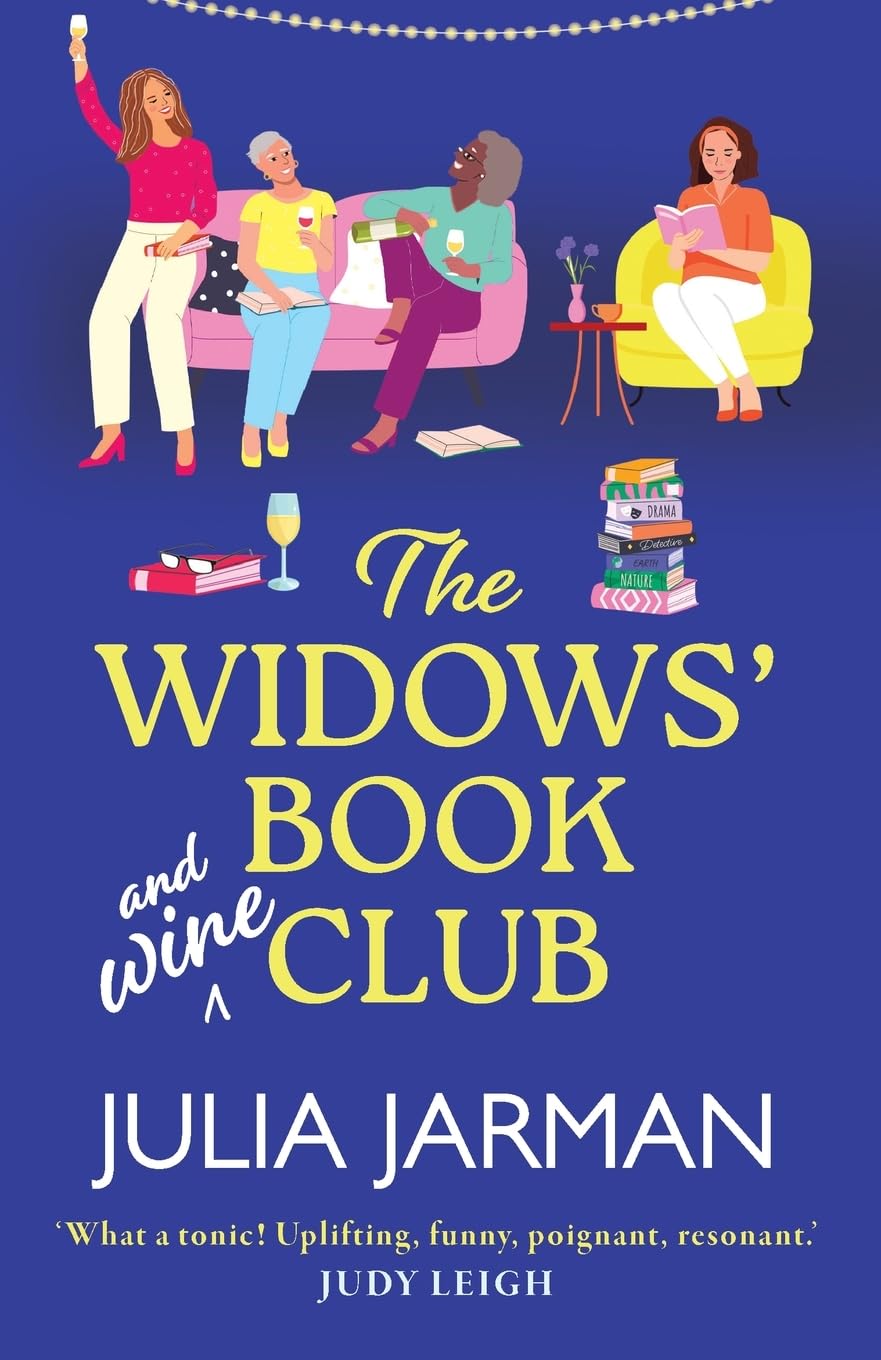
Published in 2024, this heart-warming novel was recommended by a friend whose reading tastes are nearly as eclectic as mine. Nick Bradley’s story of cross-generational relationships is set in Onomichi, a small town in the Prefecture of Heroshima. And it comes as a novel within a novel. The framing story gives us Flo Dunthorpe, a young American in Tokyo. Her Japanese is fluent and she is a professional translator with one book under her belt. In need of a new project she starts to translate Sound of Water by Hibiki into English and is enthralled by it. But she doesn’t have the (anonymous) author’s permission or her publisher’s agreement. Flo’s translation constitutes the backbone of Bradley’s novel with seasonal dives back to Flo and her progress or lack of it along with her anxieties. In some hands it might be clumsy. Here it flows as smoothly as the Sumida River.

Kyo has failed the exams he needs for entry to medical school. So he’s sent. aged 19, by his busy, arguably neglectful, doctor mother to stay with his paternal grandmother. Ayako livwa nearly 500 miles to the south west in Onomichi. The train journey is interesting because he opts for the slow route rather than the Bullet Train – lots of local detail including Fujiyama and an overnight stop in Osaka.   He must now attend what Brits usually call a crammer so that he can resit his exams. Kyo’s father, a war photographer died by suicide when Kyo was a baby. Their shared loss ought to be something they can bond over but Ayako – strong, irascible, forthright, hurting, determined to be strict and very keen on traditional Japanese courtesy and respect –  will not discuss her lost son. The novel explores the ebb and flow of that dynamic as, very gradually, an understanding begins to develop between grandmother and grandson.

Because it’s a small town everyone knows everyone else, and Ayako, who owns a coffee shop, is central to the community. There are lovely cameos of, for example, of the railway station manager and a man who owns a CD shop. Everyone, including the girl Kyo meets on the train journey from Tokyo, is pleasant, welcoming and supportive although, initially he misses the bright lights of the city and feels pretty resentful.

Kyo is an exceptionally talented artist.  He sketches all the time, creates cartoons and his real, deep-seated ambition is to be a  professional manga artist. His absentee mother, however, has never let him think of anything but medical school. So there’s conflict – except that the Japanese mindset does not support young people rebelling against the adults who are responsible for them. And this novel is, in many ways, a celebration of Japanese culture, from the food, drinks, kimonos and language to, of course, what Heroshima stands for. The section when Kyo and Ayako visit the city is very moving.

Also central to this story are the street cats Ayako feeds and her favourite, the one eyed Coltraine (sot of) moves in with her, strictly on his own terms. At the end of the novel back in the framing device, we meet the nice old cat who inspired the creation of Coltraine.

And as if that weren’t enough there are a couple of gay relationships  gently woven into the mix. Flo’s American/Japanese girlfriend has returned to New York for work and they drift apart because Flo wanted to stay in Japan  although she has many conflicted feelings. The other relationship is between men and comes peacefully at the very end of the novel when Flo finally visits Onomichi.

I found it an engaging, thoughtful read and I learned a lot about Japan.

Next week on Susan’s Bookshelves: The Four Winds by Kristin Hannah

In the Print

Robert Kahn and Tom Salinsky

Directed by Josh Roche

King’s Head Theatre


Star rating: 3.5

It’s another tight, entertaining, political play from the creators of last year’s Gang of Three. And for many audience members the events of the controversial 1980s move of Robert Murdoch’s News International from the Spanish practices of Fleet Street to the efficiency of Wapping are within living memory.  Astonishing as it might seem to younger people, this was an era in which trade unions wielded enormous power and their leaders were household names on a par with cabinet ministers. The Wapping dispute, which of course Murdoch won, was the last great battle.

Brenda Dean (Claudia Jolly) led SOGAT (Society of Graphical and Allied Trades), the first ever woman leader of a trade union. Dean was formidable and her confrontations with Murdoch (Alan Cox) lie at the heart of this play, along with her dealings with other trade union leaders amongst whom there is much self-interest, rivalry and back stabbing. Jolly makes Dean, attractive and personable as she speaks direct to audience, tackles the men who oppose her, deals with her own doubts, fights for justice and jobs and eventually has to compromise. We believe in her integrity. It’s a warmly charismatic, convincing performance.

Cox’s Murdoch, complete with gentle Australian accent, is snake-like in his reasonableness. “I just want to print newspapers” he says with repetitive disingenuity. He and Jolly work pleasingly together and director Josh Roche ensures that everyone makes good use of the square space with seating on three sides. The production also does imaginative things with the two, angled aisles through the audience which gives the piece a sense of inclusive intimacy – because it’s entirely based on conversations. We are never inside a print room.

Four other actors play everyone else in this complex story. Basic costumes – coats and so on – hang on hooks on the back wall to support rapid role change. Alasdair Harvey’s slimy Andrew Neil gets a laugh every time he emerges because, of course, Mr Neil is still very much with us. Joan Harrison excels as dispassionate lawyer Georgia Landers, along with several other contrasting characters. I admired Jonathan Jaynes’s versatility as Bill Sargent and other roles. And Russell Bentley’s gor-blimey Kelvin Mackenzie making ruthless tabloid decisions is hilarious – when he’s not being Murdoch’s put-upon, loyal but ultimately dispensable side-kick.

It’s an interesting, if rather wordy, 90 minute play which ultimately allows you to see every point of view. Of course, the job losses and the effect on families were devastating. On the other hand you can’t run a profitable industry on ancient machinery (the old print presses) in an unsuitable environment (Fleet Street) in which too many people are paid big money for obsolete roles. And, owing perhaps to digital development, all nine national newspapers which dominated the 1980s arguments. have survived, albeit with much reduced circulation. The play neatly sets out the tensions and leaves the audience to choose a side.


The Protecting Veil

Brighton Philharmonic Orchestra

Conductor: Joanna MacGregor

Violin: Ruth Rogers

Cello: Guy Johnston

Brighton Dome, 29 March 2026


Born of profound religious conviction, John Taverner’s The Protecting Veil (1989), which gives this concert its title, is a mysterious, haunting, moving work whatever your point of view. It is, in a sense, a cello concerto in eight movements, telling the story of the Virgin Mary’s journey from birth to death. The cello represents her voice. Taverner regarded it as an ikon in sound.

I first interviewed Guy Johnston, with his brother Magnus (now concert master at Royal Opera House), for The Times  when he was 16. It was  before he won BBC Young Musician of the Year and the day after an appalling disaster had hit his family. I have followed his sparkling career ever since and it’s always good to see him, now 44, in action.

Guy opened and ended the piece with those strange high register notes which he made sing out ethereally. He played the lament with brooding reverence, coaxing mahogany tone from the 1692 Stradivari cello he plays, He is, as ever, an unshowy performer. The passion – and there was plenty of that – is invoked by fingers and note quality rather than by flamboyance. His quietest possible harmonic at the end came with silvery sadness and he and MacGregor on the podium,  managed to hold the silence after the final note for the best part of a minute.

Otherwise, this concert was a showcase for the considerable talents of BPO’s strings. It opened with the always popular Fantasia on a Theme of Thomas Tallis by Ralph Vaughan-Williams.  MacGregor drew a pleasingly rich sound, especially from the cellos and there was plenty of warmth in the string quartet section with particularly lovely work from Caroline Harris on viola. The piece requires a “second orchestra” to accommodate the complexities of its scoring and it was a good idea to stand these nine players  round the back of the main body of the orchestra. The balance worked  well.

Max Richter’s responses/homages to Vivaldi’s The Four Seasons are always worth hearing. This concert gave us two movements of his The Four Seasons Recomposed. His Spring and Winter were played, more or less attaca, after Vivaldi’s originals. The versatile Ruth Rogers, who usually leads BPO, popped out to don a bright green frock for this part of the concert. She played the famous violin solos and MacGregor conducted from keyboard set to harpsiechord.  while Nicky Sweeney ably led the orchestra. The palpable rapport between MacGregor and Rogers was, as usual in BPO concerts, a powerful driving force.  These mini concerti were slick, imaginative, thoughtful and fun.  And full marks to harpist Elin Samuel, whose input was required for the Richter sections.

Translations

Brian Friel

Director: Allan Hart

Tower Theatre, Stoke Newington

Star rating: 3.5

Translations (1980) is probably Brian Friel’s best known play partly because it has long been a curriculum favourite which means that many people have studied it at A Level. Its fame is also due to its universal, timeless message which it speaks at so many levels. Language and culture lie at the heart of identity and any attempt to dent them is profoundly, dangerously disruptive. Think of the Taliban, the Russian war with Ukraine or even “woke” vocabulary manipulation in the UK.

Translations takes us to Ireland in the 1830s when the colonising British are constructing an ordnance survey map, Anglicising (“standardising”) place names and setting up National Schools where attendance will be compulsory and everything will be taught in English. Friel is clearly linking the annexing of his country by the British with later “Troubles” which were rife when the play was written. The setting is a “hedge school” run by an elderly man and his son, at which adults can learn Latin, Greek, mathematics and more.

This production delivers the message as movingly as any professional take on Translations I’ve seen in the past – staged on Max Batty’s all encompassing set with a homely room complete with manger and stairs at the back. Grassy steps at stage left suggest the outer entrance. It’s an imaginative use of the Tower Theatre’s triangular playing space. The incidental Irish folk music (Colin Guthrie) is suitably atmospheric too.

The cast of ten are generally good with an outstanding performance from Oscar Gill as Owen. He is the worldly son who has come home from England to his father and brother. Pally with the army, he has a foot in either camp, acts as a translator and Gill gives him real depth. There is also impressive work from Varvara Barmpouni as Sarah, an elective mute, gradually learning to speak again. Her role is predominantly active listening and she makes it work powerfully. I liked Allan Maddrell’s work as the gentle, kind, troubled Manus too.

I was less convinced by Robert Pennant Jones as the elderly Hugh. Everyone else in the cast speaks with an Irish accent (some better than others) which is why the voices of the two British officers (Charlie Patterson and Peter Molloy – both strong) come as such an intrusive shock.  But Pennant Jones sounds like a rather mannered, slow-of-speech Etonian and it grates. This is a play about language. Friel’s skilled script allows us to believe that most of the cast are speaking Gaelic most of the time although the play is written in English. Hugh, although very well educated and erudite, needs to be as Irish as everyone else. Pennant Jones also makes him seem very hesitant, doddery almost, and it is stretch much too far to think that the British would even consider this man to run a National School.

Overall, though, this is a pretty pleasing, thought-provoking take on a play which has acquired near classic status in the 46 years since it premiered.


I read The Catcher in the Rye decades ago, when I was a teacher-training student at Bishop Otter College, Chichester. In their usual woolly way, staff were keen on getting us to read fiction and memoir which took us inside juvenile minds. I didn’t warm to it much although I’ve met many people over the years who praise it to the hilt.  Then, a few months ago, it appeared on the yes-please-for-Christmas list sent me by my 14-year old granddaughter. Naturally I bought it for her, along with several other titles on her rather encouraging list. And I made a mental note to myself, half a century after my first visit, to reread and reappraise it,

Famously it’s a first person – almost stream of consciousness in places – account of Holden Caulfield’s troubles at school (thrown out of several), sexual yearnings, sense of alienation and suicidal thoughts all worsened by a great deal of heavy drinking and smoking. He is one of those characters who has acquired a persona outside the covers of the novel so that people who’ve never read The Catcher in the Rye usually know roughly who he is. Mr Darcy, Miss Havisham and Lady Chatterley have similar status.

Holden is being expelled from his latest boarding school but his parents haven’t yet been informed. So he bunks off to New York City and tries to amuse himself, planning to turn up at home on the day term ends. Thus, in a narrative which covers just two or three days we get lots of  flashbacks. He is clearly haunted by his dead brother, Allie, and fond of his little sister Phoebe, along with an older brother who’s developing a career as a writer in Hollywood. We also hear about boys he’s known, and loathed, in various schools and a couple of girls he’s been pals with for a long time. He has, of course, almost no sexual experience and his attempt to spend a night with a prostitute is a miserable failure. His self-confidence is pretty fragile.

JD (Jerome David) Salinger was 33 in 1952  when his most famous book was published. The concept of teenager hadn’t really arrived. Young people were crudely perceived to jump from late childhood to young adulthood without any sort of acknowledged developmental period. And there was certainly no casual talk about “hormones” as an explanation for anything anyone does, says or feels between the ages of say 12 and 18. So The Catcher in the Rye broke new ground. Holden is confused, contradicts himself, does wildly silly things and uses lazy catch phrases: “I really do”, “it kills me” and “phoney”, for example. These irritate the reader as much as they probably do the adults who have to deal with him, although parents and teachers are largely absent in the narrative because he’s avoiding them. The one teacher he is fond of, when contacted, offers Holden a bed for the night but that goes wrong too. He’s moody, difficult, capricious, rebellious, unhappy and brittle but buoyed up by shallow bravado.  It’s a pretty accurate account of the sort of state of mind many teenagers find themselves in when life seems to have gone dangerously pear-shaped.

Holden also “swears” continually. His favourite adjective is “goddamned”, a profanity which many found offensive in 1952. The hundreds of authors I’ve read since who write teenage first person narratives would generally use rather stronger language but in The Catcher in the Rye the word “fuck” occurs only a few times when Holden is horrified by its use in graffiti at his sister’s school so it becomes a marker for where his boundaries lie and an acknowledgement that he has some. His self-conscious attempts to be “grown up” – getting served alcohol in bars when he’s still a minor, or staying n hotels – are well observed and I suspect many adult readers identify with that.

It’s hard to say whether Salinger, who died in 2010 aged 91, meant The Catcher in the Rye to help adults understand young people or to give teenagers something they could really recognise – or both. And surely there must be autobiographical elements in a novel as raw as this.  I also wonder, 74 years after its publication. how much this novel will mean to a modern young reader like my granddaughter. I’m waiting to hear her response. I suspect that most young 2026 readers will feel more at home with some of Jacqueline Wilsons’s more perspicacious novels (such as The Illustrated Mum) or with Sarah Crossan’s  perceptive verse novels.  But I reserve judgement.

Next week on Susan’s Bookshelves: Four Seasons in Japan by Nick Bradley

The Curious Incident of the Dog in the Night-Time

Simon Stephens, based on novel by Mark Haddon

Directed by Roger Beaumont

Questors Theatre, Ealing

Star rating: 3.5

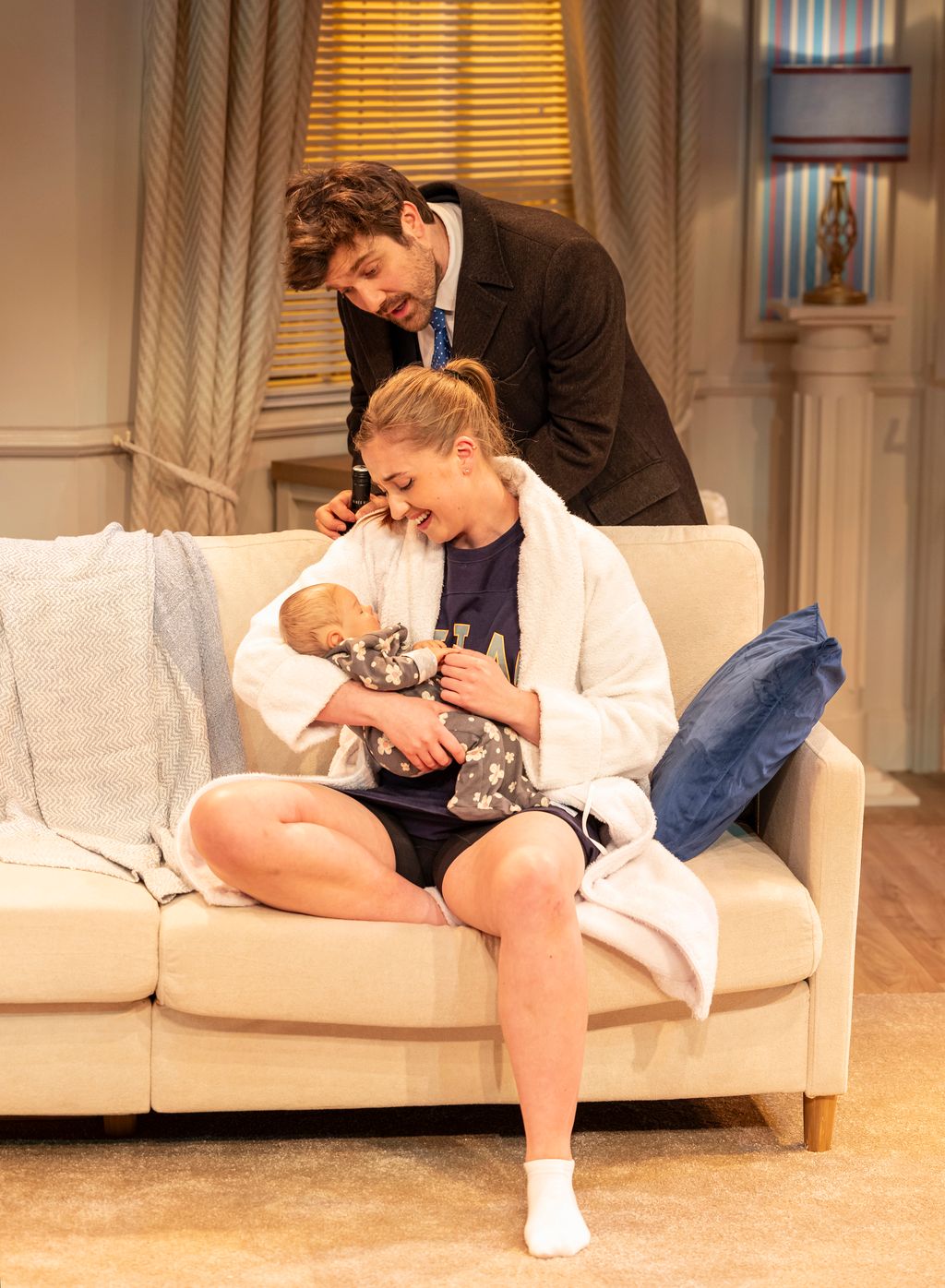
It’s good to meet Christopher Boone (Rory Hobson) again. Mark Haddon’s unforgettable 2003 best selling novel first saw the light of day as a play at the National Theatre in 2013 where I saw and loved it – and Luke Treadaway won an Olivier Award. It has toured extensively since and I saw an abridged NT production in a school at one point. It’s powerful material and Rory Hobson is terrific in this production as troubled, literalist, mathematically talented Christopher – huddling in terror, screaming if he’s touched and giving a warmly convincing account of how it feels and looks to be at this point on the autistic spectrum.

Interestingly though, Mark Haddon never saw it as a book about autism. He set out to write a book about family tensions with a Sherlock Holmes joke in the title. It is now used as a text book on autism training courses, about which Haddon apparently has mixed feelings.

The truth of course is that it’s about a lot of things including friendship, empathy, communication and even mathematics. That’s why it engages so well.  Simon Stephens’s script develops the character of Siobahn, Christopher’s special needs teacher, into a narrator who reads aloud from the book she has persuaded Christopeher to write and Claire Durrant is excellent in this role. She finds exactly the right level of assertive kindness when she’s in conversation with Christopher and she voices him perfectly.

Andrew Miller is good as Christopher’s troubled, deserted father and Holly Gillanders makes a fine job of Judy, his mother. Both are complex characters trying to do their best for Christopher but behaving badly and making mistakes because life is very difficult. Beyond that is an ensemble of six who multi-role many other characters, some stronger than others. They also do neatly directed, witty things with mime – such as becoming an ATM, a group of passengers in a tube train or a railway ticket barrier. The moments when Christopher is overwhelmed – on arrival at Paddington Station, for instance, are very effective too because we feel as if we’re inside his head.

And it’s all played on a simple geometric set (Rose Beaumont and Leon Chmabers) just as the original NT production was. Chambers’s video designs add a lot of visual interest too especially when Christopher is using maths to calm himself down.

I was expecting the lovely surprise for Christopher at the end but many of the audience I saw it with were evidently unfamiliar with this story so it was a nice moment.

When Schubert died at the tragically early age of thirty-one, he left a vast body of compositions, hundreds of which were incomplete, ranging from some that were just a few bars in length, to complete movements intended for longer works. Amongst these was what we know as his Symphony No 8 in B minor, or “The Unfinished”, even though there are at least two other symphonies which he also put to one side, unfinished, perhaps intending to work on them later.
In 1928 the Columbia Gramophone Company announced an international competition to mark the centenary of the composer’s death, the task being to complete “The Unfinished”. This proved to be very controversial, the rules being changed several times, and the eventual “winner”, the Swede Kurt Atterberg, being ridiculed for his “Symphony No 6”, which in reality, is rather good. The pianist, Frank Merrick, was the regional British finalist, and many other well-known composers also entered, Alexander Glazunov being chairman of the impressive team of judges.  BUT, all this proved was that the two movements that make up Schubert’s “Unfinished” are in reality complete in themselves, lasting, as they did in MSO’s concert, some twenty-seven minutes. Although most symphonies do have four movements, many do not: one thinks of Rubinstein’s ‘Ocean Symphony’, which has seven.
Brian Wright took a sedate view of the first movement, allowing the superbly resonant double bass section to underpin the orchestra, letting the music spread, at the same time revealing great attention to dynamics. Although, occasionally, the cellos sounded hesitant in the more exposed passages, the overall effect was of a conductor who had known this music for a lifetime. The second movement proved to be a pleasing contrast with gorgeous sounds from the woodwind section, especially the principal clarinet, Graeme Vinall, and the first violins often producing a rich timbre in the more exposed sections.
Weber’s three clarinet concertos were composed eleven years before Schubert’s 8th Symphony, in 1811 for Heinrich Baermann, having been commissioned by King Maximilian of Bavaria. And the second concerto, especially, has become very popular in recent years, together with Baermann’s “embellishments” which make it into a truly virtuosic work for a superb musician, which is what MSO’s soloist, Jonathan Leibovitz, undoubtedly is. He has the most beautiful, smooth, opulent, creamy tone when required, rather like very thick cream being slowly poured from a jug, as well as the technique to make the coloratura passages sound easy. From the almost impossible highest notes to the very lowest, he is totally at ease, clearly enjoying and savouring every moment of this underrated work.  The orchestral writing, especially for the strings, is quite challenging at times, but the MSO coped very well, as if they had been playing it all their lives.
After the interval, Wright programmed a work which many community orchestras would consider challenging: Brahms’ Fourth Symphony. It had, however,  obviously been thoroughly rehearsed and proved to be a very Germanic interpretation, in the style, perhaps, of Otto Klemperer. All that was missing was to have the excellent second violins on the conductor’s right, rather than next to the first violins, so that they balance the sound, as is still done in most orchestras in Europe, and as Brahms would have expected.
However, that is a minor criticism, given the high level of playing, the first violins coping well with the various difficulties thrown at them, for example in the final movement, and the woodwind section again making an impact, especially principal flautist Anna Binney – what a resonant, full sound she has – and Kirsten Couldwell, principal oboe. The excellent timpanist, Keith Price, also impressed with some very clean playing, as did Owain Williams with his challenging triangle part in the third movement.
This fourth concert in MSO’s 2025-2026 series was a very enjoyable foray into some ‘romantic’  music from the nineteenth century, proving, as Brian Wright says, in his introduction to the 2026-2027 season, that the orchestra is in “rude health”. Congratulations to all.