Press ESC or click the X to close this window

Not Quite Three Sisters (Susan Elkin reviews)

Not Quite Three Sisters

After Anton Chekhov

UAL Central St Martins

Platform Theatre

Star rating: 1.5

This is the fourth reworked classic play I’ve seen in a fortnight (cf A Midsummer Night’s Dream, Edward II and Saint Joan).  And it is certainly the most experimental: too experimental for its own good. It is, however, always good to see young theatre makers and actors trying out new ideas.

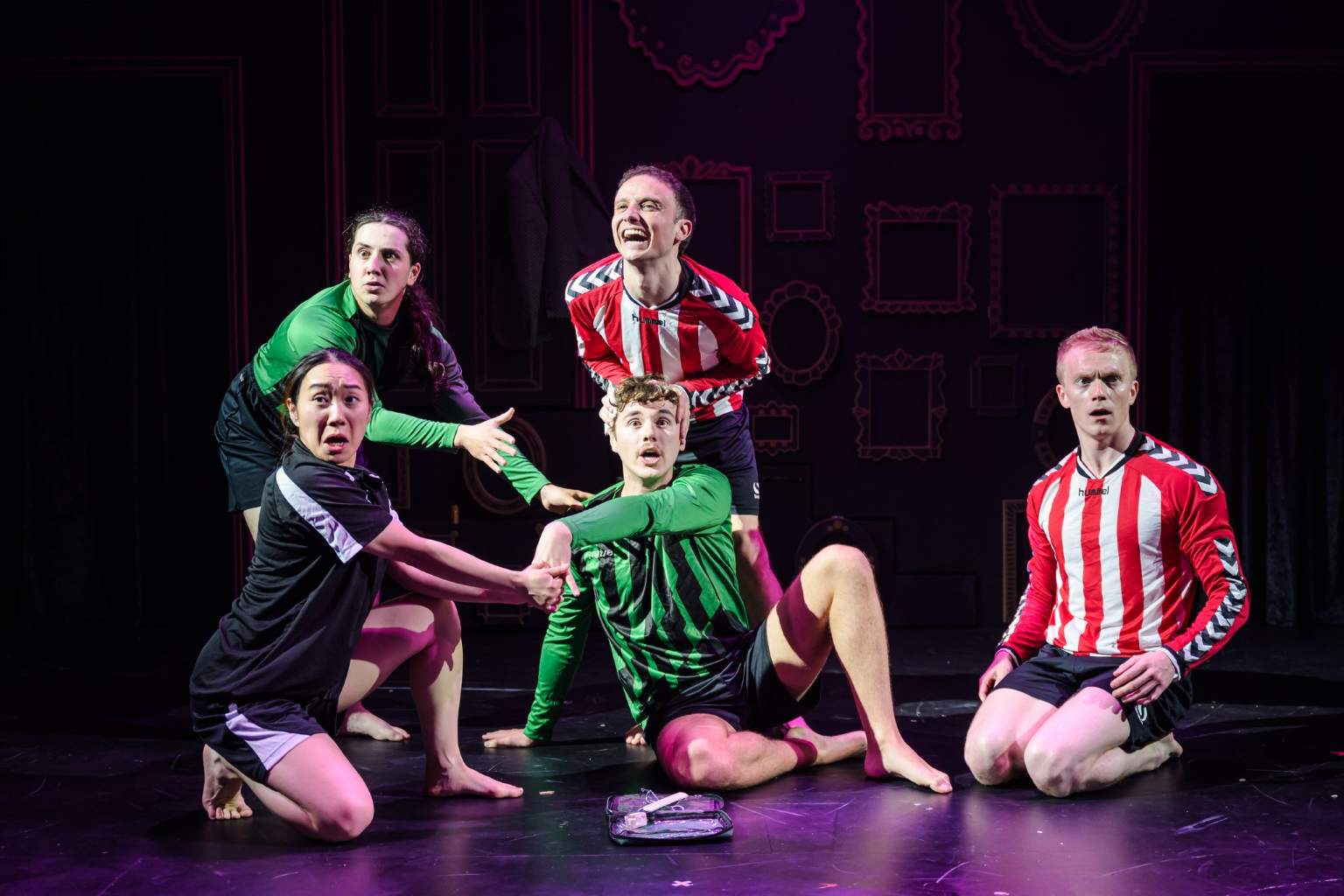
In this show three different directors are each responsible for one of the titular sisters. It’s an interesting idea but it doesn’t make for effective interaction between  chrarcters. And although there are different acting methods and approaches in the mix it’s style at the expense of story telling.

Set on geometrically marked floor with a mobile gauze hinged screen, the narrative loosely follows Chekhov’s original in that these three women are unhappy in different ways and the longing to return to Moscow symbolises that. You would, I think, be hard pressed to follow the action much further if you were not familiar with the source material. And there isn’t much dialogue. Much of it is simply characters making statements.

Another experiment is the use of different languages – with surtitles. It starts in a language I didn’t recognise but soon switches to French in which I am reasonably proficient but it was so heavily accented here that it might just have well have been another language I didn’t know. Even the English, when it arrived, was less than clear. Pier Filippo Valensin, who multi-roles the male parts does pretty well with Italian. I suspect it’s his mother tongue. If this polyglot approach is meant to make a statement about universality I’m afraid it doesn’t. It simply muddies the waters still further

I have no idea, sadly, why Shuyl Alice Wang as Irina has an episode lying on a table communing with a folding step ladder or why she stands for quite a while with a white veil over her head looking like an escapee from Ghostbusters. And that’s just one example of the arty weirdness which dogs this production which is trying far too hard to be clever.

Billed at an hour, it actually runs barely 50 minutes. I wasn’t sorry.


Brief Encounter

Noel Coward in a version by Emma Rice

Directed by Rob Ellis

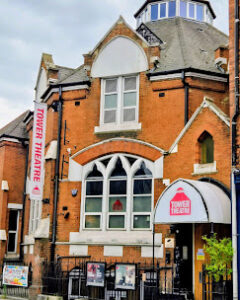
Tower Theatre, Stoke Newington

Star rating: 3

I may be the only person in Britain who has never seen David Lean’s famous 1945 film of Noel Coward’s best-known story of thwarted love. Of course, however, I have seen and heard snippets of the dialogue, and I knew that the film put Rachmaninov’s second piano concerto firmly and permanently on the popular culture map,

Normally I get a bit weary of the every-film-must-be made-into-a-musical mentality but Emma Rice’s (2008) take on Brief Encounter feels fresh and innovative. It is actually more of a play with songs and lots of evocative background music than a true musical.

So let’s start with the pleasing on-stage live band which is already playing when the audience enters. It is ably led on keys by Tower Theatre veteran, Jonathan Norris but he should not be singing in public as he does in the 15 minutes before the show goes up. Colin Guthrie, however – a talented and versatile musician, delights with one of the sassiest accounts of Coward’s timeless “There are bad times just around the corner” that I’ve heard in a while. Thereafter they accompany the odd song on stage and provide a filmic sound track. All eight cast members are reasonable singers with an exceptionally fine performance from Imogen Front as Beryl. Her duets with Tom Lafferty as Stanley are excellently done. You can hear every harmony and, as a flirty pair, they play well off each other.

At the heart of this story, as nearly everyone knows. is a middle-aged couple who meet in a railway station buffet and fall in love. Clandestine meetings follow. Eventually, not least because each has a perfectly decent spouse and children, they part and go their separate ways – cue for lots of Rachmaninov. The cast sings a rather nice reference to it in a wordless arrangement and we hear a grandiloquent recording at the end after Victoria Flint’s Laura has soulfully played the first few notes on Norris’s piano.

Flint gets the mannered middle class 1945 accent perfectly – stand to rhyme with bend and house to rhyme with dice. Dom Ward’s Alec sounds less convincing. She gazes dreamily into the distance effectively while he brings a lot of attentive warmth. The details niggle though. In the mid 1940s she would have worn nylons and suspenders rather than tights and a respected GP would not have been covered in tattoos but these are minor gripes.

The support cast is strong as they work through the two other relationships in the plot which have a future, unlike the one between Laura and Alec.  Matthew Vickers is a convincing cheeky station employee who has the hots for Deborah Ley’s lively buffet manageress – there’s lots of stage business with tea and tea cups in this show. And the younger Beryl and Stanley represent love at its most straightforward. James Taverner is fun as the crossword-addicted Fred and Fiyin Ifebogun is splendid as the both the sulky waitress and the loquacious Dolly. Most of the cast has to multi-role.

A note of praise for Stephen Ley’s lighting design. It really illuminates the emotion by highlighting faces and bringing the station to life.

While not flawless, this show is a decently entertaining, and often imaginative, couple of hours of theatre.


Heart Wall

Kit Withington

Directed by Katie Greenall

Bush Theatre

Star rating: 4


This tautly written, nicely directed, play about bereavement, grief and family dynamics is a Bush Theatre production, co-commissioned by Oldham Coliseum. It is set in and around a traditional community pub where Karaoke sessions bond the customers.

Franky (Rowan Robinson) has returned home unannounced. She is clearly troubled and evasive about the boyfriend and job she has left in London. She is no hurry to return.  Her father, Dez (Deka Walmsley) is  unravelling and her mother Linda (Sophie Stanton) is, it soon emerges, is seeking solace elsewhere although it’s compicated. Meanwhile there’s Franky’s old friend Charlene (Olivia Forrest) and Valentine (Aaron Anthony) in the pub, both with stories of their own and providing insights into Franky’s family.

From the beginning we know that there has been a dreadful tragedy in Franky’s family many years earlier which none of them has ever processed properly. Moroever, it has blighted Franky’s entire life even though it happened before she was born. Kit Withington’s script drip-feeds the facts with tantalising tension over the play’s 100-minute, interval-free duration. Eventually there’s a startlingly beautiful reconciliation scene for which Hazel Low’s set springs a rather effective surprise.

Three things stand out to make this production noteworthy. First the acting – especially Walmsley and Robinson – is highly compelling. Walmsley finds a whole range of emotion in Dez from affectionate dad, to bellowing fury and utter despair. And he switches almost instantly between moods to create this unhappy, disturbed character. And Robinson brings brittleness, curiosity and anxiety to Franky who, above all, needs to be loved unequivocally and to be talked to openly and honestly by her parents.

Second, director Katie Greenhall makes terrific use of eloquent silence. Time and again something is said and there’s a long beat – when, for example, Franky is talking to, and provocatively testing, Anthony’s character in the pub. You can hear the characters thinking.

Third, for the first 45 minutes or so there’s a lot of humour in this play. Then, as it gradually darkens, we laugh less and the shift is effectively managed.

It’s an admirable and engaging piece of theatre.

Photo credit: Harry Elletson

A digital conversation with one of the most loyal followers of Susan’s Bookshelves recently came round to  Franz Kafka. My correspondent was reading The Trial and that reminded me of Metamorphosis (1916). I studied it, in a perfunctory sort of way, as part of my undergraduate degree. And I once saw, and reviewed, a compelling and memorable staging of it by an innovative physical theatre company. Otherwise I hadn’t looked at it for a long time so it was overdue for a revisit.

It’s a long short story or novella which, famously opens with Gregor Samsa waking up one morning to discover that he has turned, overnight, into an insect: something repellent such as a cockroach. His family are appalled, mostly because Gregor – a very successful salesman – has been keeping his idle parents and sister in comfort. If he can’t work they will have to fend for themselves and that is their overriding concern although Grete, his sister tries to be kind at the beginning.

Well, my first 2026,, septuagenarian question was: Are we actually supposed to take this strange, surreal story literally? Although it’s written in the third person it’s almost entirely presented from Gregor’s point of view. Is it actually a depiction of severe mental breakdown? Kafka died aged 41 (in 1924) after a tortured life of mental health issues, depression and ultimately tuberculosis. He understood despair and had a troubled relationship with his own father, a wealthy Jewish Czech merchant, who had no time for literary aspirations.

So perhaps Gregor is simply (nothing simple about it, though) overcome by a profound sense of worthlessness which convinces him that he might as well be an insect – so he effectively becomes one? When the family finds him, for example, crawling around the floor and hiding under the sofa, eating mouldy scraps and getting thinner are they actually seeing their sick, deluded son in his own body but with his active mind very much elsewhere? After all they never, for a moment doubt that it’s him. They are revolted and ashamed but they don’t stamp on him. Gregor meanwhile is unable to speak (another symptom of profound illness?) but can hear and understand everything which is said around him. As a reading, it works but it’s far from flawless.

On the other hand perhaps we should take it at face value and accept that Gregor really is an insect. The details about his tiny legs and shiny carapace are convincing. It’s an existential, absurdist story after all. Clearly it’s about exploitation and alienation. And it was published in the second year of a massive European war the same year as Paul Hindemith premiered his cello concerto and Matisse painted The Piano Lesson. The world was suddenly a long way from Charles Dickens, Brahms and the Pre-Raphaelites. Moreover insects are often (usually?) in colonies like armies.  Gregor is entirely alone and ever more isolated as the story progresses and perhaps that is relevant too. His predicament severs the connection between him and his tribe.  And wars are all about tribalism.


Finally –  I’m not going to worry about spoilers in this instance – Gregor dies. Like all insects he has only a short life. Anyway his body is damaged and he hasn’t had enough of the right sort of food. The char woman, employed now they can no longer afford maids and cooks, casually disposes of his body and tells the family she has got rid of “that thing”.  At that point it’s definitely a dead cockroach the reader envisages. But it could, at a stretch, be Gregor forseeing his own death and imagining the family showing no interest in conventional arrangements because he believes he is worth nothing to himself or them.

Kafka was from Prague, then Austria/Hungary, now in the  Czech Republic  but he wrote in German. I have never studied German so obviously I have only ever read Metamorphosis in translation. I gather that there is humour – irony even – in the original language which disappears in translation. That too probably affects interpretation.

The  most interesting thing of all, maybe, is that critics are still thinking and arguing about all this 110 years after Metamorphosis was published. I reckon, poor, disturbed, unhappy Kafka might even have managed a smile.

Next week on Susan’s Bookshelves:

Saint Joan

Adapted by Ruthie Black from George Bernard Shaw

Arches Lane Theatre

Star rating: 3


George Bernard Shaw’s 1923 play runs for over three intensive hours with six scenes and an epilogue. Ruthie Black, who also plays the titular Joan, has pared it down to 70 minutes. Either way it’s heavily discursive material which asks a  lot of questions and, quite deliberately, doesn’t answer them.

Joan – Jeanne d’Arc – was an illiterate peasant girl who successfully led French armies against the English in the early 15th century, driven, she always claimed, by the voices of saints and angels in her head. Burned at the stake in Rouen for heresy aged only 19, she became a cult figure soon after her death and was eventually canonised by the Catholic Church in 1920 – an event which was part of the inspiration for Shaw’s play.

Black’s two-hander version sets it in a bleak interrogation room (the same sort of institutional chairs that the audience is seated on) and stresses the timelessness of the narrative with an (over long) agonised jazz song at the beginning, motor cycle leathers and at one point a Facetime time interview on phones. Fair enough. We are, after all, still debating the extent to which religion drives power struggles and wondering whether war is ever justified even if you are unshakeably convinced that some version of “God” is on your side.  There’s even an anti-capital punishment discussion sewn into this. Joan was executed in the worst possible way – on the same day as the trial at which she was pre-judged and predictably rejected life imprisonment as an alternative. Twenty years later there was another trial at which her name was cleared – a pretty strong argument against punishment by death.

Black – her magnificent cornrows emphasising Joan’s strength and individuality – is a richly charismatic performer.  Her face speaks eloquently as she listens to what’s being said to, and about, her especially during the recantation which comes in the epilogue. She does fear and anger very well – at one moment every inch the determined. dignified leader and the next a terrified teenager.

James Saxby plays everyone one else including the inquisitor, Joan’s ally Jack and the Dauphin of France who has become King Charles the Victorious by the epilogue. Saxby makes the changes unfussily and almost entirely by voice but it works pretty effectively.

Even at 70 minutes, it’s a dense and wordy piece but director Peter Hinto-Davis incorporates a fair amount interesting movement round the space including the occasional use of the centre aisle so that it never feels too static.

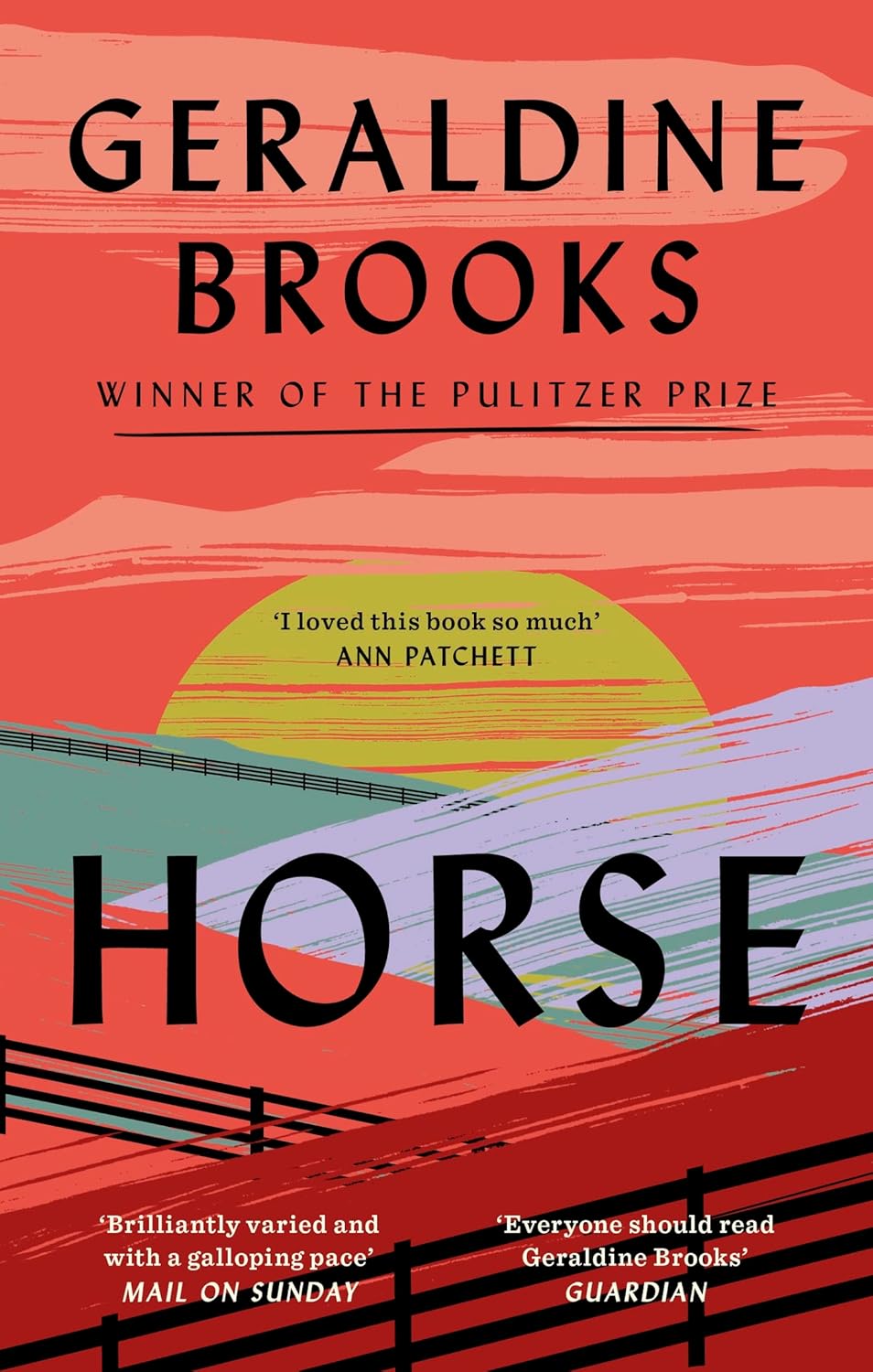
Published in 2022, this book became a runaway, international best seller and I can see why. It tells a devastatingly gritty story rooted in real events and the characterisation is wonderful. Very loosely it visits the same ground as The Grapes of Wrath, one of the most powerful novels of the entire 20th century but, unlike John Stenbeck’s masterpiece, this one ends on a note of (tearful) hope.

Elsa is the daughter of a prosperous family in a small town in 1920s Texas but, partly because of a childhood illness she is cruelly marginalised. When she sneaks out for a liaison with a glamorous young American Italian and the inevitable happens her parents reject her completely. Rafe’s farming family take her in and slowly they become the family she has never had – stronger than ever when Rafe leaves and she is abandoned with two young children.

The real action, however, kicks off in 1934 when Texas is hit by, what turned out to be, several years of drought, dust storms and devastation on top of the disastrous economic effects of the 1929 Wall Street Crash. In the end, in desperation, Elsa takes her children away from the “Dust Bowl” to California in search of a better life. But, of course, things get ever worse. The downwards spiral is relentless.

The novel is very good indeed at evoking the smells, sounds and sensations of life in those places at that time. I could feel the gritty dust between my toes, hear the howling winds destroying farm buildings and taste the lovely food Elsa and her Italian mother-in-law cook together before things get too bad. And as for the experience of a shower or bath after months without, I was in the water with them.  I also learned a lot of geography.

Hannah’s novel is partly about injustice. In California greedy farm owners are exploiting migrant workers to pick their cotton. The pay rate keeps going down. The workers – if they’re fortunate enough to be housed on site – are effectively slaves because they have little cash and are obliged to buy over-priced food on credit from the owner’s shop. All this is well documented in history.

So is the movement which rebelled against the cruelty of the system. The authorities regarded the “Reds” who were trying to get the workers to strike, as pernicious and there was a lot  of violence. Hannah’s character Jack, who epitomises all, this is beautifully done: sincere, charismatic, decent.  And he becomes the first person ever to recognise Elsa’s true worth. When you’ve been conditioned from infancy to regard yourself as unattractive and useless, self esteem is a very fragile thing.

Immigration is still very topical in 2026. People leave their homes because life, for whatever reason, has become untenable. So, in their thousands, they risk everything to travel to somewhere they believe to be better.  In many part so the world they are then met with hostility, prejudice and exploitative practices. I thought a lot about things which are going on now while I was reading The Four Winds,

A major theme in this fine novel is the relationship between mothers and daughters. Elsa’s birth mother disregarded and then disowned her. Her mother-in-law Rose becomes the mother she has never had. And Elsa’s daughter Lareda, pubescent at the point they leave for California, is central to her life. She’s a troubled, angry young woman, given to screaming in frustration at her “failed” mother but Elsa loves her unconditionally and, eventually,  mutual understanding and respect develops.

It doesn’t end as I expected (hoped?) but you reach the final page, knowing that, thank goodness, there’s some positivity for the future.

At another level this fine novel is a real page turner. I gobbled its 460 pages in less than three days. I shall now explore the author’s other novels.

Next week on Susan’s Bookshelves: Metamorphosis by Franz Kafka

Edward II

Christopher Marlowe

Directed by Alex Pearson

Alex Pearson Productions with Glass Splinters

Jack Studio Theatre


Star rating 4


It’s quite unusual to see a classic Elizabethan play in a pub theatre, especially when it isn’t Shakespeare. And done as well as this, it’s a  treat. It’s also an original take on Marlowe’s play because it’s an all-female cast of six with the text pared down to 90 minutes run without interval so the tension never flags. Every word is clear with the meaning skilfully rammed home and the story telling as clear as it could possibly be,

Famously, it’s a play about a power struggle. The titular Edward (Natalie Harper) wants his beloved Gaveston (Elinor Machen-Fortune) at his side. His barons think otherwise. It’s a tragedy so it doesn’t, of course, end happily for anyone.

Harper delights as Edward gradually losing his authority and blindly in love with Gaveston but cruelly dismissive of his wife Queen Isabella (Alison Young – good) referred to as a “French strumpet” at one point. The villain of the piece, really is slippery Mortimer (Srabani San) who wants the power for himself. San excels in this role. She does glittering cunning, exasperation and ruthlessness often disguised as reasonableness with terrific, chilling conviction. And like everyone else in the cast her active listening is a pleasure to watch.

There is a great deal of doubling in this show and it works well with lots of different accents. Machen-Fortune’s Gaveston is charismatic. You can see why Edward is so drawn to him. She is also good as the young Prince Edward (real tears at the end) and as the crusty Bishop of Coventry. Victorias Howell is strong as very mannish men such as the calculatedly political Lancaster, the loyal Spencer and several rough soldier types. And Emma Louise-Price demonstrates seamless versatility as she switches from Warwick, the King’s brother, jealous and objecting, to low life characters such as Baldock.

Eve Oakley’s set makes pleasing use of the Jack Studio’s rather limiting space by creating an upstage alcove with a chaise longue and net curtains which eventually come down. Personally I could do without the dry ice because it makes me cough but I suppose it adds to the atmosphere.

There are many fine dramatic moments in this production. It will be a while before I forget the murder of either Gaveston or Edward. Director Alex Pearson evidently agrees with the Greeks that you get the best effects but doing these things off stage and allowing audience imagination to do the work.

This is definitely one to catch if you can. It runs until 18 April.


A Midsummer Night’s Dream

William Shakespeare, edited by Robin Belfield

Directed by Robin Belfield and Rachel Bagshaw

Co-produced by Unicorn Theatre and RSC

Unicorn Theatre

Runs until 10 May


Star rating: 4


Definitely edited, rather than “reimagined” Robin Belfield’s  90-minute take on The Dream with a cast of eight runs entirely on Shakespeare’s text apart from a few pronoun changes. Moreover it includes some beautifully spoken verse – especially by Chris Jared as Theseus/Oberon and Josephine-Fransilja Brookman as Puck. And the story telling is as clear as I’ve ever seen it. As an introduction for young audiences it ticks all the boxes with panache

Lily Arnold’s geometric set has more than a whiff of Peter Brooke’s groundbreaking 1970 white box production for the RSC – for anyone old enough to remember it.  Here we’re in a large white space with sliding transparent vertical boxes, tyres suspended from ropes and high level quasi walk-on shelves accessed by ladders. It means, for example, that Oberon and Puck can look down on the action. And Titania’s bower appears in the centre of the back wall on the same high level. Sometimes we just see heads through windows. It’s all rather magical with bird song and summery sounds (Holly Khan) – as promised by voice at the start requesting that mobile phones be switched off.

There is stunningly imaginative work from Will Monks too. His video and captions designs project every word spoken on stage on to the back wall but fonts change in style and flavour and it moves about. It’s a long way from conventional, functional captioning, becomes part of the action and feels like a conversation in itself.  Projection tells us where we are too: Athens, Another part of Athens or A Wood near Athens. And in the interests of impeccable clarity each new character is briefly framed in a doorway with a caption above him or her announcing who they are. And when it’s the mechanicals (who double with the lovers) they carry and use the tools of their trades so we’re in no doubt. It’s all charm-packed fun.

Emmy Stonelake is outstanding as a gloriously Welsh Bottom being as pushy and exuberant as required but tempering it with a bit of self doubt.. She’s also good value as the grumpy, bossy Egeus and there’s a bit of improvised stage business with her stuck-on moustache which is very funny.

It’s a good idea to open a  child-friendly production like this with Puck rather than with Theseus being stilted with Hippolyta (Amelia Donkor – good) and plotting daughter-suppression with Egeus. Brookman comes in from the back of the auditorium and speaks Puck’s first speech which works well. So does the use of the semicircular aisle between the stalls and the front block of seats. It makes the production feel immersive especially when Theseus and Hippolyta are watching Pyramus and Thisbe.

In a pleasing production, featuring eight strong actors, highlights include an especially frantic, nicely choreographed fight between the four outraged lovers before Oberon utters the pivotal words which trigger the move back to reality. The bergomask after Pyramus and Thisbe is entertaining too with, Theseus and Hippolyta joining in and the four rustic characters congering off cheerfully at the end.

There were many children (it’s billed for 7+) in the audience I saw it with.  Most were engaged and there was a lot of spontaneous laughter. Ergo this is a production which more than achieves what it sets out to do.