Press ESC or click the X to close this window

Eurydice (Susan Elkin reviews)

Eurydice

Sarah Ruhl

Directed by Stella Powell-Jones

Jermyn Street Theatre

 Star rating: 2

Sarah Ruhl is an accomplished playwright but the trouble with trying to retell a myth as famous as this one is that many people – most notably Monteverdi and Gluck – have done it so well before that there isn’t a lot left to say. Moreover if you modernise it as Ruhl does, presumably to highlight the relevance, then it gets narratively, and irritatingly, inconsistent.

The story, of course, is that Eurydice is in love with musician, Orpheus and marries him. Then she dies and goes to the underworld. Distraught, Orpheus eventually strikes a bargain with Hades, God of the Underworld, that he can lead Eurydice back to life but if he looks back at her as they walk out then she will die for ever. He cannot resist looking so it all ends in tears.

This production gives us a fine central performance by Eve Ponsonby who finds a nice blend of wide eyed innocence and devastated anguish and manages to make it pretty convincing. Keaton Guimaraes-Tolley more or less matches her as the  other-wordly Orpheus playing pleasing little melodies on his guitar – more current than a lute, I  suppose.

The play feels padded out and is actually too long at 80 minutes. Why do we get a scene in the underworld in which Eurydice’s father teaches her some Greek derivations such as “ostracise” and “peripatetic”? It feels like an irrelevant bolt-on. Why is there a scene in which a rather unpleasant man coaxes her away from her own wedding? And the chorus of three stones in the underworld are risible. Perhaps they’re intended to be comic but actually, they’re excruciating.

And as for those inconsistencies how come Eurydice arrives in the underworld speaking a different language so she’s cut off from communication but five minutes later she’s enjoying a warm, cosy chat with her father (Dickon Tyrrell)? Why, when Hades (Joe Wiltshire-Smith)  first appears is he a schoolboy with a wooden hobby horse? (apart from being able to use the latter to make a lewd suggestion). Why is she told there are no hotel-style rooms in the underworld and then shown to one? The playwright, apparently, wanted an Alice in Wonderland vibe for the Underworld and she certainly achieves that because it’s hard to make sense of quite a lot of this.

Tina Torbey’s set uses lidded grey boxes and floaty blue curtains to good effect but goodness knows what the string is meant to signify.  Carmel Smickersgill gives us a pleasing sound design including evocative sea noises and some suitably hellish sound effects for the underworld

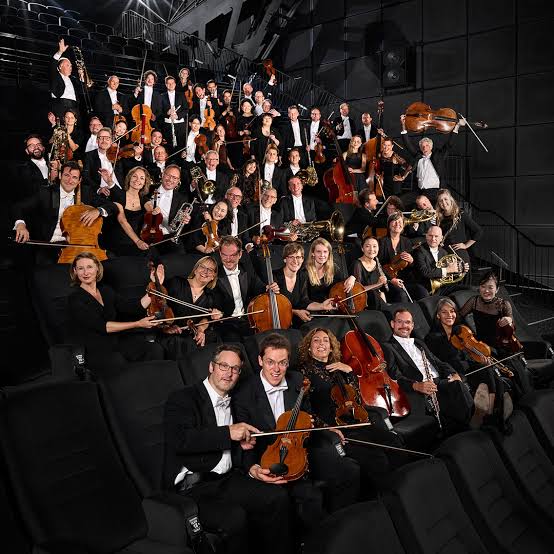
Lviv National Philharmonic Orchestra of Ukraine

Cadogan Hall, 07 October 2024

Conductor: Theodore Kuchar

Soloists: Mykhailo Sosnovskyi (flute) Oksana Hretchyn (violin) Jiri Barta (cello)

Monday 07 October 2024


Part of Cadogan Hall’s Zurich Interntational Orchestra series, this concert was certainly value for money. It’s rare these days to get four full length works plus gorgeous folksy Ukrainian encore and it didn’t finish until 10.15.

I have known the Brahms double concerto since my teens and have listened to recordings hundreds of times but this was the first time I have heard it live. It gets few outings because it’s expensive to do so this was a rare treat and a terrific start to the second half of the concert. It took cellist Jiri Barta, his music on an iPad with blue tooth pedal under his left foot, a few minutes to warm into the first movement but thereafter he and Oksana Hretchyn, a stately, dignified and unshowy player, were well adjusted to each other with good steady work from the orchestra. They played the richly “Brahmsian” Andante sensitively alongside some lovely work from the wind section. They also packed the vivace with drama leading to a resounding conclusion and highlighting the talent of the orchestra’s principal bassoon, Andriy Thachuk.

The other high spot in this concert, whose second half was generally much better than the first, was a sparky account of Beethoven 2 for which Theodore Kuchar adopted a completely different conducting style. Gone was the score and stand. Working on an assumption that we all know this symphony well enough to present it with panache, and hear it with joy, he found new ways of making it fresh. He bent double to entice dramatic pianissimi and often simply twitched and pointed rather than beating time. The effect was to build in lots of refreshing immediacy. The Larghetto was packed with dramatic contrast with particularly pleasing playing from bassoon and flute and I really liked the wind playing in the trio. Kuchar found lots of lightness in the Allegro with its off-beat rhythms and prominent timp. It was, in short, quite an original performance of a warmly familiar work.

The concert began with a mini flute concerto entitled Chamber Symphony No 3 by Yevhen Stankovych, born in 1942. He re-orchestrated the piece for strings and flute, especially for this performance. The orchestra’s principal flautist, Mykhailo Sosnovskyi, gave us some intensely lyrical playing in the middle section and I liked the plaintive mini glissandi over pizzicato and then col legno strings dying away to nothing at the end. On the whole, though, there wasn’t much warmth  here and it wasn’t a particularly digestible concert opener.

The other work in the first half was Sibelius’s relentlessly lugubrious fourth symphony which, of his seven symphonies is the one I like least. And Kuchar’s rather irritating audible breathing  didn’t help. There was, however, some noteworthy attention to mysterious anguish in the third movement especially from flute and lower strings and the string solos in the last movement were good, Interesting that the Cadogan Hall audience didn’t know when this rather strange work was finished so that Kuchar had to turn round and signal that they could applaud. I think that rather sums up the flaws in this symphony.

Philharmonia

Royal Festival Hall

Andrew Manze (conductor) Lise de la Salle (piano)

06 October 2024

Main photograph: Marc Gasgoigne

It was reduced Philharmonia forces for this all classical (in the strict sense of the word) concert. The configuration was different too with cellos to the left of first violins and seconds seated on the other side of the piano to the conductor’s right. Cue for much pivoting on the podium.

Lise de la Salle –  the first soloist I’ve seen clad in black leather trousers but why not? – was a replacement for Sir Andras Schiff who has broken his leg. Her style is, of course, different  but she gave us a vibrant, energetic, businesslike performance of Haydn’s 1780 piano concerto in D with a sensitive, individual take on the first movement cadenza. I admired the tender accompaniment which Andrew Manze coaxed from the orchestra in the Adagio and marvelled at the explosive, energetic, high speed rendering of the witty Rondo.

Then it was piano pushed to the back for Schubert 8 in all its glory. Manze, who often signals the rhythm of the music rather than beating time, allowed the brooding cellos and basses to work their magic and really leaned on the general pauses and the dramatic sforzandi. All that menacing B minor, which Manze clearly likes as much as I do, simmered mysteriously especially when he racked it up in the big repeat.  The Andante – arguably Schubert’s best symphonic slow movement –  was a joy too, especially in the tentative passages. It was well balanced with plenty of poignant intricacy and some fine work from clarinet and oboe.

The piano reappeared during the interval for Mozart’s 1786 A major piano concerto, maybe his loveliest, which completed the concert. Manze, who smiles a lot, made it sound both crisp and fluid. Lise de la Salle is a poised but not a flamboyant performer who delivered the first movement with charismatic precision and opened the adagio very much in chamber music mode, evidently delighting in playing with the wind section. Her lead into the Allegro was nippily incisive with some nicely pointed left hand work.

REVIEW: THE RIVER by Jez Butterworth at Greenwich Theatre 1 – 27 October 2024

Susan Elkin • Oct 04, 2024

Photo credit: Danny with a Camera

‘Baffling, clunky  play on a good set’ ★★

When this play debuted at the Royal Court in 2012,  Michael Billington described it as “slightly unfathomable”. That is an understatement. It is totally incomprehensible. About two thirds of the way in it becomes clear, to this reviewer’s relief, that we’re not actually meant to know what’s going on. That may be an interesting and clever dramatic trope but it hardly makes for engaging theatre. Subtlety can be just too subtle and nuance too nuanced.

Let’s start with the good bits. Emily Bestow’s set is splendid. We’re meant to be in a remote cabin (no idea where) belonging to the unnamed Man’s family. He goes there for sea trout fishing, often taking a woman with him. Bestow creates a plausible cabin on two levels with old fashioned fridge, gas cooker and sink in a kitchen above a downstage living area. It is semi-encased in wooden timbers. And because the cabin is on a big river, sound designer Julian Starr provides powerful watery noises and we get a good sense of the weather and power of nature outside from Henry Slater’s flickery lighting.

Also noteworthy is the quality of Paul McGann’s acting as the rather wooden central character in whom he finds a lot of understated, troubled stillness. He works well too with both Kerri Maclean and Amanda Ryan as the two women at the hut with him – or are they just in his memory? Maybe they’re ghosts?  These seem to be interchangeable and some of the scenes repeat. There’s a third woman at the very end too. And a framing device involving a child … no, I have no idea either. There is an audibility issue with all this too. The dialogue is directed (James Haddrell) to flow very naturalistically and, from row G, I missed quite a bit of it.

It is, moreover, clumsy  for large chunks of a play to consist of two characters telling each other what they’ve said and done off stage when they both know because they were there. It makes for very clunky dialogue contrived presumably just to inform the audience.

I go to the theatre to be entertained, challenged, moved, amused and shocked, among other things. I don’t go to be baffled.  Even on press night when there were large numbers of cognoscenti in the house the applause, at the end of this 80 minute piece, was polite but palpably puzzled.

The River runs until 27 October. https://greenwichtheatre.org.uk/whats-on/

THIS REVIEW WAS FIRST PUBLISHED BY LONDON PUB THEATRES MAGAZINE https://www.londonpubtheatres.com/review-the-river-by-jez-butterworth-at-greenwich-theatre-1-27-october-2024


The Whistling

Adapted by Rachel Wagstaff & Duncan Abel from novel by Rebecca Netley

The Mill at Sonning

 Star rating 3

Of course fiction simply circles round the same handful of  base stories. We all know that. But alas, Rebecca Netley’s novel – at least as it is adapted here – feels, pretty unoriginal. It’s Jane Eyre/Rebecca spliced with a hefty dose of Macbeth, appropriately perhaps, as we’re in Scotland. And of course, as in Jane Eyre and Rebecca there’s a fire (off-stage) and we get a pretty dramatic incantation scene as in the Scottish play.

It’s the 1860s when troubled, bereaved Elspeth (Rebecca Forsyth – strong performance) arrives on a remote island to be nanny to a traumatised little girl Mary (Saffron Haynes at the press performance I saw) who has become an elective mute. In what is a rather uneasy cross between a ghost story and a whodunnit Elspeth meets some sinister and some apparently kind people as she tries to work out what  happened to Mary’s twin brother and to the previous nanny. She suspects skulduggery and, of course, she’s right although there’s a twist at the end.

The weak narrative is redeemed to a considerable extent by the quality of the acting and the imaginative way in which the cast of eight is directed by Joseph Pitcher on Diego Pitarch’s dark set which really does look like a very grey 19th century house on a Scottish island. All cast members not involved specifically in the action at any given moment form a hooded, silent chorus moving set items on and off, using physicality to evoke scenes and sometimes singing eerie Scottish ballads. The effect is quite disturbing, especially given Richard G Jones’s lighting which casts an atmospherically murky gloom, while always allowing us to see enough to know what’s going on.

And over all this is an excellent sound design by composer Simon Arrowsmith. It’s creepy: the bumps, whistles, humming in the house and the birds screaming on the beach along with musical snatches which connote mystery and, maybe something supernatural. He quite often makes the audience jump.

It’s an enjoyable piece of theatre which shows what a really competent director can achieve with an accomplished cast and inspired creatives. I shan’t be rushing out to buy the novel, though.


REVIEW: LUCKY DOG by Tim Connery at Bridge House Theatre 1 – 12 October 2024

Susan Elkin • Oct 02, 2024

‘Nail-biting look at the horror of compulsive gambling’ ★★★★

Tim Connery’s new play is richly compelling. It takes us to the heart of compulsive gambling as well as intelligently exploring the psychology, philosophy and mathematics of chance. And in the hands of three strong actors it zings along.

Joseph Lindoe presents an unnamed protagonist who rents a tiny room in a south coast town so that he can access the casino. He has to gamble, just as much as the dog he eventually adopts with Jenny (Kate Loustau) who becomes his wife, has to run. And it’s an outstanding performance with a wide range of introspection and different levels of naturalistic dialogue. He addresses the audience making it clear that he knows his faults only too well. In conversation with Jenny he is pleasant and loveable and we see an affection in his relationship with the dog especially when he depicts a near miss as the dog charges away across a main road. Moreover he’s increasingly lost in his dealings with an utterly revolting loan shark played with terrifying conviction by Kurt Lucas who several times made me jump with his volatile, bellowed invective. The character Lindoe creates is rounded and alarmingly believable.

Of course his worsening spiral of debt and the obscene interest rate he’s facing puts pressure on his relationship with the ever patient Jenny whom Loustau makes sweet and loving but strong – and almost plausible. She has knowingly married a man with a dreadful weakness and I did wonder a woman in her position would be quite so accepting and uncritical. She is slightly too saintly but it doesn’t affect the overall impact of the play.

Director Alex Donald knows how to rack up the tension. There’s one scene in which the roulette wheel is spinning – reflected on the ceiling – and the sound is escalating while Kurt Lucas, as the croupier, mutters numbers sotto voce and we are all on the edge of our seats. And I don’t suppose I was the only audience member having to cling on tight to prevent myself from shouting “Please, please please don’t go to the casino” at Lindhoe’s character as he gets deeper and deeper into trouble. In a sense it’s a horror story and as such it’s nail-biting theatre.

Box Office https://thebridgehousetheatre.co.uk/shows/lucky-dog/


CAST

Joseph Lindoe, Kate Loustau, Kurt Lucas

ARTISTIC TEAM

Director Alexander Donald

Writer Tim Connery

Producer JLA Productions & Stage D’Or

Lighting Designer JLA Productions

Sound Designer Luke Adamson

THIS REVIEW FIRST PUBLISHED BY LONDON PUB THEATRES MAGAZINE https://www.londonpubtheatres.com/review-lucky-dog-by-tim-connery-at-bridge-house-theatre-1-12-october-2024

Redlands

Charlotte Jones

Chichester Festival Theatre


Star rating 4


Photograph by Ikin Yum

Charlotte Jones’s beautifully written new play takes as its central lynch pin the drugs raid at Keith Richards’s West Wittering home in 1967. The trial took place in Chichester so there’s plenty of local interest to make the audience chuckle. This is not, however, a play about the Rolling Stones as such.  Rather it’s a reflection on the importance of being allowed to find yourself when you’re young. Thus Jones splices together the experience of young Nigel Havers (Louis Landau – nice performance) whose father Michael Havers was defence lawyer on the case, with that of Jaggers and Richards. All are rejecting what the older people around them want in order to plough a new and original furrow of their own.  As Landau says at the beginning of the play. “One day I’m going to be a famous actor but at the moment I’m still at school.” Jagger and Richards are sticking two fingers up at the old guard through everything they say and do, and especially through their sexually provocative music of which we see a fair bit. And it causes authoritarian, maybe jealous, resentment in, for example, the police who conduct the raid which was probably a set up by a News of the World journalist.

As Jagger, Jasper Talbot gets exactly the right insouciant, adpoted “mockney” manner and his body work during the music interludes is finely observed. Good casting too because he actually looks like Jagger. Brenock O’Connor has clearly studied Keith Richards’s work very closely too because he’s richly, rudely convincing. I wonder how long he had to practise that Chuck Berry duck walk? Meawhile Emer McDaid gives us a multi-dimensional take on Marianne Faithfull who was Jagger’s girlfriend at the time of the raid. Here she is flirty, of course, but  she’s also vulnerable.

Anthony Calf nails a suitably patrician, lawyerly manner for Michael Havers although the play builds in scope to develop and soften it gradually. Eventually there’s a rather moving reconciliation scene with his son and a very funny one when, once they’re freed, he invites Jagger and Richards to the Garrick Club which I gather actually happened in real life because Havers genuinely came to like them. Theatrically it’s a quite neat comedy of manners,  enhanced by excellent work from Clive Francis as Michael Havers’s father, a retired judge famous for presiding over the Ruth Ellis case. All the Havers clan are lawyers except Nigel and his very decent mother Carol (Olivia Poulet). There are lots of minor roles in this play which uses an accomplished  cast of seventeen many of whom have to do some nifty doubling or trebling.

Redlands is a vibrant piece of theatre with high powered, ramped up music provided by a seven piece, often on-stage, band led from keys by Alan Berry. And Joanna Scotcher’s effective set puts the  word “Redlands”, writ large in neon lights, round the back wall so that we can be one minute in a concert hall with revolve, or downstage in a domestic setting the next.

Director Justin Audibert makes imaginative and inclusive use of the space too with two satellite mini stages in front of the main playing space and, inclusively, there are several occasions when actors are in the heart of the audience.


Daniel Deronda (1876) came four years after Middlemarch and was George Eliot’s last novel. She died in 1880, aged 61. I hadn’t read it for many years and was fascinated to get back to this engaging study of what it means to be Jewish, as topical now as it was 148 years ago.

The plot hangs on the mystery of Deronda’s parentage. He has been adopted and brought up by the kindly Sir Hugo Mallinger (we could all do with a man as decent as Sir Hugo in our lives) but has never been told anything about his birth and origin. He has attractive dark curly hair, an olive complexion and Mordechai, a man he first meets in a bookshop. assumes that he is Jewish. Etonian, wise, thoughtful Deronda, of course, says he isn’t. Nonetheless he becomes close to the cerebral, but dying, Mordechai and begins to study Hebrew with him.

Meanwhile, the other half of the plot is about the fascinatingly complex Gwendolen Harleth. Initially irreverently jokey and independent, she cares for nothing much except the impoverished plight of her mother. She reluctantly marries wealthy Henleigh Grandcourt (with a name like that he surely has to be bad news?) who has a past which haunts her, almost literally, and treats her with icy control once he has her. I wonder, though, whether Eliot is trying to tell us something in making Gwendolen childless although I can’t believe that Grandcourt wouldn’t have coldly taken his dues in the bedroom as everywhere else. Is she a secret user of sponges, douches or whatever?

The link is that Grandcourt is Sir Hugo’s nephew.  Deronda and Gwendolen meet first, by chance, in a casino in Germany where she is in rebellious flight from Grandcourt’s wooing and she’s gambling profligately. Then we get a hundred pages about her before we meet Deronda again and learn, at some length, who he is. She respects Daniel and comes to regard him as quasi mentor to whom she turns for advice. Of course both her husband and the reader can see that maybe, at heart, it’s more than wisdom she wants. Incidentally, Deronda’s unerring, benign, mature good sense is pretty hard to take in such a young man. Where on earth did he learn it? Surely not in the Eton of the 1850s?

Mirah, rescued from suicide in the Thames by Deronda and placed with delightful friends, turns out to be Mordechai’s sister, a development which the reader sees coming a mile off.  Deronda gradually falls in love with her but knows that it would be impossible for her to accept a gentile. The contrast between pious, pretty, conscientious Mirah and haughty, glamorous, ambivalent Gwendolen is one of the driving forces in this novel.  Both women have  been abused, in different ways, by men and have more in common than is initially obvious. Eliot ensures moreover that we feel desperately sorry for Gwendolen in her eventual, conscience-torn breakdown.

Eliot researched this novel scrupulously and the result is a pretty detailed study of Judaism and its tenets. She certainly finds gentleness and decency there which is often lacking amongst professed Christians and I like that. It works better, though. when she shows it in  action, via, for example, the humble, hardworking cheerful Cohen family.  Otherwise there is too much detail in the novel and some of the conversations between Daniel and Mordechai seem turgidly didactic, almost as if having discovered it  the author feels obliged to share it all. Fair enough, but a novel is arguably not the right place.

While I was rereading this novel, I was frequently reminded of John Sutherland’s sparky essay “ Is Daniel Deronda circumcised?” (1977) so I revisited that too.  A highly respected academic, now aged 85, Sutherland wrote several books of essays which wittily explore puzzling plot holes in Victorian fiction including  “Is Heathcliff a muderer?” and “Where does Fanny Hill keep her contraceptives?”.

Well is he? If he had been he would surely have been aware of his Jewish origins although even in the 1860s non-Jewish boys were sometimes circumcised for other reasons. Would Eliot, as a Victorian woman, have understood this issue?  Sutherland points out that she was always interested in, snd well informed about, science and medicine and would almost certainly have been fully au fait with the details of circumcision.  Besides, her long term partner, George Lewes had studied medicine and would have explained if necessary.  When Daniel eventually meets the mother who gave him away when he was two,  he learns that she hates all things Jewish so it is possible and probable that she prevented her baby boy from undergoing this routine ritual. Sutherland, who explores the issue carefully, therefore concludes that Deronda is uncircumcised. Does he, I wonder, submit to it as an adult, once he embraces his Jewishness fully? Ouch.

Next week on Susan’s Bookshelves: The Secret River by Kate Grenville