Press ESC or click the X to close this window

Two Rounds (Susan Elkin reviews)

Show: Two Rounds

Society: London (professional shows)

Venue: Jermyn Street Theatre. 16b Jermyn Street, St. James’s, London SW1Y 6ST

Credits: Written by Cristina Comencini. Directed by Aida Rocci. Presented by Aslant Theatre Company.

Two Rounds

4 stars


Photo: Giulia Delprato


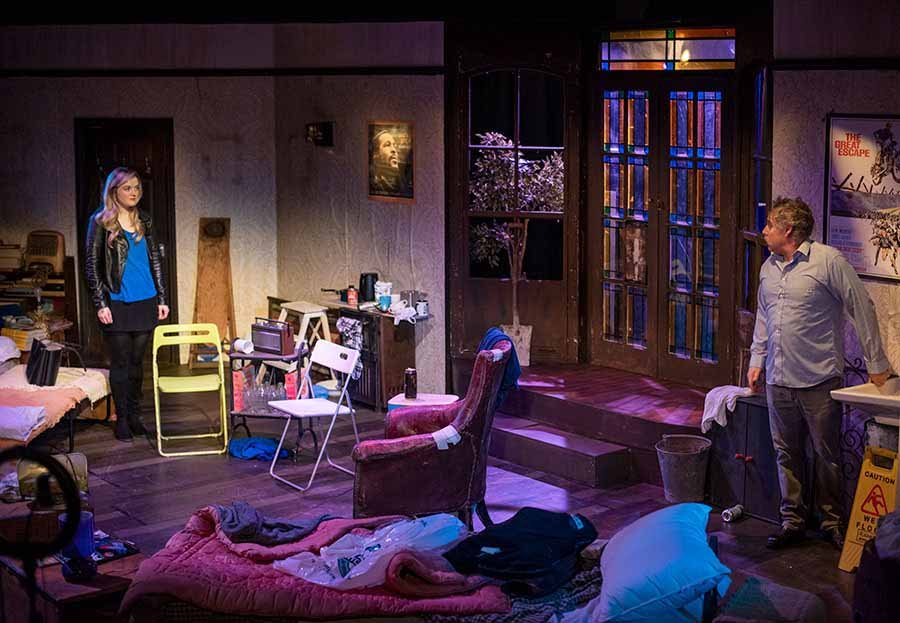
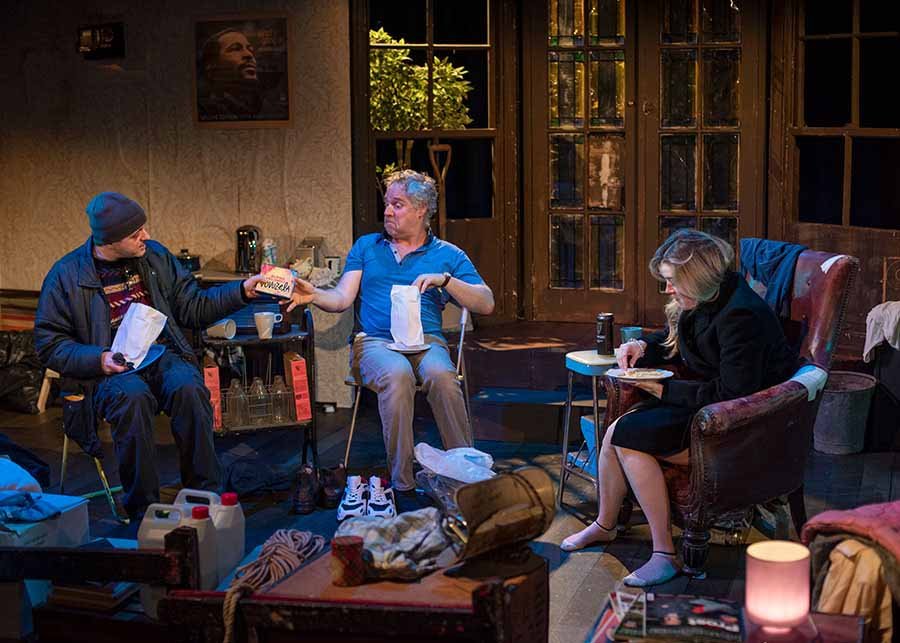
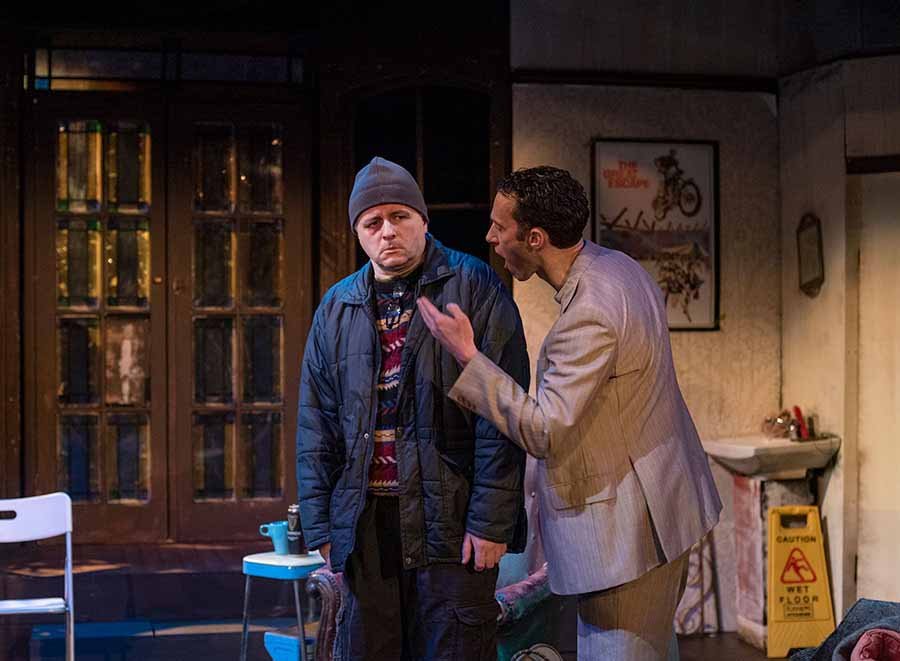
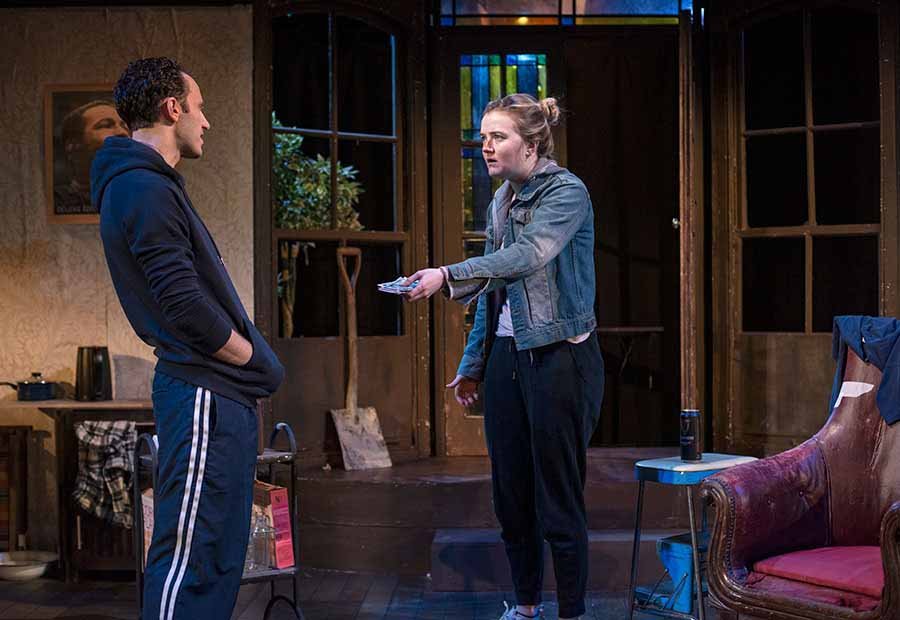
Beautifully observed and thoughtfully paced, this play explores the experience of Italian women across two generations.

Act 1 presents four 1960s women playing cards while their children play nearby. Act two gives us their four daughters in the early 2000s, clearly lifelong friends, meeting after the funeral (suicide) of one of the mothers.

The first group have to find their fulfilment (or lack of it) at home although – this is Italy, after all – one is having an affair and one has a serially unfaithful husband. The daughters have high powered jobs –  doctor, concert pianist, lawyer – but somehow they’re not much happier than their mothers were. It’s just the issues which are different.

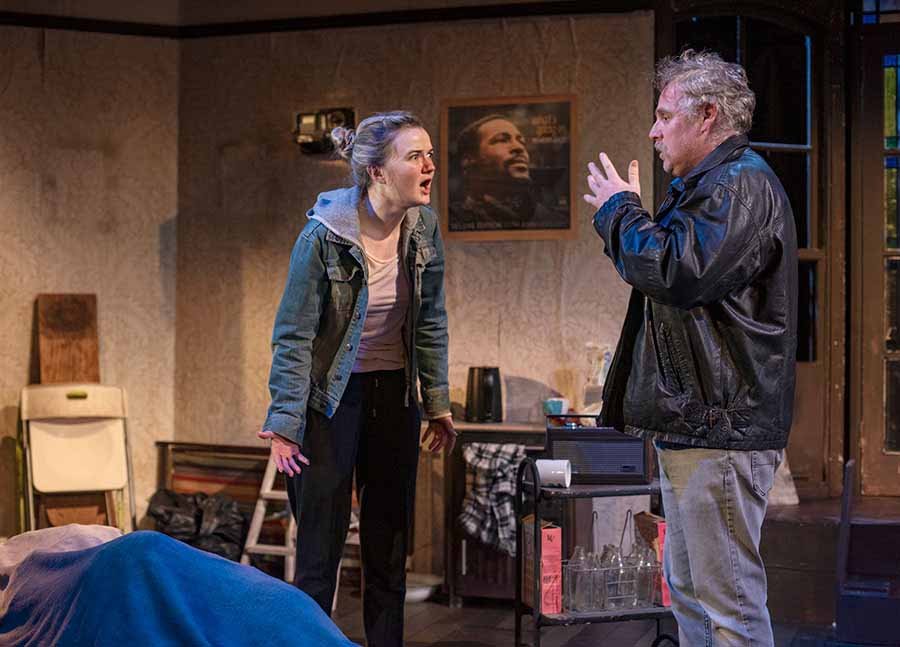
The four actors (splendidly directed by Aida Rocci) are richly convincing in each of their two roles. Natalie Cutler is brittle as tactless Claudia and moving as her childless, single daughter on her fourth round of IVF. Donna Mazzocchio is good as the twittery, pregnant Beatrice and terrific as her distraught, bereaved daughter. Flora Sowerby finds a lot of anger and frustration in Gabriella who has given up a career in music to raise a family. As her daughter, Sara, who actually has the glittering international career she is forthright and funny but also troubled in her marriage. Finally comes Saria Steyl whose two characters are similarly rational and reasonable, on the surface at least. However, she may be successful paediatrician married to a gynaecologist but at heart she’d still like children of her own.

This intelligent play has had a lot of success in Italy. Part of Jermyn Street’s Footprints Festival, this is the UK debut in English. A word of praise for sound designer Hattie North who uses evocative pop tunes for both eras (“I’m a believer” in Italian!) and some effective undertones to heighten the emotional impact of some of the speeches.

First published by Sardines: https://www.sardinesmagazine.co.uk/review/two-rounds/

Mozart: The Mixtape

London Mozart Players

Jonathan Bloxham

Fairfield Halls, Croydon

A gala concert to celebrate the 75th anniversary of London Mozart Players by Harry Blech, this event rather neatly replicated a concert which Mozart organised in Salzburg on 23 March 1783. Thus we got a symphony, two piano concertos, three soprano arias (Anna Prohaska) and two movements of a serenade.

Croydon is the current London Borough of Culture in connection with which, LMP, based at Fairfield Halls, has a partnership with a an inclusive photographic project, 100 Faces of Croydon. So the evening began with a short film about that. Then – a long way from Mozart and the concert’s title – we got Ligeti’s Poème Symphonique for 100 Metronomes which involved audience members, mostly those 100 Faces of Croydon,  standing up with their ticking metronomes and a rather engaging sound like pattering rain.

Of course, LMP play beautifully. They really don’t need gimmickry such as peculiar red lighting (to match their festive red and black outfits?) to remind us of this. And even the players began to look puzzled/amused by the amount of stage smoke unaccountably being puffed across the stage.

We began with Haffner symphony (vibrant with a nicely highlighted contrast in the second subject) and “began” is the operative word. After one movement Petroc Trelawny appeared to explain what the concert was about. Then we heard the two middle movements (lovely filigree flute work in the second movement) but we had to wait until the very end of the concert for the fourth movement (nippy pace and splendid timp work). Well, this is apparently how Mozart programmed in in 1783 but that doesn’t mean I have to like it. As far as I’m concerned a symphony is an integrated four (usually) section work and I want to hear it played all together and in the right order, please. I know the word “mixtape” was in this  concert’s title, but no thanks.

Imogen Cooper played Mozart’s piano concerto no 12 in C which is deceptively simple and doesn’t get as many outings as it should. It was stylishly played with the first movement’s dynamics and key change delivered with gentle strength and a pleasingly understated andante.

Martin James Bartlett’s take on Mozart’s first completely original piano concerto (K588) was so different in style that the piano sounded like a different instrument. Somehow he made it rattle like a harpsichord. I admired the beautiful horn work in the slow movement and Bartlett’s deftness of touch in the rondo as it winds through its witty variations.

Between items we were treated to filmed homage to LMP by various people who have worked with them and lots of input from Trelawny who also interviewed conductor Jonathan Bloxham. Well, since it was being recorded for broadcast on Radio 3 in a couple of weeks, he needed to explain a lot. Yes, I understand that but, good as he is at what he does, the constant repetition becomes very tedious for a live audience. It was a long concert by modern standards and could have done with a lot less chatter so we could all have got an earlier bus home.

Nonetheless it’s good to see a much broader audience demographic than you usually get at classical music concerts, even if the woman next to me managed to kick her metronome into action by accident during a quiet passage and never stopped reading stories on her phone about Prince Harry for the entire two and a half hours.


The Magic Flute

WA Mozart 

 Merry Opera Company

Barn Theatre Oxted and touring

The Magic Flute usually has a big cast and orchestra. Can you do it with just seven performers and a keyboard? Yes, given the imagination and wit that director John Ramster brings to Merry Opera Company, you certainly can. And it comes off in spades.

In fact there are advantages to a small cast in which everyone doubles and there are no stars. Musical clarity shines through. For example in the love duet between Tamino (James Searle) and Pamina (Rebecca Milford) the harmony is exquisitely delivered. You are forced to hear every note and suspension afresh.

The Magic Flute is an eccentric piece full of obscure Masonic symbolism and it’s unusual because Schikaneder’s libretto was written in German (not Italian) and includes spoken dialogue. The sparky Jeremy Sams translation is wittily upbeat and some of his rhyme is as good as WS Gilbert. It means that the opera becomes very accessible and the story telling – which can quite easily get lost in The Magic Flute – shines through like a beacon.

The cast consists of three women and four men, one of whom is a counter tenor. Casting is as cross-gender as it can be with, for example the Priests’ chorus arranged to accommodate women’s voices. Dominic Mattos, an accomplished actor with a versatile and high counter tenor voice, is excellent as the Third Lady and all the three boys are sung by women.

Eleri Gwilym delights as Queen of the Night. Of course, this talented young singer hits all those show-stopping high notes in both arias. But she also manages to make them funny – a furious, poisonous witch-like woman hurling her invective at people. It’s quite a performance.

And Christopher Faulkner is the best Papageno I’ve seen in a long time. He looks wonderful in pink tights and a feathery hat, hopping about ruefully and he sings impeccably (in a “rural” accent) in his famous solos as well as in ensemble numbers.

It’s quirky – as The Magic Flute really has to be. The three ladies wear red plastic macs and carry pale blue handbags. The serpent is made of a length of silver insulation pipe with a face at one end so it’s suitably slinky. Sarastro is dressed like Karl Lagerfeld and Searle lisps in vowels so distorted that he makes Jacob Rees Mogg sound like an East End barrow boy.

It all adds to the fun but, of course, it’s the music which really matters and music director Kelvin Lim, who sits at keyboard where an orchestra pit would be, has drawn excellent work out of most of the cast. Merry Opera Company specialises in providing a bursary-supported  springboard for emerging young performers. Since 2007 it has worked with over 240 professional singers. Of these 80% have gone on to major opera house choruses and 41 have launched international solo careers.

This performance at the delightful Barn Theatre in Oxted marked the opening of a ten-venue tour for this show. Catch it if you can. You won’t be disappointed but I warn you, it comes with earworms. My head is still rattling with glorious Mozartian snippets.

Show: The Project

Society: London (professional shows)

Venue: Brockley Jack Studio Theatre. 410 Brockley Road, London SE4 2DH

Credits: by Shannon Kurlander, directed by Lydia McKinley, produced by Greatest Hits Productions

The Project

2 stars

Susan Elkin | 06 Feb 2024 22:18pm

Shannon Kurlander, who both wrote and acts this 50 minute one hander is good at what she does. The play is wittily observed and, in role, she carries us effortlessly along with Katie. It is carefully paced and timed.

Katie is youngish but troubled because, perhaps because of her intensity, her relationships – or “projects” –  always founder. Now she’s in a wellness centre trying to sort herself out with a digital detox, relaxation classes and aspirational slogans. While there – obviously – she reminisces about the past and specifically about two failed love affairs, one with a man and the other with a woman.

Loosely speaking, it’s Talking Heads territory but with a lot more, sometimes pointless, grinding round the set so that there’s something to look at. And Katie is less interesting than most of Alan Bennett’s creations.

Like many new bijou plays The Project is well intentioned and well enough done but you’re left asking “so what?” Katie has got it off her chest and we’ve listened, sometimes touched and sometimes with a chuckle but there’s no resolution so it’s oddly unsatisfying. This woman hasn’t moved on and failed to convince me that she is going to – and perhaps that’s the point but it doesn’t make particularly fulfilling theatre.


First published by Sardines: https://www.sardinesmagazine.co.uk/review/the-project/

Mansfield Park has the name of a house as its title – as do, for example, Bleak House, Howards End, Wuthering Heights, The House at Pooh Corner and Small House at Allington. It usually means that the house is more than a building. It has to symbolise something.

Returning to Mansfield Park now, after a decade or two away from it, I’m struck more forcibly than ever that Sir Thomas Bertram’s titular Northamptonshire pile represents stability, decency, order and all the traditional things which most of the young people in the novel are reacting against, as things threaten to become less stable. Trouble is that three of the four Betram children are the victims of a sloppy upbringing by a pleasant and sometimes assertive but generally hands-off father and a hopeless mother who thinks more about her lap dog than her children. And eventually it shows. Somehow, though, one of the Bertram quartet turns out very different.

Fanny Price has been born into contrasting disorder because her mother has married (a long way) beneath her whereas one of her sisters married Sir Thomas Bertram and the other a, now dead clergyman to whom Sir Thomas granted a living. Sir Thomas and his sister-in-law take in Fanny to give her a better life at Mansfield Park. Once she recovers from her home sickness she settles down to be the quiet, well behaved, often troubled poor relation whose only real friend is her older cousin, Edmund, the second Bertram son, who is destined for the Church and so unlike his siblings that you can’t help wondering how he got there.

It’s easy to scoff at Mansfield Park. When Sir Thomas is away on business the young people daringly decide to stage a slightly risqué  play, called Lovers’ Vows at Mansfield Park. In 2024 we regard drama as a heathy way of exploring life, emotions and relationships and it seems a pretty harmless project to modern readers. In 1814 it was seen as licence to say things to people with whom you would normally be reserved so pretending to be someone else becomes disreputable and sexually daring. Fanny, who doesn’t take part but reluctantly helps with hearing lines and so on, is horrified. Then Sir Thomas returns unexpectedly and that’s the end of that.

The drawing of Mrs Norris, Fanny’s childless aunt, is masterly. She is relentlessly unkind, patronising, miserly and sanctimonious, arguably one of Austen’s finest creations. Anna Massie’s brilliant performance in this role is the only thing I remember about the 1983 TV serialisation apart from Angela Pleasance as the languorous, indolent, pug-loving Lady Bertram who rarely stirs from her sofa.

Late in the novel Fanny returns to Portsmouth to visit her own family – Austen’s only attempt to depict life outside grand houses. It is often said that it’s a world she fails to understand. I disagree. Austen actually lived in a small house (you can visit it at Chawton in Hampshire) and as a clergyman’s daughter would have done plenty of pastoral visiting. For me the presentation of the noisy, overcrowded house with its tiny rooms and narrow passages rings completely true. Yes Austen stayed in a number of large houses as a guest and understood the dynamic but she also has a pretty good handle on how working people lived.

I had another thought at this rereading too. Mrs Price, who isn’t much of a coper, has a huge, chaotic family. Some of the children are still very young.  One presumes that she and the lusty, hard drinking Mr Price have to share a bedroom.  Her sister, Lady Bertram probably has her own bedroom which, years ago, Sir Thomas would visit by occasional appointment. That’s why there are only four Bertram children.

The background to all Austen’s novels is war with France and in this instance, obliquely, the slavery which funds Mansfield Park.  At one point someone actually asks Sir Thomas how slavery works on his Antiguan estates. Consider the dates. Slave trade (but not the ownership of slaves which remained legal until 1838) had been banned in the British Empire in 1807.  Mansfield Park was published in 1814 so, by inference, perhaps the reason Sir Thomas has to go to Antigua to attend to estate business is related to that. There are hints, too, that money isn’t flowing quite as freely as it once did.

And as for the war, when Henry Crawford uses his contacts (overt nepotism) to get Fanny’s brother, William, promoted to naval lieutenant it is clear that this will lead to “rewards” once young Price starts overpowering enemy ships. That’s how it worked. Frederick Wentworth in Persuasion, for example, goes to war with nothing but comes back rich enough to marry Anne without anyone objecting.

Henry Crawford – a wealthy man – who comes with his sister to stay near Mansfield Park, wants to marry Fanny. She disapproves of him (with good reason and foresight as it turns out) and refuses him although he’s very persistent and all her family think it’s an offer she shouldn’t dream of rejecting. With Henry is his alluring sister, who says things she shouldn’t and exudes mysterious sexuality especially when she plays her harp. Edmund is smitten.

Fanny, who idolises Edmund, is jealous, although that’s a blunt summary of something which is quite subtly depicted. Finally, there’s the most low-key happy ending in fiction and Fanny gets her man.

Two points: First, I can accept that cousins can fall in love and marry if they meet in adult life – and have known a couple of real life instances of that –  but when they’ve grown up in the same household it seems disconcertingly incestuous.

Second, Fanny and Edmund are both so well behaved and concerned with decorous decision making – almost to the point of priggishness –  that it’s hard to disagree with the waggish critic who once commented that there’s unlikely to be much passion at the parsonage on Saturday nights.

Nonetheless it’s an interesting novel and good to come back to.

Next week on Susan’s Bookshelves: Lovebroken By Finley de Witt

Show: Just Stop Extinction Rebellion

Venue: White Bear Theatre. 138 Kennington Park Road, London SE11 4DJ

Credits: Written by Brad Sutherland. Directed by Kenneth Michaels. Produced by Maiden Productions.

Just Stop Extinction Rebellion

3 stars

At the interval I observed in my notes that this is a play about group dynamics whose setting happens to be a climate change protest group but could just as easily be church, golf club or choral society. Then I read the programme and found the playwright, Brad Sutherland, making exactly the same point.

Millicent (Louise Bangay), full of edgy privilege, joins the group and finds wary chemistry with Ben (James Price), a troubled, newly single accountant. The scenes between the two of them and their gradual working towards a relationship that neither really wants are the best thing in this play. Both actors are convincing, engaging listeners and we really do feel their pain, awkwardness and, sometimes joy.

Alongside them are three other group members. Stephen Riddle is a versatile actor (best as Millicent’s reasonable, decent, well connected husband) although his work as petulant George, the group leader in too much like a caricacature. Orsolya Nagy gives us an overstated Gaia (and doubles as Ben’s wife) who has, in Millicent’s tart words, “invented a religion”. Hilary Field does a pleasing job as the elderly Mrs Warboys.

The wiring is often very funny – Millicent throws ten dozen eggs at posh cars in Barnes and then worries about where to recycle the boxes. Mrs Warboys disco dancing with the others is fun too. And there’s a lot of witty dialogue.

This play is much stronger in the first half when the emphasis in on marriage, commitment and friendship. After the interval it suddenly seems to remember its title and there’s loss of focus as it gets more bogged down in the minutiae of climate change issues and the most effective way to protest. The rugby scrum ending is an odd cop-out too because we leave the theatre not really sure of what happened to any of these characters.

It feels like a play with potential, staged by enthusiasts. Come to think of it, it could just as easily have been set in an am-dram group.

First published by Sardines: https://www.sardinesmagazine.co.uk/review/just-stop-extinction-rebellion/

MAIDSTONE SYMPHONY ORCHESTRA Mote Hall, Maidstone. 03 February 2024

It was a definitely a Big Works Night with batteries of percussion, double brass and harp all helping to nail MSO’s vibrant, signature sound.

First up was Wagner’s Overture Die Meistersinger von Nurnberg in which Brian Wright allowed us to enjoy all those majestic ralls, although the skill in playing Wagner well is also to deliver the contrasting lyrical passages with tenderness and there was plenty of that too along with exceptionally fine brass playing.

Then it was slightly reduced forces for Sibelius’s 1904 violin concerto. It’s one of the most challenging in the repertoire but Mathillde Milwidsky played it with her accustomed, focused charm.  I’ve noticed the exceptional clarity of her playing before and here it shone creamily through the aching passion of the first movement, followed by that long cadenza and then some fine cross string work. Wright controlled the woodwind perfectly into the legato ending of the adagio and Milwidsky’s rendering of the final allegro was both elegant and eloquent.

After that her Adadio from Bach’s G minor sonata was a complete palate cleanser. I loved the silvery beauty of her perfectly placed double stopping and trills.

Scheherazade with its almost literally fabulous orchestration (bassoon over double bass pedal note at opening of second movement for example) is always a magnificent show stopper and this performance, full of power and grandiosity, was no exception. Highlights included the way Wright made sure we felt every yearning note of the violin and cello solos at the beginning,  the excellent string playing the third movement, George English’s side drum playing and the brass fanfares in the fourth and then – lump in the throat stuff – the breathtaking balance of the final harmonic from the solo violin.

The huge round of applause saved for leader Andrew Laing was richly deserved in this concert. There is a lot of solo work in Scheherazade and he played with exquisite poignancy. Beautiful work indeed

Anna Funder is Australian and this book was recommended to me by a friend who lives and reads in Brisbane. “It’s making a lot of waves here” she said. Well maybe I haven’t been paying attention but I haven’t seen much about it in the UK where it should be making even bigger waves because it’s an intelligent, thoughtful and original analysis of George Orwell’s wife, Eileen O’Shaughnessy, and her role – or fate.

Much as I’ve long admired his work, until now I knew very little about Orwell’s life – simply that he was an Etonian, who worked in Burma went to Spain for the Civil War and spent time in Paris. Most of what I knew was deduced from his books which are, as Funder makes clear very selective in what they reveal. When I was in my teens and twenties his widow, Sonia who died in 1980, was around, managing (or mismanaging) the Orwell rights and his estate. I had no idea that he married Sonia in hospital just three months before he died.  To my shame, I’d never heard of Eileen to whom he was married from 1936 to 1945 when the poor woman, who suffered appallingly from what was probably endometriosis, died during an ill-judged hysterectomy. She was 40 and left an adored young child, Richard, whom she and Orwell had adopted.

It isn’t, I gather, unusual not to know about Eileen. Orwell hardly mentions her in the books although, for example, she was actually in Catalonia with him working very hard at managing the office in Barcelona which was often attacked. Orwell’s several biographers give her pretty scant mention or credit too although, a clever woman with an Oxford degree in English, she probably had a big hand in Animal Farm. And she certainly typed and edited his manuscripts.

Funder sets out to “find” Eileen and she succeeds. But this isn’t a biography although Funder tells us a lot about what Eileen does. She weaves in speculative fictionalised conversations, reflects on the difference between the Orwell marriage and her own 21st century one and gets pretty cross about the amount of cooking, mending and housekeeping Eileen was expected to do as well as everything else. She is also pretty critical of the biographers and of Orwell himself for leaving Eileen out of their accounts so often. She accuses the biographers of hagiography. Funder’s discoveries about Orwell, who was a rampant womaniser, present an unattractive, querulous, hard-to-like man in denial about his declining health. It’s yet another example of separating one’s appreciation of the work from the life of the creator – as with Eric Gill, Richard Wagner, Carlo Gesualdo, Charles Dickens and many more. Funder, like me, is a resolute admirer of Orwell’s writing.

The research is immaculate and irrefutable. There are reference numbers  on every page which link to 45 pages of end notes after the text. She has uncovered letters and so much other evidence of Eileen’s life that you emerge from this book feeling that you really have met this woman who worked so hard and suffered so much – put upon, taken for granted and exploited.

My friend was right. It’s well worth reading.

Next week on Susan’s Bookshelves: Mansfield Park by Jane Austen