Press ESC or click the X to close this window

A Gershwin Celebration (Jeni Whitaker reviews)

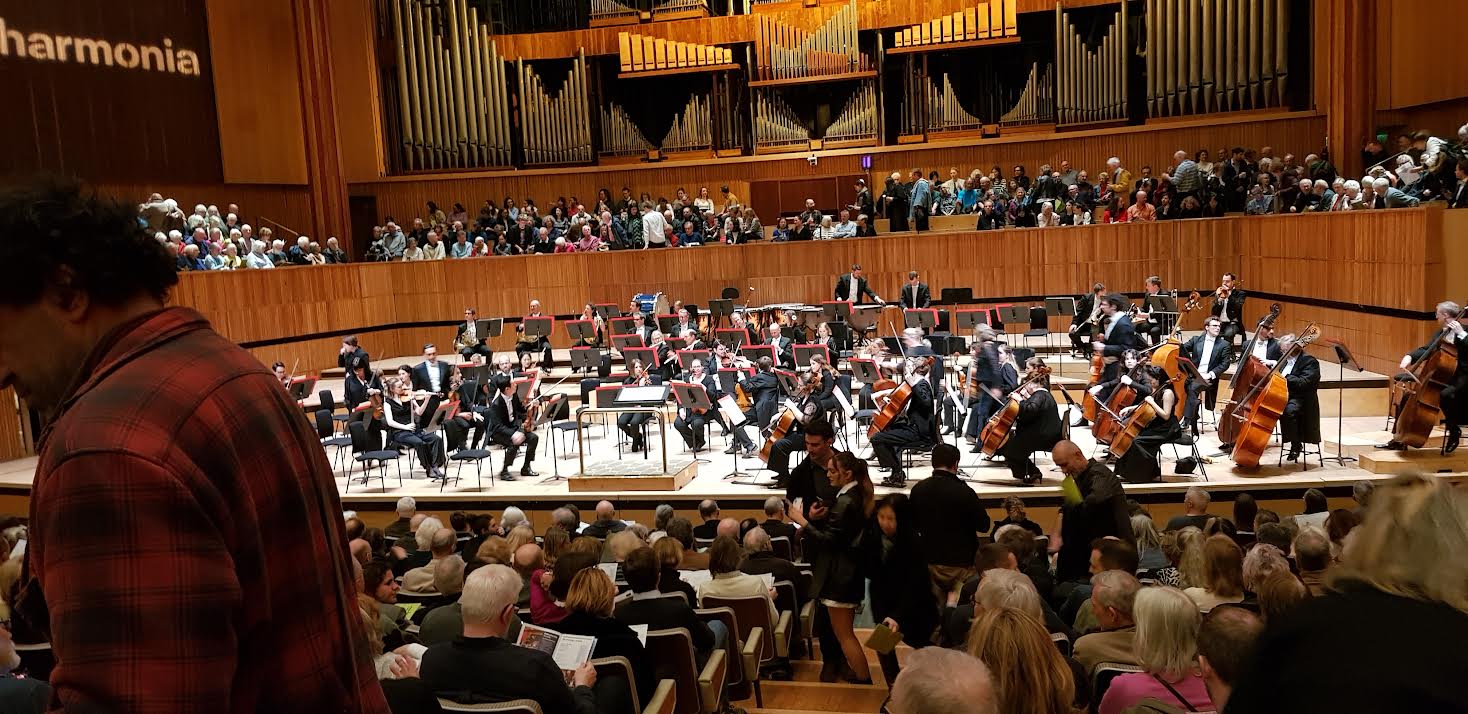
A GERSHWIN CELEBRATION with the London Gershwin Players, conductor Mark Forkgen, at the University of Plymouth, part of the Musica Viva Concert Series

Saturday 27 th January 2024

George Gershwin was an extraordinary talent whose music includes many much-loved musical
theatre songs as well as experimental and very assured blends of classical music and jazz. This
concert, though excluding singing, still touched on many well-known sung numbers from his
Broadway hit Girl Crazy as well as from his opera Porgy and Bess. By referencing both areas of his
main work the audience were treated to a panorama of his melodic and rhythmic gifts and
marvelled at an extraordinarily large repertoire, considering the composer died of a brain tumour at
only thirty-eight.

As always with the Musica Viva series, Robert Taub, the Director of Music at the University
of Plymouth, introduced the audience, in his half-hour introduction, to interesting facts and
demonstrations of some of the musical motifs to listen out for during the evening. This time he was
helped by his friend, Mark Forkgen, no stranger to the Musica Viva concerts himself and tonight's
conductor. There is something very warm and open about Forkgen’s conducting style which I always enjoy.

The evening started with the Overture to the musical Girl Crazy, jam-packed with
memorable tunes. Originally these would have been sung [though admittedly not in the
overture!]and Gershwin was lucky to be in partnership with his brother Ira, who wrote all the witty,
clever lyrics for each of those melodies. After Girl Crazy the pair wrote many more songs for other
shows and reviews, many of which have become jazz standards ever since. Such famous numbers as
“My Time”, “But Not For Me”, “Embraceable You” and “I Got Rhythm” feature in this overture, the
musicians moving from faster to slower tunes via a busy musical link, similar to some of the links
Gershwin uses in An American in Paris.

After this smorgasbord of tunes the next offering was the rightly famous and much-loved
Rhapsody in Blue. Here, as Robert Taub explained, they had pared the number of instruments down
to reflect how the original version was, before it became picked up by large symphonic orchestras.
The result is crisper and clearer. Taub was the pianist for this. Having watched him perform before, I
always enjoy watching how he builds a mental space around himself, a palpable concentration, his
hands resting quietly on his lap, before beginning.

I found this less-encumbered version far preferable, though who cannot greet that opening
swoop of the clarinet and its response from the brass section with an answering joy, whichever
version you listen to? What follows is a series of changes of mood and tempo, often which suggest a
story, often busy with the suggestion of hurrying crowds or traffic, as in the last piece of the evening.
In the long piano solo section, I found myself conjuring up a young girl, questing, stopping
and starting, uncertain of her allure, looking round her before gradually gaining confidence. And yet
the title of the piece suggests there is a sad undertone, so that when the orchestra returns it is in a
more reflective mood, at peace with itself. It suggests a night life, tired and packing up. Then
different characters emerge – little pockets of life suggested by the speeding up of the music – which
join at the end into one final triumphant dance of the city inhabitants.

After the interval comes the Porgy and Bess Fantasy, an arrangement made by Iain Farrington, who
played the piano for both these last pieces, which incorporates many of the best-loved tunes from
the opera. As with all his music, Gershwin was breaking new boundaries here, not only by writing an
opera about black Americans from Charleston, South Carolina, but also by using the rhythms of
folksongs and spirituals. He called it an American Folk Opera. Far from the classical structures and
characters that are usual, here we have a street beggar – Porgy – who (and here the theme is as
grand as any Grand Opera) seeks to rescue the girl he comes to love, Bess, from a violent and jealous
lover. The fact that she is also targeted by a seedy, snappy drug-dealer offers us a realer, grimmer
storyline.

The music is full of ominous rhythms and swooping strings or xylophone with subterranean
strings which build excitement and tension and set the atmosphere. The beautiful, famous
Summertime lifts itself out of this 'waiting' mood of piano, sombre cellos and double bass, with their repeated notes. Summertime is sung by the First Violin alone, against a soft background of the
other strings. You can almost hear the chirping of the crickets in the heat.

The storm is wonderfully built – a lightning flash of flute followed by a threatening thunder
of timpani. The African drums, also used, build up to a galloping rhythm against the suggestion of
rain from xylophone. This was a colourful and very successful depiction of a storm. Soon a lazy,
drunken lurching rhythm follows, as if of someone being blown by the wind and trying to keep
balance. Behind are the last defiant rumbles and slides of the vanishing storm before the chirpier
rhythm asserts itself.

Throughout this extraordinary tapestry of music, pieces of well-known tunes surface: not
only “Summertime” but also I Got “Plenty”  and “It ain’t Necessarily So.”

Finally came An American in Paris. Through this we follow a tourist, jauntily enjoying his
walk through the French capital. He sets out at a fine pace. Sometimes he stops to admire a vista, a
glimpse through a side-alley. At other times he has to negotiate roads, the terrifying hooting traffic
of Paris. Gershwin is particularly brilliant at suggesting busy city life. It is so vital and vivid that you
can almost see and smell it and you can certainly feel the tourist’s enjoyment as well as his
occasional bewilderment, reflected in the changing tempos. Sometimes the rhythms cross and re-
cross, as if others in more of a hurry than himself, are cutting across him, overtaking, getting
impatient. Gradually we feel him becoming more confident, the music expands as he enjoys a
particular moment, but again and again the mayhem of the traffic returns. Oh, Paris! Can’t you just
feel yourself there as you listen?

So this was a joyful, exciting concert, full of energy, contrast and precision. Thank you to all
the musicians involved and to Musica Viva.

Show: Blood on Your Hands

Society: Southwark Playhouse

Venue: Southwark Playhouse. 77-85 Newington Causeway, London SE1 6BD

Credits: By Grace Joy Howarth. Directed by Anastasia Bunce. Presented by Patch Plays.


Blood on Your Hands

3 stars

Photo: LOUIS CAO


This is a play which – although it’s fairly gripping – can’t make up its mind what it’s meant to be about.

Kostyantyn (Shannon Smith) is a Ukrainian vet but the only work he can get in Britain is in a Welsh slaughterhouse. He is desperate to get his wife and children out of Ukraine where the Russian invasion is imminent. At work he meets Dan (Phillip John Jones), a complicated young man who has history with one of the protestors at the slaughterhouse gate.

So is the play about the horror of the slaughterhouse and the way it dehumanises people? Patch Plays, notes in the programme, that it is dedicated to staging new writing focusing on themes of animal ethics and the environment. Unsurprisingly, on press night, there were several people in the audience who clearly belong to anti-meat, vegan and animal welfare groups. Tee shirts and other statements were in evidence.

Or is it about the tragedy of the war in Ukraine and how it separates family and causes agonising grief? Arguably that’s the stronger story and when we suddenly get a dramatic slaughter house “kill floor” scene with buckets of stage blood, stabbing knives, projection, menacing sound track and stringy red rags to represent entrails it feels like an interruption which doesn’t belong in this play – although it’s an effective enough statement.

On the other hand, is this a play about family, immigration, British treatment of refugees (Kostyantin’s billet is pretty bleak), friendship or mental health issues? Take your pick.

The best things in this play, which tries so hard to do so much, are the scenes in which we see Smith’s brooding, troubled character (when he smiles it’s like an unexpected glimmer of sunshine) with Jones’s jokey, joshing kind character who is actually profoundly disturbed – arguably, and ultimately, a victim of the work he does. They work very intelligently together.

Three other actors play everything else. Given the subject matter, it’s great to have a Ukrainian actor in the cast: Kateryna Hryhorenko plays Kostyantyn’s wife Nina and her movement work is delightful – there’s some stylised mime in the play. Unfortunately her diction isn’t always clear, particularly in the early scenes. Liv Jekyll finds brittle anger and passion in Eden and Jordan El-Belawi is suitably slimy as the  slaughterhouse manager and deliciously nauseating as Dan’s patronising schoolfriend who has made good in London.

There are flashbacks to show how Nina and Kostyantyn met and the homely relationship which Dan and Eden once enjoyed but these scenes don’t add much.

There’s a lot of blood in this play. It is literally, as well as figuratively, on the hands of Dan and Kostyantyn and all over the floor. Yet when Nina tries to mop it up, we are suddenly aware of a different sort of bloodshed. It’s an over-busy play in other ways too. We get projected headline updates about the situation in Ukraine as well as news broadcasts and abstract projection to remind us where Dan and Kostyantin work.

There’s some excellent writing in Blood On Your Hands but the overall effect is of trying to fire too many guns in too many directions all at once.


First published by Sardines: https://www.sardinesmagazine.co.uk/review/blood-on-your-hands/

Philharmonia – Thomas Dausgaard – Mitsuko Uchida – Royal Festival Hall – 25 January 2024

Can anyone play Beethoven as Uchida does?  She sits diminutive, slightly hunched over the keys, looking like a teenager from a distance, although this great pianistic Dame is actually 75. Then she produces magic. She plays the rippling first movement melodies of the second piano concerto as if it were chamber music, delivers the adagio with such intimate tenderness that it’s almost painful and then sets a nippy, but not extreme, tempo for the rondo which dances along elegantly with Dausgaard on the podium ensuring that we don’t miss the delicious detail in the accompaniment such as the lower strings pizzicato and the bassoon work.

Part of the secret, I think, is that Uchida is a charismatic communicator at every level. She makes eye contact almost continuously as she plays and genuinely seems to enjoy every moment of the work. And when she’s not playing, she never stops talking – to Dausgaard, to Philharmonia leader Zsolt-Tihamér Visontay and to any section leader whose eye she can catch. It must be a warm joy to work with her.

The concert had begun with Overture Leonore 2 presumably to get us in Beethovenian mood. It came with lots of impassioned drama in the slow (very slow) opening with some impressive pianissimo and later some immaculately punctuated heavy chords. It was a performance full of colourful contrasts and, of course, the semi-surreal effect of the off-stage trumpet. Dausgaard was a last minute stand-in for Esa-Pekka Salonen who was unwell, but one would never have known.  He did a fine job.

The interval saw the disappearance of the piano and the arrival of big forces for Sibelius’s Lemminkӓinen Legends, an early work n which he rycycled material he’d previously used in Kullervo, The result is a 50 minute, four section work in which each movement is a tone poem inspired by a Finnish legend. Of these, the third movement The Swan of Tuonela is the most familiar because it’s often extrapolated and played as a standalone.

Dausgaard gave us exceptionally rich passionate cello sound in the first movement and I admired the way he dug out the darkness of the sinister rising and falling tremolo figure in the scherzo. And of course, there was a lot of power in the evocatively dying Swan before we reached the descriptive, rather more optimistic final movement.

It was good – and perhaps not surprising – to see Royal Festival Hall full almost to capacity for this interesting and very rewarding concert.

One of my self-imposed Susan’s Bookshelves briefs is to keep it as eclectic as possible. So if something a bit quirky comes my way, I’m delighted. And this book is certainly original. Gareth E Rees makes a fascinating quasi-touristic exploration of functional things we normally write off, or don’t notice: road junctions, car parks, motorways, retail parks, hospitals and the M6, among other things.

I’ve driven through Gravelly Hill (“Spaghetti Junction”) many times but have never thought about what might lie at the bottom of it – possibly because I’m concentrating on being in the right lane for the bit of the intersection I need. Rees has been down there to explore and likens it to a mythical underworld. The detritus, the canal, the homeless people and the dog walkers create a sort of alternative world to the pounding noise of the cars above.

One of his main arguments is that history is ongoing. Any site we look at now has had different usage in the past so it’s a  historical interweaving when, for instance, a retail park is built on the site of a factory which replaced another factory on the site of an old monastery. No wonder so many of these places have strong ghost traditions attached to them and Rees is good at ferreting out these stories and evoking  creepy uncertainty. “The past” he observes, “is never absolutely destroyed but recycled into mutant strains. It seeps into the atmosphere of a place and takes on new guises to give us goose-bumps and chills.”

For myself I’m a bit chary of almost empty multi-storey car parks at night when I’ve been to a show and mine is the only car in sight. I just hope there won’t be a mugger lurking behind a pillar. Rees regards them as concrete castles full of mystery, ghosts or sometimes squatters. The atmosphere is distinctive. It isn’t surprising, he says, that they so often form the backdrop for violence in crime drama. Sometimes, though, they can be repurposed when no longer needed. He mentions, for instance the one in Peckham which has been developed into a performing arts space.

Or what about hospitals? We associate them with birth, death and illness and only experience them when we, or someone close to us, needs hospital services. How does a hospital look and feel if you go there and look at it objectively without any emotional baggage? That’s what Gareth does and manages to avoid being accosted for unauthorised corridor wandering.

It’s a warmly reflective book which has certainly made me think afresh about the harsher aspects of our built environment. And his prose is to die for. Take this definition: “A motorway is a channel of repressed rage, jealousy and social politics, expressed in a ballet of metal machines moving at lethal speeds.”

Dating from 2020, Unofficial Britain whose title continues ”journeys through unexplored places” is effectively a travel book. Rees has been all over the UK with his notebook and it’s a treat to read something so unlike anything else. I shall see those service stations on the M6 very differently now.

Next week on Susan’s Bookshelves: Wifedom by Anna Funder

Venue: Jack Studio Theatre. 410 Brockley Road, London SE4 2DH

Credits: By Aimee Walker-Reid. Presented by Kefi Theatre. Directed by George Rowland.

KINDRED

3 stars

This 65-minute two-hander is, among other things, a study of family relationships (the clue is in the title) and, more centrally, an exposition of the severe mental health problems which can ensue when kinship doesn’t go well.

Matt (Finlay Vane Last) has, and has always had, a  difficult relationship with his family, especially his mother, which has left him agoraphobic and prone to panic attacks. Now that his father has died, things are worse – not least when he discovers that he has been cut out of the will on grounds of mental instability.

The funeral is at the beginning of the week in which he is to marry his live-in girl friend, Lois (Aimee Walker-Reid) so tensions are running high. We see two strong performances with actors playing well off each other in all moods. There’s some pretty powerful abuse shouting towards the end.

Living with Matt is difficult. He isn’t working. The flat is “shit” (they say) and that’s rather neatly connoted in Tamara Walker-Reid’s set which includes randomly suspended objects such as a toaster, an ironing board and a spilled pot plant. He is meant to be taking pills to ease his condition but is in denial about his need for them. And, we realise towards the end of the play that he is irrationally hiding things as well as drinking too much. He is, moreover, unhealthily obsessed with news and newspapers.

Lois tries hard to be patient with him and ricochets between sympathetic kindness and relentless fury. In general it’s a well observed bit of relationship dynamics as we work through her having to speak at her sister’s divorce party and a wedding rehearsal dinner during the week which also includes Lois going to her regular art class and out to work.

The device of having a wall calendar from which they tear sheets to mark the passing days as the week progresses is simple but effective until  it includes flashbacks to their first meeting and then it becomes confusing.

The play itself is bumpy, mixing as it does funeral blues, pre-wedding nerves and implausible off-stage violence. Is it really likely that a mother would punch her own son in the face at his father’s funeral? These purport to be sensible, educated people, not drunken thugs.

Moreover, I was expecting Lois to lose patience and call the wedding off but maybe that would have been too obvious. As it is the ending is unsatisfactorily obfuscatory – in short a bit of a cop out.


First published by Sardines https://www.sardinesmagazine.co.uk/review/kindred/

 Subscribe 
THE GOOD JOHN PROCTOR
3 stars

Part of Jermyn Street’s Footprints season, The Good John Proctor is a thoughtful, powerfully acted and imaginatively directed (Anna Ryder) prequel to Arthur Miller’s The Crucible. It did well in New York and this is the first time Monahon’s play has been seen in the UK.

It’s an interesting idea but my reservation is that if you don’t know The Crucible  – or haven’t read up on the well documented history of the late 17th century Salem witch hunts and executions –  you won’t have a clue what was going on. It was all right for me. I used to teach The Crucible to GCSE classes but otherwise …

Abigail Williams (Anna Fordham) and her younger cousin Betty Parris (Sabina Wu) are at the heart of this story, living as they do with Betty’s parents. Mercy Lewis (Amber Sylvia Edwards) , a bit older and a real stirrer, often drops in and later Mary Warren who at 18 is the oldest of the four, moves to Salem and gets to know the others.

There’s much giggling and frightening each other with stories of witches and possession along with Abigail’s first period and much fear, naivity and egging each other on  – all accompanied by Bella Kear’s rather effective, creepy sound track which seems to be all round Jermyn Street’s tiny auditorium.  Then Abigail gets a job and we can see that she’s rapidly developing an inappropriate relationship with her boss – this, of course, is the titular John Proctor but you need to know your Arthur Miller to realise that. Eventually the girls swim naked or partly so in the wood and are spotted indulging in “Satanic” behaviour.  And Abigail has been sacked by Proctor’s wife so she gets her own back by testifying against them – but you have to infer that. The prologue in which Betty, Mercy and Mary look back years later is a good narrative idea but you still have to do a lot of deducing.

Fordham’s Abigail is domineering yet vulnerable and you can almost see the adolescent hormones kicking in. It’s a strong performance. The hint that Abigail is pregnant is not satisfactorily developed, though. Wu is delightful as Betty – childish but sometimes knowing. She has a real talent for visible listening and reacting too. Edwards makes Mercy a knowing – but ignorant – young woman who uses language that would get her whipped if grown ups heard her and her acting is totally convincing. Mary is an otherworldly woman who has fits and long dreamy thoughts. Larson is well cast in the role. And the four actors work pleasingly together.

It’s an entertaining 100 minutes of uninterrupted theatre but it doesn’t work as a standalone so it’s not exactly inclusive.

First published by Sardines: https://www.sardinesmagazine.co.uk/review/the-good-john-proctor/

 Subscribe 

I read eclectically. And I always told my students that and advised them to do likewise. We all need variety and we all read at different levels. There is nothing wrong with “accessible”. No one can (or should) read, say, Henry Fielding or Wordsworth to exclusion of all else. On the other hand a literary diet restricted to, say,  Jilly Cooper (congratulations Dame Jilly) or Wilbur Smith wouldn’t be good for one’s brain either.   So I dot about, although as regular readers will have long since noticed, personal taste generally keeps me away from horror, fantasy and ghosts.

The Widows’ Wine Club (2023) is about three women who’ve husbands have recently died – and of course I can personally identify with that “Now what?” feeling. Been there. Done that. They are different sorts but, having met more or less by chance, they become firm friends. It’s engaging and entertaining. All three women, Viv, Zelda and Janet are nicely drawn people that one would be glad to have in one’s own friendship circle as we gradually learn more about their marriages, families and outlook.

This is Julia Jarman’s first adult novel although she has written many titles for children of all ages which is why her name was familiar to me. I suspect she dislikes categorisation and labels as much as I do so I refuse to describe this book as “rom com” or “chick lit”. And as for the publisher describing (condemning?) it as “golden years women’s fiction” –  ugh.  Rather, it’s a rich celebration of friendship, often quite funny and a good choice to curl up on the sofa with on a winter’s afternoon.

When Zelda – a mixed race hairdresser whose unknown father was a wartime GI – meets an online date in a pub, Viv creeps in to rescue her if necessary. Viv is a professional landscape and jobbing gardener living in a lovely arty house that she can’t afford to stay in.  Janet, on the other hand, is the crisp widow of a standoffish bank manager who was also a womaniser, although she doesn’t discover that until after his death.

The big question is do they want new relationships? Zelda definitely does. The others are less sure – until Janet gets close to a wealthy and gallantly fancy-able widow from church and Viv, while she’s away on a course, sees a man in a museum who reminds her of someone … Into this mix are blended many misunderstandings, uncomprehending adult children, very elderly manipulative parents, illness, a bit of gentle sex, some far-fetched coincidences and  lots of wine.

I enjoyed spending time with these women and I like Jarman’s slightly quirky style. It’s a third person novel from three viewpoints so that we get chapter headings each with one of their names and then spend time seeing/experiencing/doing thing with whichever one it is and of course, at times, it overlaps.

Next week on Susan’s Bookshelves: Unofficial Britain by Gareth E Rees  

Alan Turing: A Musical Biography – Riverside Studios

Picture: Gabriel Bush

Alan Turing: A Musical Biography continues at the Riverside Studios, London.

Star rating: two stars ★ ★ ✩ ✩ ✩

We all know what happened to Alan Turing. He cracked the Enigma Code during the Second World War, invented the computer, was shamefully treated by the British Government because of his homosexuality and died by suicide in 1954. And sadly, this rather lacklustre, very predictable, little two-hander musical doesn’t add much to that.

The music (Joel Goodman and Jan Osborne) is unmemorable and because it’s not live Joe Bishop (Turing) and Zara Cooke (all the female roles) aren’t always accurate in their entries. There is, however, some pleasing harmony singing.

Bishop is suitably serious and troubled as Turing although I was unconvinced by the ongoing Snow White/poisoned apple theme which …

To read the rest of this review go to: https://musicaltheatrereview.com/alan-turing-a-musical-biography-riverside-studios/