Press ESC or click the X to close this window

Maidstone Symphony Orchestra 02 December 2023 (Susan Elkin reviews)

Maidstone Symphony Orchestra

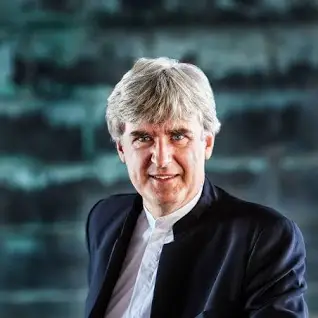
Brian Wright (Conductor)

Benjamin Baker (Violin)

Saturday 02 December 2023, Mote Hall, Maidstone

An all English programme with three works likely to be unfamiliar to most of the audience is a brave undertaking  but on the whole Brian Wright and the MSO carried it off with their usual aplomb.

At the heart of the evening was Lark Ascending, regularly voted by the British public its favourite piece of classical music. Violinist Baker presented Ralph Vaughan Williams’s evocative masterpiece as a substantial post-interval encore and he played it – his hands small and his fingers fascinatingly neat – with immaculate musical control. Yes, he, and we, really did soar and hover with the eponymous bird.

Baker’s pre-interval work was Samuel Coleridge-Taylor’s G minor violin concerto – an unusual key for a violin concerto – and it was a warmly business-like performance starting with the grandiloquence of the opening movement with its flamboyant melodies. I admired the gentle lyricism in the andante, It’s very hard to achieve but Baker gave us a passionate song-like quality carefully supported by Wright delivering the instrumental detail in the muted accompaniment. The legato violin over the short wind notes in third movement was another rather lovely moment.

The concert had begun with Holst’s ballet music for The Perfect Fool and ended with Elgar’s Falstaff so theatrical reference was, in effect, a theme.

The Holst piece, which came  soon after The Planets, enjoys similar quirky orchestratation so there was plenty of opportunity for MSO players so show just how good they are from the trombone opening, to the bassoons grunting at the very bottom of their register. In the second dance, The Spirits of Water, the harp and flute moment was attractively balanced.

Elgar’s Falstaff is a musical exploration of the character of Shakespeare’s “Fat Jack” as he appears in the two Henry IV plays and Henry V in which he dies off stage. It’s a colourful episodic piece which required the return of full forces, including five percussionists. Those of us who know the plays well – from the bawdy comedy, to the cruel trickery and ultimately to the devastating rejection – can appreciate Elgar’s imaginative contrasts including whispering strings and wind interjection. It was all pretty accurately played here, with some delightful bassoon work although it’s a very challenging piece – Elgar is never straightforward –  and there was a feeling in places that the strings were working at the far edge of their ability. Nonetheless it was quite what an achievement for a community orchestra – another feather in MSO’s cap.

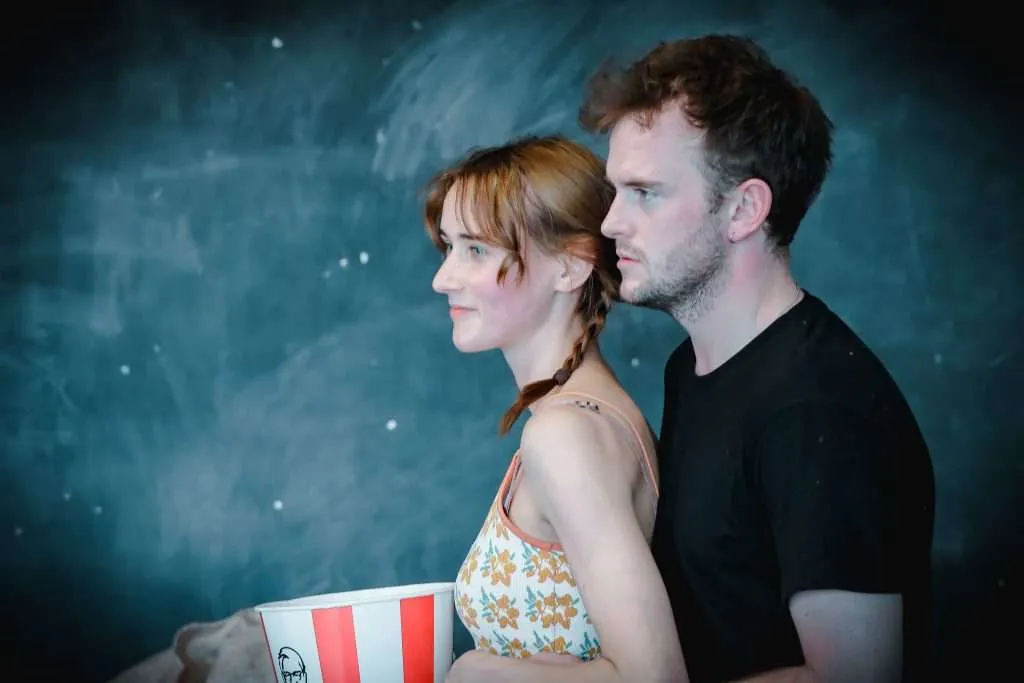
Photographs by Kaupo Kikkas

Show: The Toymaker’s Child

Society: Chickenshed

Venue: Rayne Theatre, Chickenshed, Chase Side, Southgate, London N14 4PE

Credits: Dave Carey and devised by Chickenshed Directed by Michael Bossisse, Bethany Hamlin, Cara McInanny & Jonny Morton.

The Toymaker’s Child

4 stars


Photo: Caz Dyer


Written Dave Carey and devised by Chickenshed. Directed by Michael Bossisse, Bethany Hamlin, Cara McInanny & Jonny Morton

Vibrance, energy, slickness, inclusion, passion and epic scale are just six of the components of Chickenshed’s distinctive style. And this new show is true to form  with four rotating ensemble casts of around 200 in each. I saw the Green Rota on press night with Beatrice Afhim as the eponymous child, Katy.

A very ingenious 2023 take on the Pinocchio story gives us the lonely daughter of a toymaker wishing for company. So, using an old computer chip he finds in a bin he creates a doll/toy/robot who has everything but feelings – so there’s a dramatic, colourful quest for them bringing in versions of  Carlo Collodi’s original tales such as the con-(wo)men cats, the fairground and the near drowning. And to make it feel even more current there’s continual intercutting of news flashes from Mike’s News in a box above and his reporter on the ground. Clever stuff, indeed.

Courtney Dayes is convincing as PIN:OCCh10, moving with robotic precision and speaking mechanically but relaxing into joyful humanity at the end. Beatrice finds a very plausible girlish knowing innocence in Katy, ricocheting from frightened child to sensible young adult and back as adolescents do. Cara McInanny and Demar Lambert have a ball as the absurdly excessive but highly entertaining feline villains and Will Lawrence delights as the Fun Fair MC, expert on roller skates. Ashley Driver, meanwhile is admirably slimy as the news anchor, Mike and Lauren Cambridge, whose character seems to be modelled on Janet Street Porter, gives a well observed and witty performance.

Best of all, though is the ensemble work – small children, some who are unconventionally “abled” and in need of discreet support, young adults and staff members work together in extraordinarily complex and well disciplined routines. And several members of the ensemble emerge to sing short solos.

One of the things I admire most about Chickenshed productions is the use of signing. It takes the concept of “integral” to a new level. In the first scene in the toymaker’s workshop, for example, there are wooden dolls lying about who sit up to sign what the speaking characters are saying. Every word spoken or sung is signed by one of the eight expertly fluent “augmentors” (as the programme calls them) who are also part of the action, dancing or interacting with each other. They are all good to watch but Shiloh Maersk is in a class of his own. He has unusual physical eloquence – watching him is like listening to an actor with an exceptionally beautiful voice.

Above stage left, and occasionally partly visible,  is the youth band, directed  by Phil Haines and the sound is terrific – rich, imaginative and accurate.

These shows always feature large sections of the ensemble forming different groups because they can be rehearsed in their specific scenes. At the end, though,  we see the entire cast on stage at once and, in The Toymaker’s Child, that’s the best moment of all. As always I walked back to Cockfosters station swallowing a lump in my throat.

People usually join Chickenshed in childhood because they want to do youth theatre. It is a huge testament to the unique Chickenshed ethos that so many of them then come to do their further and or higher education there. The staff, moreover, have predominantly come up through this route. So it really is like a family – a very warm and welcoming one. You sense it the moment you walk though the door of this one-off theatre company’s building.  Congratulations to all concerned on yet another powerful production.


 Subscribe 
guest

Odyssey: A Heroic Pantomime continues at the Jermyn Street Theatre, London until 31 December 2023.

Star rating: four stars ★ ★ ★ ★ ✩

Take five talented women, the best-known epic in European literature and two surreally inspired writers and it makes for a pretty good evening’s seasonal theatre although it’s a mystery to me why performers need radio mics in a space the size of Jermyn Street Theatre.

Odysseus has disappeared on his way home from Troy and the gods on Olympus want to help. So far, so Homer. Then we dance off into pantoland with lots (and lots) of Hermes delivery jokes, a gloriously inebriated Dionysus and a seafarer-type Poseidon.

It’s a gently feminist take on the Odyssey so Penelope (Emily Cairns, also good as a Barbie-style gor-blimey Aphrodite) proactively goes off to look for him, accompanied by her husband’s horse Trojan, who has an oft-mentioned gut problem.

Directed by co-writer John Savourin, this  …

Read the rest of this review at Musical Theatre Reivew: https://musicaltheatrereview.com/odyssey-a-heroic-pantomime-jermyn-street-theatre/

Hastings Philharmonic (HPO) Singers
Saturday 25 th November at Christ Church St Leonards-on-Sea
Rameau Aquilon et Orithie
Rameau Quam dilecta tabernacula
Gilles Messe des morts
Ensemble OrQuesta Baroque
Music Director Marcio da Silva
Continuo Predrag Gosta

Marcio da Silva is something of a musical polymath. Among a whole host of activities, he is conductor of the Hastings Philharmonic Orchestra, Choir and Singers; he has set up his own ensemble, OrQuesta Baroque to perform music from the baroque repertoire in which he directs as well as playing the recorder; he has a fine baritone voice; and he also is an enterprising impresario who brings to the Hastings and St Leonards music scene a wide range of high quality, professional and good amateur performances, both of large scale choral and orchestral works as well as smaller ensemble and soloist recitals. He is no one-man-band, however, and he would be the first to admit that he would achieve little without the focus and musical intelligence of the instrumentalists and
singers with whom he works.

Good as it is to resurrect forgotten works, rigorously authentic performances sometimes suggest that it might have been best to leave such works in obscurity. On the other hand, this concert of unfamiliar French vocal music from the late 17 th and early 18 th centuries by Rameau and Gilles proved quite the opposite: three pieces of great poignancy and beauty performed with exquisite tenderness, sensitivity, drama and utter musicality, enhanced by the fine acoustic and intimate candle-lit atmosphere of Blomfield’s Gothic-revival church of Christ Church St Leonard’s.

In Rameau’s solo cantata ‘Aquilon and Orthie’, the north wind woos his lover. There was a wonderful lyricism to Marcio’s singing, which fully brought out the drama of the text, while the recorder and violin soloists and the continuo of the distinguished keyboard player, Predrag Gosta, provided brilliant but gentle support and contrast to the strong vocal line, emphasising both the dance like qualities and rustic melancholy of the music. The interweaving and imitation of the vocal and instrumental parts had a magical effect and the whole ensemble was perfectly balanced in a performance which was both intense but relaxed. I particularly enjoyed the graceful and implied shifting harmonies of the recitatives, which are unlike those of other composers.

The impressive instrumental playing continued in Rameau’s setting of Psalm 84. ‘Quam dilecta tabernacula’, with its sublime opening of strings and recorder, and the strings provided a firm but controlled accompaniment and counterpoint to the vocal lines. The soprano soloist had a bell-like purity of tone and, as elsewhere, the vocal line was not embellished with too many ornamentations which, in some period performances, can be excessive for a modern audience. The chorus provided a rich, intense but controlled sound which balanced the soloists well; entries were all precise, well-tuned and often dramatically joyful, with clearly articulated and pointed imitative phrases. Despite
the fullness of the writing, there was considerable variety to the texture of the choral singing. The light, evangelist-tone of the tenor soloist was exactly right, with a superb high register: his top notes floated out with consummate ease. This expressive lyricism was reflected by all four soloists who sang with perfect ensemble, balancing their volume and vocal quality to recreate Rameau’s wonderfully expressive harmonies and vocal lines. Crisp double-dotting gave the choral sections a light, dance-like quality while the bass solo with recorder again emphasised the harmonic intensity of the writing.

The quality of performance by soloists, instrumentalists and choir perhaps reached its peak in the performance of the Messe des Morts by Jean Gilles, a name new to me: what, one wonders, would he have produced had he not died so young aged 37 in 1705? The work has a remarkable variety of emotional content, from the solemn funeral march at the start to joyful, dance-like celebrations of the life hereafter, with sections of contemplative introspection, but at no point is there a sense of gloom: death is seen as either inevitable, a welcome release form the tribulations of worldly life or the door to eternal joy. This diverse approach to the subject matter was reflected superbly
throughout the performance, with the changing colour produced by different vocal, choral and instrumental combinations, all of which emphasized both the lyrical vocal lines and the often poignant harmonies. The variety of emotion was nowhere more apparent than in the solo performances, all well-balanced with measured instrumental accompaniment: it was good to hear soloists who were so responsive to each other, producing perfect ensemble singing. The choral elements were dramatic, exhilarating and, in the final chorus, heart-wrenchingly moving in its emotional content: throughout, the choir sang with great precision in tuning and in its entries, some of them quite exposed, and coped well with the harmonic changes, producing considerable variety
in tonal colour. There was never a hint of straining for top notes, and the more forceful passages were simply exciting, with some almost theatrical interjections. This was a fine, totally professional performance of an unjustly neglected work which brought out its deep emotional power and sheer beauty.

There were absolutely no weak links among those involved in this impressive concert, and Marcio is to be congratulated on balancing so well soloists, choir and instrumentalists, while taking a leading role as performer himself to produce a highly memorable evening. I will certainly now be listening to more early Rameau and Gilles.

I had vaguely heard of Dorothy Whipple (1893-1966) but never read any of her books and knew nothing about her. Then a friend, author and avid reader, recently listed her ten best novels of all time on Twitter.  Someone at a Distance (1953) was the only one on her list that I hadn’t read. What? Time I put that right, obviously. So I did.

My friend told me I wouldn’t be disappointed and she was right. JB Priestley dubbed Whipple “the Jane Austen of the 20th century” and I can see what he meant although she also reminds me, perhaps because of the period, of both Josephine Tey and Daphne du Maurier

It is the early 1950s. The war is a very recent memory and rationing is still in place. The family at the centre of this novel are well-to-do businessmen class although they can’t get live-in staff any more for their generously proportioned houses.  Whipple’s exposition is strong and clear. We meet difficult, self-absorbed Mrs North and her son Avery who lives happily nearby with his wife and two children, one at boarding school and the other doing his National Service. Then Mrs North, given to changeable moods and whims, decides to recruit a French companion, Louise Lanier. to live with her. And, very gradually and subtly, the rot sets in because Louise has an agenda of her own and is not at all what she seems – although she tends to create uneasiness. There is a whiff of Emma Bovary about her boredom with French provincial life. Inevitably Mrs North adores her blindly but then circumstances change and the novel sets off on a painful but immaculately observed path.

Someone at a Distance is a study of marriage, family dynamics and malevolence with splendid characterisation. Apart from Louise, every character is at best likeable and at worst more sinned against than sinning. They are all what EM Forster would have called rounded examples of Homo Fictus. Ellen, Avery’s wife, for example has to find inner strength and some independence – and does so convincingly. The staff at Anne’s boarding school are plausibly kind and supportive. And we all need people in our lives like wise, kind Mrs Brockington, a sort of mother-figure to Ellen, and Miss Daley, old Mrs North’s “help” who turns out to be perceptive and right there when she’s needed despite her dreadful singing voice. Louise’s parents are decent, well meaning but insular, staunch Catholic folk too. They do not deserve what their daughter does to them although their reaction when they finally discover the truth is satisfying.

I found myself unable to predict where this thoughtful novel might be going. As omniscient narrator, Whipple shows us what each main character is doing and thinking so the reader is well aware of all the complexities.  Surely after everything that happens there couldn’t be any kind of happy ending?   Well, yes and no. Suffice it to say that where well drawn sensible, and sensitive, human beings are involved there is always hope.

Whipple enjoyed great popularity between the wars but then fell out of favour. Her books have, however, been republished in recent years by Persephone Books, a company which specialises in bringing good authors back to public awareness. There are eight Whipple novels and I’m now looking forward to discovering the other seven

Next week on Susan’s Bookshelves The Spire by William Golding

Philharmonia    Royal Festival Hall    Paavo Jarvi    James Ehnes   26 November 2023

However many times you’ve heard it and however familiar it is, there are few more atmospheric pieces than Prelude à l’après-midi d’un faune. In this performance Jarvi really ensured that it resonated with every detail of Debussy’s sunny, evocative score lovingly lingered over – especially the harp chords and then the tiny, tinkling bells in the final bars. And I really liked the way he allowed the sound to die away, arms raised at the end and – for once – the audience respected that and really listened.

James Ehnes is an admirably unshowy performer but, my goodness, he finds plenty of passion and bravura in the music. Dressed in “lounge suit” with tie (the orchestra was in full evening dress at 3pm) he looked more like a very business-like cabinet minister than a soloist. The Tchaikovsky violin concerto can seem like a populist pot boiler but Ehnes made it sound daisy-fresh most notably in his immaculate first movement cadenza and the delightful duet with the orchestra which ends it. His muted Canzonetta was moving and I enjoyed the excellent balance with the wind solos: flute, clarinet and bassoon. The segue into the finale was elegant and his staccato, vivacissimo, heel-of-the-bow rhythms were a masterclass in violin technique.

His encore was new to me, and I suspect to most of the audience. Eugène Ysaÿe’s sonata number 3 in D minor is a one movement piece. It’s plaintive with lots of double stopping and glissandi along with some wonderfully virtuosic cross string work. It was a well chosen contrast and the tumultuous applause Ehnes received was richly deserved.

And so to Prokofiev’s sixth symphony which dates from 1947, only six years before the composer’s death. It was, almost inevitably, banned in Soviet Russia: it was too austere and truthful for the Stalinist regime. At this concert it required a fair bit of interval stage management to accommodate an additional desk in each of the four string sections, five percussionists and full brass as well as piano. The symphony is structured as a triptych with a poignant, almost filmic largo at its heart.  Jarvi, always a very measured conductor who really holds general pauses for dramatic effect, brought out all the necessary sonority in, for example the violin solo in the first movement and the sensitively played brass solos in the second. And the insouciant (subversive?) trombone work against the strings in the third vivace movement was delightful.


Show: Nell Gwynn

Society: Huntingdon Drama Club

Venue: The Commemoration Hall, Huntingdon

Credits: Jessica Swale

Nell Gwynn

3 stars

Jessica Swale’s 2016 play about Charles II’s most famous mistress, the self-declared “Protestant whore”,  is almost as pretty and witty as Samuel Pepys wrote that Nell was. And Huntington Drama Club have evidently had a lot of fun with it.

Nell, famously, sold oranges (and other things) at the theatre, before she was talent-spotted. She became the best known of the first actresses to grace the stage in the 1660s when theatres re-opened and Restoration Comedy was born – with real women in the cast for the first time. Then Charles II fell for her charms and it becomes a real-life rags-to-riches story.

Georgie Bickerdike is outstanding as Nell. She smiles with translucent charm, flirts, pouts, sings beautifully and is very good at dropping double-entendres, almost literally tongue in cheek. Chris Turner makes a fine fist of the actor manager, Killigrew, with exaggerated actorly diction and Nat Spalding finds plenty of very funny petulance in Nat Spalding whose chance to play female parts is rapidly disappearing. Carl Perkins is reasonably convincing as Charles II  given to pragmatically sitting on the fence because he doesn’t, given what happened to his father, want to antagonise anyone. It’s not his fault that I can never take anyone dressed at Charles II seriously because it immediately takes me and my imagination to Neverland and Captain Hook.

It’s a big company.  Some of the roles which would originally have been doubled – are all cast singly, presumably to maximise opportunity. Thus, along with other reasonably decent acting there’s an enjoyable cameo form Naomi Ing as a furious Queen Catherine and another from Steph Hamer as Nell Gwynn’s bawdy mother. Most of the acting is acceptable but, despite skilful direction, standards are inevitably variable.

The best thing about Swale’s clever play and this production of it, is the send-up of theatre done badly – as comedy it works every time. It’s A Midsummer Night’s Dream, Noises Off, The Play that Goes Wrong, Our Country’s Good and many more. In Nell Gwynn, though it’s a bit more than that with some serious, quite topical, open-ended questions about who or what theatre is for and who should be doing it – with, of course, some knowing looks at the real 2023 audience lapping it up in Huntingdon’s Commemoration Hall.

The play comprises twenty five short scenes and I think the decision to mark each change with a black out is ill judged. It triggers audience applause and that makes the play feel clumsily choppy. Props and set are pretty simple. It would be perfectly possible for cast members to move from one scene to the next, maybe bringing items on and off as they go which would have made a much more seamless, less hiccough-y show.


First published by Sardines: https://www.sardinesmagazine.co.uk/review/nell-gwynn-3/

Oh What a Lovely War continues at Southwark Playhouse, London until 9 December 2023.

Star rating: five stars ★ ★ ★ ★ ★

This year marks the 60th anniversary of Joan Littlewood’s ground-breaking, devised show which satirised the absurdity and obscenity of war, roundly condemned the officers who gave the orders, issued relentless, chilling statistical reminders of the horrifying scale of the casualties and wrapped it all up in commedia dell’arte and songs from the First World War.

Normally it’s done with a sizeable cast so that you get chorus numbers and lots of cameos. In this production it’s entirely in the hands of just six actors, all actor-musos, most of them recent graduates of Rose Bruford College’s actor-musician degree, the leaders of which are going to be delighted with this show and the quality work their alumni are turning out.

Rarely have I seen so much talent in a small space and never have I seen six actors work so hard, although – with commensurate professionalism – they make it look effortless.

The energy level is phenomenal as they leap on and off instruments which they play with warmth and enviable competence, whether it’s an Irish jig or a poignant lament …

Read the rest of this review at Musical Theatre Review: https://musicaltheatrereview.com/oh-what-a-lovely-war-southwark-playhouse/