Press ESC or click the X to close this window

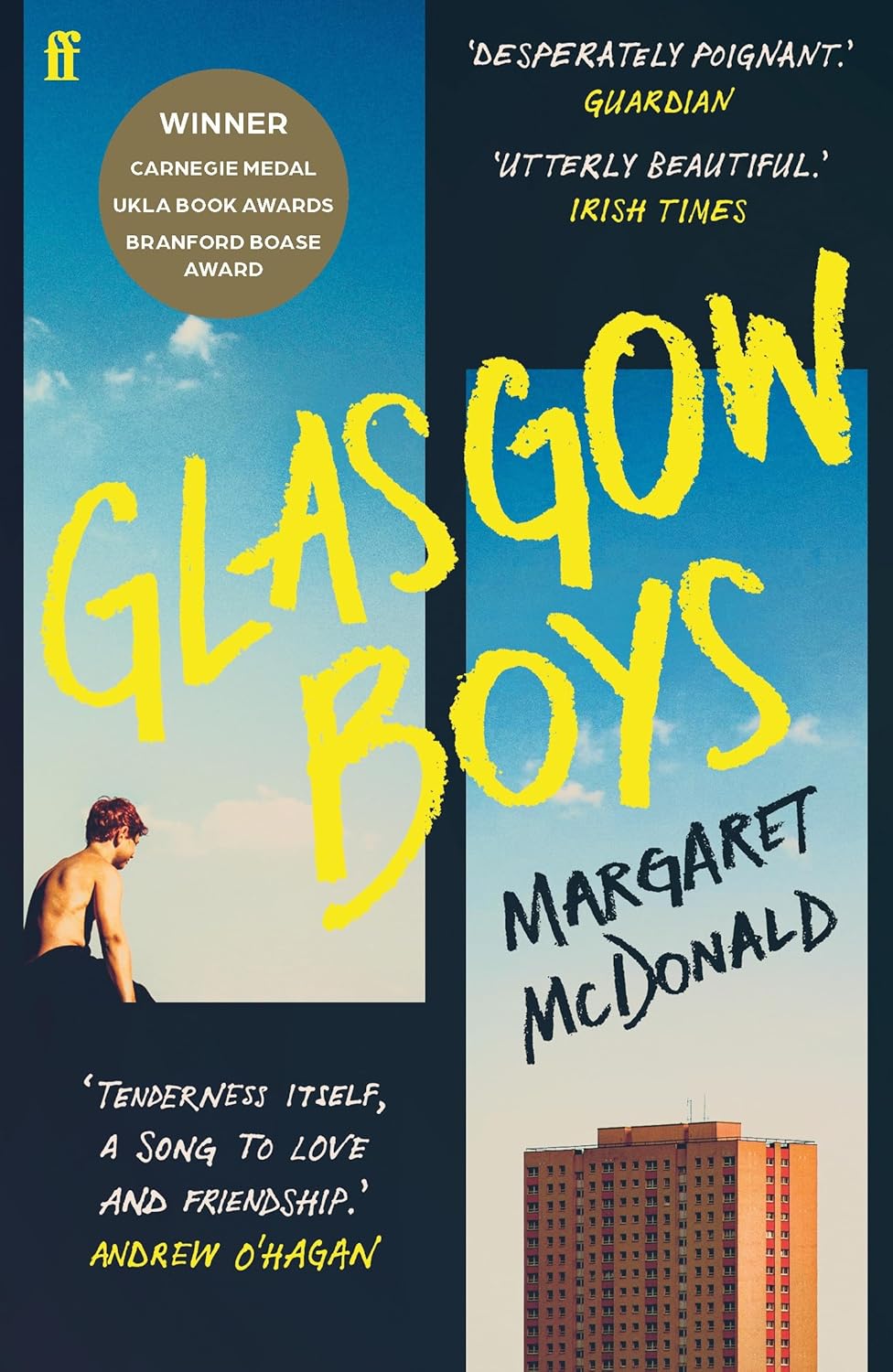
Susan’s Bookshelves: Glasgow Boys by Margaret McDonald

Writing a piece the other day about the history of the Carnegie Medals, I realised that I had missed last year’s winner for writing. Time then to put that right. And I can now attest that it’s an emotional rollercoaster.

Finlay and Banjo have both grown up in care. Neither has ever really known family life although Banjo’s current, saintly, foster parents are doing their damnedest.  Their circumstances are different. Banjo is back at school (sometimes) and Finlay is now training to be a nurse although self-funding is causing him worrying problems. The novel has a split time frame between “now” and three years ago.

Both boys are damaged, vulnerable, unhappy and angry although it manifests in different ways. Neither really knows how to form any sort of friendship or relationship. Anyway, who wants to? Anything which seems good is bound to be snatched from you so you might as well bust it up now – with violence, anti-social behaviour, silence, withdrawal or lies. Margaret McDonald has a real knack of getting inside their heads so that we understand – really understand – their thinking and flawed reasoning. In that sense Glasgow Boys reminds me a little of Melvyn Burgess’s Junk which also won the Carnegie Medal (2021) and remains the only thing I’ve ever read which helped me to understand heroin addiction.

Banjo and Finlay meet in a facility three years earlier in St Andrews and are room mates. Very gradually they form the nearest thing to a friendship either of them has ever known. Although Finlay is gay and Banjo is not, this is simply friendship. There is however, nothing simple about it. There are issues of trust born of a lifetime of being unable to rely on anyone and eventually there is a shattering rift, the exact details of which McDonald drip feeds with great skill though the memories of these boys now in their upper teens.

There are some wonderful characters in this novel. Paula, Banjo’s foster mother is the epitome of kindness understanding and reasonableness, Anger, or even irritation, is foreign to her. Akash the medical student, Finlay is falling in love with is a delight and he has a stable family home so Finlay begins to understand the dynamic. Meanwhile Banjo works  part-time in a café where he makes friends with Elena and slowly morphs into her boyfriend. She too has a very stable, welcoming family. When Elena is hospitalised with Crohn’s Disease ( interesting quasi “subplot”) her father, Carlos, welcomes Banjo into her hospital room as “part of the team” and that’s quite a moment.

Of course none of this happens straightforwardly. Both “Glasgow boys” suffer repeated setbacks which they recognise as being their own fault but neither is super human enough to get systematically on top of the issues. They need help but they’re conditioned not to discuss their feelings.

So will Finlay and Banjo meet and repair their friendship? I’ll spare you the spoilers. Suffice it to say that this warm hearted, intensely perceived, moving novel ends hopefully.

Glasgow Boys was published by Faber & Faber as young adult fiction. It wouldn’t have qualified for the Carnegie Medal for Writing, otherwise And Margaret McDonald, incidentally, is at 27 the youngest ever winner. I have read many hundreds of novels written for children and young adults over the years and I used to say that the writing is subtly curtailed so that you can sense immediately which genre you’re in.

Bernard Ashley is a retired South London headmaster, author of many prize-winning books who came, at my invitation, several times to schools I taught in.  And I once heard him talking to a teachers’ conference about gang warfare in the East End which featured in one of his books. Of course, he said, these people would have been swearing in every sentence but you can’t do that in a children’s book so you have to find other ways of conveying the mood.

That would have been about 1985. Forty years later expectations are completely different. Glasgow Boys is authentically gritty. Finlay and Banjo speak exactly as they would in real life. And as I read, apart from the main characters being young adults, I had no feeling at all that this was a book targeted at teenagers. The distinction has disappeared and, on balance, I think that’s welcome.

Next week on Susan’s Bookshelves: The Catcher in the Rye by JD Salinger
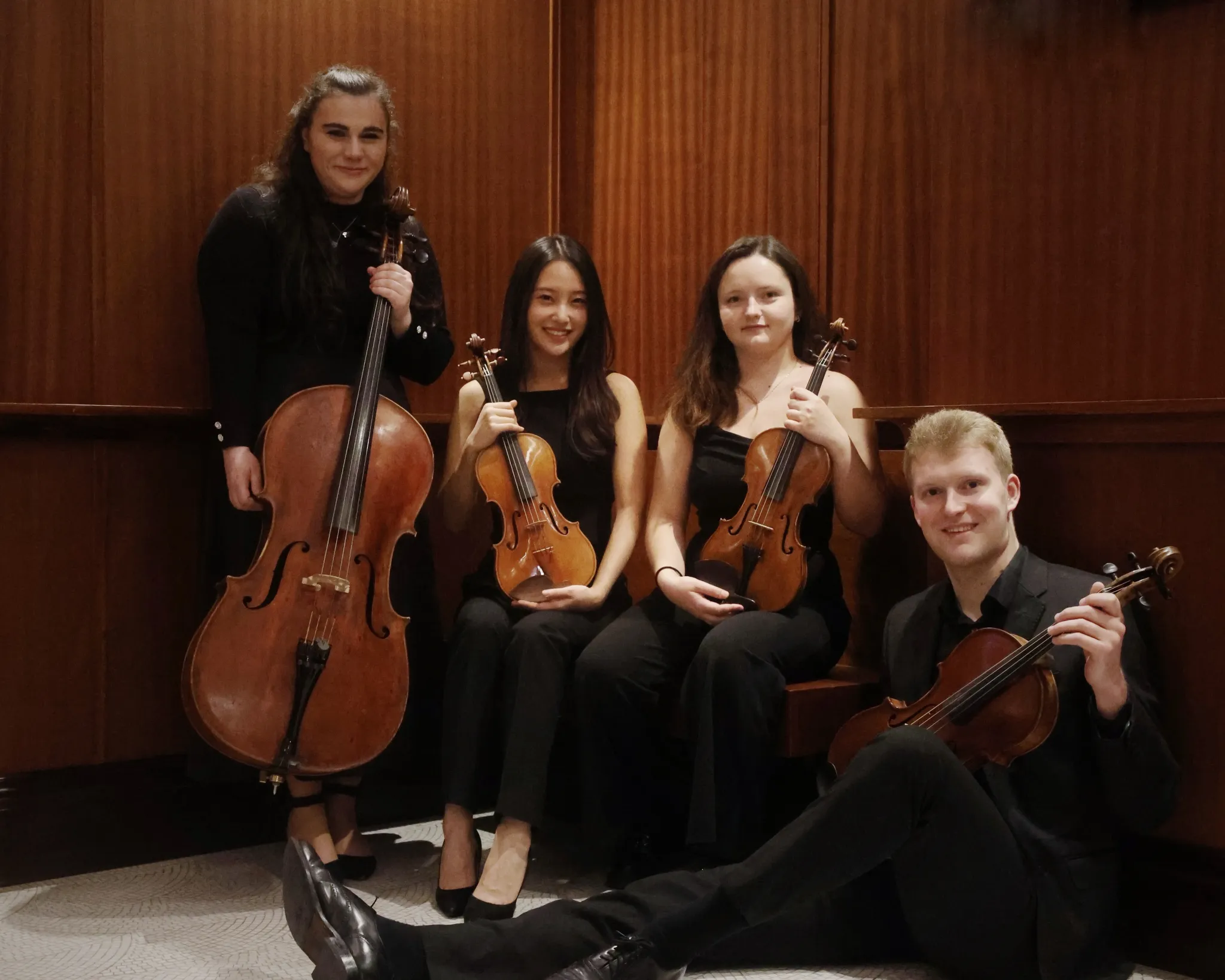
Regency Quartet

Brighton Dome, Corn exchange

25 March 2026

The concert opened with a pleasing account of Mozart’s K465 quartet. It’s a good choice with which to warm up both performers and audience because it offers equal prominence to all four players especially in the Hadynesque (it was dedicated to Haydn in 1785) adagio opening section. The andante cantabile came with loving tenderness and lots of eye control and the clarity of the semi-quavers in the final allegro was notable. And, as always, I was struck by the way the lofty Corn Exchange acoustic, which looks so unlikely with its huge space behind the players, actually allows us to hear every note.

Jesse Montgomery’s Strum (reworked for string quartet in 2012) provided a complete contrast. The seven minute piece is inspired by folk songs, protest songs and dance music and includes a great dela of the titular “strum”. Jamie Howe began with his viola in guitar position and all four players demonstrated rhythmic pizzicato with chords across the strings in both directions – all rather fascinating and enjoyable, especially when  violin harmonics topped the texture.

After the interval came Webern’s 1905 more familiar Langsamer Satz, written when he was only 22, still a student, and long before he started experimenting with atonality. The Regency Quartet delivered it with lots of wistful lyricism, lovely playing from Olwen Miles (Violin 2) when she introduces the melody and delicately muted piano sections. It’s a piece which requires a great deal of imaginative control which it certainly got in this performance.

Shostakovich’s String Quartet no 3 is an extraordinary work. Written in 1946 under the Stalinist regime, it presumably tested the composer’s fragile relationship with the establishment. It was rarely performed in public after its premiere and Shostakovich soon withdrew his potentially provocative headings for the five movements,

In this performance there was a string sense of virtuosic  wonder. In the opening movement Mabelle Young-Eun introduced the typically Shostokovich-ian melody with verve and, at the point when it goes fugal, the other three nailed the anxious, chromatic insouciance rather well. Then they found all the right disquieting menacing (sinister?) tone for the second movement with its strange percussive pianissimo.

The war-like (surely that’s what the composer intended?)  third movement needs, and found, huge reserves of energy and the contrasting funereal adagio followed with some beautiful lachrymose violin playing in the instrument’s highest register and some solemn near-unison statements. I especially admired Ellen Baimring’s cello work here along with Howe’s poignant viola solo

It’s a pleasure to see and hear four young players performing such challenging work with such vibrant passion and intensity.

The Beekeeper of Aleppo

Christy Lefteri, adapted by Nesrin Alrefani & Matthew Spangler

Directed by Anthony Almeida (original director Miranda Cromwell)

Richmond Theatre and touring

Star rating: 3.5

I first saw this Nottingham Playhouse Production three years ago on its home turf. Now touring, with a cast of eight which includes some actors from the original show, it has changed a little but remains powerfully moving.

Based on Christy Lefteri’s bestselling 2019 novel, the play explores the experience of migration to Britian from terrifying places of conflict – specifically Syria in the case of the titular beekeeper, Nuri (Adam Sina). As well as migration itself we are led to think about loss, marriage, parenting, guilt and friendship among other things. “Where there are bees there is life and hope” Nuri’s cousin and fellow beekeeper observes as bees emerge as a metaphor for what we all want:  a harmonious, peaceful, collaborative way of living together.

Nuri, gradually afflicted by PTSD, which everyone can see except him, is sensitively portrayed. Adam Sina gives him loving warmth and tremendous decency all of which gradually crumbles into despair until something happens to change that. And Farah Saffari, is pretty strong as his damaged (blinded by trauma), troubled wife, Afra, although – possibly because of the acoustic of Richmond Theatre –  she isn’t always audible from Row G. There is delightful work, too from Joseph Long as gentle, wise cousin Mustafa and the Moroccan man in a south coast hostel desperately, and hilariously, trying to adopt British ways. Otherwise this is very much an ensemble piece, sometimes using physical theatre, in which the other five actors show a lot of versatility.

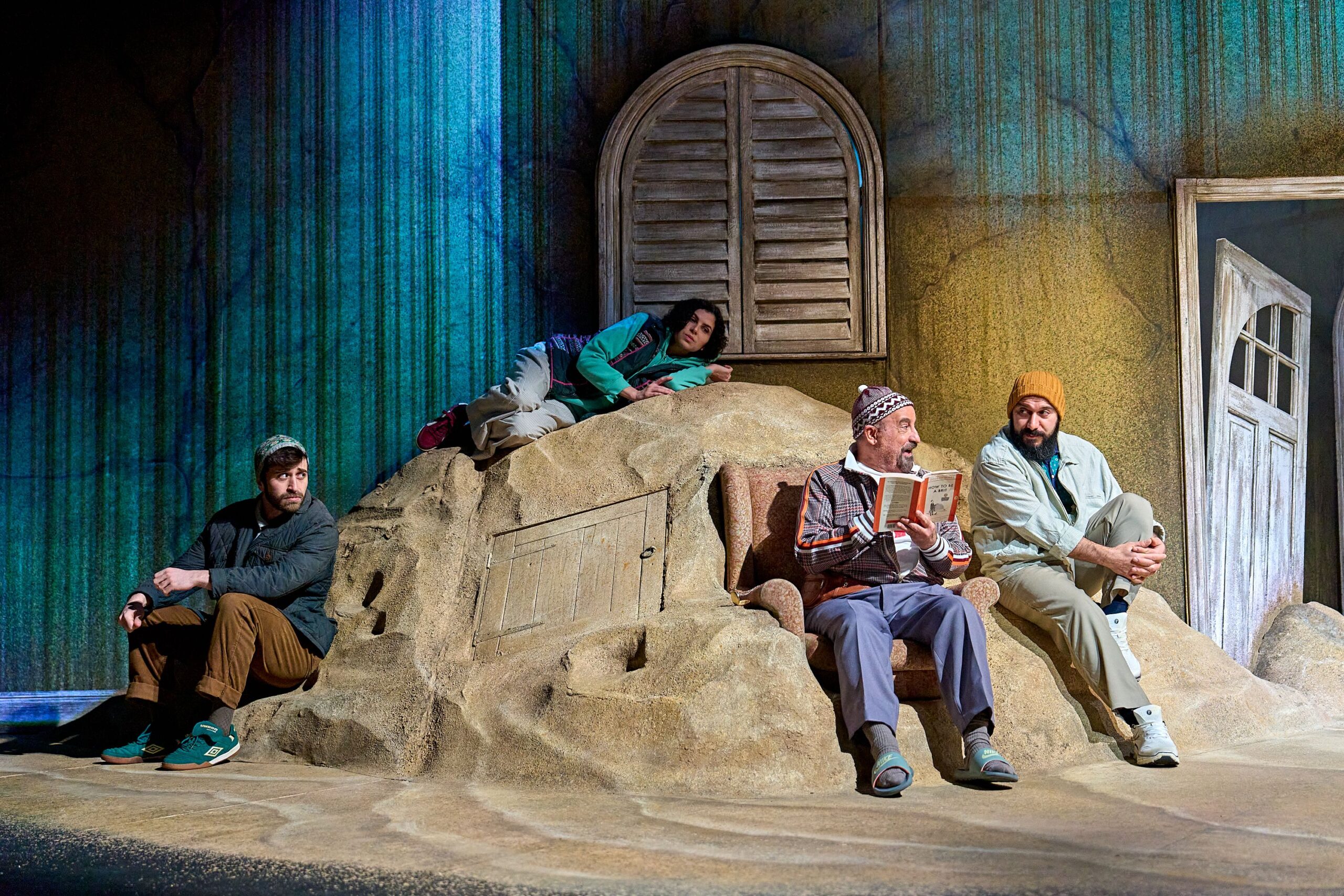
Ruby Pugh’s ingenious set presents a sort of rocky promontory with an inset door, window, trap door, bed and armchair, against which all the action is played. And there are a lot of scenes in this play, ranging right across Europe and shifting back and forwards in time but the storytelling is commendably clear. Video projection by Zsolt Balogh and Palma Studio adds a lot of atmospheric and colourful detail and the captions to indicate location are a sensible idea. The sound design is neat too ranging as it does from bombs to seagulls and, of course, bees.

It ends on a note of forward-looking optimism because, naturally, there are bees so there is hope.

Marin Alsop conducts Scheherazade

Philharmonia

Marin Alsop

Cello: Ailsa Weilerstein

Royal Festival Hall

12 March, 2026


The first half of this concert presented an imaginative, all-Mexican pairing. It’s a treat to hear an orchestra of this calibre having beautifully balanced fun with the rich rhythmic pulsating of Arturo Marquez’s Danzon no 2. It is, of course, a fusion of Mexican popular music with classical ideas and this compelling account of it included splendid tuba work, bows-down pizzicato and a suitably understated violin solo (Sergey Ostrovsky) The energetic cross-rhythms made it quite hard to sit still and listen.

Thence to a completely different sound world and response to Mexico. Gabriela Ortiz’s Cello Concerto “Dzonot” is a reflection on Mexico’s natural underwater network and an expression of concern for the environment as well as a celebration of its beauty. This was the London premiere of the piece played by Ailsa Weilerstein to whom it is dedicated.

Weilerstein can certainly coax some unusual un-cello-like sounds from her instrument. The second movement opens with col legno (to represent the padding feet of a jaguar) and there are some plaintively mysterious harmonies in the third movement with a pedal note in the basses and tinkling bells at the top of the texture.  Her glissandi grab the attention and so do her harmonics. It’s a piece full of haunting sound effects and Weilerstein plays it beautifully – it must be pretty challenging but satisfying to do for her as well as for conductor and orchestra. On the other hand it’s not particularly listenable and I suspect many of the audience, who were looking forward to the main piece in the concert might have preferred something more melodious ,although contrast and innovation are always welcome.

And so to the high spot of the evening and this performance of Scheherazade – Rimsky-Korsakov, always a sumptuous melodist, at his very best – really did scale the heights. Played throughout with incisive passion and conducted by Marin Alsop without a score, it shone like a brightly burnished old coin.  Highlights included the magnificent bassoon solo in the second movement which Arvid Larrsson packed  with warmth and rubato. And Ostovsky played the narrative solo line with immaculate poignancy without ever milking it.  The rich string work, especially, in the third section was full of dynamic contrasts and I like the way Alsop sometimes stops conducting conventionally and simply sways.

I suspect the quality of a Philharmonia performance such as this lies partly in the sense that every member of the orchestra is enjoying playing. It’s not just a job. Annabelle Meare, principal second violin, always draws my eye, for example, because she lives and breathes every note with tangible pleasure.

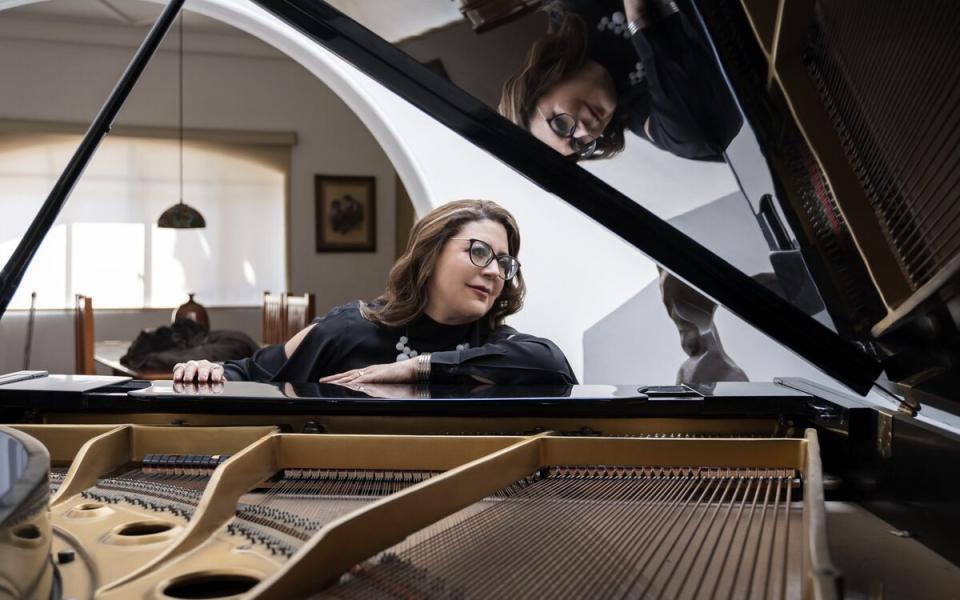
Photograph: Gabriela Ortiz


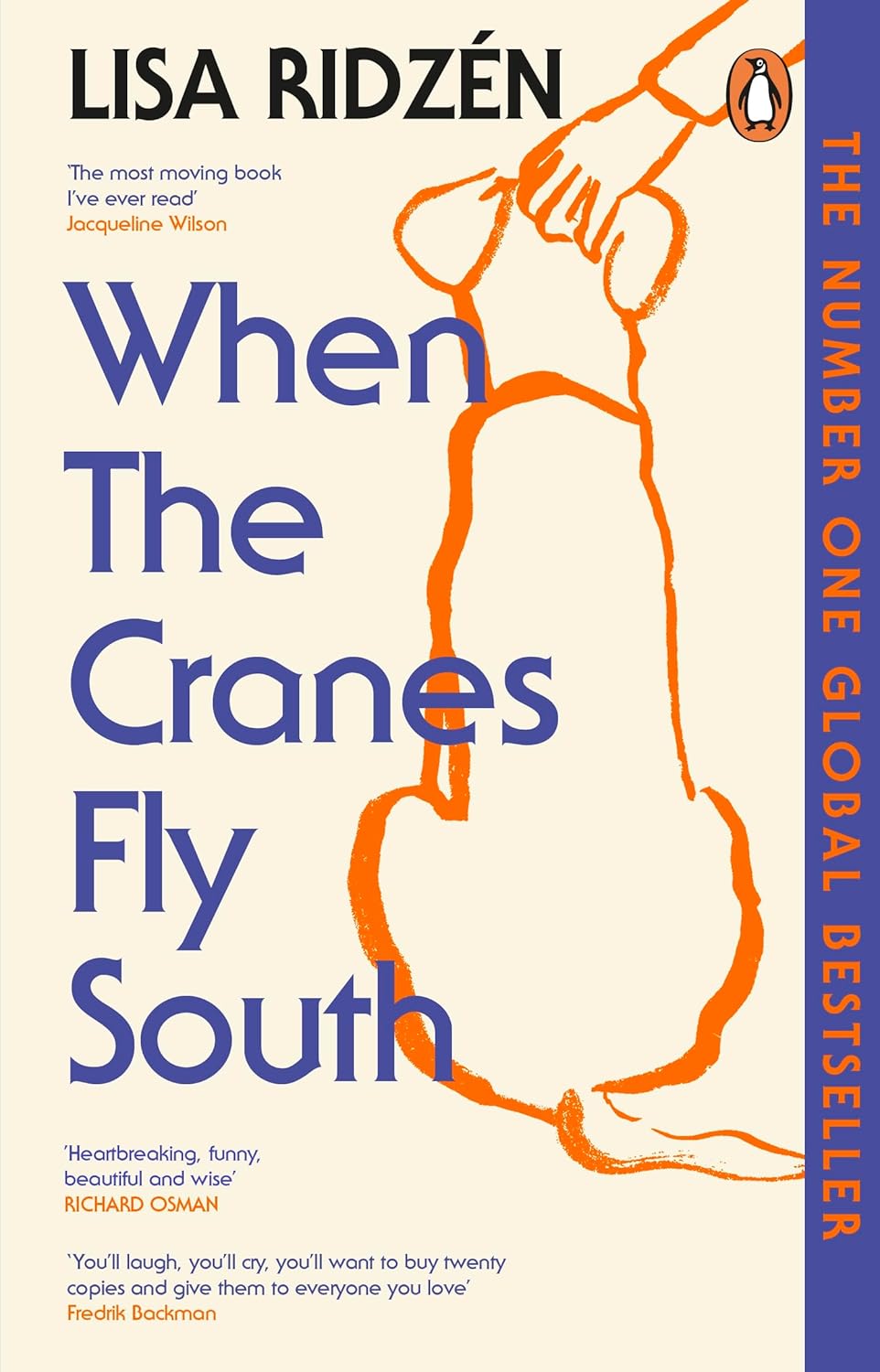
First published in Sweden in 2024, Liza Ridzen’s debut novel has been a runaway, word-of-mouth success. The English translation landed in mid 2025 and it is now translated into 34 languages. I think its power lies in its simple humanity. Most of us will have experienced, from some angle, at least a bit of what Ridzen presents here.

Bo is an ordinary man of northern Sweden (where Rizden lives). His adored wife, Fredrika is in a care home, so far afflicted with dementia that she no longer recognises him. Having worked for fifty years in a sawmill, Bo now wants to live independently with his beloved elkhound, Sixten. The trouble is that he’s 89 and his health is failing rapidly. It is not safe for him to take Sexten out into the woods, as he always has done, although he tries to repeatedly. At one point Sexten spots an elk and hares off in an attempt to do what he’s bred to do and there’s a tense 24 hours when the dog is missing. Bo is visited four times each day by carers.

The narrative runs on dates like a diary – with third person, quasi stream of consciousness passages in which Bo shares thoughts, memories, views and worries as if he were speaking to Fredrika. Interspersed with that are comments left by carers in the record book. Apparently, that is where the inspiration for this moving novel came from: the written entries left by carers in the report book as Rizden’s grandfather’s approached the end of his life.

Bo is often understandably angry. Who are these people to keep telling him what to do? He won’t shower if he doesn’t want to. Why should he eat if he’s not hungry?  And of course he can take his own dog out. He’s been doing it all his life. But, in fact he is powerless as, increasingly his son, Hans, make decisions for him. Bo, inevitably, detests this role reversal and uses sullenness to object because it’s the only strategy he has left.

One of the issues is Sexten who gives Bo huge amounts of comfort as they sleep together on the antique day bed in the kitchen. But of course, the reader knows, that tragic as it is, Hans is right. This is no life for an active dog and he needs to be rehomed with a family who can look after him properly. On the other hand, we also feel Bo’s grief at the prospect of being dogless. Then there’s the issue of the day bed to which he has become attached.  Bo refuses to use the bed he formerly shared with Fredrika. Now his son and carers decree that he must have an “adaptable” hospital style bed and, of course, he doesn’t want that either. “This isn’t just about you, Dad” Hans tells him tersely. Bo wonders sardonically why it isn’t – it’s his life and comfort, after all.

Hans is an interesting character whom we meet only through Bo’s eyes, including many memories of his childhood.  Bo was always determined to be a much better father than his own bullying father had been. Nonetheless he and Hans have always struggled to talk to each other freely. The reader can see past Bo and recognise that the younger man is doing his best in a difficult situation – especially when they visit Fredrika or attend the funeral of Bo’s best friend, Ture. He can be tactless, bossy or exasperating but he’s a good man and very worried about his ailing father.

We also get a vivid impression of Ingrid, Bo’s favourite carer. She takes the time to talk to him. She jollies him along without being patronising. She even takes Sexten out briefly which is definitely not part of her job.

It’s a beautiful, intensely thoughtful book which I found so riveting that I read it in twenty-four hours.

Next week on Susan’s Bookshelves: Glasgow Boys by Margaret McDonald.


St Matthew Passion

JS Bach

The Bach Choir

London Youth Choirs

Florilegium

Conductor: David Hill

Soloists: Toby Spence, Neal Davies, Lucy Crowe, Carolyn Dobbin, Benjamin Hulett, Christiopher Purves

Royal Festival Hall, Southbank Centre

08 March 2026


I am a religious unbeliever. JS Bach was a deeply committed Lutheran. One thing that Herr Bach and I was agree on, however, is that this is one of the most intensely powerful narratives of all times and all cultures. Why else has it absorbed musicians (and other artists) since the stories were first set down in the first century AD through mediaeval carols to Handel, Bach, Andrew Lloyd Webber and many more? The fascination is timeless, endless and cuts through all points of view,

And St Matthew Passion, which requires two chamber orchestras, two choirs plus a ripieno choir, organ and six soloists is one of the most tenderly grandiloquent accounts of it ever written. The staunchness of Bach’s beliefs are there but so is the drama of a good story well told which is why there’s something here for everybody.

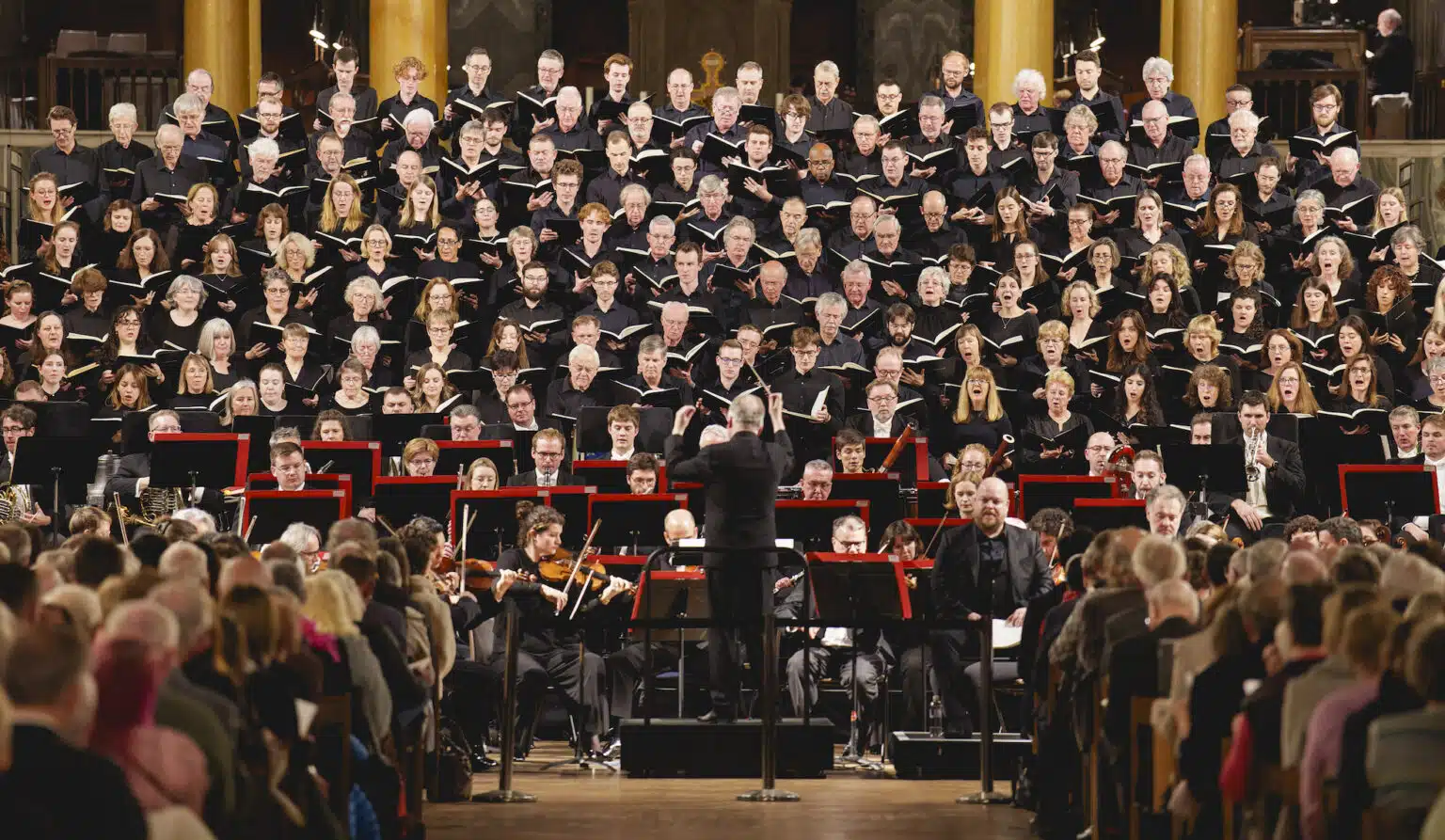
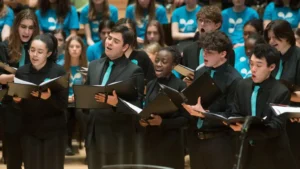
The Bach choir, marking its sesquicentennial this year, performs St Matthew Passion annually and has a long tradition of no applause until the very end which is very welcome. If only this respect would spread to other works (such as symphonies) in other concerts. David Hill had the huge forces completely under his hands and coaxed the crispest possible diction and a whole range of dynamic and harmonic richness from the choir which is seated on three sides above the orchestra. “Loose him! Leave Him! Bind it Not!” was incisively operatic and every chorale was sung with warmth and immaculate control right through to the poignancy of the final pianissimo G minor chord. And it’s a treat to see and hear the London Youth Choirs, resplendent in turquoise tee shirts, contributing so ably.

The starry lineup of six solists were seated mostly behind the orchestra with Toby Spence as Evangelist next to the organ immediately in front of David Hill. From time to time they moved to the front but sometimes sang from within or beyond the orchestra and it was pretty effective placing. Of these Spence (tenor) gave a marvellous performance – moving and dramatic with every and every note placed with precision and clarity. And, always good value, Christopher Purves, in his trademark black kilt, gave the baritone voices, especially Judas, all the dark brown resonance you could wish for.

Full marks too, to Florilegium. Working, as the piece requires, as two orchestras, they played with enjoyable mellowness on their period instruments. The flute and oboe continuos (with players standing) were especially lovely and there was plenty of fine work from strings, especially double basses.

I see, and review, a great deal of heavily amplified musical theatre. It’s reassuring to see a performance as stunningly able to fill a large auditorium as this without a radio mic in sight. Long live “classical” training.

The Wrong They Knew

Directed by Michael Bossisse and Bethany Hamlin

Rayne Theatre

Chickenshed

Star rating: 5

I have been travelling to the wilds of N14 to review Chickenshed shows for twenty years. Almost everything I’ve seen there has been impressive But this time they have, I think, surpassed themselves. The Wrong They Knew is the strongest work I’ve ever seen there.

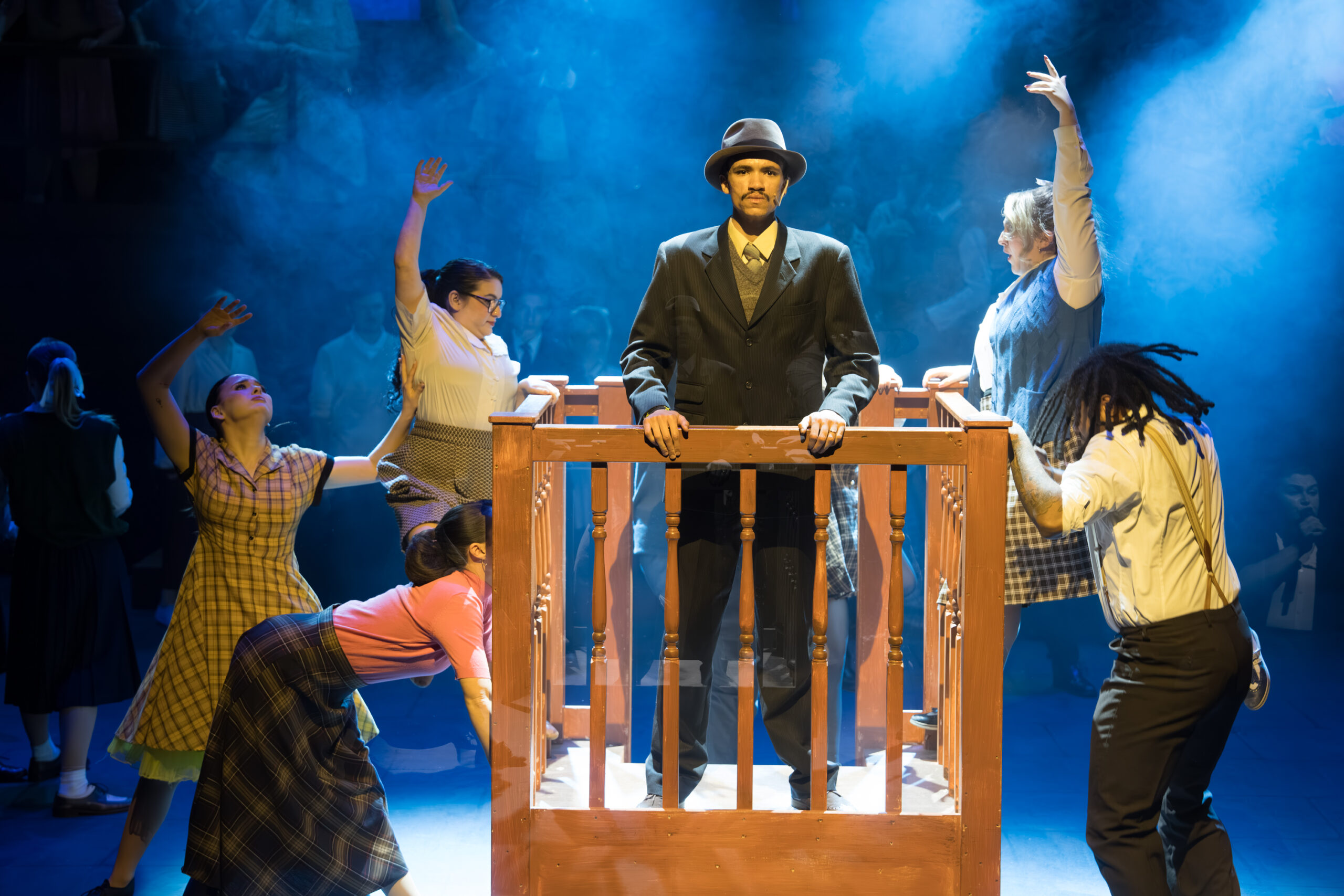
We’re in the 1950s. Immigrants have arrived from the Caribbean and there is a lot of ugly hostility. I am old enough to remember a lot of this in the later 50s and 1960s and it’s very important to inform young people that things were far, far worse before we had race relations legislation. The raw prejudice was horrifying and that’s what this very moving production highlights – in Chickenshed’s inimitable way. That means breathtakingly slick choreography involving a big, inclusive ensemble  cast, diverse in every sense, punctuated by acrobatically smooth architectural shapes. It’s somewhere between physical theatre and ballet. At the same time there’s fabulously atmospheric music with lots of calypso and rap along with a haunting version of “Early One Morning” (which every 1950s school child knew) in the classroom and a menacing reworking of “I know an Old Lady Who Swallowed a Fly”.

The plot is very clearly inspired by To Kill a Mockingbird. Two children leave food for a reclusive man who, a long time later, rescues them from a dangerous situation. White girl, Madeleine Awol (Tilly Morton – good) is a lonely, abused victim terrified of her father but sexually frustrated. She persuades Theo Rookley (Shiloh Maersk – fine performance), a happily married, disabled black man, to come, against his will, into her home to help her. Her father (Jimmy Adamou – very good indeed) is a brutish lout who then beats her up and accuses Theo of assault. Despite the efforts of the benign, decent lawyer, Isaac Shawcross, Theo is found guilty. If you know To Kill a Mockingbird you’ll know more or less how it pans out although there is a pleasing narrative surprise at the end

Cara McInanny, co-musical director with Phil Haines, plays Iris who is Isaac’s second wife and a loose reworking of Harper Lee’s Calpurnia. She sings beautifully and acts as an anchor for much of what happens on stage. Other music mostly involves Chickenshed’s trademark short solos and lots of dramatic chorus work all of which drives the plot along powerfully.

The Wrong they Knew also visits the joy of Carnival – a concept which arrived in Britian in the 1950s with people from the Caribbean. Then there are tensions with Teddy boys and quite a lot else. I really liked the insertion of real extracts from 1950s news reports, interviews and vox pop comments along with posters, placards, banners and grafitti.  And everyone on stage is in some form of 1950s costume – tweed skirts, full skirts, polka dots, ties, formal jackets and much more. The sense of period is spot on. Even the foyer music is calculated to support that. I hadn’t heard “Magic Moments” for a very long time,

Bravo Chickenshed. You certainly live up to your “theatre changing lives” branding. Shocking as the subject matter is The Wrong They Knew is a joy to watch,


The Lost Art of Keeping a Secret

George Ryder and Brodie Husband

Directed by Emily Prosser-Davies

Linnet Theatre

Jack Studio


Star rating: 4


Five first year students who don’t know each other arrive at a shared house and the group dynamics are complicated. It’s a strong idea for a 95 minute straight-through play and it’s tautly written.

Bex (Emily Dilworth) is, at least on the surface, a knowing, confident good-time girl of some experience. Charlotte (Katie Emanuel) is, very different: nervous, Christian and initially keener on work and peace and quiet than drink and drugs. Later her caution is thrown to the winds and Emanuel really nails the contrast and makes it plausible.

Luke (George Ryder, co-writer of the play) is at the start worldly like Bex and Henry (Brodie Husband. co-writer) pretends to be a slobbish buffoon but actually emerges, as the play goes on, as an articulate man who knows about poetry. None of them is a stereotype.

But Ollie J Edwards gets the best role. As Kane he is a non-drinking studious, decent type who supports (and fancies) Charlotte or so it seems. Actually he is a dark – shockingly dark – horse. Edwards plays him with naturalistic nuance and it’s good to watch.

This well-directed quintet of accomplished actors play impressively off each other too. There’s a lot of alert listening and response and the aggressive arguments are convincing.

The low budget set works well. The room contains only a sofa (stage business with cushions) a table and a mini kitchen. A false back wall incorporates a locked door behind which is a chilling mystery and the main auditorium entrance is used to add depth as usual at the Jack Studio.

Long before we get to the real drama, the inconsequential awkwardness when the five first meet at the beginning is deftly observed,

Linnet Theatre is a new company and clearly one which knows its business.