Press ESC or click the X to close this window

Starcrossed (Susan Elkin reviews)

Show: Starcrossed

Society: West End & Fringe

Venue: Wilton’s Music Hall. Graces Alley, London E1 8JB

Credits: By Rachel Garnet. Inspired by William Shakespeare’s Romeo and Juliet. Presented by Jacob Schott and Visceral Entertainment in association with Ticking Clock Theatre

Starcrossed

4 stars

Photos by Pamela Raith


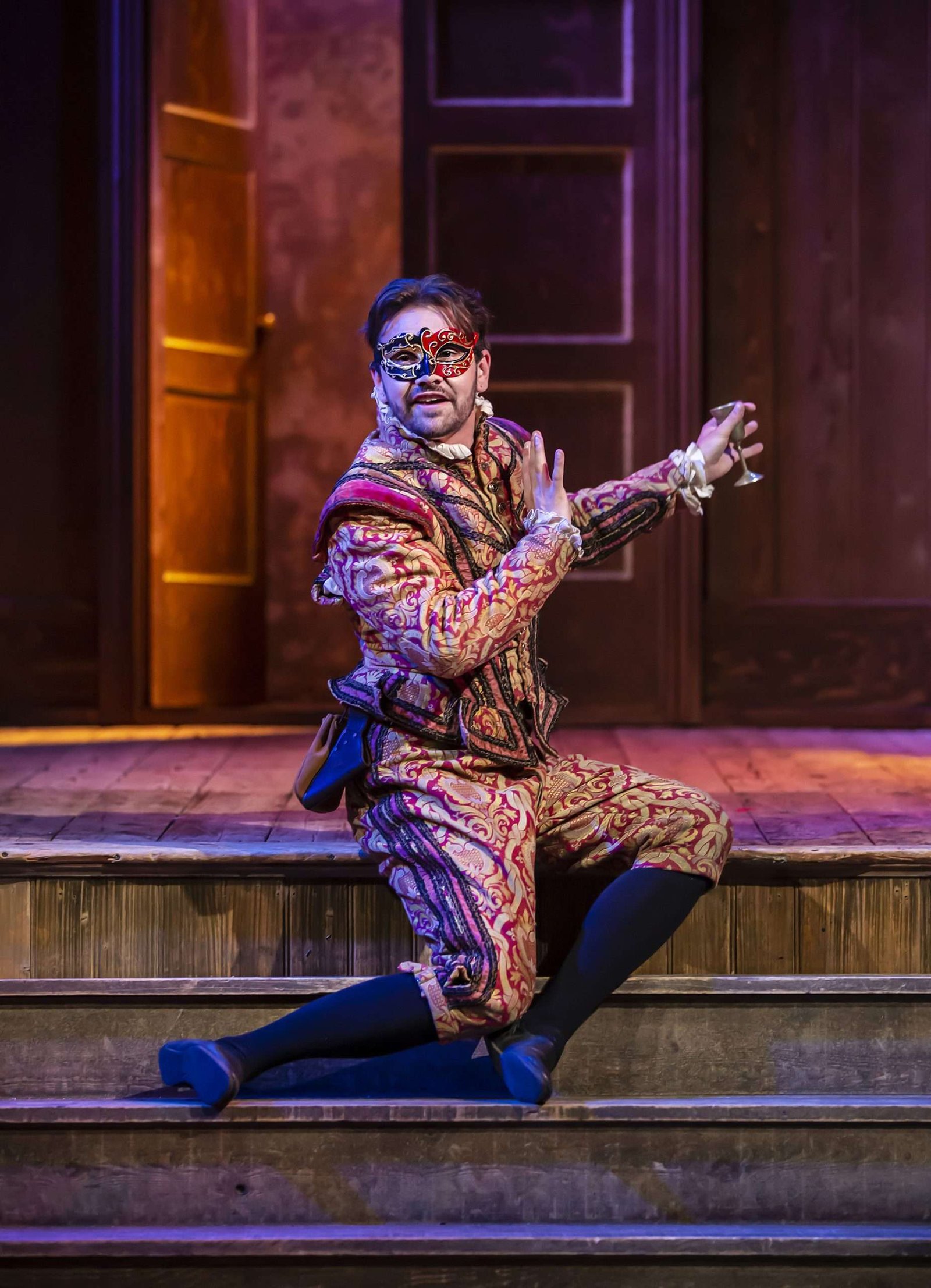
An intelligent, moving, original, tangential response to Romeo and Juliet, Starcrossed  feels, in many ways, like traditional Shakespeare. The three actors are in Elizabethan dress. And I was constantly impressed by the language. Rachel Garnet’s text weaves Shakespeare’s  familiar verse and her own so neatly together that it’s seamless fusion. Most of the play is in iambic pentameter, complete with occasional rhyming couplets and contemporary usage such as “Art thou” and “Go forth”. It’s clever stuff which pounds along with great clarity.

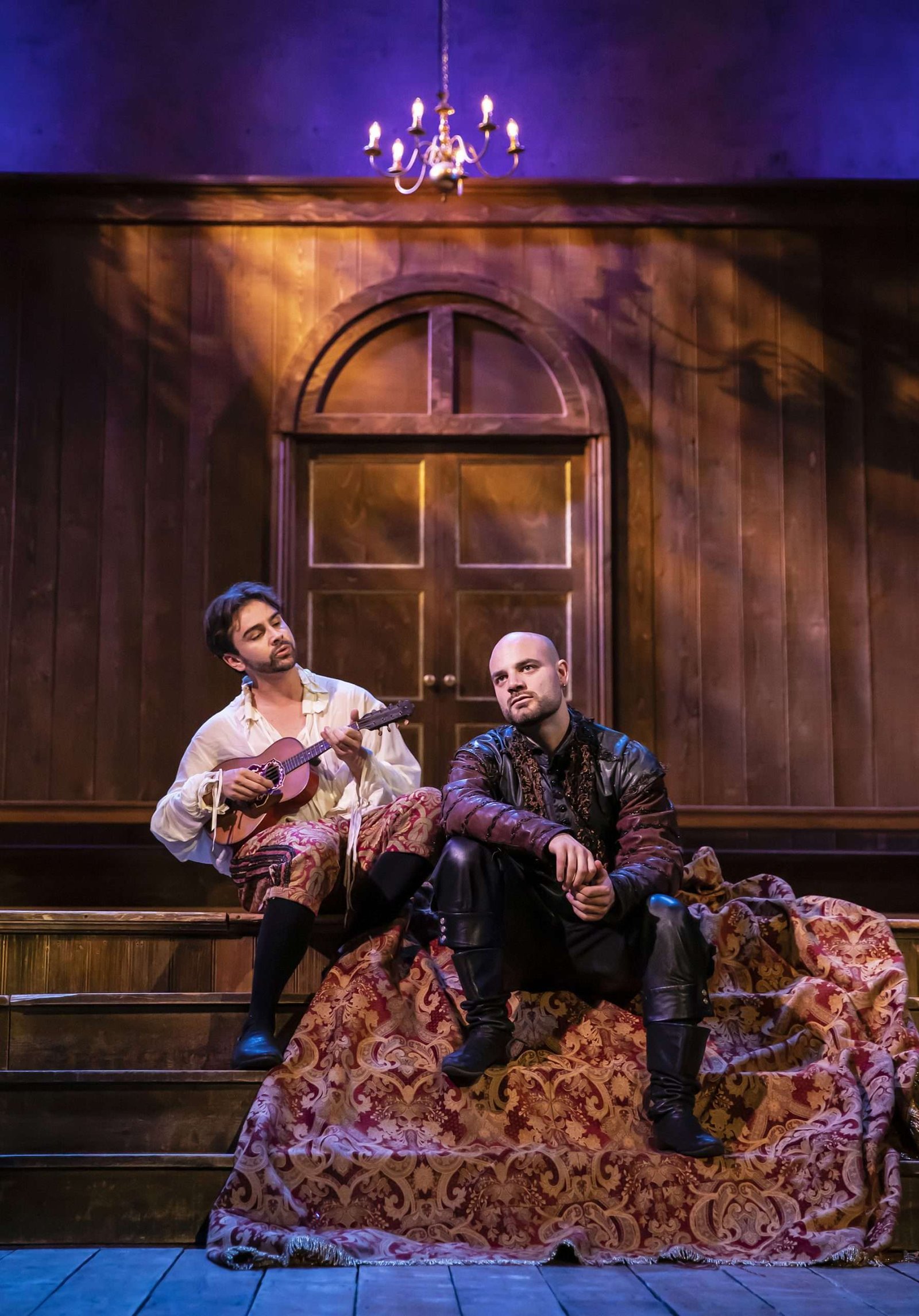
The narrative conceit is that, at the same time as Juliet and Romeo  meet and fall for each other in the background, Tybalt (Tommy Sim’aan) and Mercutio (Connor Delves) realise they are in love. Tybalt tries very hard to resist it but eventually succumbs. The scene in which they wake up after spending the night together, uses Shakespeare’s beautiful lark/nightingale dialogue. Thereafter – when they’re almost caught together – we get a hilarious traditional bedroom farce with much hiding under the bedclothes and quick fire on stage misdirection. It’s a very well paced play.

Gethin Alderman plays almost all the parts except Tybalt and Mercuitio and he is a magnificent, often very funny, actor, Among other incarnations he finds a lofty, gobbled voice for Capulet, a light soppy one for Romeo and a rough bellow for Salvatori, a character not in Shakespeare’s play but essential to the plot here. Alderman exploits his towering height too.

Delves makes Mercutio mercurial and very seductive and Sim;ann brings serious gravitas tempered with warmth to Tybalt. And the  three cast members are finely attuned to each other.

The piece is peppered with wistful folk songs and Elizabethan ballads – mostly in minor keys led by Delves on small guitar, They feel atmospherically appropriate.

Many Shakepeare spin offs – and Juliet or Matthew Bourne’s Romeo and Juliet ballet for instance move a very long way from the source material. Starcrossed is refreshing and enjoyable because, despite its plot twist, it actually celebrates Shakespeare’s play. When Mercutio dies, for instance, we’re straight back to the lines we’re all familiar with. Of course there’s room for both approaches.

First published by Sardines: https://www.sardinesmagazine.co.uk/review/starcrossed/


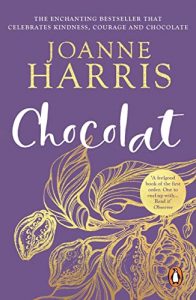
I first read Chocolat twenty three years ago when it was first published in 1999 and getting huge amounts of acclaim. All I remembered was that it was about chocolate making in a French village – with lots of colourful characters.

Having reread it now, I realise and remember that it’s about a great deal more than that. Chocolate is the novel’s metaphor for pleasure and free will and it’s pitted against the bigotry of some corners of the Catholic church which clings to its doctrines of sin and the need to forgo all sensual pleasure.

Vianne – with her young daughter Anouk and many memories of travelling the world with her otherworldly, perhaps psychic mother – arrives in the fictional Lansquenet-sur-Tannes, near Agen in south-west France at the beginning of Lent. There she decides to use her newly acquired skills as a chocolatière by opening a shop –  to the horror of the local priest, Reynaud. Vianne and Reynaud alternate as narrators.

Vianne is wise, kind and exceptionally perceptive. During the six weeks of the novel’s span with Easter as its climax she befriends a spirited elderly woman with a mind of her own – wonderful creation. She also supports the River People who arrive nearby and are met with a pretty solid wall of, as it turns out, criminal, vigilante prejudice. She takes in the wife of local café owner helping her to escape from a brutally abusive marriage. And she makes friends with locals who come to her café to drink her chocolate, eat her near-magical concoctions and bathe in her calm alternative to the church across the village square.

Reynaud’s chapters are addressed to his predecessor priest in the village – effectively his mentor and now comatose in care. Gradually we realise that there are dark secrets in the past which partly explain why he is as he is although Harris doesn’t exactly forgive him for the unhappiness he has caused. It’s just one of the many well drawn and nicely paced sub plots. Lovely old Armande’s relationship with her difficult bossy daughter and delightful poetry-loving grandson is another. So is the development of Josephine from terrorised wife into a confident, independent woman.

The writing is extraordinarily sensuous. You really can taste the chocolate and feel it texture in your mouth: “I poured a glass for myself, with noisette liqueur and hazelnut chips. The smell is warm and intoxicating, like that of a woodpile in the late autumn sun” or “I went into the kitchen and very slowly prepared the chocolate espresso. By the time I’d poured it, added cognac and chocolate chips, put the cups onto a yellow tray with a wrapped sugar lump in each saucer, she was calm again.” And at the end of the novel is a dinner party at which every dish is lovingly described – it’s climactic in more ways than one but no spoilers in case you haven’t read it.

In short I loved Chocolat  and admired it all over again. I don’t think I have ever seen the 2000 film in which Juliet Binoche played Vianne – if I have it must have made very little impression on me. I shall now however, having reread the book and thought a lot about it, give the film a whirl. I doubt that it manages to convey the chocolate experience as well as Harris’s words do but we’ll see.

Chocolat

Next week on Susan’s Bookshelves: The Amazing Story of Adolphus Tips by Michael Morpurgo

Show: The Lion

Society: Southwark Playhouse

Venue: Southwark Playhouse. 77-85 Newington Causeway, London SE1 6BD

Credits: BOOK, MUSIC & LYRICS BY BENJAMIN SCHEUER. Produced by DANIELLE TARENTO IN ASSOCIATION WITH ARIZONA THEATRE COMPANY

The Lion

4 stars

Susan Elkin | 02 Jun 2022 13:59pm

Photos: Pamela Raith Photography


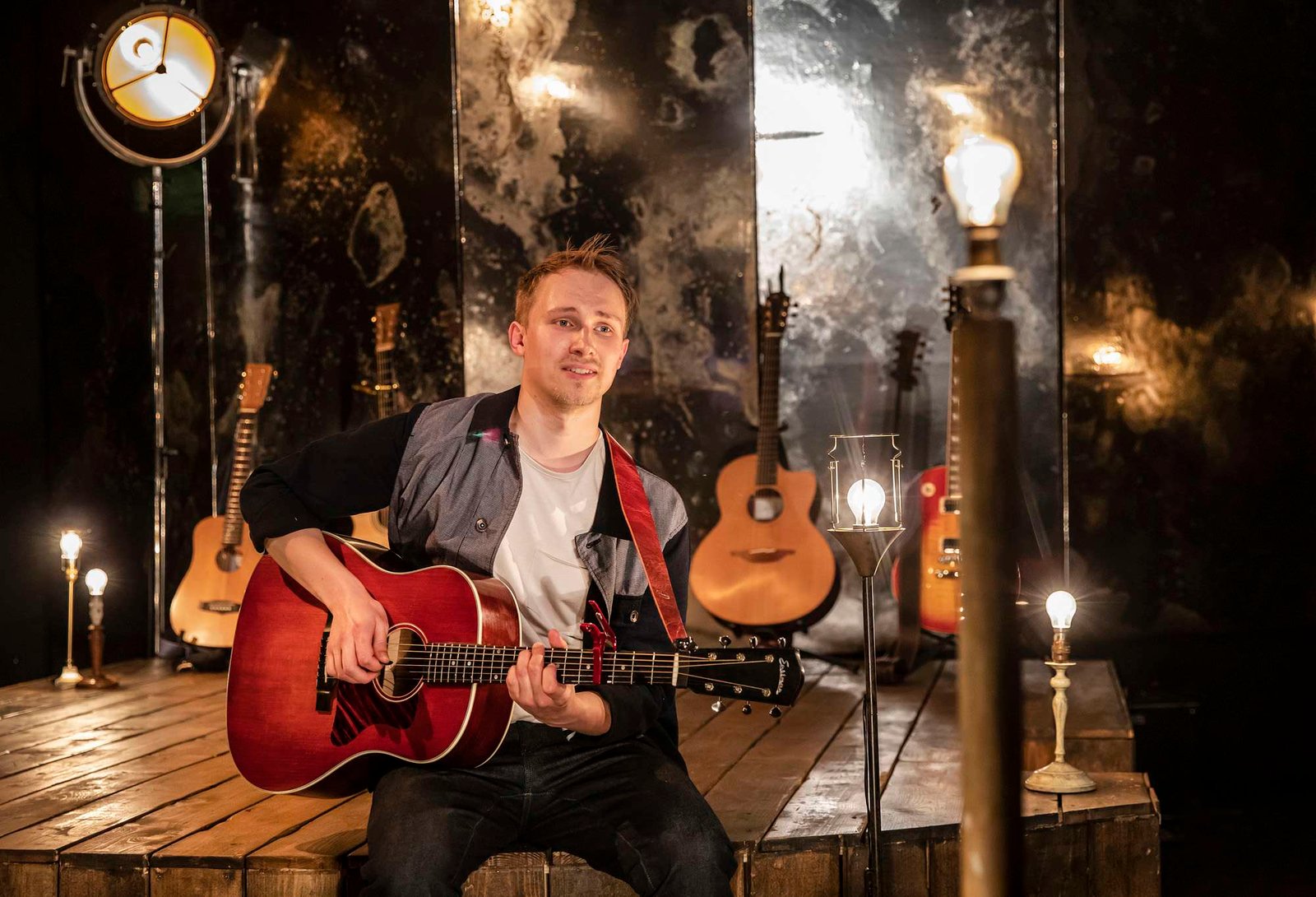
This warmly engaging show is a one-man, song-based autobiographical piece. First aired in 2014, it was originally produced at Manhattan Theatre Club and toured all over the US with the author/composer performing it himself. The 2022 revival features the very talented Max Alexander-Taylor as Ben.

Ben’s life story is eventful. The son of an American father and British mother, he grew up in New York. When he was 14,  his father died suddenly after which his mother returned to the UK with his two younger brothers and Ben who was sent to an English boarding school. As soon as he could he returned to New York, established himself as a musician, had a long relationship with a girl (“freckled face and eager mind”) and, before he was 30, survived Stage 4 Hodgkin’s Lymphoma – a very serious form of blood and bone cancer.

We start with Ben as a child playing a home-made toy guitar with his musically accomplished, mathematician father who eventually gets the boy a proper guitar and shows him one chord from which the rest develops. The relationship with his father is troubled because Ben fails to live up to expectations and Scheuer senior is very short tempered. He and Ben were locked in an unresolved  quarrel at the time of his death so the boy is wracked with guilt and feelings he doesn’t understand. And those feelings are later threaded through the love for Julia and the cancer as we watch, and listen to, Ben unpicking his emotions.

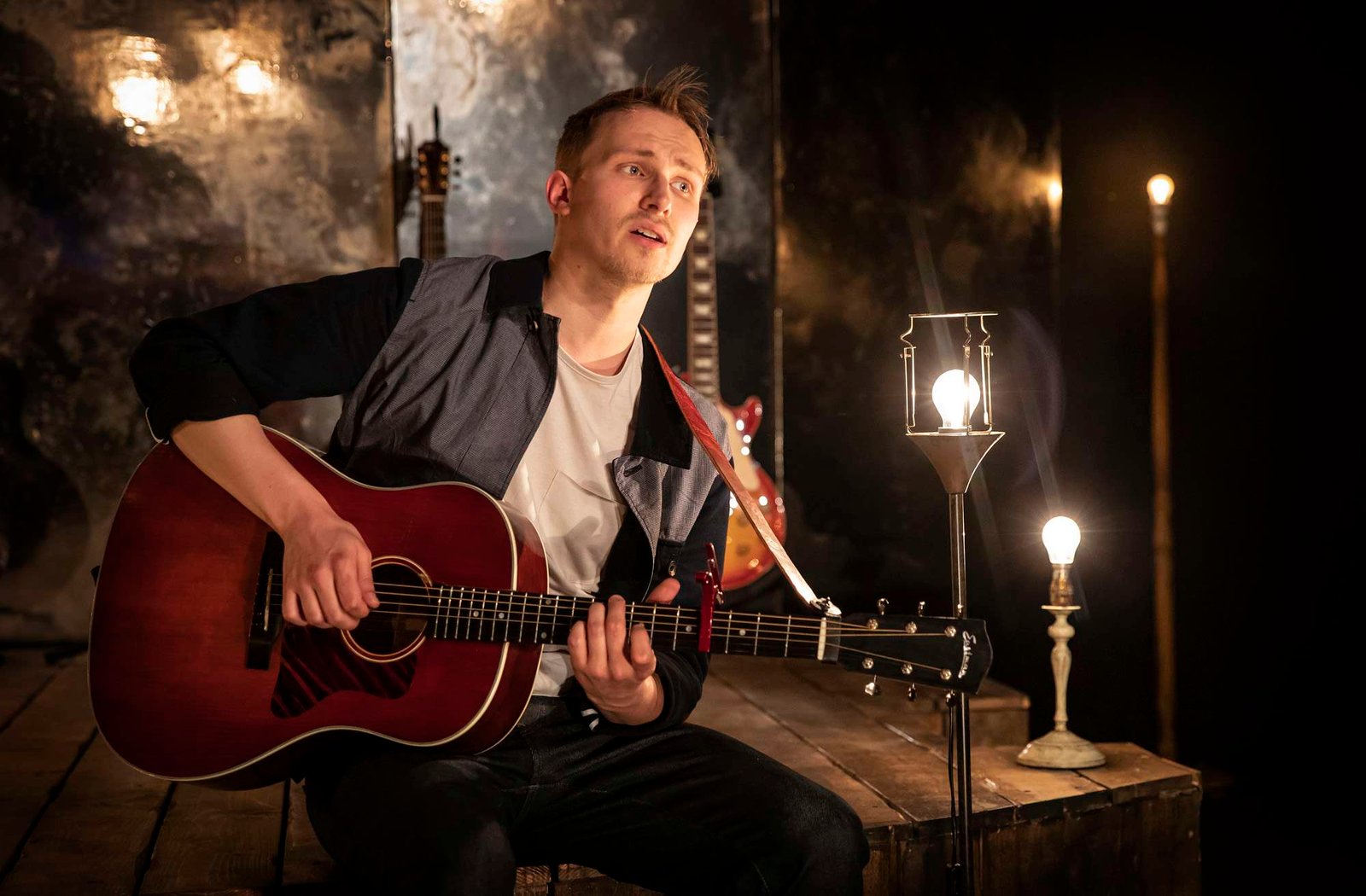
Effectively a musical monologue, this show has some very beautiful songs especially the loving one about how Julia makes him laugh. Alexander-Taylor is perfectly cast. He is an accomplished guitarist (the five instruments on stands behind him are the only props). We are way beyond anything like strumming and the “three chord trick”. He uses plectrum and/or plucks the strings like a harpist to create some complex rhythms and riffs. He plays a lot of melody – often in chords as a pianist would. His high tenor voice does wistful sweetness well and his diction is very clear. He uses an English accent except when he is voicing an American such as his father. It’s a very balanced and impressively sustained 75 minute performance.

He’s also unflappable. Because Lion is performed on a small, intimate thrust stage it makes some use of aisles and the audience is very close. When a  front-row audience member was taken ill on press night, Alexander-Taylor – thrusting his guitar into the hands of a front of house person – was the first to reach him. Once the man had been helped out, Alexander-Taylor simply took back the guitar and continued from where he had stopped, almost without missing a beat. What a pro!

First published by Sardines: https://www.sardinesmagazine.co.uk/review/the-lion/

Show: I Want My Hat Back Trilogy

Society: Little Angel Theatre

Venue: Little Angel Studios. Community Centre, Sebbon Street, London N1 2EH

Credits: Adapted from the books by Jon Klassen, by Ian Nicholson and Sam Wilde. Produced inn association with Little Angel Theatre

I Want My Hat Back Trilogy

 4 stars

Photos by Suzi Corker


You can rely on Little Angel Theatre to produce oodles of charm and I Want My Hat Back delivers it. Personally I am more charmed by work staged in the exquisite main house than in the rather banal studios, but under fives don’t notice and I’m sure there are good practical reasons for using a building with more space and fewer constraints.

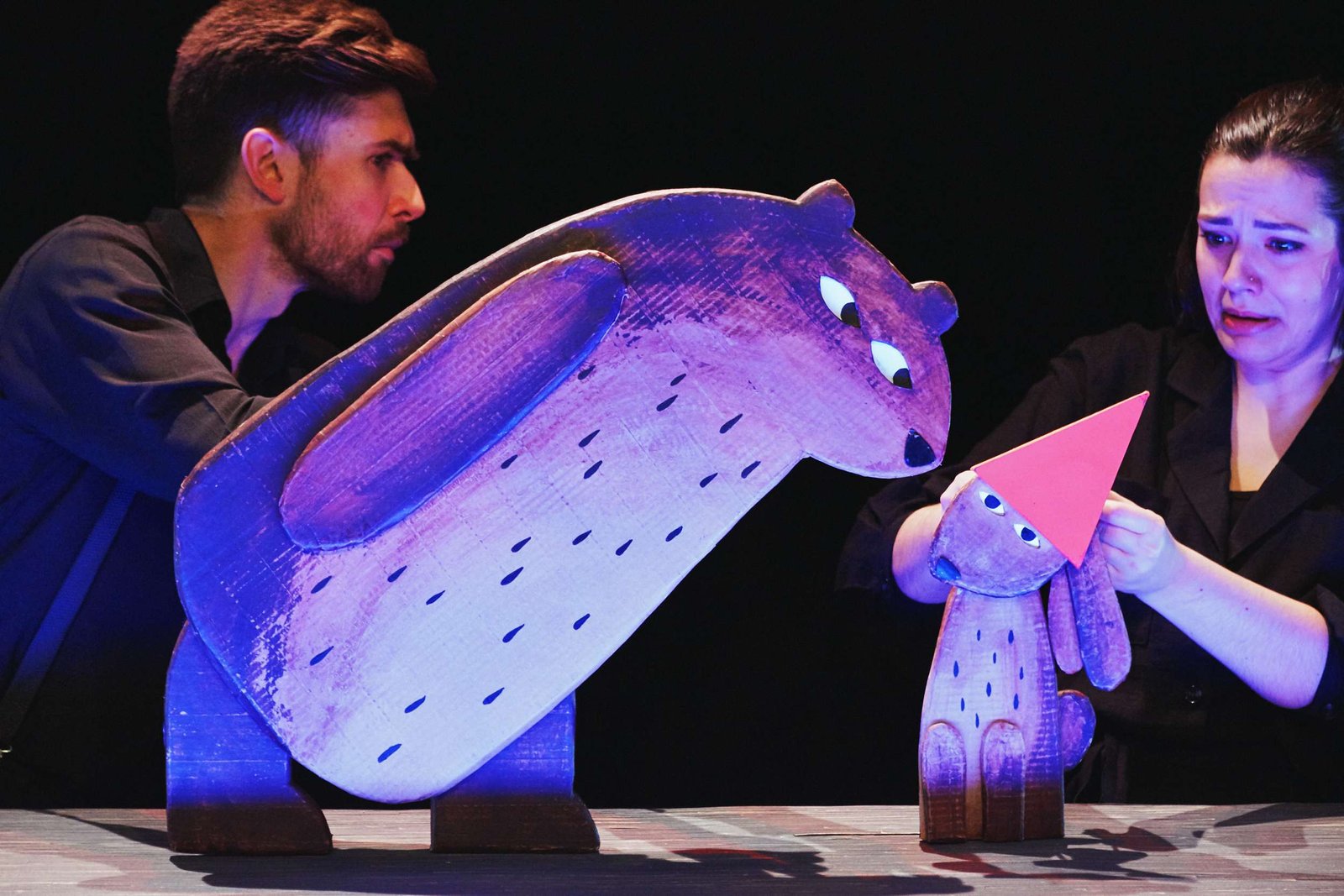
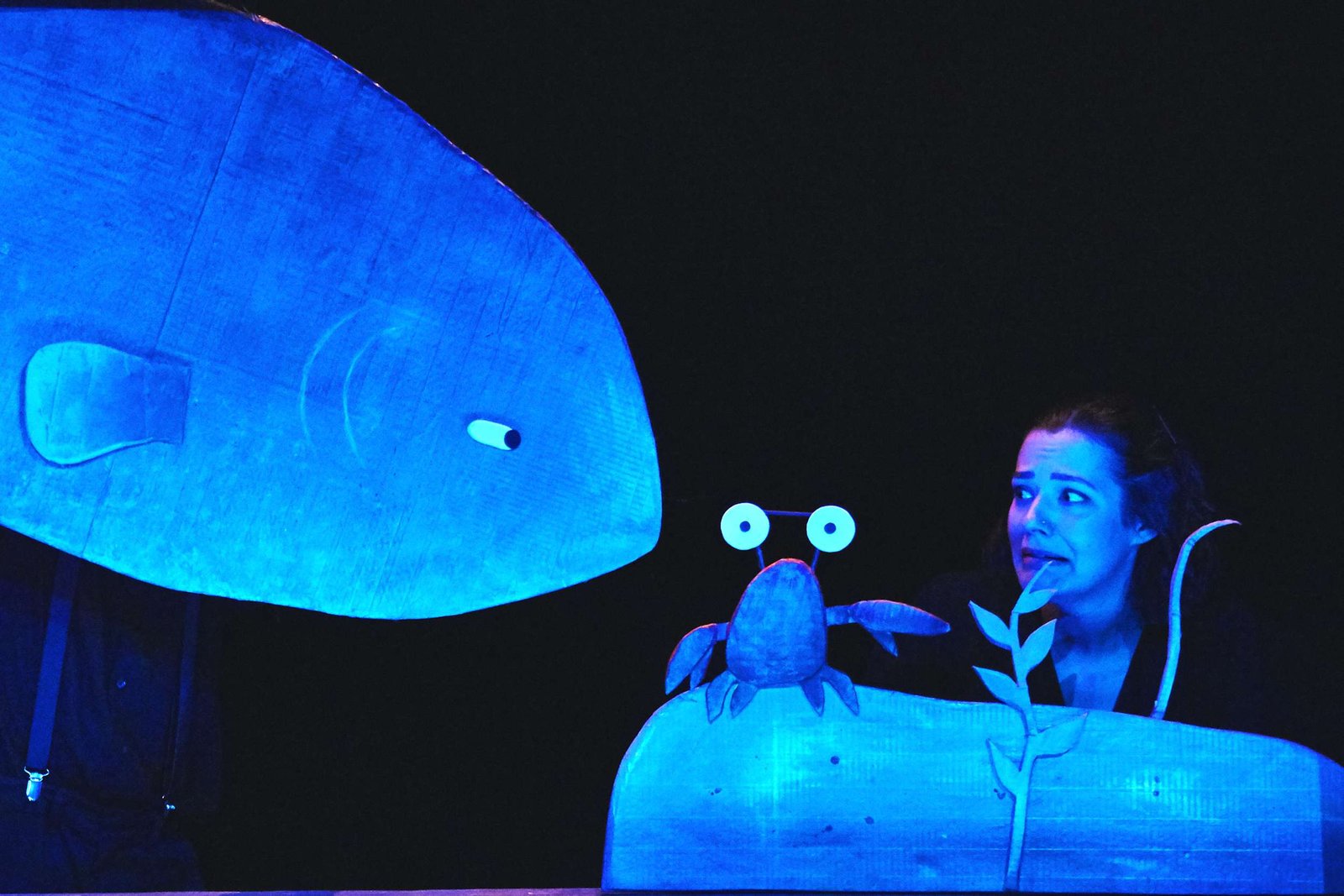
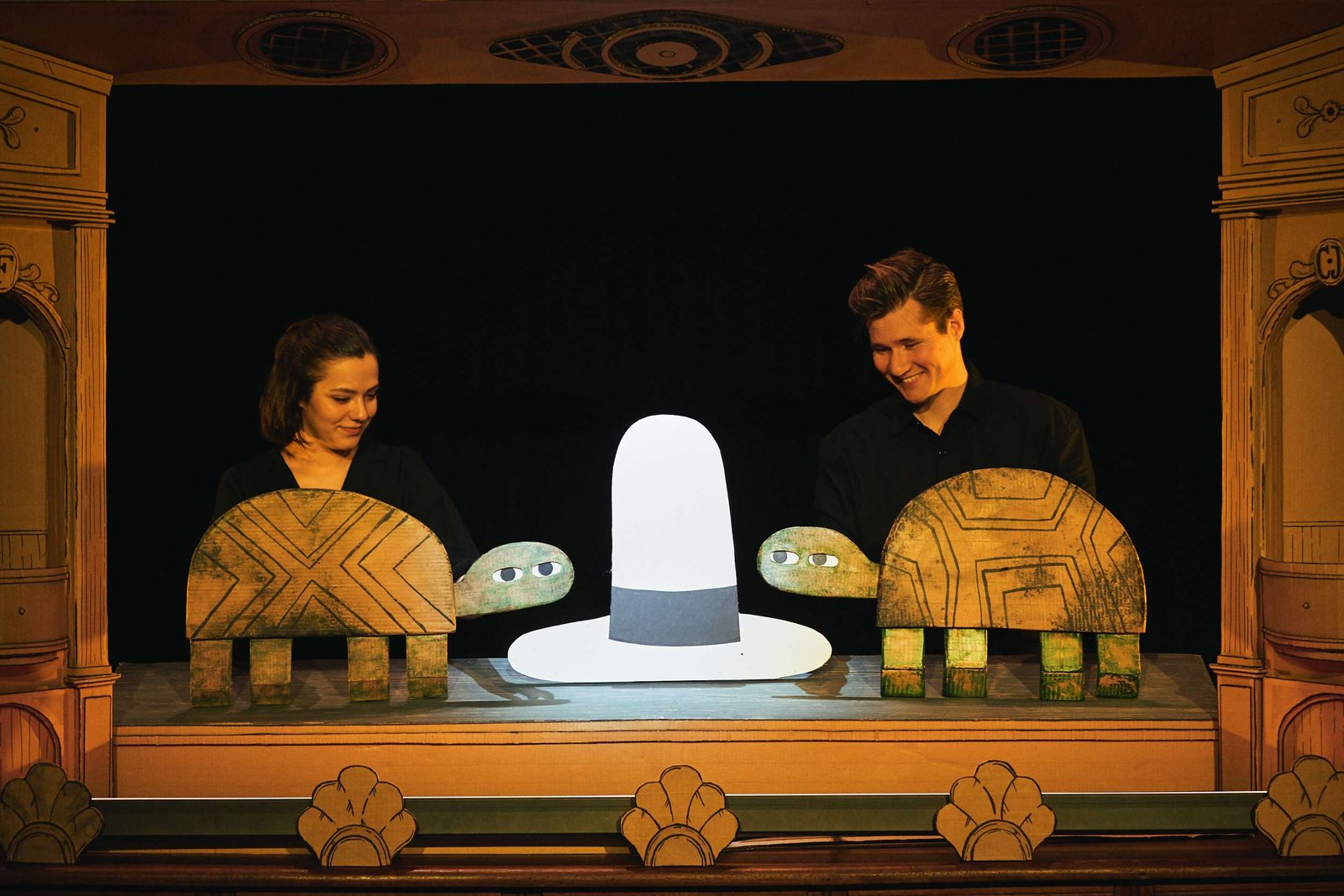
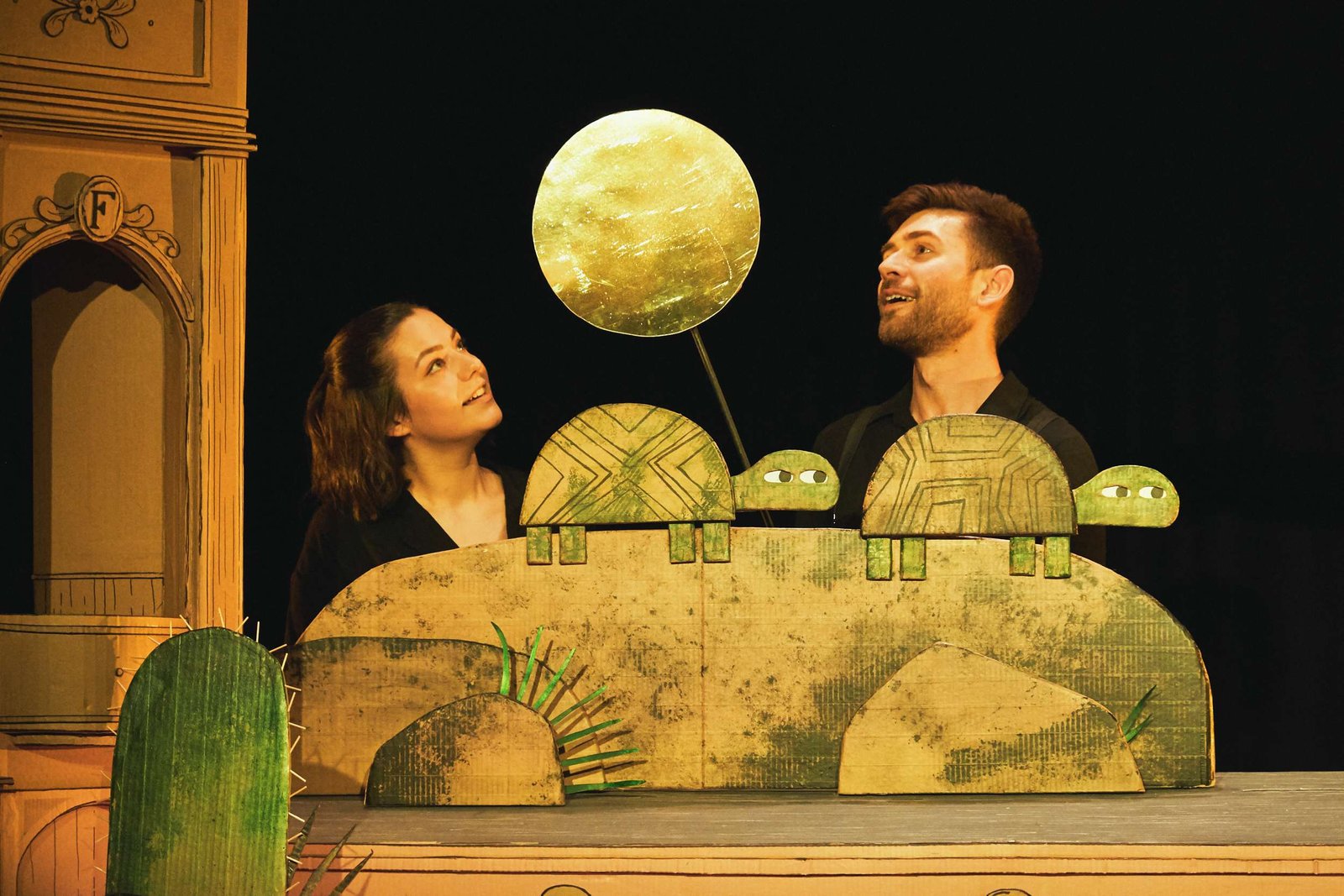
The show – only 35 minutes in total – dramatises a trilogy of tiny stories by Jon Klassen. The first is a quest for a hat by a bear who has lost it. The second is a blue-lit underwater, rather moral, tale of a little fish who steals a hat from a whale and meets an appropriate end. Lastly we meet a pair of desert tortoises who have found a hat which they both want.

Of course the puppets, mostly framed by a mini proscenium standing on a big wooden table with drawers, have to look like the drawings in the books the children are already familiar with. And they do: flat, two dimensional creations operated by two black-clad puppeteers who voice them and slide/whizz them round the space. Eyes, presumably operated by lever from behind are particularly effective.

There are literally dozens of puppets in this show – they come in a whole range of sizes and guises with the bear, his rotating legs flying round as he chases a naughty rabbit,  being my definite favourite. The slick stage management of all these changes is quite a feat.

Simon Lyshon has a very unflappable demeanour and a splendid range of funny noises – the underwater glooping being particularly good. Imogen Khan’s voice work is fine too – she gives every animal a different accent or voice. And the two work seamlessly together.

So all in all, a delightful, engaging show for preschoolers. The little girl (4?) next to me  gleefully shrieked “O my God!” thus making the audience laugh when she saw the sperm whale’s teeth. The show clearly works.

 First published by Sardines: https://www.sardinesmagazine.co.uk/review/i-want-my-hat-back-trilogy/
 

Show: The Pirates of Penzance

Society: Ferrier Operatic Society

Venue: Bob Hope Theatre. Wythfield Road, Eltham, London SE9 5TG

Credits: Music by Arthur Sullivan and libretto by W. S. Gilbert

The Pirates of Penzance

3 stars

It’s a real pleasure to find a non-professional company still staging an annual show mostly G&S (twelve out of twenty this century) as they have been doing since 1973 – and doing it pleasingly.

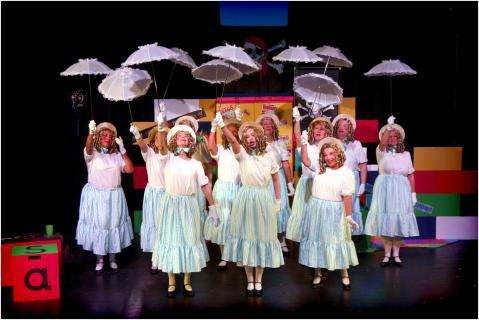
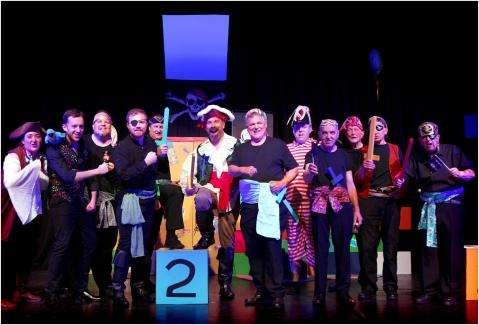
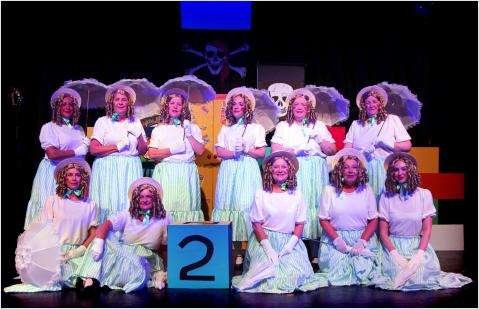
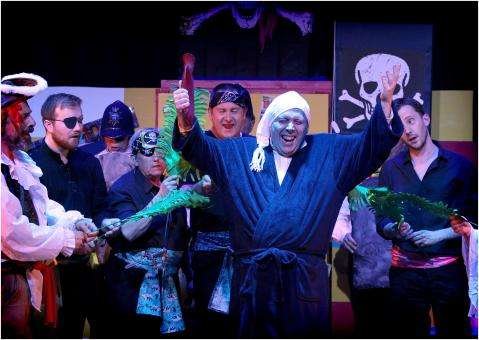
Director Leon Berger takes us to the land of make-believe with this production. Frederick is, after all, reckoning by his “natal day” just a “little boy of five”. So with 21st birthday balloons aloft, we’re in a colourful nursery classroom in which pirates with scarves round their waists play with wooden swords and there are lots of wind-up dolls and policemen. But it’s a gentle conceit. Beyond that it’s a pretty straight account of Gilbert and Sullivan’s 1879 piece.

Someone at Ferrier Opera Company understands that the important thing about making G&S work in the 21 century is to respect the music and have faith in it. And Gilbert’s words are as funny and clever as ever. For the most part they don’t need tinkering with.

I was thrilled, therefore, to hear Hail Poetry – the lovely four line anthem which Sullivan pokes in apropos of nothing in particular – beautifully sung by a totally still cast, lights dimmed and an illuminated photograph of Sir Arthur at the back. Later I was also delighted to hear another anthem To Queen Victoria’s Name sung with the same respect and precision in the second half – this is an unusual inclusion because there are three versions of the Pirates of Penzance owing to “cock-ups” relating to first performances, copyright issues and the first production in New York.

Of course some cast members are a lot stronger than others but Andy Lee excels as Frederick. His tenor voice is delightfully resonant (nothing as crass as radio mics in this production) and he convinces completely as the dutiful young man who falls passionately in love with Mabel (Rebecca Foster). She matches him perfectly with her piercing soprano voice. Yes, she has great fun with her show piece top notes but also duets very sensitively with Lee. Every note and every word is placed with accurate warmth. Both are accomplished actors too.

Other cast members doing a fine job include Jackie Mitchell as Ruth the “piratical maid of all work” whom Frederick loves as his nursemaid but rejects as his bride. She has some good low contralto notes. Nice 2022 touch to have her team up with another woman at the finale so she gets a happy ending like everyone else.

Andy Noakes is a pretty competent Major General – making his first entrance in 19 Century striped bathers, flippers and bearing an inflatable unicorn because he’s come straight from swimming in the sea. Much is made of pretending he can’t manage the rhymes and needing cast help in his famous song. He’s also a strong lyrical baritone as well as a watchable actor. I also enjoyed  Nathan Killen’s deliciously Irish Samuel – he sings well too.

Musical Director, David Stephens gets a nice sound from his bijoux 12-piece band – working from the proper, if cramped, pit offered by the Bob Hope Theatre.  And three cheers for the decision to play the overture and let us listen to it without stagey distraction. The enthusiastic chorus escaped from him several times during the performance I saw but each time he managed to get them back on track after a few bars. I suspect some cast members are not very good at keeping a discreet eye on the conductor.

It’s a decent show, though, and I’m really thrilled that Ferrier Opera Company is doing this sort of thing. Princess Ida next year!

First published by Sardines: https://www.sardinesmagazine.co.uk/review/the-pirates-of-penzance-9/


This is not the first time Radio 3’s Private Passions has led me to a book. Until I heard him talking to Michael Berkley about his life, work and chosen music I had never heard of Dr Waheed Arian. Shame on me because given what he’s achieved I certainly should have done. As it is I ordered his book as soon as the programme ended and then gobbled it in 24 hours almost unable to tear myself away from it.

Now 39, Waheed was born in Afghanistan the eldest son in a large, loving but poor family. Constant conflict meant that he saw death and destruction daily and lived all his early years in almost continual fear and the sound of shelling. For a while the family escaped to Pakistan, returning when things seemed better – for a while before a politically different war started. There was very little schooling for anyone and health care was scant. And that was before the emergence of the Taliban. Waheed is very good at explaining the troubled history of his country in a succinct, accessible way.

As a young child in Pakistan, Waheed was seriously ill with TB and malaria. Somehow his father managed to get him to a specialist and that treatment inspired the idea that he’d like to be a doctor one day – and help people get better. So he started asking questions. At one point back in Afghanistan he took a part-time job in a pharmacy because he wanted to learn the names of the drugs.

The future looked bleak and after a whole series of terrifying incidents he persuaded his parents to let him come to the UK. They engaged the services of a “travel agent” (actually a ruthless people smuggler), somehow scraped together the money and Waheed was despatched, aged 15. Of course his papers were forgeries and on arrival at Heathrow he was arrested as an illegal immigrant and sent to Feltham Young Offenders Institution for a fortnight. Eventually luck kicked in.  A friendly barrister managed to get him freed and a social worker was kind to him. And he went to live with a friend in a room in Notting Hill.

Thereafter he worked flat out at every menial job he could find (sending money home was a priority) did all he could to improve his English and enrolled on courses in English and science in a bid to get university entrance qualifications – in spite of having effectively had no childhood and almost no education and inadequate English. Gradually – and there are heartwarming tributes to various people who helped him – he began to pass what he needed, ending up with straight As at A level. Then a miracle happened and he was offered at place at Trinity Hall Cambridge – with accommodation, bursaries and the like so that he could continue to support his younger brother who had joined him in the UK.

It’s a movingly compelling – if often horrifying –  story. But qualifying as a doctor, working towards a specialism in radiology and marrying a tremendously supportive Brit with whom he now has two children is really only half of it.

What Waheed really wants his readers to know about is the charity he has set up: Arian Teleheal offers a way of connecting doctors in places with poor medical provision with those if the west with excellent facilities. Using simple mobile phone apps to exchange information the idea is to offer specific advice relating to individual patients and to save lives. It’s very hands on and all the Western participants are volunteers. The award winning work started in Afghanistan but has spread to other underdeveloped countries and there have been pinch-me moments when Waheed has addressed audiences of state presidents and other very powerful people. And the wonderful thing is that the learning is not just one way. Staff – for example – in the NHS here in the UK are learning a huge amount about, among other things, how to treat victims of conflict.

I often gasped in horror, admiration and amazement as I read all this. I also chuckled occasionally about, for instance, the girl in Cambridge who told him she was pissed and he thought, appalled, she meant she’d been pissed on because he’d never heard the expression.

And when I got to this, near the end, I wept:

“Many of the volunteers and Afghan doctors are now on first name terms. Their messages show them enquiring after each other’s families and at Eid the greetings flow round the globe. It is amazing to see a critical-care consultant in the US talking to a doctor in the village in Afghanistan like old friends. Our pioneering methods have broken down barriers and built bridges between people who would never meet in any other circumstances and who now stand shoulder to shoulder across the world to promote peace through saving lives and improving education”.

I worry, though. In the Wars was published in June 2021. Two months later  the Americans left Afghanistan and, within weeks the Taliban had moved centre stage again. At the time of writing restrictions are strict and there is, once more, no schooling for girls. How fervently I hope that Waheed’s work can continue.

Next week on Susan’s Bookshelves: Chocolat by Joanne Harris

Show: A Midsummer Night’s Dream

Society: OVO

Venue: The Roman Theatre of Verulamium. Bluehouse Hill, St Albans, Herts AL3 6AE

Credits: by William Shakespeare. Directed by Adam Nichols and Matt Strachan. Musically Directed by Tom Cagnoni. Presented by OVO

A Midsummer Night’s Dream

2 stars

Photo: Tim Morozzo


If you can shed every shred of purist pretension then you might be amused by this colourful, musical romp. Who needs Pyramus and Thisbe, an ass’s head, Athens or a happy ending for the lovers?

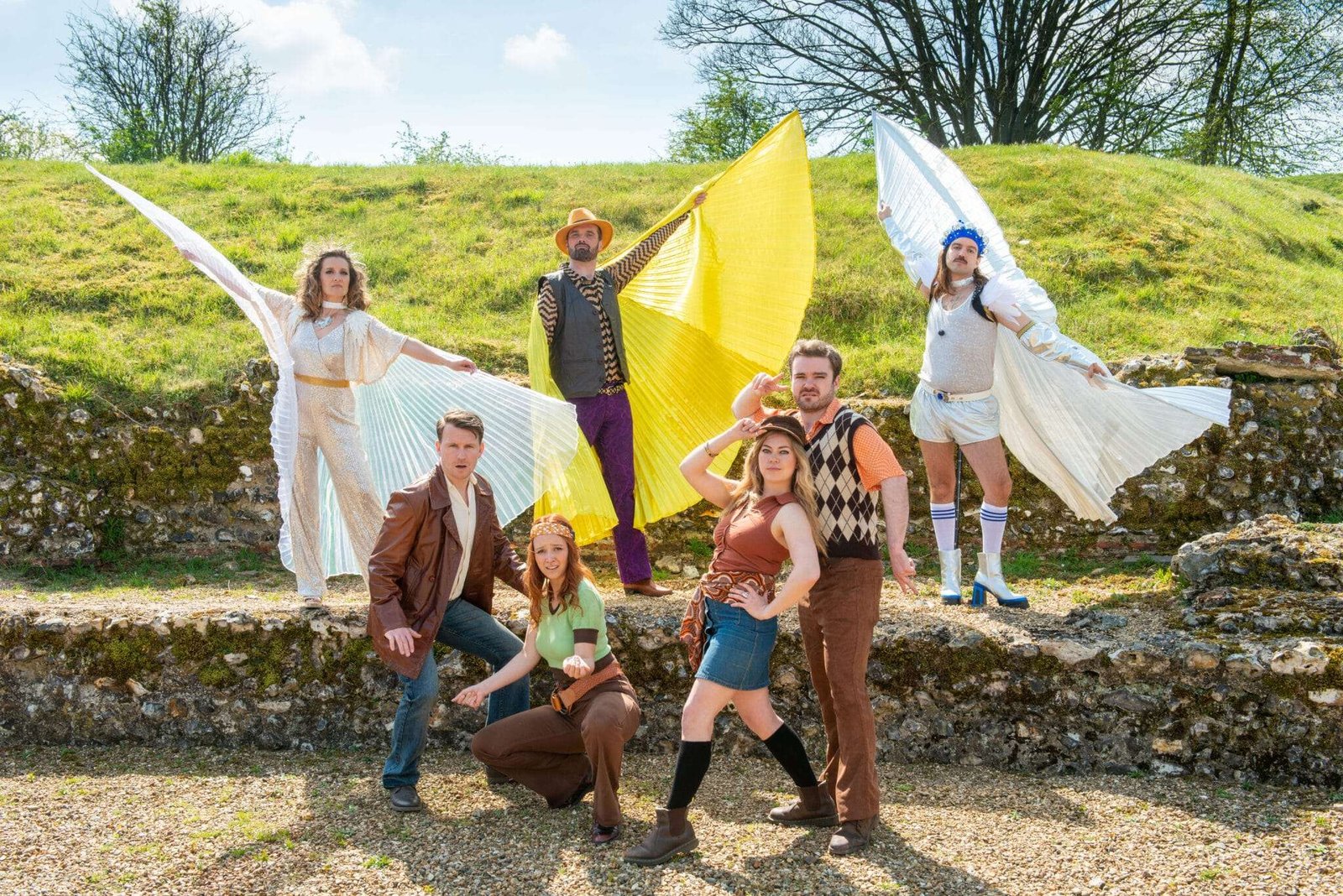
We’re in a 1970s club in Blackburn run by Theseus and Hipplolyta (about to celebrate their Silver Wedding) with Philostrate as the MC. Unlikely names for the setting but so be it.  Various weak acts are presented and it’s a long time before we hear any Shakespeare text. And that’s where it flounders because the words are at variance with the situation. Why should a nightclub owner have the authority to condemn a woman to death or banish her to a convent simply because she disagrees with her father? Even given that everyone is – to a greater or lesser extent – dreaming it doesn’t make sense.

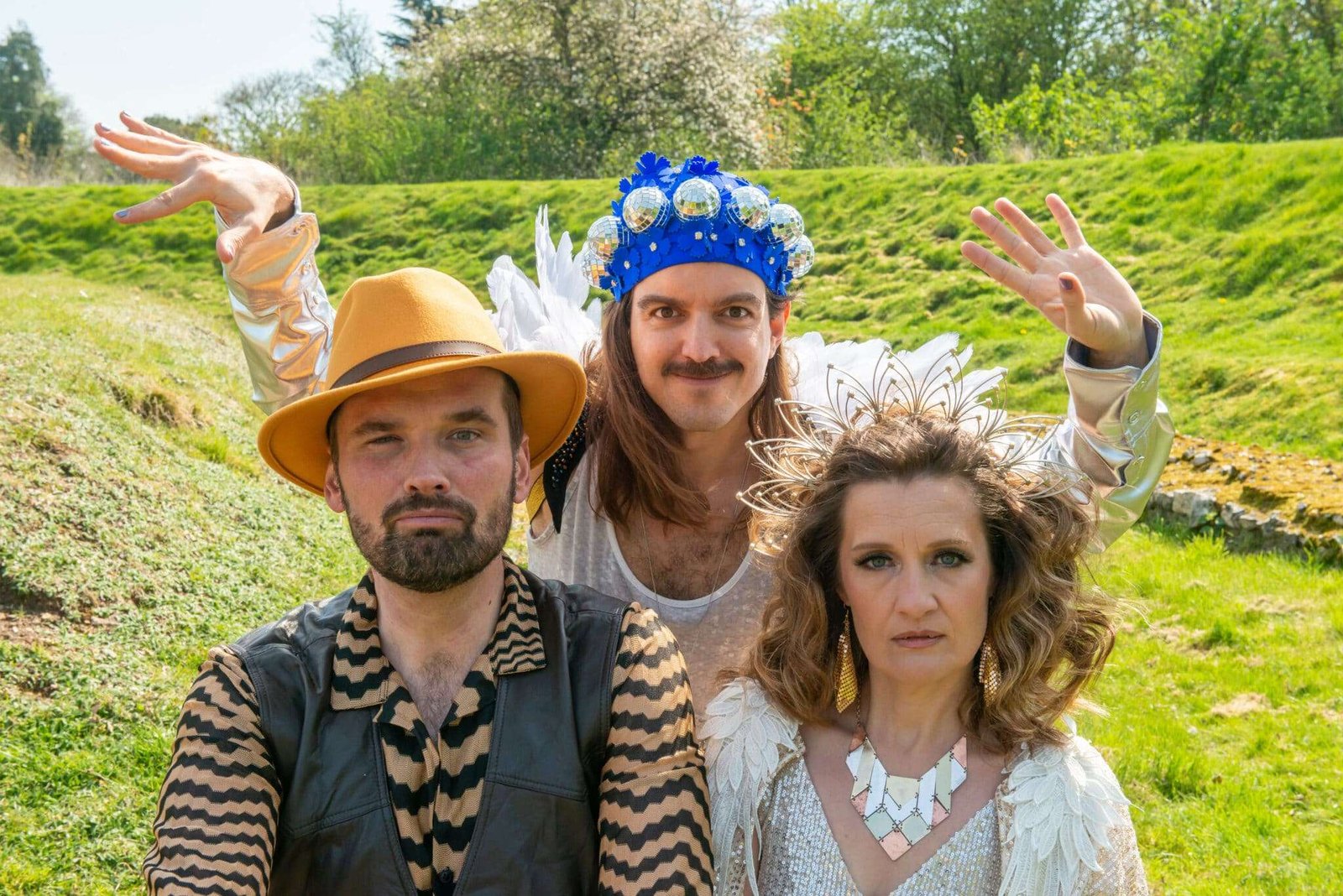
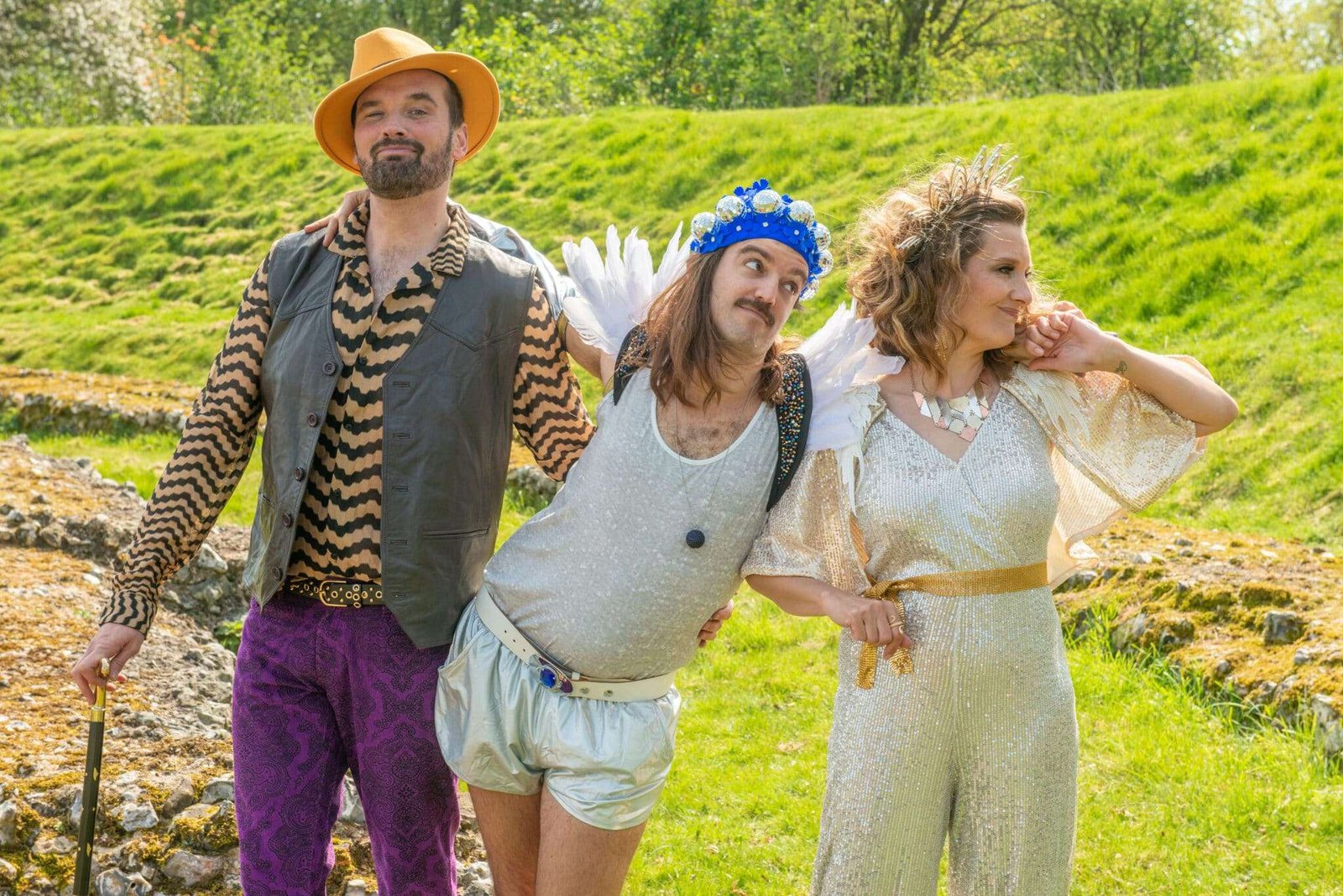
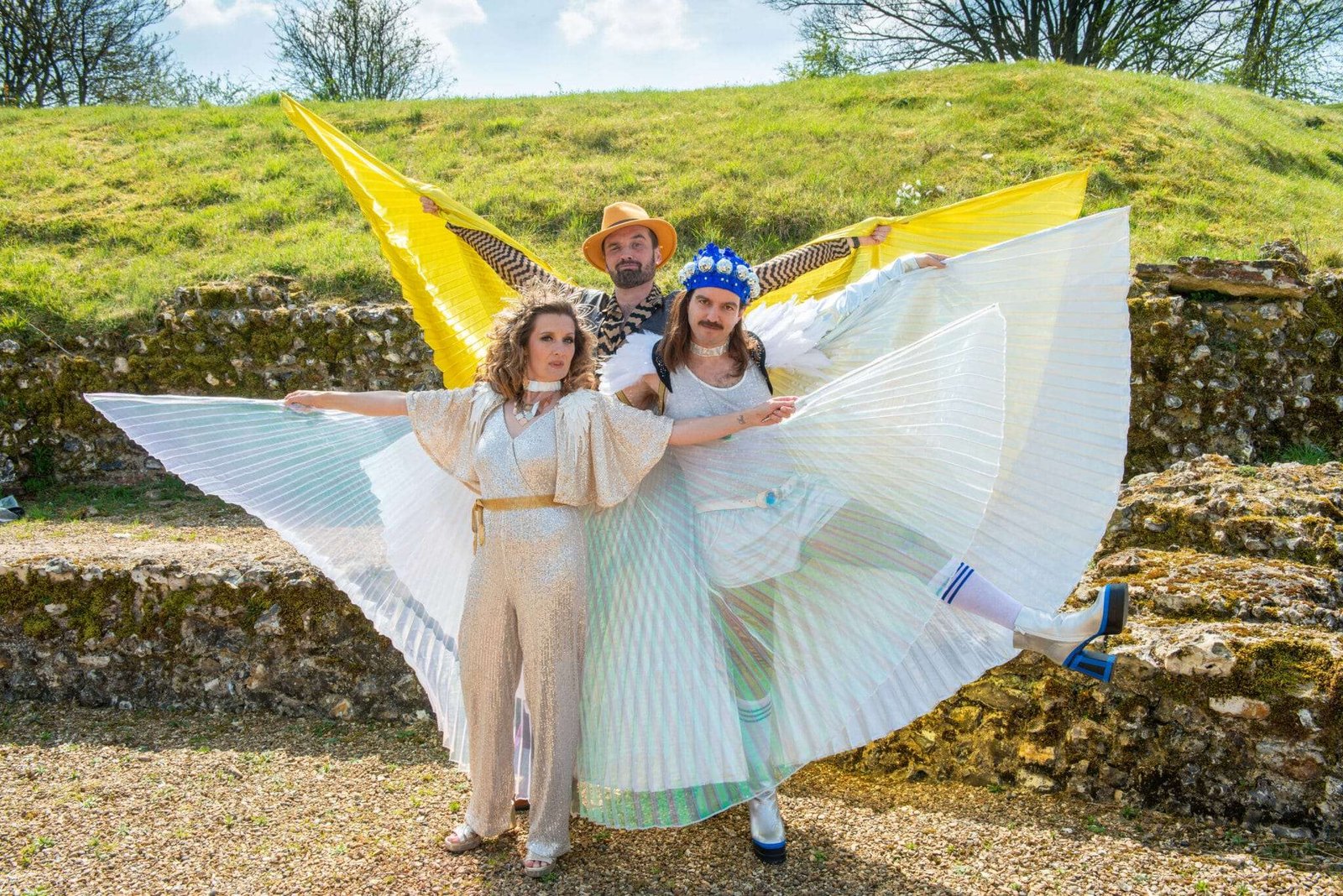
The show begins and ends with Puck (Guido Garcia Lueches) teetering about in sparkly shorts, platform boots and long white socks, camply flirting with the audience and being pleasantly outrageous. He has a nice range of facial expressions and lanky body statements. He sings with wistful lyricism too – not the songs which Shakespeare included but lots of others because this show is almost a juke box musical punctuated with popular 1970s numbers which loosely fit the context of what’s going on.

This version has Quince and his mates forming a band to perform at the anniversary party – they’re all competent actor musos and of course, the high quality of their performance destroys all the traditional humour when they play for Theseus and Hippolyta and their friends. It’s as if one of Shakespeare’s funniest scenes has been thrown out to make room for bits of pantomime and stand-up comedy.  It is a neat idea, however, to pop wings on their backs as we move into Discoland (a replacement for Shakespeare’s fairyland) and turn them into a fairy band.  Jon Bonner as Quince on trumpet is good value.

Daniel Hall is entertaining as Bottom although his conversion into a white suited, fuzzy dark wigged doesn’t cut the mustard. Why is it so absurd that the drugged Titania (Emma Wright) would fall for him? He isn’t extreme enough.

Wright does an interesting shift from the glass washing, wise Hippolyta into the glamorous Titania dreaming of sexier things and Ben Whitehead morphs from the down to earth northern pub owner into a strange American (accent iffy) film idol-type as Oberon.

There is an outstanding performance from  Eloise Westwood as Helena. She does desperation, confusion and anger beautifully and her humiliation in the woods is masterly. So is her loneliness at the end when it doesn’t work out with Demetrius (good idea – he has treated her shamefully, after all),  Motherly Hippolyta comforts her and takes her off stage muttering about cups ot tea.

There is a lot of that sort of language in this version with gives us things like; “Stand forth Demetrius – Come here, lad”  or “Full of joy and mirth and byriani”. And the substitution of Blackburn for Athens made the audience laugh every single time on press night. It is also fun to have Lysander (Lyle Fulton – nice work) describing the motorway route to his dowager aunt’s house as a way of coaxing Hermia (Emilia Harrild – good) away from Blackburn.

There’s a lot of talent in this show – especially in the music and the choreographing of the big quarrel scene  – but I doubt that Shakespeare would recognise his play. It’s like Stanley Holloway’s axe joke (new handle, new blade but still the same axe). How much Shakespeare can you strip away and still call it Shakespeare?

First published by Sardines: https://www.sardinesmagazine.co.uk/review/a-midsummer-nights-dream-10/

Show: We Started To Sing

Society: Arcola Theatre (professional)

Venue: Arcola Theatre. 24 Ashwin Street, London E8 3DL

Credits: Written and directed Barney Norris

We Started To Sing

3  stars


Critics, actors and teachers of acting often talk about “truthfulness” in drama. Well, although it’s not quite what such people mean, you couldn’t have anything much more truthful than this play which is overtly about the playwright’s parents and grandparents. Even the names are unchanged. Barney Norris admits in his Author’s Note in the Faber edition, which doubles as a programme, that he wasn’t present at most of these scenes and that some of them “never exactly happened – they’re true stories in a slightly different way”. Or as one long-dead character says just before the end “Then am I here in someone’s dream? Someone doesn’t want me to have gone” to which the rueful reply is “My son is writing us”.

The problem with all this slippery truthfulness is that there’s no real plot. It’s simply a series of scenes set across 30 years in which we see an elderly couple whose son is a professional pianist along with his wife and, later, her second husband. There is tension – of course – and a great deal of wistfulness along with anger, anxiety and frustration. It’s beautifully observed but nothing much happens beyond two people getting very old and a marriage breaking up – pretty ordinary family life, in fact. Norris is probably smiling at himself when his father David (David Ricardo Pearce) tells his grandmother Peggy (Barbara Flynn) about Barney’s first project after university: “There are these people, who meet each other. And they sit around. And then one of them dies. And that’s it really … It’s got songs.”

There is some very good acting, though. Flynn endows Peggy with common sense and sensitivity and skilfully ages her with body language over 30 years. As her practical, straight talking husband, Bert, Robin Soans makes it absolutely clear that he adores his wife while boring the pants off his family with World War Two anecdotes. Ricardo-Pearce is totally convincing as David – trying to be reasonable, often in the face of difficulty and he does awkwardness as well as I’ve ever seen it done on stage. As Fiona, initially David’s wife, Naomi Petersen does with aplomb  the transition from young, happily married woman with a singing career to middle-aged second wife running choirs in the Welsh borders. And George Taylor finds stillness and warmth in the ever decent Rob who takes on David’s two children and has a daughter of his own with Fiona.

Because this play is about a musical family, the cast are all musically adept.  David (David Owen-Norris) has a successful career as a pianist, composer, broadcaster and teacher so the casting director did well to find an actor who could play the piano as well as Ricardo-Pearce does. The play is interspersed with music including a moving account of Dido’s Lament sung by Petersen with Ricardo-Pearce at the piano. And there’s a lovely moment when all five characters join together in a full harmony version of Sullivan’s The Long Day Closes as they busy themselves with tidying the stage.

It’s an enjoyable two hours which gets under your skin even if it makes you feel voyeuristic as you watch actors as “real” people working through the private issues of everyday life. I’m not surprised, though, to read in the Author’s Note that Norris was estranged from his brother for several years because “we disagreed over the ethics of telling”.

First published by Sardines: https://www.sardinesmagazine.co.uk/review/we-started-to-sing/