Various Czechs
Philharmonia Orchestra
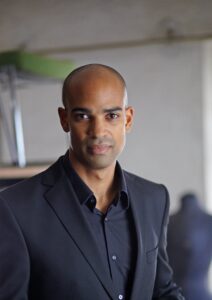
Conductor: Kevin John Edusei
Violin: James Ehnes
Royal Festival Hall, 29 October 2026
It’s an appealing idea to programme three Czech composers and one Croatian together. The result gave us a whole evening of strong melodies pushing irrepressibly through the texture. And conductor Kevin John Edusei with his clear beat, expressive fingers and no-nonsense style is evidently very at home with this material.
The concert opened with Dora Pejacevic’s Overture for Large Orchestra (1919) . Although Pejacevic’s work is played quite often on Radio 3 and elsewhere these days, this 6-minute piece was probably new to most audience members. It is flamboyant and showcases some nice brass work especially from the tuba but it lacks the elegant finesse of the other three works in the programme.
It’s always a treat to see and hear James Ehnes, looking for all the world like a businessman, and coaxing amber-rich sounds from the 1715 “Marsick” Stradavarius, which he told the audience he feels privileged to have the opportunity to play. Dvorak’s 1879 Violin Concerto showed how comfortably Ehnes can move from decisive legato to nimble cross string work and fireworks with harmonics. And he does it without drama, face pulling or leaping about. As they moved (attaca) into the adagio Edusei balanced the violin with the winds, especially flute, and I admired the staccato tongue-ing from the trumpets. In the Finale – so reminiscent of Dvorak’s Slavonic Dances – Ehnes produced some exceptionally eloquent double stopping. And the off-beat interjections from the violas really worked because Edusei had placed them to his right which meant that all their detail was audible. It was, in general, an enjoyable, intelligent, account of this sunniest of concertos.
For his encore Ehnes chose a Bach movement, mainly, as he told the audience, to showcase the warm resonance of his instrument and it certainly did that.
After the interval, and the arrival of additional strings, it was on to the charm of Suk’s Scherzo fantastique (1902/3) – a piece which really belongs to the cellos and they more than did it justice in this performance. Their quasi-alto sound was gloriously rich as they delivered their beautiful melody. And Edusei’s meticulous attention to dynamics ensured that it all sounded as fresh as the day it was written.
Finally it became clear why the choir area behind the orchestra had – oddly – been kept empty for this concert. The thirteen brass players who play the famous opening and conclusion to Janacek’s Sinfonietta (1926) now stood in a line in front of the organ. It was an imaginative dramatic idea and their being positioned at a higher level enabled their sound to soar out with all the grandiloquence it should – and the contrasting lightness of the piccolo which cuts in soon after the fanfare was a delight.
Other highlights in this pleasing rendering include the good trombone work in the second movement and the crispness Edusei brought to the third movement. The coherence of the last movement was impressive too. It’s challenging to hold the broken texture of the developmental passages together as Janacek works back to the fanfare but this performance triumphed and the duetting between clarinet and piccolo was well judged.