Martha Argerich Plays Beethoven
Munich Phiharmonic Orchestra
Conductor: Lahav Shani
Royal Albert Hall, 05 September 2026.
Now 85, Martha Argerich comes with such charisma and reputation that the exuberance of the full-to-bursting Royal Albert Hall audience was as high-octane as I’ve ever heard it. “Now sits expectation in the air”, as Shakespeare’s Henry V Chorus would have put it as this diminutive figure, with her luxuriant grey hair made her way through the orchestra to the piano.
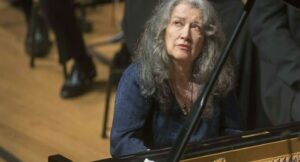
She then sat without fuss or flamboyance and played Beethoven’s most sunny of concertos with the deftness born of decades of familiarity. Of course it goes without saying that she played it competently and with intelligent warmth especially in the first movement cadenza and there was poignant delicacy in the adagio. It was a very decent, enjoyable, businesslike performance but, in all honesty, it wasn’t remarkable – not that this prevented the Proms audience from going wild with affectionate acclaim when it was finished. Incidentally I have never before seen a soloist do what Argerich did at the end. She leaped from the piano before the last orchestra chord had fully died away and engaged conductor Lahav Shani in a chatty embrace, presumably thanking or congratulating him, almost before he’d lowered his arms,
The encore was fun, though. A second piano stool was brought in and Argerich played, with Shani, the original piano duet version of the fourth movement of Ravel’s Mother Goose Suite: Le Jardin feerique.
In musical terms the real star of this concert was Munich Philharmonic Orchestra with its glitteringly fresh sound. Shani conducted the whole concert without scores and he works with his hands, rather than a baton. He shapes what he wants rather than beating time conventionally and speaks with his eyes. It means there’s an usually close connection between him and his players and close attention to every detail and nuance. On the big Albert Hall stage, however, the back desk of the second violins, to the right of the podium, are a long way from the firsts which must make it difficult for players to hear but didn’t seem to affect cohesion.
The concert opened with Louise Farrenc’s overture no 2. It was the first Proms performance and it really does deserve to be heard more often with its operatic opening chords and attractive melodies. The orchestra – cellos next to first violins – made it sound both alluring and exciting.
A spectacular performance of Brahms’s Symphony number 4 was the post-interval main course. Shani delivered the first movement with clarity, electrifying dynamic control, drama in plenty and some fine timp work. I like the string sound of Munich Philharmonic Orchestra and especially admired the rich pizzicato tone in the andante. Shani gave us a resolutely lively allegro giocoso followed by a fourth movement which achieved unusually fine balance between the trombones and string interjections and it’s quite an achievement to make those grandiose eight opening chords sound light and enticing.
We almost didn’t need an encore but of course we got one as Shani finally tossed (yes really) the orchestra into Brahms’s Hungarian Dance no 5 – in which he avoided all the usual temptation to exaggerate the swoops. Instead it was very fast, joyously slick and rounded off a good concert with incisive showmanship.