I was discussing books which had made us laugh with a friend the other day. I was fondly recalling Gerald Durrell’s Fillets of Plaice (1971) and she mentioned Wilt. Ah yes. I remember giggling my way through Wilt not long after it was published in 1976. It was the first in Tom Sharpe’s hilariously well observed series of satires. How, I wondered, would it seem fifty years later? So, fired up with my usual curiosity, I reread it.
Henry Wilt is a cynical, frustrated further education teacher (“Liberal Studies Department”) trapped in a tedious marriage. His job involves teaching English Literature to day release students – abattoir workers, brickies, printers and the like – because it is deemed that they should have some “culture” in their lives. I was a secondary school teacher for decades and, after I’d read Wilt “Lord of the Flies for gas fitters” became a shorthand for being obliged to present inappropriate material to uninterested students. In Wilt’s case, they are generally affable, and he has all sorts of wacky discussions with them because he doesn’t usually bother to keep them on task. The students come out with some trite but perceptive observations. Sharpe captures the tone perfectly and, during this reread, I chuckled a lot especially in the opening, expositional chapters.
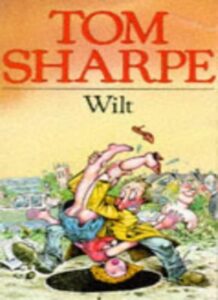
Then there’s overweight, intellectually limited Eva with her tiresome enthusiasms and obsession with housework. Wilt, who is of course an educated man, finds her infuriating. Sharpe begs the question of why Wilt married her in the first place (twelve years earlier). Was she ever attractive? There is certainly no sexual spark now. So Wilt fantasises about murdering her. Then comes the central plot development. He gets drunk at a works party – I’m cutting to the chase here – dresses a realistic life-size sex doll in Eva’s clothes and buries it under the ongoing concrete foundations of a building project at his college. It is of course spotted, mistaken for a human body and all hell lets loose. Eva meanwhile (subplot) has disappeared so the police assume that Wilt really has murdered her. And it all gets ever more complex, silly and very funny.
Behind all this is college politics. Wilt’s superiors (and his long quest for promotion is another issue) are blinkeredly determined to introduce an honours degree and get the college re-classified as a polytechnic. And inevitably there’s snobby competitiveness with the local university. It’s another aspect of education I recognise very clearly. Sharpe, moreover, has huge fun with supposed brilliantly clever academics who talk in wordy, meaningless cliches so that Wilt has no idea what, if anything, they’re saying. Eva, though, is flattered by the jargon-laden attentions of an American couple and it ends quite literally in tears although not before she has – exquisite situation comedy – found herself naked and alone in a lonely Norfolk vicarage with a dipsomaniac clergyman.
So yes, Wilt is still funny and well worth a revisit. Of course it is, in a sense dated. Dozens (hundreds) of former FE colleges became polytechnics soon after Wilt was written and are now universities. You can no longer buy beer for small change or houses for just a few thousand pounds but it doesn’t matter. The observation is razor sharp (no pun intended) and the situational stuff priceless and timeless.
Next week on Susan’s Bookshelves: 52 Ways to Walk by Annabel Streets