Press ESC or click the X to close this window

Royal Philharmonic Orchestra 16 June 2016 (Susan Elkin reviews)

Royal Philharmonic Orchestra

St Giles Cripplegate

Conductor: Gergely Madaras

Tuesday 16 June


The opening concert in the Summer Music in City Churches festival, now in its eighth year, was a pleasant and, at times, uplifting concert comprising four very familiar works. This year’s festival is badged “Around the World” and the music took us to Italy, France, Spain and Germany so it did what it said on the tin.

The heart of the concert, and very much its high spot, was Roderigo’s Concerto de Aranjuez with the impressive, charismatic Jack Hancher as soloist. Using a knee rest to keep the instrument at a 45 degree angle to his body he created vibrato to coax every ounce of anguish from the plaintive adagio. And the duet with the cor anglais was magically tender. In the outer movements he plays the strings like a pianist and every note rings. Perhaps isn’t easy to make a work as familiar as this sound fresh but Hancher delivers in spades.

For me this was the most interesting work in the concert for two other reasons. First, live performances of it seem suddenly to be proliferating. I heard Sean Shibe do it with the Philharmonia under Marin Alsop in February. Samrat Majumba is playing it with Maidstone Symphony Orchestra, where I review regularly, on 29 November. Second, the Hayes Symphony Orchestra in which I play second violin, is doing it with none other than Jack Hancher on 06 December. It’s a fine work and it’s good to see it getting about more than in once did.

Back at St Giles Cripplegate, the concert opened with a decent account of Rossini’s Barber of Seville overture – this is the RPO pared down to six first violins and two double basses (even fewer for the Roderigo)  by the way so that it fits into the chancel. It needs some imported raked seating for players, though, because the winds are invisible to the audience in the nave which is frustrating.  Conductor Gergely Madaras is evidently aware of the resonant acoustic and resisted the urge to run with exaggerated tempi but managed to find plenty of crisp wit in the music with some pleasing work from horns and cymbals.

Then it was off to the colourful but, for me, always waffly world of Ravel’s Pavane pour une enfante defunté. It was sumptuously played especially by the brass but I failed to warm to it because French impressionism in music simply doesn’t grab me.

After the interval we got a rousing performance of Mendelssohn’s decisively sunny Italian symphony. High spots included  the lively contrasts in the opening Allegro vivace, nicely balanced “ticking” from lower strings in the Andante and some fine horn work in the third movement. The opening to the Salterello was slightly ragged (an acoustic issue maybe?) but soon found its feet and packed in plenty of excitement.

It is always a pleasure to attend a central London concert with a wide demographic in its audience. I sat alongside children, city workers of all ages, retired people and many who had travelled from other parts of London. Classical music is for all. QED. Hurrah.


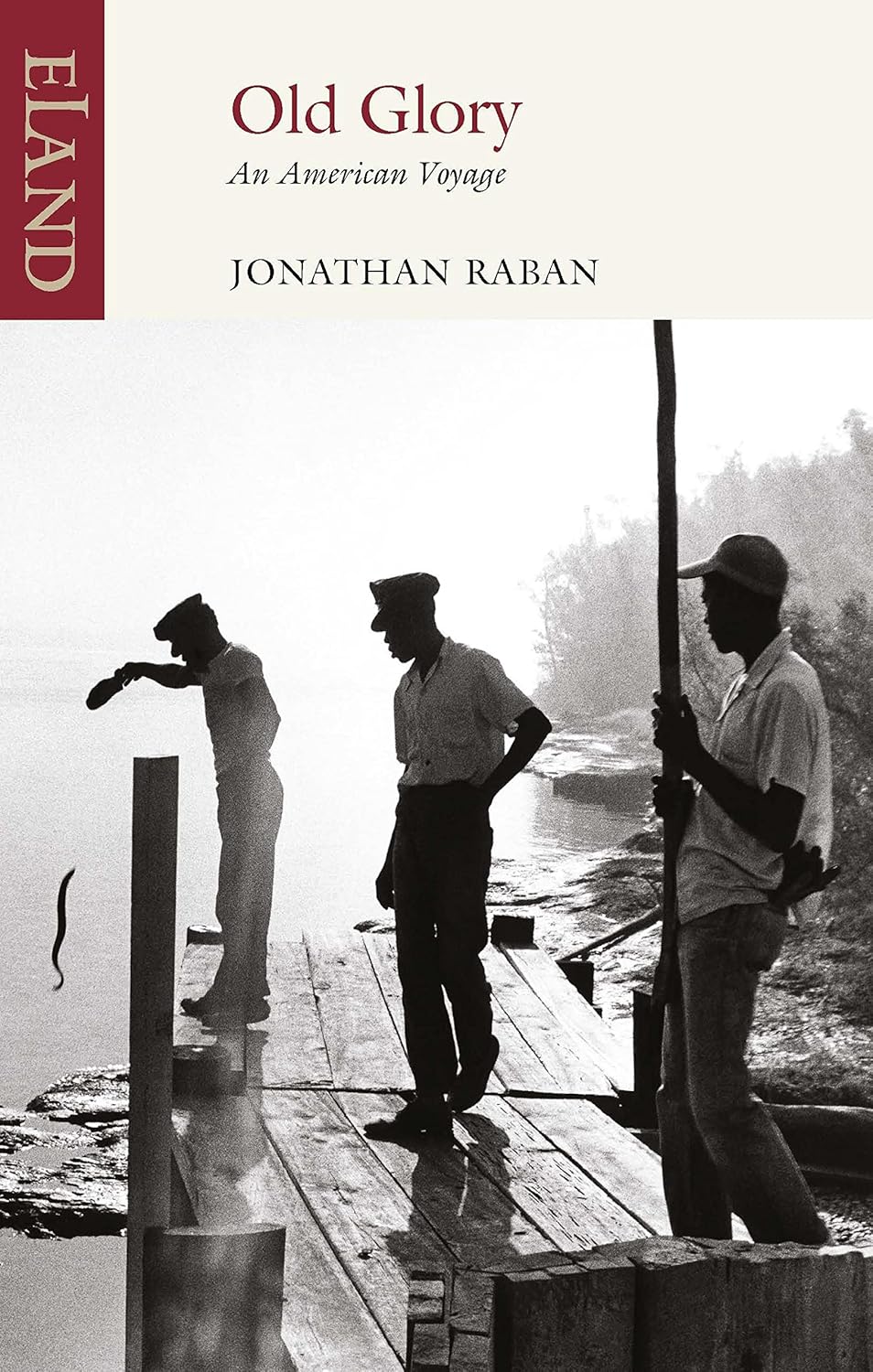
I recently told a newish friend who had come to coffee that I’d always had a fancy to explore America’s central states. I meant the ones where Real Americans live and there are no tourists – perhaps a road trip from Chicago to Louisiana like the one Stephen Fry did for TV in an old London taxi. Not, as I said to her, that it’s likely to happen now. I’m not cut out to be a lone traveller and I’d probably find all those miles a bit tiring these days. “Oh,” she said, “You should read Jonathan Raban’s Old Glory: An American Voyage”. So I did.

Jonathan Raban, who died in 2023, sailed down the Mississippi in a 16-foot boat with a 15 hp engine in 1979. He and the river pass through ten states.  His book was published in 1981 so 45 years have passed and I read it with sense of nostalgia because I bet it’s not quite like that now in these days of mass communication.  On the other hand, he writes so graphically that I felt I too had journeyed  from Minneapolis to beyond New Orleans on the Delta so perhaps I don’t need to do it after all – the best sort of travel writing. The only places on his voyage that I have actually been to are New Orleans (and done the obligatory paddle steamer tourist thing) and I’ve stood in awe on the banks of the Mississippi at a few quieter spots in Louisiana as, on a road trip we headed towards Mississippi state. Otherwise, it was all new to me.

The Mississippi is a character. It has a personality and moods. Again and again, Raban is told he has to respect its “boils”, currents, swamps and the like because many people have died there.  In places it’s several miles wide. It others it churns along. There are islands and many hazards. Raban, though, has come because of an illustration he loved in a childhood book. He’s also attuned to Huckleberry Finn and historical books about the river which he carries with him – along with navigational charts.  He is determined but far from fearless. Sometimes the water looks silky. At other times it’s oily or angry. And he soon discovers that he really can’t sail safely at night. Storms, moreover, are terrifying.

His craft, fitted out for him by a cheerful chap named Herb, who gives him a few navigation lessons before he sets off, is very small so he doesn’t sleep on board. That means he stops off at towns en route where he meets hundreds of people. He has a knack for getting people to talk to him – fishermen, mayors, police, bar tenders, radio stations, hoteliers, an old lady in a care home and many more. What he’s doing is very unusual, so people notice him and, often, know he’s coming or that he’s around.  Many are very hospitable. His discussions with them paint a kaleidoscopic picture of some very insular places and attitudes.

At the same time, although he doesn’t labour it, Raban, aged 37, is trying to escape from demons of his own. His father came back from the war, struggled to form loving relationship with the son he found at home and eventually became an authoritarian Anglican clergyman. So church is in Raban’s blood although he’s an unbeliever. Wherever he goes on his river trip he picks a local church each Sunday – various denominations –  and attends a service as a way of getting the flavour of local thinking. He is very good indeed, for example, on Otis Higgs – a preacher trying at the time to become the first black mayor of Memphis but, ultimately failing by a narrow margin. Raban sees Higgs in action in both capacities and marvels at the difference. He meets him and talks to him too.

Because this is 1979 the local vocabulary is striking. One man tells Raban that he simply can’t get used to being referred to as “a black man”. I’m a —-” he says using the word which has become the most emotive in the language and which I dare not type for fear of being banned by some social media algorithm. “That’s what I am and it’s fine” the man declares.  The word  casually occurs a lot in Raban’s conversations with locals. Raban himself uses “negro” as a non-pejorative descriptor. It’s another word, which simply means “black” (from Latin) which we’re now not allowed to use. I suspect many of the new friends Raban makes on river would be surprised at the lexical turn things have taken half a century later.

Raban cuts a solitary, sometimes lonely figure. Twice during the course of this book he meets a woman he’s attracted to. He even moves in with the second one for a while. He’s evidently good company. Wherever he goes people make him welcome and his friendship with the captain of the tow boat which transports him on the final dangerous stretch down to Baton Rouge is quite moving. But it isn’t always like that. His almost getting knifed by an aggressive (disturbed) man in a bar who mistakes Raban for a “Fed” is pretty scary.

This book is a fabulous geography lesson. It’s also full of history and tucked into the mix are, of course, geology, botany and more. Very accessible to read, it’s also a compelling and beautifully written quest story complete with the “stations” which always provide a framework for quest stories in the tradition of The Odyssey and Pilgrim’s Progress. Raban is questing for the Gulf Of Mexico. He’s also trying to find himself, as questors always are. And he does.

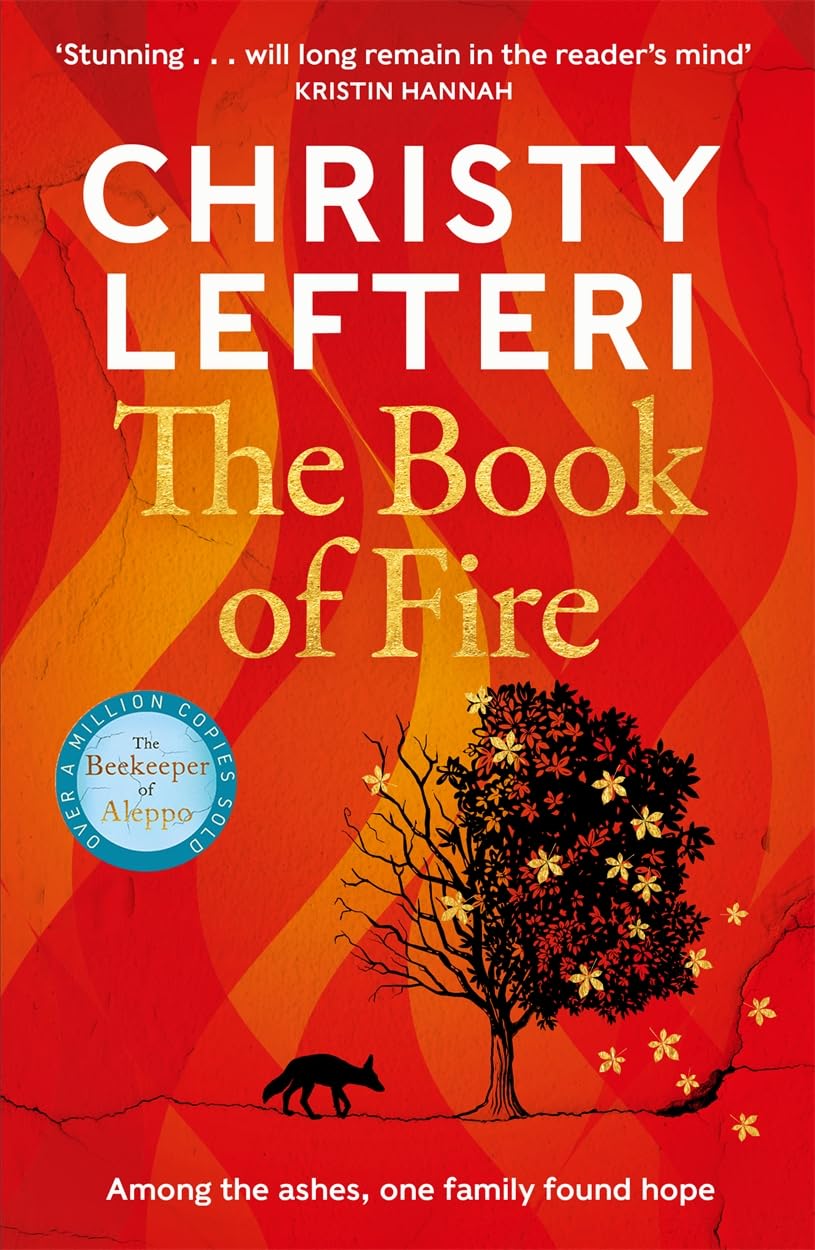
Next week on Susan’s Bookshelves: The Book of Fire by Christy Lefteri
A Fine Idea

Caroline Bacon

Directed by Charlotte Westenra

Arcola There, Studio 2

Star rating: 2.5

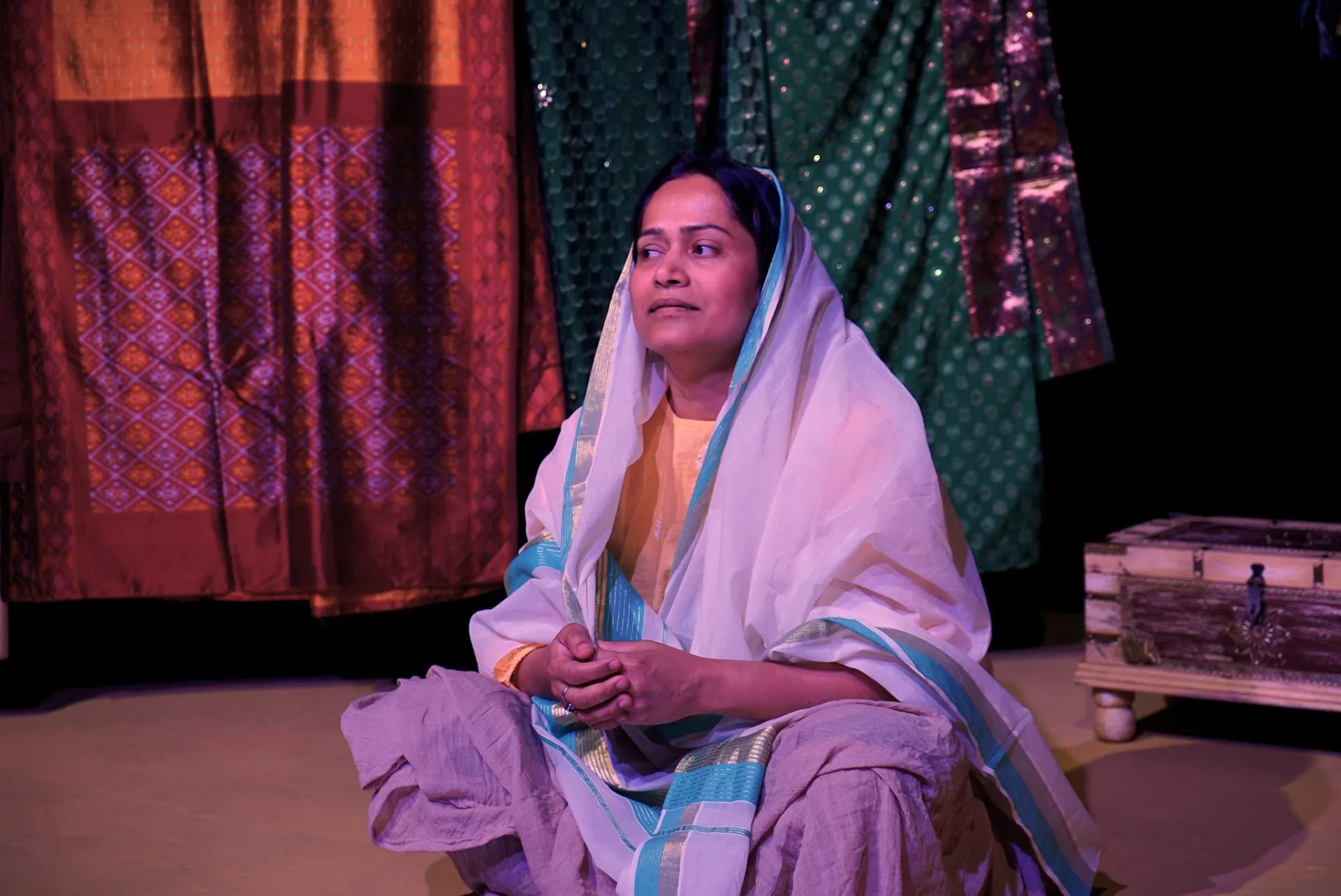
Ella Bryant, Georgina Rich, Grace Saif, Kevin Trainor. Photo credit: Beatrice Updegraff

International development aid and attitudes towards it is an interesting idea for a play. Just how much difference does the money make to individuals?  Are aid workers deluding themselves? These are topics worth exploring.

The trouble is that there are many facts and statistics which need to be delivered with the result that this play is too didactic especially when it strays into Oh! What a Lovely War country by using satirical show-biz routines to drive the message home. There is sardonic wit in places, though.

The plot gives us Jo (Ella Bryant) fulfilling a lifelong ambition to follow her parents into the International Aid sector in memory of her grandfather who conceived the term “international development” and got it into President Truman’s inaugural speech in 1949.  Cue for imagined conversations with him. Working in Kenya in the present, she learns that aid isn’t always what it seems to be. People with privileged backgrounds cannot conceive of the poverty levels – infant mortality, undernourishment and so on – which go on around them. And it’s a drop in the ocean anyway. Nobody quotes Jesus’s observation that “the poor will be with you always” but that’s the sense. And Kala (Grace Saif) whom Jo meets in Nairobi is an angry activist whose story does not end happily.

The cast of four all do good work with convincing multi-roling although some of the accent work is iffy. Saif gives an especially fine performance. She does grief and despair very memorably – a very different role from when I last saw her as Pauline Fossil in Ballet Shoes at the National Theatre.

Sadly this play knows what it’s trying to do but can’t make up its mind how to do it. And it’s bitty. One minute we’re in a realistic conversation and then, for example, we get a weird metaphorical surgical operation or a magician working tricks with numbers. The personification of institutions like the International Monetary Fund (IMF) is a bit clunky too. It feels like something contrived by a teacher to convey tricky political points to Year 10.

Moreover at 90 minutes it’s too long. Florence Nightingale and the hospital at Scutari are in the mix, for instance and could go. I suppose it’s an attempt to draw comparisons but it’s an unnecessary digression which doesn’t add much.

In short A Fine Idea is worthy and worthwhile but not especially successful as drama. The title says it all really.


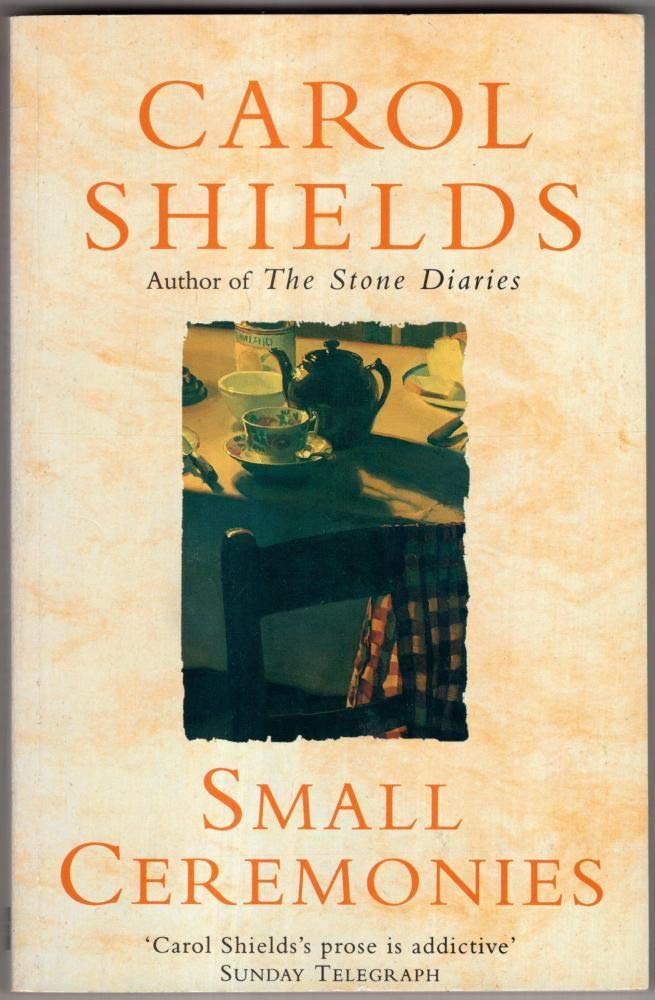
I first discovered Carol Shields when her The Stone Diaries was shortlisted for the Booker Prize in 1993. Before that she hadn’t been published much in Britain. I then went on to read most of her backlist as the titles appeared in bookshops because I was hooked. Her prose ripples, her characters are richly recognisable and genuine, and her narratives are compelling. Sadly that year’s Booker went to Roddy Doyle for Paddy Clark Ha Ha Ha but Shields did win the Pulitzer Prize.

Small Ceremonies, a first person narrative, was her first published novel (1976) which appeared in the UK in 1995. An Illinois-born, naturalised Canadian, university teacher and mother of five children, she was 37 when she wrote it.

She certainly knew all about female juggling. Judith Gill, the protagonist of Small Ceremonies is the wife of an English academic, and she’s an author. The English department in which her husband works, the parties they go to and give and the people they know all ring resoundingly true. So do the meals she cooks and the two teenage children she adores but sometimes struggles to understand. Everything she describes is beautifully observed.

Of course this title is over half a century old now so you have to read it as you do fiction from a former age and accept that ideas have changed about what it is acceptable to say or even think. I winced – and then reprimanded myself – at Judith’s being thankful that she hadn’t had to raise a “mongoloid” and that’s just an example. The same applies of course to, say, Jane Austen (who, incidentally and unsurprisingly, Shields read extensively). You just have to get into the right mindset.

Most of the people Judith and her husband know are writers of one sort and another, and oddly, this is the second book about writers I’ve read in a week. The other was Amanda Craig’s enjoyable new book High and Low. In both cases one is led to consider the issues and angsts which writers face and they resonate with me for obvious reasons.

One of Shields’s main themes in Small Ceremonies is plagiarism. What is it and how much does it matter? Judith has borrowed (appropriated? stolen?) the plot of an unpublished novel she secretly read while staying with her family in another writer’s home for a year in England. She then abandons her own novel but not before she has shown it to another novelist – whose next novel … well you can guess. It’s fascinating stuff because of the three she is the only one aware of what has happened. Neither of the others has noticed.

We all know the theory that there are seven stories in the world which are the backbone of all fiction. Years ago I read most of Noel Barber’s entertaining books. He’d been a foreign correspondent and used his experience to tell the thwarted love Romeo and Juliet story in various settings and situations across the world. I wonder if he was aware that was what he was doing? To this day I like to relax occasionally with the feel-good novels of Katie Fforde. She usually retells Jane Eyre spliced with Pride and Prejudice (rags to riches) in lots of different modern settings – and it works nicely.

And I speak as someone who has recently published a book of short stories each of which is predicated on a character from a great work of literature. They’re not my characters. I’ve borrowed them.

https://www.amazon.co.uk/Unheard-Voices-Tales-Margins-Literature-ebook/dp/B0FWZQ8YRT

Plagiarism? Definitely not, not least because I am completely up front about what I’m doing. I regard it as form of literary homage/criticism.  I’m working on a second set.

Carol Shields died in 2003 at age 68 having, the previous year, again been been Booker-shortlisted for Unless which was her last novel. Small Ceremonies has sat on one of my shelves since the mid-90s when I first read it. I now realise that it’s a “companion novel” to her The Box Garden (1977) which I’ve never read. Of course I now have it and it’s near the top of my TBR list.

Next week on Susan’s Bookshelves: Old Glory by Jonathan Raban

Allegra

Peter Quilter

Directed by Stephen Mear

Richmond Theatre and touring


Star rating: 3


This show is entertaining twaddle. In places it’s very funny and Maureen Lipman is a stage commander like no other. But there’s no substance or depth in it.

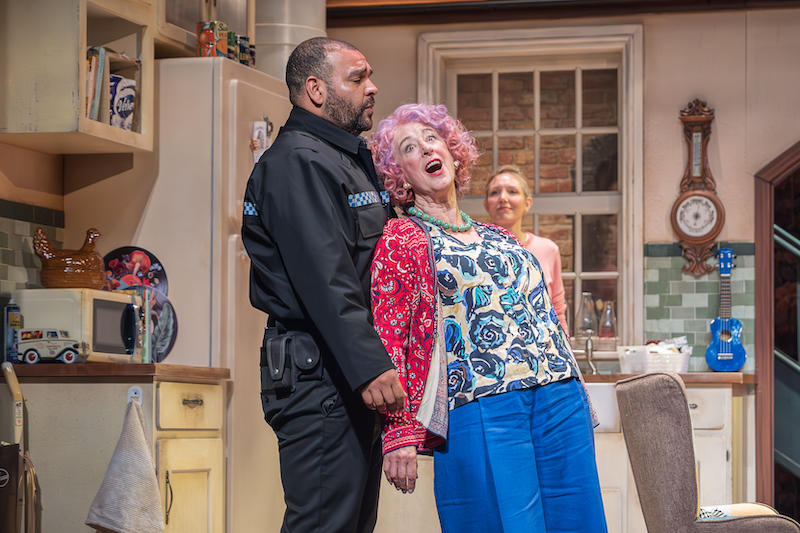
The titular Allegra is a lithe, irrepressible, ever-cheerful elderly eccentric. She gets up at 3pm, doesn’t buy food and sings songs and dances wherever she goes to such an extent that noise nuisance and restraining orders are in the air. Although it’s never mentioned or discussed she probably has some rare form of dementia. Her long-suffering brother Ronen (John Middleton) certainly thinks so which is why he installs a carer (Elizabeth Bower). Police Officer Rogers (Bailey Patrick) has to call increasingly often. And that’s it as far as narrative goes – none of it is developed although there’s plenty of laugh-aloud situation comedy.

Lipman’s is an extraordinary performance. Her rapier sharp timing throws the best lines in the play back at whoever she’s talking to and she’s hilarious with her knowing logic and shiny curly hair. Even her feet mange to be funny. She’s also full of dramatic energy despite quipping at curtain call that “eighty is the new forty”. Born in 1946, she is touring for the first time in 30 years and will do eight shows a week for some months. She does a lot of singing in this show because that’s Allegra’s “thing” and occasionally the lighting changes and she goes into a sort of trance in which she does a full dance and song routine sometimes with the rest of the cast in, for example,  the umbrella-twirling Singing in the Rain – all choreographed by director, Stephen Mear. It’s as if there’s a musical in this show which is trying to get out but it doesn’t sit very coherently.

Because Lipman is the calibre of performer that she is, the other three cast members  rise to her quality and in their different ways are all excellent: Middleton, always the serious voice of exasperated common sense,  Bower the Czech, twinkling carer cooking delicious meals and  and Patrick as the policeman trying to be firm but getting drawn in to the silliness in spite of himself.

It’s odd to see a show which manages to be both weak on many counts but  also quite watchable. I suspect it will prove a hit with uncritical audiences who will simply enjoy the humour.


Atonement

Adapted by Christopher Hampton from Ian McEwan’s novel

Directed by Adam Penford

Chichester Festival Theatre

Star rating: 3

It’s a sparky and original tale about deceit, guilt, imagination and story telling over six decades – complete with country house and stylish frocks. No wonder Ian McEwen’s 2001 novel won several awards and Joe Wright’s star-studded 2007 film – with screenplay by Christopher Hampton – did pretty well too.

Now Hampton has had another bite at it by adapting it for stage. And that has come with problems because it’s a narrative full of time shifts and in theatre, even with dates clearly projected, this feels bitty. At times, moreover, one senses that director Adam Penford is looking for imaginative things to do with Chichester Festival Theatre’s big stage when many of the scenes are small scale – despite the largish cast of fourteen.

Thirteen-year-old Briony Tallis (Isabella Dempster) has a bent for writing stories. When, in 1935, she sees her older sister Cecilia (Miriam Petche) in flagrante with Robbie Turner (Jasper Tabot) she mistakes it for an attack and later gives evidence against him in a rape case. After five years in prison he is recruited as a private to the army. Cecilia and he are still in love. The 1999 epilogue presents Briony (Jessica Turner), a successful novelist, revealing the truth and laying bare her lifelong search for atonement.

Dempster excels as the young Briony, first as an innocently knowing thirteen-year old and then – without the white socks and colt-like body language – as an old-for-her years, troubled eighteen year old nurse. Petche is strong as Cecilia, initially young, happy and in love and later loving, resigned and angry. And Talbot’s is a delightful performance as a wronged man who never loses his dignity or charisma.

In support of this is a large cast of competent multi-rolers. A word of praise too for Jessica Turner who stepped into the role of the older Briony at the last minute (after the programmes were printed) in place of Sian Phillips who withdrew with “heartfelt regret”.

Anthony Ward’s designs work quite well with a spiral staircase suggesting access to more intimate things than the formal dining room or the garden. Cecilia’s wartime billet in Battersea is convincing too. Meanwhile Andrzej Goulding’s video projection evokes various settings including the retreat to Dunkirk – scenes which are in some ways the most powerful in the play as the men banter in terror and accept help from two Frenchmen.

There’s much in this show to admire and enjoy but ultimately it feels oddly one-dimensional and some of the dialogue is laboured.

Meet the Kids

Desiri Okobia who also co-directs with Ellis Metzger

Bridge House Theatre, Penge

Star rating 2

This is a difficult show to review fairly because although it has a lot of heart and a huge amount of effort has gone into it, it also has many flaws and shortcomings. Perhaps “work in progress” is the kindest and most accurate descriptor.

Desiri Okobia, who also plays the teacher, Mrs Cleopatra, developed this play as part of her MA. It sets out to give a voice to young people in an inner-London school. Four students represent over-achievement, vulnerability, and the power of poetry and rapping. Dozens of  less-than seamless short scenes (far too much walking on and off) depict them confronting their various issues until we begin to see connections between them and a narrative, of sorts, emerges. A cast of eight allows four other characters to interact with them and there’s some multi-roling.

Now, most of these actors are very young and I suspect have had little or no professional training.  Yes, there are some strengths here but much of the acting is pretty wooden and there are audibility and projection problems even in the Bridge House’s bijou 50-seater thrust space.

The show began life at Theatre Peckham earlier this year and it’s good news that it’s getting a second run now because it’s a valiant attempt to let audience members of all ages see and hear what young people think and go through. The most chilling story in the mix is Jessica who is picked up by a man of 24 – a Brixton drug dealer –  who grooms and controls her until a classmate rescues her. It’s frighteningly plausible

It’s also encouraging to see a predominantly young cast working enthusiastically together to create theatre and convey important messages.

Santtu conducts a Strauss Extavaganza

Philharmonia

Conductor: Santtu-Matias Rouvali

Piano: Benjamin Grosvenor

Royal Festival Hall

Thursday 04 June 2026

This concert was billed as an exact re-run of the one the elderly Richard Strauss programmed and conducted with the Philharmonia, then just two years old, at Royal Albert Hall in 1947. In the event Rouvali changed the running order at the eleventh hour.  It therefore acted as a finale to Philharmonia’s 80th anniversary year and acknowledged the link with Strauss who died in 1949 with a nod to the Festival of Britian which, 75 years ago saw the birth of Royal Festival Hall. All this was explained at some length, and rather unnecessarily, to the audience by trombonist James Buckle who is president of the Philharmonia Board and Thorben Dittes, Philharmonia Ltd’s CEO – despite its all being set out in the free programme.

The concert comprised four substantial works – all written before the composer was 50 including two (Don Juan and Burlesque in D Minor for Piano and Orchestra) dating from his twenties. And it ranged over many moods from the narrative sauciness of Don Juan, the witty, quasi piano concerto, the poignancy of the Der Rosenkavalier big tunes and the happiness of Symphonia Domestica.

The 1885/6 Burleske, the nearest Strauss ever got to a piano concerto, has a timpani opening wth echoes of Beethoven’s violin concerto or the second movement of the Choral Symphony and in this performance the duetting between timp (Ziv Stein) and  Benjamin Grosvenor on piano was a delight. Also very beautiful here was the lyrical cadenza with cello (Richard Birchall). Did Strauss write this in homage to Clara Schumann whose piano concerto does something similar? Grosvenor, as usual, played with unshowy passion.

Otherwise highlights in this concert included fine oboe playing over muted strings in Don Juan and Rouvali’s carefully managed luxuriant and extravagant tempo changes in the Waltzes from Der Rosenkavalier.

The concert ended with Symphonia Domestica – a work which doesn’t get out much. And it’s unusual because the title says it all. It’s a description, composed when Strauss was 39, of his very happy family life,  written in five movements without breaks.  There was a lot of joy in this performance including the flute and clarinet weaving round each other in the adagio and some lovely work by the four bassoons.

This grandiloquent concert required huge forces on stage – at times there were eight horns, a quartet of saxophones, two harps and five percussionists so it felt richly celebratory. On balance though, for a 2026 audience there was one piece too many. It could have done with dropping either Don Juan or Der Rosenkavalier.

Listening to all that Stauss in one go, however, I’m struck – not for the first time –  by the  innovative brilliance of his orchestration and by his love of solo violin breaking out of the texture. Leader Zsolt-Tihamer Visontay had extra work to do in all four pieces – all played in his unique, straight-backed style and lots of eye contact with the orchestra. And, as always with the Philharmonia, there was a palpable rapport between string sections which contributes to the precision of the orchestra’s distinctive sound.