Press ESC or click the X to close this window

1.17am or until the words run out (Susan Elkin reviews)

1.17am or until the words run out

Zoe Hunter Gordon

Directed by Sarah Stacey

Finborough Theatre

Star rating:1.5


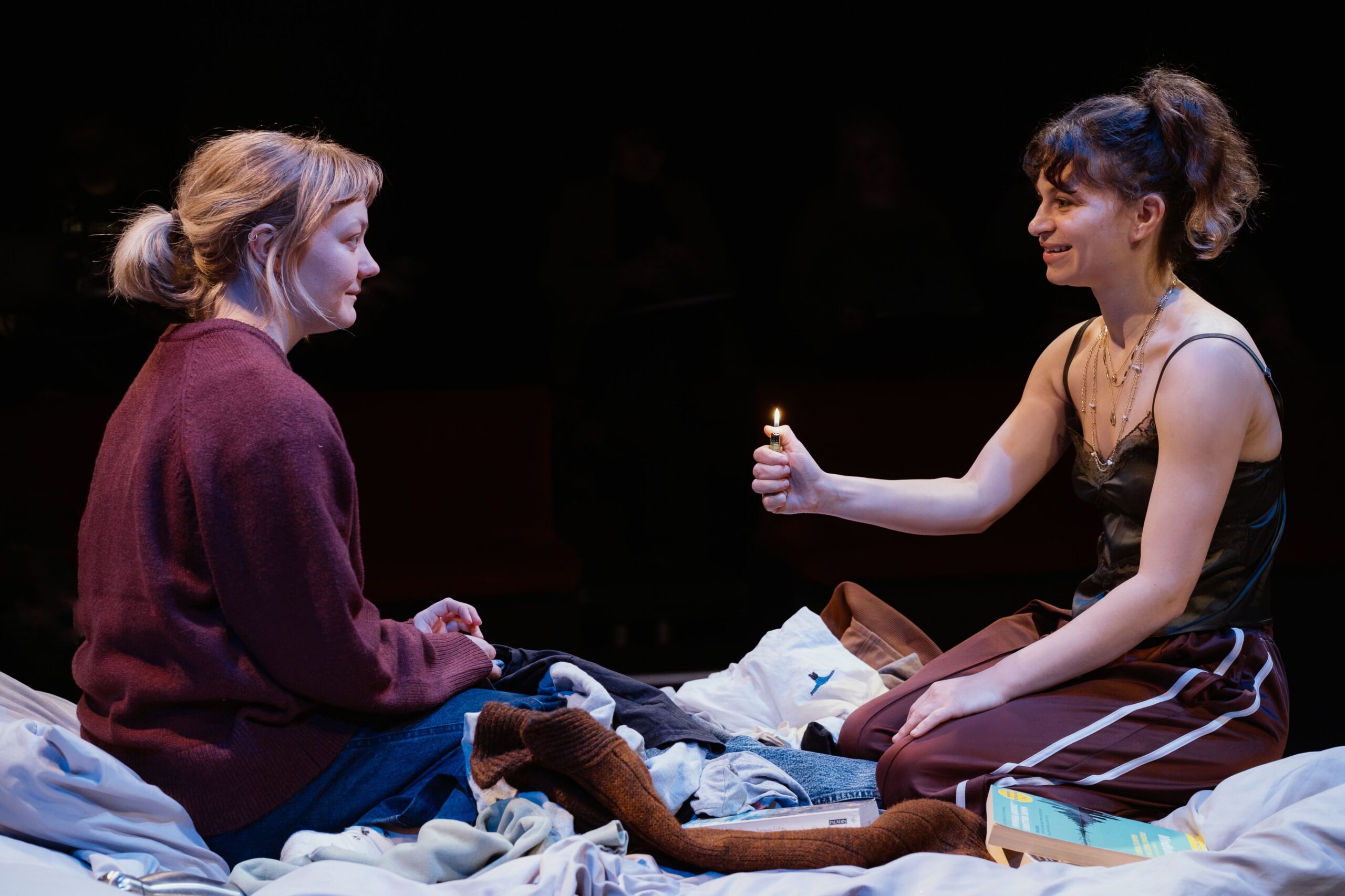
Katie (Catherine Ashdown) is in a very untidy basement bedroom strewn with clutter. Mim Houghton’s set is good. There is a party with thumping music upstairs which is, apparently where Katie should be. She appears to be trying to sort out the muddle and pack up but she is so overcome with weeping that she can’t. Clearly we’re dealing with some kind of major loss but it’s a very long tome – far too long – before the details emerge and even then it’s confusingly blurred.

When her lifelong friend Roni (Eileen Duffy) arrives Katie is passionately furious – apparently because Roni slept with the man Katie is mourning. There’s a great deal of passion and anger. So it’s about jealousy and lies with a hint of incest? Not really. But the story telling is not as clear as it should be and 75 minutes is at least a quarter of an hour too long for a piece which needs to find a chase and cut to it far sooner than it does. And although I liked, and empathised with, the stress on moving on after bereavement, the ending actually feels like an inconclusive tail-off as if the playwright has run out of ideas.

And all that is unfortunate because Ashdown and Duffy are both talented actors adept at playing off each other with a lot of attentive, reactive listening, Duffy has a wonderful way of expressing distress with a cigarette and Ashdown weeps cries with her whole body.

It’s just a pity about the play.

Learning to Dive

Brendan Murray

Directed by Willie Elliot

Damn cheek Productions

White Bear Theatre

Star rating: 2.5


We’re in Terry’s south coast home. Terry is played by the playwright. He’s elderly and he’s had a slight stroke, Then an angry young man (Darren Cheek as Matt) arrives to give Terry some letters and photographs found in the possession of his recently deceased father, Barry. It is fairly obvious where this is going as, gradually, Matt softens and the hitherto hidden past is revealed. The writing is strong. The well directed acting is very convincing. And, at the interval it feels like a reasonably satisfying one act play.

And that’s the trouble. The second half. in which we meet Barry’s wife, Jill (Karen Spicer – good)  in conversation with her son, Matt, a week earlier feels like an add-on. Murray admitted in the post-show Q&A that it was an afterthought. Thus Leaning to Dive feels like a pair of inadequately integrated tangential plays rather than a cohesive piece of work. There are plot holes too. What made Matt decide to visit Terry? Did his mother send him? Moreover, there’s some issue with Matt’s unseen brother Chris, which is never fully explored or explained.

On the other hand, there is much to admire in this show. Murray and director Willie Elliot are very good at the use of quasi-Pinteresque silence and awkwardness which punctuates the dialogue as characters palpably process what they’re learning. And Karen Spicer is moving as, the wife who never understood her husband and who now, after his death works out the truth. There’s a lot of realism too. Barry was fond of his wife and adored his children and grandchildren but life can be complicated.

The sound design is effective too. There’s a clock ticking loudly in Terry’s living room which heightens the tension and a Chet Baker number which everyone associates with Barry.

Work in progress?


Composer: Wolfgang Amadeus Mozart

Librettist: Lorenzo Da Ponte

Director: Phelim McDermott

Conductor: Dinis Sousa

This production dates from 2014 and has been revived several times. Musically, it is very fine. In the pit, Dinis Sousa ensures that every single nuance and detail of Mozart’s magnificent score is clearly heard.

Da Ponte’s plot presents two couples in love. Then a waggish friend of the men cynically bets them that if tempted, their girlfriends wouldn’t remain faithful. In order to test this, they fake leaving for the army but actually disguise themselves and work on the women with the connivance of a cheeky maid. Of course, it all works out in the end.

Unusually for Mozart, Così is a six-hander with very brief and infrequent appearances of a small chorus. All six singers are strong, and there is some delightful duet, trio and quartet work. Lucy Crowe, however, is outstanding as Fiordilgi. She has an unusually wide range and packs emotion into dramatic drops – especially in the long, well-sustained Far Away a Man is Sighing with some sublime horn playing beneath her.  And Ailish Tynan shines as the mischievous, knowing chambermaid.

Because this is ENO, an English translation by Jeremy Sams is used, and it’s witty with a hint of WS Gilbert: “I know two guys with their eyes on the prize”. It’s accessible, but there’s a pay-off in that, as always with translation, the words don’t always sit happily with the rise and fall of the music.

Less successful is the overall concept. The setting is a seaside town motel probably in the 1950s. Some scenes take place on the promenade looking out to sea. Tom Pye’s elaborate set includes carousel horses, swan pedaloes, illuminated heart-shaped archways and a balloon which lifts, so there’s plenty of colourful romance.

Nearby is a circus, and this is where the production falters. The cast includes twelve circus performers, in various sizes, as a non-singing ensemble (they do a lot of scene shifting), and they’re good at what they do. The trouble is that it’s distracting. If you put a spectacular circus skills display centre stage during a key duet, then no one in the audience is going to listen to the music.

Even the overture is ruined by stage business as the circus people emerge from a trunk and race about with placards announcing what the opera is about. It means that the audience laughs and applauds over the music, which is hardly heard.

Runs until 21 February 2026

The Reviews Hub Star Rating 3.5

This review was first published by The Reviews Hub
The Unlikely Pilgrimage of Harold Fry

Rachel Joyce, Peter Darling and Katy Rudd, who also dircts.

Music by Passenger

Theatre Royal Haymarket

Star rating: 5


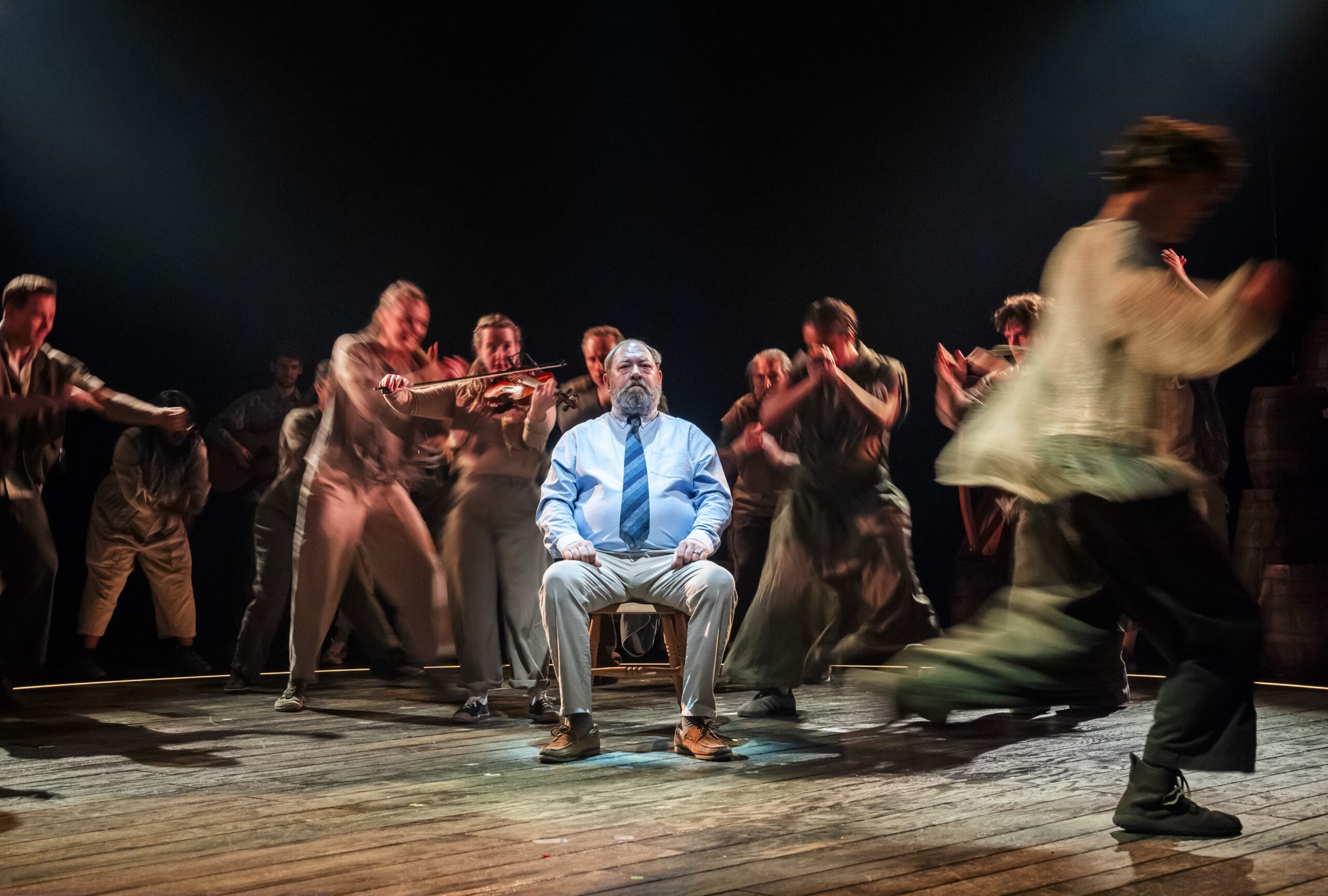
I liked this vibrant show in its first outing in Chichester Festival Theatre’s almost-in-the-round Minerva Theatre last year so much that I awarded it five stars which is unusual for me.  It has now bedded so happily – despite proscenium arch limitations – into Theatre Royal Haymarket, that, if I could, I’d give this West End transfer six stars. Rarely have I seen a show as close to perfection as this one is.

Based on Rachel Joyce’s 2012 novel it tells the story of a very ordinary man (Mark Addy) living in Devon with his wife (Jenna Russell) of many years. Their marriage has become humdrum and they aren’t communicating. Then comes a letter from a former colleague of Harold’s telling him that she is dying in a hospice. So, for reasons he doesn’t even understand himself, he sets off to walk 500 miles to Berwick-on-Tweed to say goodbye to her. In the tradition of Pilgrim’s Progress, The Canterbury Tales, The Hobbit and every other quest story you can think of, he has enlightening encounters on the way.

It’s a rich narrative about marriage, love, hope, despair, grief, forgiveness, reconciliation and friendship. And part of the reason it works so well on stage is that Rachel Joyce herself wrote the musical’s book and has co-adapted it as a quasi-folk opera with Peter Darling and director, Katy Rudd. The result is stunning at every level.

The two central performances are beautifully nuanced. Addy’s Harold is down-to-earth and likeable but he has issues.  And Rudd’s direction – wonderful ensemble work enhanced by Paule Constable’s evocative lighting –  reveals his troubled inner world perfectly. Addy is no singer but does occasionally contribute a bit of song-spiel and it’s fine. Jenna Russell’s character, meanwhile, is on a journey of her own and it’s gradually developed with warmth and some very pure moments of reflection through singing. There is (no spoilers in case you don’t know this story) a massive elephant in the room which, for a long time, blocks communication between them.

Then there’s guitar-playing Noah Mullens as the balladeer who dances ethereally around them, singing Passenger’s songs with panache and driving the narrative. The music, with orchestrations and arrangements by Jeremy Holland-Smith, comes in various folksy styles from the hilarious Out of Luck (brilliant cameo by Madeleine Worrall) and the Tin of Soup for One (ditto Jenna Boyd) to the poignant power of many other numbers. And it’s adeptly driven by Chris Poon with a seven-piece band in the pit. Full marks too, to Clodagh Kennedy who plays fiddle – mostly on stage – with astonishing energy, especially in the barn dance sequence. Her ability to switch styles continually is very impressive.

This show is a pleasingly democratic ensemble piece in every sense of the word. The ensemble represents the mood of the moment in movement, shifts scenery and sits at the side passing props such as phones to support centre stage action. And almost every ensemble member emerges, at some point, as a character with his or her own role/number. This, as with Ballet Shoes, is Katy Rudd at her inspiring best.

The reason The Unlikely Pilgrimage of Harold Fry works so outstandingly well is that this is a show about “real” people. We all know them. So we feel totally in touch as they try to make sense of their lives. No wonder there were so many empathetic audience tears at the end. Bravo to everyone involved.


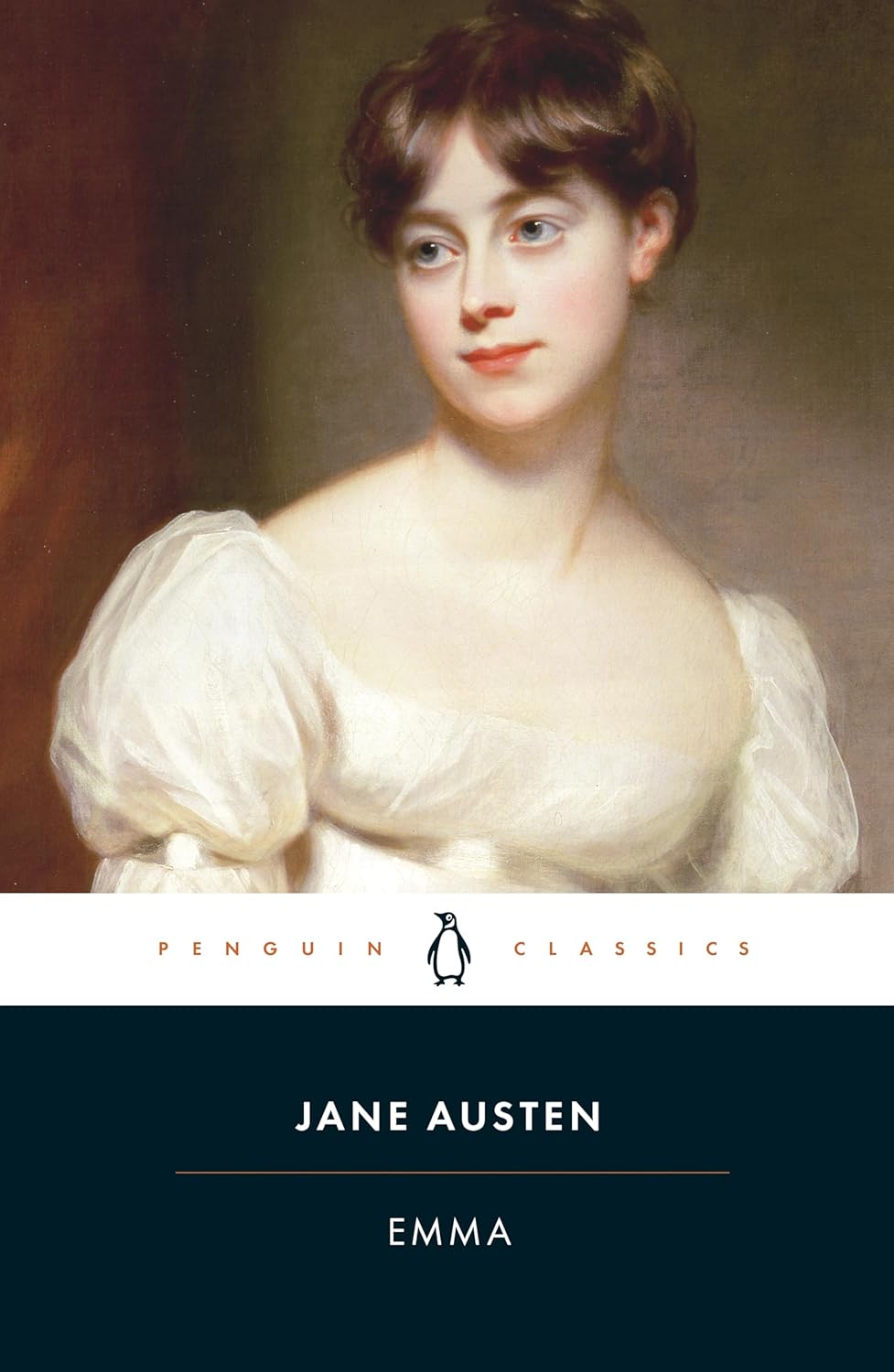
I reread each of Jane Austen’s six novels about once in ten years. This is the fourth time I have featured her here in this blog which has been running just over five years. It means that I have read each of these novels at least five or six times. And she never fails me.

The really interesting thing is the way that I, and presumably most other Austen-inclined folk, tend to react differently at each rereading. Well, as I used to point out to students, the books don’t change. It’s the reader who brings different experience and shifting cultural attitudes each time he or she opens the covers.

It was certainly the case with Emma which I have just reread for three reasons. First, it’s a novel I have always enjoyed. Second, I thought it would be an interesting title to write about here. Third, I am developing a short story predicated on one of the minor characters.

So what, at surface level, is this novel about? Emma, not quite 21, lives with her widowed, neurasthenic father in Surrey. She has a certain amount of local status and likes to organise other people’s lives. Thus we meet villagers and others, especially her younger, easily-led, less privileged friend Harriet Smith. Also in mix are her London-based married sister and her family along with her former, just married governess who lives nearby. Then there’s the avuncular Mr Knightley, a near neighbour and close family friend. All these groups are interlinked and immaculately, often amusingly observed. And her characterisation is startlingly acute – this is Jane Austen after all.

Beneath the surface simmer issues about social class and changes to perceptions: Mr Knightley’s farming tenant, Robert Martin is well educated and respectable. He is almost gentry and his children probably will be. And of course, marriage is a burning question, Marriages aren’t arranged in this world but they tend to fall into place – or not. Moreover, with that go all the questions about inheritance and legacy.

Austen famously said that in Emma, she had created a character whom nobody would like except her creator. Well that’s disingenuous. Emma is full of herself and very keen on manipulating others but when she eventually realises her folly and its consequences, she is genuinely contrite. Surely she’s just a very young and arguably immature, woman  with a lot to learn? She is rude to Miss Bates too – well I think most young people would be, actually. Miss Bates is one of those marvellous Austenian characters whom we’ve all met: garrulous, self effacing, well-meaning and you certainly don’t want to get stuck with her at a party. No I don’t dislike Emma. She’s learning fast, after all.

What struck me forcibly this time is that I don’t care for Mr Knightley. Did Austen expect me to? He is 16 years older than Emma and has apparently, it eventually turns out, had his eye on her as wife material,  almost ever since she was born. When he was 21 and, presumably out sowing wild oats, Emma was a child of five. It makes me feel a bit queasy.  That’s why, though, despite his prosperity as a landowner he is still single in his late thirties.  To the version of me rereading this in 2026, it feels uncomfortably and unhealthily inappropriate given the age difference and his fraternal relationship with her

Meanwhile Mr Knightley constantly corrects Emma and tells her how to behave. It’s benign and fairly light-hearted but who on earth does he think he is? Eventually when the inevitable Austen happy ending hoves into view he apologises to Emma for his former bossiness. Is he now going to stop being an overbearing quasi older brother and respect her as an equal? Well he might try to but patronising old habits die hard so I’m not holding my breath.

Of course the plot runs on all the usual Austen misunderstandings. A very old friend of mine is an antiquarian book dealer and I honestly thought that he had read every book on the planet. To my astonishment he told me recently that he had never read Austen. “She wasn’t taught in boys’ schools” he said. Then came the pandemic when my friend read them all in a row. His comment was that if you consume them en bloc the novels begin to feel formulaic. And I suppose that’s what I mean by the usual misunderstandings. Emma is mildly drawn to Frank Churchill who’s a bit of a charmer but the reader knows immediately that he’s not quite what he seems – we’ve been here before in the other novels. We can also see that Mr Elton (Austen’s awfully good at clergymen on the make) is simply looking for a wife and doesn’t much mind who she is. And that’s a familiar plotline too.

Not that it matters. It’s all done with such rapier wit that whatever the plot details are you are swept happily along, Or at least I am. I think it will be Sense and Sensibility next. Give me a few months.

Next week on Susan’s Bookshelves: With the End in Mind by Kathryn Mannix

Star Wars and The Planets

Philharmonia

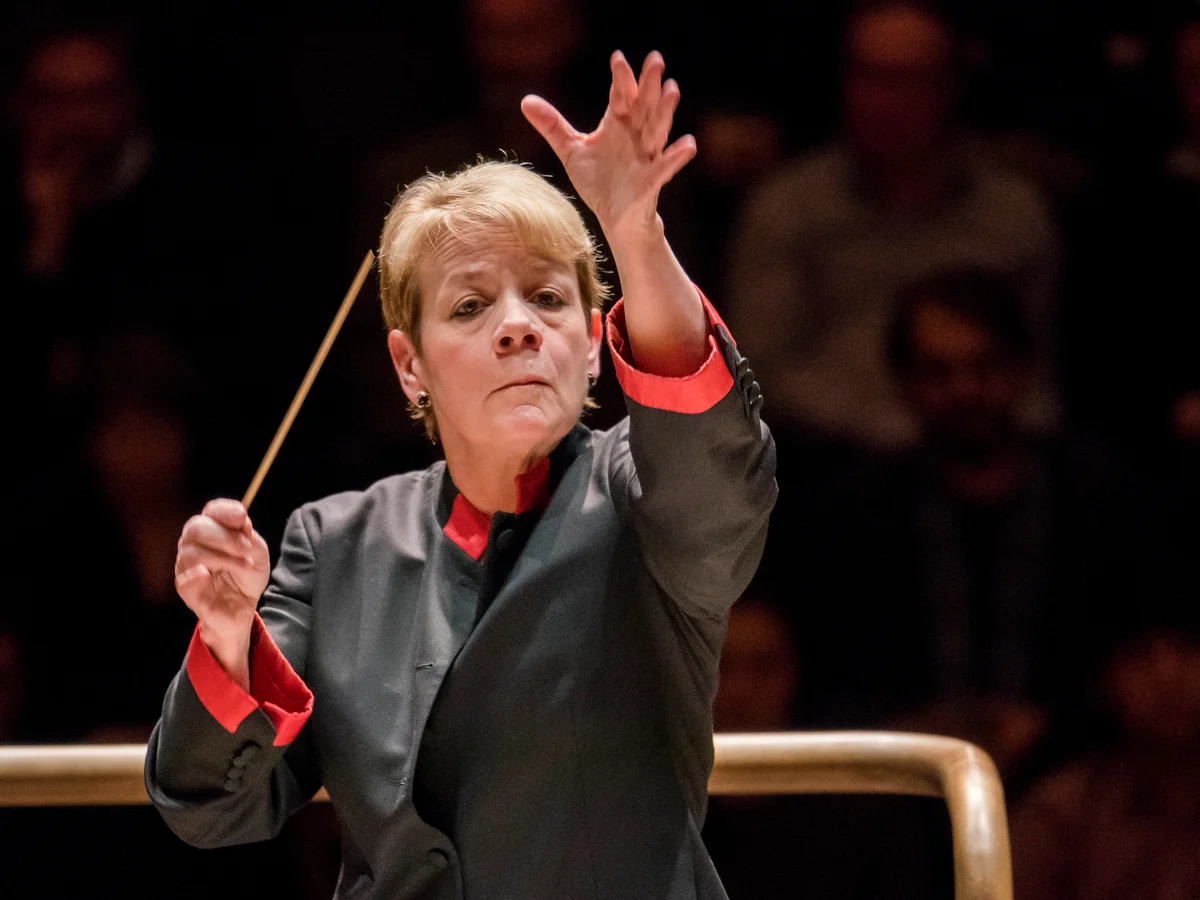
Conductor: Marin Alsop

Guitar: Sean Shibe

Royal Festival Hall, 08 February 2026

It’s great fun to hear John Williams’s Star Wars music live. Structured as a suite, it’s effectively a symphony. Alsop gave us lots of loud drama although it took a few bars for the tempo to settle at the start. There was excellent wind and horn work in the second movement and admirable cello lyricism in the third. And John Williams is very good at fanfares which begin conventionally and then stride off into alien territory – all adeptly delivered by the Philharmonia in fine form. I was also struck by how well Williams knows his Elgar. Alsop gave us just the right level of cheesiness in the final movement’s Big Tune.

Then came a complete contrast with the Philharmonia pared down to chamber proportions for Roderigo’s delightful guitar concerto. It is, of course, a very familiar piece. It frequently crops up both on both our leading classical music radio stations and we’ve all got recordings. I don’t think, however, that I’ve ever before heard a live performance. Sean Shibe played the opening Allegro con spirito with delightful percussive delicacy while Alsop coaxed filigree accompaniment from the orchestra in support of the intricacy of the guitar. Shibe played the cadenza with lots of vibrato, evocative warmth and freedom. The nicely controlled transition into the Allegro gentile was a good moment in an enjoyable performance in which the chemistry between soloist and conductor was palpable.

And so to the magnificence of The Planets. For some reason best known to itself (I think there was a mix up with my press booking) the PR department had put me in Box 1, Green Side rather than in the stalls where I am usually positioned. It meant I had a quasi-celestial view above the orchestra which was perfect for Holst’s greatest work. Thus, I saw and heard things from this vantage point that I have never noticed before despite a  lifetime of listening to this work and attending performances although first and second violins seemed a long way away.

Alsop packed Mars with pulsating power from the relentless menace of the 5/4 rhythm to the col legno string work and the brooding threat of the lower strings. Other highlights included the grandiloquence of the horns in Venus and the way Alsop simply stood back and reverently allowed the orchestra to take charge of Jupiter’s famous melody – emotional magic. I also admired the uneasiness and climactic tension she found in Uranus (oh those tubular bells!) and her attaca approach to Neptune –  thank goodness. I really don’t like the cohesion of this seven-part work being fractured by facile applause and I got the feeling Alsop doesn’t either

The celeste work in Neptune was suitably poignant but the choir (Philharmonic Chorus) was disappointing. They were positioned beyond the stage right entrance and I could see them quite clearly from Box 1. Acoustically it wasn’t great because it didn’t resonate enough and the intonation was faulty at the start. It was a good idea, though, to reinforce the fade-out into outer space by slowly closing the door.

A very pleasing concert in almost every respect although, personally I could have done without the introductory chat from Robert Looman (flute/piccolo), witty as it was.

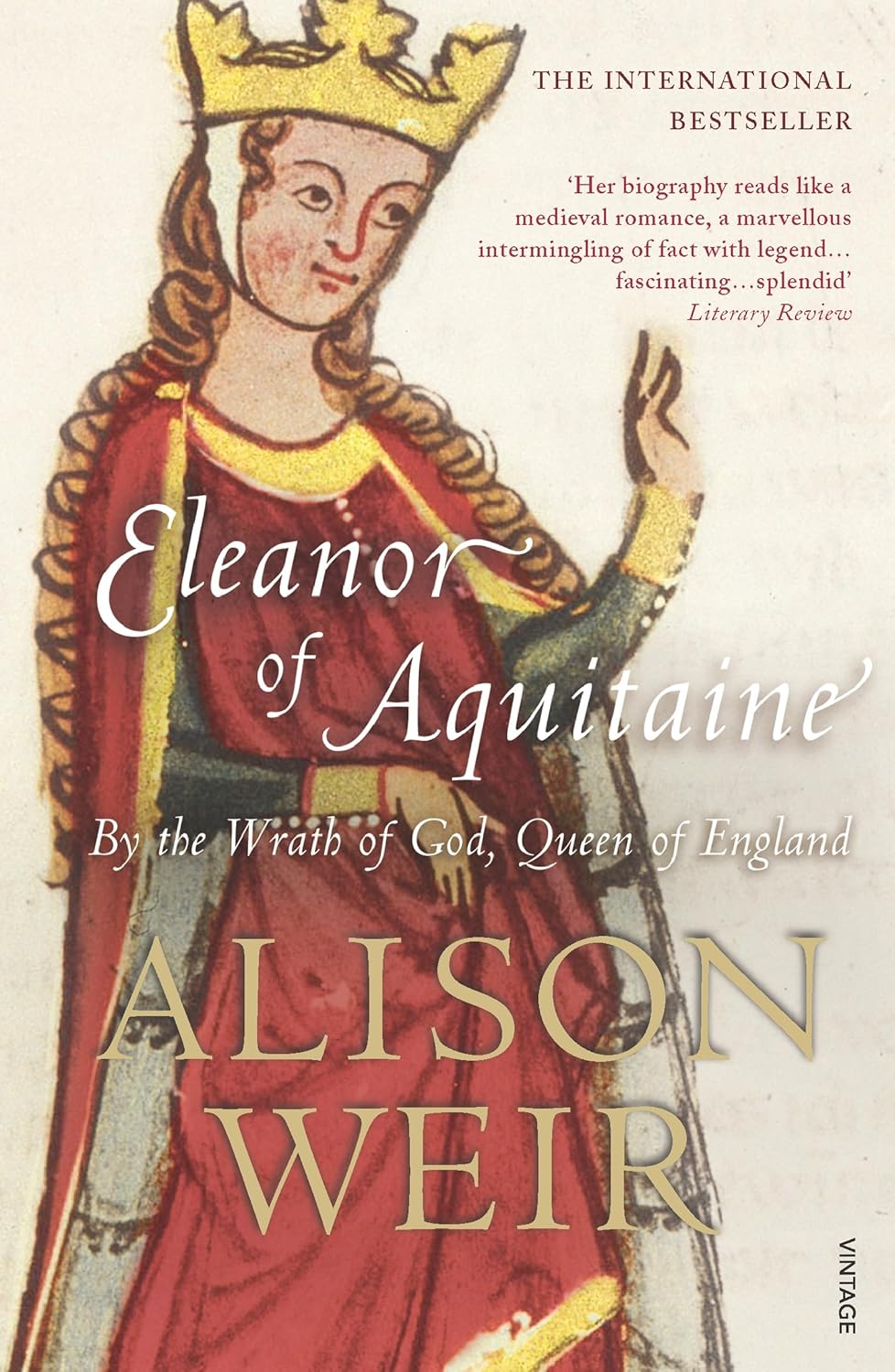
I don’t remember learning about the 12th century at school. And that’s odd because our sensibly sequential history syllabus began with the Romans at the beginning of what we now call Year 7. It then, at the end of Year 9, arrived at 1760, which was where the O level syllabus began. So Eleanor and her tribe must have been in there somewhere. I suspect that either the politics were so complicated that they skated over it or, it was just too involved for me to get my pubescent head round so my brain simply wiped it. Either way, all I knew about Eleanor was some outdated nonsense about “fighting the infidel” and a few vague impressions courtesy of Katherine Hepburn in 1968 film The Lion in Winter.

Then I heard Alison Weir talking about Eleanor on the radio. And I was intrigued. I have read Weir before but not this biography, published in 2008, It is, apparently. her personal best seller.

Eleanor was extraordinary. She lived to be 82, married twice (Louis VII of France and Henry II of England) and probably had other liaisons. She bore ten children and there is an assumption of miscarriages and stillbirths in the gaps. She also travelled extensively including a desperately uncomfortable crusade to the middle East. It is hard to imagine her physical stamina in an era without modern medical care or transport.

What is now western France was a patchwork of provinces eagerly coveted both by France and England so there was constant war between factions – often between brothers and other close relations. Eleanor, Duchess of Aquitaine, often had to deal with her own children fighting. She became a skilled and pragmatic politician. Once her second husband (who imprisoned her for supporting his enemies) was dead and their son Richard acceded to the English throne, the elderly Eleanor ruled England with commonsense and skill while he was absent crusading for several years.

I also learned a lot about Thomas Becket with whom Henry II famously quarrelled. And, as so often in this book, Weir debunks many myths. Becket had been Henry’s chancellor and close friend for several years long before Canterbury loomed. He didn’t want the job and was, almost unbelievably in 2026, ordained as a priest only the day before he was installed as Archbishop. After that he became an ascetic – a colourful character and never a man to do things by halves. Thereafter he was a thorn in Henry’s side, as we all know.

Bishoprics were political posts and it was all pretty corrupt. It would be easy to assume, given their behaviour,  that they were a bunch of exploitative,  cynical unbelievers but, no. The superstitions which had by then firmly attached themselves to Christianity were very strong in almost everyone. There was a widespread and deep-seated fear of hell fire so they were constantly seeking absolution for appalling crimes (such as Henry’s murder of Becket). Moreover they were all terrified of excommunication – a punishment issued so readily there was a sense of The Red Queen and “off with his head” to it.

Meanwhile marriage in ruling circles was, of course, simply political. However, I was amused and surprised to read how easily dynastic marriages were ended in the 12th century – usually on grounds of consanguinity. Well, yes, these people were almost always related to each other at distant cousin level. That seems to have been routinely ignored at the time of the wedding and conveniently foregrounded when the marriage was no longer required.

It all meant, of course, that women and female children were simply pawns in male manoeuvres. But Eleanor was feisty and very much her own woman at a time when for a woman to manage her own life was almost unthinkable. You might almost describe her as an early (the first?) feminist.

This is a wonderfully well researched book. Using contemporary chronicles, Weir has managed to document where Eleanor was and what she was doing for almost every year of her life. Where there are gaps because she isn’t mentioned in accounts, Weir says so and speculates about probabilities.

It’s detailed, thorough and convincing – and best of all, written accessibly without academic fussiness.  It isn’t just about Eleanor either. It is a compressive account of government in the 12th century. And it has begun to plug a gap in my education.

Next week on Susan’s Bookshelves: Emma by Jane Austen

Maidstone Symphony Orchestra

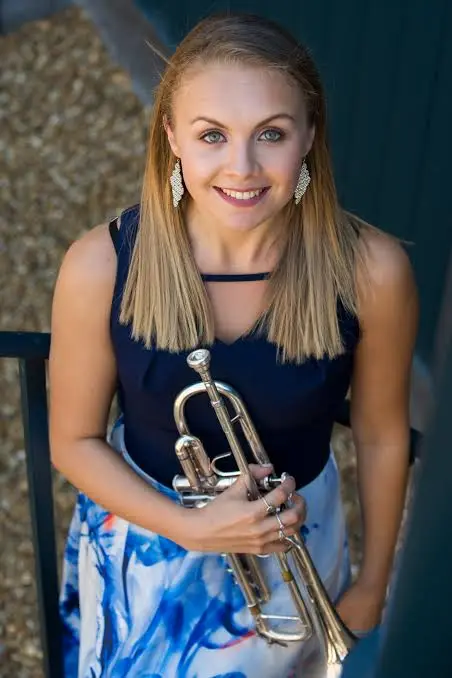
Matilda Lloyd (trumpet) and Brian Wright (conductor)

Mote Hall, Maidstone

Well someone has to take over as Queen of the Trumpet now that Alison Balsom has retired from performance. Matilda Lloyd, with her sumptuous legato, immaculate tongue-ing, restrained flamboyance and stage presence definitely gets my vote. She played the famous Haydn concerto in E flat with tremendous dynamic control especially in the opening movement which included a cadenza full of clarity and rubato. She was sensitively accompanied too particularly in the middle movement which presents one of Haydn’s most charming melodies.

Lloyd has recently issued an CD, Casta Diva, featuring operatic arias arranged for trumpet which is garnering critical acclaim. In lieu of an encore she played two of these spliced together. It must have been fun for the orchestra to do because even Brian Wright admitted that composer Severio Mercadante was new to him. Of course they rose to the occasion with aplomb.

Matilda Lloyd’s spectacular appearance was preceded by a pleasing account of Dvorak’s Czech Suite parts of which often feature on Radio 3 and Classic FM. It doesn’t, however, seem to get into the concert hall much so it was nice to hear it live. The playing was elegant although Wright’s tempi were understated in places. The Sousedska movement, for example, was quite subdued. The horn solo and flute work in the Romance were a delight, though.

And so, after the interval, to the joyous glory of Beethoven’s Fifth Symphony in C minor.  It began with all the incisiveness it needs. How extraordinary it is that, 214 years ago, this astonishing composer could create what he did out of a simple, off-beat dot-dot-dot-dash rhythm. In this performance the Beethovenian magic was highlighted by exciting dynamics and some very attractive wind interjections. Then there was excellent string work in the second movement – I was struck, incidentally, by the strength of MSO’s viola section throughout this concert – and an imaginatively built fugal passage in the third.

For me, though, the very best bit of this marvellous symphony is the use, in the final pages, of the triumphant piccolo with those chirruping upward glissandi. I have heard professional performances where it gets lost in the muddy texture. Not this time. Bravo Angela Love. Fine job.

And finally, the delighted and quite large Mote Hall audience were given a little treat for the road. Brahms’s Hungarian Dance number 5 is always fun and MOS, now thoroughly warmed up and evidently enjoying themselves, really responded to Wright’s take on the swoops and contrasts.

Thanks, once again, MSO. It was a good way of spending a damp January evening.