Press ESC or click the X to close this window

Absence of Youth (Susan Elkin reviews)

REVIEW: ABSENCE OF YOUTH by Theo Duddridge at Golden Goose Theatre until 31 January 2025

Susan Elkin • 28 January 2026

‘Interesting idea in need of a lot of work’ ★ ½

Four young people are stranded in a dystopian world. We gather that the development of a miracle drug which can cure all forms of cancer and other fatal illnesses has somehow brought the world as we know it to an end. There is danger, pulsating fear and challenging dynamics between the survivors. It’s not a bad idea for a play.

There’s pleasing performance from Izaak Hamilton-New as the middle-class Henry usually able to keep calm and nice work from Jaspar Albright as Michael, the effective leader of the group who tries hard to allay fear and diffuse situations.

Beyond that, sadly, the best thing which can be said about it is “work in progress”. The worst is that it reminded me of a hastily devised piece by a Year 10 group for a school assembly, complete with a lot of defiant shouting, swearing and violence of which, in my years as a teacher, I saw dozens.

The show is over-reliant on voices off. It’s not the most dramatic device to open a show with although it does make the miracle cure issue clear by presenting it as a radio news bulletin. Later other voices and loud music simply muddy the storytelling.

The cueing is weak too. At one point at the performance I saw the music started at the wrong time, And (I think) there’s meant to be a gun shot which didn’t happen thus making nonsense of the reactions on stage.

Then there’s the length issue. Absence of Youth is billed at 45 minutes. Actually it ran on press night for 38 minutes. In common with most critics I quite like short shows but 38 minutes is barely worth the effort of travelling to the venue.

ABSENCE OF YOUTH

Written and directed by Theo Duddridge

Final Run (theatre company)

Golden Goose Theatre

27 – 31 January 2026

https://www.goldengoosetheatre.co.uk/whatson/absence-of-youth

First published by London Pub Theatres Magazine; https://www.londonpubtheatres.com/review-absence-of-youth-by-theo-duddridge-at-golden-goose-theatre-until-31-january-2026

Call Yourself an Irishman

Written and Performed by Declan Duffy

Directed by David Alexander

Jack Studio Theatre

 Star rating; 3.5

If you are born, and live, in a country are you truly a “national” even if your parents migrated from somewhere else? Declan Duffy’s thoughtful, informative autobiographical piece explores the notion of duality from his own London Irish perspective. But the fundamental point could apply to any nationality or culture especially in a diverse city such as London. Is a so-called second or third generation person Irish (or whatever) English, neither or both? The answer probably boils down to point of view and it’s more topical than ever now, perhaps, given that immigration is such a contentious issue at present.

In what is effectively an entertaining, theatrical lecture (a lot of words) rather than a play, Duffy starts with a brief history of Ireland’s relationship with England which began with Henry II’s being asked for help in 1171. That led to a takeover and triggered 800 years of strained relations between the two nations. He then ranges over football, music, pubs (his parents were publicans in Kilburn), church, Guinness, actors, writers, politics and everything else that distinguishes the Irish. He’s a richly articulate and talented presenter.

At times he acts out conversations and although he speaks naturally with a London accent, he can switch on an Irish voice and turn himself into a range of characters convincingly. He also sings several poignant songs, competently accompanying himself on guitar.

Unlike most of the audience that I saw this with (who chuckled appreciatively when they identified with what Duffy was saying)  w I have no Irish connections. That meant that I learned a lot from Duffy.  Church, for example, was so important as a bonding community for Irish immigrants in the 1990s that one church in Kilburn routinely held 21 masses each weekend.

Duffy is a charismatic stage presence whose piece often pulls you up short. I was especially struck by the stereotyping and racism against Irish people and he quotes several examples, some of them current. It is true that no one would dare tell racist jokes making fun of say, Muslims or Jamaicans so why is it still acceptable when it’s the Irish who are the butt?

Interesting stuff even if it isn’t quite theatre.


REVIEW: Cable Street at Marylebone Theatre until 28 February 2026

Susan Elkin • 27 January 2026

‘Powerful, poignant and alarmingly relevant’ ★★★★ ½    

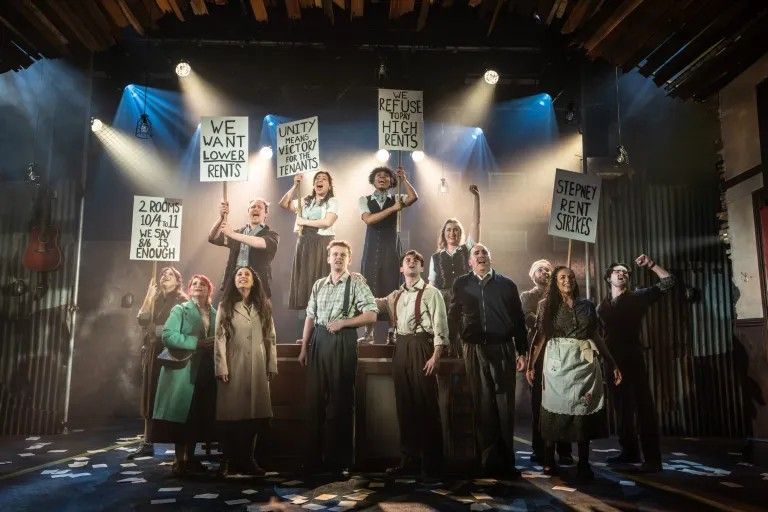
This energetic new musical – now in its third run and heading for Off Broadway next – centres round events in Cable Street in London’s East End in October 1936.

The depression was biting, Jobs were scarce. The community was a mix of Jews, Irish and other ancestries. And there was pressure to volunteer to fight in the Spanish Civil War. Enter Oswald Mosely and his black-shirted thugs more formally known as the British Union of Fascists (BUF) to stir up discontent and hatred. Of course immigration is blamed and used as a justification for violence, especially, against the Jews. It all sounds startlingly and hideously familiar to me. Only the details have changed in 90 years.

Alex Kanefsky’s book provides an effective framing device in the form of a modern day tourist tour led my Steven (Jex Unwin). He has a diary written by a man called Sammy (Isaac Gryn) who lived in Cable Street. He shares this with the group, especially with Oonagh (Debbie Chazen) who has come from America in search of her roots. The diary acts a flashback trigger. It’s neat plotting and there are some satisfying “Ooh!” moments at the end when it all links up.

A strong cast ensures that this story packs a powerful punch. Gryn’s Sammy is a very conflicted character. He is struggling with his orthodox Jewish family because he thinks they – especially his father (Unwin, again – talented actor) – have their heads buried in the sand. The contrast between the traditional Friday night at home with the aggression outside is well nuanced. And Ethan Pascal Peters, another accomplished multi-roler, evokes huge sympathy as the geeky, gentle younger brother always quoting scripture and planning to be a rabbi. But it’s not be … no spoilers because this is actually a fast-paced edge-of-your-seat drama.

Chazen excels in a whole range of roles from a feisty Metropolitan Police officer to an Irish mother, a Jewish mother and lots more. She is richly versatile and the speed at which these actors switch characters though slick exits and entries is very impressive. In two and three quarter the pace rarely flags although the second half could lose a quarter of an hour and cut to the chase more incisively.

Lizzy-Rose Esin-Kelly is another stage commander. Her character works in a baker’s and she’s a charismatic actor to watch. She sings beautifully too. And the ensemble, which includes everyone at times, works its socks off to good effect.

Tim Gilvin’s songs are a delightful blend of anguish, celebration, statement and humour and they drive the narrative rather than being, in any sense, bolted on. The rhythmic, menacing BUF anthem, for example is suitably sinister and when Unwin sings the simple, lyrical words “This too shall pass away” the sadness is palpable. And I loved the cynical “Read all about it” numbers in which four performers don billboards and represent the views of different newspapers in witty dance and patter.

One of the most impressive things in this show is Elizabeth Boyce on violin. She’s actually part of a five piece band along with impressive actor-muso Max Alexander-Taylor (guitar). Boyce is on stage much of the time, as an unobtrusive part of the action – playing continuo, adding dimension to songs from Irish-flavoured numbers in the pub to solo internal reflection. She makes the playing look enviably effortless and it sounds glorious.

There is a QR code in the programme to enable anyone who’s interested to hear the songs again. I think this has the potential to catch on in the way that Six or Les Miserables have, I hope so because it’s fine music and, my goodness, people need to think about these issues now before it’s too late.

Cable Street

Tim Gilvin (music and lyrics) and Alex Kanefsky (book)

Directed by Adam Lenson

Marylebone Theatre

16 January – 28 February

BOX OFFICE https://www.marylebonetheatre.com/productions/cable-street

First published by London Pub Theatres Magazinehttps://www.londonpubtheatres.com/https-www-marylebonetheatre-com-productions-cable-street

Cohen, Bernstein, Joni & Me – Upstairs at the Gatehouse

Cohen, Bernstein, Joni & Me continues at Upstairs at the Gatehouse, London until 1 February 2026.

Star rating: four stars ★ ★ ★ ★ ✩

This warmly engaging, autobiographical, one-woman story presents Deb Filler’s adventures as a wannabe singer. A complete stranger in the bar beforehand somehow clocked that I was reviewing and asked me incredulously whether she, Filler, really had met all those people in the title. I had to tell him that, at that stage, I didn’t know. The answer is that yes, she did – sort of. And those three unlikely encounters provide the piece with its structure.

She met Cohen, for example, when …


Read the rest of this review at Musical Theatre Review: https://musicaltheatrereview.com/cohen-bernstein-joni-me-upstairs-at-the-gatehouse/

REVIEW: SAFE HAVEN by Chris Bowers at Arcola Theatre until 7 February 2026

Susan Elkin • 20 January 2026

‘There’s a dramatic punch to this play which lingers quite a while after you leave the theatre.’ ★★★ ½

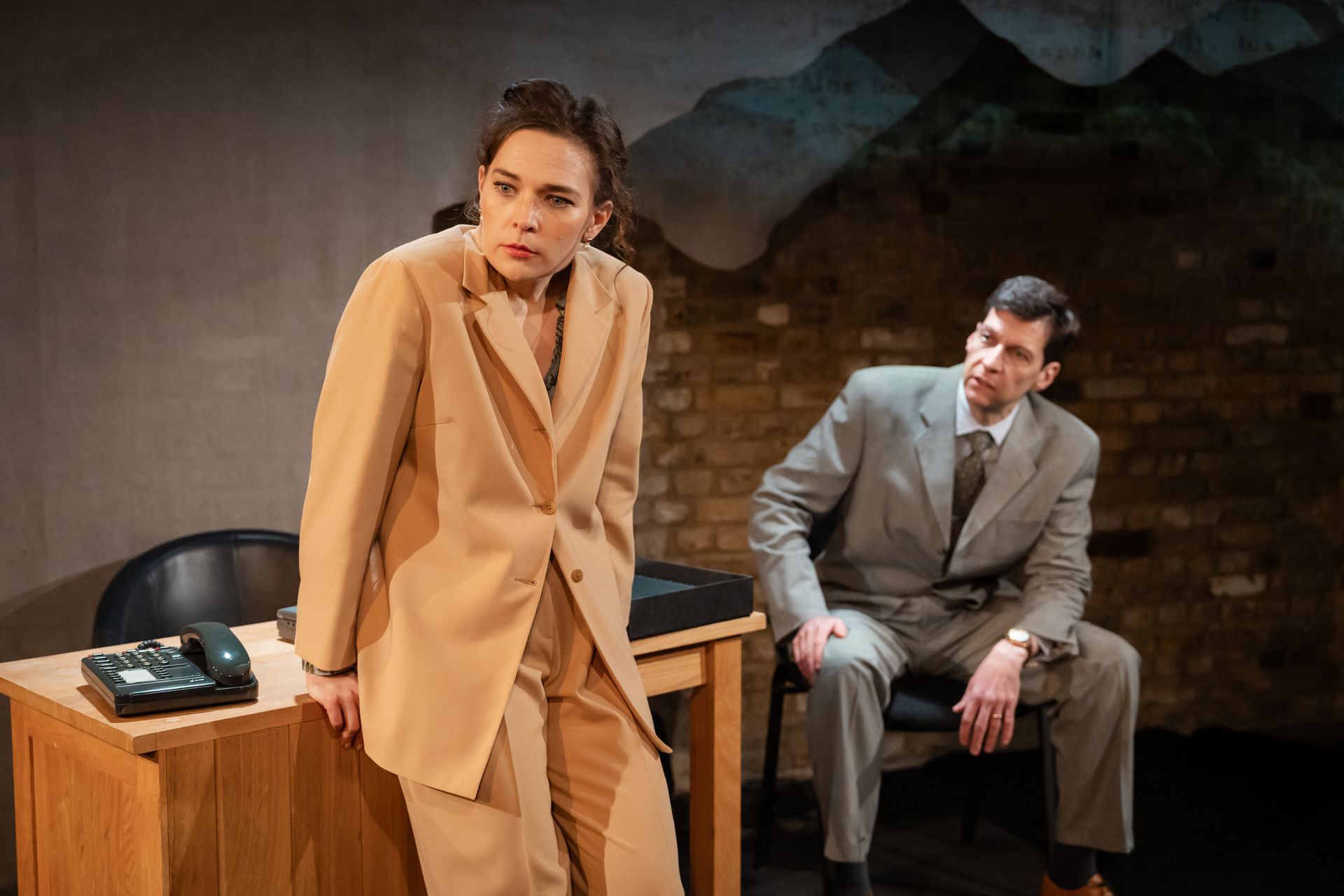
It’s 1990 and Saddam Hussain has just been driven out of Kuwait. Now he has turned his attention to the loathed Kurds – which results in one of modern history’s most ruthless genocides. The first few scenes in this play are wordily didactic as the playwright seeks ways of making it completely clear what is happening. After all there are people in the audience who aren’t old enough to remember these incidents although there were many Kurdish people there on press night. Perhaps the clumsiness in the script was unavoidable.

After a few minutes the six-hander play settles and proceeds to switch pretty seamlessly between scenes – predominantly a pregnant woman fleeing to the bitterly cold mountains in Iraq and diplomats in London working – against their own political constraints, and the Americans who have a different agenda – to find ways of saving the lives of the beleaguered Kurds. Also in the mix is a Kurdish doctor in London (Mazlum Gul – good) lobbying everyone he can get access to on behalf of his desperate compatriots at home.  The writer Chris Bowers has been a diplomat and a journalist in war zones. This is a world he knows and understands very well. The titular safe haven was the eventual terminology chosen because “enclave” was seen as provocative.

There is a startlingly convincing performance from Beth Burrows as Catherine, a passionate, right-thinking diplomat determined to make a difference. She speaks with her eyes and holds the audience from the start – the play opens with her in a quasi mini-monologue. Lisa Zahra is impressive too – doubling as forthright wife to Catherine’s boss and the warm kind woman who helps her friend on the mountain.

Director Mark Giesser makes imaginative use of the simplicity of Arcola’s Studio 2 rectangular space with seating on three sides. Loose curtain screens create two entrances and we readily believe that we’re in a Whitehall office, a home counties garden or homeless, cold and lonely in the inhospitable mountains of Iraq. Of course there are sound effects which add to this. Ali Taie’s sound design gives us everything from atmospheric folk music to connote Kurdish culture and the sound of war planes and machine gun fire.

There’s a dramatic punch to this play which lingers quite a while after you leave the theatre, not least because of statements in the script which relate to much of what’s happening now especially in the US – which Bowers may not have intended when he wrote it. Either way there were quite a few hollow chuckles from the audience on press night.

Safe Haven is a sobering narrative but it ends, thank goodness, with a moment of hope.

SAFE HAVEN by Chris Bowers, Directed by Mark Giesser

Arcola Theatre, Studio 2

14 January – 7 February 2026

BOX OFFICE https://www.arcolatheatre.com/event/safe-haven/

CAST: Eugenie Bouda as Najat, Beth Burrows as Catherine, Stephen Cavanagh as Brett/Reporter, Mazlum Gul as Dlawer/Al-Tikriti, Richard Lynson as Clive, and Lisa Zahra as Anne/Zeyra.

Photography: Ikin Yum

First published by London Pub Theatres Magazine: https://www.londonpubtheatres.com/review-safe-haven-by-chris-bowers-at-arcola-theatre-until-7-february-2026

REVIEW: Already Perfect at King’s Head Theatre until 15 February 2026

Susan Elkin • 16 January 2026

‘Richly layered’ ★★★★


Levi Kreis is a phenomenal talent and it’s quite something for London in general and Kings Head Theatre in particular, to premiere this. his new autobiographical show.


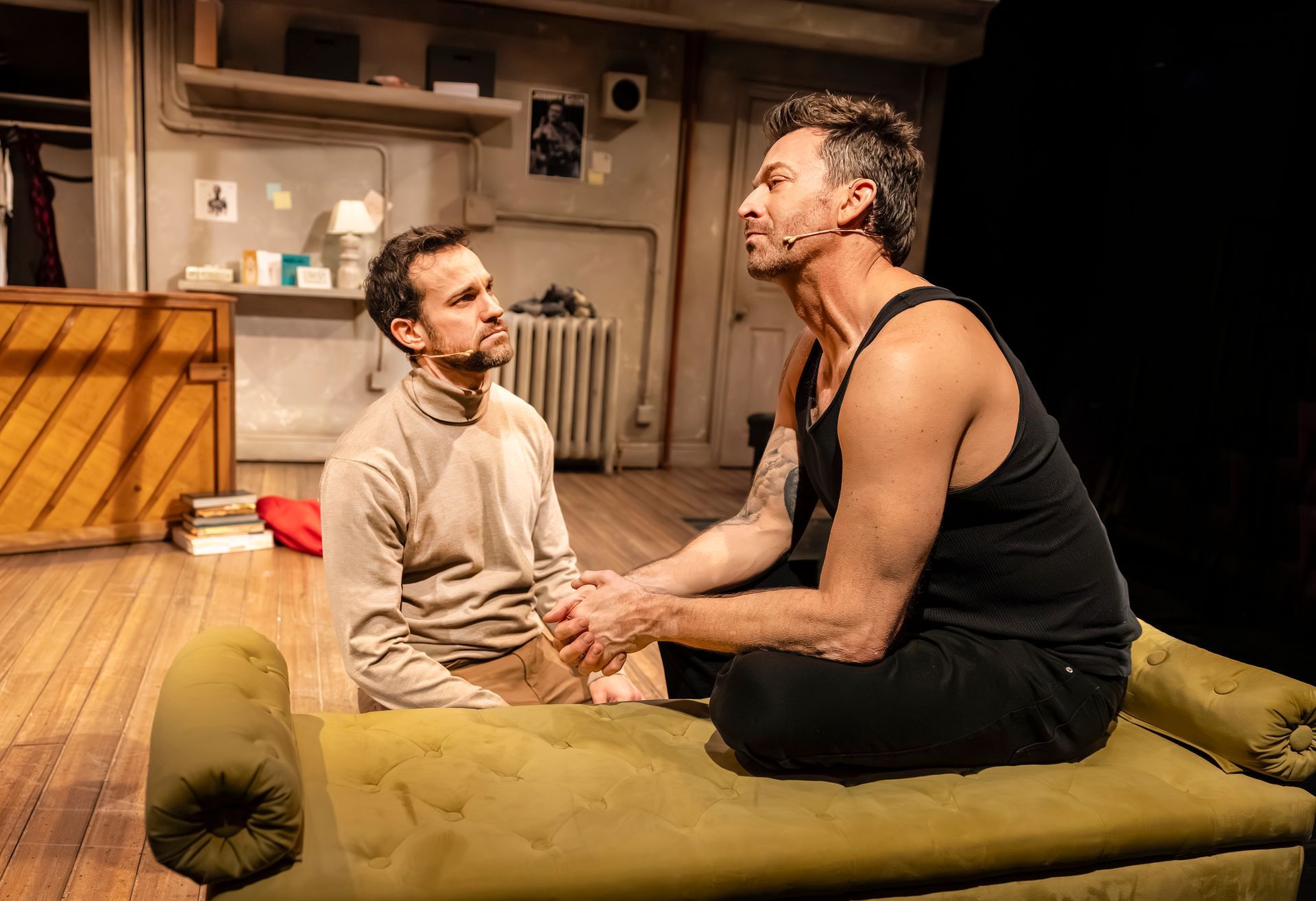
The Levi we meet (played by Kreis) is a successful, Tony award-winning performer with a background full of demons which have plagued him since childhood. He is gay and an evangelical church upbringing led to six years of conversion therapy and profound levels of despair and guilt. Always a misfit he was “too gay for the church and too church for the gays.” Aids is in the mix too. Today it’s curable, or at least manageable, and a bit of a non-event. When Levi was young it was very different.


The story telling is richly imaginative. We’re in the anguished Levi’s dressing room after a lacklustre matinee. Then his friend Ben (Yiftach “Iffy” Mizrahi) turns up and pressurises him into confronting his past, specifically his younger self when he was known as Matthew (Killian Thomas Lefevre). The three of them then act out scenes from Levi’s memories, summoning some rather jolly theatrical effects – bibles tossed down from the flies, sudden bright lights and more. “We’re in a theatre” says Ben, more than once.


Levi, reluctantly, describes his feelings and experiences in songs mostly at the onstage piano. Kries is an exceptionally gifted pianist and his singing voice is stunning with a wide range, impressive purity, faultless intonation and a wide range of gut-wrenching emotion.


There is also a three piece band on an upper level led by Matthew Antonio Perri. Sometimes visible and sometimes not, it adds other strands to the musical texture and accompanies numbers when Kreis is not playing. Mizrahi and Lefevre are both strong performers who sing pretty well. They are a nuanced, very responsive trio.


Because he struggles to face the truth of what actually happened. Levi repeatedly tries to tell his story differently. “You can’t rewrite the past” Ben, the voice of commonsense and kindness, keeps telling him. It’s a journey and when the final number declares “Nothing to prove, we’re already perfect” it feels as powerfully redemptive as it is moving.


This is a richly layered, satisfying show which deserves a long shelf life.


Photographer credit: Pamela Raith Photography


ALREADY PERFECT at King’s Head Theatre

16 January – 15 February

Book, music & lyrics Levi Kreis

Directed by David Solomon

King’s Head Theatre


Tickets are on sale now from www.kingsheadtheatre.com


CAST

Levi | Levi Kreis

Matthew | Killian Thomas Lefevre

Ben | Yiftach ‘Iffy’ Mizrahi

CREATIVES

Book, Music & Lyrics | Levi Kreis

Additional Book | Dave Solomon

Director | Dave Solomon

Music Supervisor, Arrangements & Orchestrations | Matthew Antonio Perri

Set Designer | Jason Ardizzone-West

Movement Director | Jennifer Rooney

Lighting Designer | Ian Scott

Costume Designer | Jason Antone

Sound Designer | Jessica Paz

Casting Director | Will Burton for Grindrod Burton


Associate Set Designer | Ellie Wintour

Associate Sound Designer | Andrew Johnson

Assistant Director/Script Supervisor | Alfred Taylor-Gaunt

Music Assistant | Amos Wong

Artwork Photography | Charlie Flint


Producer | Larry Lelli, Lelli-Pop Productions

Executive Producer and General Manager | Katy Lipson, Aria Entertainment

First published in London Pub Theatres Magazinehttps://www.londonpubtheatres.com/review-already-perfect-at-kings-head-theatre-until-15-february-2026

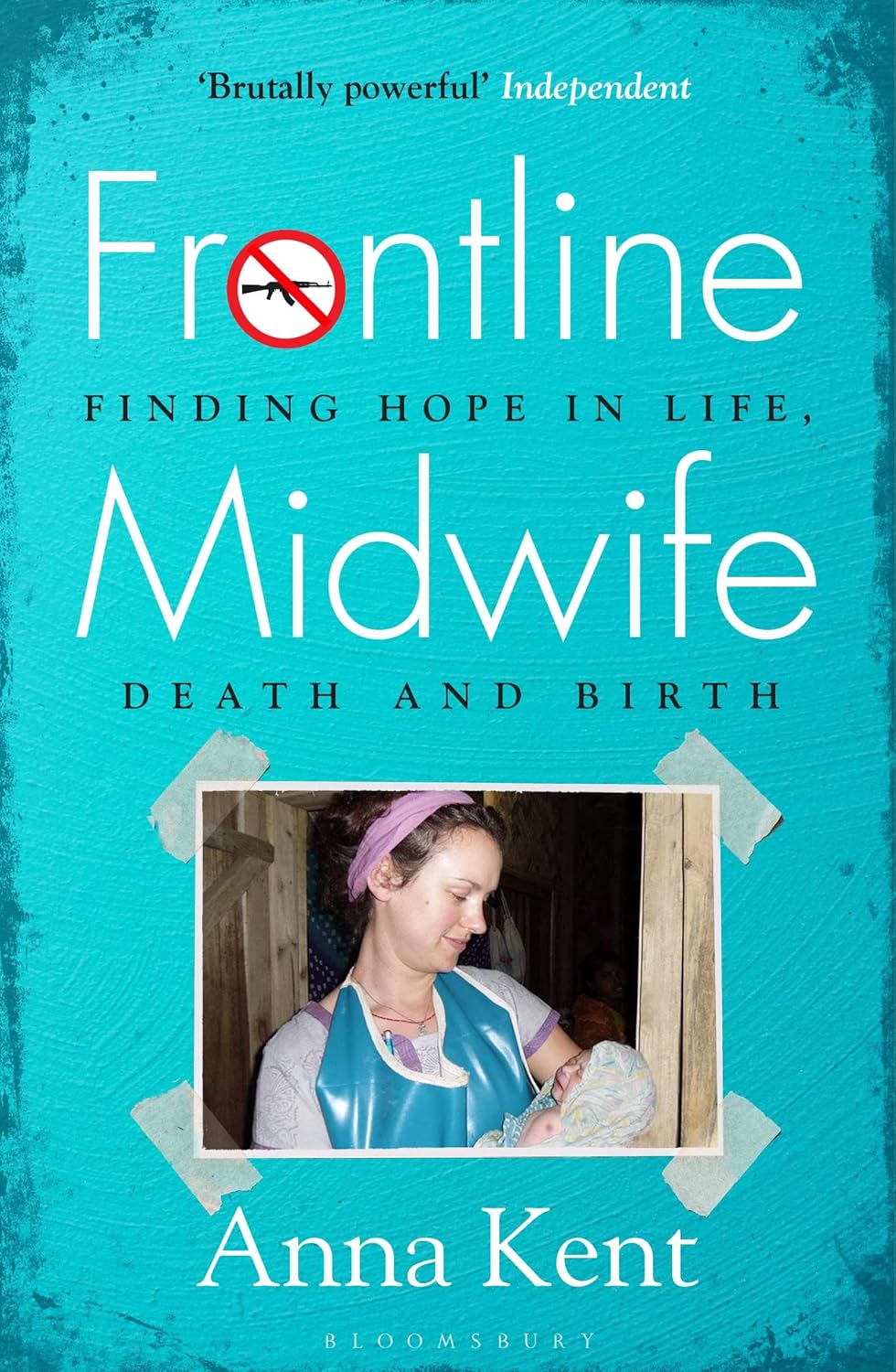
My second granddaughter (aka GD2) is a midwife in Cambridge. There she has access to spotless facilities, the latest technology and the extensive expertise of a big teaching hospital. “You should read this memoir, Granny,” she said to me soberly the other day. “It’s astonishing.” So I did.

Anna Kent, a qualified nurse, was uneasy working in the comfort of the UK and vaguely dissatisfied with her very promising relationship with an eminently likeable and decent man. Although she has grown up in a comfortable, loving, supportive home in Shropshire, there are incidents in her past which haunt her. It’s the early 2000s. So she volunteers with Médicins sans Frontières (MSF), is accepted and, eventually, after some training, sent to the war-torn country we now call South Sudan for a nine month placement.

What she finds there is almost unbearable and she is plunged in at the deep end – sleeping in a tent and dealing with tragic, desperately serious medical issues every day as people come from miles around to access the pretty basic MSF clinic. Despite having no midwifery training she has to deal with women in labour, pre-eclampsia, retained placentas, sepsis and other things which fill her with anxiety and horror although she is actually good at what she does.

The trouble is that Anna is not strong mentally and very quickly gets bogged down in what she regards as her own inadequacy despite the warm support of her fellow nurse, James who becomes a lifelong friend. James has a long history of issues in his life (alcohol, drugs, failed relationships) but has come through it all to become a wise, kind adviser – and a fine nurse, now a gently un-judgemental Buddhist with a sense of humour. Perhaps we all need someone like James in our lives to be the still, small voice of calm. Another nurse, Anita becomes a wonderful long-term quasi-sister too.

As the months go by, Anna, to whom sharing problems doesn’t come naturally, becomes ever more distanced from her life in the UK. Only the here and now seems real. The horror can be discussed only with those who have seen it with her. It doesn’t take an psychiatrist to spot PTSD – it’s what left millions of men who fought in World War One unable to talk about what they’d experienced other than to former comrades. War zones and frontlines come in many different forms.

Once back in the UK Anna, still beset by guilt, trains as a midwife and then goes  to Bangladesh with MSF to serve a huge refugee camp. Her accounts of the women she helps are very painful to read. And the ones she can’t help, obviously, are even more agonising. They haunt the reader as much as they do Anna. She’s a fine, graphic writer (she always wrote diaries) and her account of how, utterly terrified, she has to break up a dead baby to get it out of the poor woman’s body will stay with me for a very long time.

By the time she finally gets back to the UK her mental illness is severe and I couldn’t help wondering, despite all she achieves, whether she was ever actually cut out for field work. Her stress levels have made her physically ill and recourse to heavy drinking and smoking do nothing to help. Moreover, as a youngish woman, she craves for the “right” relationship (she details several failed ones) and children of her own. None of that goes well either although she does eventually find a settled life of sorts. And her daughter Aisha is, she says, the best thing which has ever happened to her. Not for nothing is the book subtitled: “My story of survival and keeping others safe.”

Published in 2023, this is one the most excoriatingly and powerfully truthful books I’ve ever read. Kent bravely and casually shares, in some detail, personal matters which most of us would hesitate to confide to our closest friends. Somehow, that simply adds to the authenticity. We believe every word she writes. And we are right to do so because she is no Raynor Winn. Her afterword carefully explains that she has changed details to disguise identity where necessary and that’s fine. Every writer of memoir (and I’ve done it so I know) has to do this. Moreover because she has, as far as possible, consulted  the people she writes about, there are of course, some who asked to be omitted and she has respected that.

As any reader knows, some books disappear from consciousness almost before you’ve reached the last page. Others get right under your skin and stay with you permanently. This is going to be one of those. So thank you, Jasmine, for alerting me to it.

Next week on Susan’s Bookshelves: Eleanor of Aquitaine by Alison Weir

 

Heath Quartet with Ben Goldscheider

Brighton Dome Corn Exchange

25 January 2026

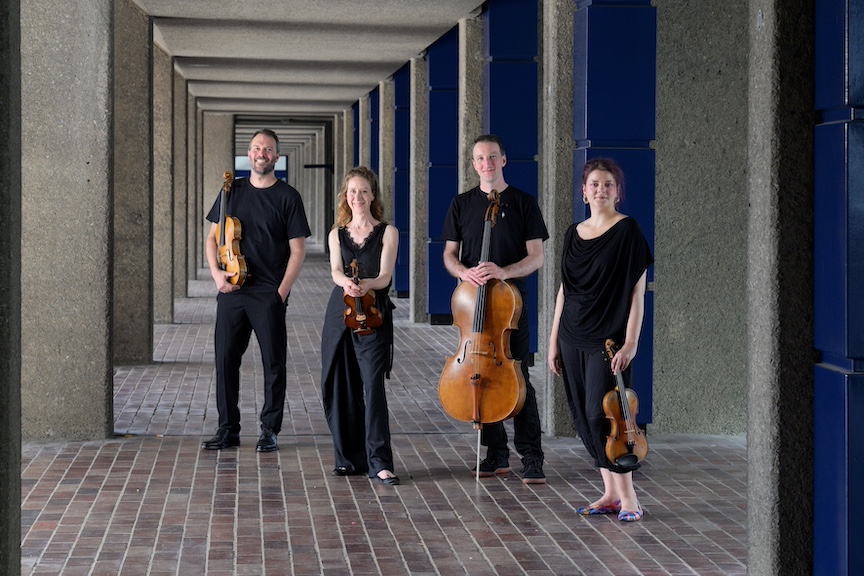
Co-produced by Strings Attached, which aims to promote Chamber Music in Brighton, this Sunday morning concert presented two mainstream delights and two which were almost certainly new to most of the audience.

We started with Mozart K 80, of which he wrote three sunny movements in Italy aged 14 and the final one three years later. The Heath Quartet stands to play (apart from cellist Christopher Murray who’s on a small dais). It allows them to work close together with a great deal of rhythmic body movement and eye contact and that, obviously, feeds into the sound quality. Highlights of this engaging performance were the quasi fugal entries, placed like conversation in the allegro and the grandiose mischief in the rondo right through to the Haydn-esque ending.

Then the quartet (different positions and in one case instrument) was joined by Ben Goldscheider for Mozart’s Horn Quintet K407. Although it’s fairly familiar this delightful work doesn’t get out anything like as much as the Clarinet Quinet, like which it requires two violas – and I have no idea why.  The horn blends beautifully with the strings – Mozart and Jospeh Leutgeb for whom he wrote it – knew what they were doing. In this performance we got a palpable rapport between performers and very elegant dynamics. The horn legato work in the andante was stunning and the virtuosic fast runs in the rondo spectacular.

Eleanor Alberga’s 2012 Shining Gates of Morpheus completed the first half of the concert and took us to a completely different sound world with powerful rhythms against muted horn. It’s a rather soporific piece but since Morpheus was the god of sleep that was presumably the plan.

After the interval came York Bowen’s 1927 Horn Quintet which is a lot more Elgar then Schoenberg. It was a neat inclusion as it allowed for another piece with Goldschieder. The first movement is marked “serioso” and there was a lot of that along with fierce concentration as the five players passed round and developed the declamatory opening statement. I admired the impressive control in the andante and in the incisive playing in the fugato section of the rondo.

Of course these people are professional players. In a sense, they are “merely” doing their job. But part of what makes the Heath Quartet unusually and charismatically appealing in performance  is that they seem genuinely to enjoy every note. And that makes their playing feel excitingly fresh.

This was my first visit to the Corn Exchange since renovation and when I first saw that vast performance area I was afraid that the acoustic might not work for a very small group at the front of it. Happily I need not have worried. It works well. However, I think the management should admit latecomers only at suitable breaks in the music, given the loudness of the banging doors and the creaking of the steps through the seating area.