Press ESC or click the X to close this window

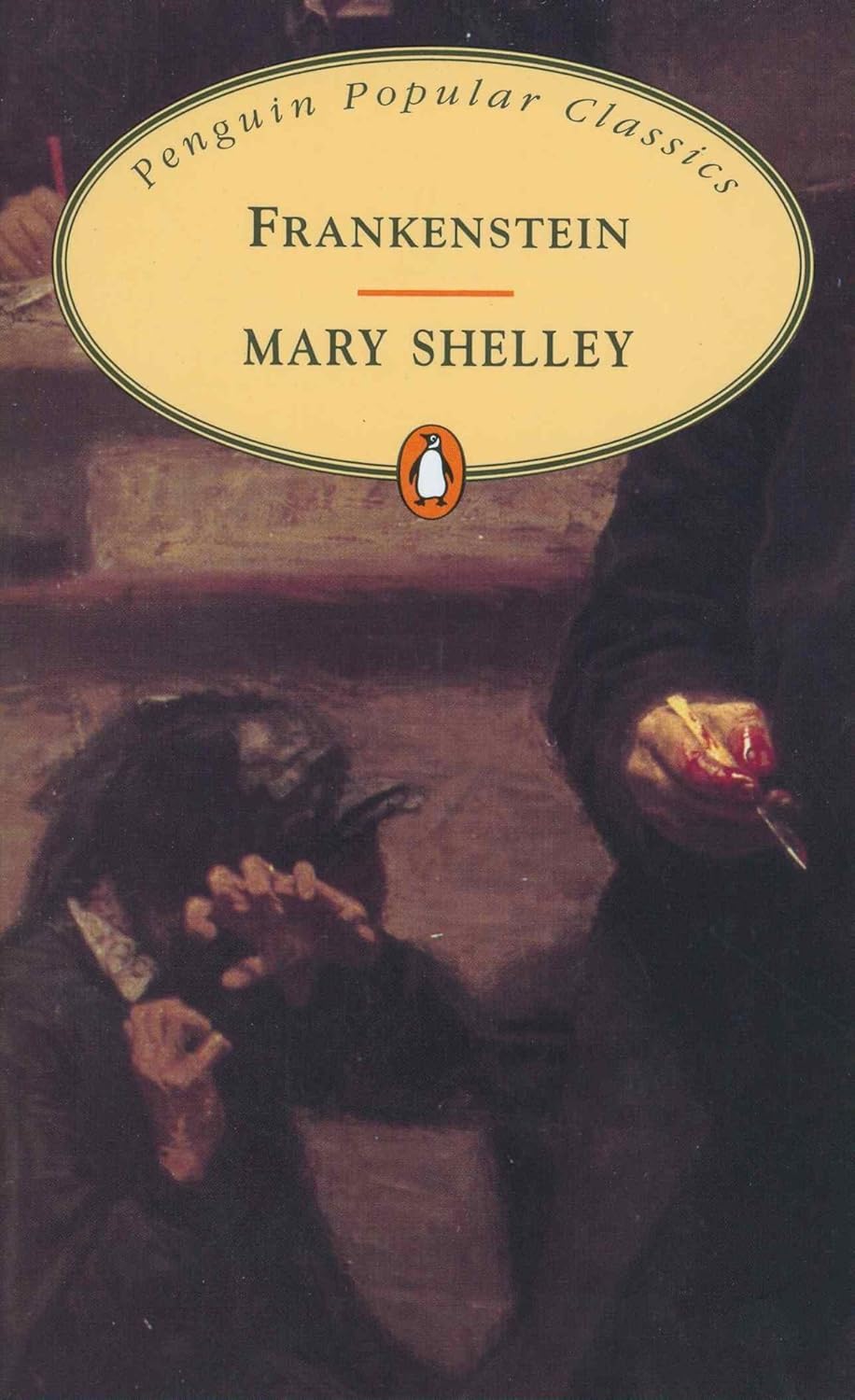
Susan’s Bookshelves: Moby Dick by Herman Melville

It’s a novel I’ve always strenuously avoided for personal reasons. I am ichthyophobic in general and galeophobic in particular. (I also own a good dictionary).  In short I don’t like – really don’t like –  anything alive bigger than my thumb moving darkly in water. I have no idea where this fear came from but it means, for example, that I couldn’t go into an aquarium or on a whale watching trip. I have to be careful about TV nature programmes too. Therefore, knowing that the titular Moby Dick is a white sperm whale has aways kept me well away from Herman Melville’s 1851 novel.

Then, earlier this month, I was invited to review a dramatisation of  Moby Dick (the jury seems to be out on whether he needs a hyphen so I’m omitting it) at Tower Theatre in Stoke Newington. Surely, I reasoned, they can’t do anything to distress me in a small triangular, fairly low-tech space?  So, I took courage in both hands and went. And it was a very pleasant, educative surprise. A richly imaginative piece of physical theatre, the adaptation by Paul Graves and director Angharad Ormond taught me that Moby Dick is not “about” whales. Rather it is a study of one man’s obsession and what we would now call “mental health issues”.

I enjoyed it as theatre, wasn’t remotely freaked out and, on the bus home, ordered a copy of the novel to read. Never let it be said that reading isn’t a lifelong journey or that my reading range isn’t eclectic.

Reading Moby Dick, though, is a pretty mixed experience. “Call me Ishmael” is one of those famous opening lines which everyone knows (cf Anna Karenina, Pride and Prejudice and Nineteen Eighty Four). I wonder why the narrator says it at all. Is it not his real name?

The opening chapters are quite promising as Ishmael meets the charismatic Queequeg who becomes his close friend and they sign up as crew on a Nantucket whaling ship. It’s owned by an entertaining pair of businessmen, captained by one Ahab and managed on a daily basis by a trio of “Mates” each of them nicely characterised. The tone is quite wittily sardonic in a Dickensian kind of way and once or twice I could feel the young Mark Twain reading this and, maybe, soaking up some of its wit.

Then, sadly, the rot sets in and it becomes ever more self-indulgently prolix. Melville finds literary name dropping irresistible and far too often wanders off into verbose backwaters. We really do not need, for example, a whole waffly chapter about the taxonomy of whales or a lengthy essay about the symbolism of whiteness in religion, culture, nature. Then there’s a digression into whales in art, a separate one on whales in literature, a whole chapter about rope making and so it goes on – and on. It runs for 684 pages. One waggish friend, a former university teacher of literature, said – when I told him what I was reading –  that it’s a novel which works (a bit) only if you read alternate chapters. No wonder it achieved very little success in Melville’s lifetime.

At one third in, I was on the point of giving up but then I had a long train journey to occupy so I ploughed determinedly on because it has plugged a gap in my literary experience and, as such, is quirkily interesting.

The casually “racist” language is jarring for a 21st century reader although Melville is simply using the standard vocabulary of his day when he has Ishmael refer to the diverse crew members as, for example “negro”, “savage”, “pagan”, “cannibal” and such like. In fact Ishmael shows a lot of respect for the skills of his fellow crew members and the sentiments are pretty even handed. And that’s noteworthy considering that this book was published the year before Harriet Beech Stowe’s Uncle Tom’s Cabin (a novel I’m now minded to reread) and over a decade before Abraham Lincoln’s Proclamation of Emancipation.

Moby Dick is a colourful travelogue. Ishmael and the Pequod sail all over the world. Moreover, Melville had experience of whaling boats so the depiction of life aboard such a ship feels very authentic. And he’s good on what it would actually have been like to be lowered in a small rowing boat in hostile seas. Then, at about the half-way point, there’s an utterly revolting, and presumably accurate, description of the killing of a sperm whale which made me deeply thankful that we no longer rely on these noble beasts for lamp oil, corsets, animal food and all the rest of it.

I remain puzzled though about why Melville’s 19th century sailors speak to each other in Elizabethan English saying things like: “thou wilt hold thy peace” and “if thou hast none of thine own”. And why, in a novel, does he give us stage directions in some chapters as if he were writing a play? It creaks as much as the Pequod does when there’s a storm in the offing.

Moby Dick is a quest story in the time-honoured tradition. In the end, Captain Ahab does find the white sperm whale he blames for the loss of his leg and there’s a dramatic confrontation.

My conclusion is that, unusually, this made a far better stage play than it is a novel because the dramatisation I enjoyed was able to evoke atmosphere, tell a story and (almost literally) cut to the chase without all that digressive verbiage.

In short, it’s not a novel I would actually recommend, other than as a curiosity, although I’m quite glad I have read it.

Next week on Susan’s Bookshelves: Liza of Lambeth by W.Somerset Maugham


I pounced on this in my local indie bookshop, Beckenham Books. Penguin have apparently launched an archive series of seventy titles. And whether it’s intentional or not, it harks back to Alan Lane’s original plan when he launched Penguin Books. They were meant to be small format editions which you could carry about. And Odour of Chrysanthemums fits easily into any of my handbag pockets. And as someone who never leaves the house without a book, that neatness is a bonus.

So why did I pick this one? Well of course I already have it in other books but I was attracted by the format.  Odour of Chrysanthemums is one of my favourite Lawrence short stories. It features in school anthologies (or it used to) so I’ve often studied it with students and therefore know it well. Elizabeth Bates, collier’s wife and mother of two, is anxious when her husband doesn’t come back from work although he’s a heavy drinker and may just be loitering in the pub.

Actually, of course, there has been an accident and Lawrence builds the tension until eventually fellow miners carry their workmate’s body home. I’ve read it many time but am still struck afresh by the way in which Lawrence presents the totality of the Bates marriage which wasn’t bringing either of them any satisfaction. The evocative language often arrests me so  that I have to reread and marvel at sentences such as “The pit-bank loomed up beyond the pond, flames like red sores licking up its ashy sides in the afternoon’s stagnant light” or, of Walter’s dead body, “Life with its smoky burning gone from him, had left him apart and utterly alien to her.” And in contrast to all of this is Elizabeth’s father, who drives the pit train past her cottage and stops to speak to her at the beginning of the story and her mother-in-law who helps to wash the body and is already coming to terms with Walter’s death in a way Elizabeth never will.  It’s masterly.

Also in this nice little book are three other stories. I thought I had read all of Lawrence’s short stories at some point or other but I have no memory of England My England or Things but enjoyed both here. The former is another story about marital disillusionment – a well-worn Laurentian theme. It presents a woman whose marriage is rooted in idealism rather than work so the family has to be propped up by her father. Then comes 1914 and he husband reluctantly signs up with inevitable consequences and the death of idealism. Things, in a way, covers similar ground as an American couple move to Europe, collect antiques and come to be dominated by them at the cost of all else.

The fourth story, The Rocking Horse Winner, is another dear old favourite. Paul is an anxious, sensitive child who senses his mother’s profligate spending habits and is haunted by voices in the house whispering “There must be more money”. In what is almost a ghost story – or certainly fiction suffused with surrealism – Paul finds an unlikely way of making a lot of money. But it’s a morality tale too. The more his mother has the more she “needs” and Paul’s voices get ever louder with, ultimately, tragic results.

Eclectic reading is what these blogs are all about and it’s a pleasure to dip into old favourites like these. I bet there are other Lawrence stories I’ve forgotten so it’s probably time to make rediscovering them into a project.

Next week on Susan’s Bookshelves: Moby Dick by Herman Melville

REVIEW: THE UNKILLABLE MIKE MALLOY by Luke Adamson at Bridge House Theatre, Penge 8 – 26 July 2025

Susan Elkin • 10 July 2025

‘Well acted but lacks spark’ ★★★

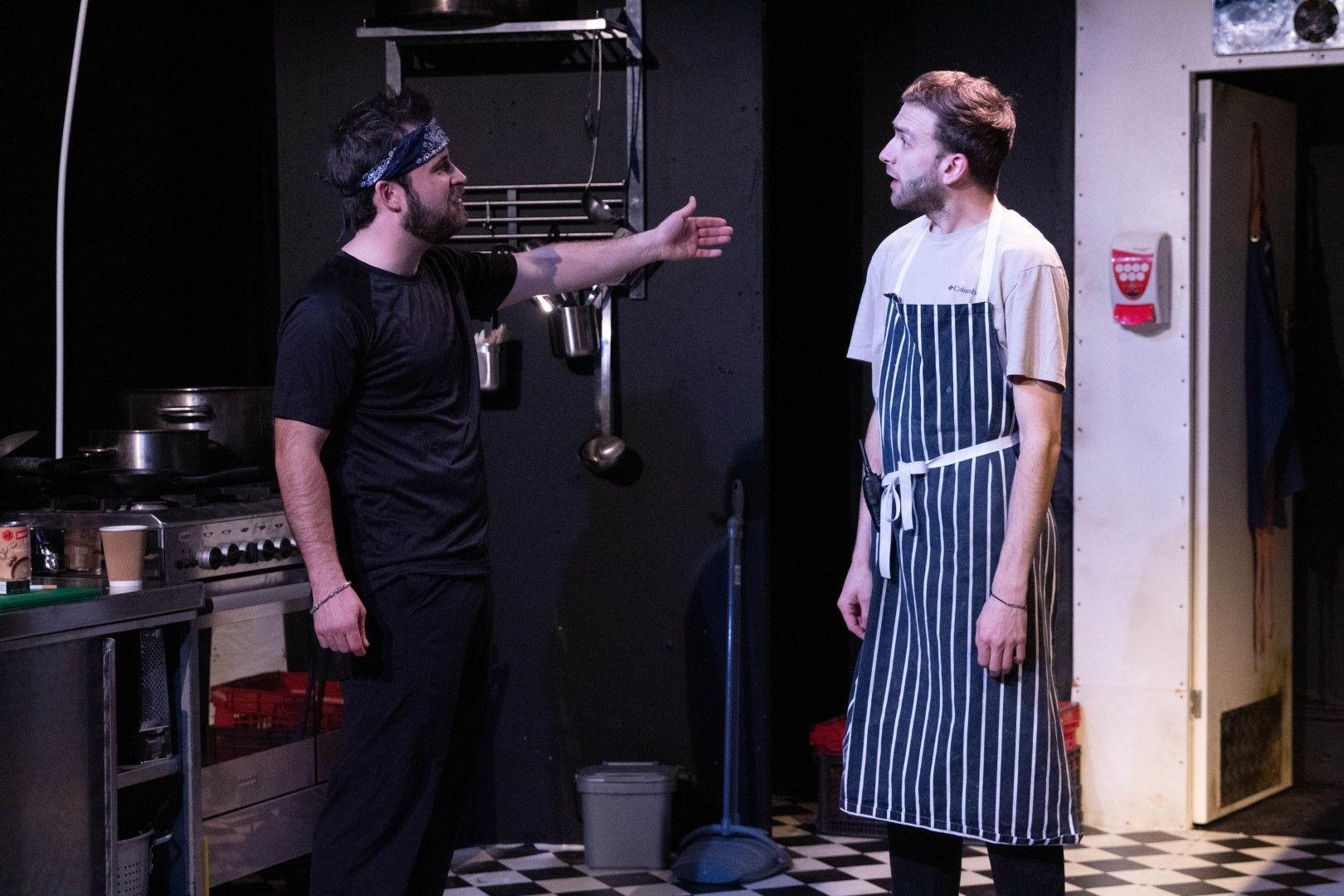
Based on a true story. this unlikely romp takes us to the Bronx during prohibition and the Depression. A group of very hard up people decide to kill a larger-than-life Irish drunk upon whom they have taken out insurance policies. The trouble is he won’t die. They try alcohol poisoning through excess whisky, methanol, contaminated oysters, exposure and hit and run – among other things but he goes on bouncing back. Of course eventually they get caught and the piece is framed by two of them writing their confession in a prison cell in the hope that honesty might get them clemency.

It’s a three hander and all three actors, two of whom do a lot of witty doubling, are strong. There is particularly pleasing work from Stefani Ariza who plays the boss of the speakeasy where most of the action happens – and many other roles. She is impressively versatile. Bryan Pilkington gives a colourful performance as Malloy – mostly drunk and singing Irish folk songs – and morphs into other characters convincingly. Will Croft as Francis Pasqua is the anchor man who speaks direct to the audience and is a satisfactory foil to the other two.

Dan Bottomley’s sound design creates atmosphere and the basic set device – a sort of counter which becomes a bench and car, among other things, is neatly contrived.

It’s a lighthearted piece which Adamson has clearly had fun writing. And it’s a commendably quirky idea for a play. The trouble is that it’s meant to be a comedy and, although it’s mildly entertaining, it really isn’t very funny. Moreover at 90 minutes straight through it’s too long for its subject matter.

Photography: Cam Harle

THE UNKILLABLE MIKE MALLOY

Written and directed by Luke Adamson

Bridge House Theatre, Penge 8 – 26 July 2025

BOX OFFICE

Cast

Will Croft

Stefani Ariza

Bryan Pilkington

Artistic Team

Director

Luke Adamson

Writer

Luke Adamson

Producer

The Bridge House Theatre. Executive Producers: Simon Jeal, John Handscombe, Ju Owens, David Owens, Ellie Ward, Graham Telford, Tim Connery

Lighting Designer

Luke Adamson

Sound Designer

Dan Bottomley

This review was first published by London Pub Theatres Magazine: https://www.londonpubtheatres.com/review-the-unkillable-mike-malloy-by-luke-adamson-at-bridge-house-theatre-penge-8-26-july-2025

REVIEW: NOUGHTS AND CROSSES at Regent’s Park Open Air Theatre 28 June – 26 July 2025

Susan Elkin • 9 July 2025

‘Passionate and gripping but over-egged’ ★★★

Malorie Blackman’s passionate young adult novel, Noughts and Crosses (2001) presents a what-if world in which white people (Noughts) are marginalised in a casually black supremacist environment, ruled by the Crosses. Within that framework she presents a version of the Romeo and Juliet story. It’s desperately uncomfortable reading for a white person as it forces you to reverse your preconceptions in almost every line because you constantly have to remind yourself who these people are and which “side” they’re on. It’s a novel which bravely tackles the fundamentals of racism.

The problem with dramatising it is that it’s visually obvious who is black and who is white so three quarters of the work is done for you and that lessens the impact and the work the “receiver” has to do. I thought this when I first saw this Dominic Cooke version when the RSC staged it in Stratford in 2007 before touring it in 2008. The same applied to the 2020 BBC TV serial. And it remains true for this open air theatre staging.

The other issue is that this was originally targeted at young people around 12-16 and that’s fine, obviously. As an English teacher, I discussed it with many classes and the students found it intensely powerful.  It means, though, that the message is so didactically rammed home on stage that it feels a bit clunky and shallow for an adult audience.  Painful jokes such as the word “whitemail” (rather than blackmail) and the poor white girl who can only get a black sticking plaster when her forehead is cut by the thrown stone, seem laboured.

Nonetheless there’s plenty to admire in this production which mostly grips although  the second half is too long. Corrina Brown as Sephy, the chirpy Cross daughter of the authoritarian deputy prime minister is attractively childlike at the start and develops her character convincingly to a mature, decisive 20 year old beset by tragedy but with very tangible hope for the future (no spoilers). Noah Valentine, who has very little stage experience, brings pleasing freshness to the troubled, marginalised, hurt and ultimately angry Callum – a Nought with complex torn loyalties who eventually becomes a member of a political terrorist movement. Behind them, as in Shakespeare, are two families with many problems and a firm reminder that wealth and privilege do not equate to happiness. Among the supporting cast there’s a fine performance from  Kate Kordel as Callum’s anguished mother, Meggie, and Jessica Layde gets Sephy’s dismissive but ultimately caring sister Minerva nicely.

Director Tinuke Craig makes imaginative use of Colin Richmond’s set – all concrete walkways and lurking places on three levels. The bomb in the shopping centre is pretty effective: cue for an awful lot of smelly stage smoke. And there’s an immaculately directed, “tasteful” sex scene – I presume school parties are expected and even the most prudish teacher or parent would find nothing to object to here.

NOUGHTS AND CROSSES Based on the novel by Malorie Blackman, Adapted by Dominic Cooke

Directed by Tinuke Craig

Regent’s Park Open Air Theatre

28 June – 26 July 2025

This review was first published by London Pub Theatres Magazine https://www.londonpubtheatres.com/review-noughts-and-crosses-at-regents-park-open-air-theatre-28-june-26-july-2025

Sarah Vine married a fellow journalist, Michael Gove. Then he became a politician and she was plunged into a role which she had certainly not signed up for. She did her utmost to be a loyal political wife but tells us in her witty, self-deprecating way that she had no talent for it. The couple are now divorced. Her candour is heart warming

It goes almost without saying that the book is a beautifully written memoir. Vine is, after all, a lifelong journalist and a Daily Mail star columnist. She knows how to hold her reader. She says herself that writing is the only thing she’s ever been any good at although she also comes across as a wonderful mother, friend and time juggler.

Brought up in Italy by rackety British parents and a father who put her down ruthlessly and constantly, Vine met Gove when she was in her early thirties and they were both working at The Times. Having been adopted in babyhood by an Aberdeen fisherman and his wife, Gove does not have an “entitled” background any more than she does. She is ever conscious of this even as they become close friends with “Dave” and “Sam” Cameron who come from a very different social sphere. Gove gets a safe seat and the Conservatives are elected.

The fly in the ointment – as the brilliantly clever Gove becomes ever more tied up in his Education secretary role and then becomes Justice Secretary –  is the referendum and Brexit. Gove has always been anti-European and, aligns himself prominently with the Leavers.  Vine is very interesting about how, for a long time, this was almost a casual, intellectual, amicable, hypothetical difference of opinion. At dinner parties there were often people of all persuasions amiably chatting together without acrimony. Then in June 2016, to everyone’s astonishment Leave beat Remain by a substantial majority. Suddenly everything was toxic.

Vine believes that Cameron scuppered the future of Brexit by resigning although she doesn’t say much about how how deliberate she thinks this was this. What would have happened, she speculates, if he had calmly summoned Gove and Johnson and said: “You won. Didn’t see that coming. Now what’s the plan?” That, she implies, would have been the grown up, rational thing to do. Instead we got Theresa May, failing dismally to “get Brexit done” with all the fall-out that caused and is still causing.

However, this is not a political memoir. It’s a rueful, sometimes sad, very personal account of one women who was stuck in the middle of it all despite not really wanting to be there. She is still grieving for the loss of what she thought was a lifelong friendship with Samantha Cameron. She is godmother to Florence Cameron from whom she is now estranged. She was sure that the bond between the two families, whose children grew up together, was stronger than disagreements about trade deals. Alas, as she comments sadly, there is no such thing as friendship in politics.

Throughout this account, Vine discusses their memories with her children, Bea and Will who are now young adults. She also talks to Gove. I know several divorced couples who’ve established a post-divorce rapport and say that they have better conversations now than they ever did when they were married – which is what Vine says too. She also says ruefully, more than once, that Brexit destroyed her marriage – and a number of other marriages. And of course, since she grew up in Italy and has a brother in Spain, her own personal views about the EU  are – she now admits – much less cut and dried than her ex-husbands were/are,

Probably the most horrifying thing is this book are revelations about the difficulties of being a family in the limelight when you’re cast as pariahs. Appalling incidents include a hateful encounter in New York when a holidaying British couple spotted the Gove family in the street and hurled abuse and foul language at them. And how dare teachers (I used to be one so I feel strongly about this) tease or pester pupils about the actions of their parents? But some of them did. At one point her son Will is bottling so much pent-up fury that he loses his temper with a computer game and has an argument with a plate glass door which leads to serious cuts, A&E and many stitches.

And throughout all this, Vine, by her own account just wants to go to work and do what she likes doing – despite health issues (thyroid) which she makes light of.

You don’t need to be aligned to any particular political party or to admire Michael Gove’s decisions and standpoints, or for that matter to like Vine’s Daily Mail columns, to be moved by this blisteringly honest, and very compelling, book.

Next week on Susan’s Bookshelves: Odour of Crysanthemums by DH Lawrence

Moby Dick – Tower Theatre, London

Reviewer: Susan Elkin

Writer: Herman Melville

Adaptors: Paul Graves and Angharad Ormond

Director: Angharad Ormond

Community theatre at its very best, this vibrant show would grace any theatre anywhere. It bubbles with energy and imaginatively evoked passion.

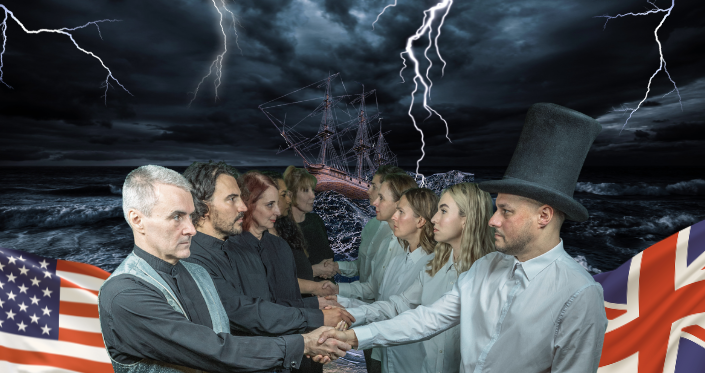
Herman Melville’s famous 1851 novel presents Ishmael (Tony Sears – compelling) signing up to sail from Nantucket on a whaling ship. Captain Ahab (Nick Hall – good) is on a personal mission to avenge himself on a particularly vicious whale, named  Moby Dick because he blames this animal for biting off his leg. Actually, of course, there’s a lot of metaphor here because in real life, whales are neither aggressive nor vengeful, and the calm, informative voice of David Attenborough at the beginning reminds us of this while the cast stands impassive behind a gauzy screen.

Authoritarian Ahab is fighting demons of his own, and this production stresses that he has a wife, “widowed when I married her”, and child at home. In modern parlance, he has mental health problems.

The delightfully clear storytelling makes rich use of imaginative physical theatre. When Ahab is beset by inner terrors, the white clad, heavily made-up female ensemble surrounds him menacingly to the sound of discombobulating violin and flute glissandi. As a whale is killed, the ensemble gasps, wilts and gradually falls to the floor, flooded with red light (excellent lighting design by Samuel Littley). Then one of the ensemble is suspended to represent a dead whale. It’s both ingenious and effective, and the whale bone crinoline frames worn most of the time by these women make a thoughtful statement. And how – in live theatre – do you create another ship coming alongside? The solution is neat, physical and convincing.

The set consists mostly of six big yellow oil drums, which, when turned to the audience, spell the ship’s name PEQUOD. It’s a versatile device. These drums are rolled about to suggest rough seas and inner torment. They are also used as acoustic drums in several different ways and, at one point, one becomes a blacksmith’s furnace for the fashioning of ever stronger harpoons.

Integrated into the piece is Colin Guthrie’s rather marvellous and near-continuous music. Led by Guthrie on accordion, it is played by seven actor-musos. It ranges from muscular sea shanties to folksy dance music to classical allusions and organ music for a quasi-funeral funeral, along with musical sound effects to connote disquiet or despair. It’s a rich score with some exceptionally impressive work from Kate Conway on violin, who rarely leaves the stage with her ethereal high notes, fine timing and evocative melodies. The piece also includes some strong whole-cast singing, especially when it starts from a solo and builds to full choral unaccompanied part singing at the end.

Best headphones deals

It’s a strong cast too, with particularly moving performances from Femi Davies as Ishmael’s charismatic friend and from Mayank Adlakha as Pip, the young crewman who is initially excited to be on board but gradually despairs – and suffers. Many minor characters emerge from the ensemble, and that’s done with witty aplomb and much skill.

It’s a pity this production uses brown, smelly, cough-inducing stage smoke instead of the usual dry ice, but it’s a minor gripe. Overall, this show is outstanding.

Runs until 6 July 2025

The Reviews Hub Score

Visceral, vibrant, adventurous

Marie and Rosetta

George Brant

Directed by Monique Touko

Minerva Theatre, Chichester


Star rating: 4


Sister Rosetta Tharpe (1915-1973) was an extraordinary guitarist, singer and performer who broke the barriers between gospel and secular music and effectively invented rock and roll. As a black southern woman on tour, she had to eat what the white coach driver brought her because she wasn’t allowed in the restaurants. She had a high profile career and influenced Johnny Cash,  Elvis Presley and Jimmy Hendrix among others. Yet she is largely forgotten today.

George Brant’s two hander play seeks to rectify that. We’re in a funeral parlour where Rosetta (Beverley Knight) has just met talented younger singer Marie Knight (Ntombizodwa Ndlovu) and wants to work with her, Marie is doing Rosetta’s make up as the back story gradually emerges and time moves on. Eventually it becomes clear why they’re where they are.

Both actors are superb. Knight gives a bravura performance as the brittle, sassy, witty but vulnerable Rosetta – moving round the circular stage with her usual elastic fluidity and, of course, she sings as if these numbers were written for her. Ndlovu is younger and less well known but, my goodness, what a voice! When she sings “Were You There” she has every member of the audience hanging on every note. And she develops her character’s voyage of self discovery beautifully. There is real chemistry between these two actors as Rosetta encourages Marie and brings her on. It’s often funny but there’s tragedy there too.

The third star in this show is guitarist and musical director Shirley Tetteh who plays some fabulous guitar sequences to represent Rosetta’s virtuosity. She works from a stage left recess and at one point comes centre stage. The other three band members (all black and female – appropriately) do a fine job from a recess opposite Tetteh and two spots on an over-stage mezzanine. And the sound is terrifc.

Marie and Rosetta is a play with songs –  a lot of them because Rosetta and Marie are rehearsing – rather than a musical as such. It’s intensely vibrant and interestingly informative. The southern accents are very heavy (voice and dialect coach Joel Trill) and take a few minutes to tune into but they’re convincingly authentic.

Marie and Rosetta premiered in New York City in 2016. This revival is a co production with Rose Theatre, Kingston (where it had a run in May) English Touring Theatre and Chichester Festival Theatre.

Assassins

Stephen Sondheim

Book by John Wiedman

Directed by Bruce Guthrie

Royal Academy Musical Theatre


If you assassinate an American president, you change the world and will always be remembered. We’ve all heard of John Wilkes Booth and Lee Harvey Oswald. And look at Brutus – it’s over two thousand years since he murdered Julius Caesar but his fame lives on.

It all depends how much fame matters to you. Dating from 1990, and not one of Sondheim’s best known shows, Assassins wittily explores the concept of fame through the stories of nine assassins – four who succeeded in killing American presidents and five who failed. It’s clever, poignant and thrusting as you’d expect from Sondheim who, in this show, includes a couple of music-free episodes although there’s also a great deal of his trademark text set to music which runs impeccably with the rhythms.

This revival is flamboyantly staged and energetically choreographed (Ben Hartley) with a fine cast  of sixteen. Two casts do two performances each so a total of 32 students are involved. At the performance I saw, Issac Wray shone as Samuel Byck, Matthew Arnold excelled as Charles Guiteau and Jelani Munroe commanded the stage both as Balladeer and then as Lee Harvey Oswald in a wonderfully done, almost-Biblical temptation scene. And we get a splendid theatrical tour de force when he finally pulls the trigger – noise, projected headlines, balloons, light and smoke as the world changes, in an instant, forever.

This is a richly talented company, all of whom, have strong careers ahead of them if that’s what they go on wanting. Also doing a fine job, as usual, is the Musical Theatre Orchestra in the pit delivering all those cross rhythms and timing the entries when the music cuts across speech.

Before the show, I spoke briefly in the RAM café to a couple who were about my age. We chuckled about the all-bases-covered trigger warning in the programme: “sexual violence, violence including guns and gunshots, death, suicide, self-harm, strong language and flashing lights”. We septugenarians reckoned we had seen and heard it all before and could cope. Joking apart though, it quickly became mildly irritating that the students in the audience – keen to support their friends – tittered every time anyone on stage said “fuck”. Time for a bit of growing up?