Press ESC or click the X to close this window

Fanny and Stella (Susan Elkin reviews)

Fanny And Stella
Book and Lyrics by Glenn Chandler, Music by Charles Miller. Produced by Peter Bull for LAMBCO Productions.
society/company: West End & Fringe (directory)
performance date: 11 Aug 2020
venue: The Garden Theatre at The Eagle, 349 Kennington Lane, London SE11 5QY
reviewer/s: Susan Elkin (Sardines review)

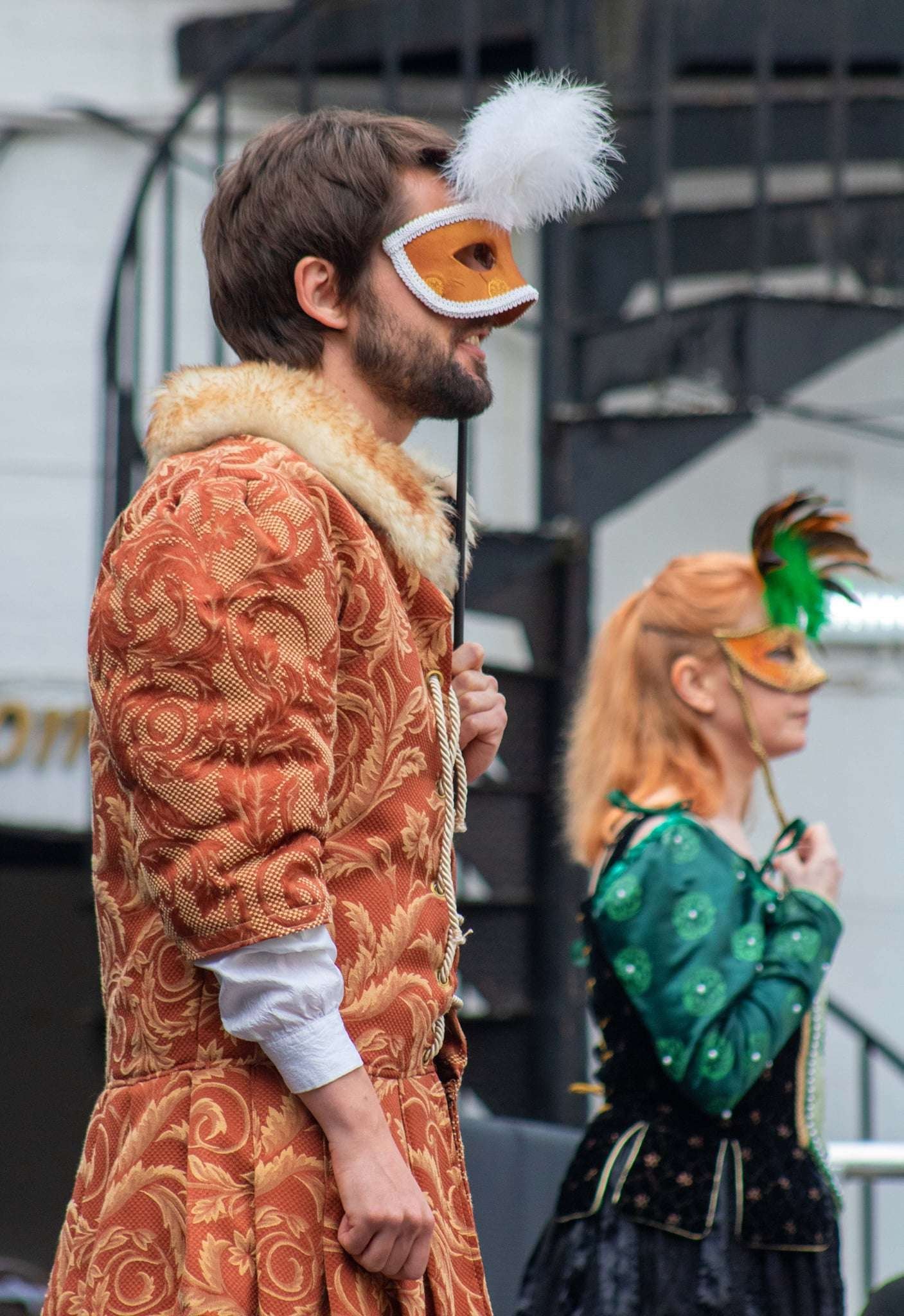
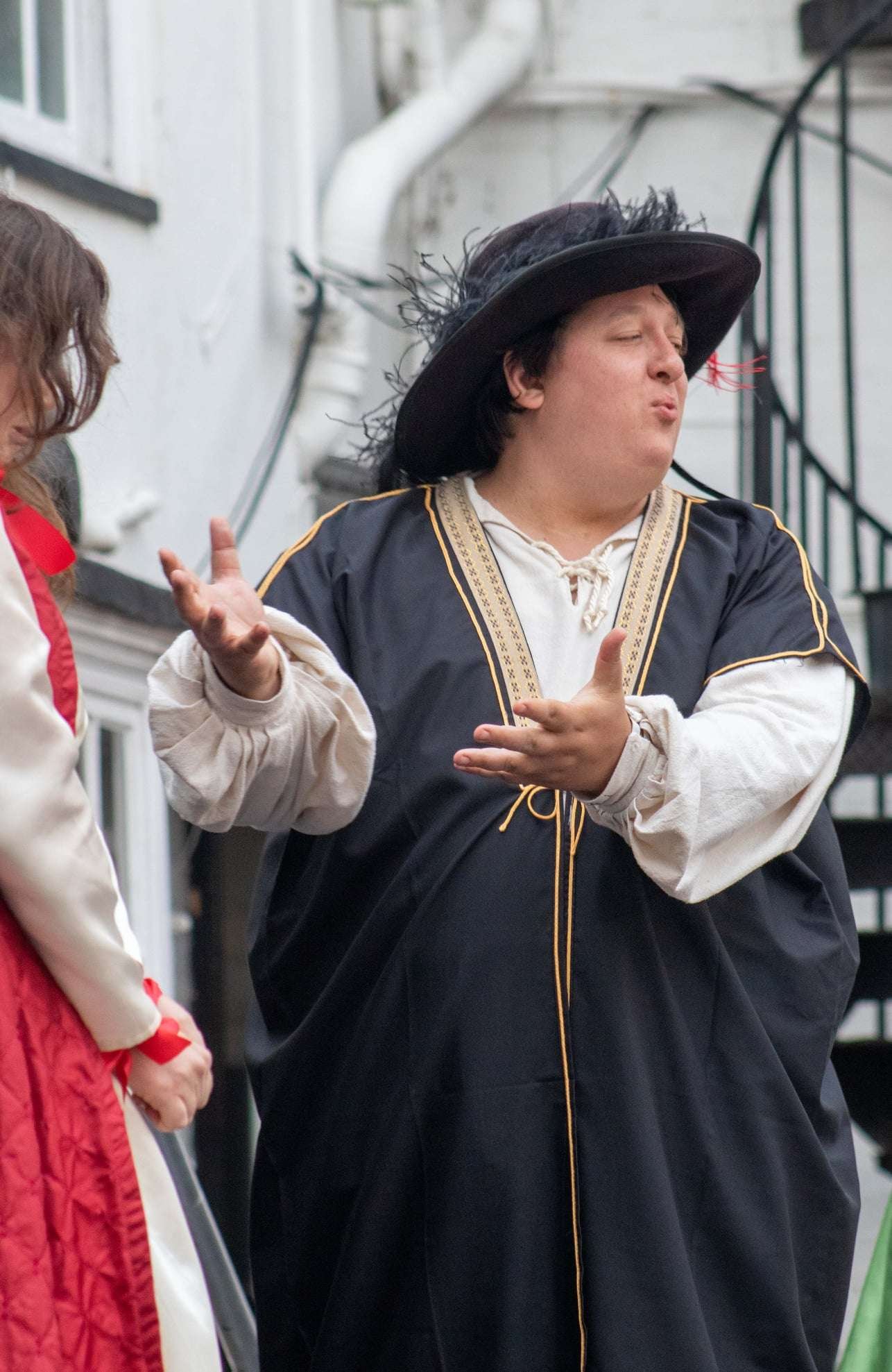
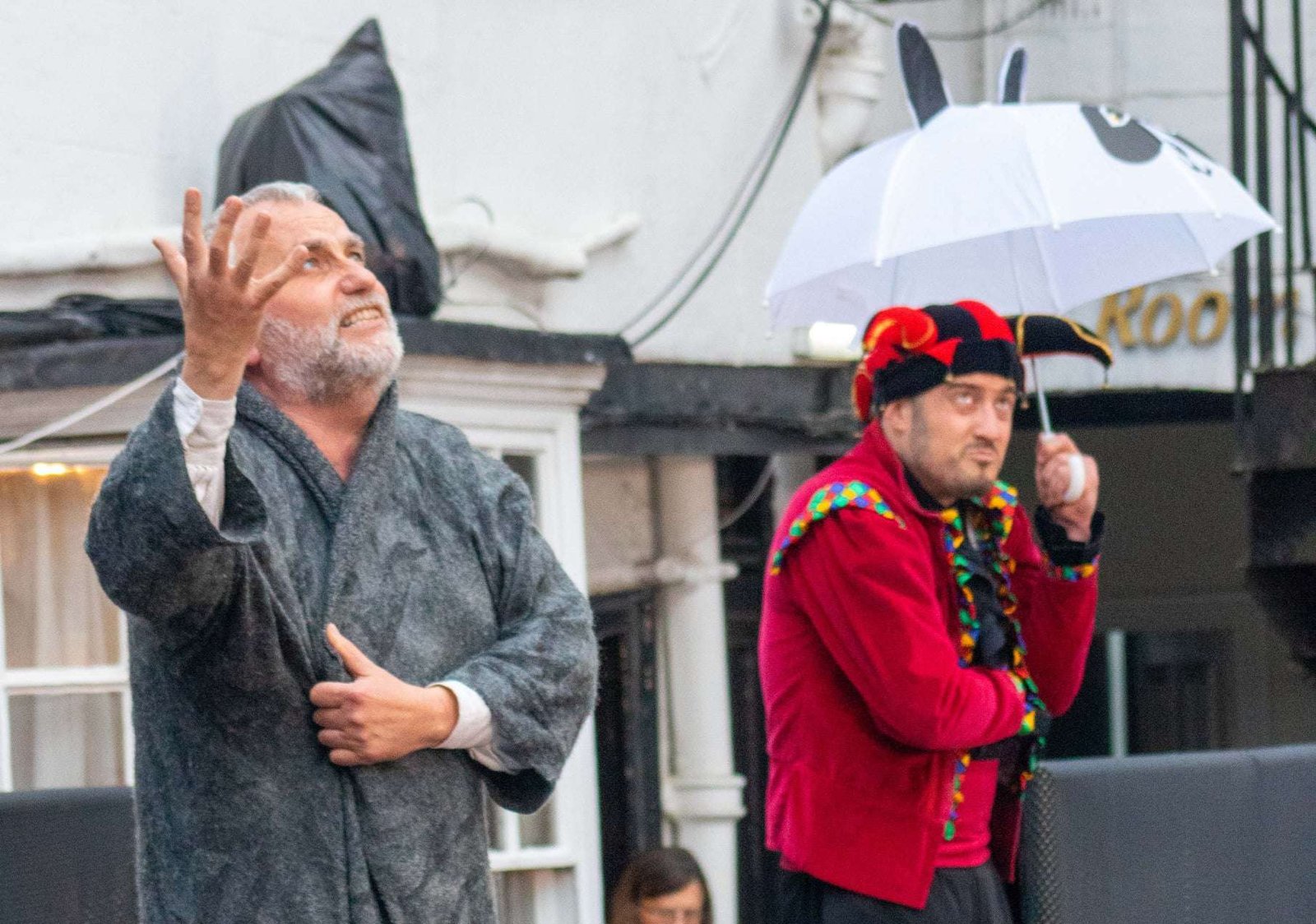
Fanny and Stella. The company. Photo: Alex Hinson

⭐⭐⭐

This is a show – about two, real life, Nineteenth Century gay cross-dressers – which resonates. They have been acquitted of indecency offences and now, as actors, take their show on the road to tell their story. Cue for some nifty and versatile role playing among the accomplished cast of six. Even today many people will recognise and identify with some of the serious issues it lightheartedly raises.

And the press night I went to was a pretty special occasion because for most of the threatre-starved critics in attendance this was the first live show they’d seen for five months. There was a great sense of joy in the atmosphere even before we were ‘safely’ escorted out to the Eagle’s newly reburbished garden. I for one, was thrilled and charmed, even to be in the same space as performance after such a long deprivation.

Jed Berry as Stella and Kane Verrall as Fanny spark well off each other – each character sometimes troubled but also being shamelessly outrageous. Mark Pearce is good value as Mr Grimes (a role he is reprising from a previous production) gamely becoming whatever character he’s required to. Glenn Chandler’s book and lyrics are spiky fun with lots of double entendres.

Charles Miller’s music is spot on for the 1870s with echoes of Arthur Sullivan and music hall. And it sets off the words which are sung with impeccable clarity by this well directed (Steven Dexter) cast. ‘Sodomy on the Strand’ is a fine, catchy song but maybe not one you’d want your child to pick up and sing at school. This is definitely an adult show. All the musical accompaniment is provided by Aaron Clingham, playing keys in a face mask at the back of the playing area. And Nick Winston’s musical staging provides some compelling dance routines complete with smouldering looks and sexy shivers.

Saucy and ribald as it often is, this production of Fanny and Stella also has a quality of innocence about it and the end with its line about surely not having to wait another hundred years for tolerance and acceptance is ruefully moving. Generally though, The campness is delicious and by golly, it was good to be back in a theatre space.

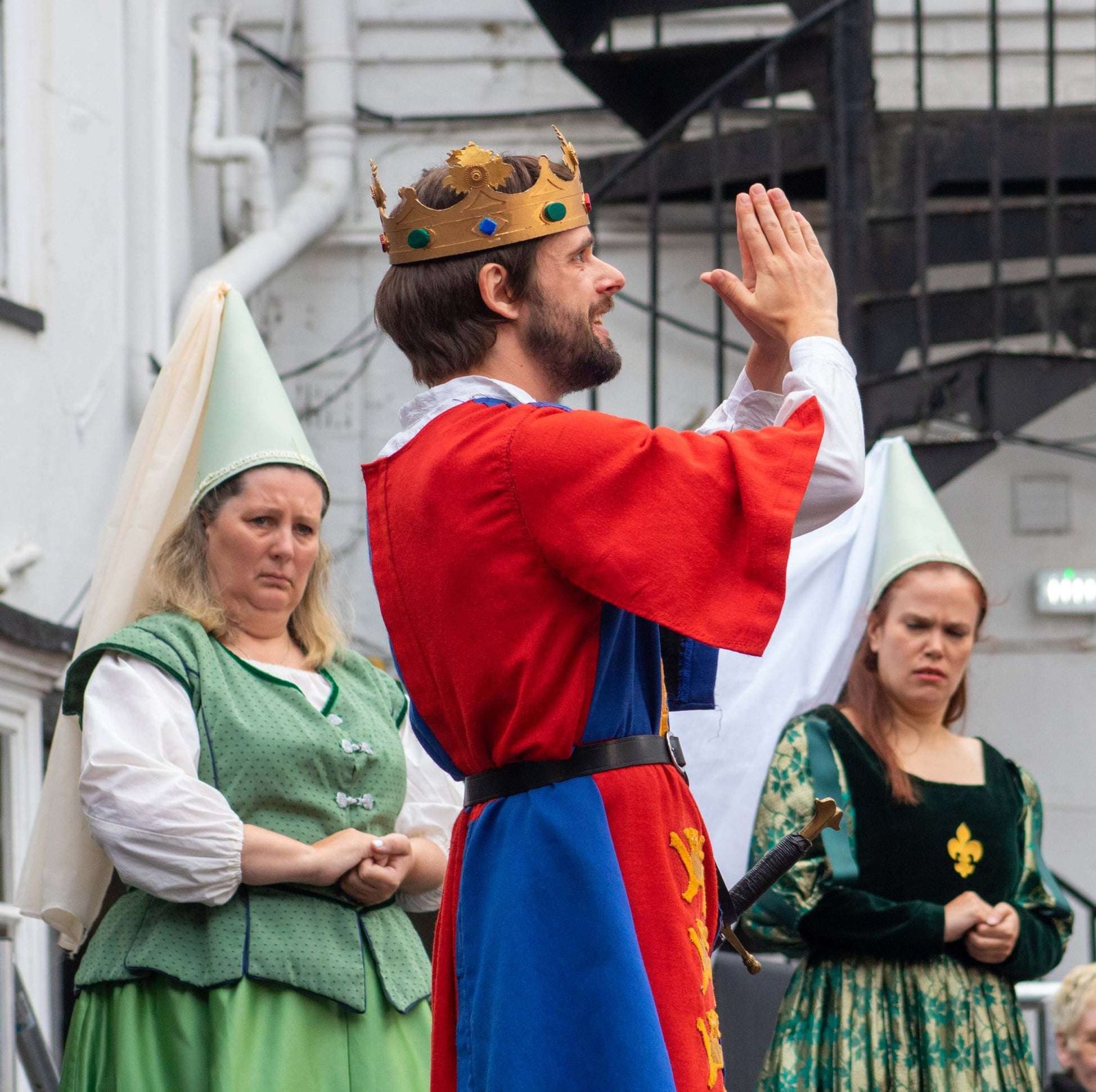
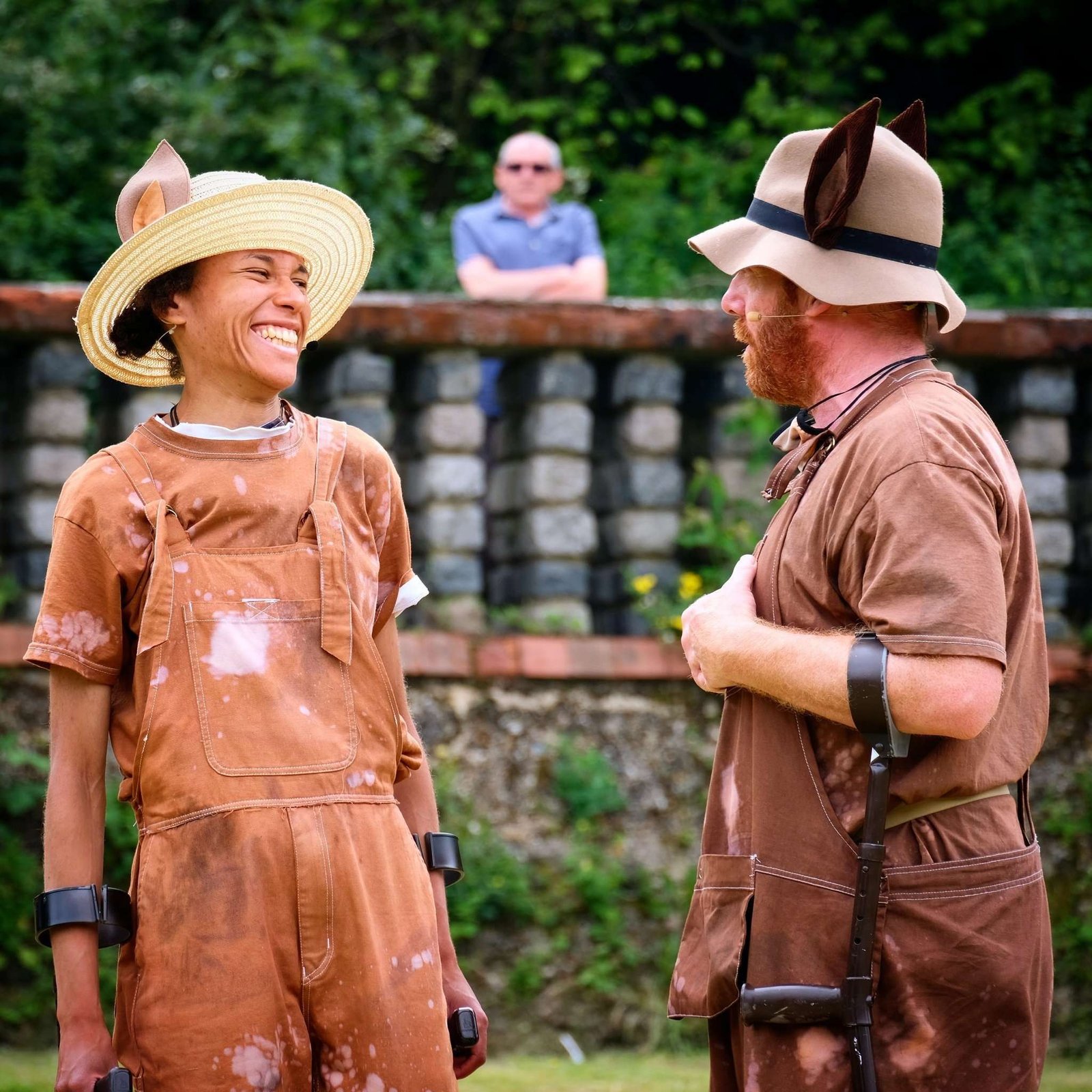
Fanny and Stella (Kane Verrall as Frederick William Park aka Fanny) and Jed Berry (Ernest Boulton aka Stella). Photo: Joseph Thomas

 
First published by Sardines: http://sardinesmagazine.co.uk/reviews/review.php?REVIEW-West%20End%20&%20Fringe-Fanny%20And%20Stella&reviewsID=3910
 

Anniversaries are strange old things. It makes no rational sense to get maudlin about them. Each day is just another date on the calendar. And yet. As one wise friend said to me, last week, they punctuate our lives.

In recent months, I have managed to get through our wedding anniversary, my birthday. Nick’s birthday and the anniversary of the day we became an item. Despite Covid and all its attendant prohibtions I have coped by keeping busy and and spending plenty of time with family.

Last Thursday marked the anniversary of Nick’s death in Lewisham Hospital at 9pm on 20 August 2019. I didn’t want to be alone at home in case I fell apart so I went to Cambridge overnight and had dinner with my elder son and his family. We toasted the person who was missing but otherwise simply enjoyed chatting and catching up with news. Just another day – and provided I’ve got plenty to do and think about, I’m fine. As Lord Hailsham once remarked long after the death of his wife in a riding accident: “It’s like losing a leg. Life will never be the same as when you had both legs but somehow you learn to get about with only one”. I’m blessed with plenty of  good crutches, loads of will power and lots of things I want to do – get back to a normal pattern of work, for example, once we’ve stopped panicking about this wretched virus.

The Alzheimer’s Diaries: a love story is 36% funded. It occurs to me that if every one of the lovely, generous 157 people who have so far supported the project were to persuade just two people to support it we’d be home and dry in an instant.  And that would be a fantastic way of marking the first anniversary of life without Nick.

20181001_112922(1)https://unbound.com/books/alzheimers-diaries/

Photograph taken on roof of Newseum in Washington DC in September 2018, amazingly, just 11 months before Nick’s death

When we were first married we lived in a flat in Forest Hill and Nick worked for Lewisham Borough Council. Then he got a much better job – it paid £1,400 per year as opposed to the £1,000 he’d been earning previously. And no, I haven’t made a mistake with the noughts. This was 1970.

The Local Government Training Board was based in Alembic House on the Albert Embankment. Actor, Stanley Baker lived in the penthouse and LGTB employees got used to chatting to him in the lift. Today that penthouse is owned by Jeffrey Archer.

We knew from the beginning that LGTB was planning to move out of London and in the end it relocated to offices above the (then) new Arndale shopping centre in Luton and we moved to Wellingborough – removal expenses paid by LGTB.

Well it wasn’t the best of moves, really. The house we unwisely bought turned out to have all sorts of problems and was eventually sold four years later for less than we’d paid for it. Moreover, the job changed and Nick became very disillusioned because there suddenly seemed so little for him to do. It was like being literally redundant while still on full salary.

And that is quite stressful. The migraines Nick had always been prone to got worse and much more frequent. And it was always weekends.  He’d routinely spend either Saturday or Sunday in bed, more or less insensible with the curtains drawn and vomiting frequently. You can imagine how difficult this made family life. By 1976, when things were at their worst, I had a child of four and a new baby. No wonder my smoking shot up and my weight, for the only time in my entire adult life, dropped below 9 stone.

Then I had a brainwave. One Sunday afternoon at about 4pm when he’d just about reached the dry-biscuits-and-sips-of-water-stage – there was a definite pattern to these migraines – I sat on the edge of the bed and said: “Listen. We can’t carry on like this. Why don’t you give up the wretched job? I’ll get a full-time teaching job and you can look after the boys.”

He looked incredulous. “You’d really do that?”

“Yes” I said. “Provided we can go back south to do it – Kent, and near London preferably. I don’t want to stay in the Midlands.”

So that was what we did. I was appointed to teach English at Rowena High School for Girls in Sittingbourne in 1977 (having, for the record, finally given up smoking earlier that year).  We bought a house in the town and Nick became, for some years, a jolly efficient and capable “house husband”. A ground breaker – he was several decades ahead of his time.

What I often wonder now, is has anyone ever done any research into migraine and Alzheimer’s? Both are brain conditions after all and Nick’s migraines were pretty spectacular although they occurred less regularly after we moved and as he got older.

Please support crowdfunding The Alzheimer’s Diaries: a love story if you haven’t already done so and pass this link on to as many others as you can. Spead the word and all that. https://unbound.com/books/alzheimers-diaries/

Photograph 1969. Claude was our first cat.

It must have a summer Saturday afternoon in 1995 or 96. Temperatures were sky high and Nick and I thought we’d pop across to the Isle of Sheppey, a short distance from Sittingbourne where we then lived. The plan was to do one of our favourite walks from Harty Church across the nature reserve to Shellness, loop inland  past Muswell Manor and back to the car through the hare sanctuary area.

It wasn’t to be. Every inhabitant of North Kent (it seemed) was heading for the beach at Sheerness and the very long, slow queue for the bridge onto the island put us off. So we peeled off to the left and headed for another favourite walk which starts and finishes at Upchurch.

We had the car windows wide open because it was hot and air conditioning was not standard then. Along the lane we passed, a few feet away, a glorious field of flax in full, bright, azure blossom its sweet, floral scent almost overpowering “What a fabulous smell!” I said.

“What smell?” asked Nick. I could hardly believe it. In fact I thought he was winding me up. When I’d got my incredulity under control he added “Actually I don’t think I can smell much at all now. I’ve been noticing it for some time. And it means I can’t taste much either”

“Well” I said flippantly. “If you have to lose a sense I suppose it’s better than sight or hearing”. I was more amused and exasperated by it than anything else. But from then on it was a problem, albeit a fairly minor one.  A few months later I got home from work to find the kitchen stinking of burning. When questioned Nick, explained that he’d made toast for lunch. The slice of bread got stuck in the toaster but he hadn’t noticed it until he saw smoke. Blimey. Put smoke alarms in pronto.

Nick’s grandfather – who lived lucidly into his 80s and died of bowel cancer – lost his sense of smell too so we assumed it was hereditary and I don’t think it was ever mentioned to a doctor.

If, these days, anyone mentions anosmia – the medical term for loss of sense of smell and taste – my heart plummets because it’s a recognised early symptom of Alzheimer’s (as well as being, coincidentally associated with Covid19.) Of course, back in the mid 1990s I knew none of this and just thought it was a bit of an inconvenience.  Would it have helped Nick (or me) to have had this information 25 years ago? No. There is no cure for this disease. As it was, he had the certain knowledge he had a terminal illness for only 28 months which is preferable to a couple of decades, I think.

On the other hand, there is a lot of talk about, and research into, early intervention these days. But I’m still not convinced that it would do the patient’s mental health any good. So If I hear of, or meet anyone, with anosmia, I say nothing.

Please support The Alzheimer’s Diaries: a love story which describes the illness and its effects if you haven’t already done so – and share the link with lots (and lots) of other people! Crowd funding stands at 35% at the time of writing.  https://unbound.com/books/alzheimers-diaries/

Elkin family around 1955. Nick front row, left. His grandmother, Elsie, to his immediate left.

When Nick and I first got together properly in 1967 and it was clear to both of us almost from day one that this was “for keeps”, I had – of course –  to meet his extended family.  I’d known his parents for some time and had met his cousin Bernard several times. Beyond that it was all a new adventure and gradually, household by household, I was presented and welcomed. In those days nearly everyone lived locally which made it easier.

He was under some pressure from his parents to take me to see his paternal grandmother, Elsie Elkin, so in the end he did. I’ll call here “Elsie” her for clarity although Nick called her “Nan” and I don’t think I got as far as calling her anything.

Nick’s grandfather William Elkin, who was a generation older than his wife, had died when Nick was still in short trousers so by 1968, when we got engaged, Elsie had been widowed for twelve years or so. She had gradually gone “senile” (note how the vocabulary has changed in 50 years) and had been assisted into her care home by Nick’s father George and his Uncle Roy. There were lots of rueful stories about how she’d frequently left the gas on and other worrying things so that in the end they’d decided she was no longer safe to live alone, although she was still relatively young.

The care home was in Lee High Road in Lewisham and Nick was very reluctant to take me there but we went – twice, I think. Elsie had been told in advance that her eldest grandson had got engaged and when Nick said “This is Susan and we’re engaged” she smiled and seemed to understand but it was very hard work. I was still a naïve 21,  had no experience at all of dementia and had never before been inside a care home. Poor Elsie sat slumped and helpless in her chair. It was pretty upsetting and Nick really didn’t want me to see it. Both our visits were short.

Then Elsie deteriorated and had to be moved to a different care home – this time to one known to everyone in the borough as the place you really didn’t want to go not least, I think, because the building had once been a workhouse and there were people around (my own grandfather, for instance) who could remember that. Nick visited her there from time to time but refused to take me with him – a mixture of embarrassment and gallantry, I think.

Elsie died in 1970, a year after we were married. Her death certficate is vague because, 50 years ago, diagnosis was much less precise. It hints, however, at what we would now call vascular dementia – and that is unrelated to Alzhemer’s Disease although some of the symptoms are similar.

And this is what I continually remind the family when they mutter worriedly about Alzheimer’s being genetic. The only person we can find in Nick’s ancestry over the last few generation who had dementia was Elsie and hers was a different illness. His parents were mentally fine into their eighties (almost 90  in his father’s case) as were his other three grandparents and, as far as we know, great grandparents.

So it seems that wherever Nick’s Alzheimer’s “came from” it wasn’t in his genes. As I used to say to him – when he was well enough to understand what was happening and to complain – in his case, it was just sheer bad luck. It’s like the unfortunate man or woman who has never smoked or worked/lived in a toxic environment but who gets lung cancer anyway. It happens but that doesn’t make it any easier to cope with what feels like the injustice of it. Maybe Elsie, in the early stages, felt the same way.

Please help to crowdfund my book about all this if you can http://unbound.com/books/alzheimers-diaries/

Nick and I were married for 50 years. Till death do us part and all that. In fact I’d known Nick for seven years before we were married and I thought it might be fun to share that background as part of the backdrop to The Alzheimer’s Diaries: a love story.

 In 1962 the church youth club was central to my life. As a pupil in an old fashioned all-girls’ grammar school, the youth club was the only place I met boys of my own age. So it was an excuse to “doll up” although I don’t think anyone uses that expression any more.

I was 14 when I first saw Nick across a room in someone’s house at a sort of subsidiary gathering pertaining to the youth club. A weedy, thin 16 year old in a check sports jacket,  he’d come along with a school friend. Like most of the boys at the youth club they attended the nearest equivalent grammar school to ours.

Actually Nick was very keen on another girl and for several months he and she seemed to spend every spare minute wrapped round each other – he, mostly in the brown mock leather bomber jacket he wore to ride his trusty moped. Eventually that relationship ended and because I had also, meanwhile. had a little adolescent fling which had ended in tears we had something in common. Nick started dropping in at our house and gradually we became friends – but that’s all it was for several years, although we were bonded by classical music from the very start and often went to concerts or listened to records together.

“Did you say that boy’s name is Elkin?” asked my father, one evening after Nick had left.  “I bet he’s the son of George or Roy Elkin. My brother and I were very pally with them before the war. We all went to Scouts together.”

Sure enough, it turned out that Nick was George’s son. South London is just a village really. Years later, once Nick and I were a proper item we got them all in one room and then crept away and left them to their reminiscing. And of course, thereafter they became friends all over again.

It wasn’t until 1967 that things changed between Nick and me. I blame the grey Morris Minor he bought that spring. He needed somewhere to drive his pride and joy to and what better than to visit his old friend, Susan, who was by then at college in Chichester? He came almost every weekend and by the time the summer was out Nick and Susan were on rather a different footing …

We married in March 1969 after I’d completed my training, come home to South London and got a teaching job. It lasted for 50 years and five months. We celebrated (sort of) our Golden Wedding anniversary five months before Nick’s death in August 2019, over 57 years after I first clapped eyes on him.

And he remembered all this almost to the last too even when he was almost incoherently oblivious and often didn’t know who I was. A couple of weeks before he died one of the nurses at the hospital asked where we’d met. “In a church youth club” I said, turning to Nick in an attempt to include him. “Do you remember the church youth club, Nick?”

“Of course I do” he snapped back crossly as if I’d asked the silliest of questions.


Image is Nick (back row, far right) in an Alleyns School athletics team at about the time I met him.

For as long as I can remember I have silently, and fairly compulsively, articulated thoughts, ideas and stories in my head. Words would come and go as I chose the ones I wanted and shaped them mentally.

I suppose I’ve always been a writer. That’s certainly what my Dad said when, aged 11,  I won a children’s TV writing competition (Associated Rediffusion – Peter Ling and Hazel Adair who went on to write Coronation Street etc). It was what my tutor at Teacher Training College said too.

In the event it was decades before I took myself seriously although, as a teacher, I always wrote reports, policy documents and letters to parents which colleagues seemed to admire. Then came Open University essays which I really liked doing and seemed to be pretty good at.

In the end I bowed to the inevitable and started sending articles off to newspapers. A year or two later I became a professional writer and went part-time as a teacher. I finally became a full-time pro and stopped teaching altogether in 2004. In the last 30 years I have – and it amazes me too – published more than 5,000 articles and over 50 books.

I play with sentences and ideas when I’m walking, gardening, cooking or pretending to watch television. Many’s the time I’ve been fidgety and restless in the night and my husband Nick has said “Why don’t you go and type up whatever it is you’re ‘writing’ and then perhaps you might be able to get to sleep?”

So when my poor Nick, who had been displaying some rather worrying symptoms, was diagnosed with Alzheimer’s in April 2016,   the words started to tumble about in my anxious head. I think it’s my strategy for facing up to the truth. For me, writing is the antithesis of denial. It’s a way ordering my thoughts.

I was initially so pole-axed by the word “Alzheimer’s” at that consultation that I was literally almost unable to stand upright when we staggered out of the building. It was Nick who had to support and steer me into the coffee shop over the road. I think I comprehended the appalling implications faster then he did. All he could think about, at that moment, was having been ordered to surrender his driving licence.

But within a day or two it was all shaping itself into a piece of writing in my mind. So I asked him if I could write about his illness fully expecting a horrified no because he was a quiet, private sort of man. To my amazement his eyes lit up and he said: “Yes. Go on. Why not? You’ll do it well and perhaps going public will help others.”

So I did. In the first instance I wrote a one-off piece for The Daily Telegraph although it was a while before it was published: https://www.telegraph.co.uk/family/relationships/husbands-alzheimers-diagnosis-has-agony-wont-let-become-dirty/  Then I wrote an angry, personal piece about how it feels when your marriage is invaded by a hideous befanged monster whom I named “Ms Alzheimer’s”. I published the latter on my website – the first of a series of weekly blogs which I wrote for the next 28 months until after Nick’s funeral in September 2019.

And that’s how my forthcoming book: The Alzheimer’s Diaries: a love story was born. It’s an edited compilation of those blogs. Unbound Publishing snapped it up as a project and we’re now crowd-funding the publishing costs. Here are the details: https://unbound.com/books/alzheimers-diaries/


And the story of how and why this project has evolved and developed  will be continued in future blogs.


Twelfth Night, available to stream via Zoom until 14 June 2020.

Star rating: three stars ★ ★ ★ ✩ ✩

Adam Nichols’ bijou take on Shakespeare’s most silvery, summery, musical play is quirky and fun. We’re on a cruise liner, the SS Illyria, captained by Orsino. At the beginning it picks up the survivors of SS Elysium on which Sebastian and Viola are employed as vaudeville dancers.

And this is very firmly the hedonistic 1920s with lots of jazzy music (MD: Tom Cagnoni) played and sung by a talented actor-muso cast.

Given that there’s a 10 minute, jokily inclusive modern English introduction and occasional explanatory comments plus music we don’t get more than about 45 minutes of Shakespeare’s text so this could be a good starting point for children.

Anna Franklin gives us a deliciously blousy, all drinking all laughing Lady Toby Belch with scarlet lipstick and an abundance of curly hair. It’s a refreshing take on a familiar character.

Faith Turner’s Malvolia is slimy and sneering. Her vowel sounds are immaculately twisted and her consonants clipped to absurdity. Her yellow stockings scene (not cross gartered) is a delight and she’s an expressive singer.

It’s a nice touch to have Orsino (Will Forrester) playing his own “food of love” music on piano in his cabin and he develops the new passion for Viola (Flora Squires) effectively.

Squires is unusually convincing as Viola, with her little stick-on moustache and asides to camera. She too sings with passion and charisma.

So how does it all work live on Zoom? Well it’s quite an undertaking because this is also an interactive show with the audience asked to bring something to bang (for the drinking scene), to have something yellow to brandish in when Malvolia is misguidedly strutting her stuff and various other participation moments.

It means that Will Pattle, as Fabian and a quasi narrator, has to do technology trouble shooting as he goes along to keep everyone on board. Once the play moves into Shakespeare’s text it flows pretty smoothly with characters mostly in separate frames. The gulling scene works particularly well with the onlookers peering through portholes each in a separate frame.

The upbeat music between scenes is fun, effective and remarkably well synched. And it involves almost everyone. Hannah Francis-Baker as Feste is a talented singer and saxophonist and David Widdowson (Antonio) leads most numbers from piano, for example.

OVO theatre company’s show is an original concept and an entertaining 70 minutes but I would have preferred to see it live in a theatre – of course.

(First published by Musical Theatre Review)