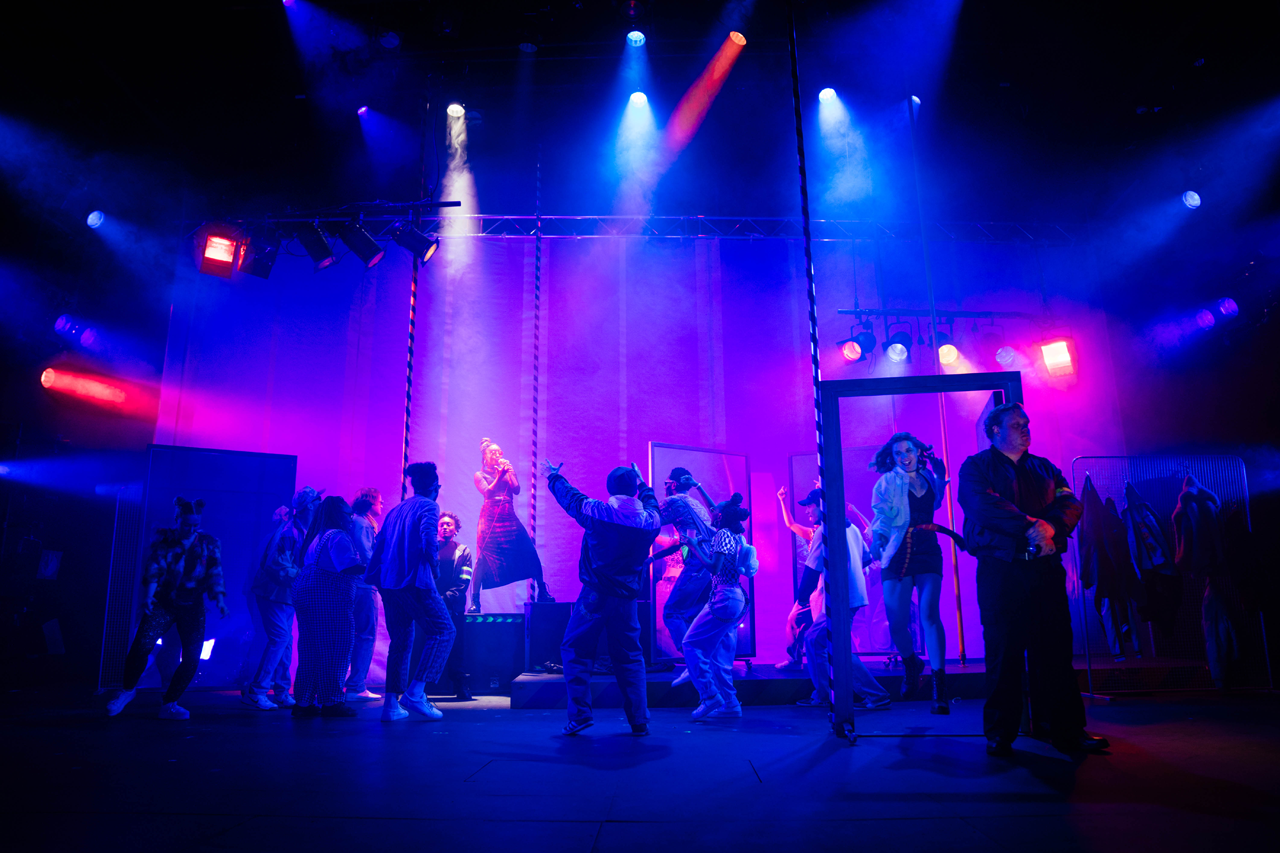
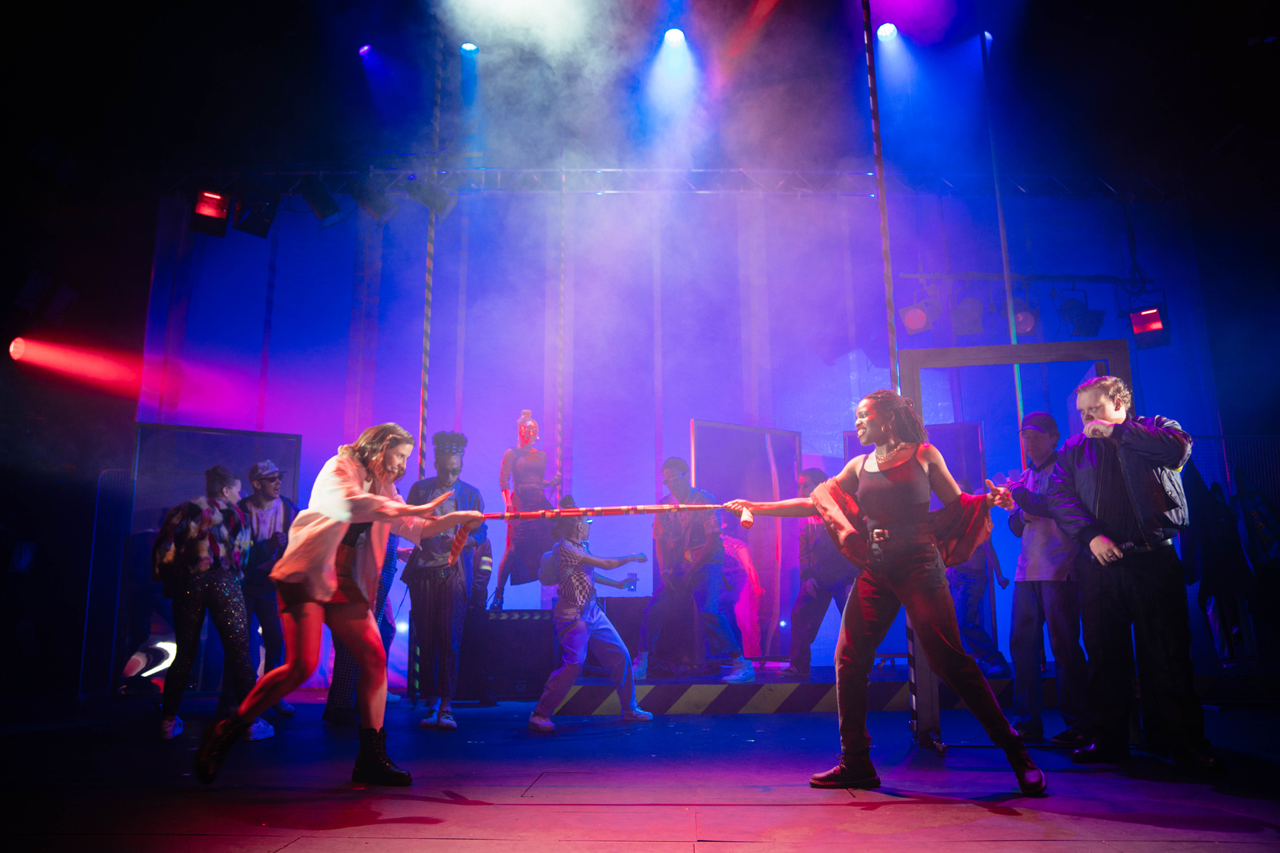
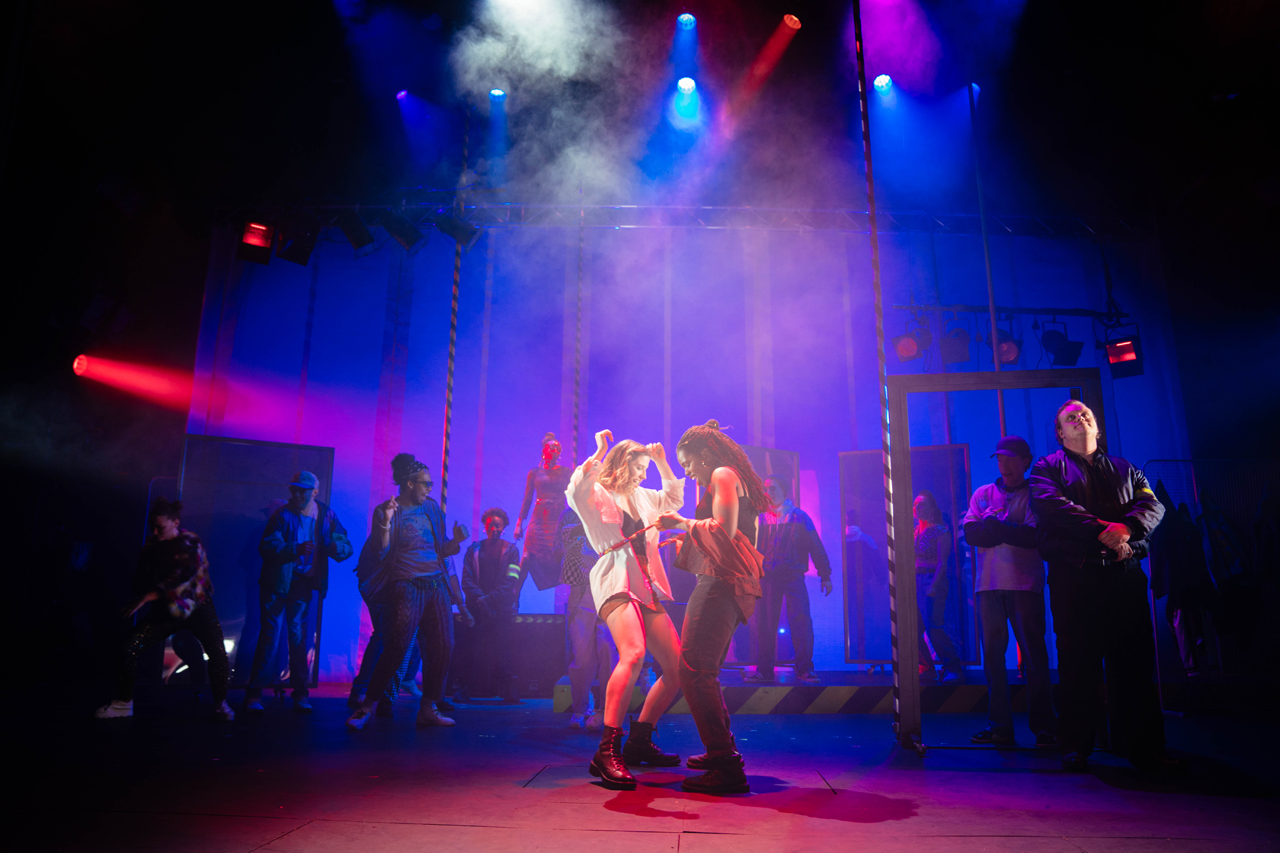
Stephen Adly Guirguis’s witty, thoughtful 2005 play is a good choice for a drama school. Its episodic structure uses a large number of actors in some pretty colourful roles. Including a bit of doubling these thirteen graduating actors all have something interesting to do with lots of moments in the spotlight. And director Ishwar Maharah has ensured that everyone really gets the chance to show what he or she can do.
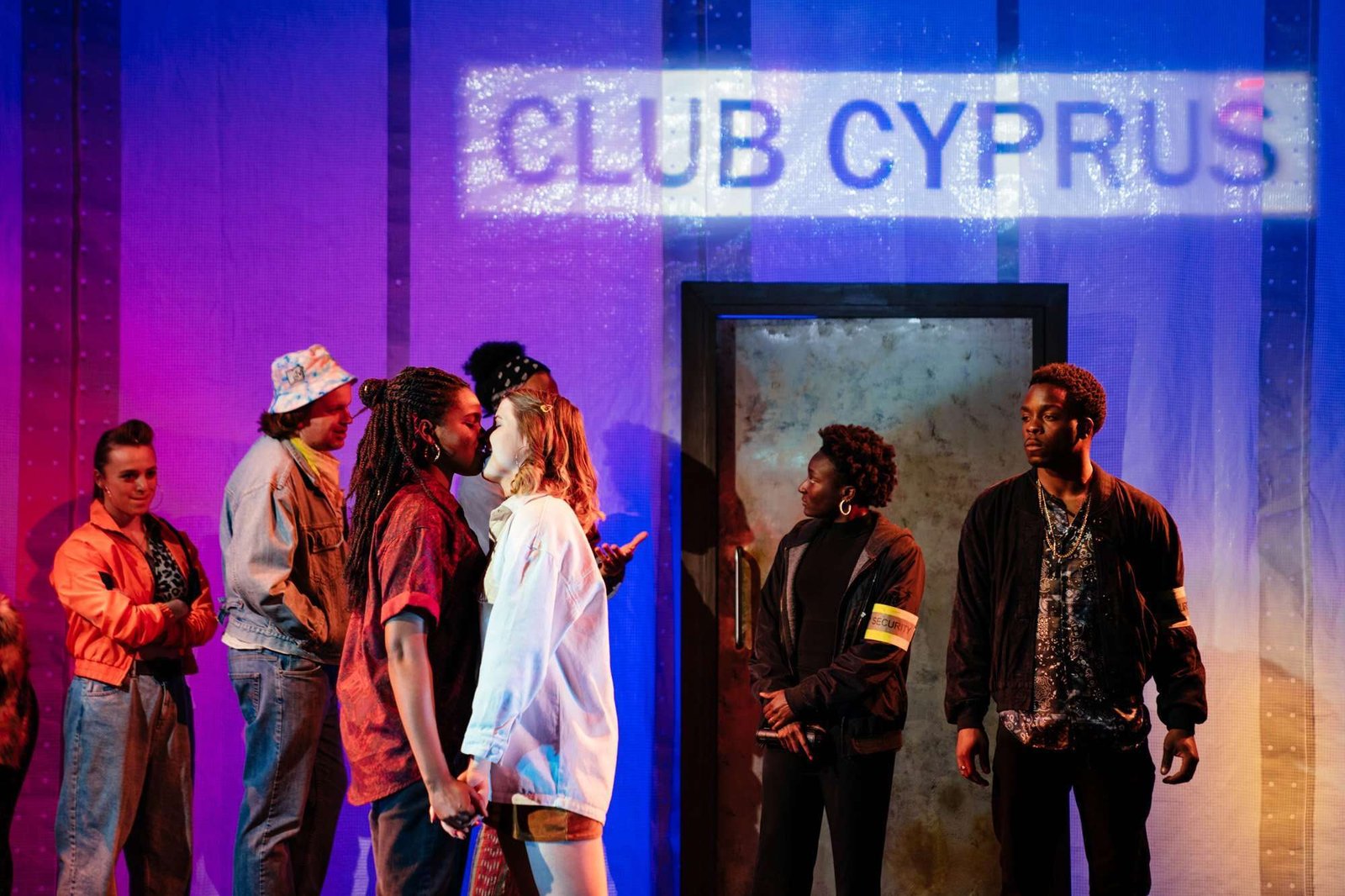
Although this play has been revived many times in its 16-year life, this was the first time I’d seen it and I’m glad I did. The premise is that Judas Iscariot is in purgatory – still. Other characters, all of them dead, are either in heaven or hell but summoned to take part in a trial to decide what should be done with Judas. In places it’s very funny because we’re in the present day and some of the anachronisms and incongruities are great fun – Diavian Galloway, for example, as a very blousy, sassy, fur-coated St. Monica fond of words such as “motherfucker” goes down well with the audience.
In court Luke Walter is an irascible, irresponsible judge with a suitably load bellow when he’s not getting his own way. Jade Lane as the defence council and Hayden Mampasi for the prosecution take a while to find dramatic balance but Lane, in particular, really finds her feet in the second half, especially in the scene with Henry Rousso as Sigmund Freud.
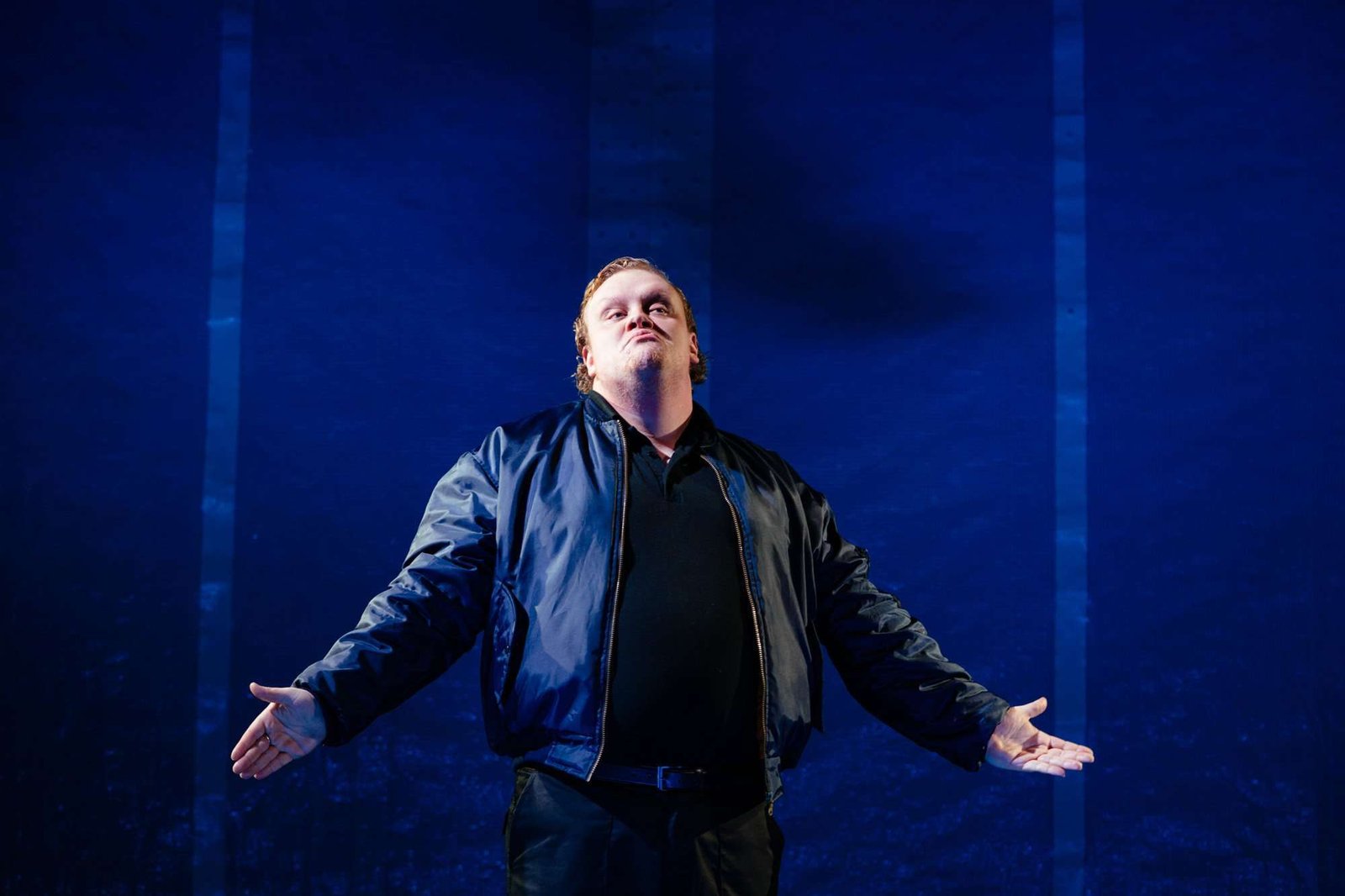
Best of all the witnesses is Henry Boston as Pontius Pilate. He shifts mood instantly from insolence to determination and from anger (wonderful crescendo) to grudging sympathy. Boston is also a fine on-stage listener and a very charismatic actor to watch. I hope we see more of him very soon. Another very fine performance is Georgina Goodchild as Mother Teresa, deaf, flirting with the prosecutor and visibly responding to every word spoken.
As a newcomer to the play, I was intrigued about how it could possibly end. The answer is with an argument which changes the mood and becomes a stunningly beautiful – reverent, almost – scene between Judas and Jesus. It leaves us with a lot to reflect upon because this is not Horrible Histories. Beneath the jokes it’s a telling play for our times which asks serious questions about responsibility, forgiveness and self esteem. The final scene could hardly fail to be moving but as played by Robbie Young and Ben Strang it is arrestingly poignant.
One point about voice work: This production is staged in the round, When inexperienced actors are required to do American accents there is a tendency to get too fast and get the pitch wrong. Sometimes it can become shrill and clarity is lost especially when actors need to reach audience members on three sides. Maybe voice coaches should make more of the fact that most real-life Americans speak quite slowly unlike Brits who tend to speak quickly with a lot of elision. If you try to deliver American English as if it were British English there are audibility problems. This applied to several (but not all) of the cast members in this production.
This review was first published by Sardines: https://www.sardinesmagazine.co.uk/review/the-last-days-of-judas-iscariot-2/