Press ESC or click the X to close this window

Susan’s Bookshelves: Should We Stay Or Should We Go by Lionel Shriver

Even the title is clever – the deliberate omission of a question mark makes it ambivalent. It could be a question about intent or it could be a subjunctive statement meaning “If we should stay …” and therefore speculative in the what-would-happen-if sense. Oh the joys of this gloriously flexible language of ours.

Kay, a  nurse, and Cyril, her GP husband have been happily married and settled in Lambeth for a long time. Nursing her father through the graphically physical awfulness of Alzheimer’s has the effect on Kay it does on many of us. She recoils in horror at how the same fate could await her. After her father’s death in 1991 she and Cyril – it’s his idea – agree that once they are both 80, regardless of their state of health, they will overdose on the Seconal which Cyril has stashed in the fridge thereby sparing themselves a hideous demise. The agreed date arrives shortly after Brexit and in the midst of the Covid pandemic.

So what happens? That is entirely up to you, dear reader. Forget that omniscient author that A Level English teachers bang on about. This one is gleefully unreliable.  Maybe Kay takes the pills and Cyril bottles out. Or perhaps they’re caught just before the deed and sectioned by their children. Maybe neither of them do it and they enjoy many more years of healthy productive life. On the other hand perhaps medical science comes up with an unexpected world changer. Anything can happen because Shriver tells a whole string of versions of this story, repeatedly winding back and then making different things happen. Thus the cleverest post-modern novel I’ve read since The French Lieutenant’s Woman forces you to be an active reader and choose your own outcome. She visits a whole range of fictional worlds too – like variations on a theme in music.  She often reminds me of John Fowles. Margaret Atwood and Ray Bradbury are clearly in the mix too because some of her scenarios take us well into the 21st century when things might be healthy, peaceful and prosperous. Or they might not. Is money really just an abstract concept? Would we really want to live for ever even if we could? And surely it really is time to think rationally about assisted dying?

There’s nothing obscure about any of this. It’s a very accessible read and often laugh-aloud funny. Shriver’s wry, taut writing style in more honed than ever in this novel. I shall long treasure, for example, Kay’s sardonic observation that “Simon and Hayley rang to wish her a ‘safe’ birthday – safety having been mysteriously elevated of late to the highest of virtues.” And at one point she pillories herself as “that Shriver woman”  an irritant that her characters hear on the radio.

Many of the books I discuss here are re-reads of books I’ve known for a long time. Should We Stay or Should We Go is a 2021 publication which I felt compelled to share because it’s one of the most original new novels I’ve read in quite a while.

Next week on Susan’s Bookshelves: Lady Chatterley’s Lover by DH Lawrence


Venue: Jermyn Street Theatre. 16b Jermyn Street, London SW1Y 6ST

Credits: Alan Ayckbourn – PLAYWRIGHT. Robin Herford – DIRECTOR


Relatively Speaking

4 stars

Susan Elkin | 18 Sep 2021 12:01pm

James Simmons (Philip), Lianne Harvey (Ginny), Rachel Fielding (Sheila) and Christopher Bonwell (Greg). Photo: Steve Gregson


No Sardines reader needs me to remind him or her that Alan Ayckbourn’s 1965 hit is a terrific comedy. It’s immaculately constructed and with a fine cast, directed by Robin Herford – a long time collaborator with Ayckbourn – the piece is in very good hands. Every joke, nuance and misunderstanding is timed and delivered with practised aplomb – although the programme note makes me long to have seen the original 1987 West End production with Michael Hordern, Celia Johnson and Richard Briers.

We are, of course, not far from Brian Rix territory – which dates from the same era. It’s the comedy of misunderstanding in which – a refined form of dramatic irony – the audience sees through what the characters on stage are saying and doing and understands what’s really going on long before they do. Thus a raised eyebrow, a twitch of the lips, stunned silence or fixed smile all become hilarious. It’s old fashioned now but my goodness it still works. I haven’t laughed so much in ages. This mood-lifting old favourite is an ideal choice for a post Pandemic winter programme.

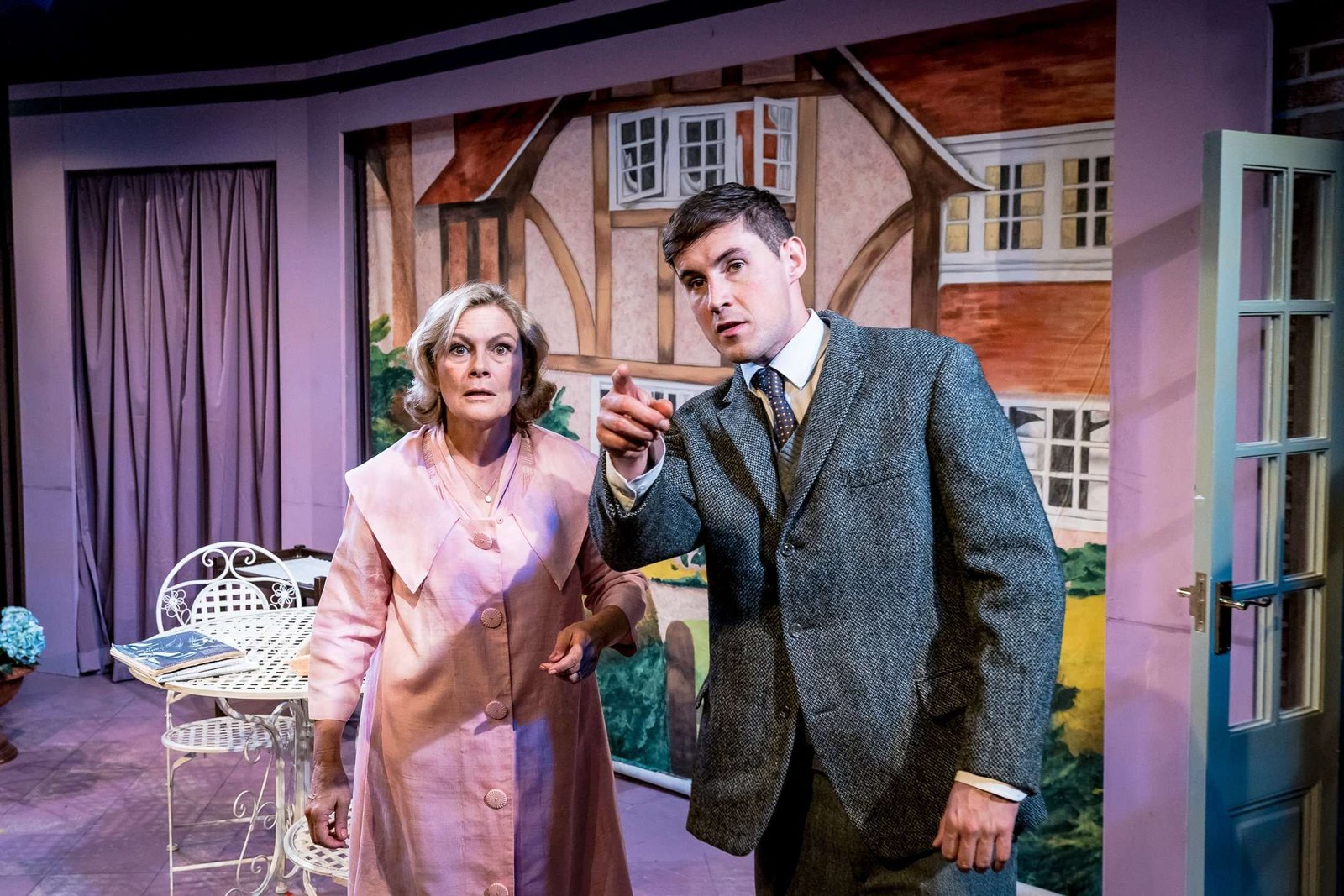
So, just in case, you’ve been in hiding for the last 56 years: The four hander play gives us two couples one young, and thinking about marriage, and the other middle aged with infidelity in the wings. Of course there’s a connection but no one tells the whole truth to anyone else. Three of the four scenes take place in the older couple’s glorious, sunny garden in the home counties to which the younger couple have come, separately, by train.

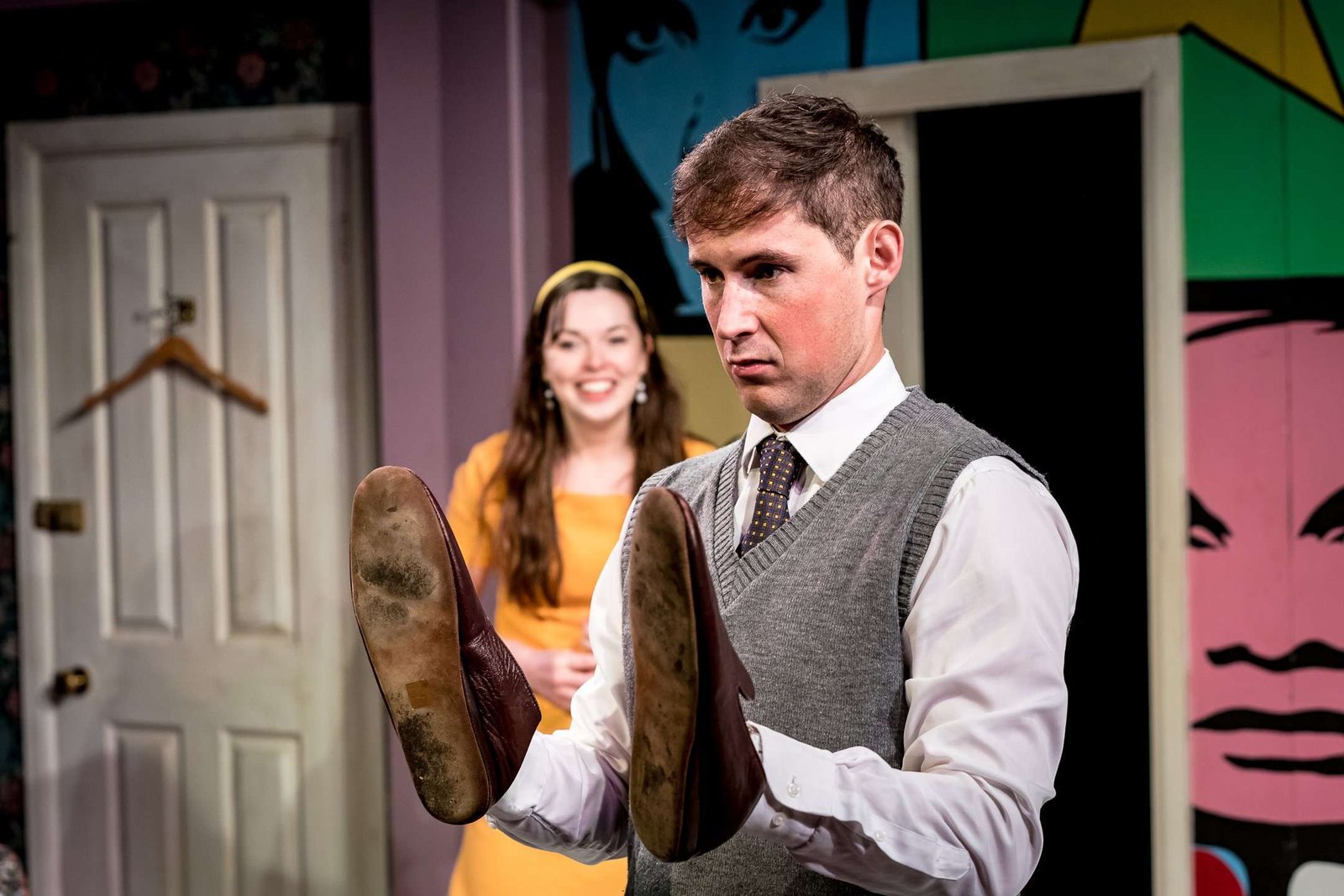
James Simmons as the older man, Philip, can communicate his exasperation, anxiety, embarrassment, cunning and a lot more with the merest flicker as he charges on and off in search of his lost hoe. And he turns running his hand through his hair or across his face into an art form.  Rachel Fielding, as his wife Sheila fussing with the accoutrements of prosperous middleclass life is a joy to watch too. She plays up to the stereotype but is also gloriously knowing when she stops dead, tray, coffee pot or whatever in hand and simply looks. We can actually see her thinking.

Christopher Bonwell’s disingenuous Greg is great fun. He does funny voices to cover his innocence and inexperience. You can see why Lianne Harvey as Ginny is taken with him – even as she gets ever further enmeshed in her own web of lies. Harvey brings seriousness to her muddled character and does a good line in shocked horror. All four actors work well together delivering this beautifully written dialogue to life on stage so that it’s as frothily funny as ever. I hope this enjoyable production will attract new comers to the play as well as old timers.

First published by Sardines: https://www.sardinesmagazine.co.uk/review/relatively-speaking-2/

Show: There’s a Rang-Tan in my Bedroom and Other Stories

Society: Little Angel Theatre

Venue: Little Angel Theatre. 14 Dagmar Passage, London N1 2DN

Credits: Concept by Mother. Written by James Sellick. Directed by Maia Kirkman-Richards. Music composed and sound designed by Dominic Sales


There’s a Rang-Tan In My Bedroom and Other Stories

This is a piece for 5-11 year olds with a loaded agenda. Its aim is to introduce children to the concept of habitat destruction and its relationship with big business and to suggest some things we could all do to help arrest it. It is, however, packaged with a lot of charm and artistry so that it still feels like a pretty decent piece of theatre for children – as we’ve long come to expect from Little Angel Theatre which is celebrating its 60th birthday this year.

A little girl finds a turtle in her bath and then an orang-u-tan in her bedroom. “There’s a rang-tan in my bedroom and I don’t know what to do” she says. We hear the orang-u-tan (voiced by Sophie Thompson) and a jaguar says repeatedly “There are humans in my forest and I don’t know what to do. The turtle makes the same complaint about “my ocean”. Puppets sensitively operated by Ajjaz Awad and Aya Nakamura convey a real sense of vulnerability.

The 45-minute piece concludes with three suggestions drawn (sort of) from children in the audience: avoid palm oil, recycle and reuse as much as possible and eat less meat.

I especially liked the jaguar puppet which has huge feet and a nice stripey tail and the creation (design by Kate Bunce) of a minature domestic set including bed bath, lavatory and filled fridge all on moveable counter tops.

But the loudest cheer goes to the small boy who stood up at the end and declared that the palm oil industry must be stopped. “It destroys the environment and it isn’t good for you” he said.

First published by Sardines: https://www.sardinesmagazine.co.uk/review/theres-a-rang-tan-in-my-bedroom-and-other-stories/

Bromley and Beckenham International Music Festival: Concert 2 Bromley Parish Church

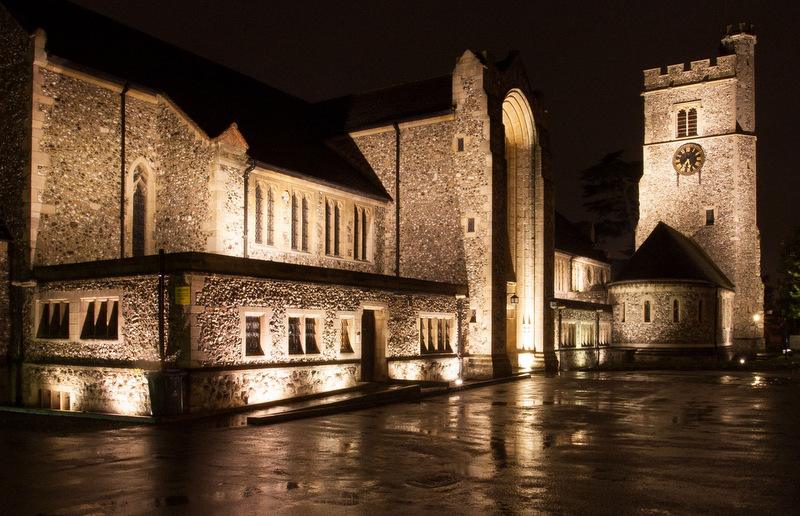
Bromley and Beckenham International Music Festival (BBIMF) was co-founded last year by pianist Benjamin Grosvenor, who comes from Bromley and violinist Raja Halder. This concert was the second in a series of four over the festival’s single weekend – and a thing of wonder it was too happening as it did at 4.30 on Saturday afternoon, an oasis of culture and calm a few yards from the busy high street with its shops and pubs.

It’s a treat to see Grosvenor, who famously won Young Musician of the Year aged 11 and is still only 26, on his home turf and doing the chamber music he is so committed to. I last saw him 11 days earlier playing Beethoven’s Fourth Piano Concerto at the Proms.

We began with Britten’s Lachrymae op 48a which is based on Dowland’s song “If my complaints could passions move”. Premiered at Aldburgh in 1950 and scored for viola and piano, it was new to me as it was, I suspect, to most of the audience. It is actually a theme and variations but Britten reverses the usual order and doesn’t let us hear the plain theme until the end. At this performance a group of four musicians, almost out of sight near the high altar played the soulful, hymn-like Dowland so that we could hear it first. Then it was down to Timothy Ridout and Benjamin Grosvenor to make it sing in the fabulously resonant acoustic of Bromley Parish Church. The effects were surreal and otherworldly especially in the third variation with pizzicato pinging out over wide chords on the piano and I loved the end with Ridout sending the harmonics off into the lofty blue domed roof like stars dying away in the distance.

The second work was the much more familiar Schubert Trio in E flat major in which Grosvenor was joined by violinist Hyeyoon Park (his regular duet partner) and cellist Bartholomew LaFollette. It was supremely well played with warmth and drama in the interwoven melodies of the opening movement. I liked the elegance they brought to the andante as the tune is passed round before those entrancing octave leaps and there was lots of light and dark in the Scherzo. Then they played the Allegro Moderato with delicious charm especially in the witty rotating solo. There was absolutely no blurring of sound in this performance. You could hear every note of every part because speeds were judged to accommodate the loftiness of the space.

I was delighted to see several children at this concert and also noted with approval that the vicar, James Harratt is clearly pleased to have this remarkable festival in his church. He personally welcomed people in at the door, ticking our names off his list and spoke enthusiastically to the audience at the beginning. Too often, when there are concerts in churches, the priest-in-charge, vicar or rector is nowhere to be seen.

First published by Lark Reviews: https://www.larkreviews.co.uk/?p=6643
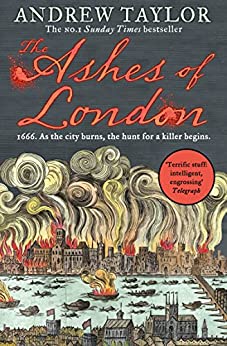
People who read fiction know things. I used to tell my students that so often that they probably mouthed it behind my back in mockery. But of course I was right. Fiction is an indispensable fount of general knowledge. And Ashes of London (2016) is a good example.

Yes, of course, I learned in primary school that the Great Fire of London was in 1666. And I was taken to the Monument and told stories about a baker in Pudding Lane.  But, despite later reading Pepys and Evelyn I had never actually thought much about what it would have been like at the time to be on the ground in London surrounded by ash, dangerous buildings, people sheltering in cellars, the fate of the old St Paul’s in the balance (rebuild or renovate?) and a lot of people drawing up plans and vying for contracts. Neither – what an admission! –  had I given any serious thought to the Fire in relation to the Restoration only six years earlier and the death of Cromwell only eight years before.

Andrew Taylor brings all that to life in this crime novel, the first of a series featuring Cat Lovett and James Marwood, set at the time of the Fire. You can almost smell the acridity of ashes and hear the creaking of the temporary supports hastily erected to stop more buildings collapsing as his complex web of characters skirt round, and confront each other, at a time when nobody is quite sure where other people’s loyalties lie. Yes, an Act of Indemnity protects most people from being prosecuted for supporting The Commonwealth but not if you were a regicide. And Charles 1’s execution in front of the Banqueting House in Whitehall in 1649 is only 17 years ago. James Marwood vividly remembers being taken to see it as a child by his printer father, a Commonwealth supporter who now has dementia.

Cat Lovett is also the child of a wanted man, portrayed as well- meaning, passionate – blinded by religion – and flawed. Cat, who hasn’t seen her father for a long time, goes into hiding at the beginning of the novel because, living with an aunt, she is raped by her cousin and maims him in retaliation. She is a refreshingly feisty character. This is not the only time she behaves incisively – and that’s a literal adverb in this context.

St Paul’s cathedral, now a huge, dangerous ruin towers over the action and  it doesn’t come as a huge surprise that the suspenseful denouement takes place at the top of the crumbling tower. It’s really just a question of who is going over. No spoilers.

Action packed, full of colour and history – just the thing for winter evenings as the days shorten.

Next week on Susan’s Bookshelves: Should We Stay or Should We Go by Lionel Shriver

Show: Quentin Crisp: Naked Hope

Venue: Crazy Coqs at Zedel Brasserie. 20 Sherwood Street, London W1F 7ED

Credits: by Mark Farrelly


Performance Date: 11/09/2021

Quentin Crisp: Naked Hope

Susan Elkin | 12 Sep 2021 17:57pm

This was the 140th performance of Mark Farrelly’s moving, hilarious sensitive 2013 play about that most flamboyant of gay men: Quentin Crisp.  I liked Farrelly’s two hander Howerd’s End last year and admired his acting, but this post-Pandemic revival of the earlier show is glitteringly good.

Crisp, of course, beneath the outrageous banter and the witty one liners was a deeply troubled man never allowed to be himself. And it’s that poignant  ambivalence which Farrelly nails exquisitely both as playwright and actor.

The play – modelled on the shows Crisp did in New York once he’d become famous – falls into two halves. At first Crisp acts out and tells the story of his own life, including his brief career as a rent boy, living in a squalid (“after four years the dust doesn’t get any worse”) bedsit and, always dressed like a bird of paradise, being the victim of frequent homophobic attacks. Farrelly has the young Crisp’s voice perfectly – measured, effeminate and rising to a sing song high note in almost every sentence. He also hops briefly in and out of other roles when he’s describing an incident.

Then the lights dim and Farrelly changes into more formal, louche but fairly conventional clothes and a grey wig. Now we’re in New York and the older Crisp is entertaining an audience and answering questions with, by how, well practised wicked punchlines. The voice has matured and is slightly more even now. The care with which Farrelly has observed these subtleties is awe inspiring.

Watching him is like being present at an acting masterclass not least because he has to work the audience sometimes with a moment of ad-libbing because at Crazy Coqs at Zedel Brasserie where I caught this show, the audience is seated very close at tables, cabaret style. There was also an audience incident at the performance I attended which Farrelly dealt with expertly before moving on.

Five stars indicates that this is an unmissable show of its type. Of course it’s very different from, say, South Pacific at Chichester or a full blooded Shakespeare interpretation by the RSC but, compared with the many one person, low budget shows I have seen, Quentin Crisp: Naked Hope is extraordinary.

This review was first published by Sardines: https://www.sardinesmagazine.co.uk/review/quentin-crisp-naked-hope/

Show: Showcase 2021

Society: The MTA (student productions)

Venue: Leicester Square Theatre. 6 Leicester Place, London WC2H 7BX

Performance Date: 10/09/2021

Showcase 2021

It is always a pleasure to see young people achieving and to enjoy the work of qualifying performers at the start of their careers.

Staged at Leicester Square Theatre (and live-streamed) this graduate showcase amply displayed the talents of its seventeen new “ambassadors” as The MTA, which styles itself “a college for life” calls its graduates.

Under Tilly Vosburgh’s inspired direction we got sixteen items in an hour-long show which meant that we saw each participant in at least one musical theatre setting and a “straight” one. Most colleges run their showcases with a single side-stage pianist or backing tapes. The MTA uses a live, centrestage three-piece band with principal Annemarie Lewis Thomas as MD on keys. She has also arranged the music. Such a band adds a lot to the quality of the work.

We started and finished with a whole company number. Both Be The Hero from Big Fish and The Goodbye Song from SMASH have a series of opportunities for single line solos – all delivered with tuneful energy.

The other fourteen items ranged from Mike Bartlett and Maxim Gorky to Godspell and Waitress. Everyone is an achiever but of course there were some students who really stand out. Stamatis Seraphim is one to watch, for example. He was disarmingly funny in New Boy (by Russell Lobey) as the teenager who hasn’t had sex, but yes please, would like to. And he packed lithe, infectious charisma hopping about in the hippy absurdity of Godspell. Antoine Paulin has a rare gift for stillness and active listening especially in Children of the Sun and he was slickly hilarious in Stuck Together (from Catch Me If You Can) with the much shorted Nick Tajan which was part of the joke. Their double act jazz singing was memorable too.

Bethan Raja as Isabel in Bull (by Mike Bartlett) is another visibly attentive listener and I liked the sensitive work of Sophie Owen as Rose in Di, Viv and Rose (by Amelia Bullmore) and in Like Breathing from Edges by Pasek and Paul. Her eyes flash very convincingly.

I wish each and every one of these twelve women and five men luck as they now seek professional jobs. The MTA has a history – every year since the college was founded in 2009 – of securing 100% independent representation for its graduates so I doubt that it will be long before we hear more of this latest cohort.

First published by Sardines: https://www.sardinesmagazine.co.uk/review/showcase-2021/

Show: The Beauty Queen of Leenane

Society: Chichester Festival Theatre (professional)

Venue: MINERVA THEATRE, Chichester Festival Theatre, Oaklands Park, Chichester

Credits: By Martin McDonagh

Performance Date: 09/09/2021

The Beauty Queen of Leenane

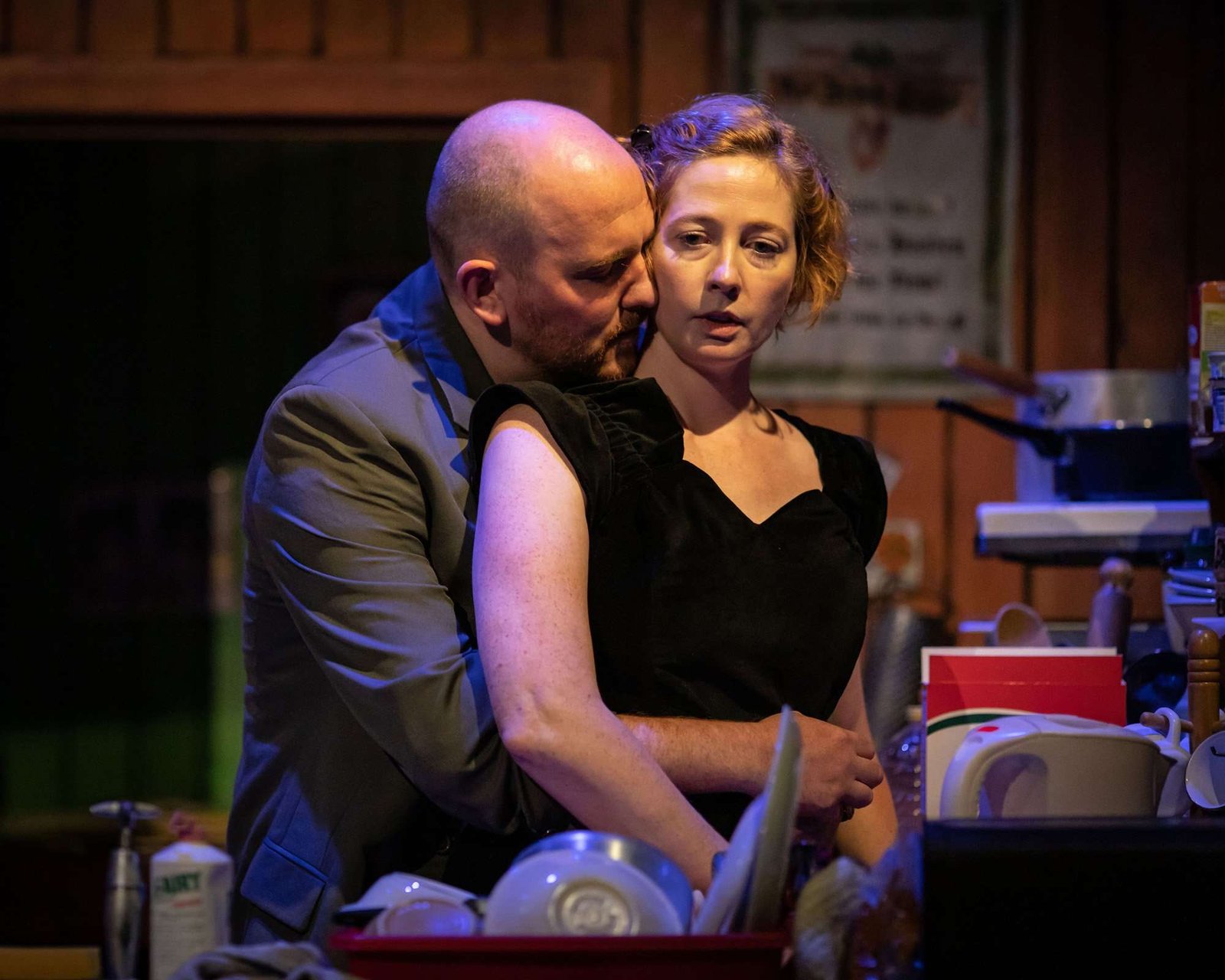
Chichester Festival Theatre’s first co-production with Lyric Hammersmith is arresting. However many times you see Martin McDonagh’s 1996 play about a mother and daughter viciously fighting their corners at home against a background of Ireland still bleeding into Britain and America, it packs a huge dramatic punch. As a gut-tearing tragedy it’s up there with the top ten.

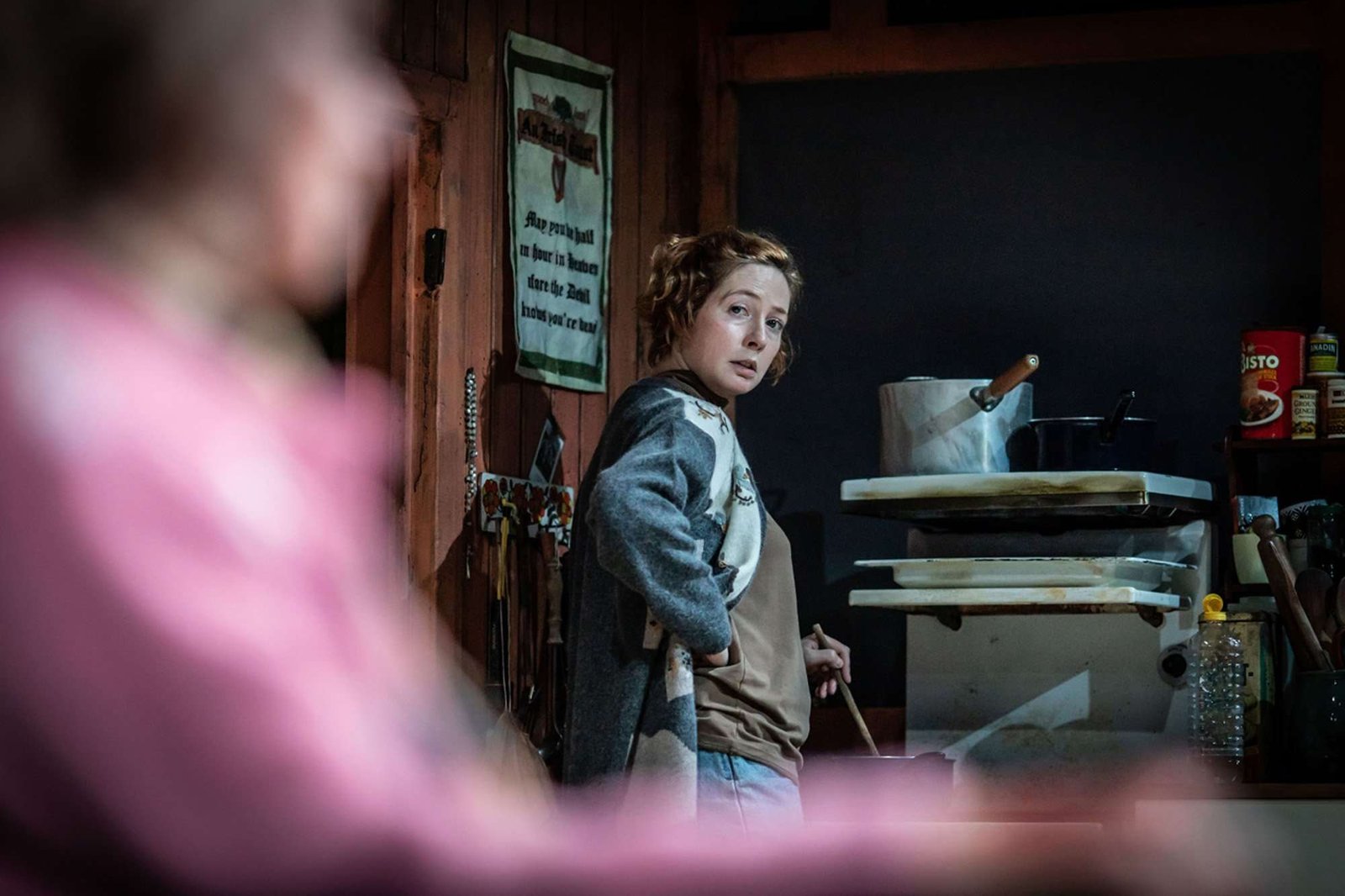
In this production director Rachel O’Riordan makes fine use of the Minerva’s square-ish playing space so that the action moves seamlessly from upstage to downstage with little sense of fourth wall – and the set by Good Teeth Theatre  connotes a shabby, lonely, small town, 1990s Irish home which is anything but cosy. Even a newcomer to the play will sense that the stove and poker aren’t being flagged up for nothing.

The emotions within that home are angry, violent, frustrated – and hopeless. We laugh at the truth of all that and at the blunt way the women speak to each other. The tragedy lies in the fact that – briefly – there is hope. Then it is snatched away.

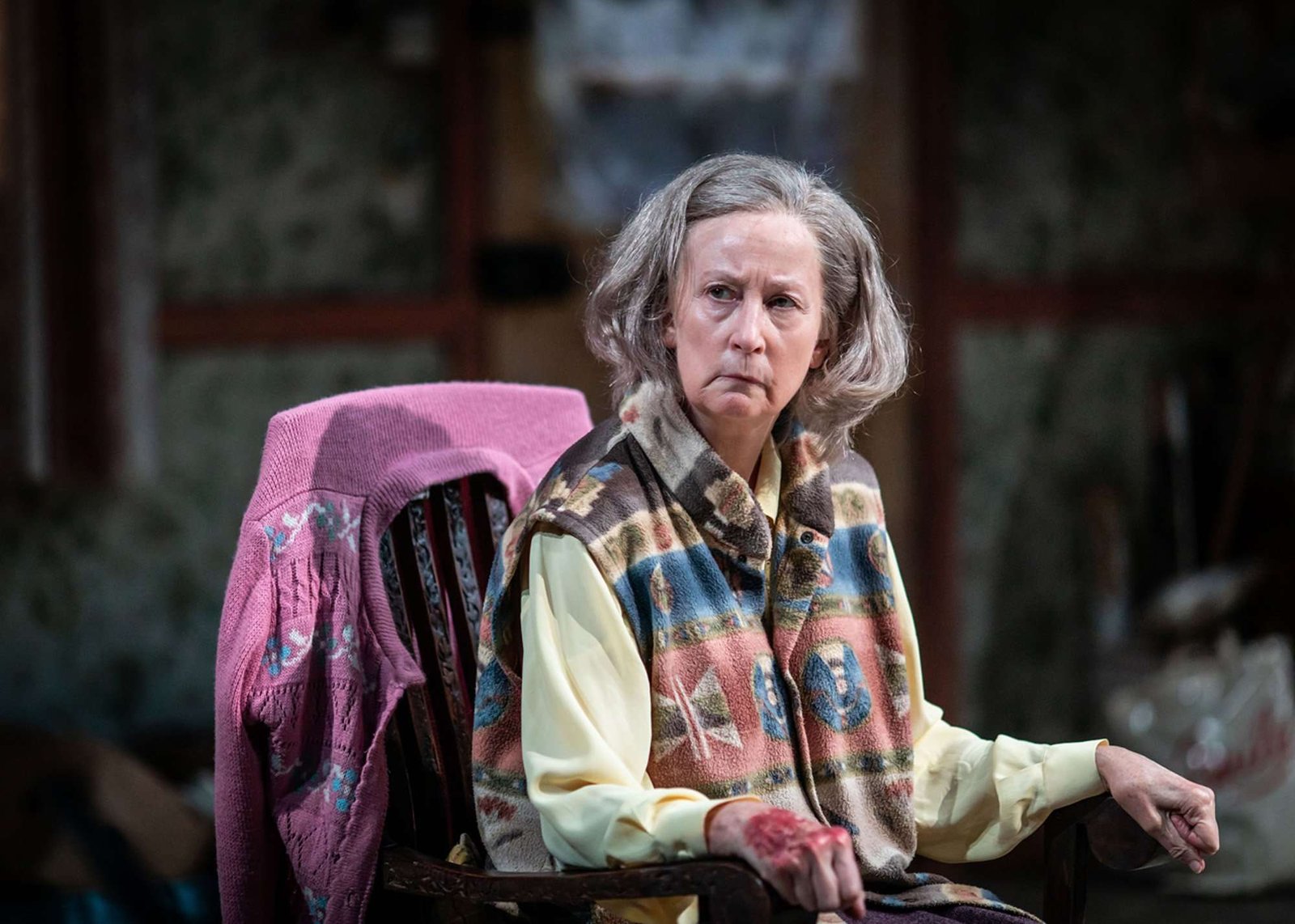
There’s a great deal of silent communication in this production. Ingrid Craigie as Mag can tell us almost everything we need to know just by glaring or simpering. As an elderly, semi-invalid mother she should invite sympathy. Actually she is a cunning, manipulative, selfish liar. She doesn’t deserve her fate but it’s hard to feel too sorry for her and Craigie, hobbling about – and demonstrably able to do more for herself than she does because she’s lazy –  gets that whining ambivalence perfectly. And you can almost smell her oft-mentioned urine infection.

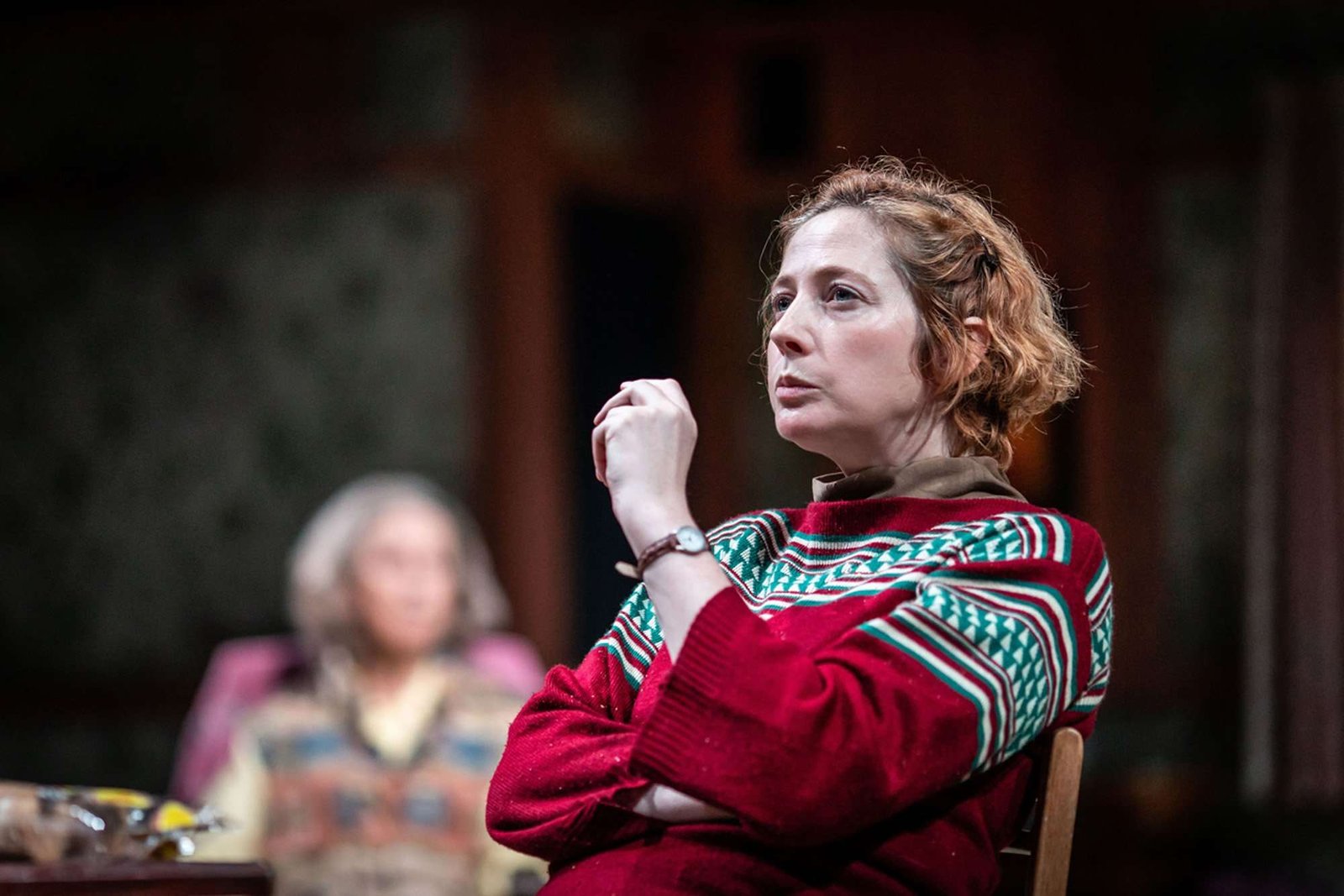
Orla Fitzgerald as Maureen, the long suffering furious carer/daughter, speaks volumes through her silences by banging cups of tea and bowls of lumpy Complan down for her mother. She ensures that we really do feel for her plight. These women may be mother and daughter but there is no love, affection or tenderness between them and that’s partly where the shock of this play comes from. It’s “unnatural” but oh so recognisable when two people are thrust into a situation like this and each of them has needs which the other can’t possibly meet.

There’s a lovely performance from Adam Best as the gentle, caring, not particularly confident Pete. The scene in which he listens to  Maureen poignantly explaining her feelings shows him really hearing her and it’s very moving. His letter writing soliloquy is deeply touching too. Kwaku Fortune, as Pete’s swaggering impatient, intolerant younger brother makes the best of his scenes with both the women and ensures that we see them from a different perspective. It’s a multifaceted play and this production stresses that.

Of course, the accents and dialectal syntax are strongly Irish which makes for occasional audibility problems partly because  the shape of the playing space actors are sometimes facing away from some of the audience. Occasionally it is difficult to tune into the pitch of the voices but that’s a minor gripe in what is, otherwise, a meaty interpretation of a powerful  play.

First published by Sardines: https://www.sardinesmagazine.co.uk/review/the-beauty-queen-of-leenane-4/