Press ESC or click the X to close this window

Susan Elkin reviews: The Choir of Man

The Choir of Man continues at Underbelly’s London Wonderground until 5 September 2021.

Star rating: four stars ★ ★ ★ ★ ✩

We’re in a pub called The Jungle where eight cheerful chaps are singing, joshing, laughing, jigging about and passing pints drawn onstage into the audience – while catchy trad tunes are belted out on a backing tape.

It’s a gloriously upbeat prelude to a show which celebrates pub culture and, in many ways, took me happily back to the smoky, exuberant folk clubs of my youth.

Andrew Kay and Nic Doodson’s show – once it actually gets going – features lots of 20th century pop classics, close harmony numbers, songs from shows, ballads and more as the cast bounces round the pub set using the bar and a table as mini performance spaces …

Read the rest of this review at Musical Theatre Review: https://musicaltheatrereview.com/the-choir-of-man-london-wonderground/

The Selfish Giant – Garsington Opera at Wormsley July 2021

Opera Pavilion | Garsington OperaThe lovely big playing space in this lightest, airiest of venues so elegantly (operatically) sited in the leafy undulations of the green and gorgeous Wormsley estate, is quite a setting for a youth opera. And every single one of the 75 young cast members does it justice. So does the team of young stage managers and the young designers who helped find ways of bringing this piece to stage.

This show was originally planned for 2020 but we all know what happened then. In the event it’s a very poignant story for now. The eponymous giant throws the children out of his garden so that they have nowhere to play. Eventually – it’s a one hour piece – he comes to think otherwise and human mixing is restored.

How do you depict a giant on stage convincingly in a fairly simple production? You find a portly singer/actor – Matthew Stiff – with a resonant bass voice, dress him (initially) in black with a flapping raincoat and give him a larger than lifesize model head on a pole to hold – and it’s neatly effective. One of two professional singers in this show, he brings real warmth to the role as his character gradually learns and changes. The other professional is Barbara Cole Walton who plays a linnet, holding a model bird and singing mostly from the top of a ladder. She is gently, smilingly avian and her top notes are quite something.

The other lead is a child – talented Barnaby Scholes – who confronts the giant and looks very effective next to him because he’s small. Barnaby sings treble poignantly. Ultimately his character turns out to be stronger in spirit than body although he achieves his aim. That blend of feistiness and fragility is well captured

But the real high spots in this show are the choruses in which it’s good to see so many boys and an accomplished group of over-18s who sing a couple of choral numbers.

Jessica Duchen’s libretto is clear and unfussy (“The garden looks marvellous. I couldn’t do this alone”) and John Barber’s music is highly evocative. Words and music complement each other. Scored for a small group and played by a six-piece band drawn from the Philharmonia and conducted by Jack Ridley, every note conveys a message. I especially liked the scoring for a winter dance sequence with tinkly discords, faintly reminiscent of Britten, followed by a minor key passage and lots of tambourine.

The whole show, under Karen Gillingham’s practised directorship, is actually a bit of a miracle. Young people have had to audition and rehearse digitally for much of the time with masks and distancing requirements even when they finally got together. The over eighteens didn’t meet each other or the rest of the cast until 5 days before the show. Twenty four hours before curtain up the accordionist was “pinged” so the part had to be rewritten for keyboard tight against the clock.

One always hopes that these enterprising Garsington youth and community operas will live on especially as this one got only a single performance at Wormsley. The good news is that The Selfish Giant, which was co-produced by Opera North, will be staged at Leeds next year.

First published by Lark Reviews

I was sent a proof copy of this novel a few months ago and it published earlier this month. Historical fiction is part of my eclectic taste along with family sagas, literary stuff, young adult fiction and anything to do with detectives. So I pounced on this brick of a book which is actually a sequel to an earlier novel but I was half way through it before I realised that.

Now – having grown up on Jean Plaidy and Anya Seyton – much of the history I know first came to my attention through fiction. But most of it was, and still is, British via Philippa Gregory, CJ Sansom, Hilary Mantel et al.  The Tsarina’s Daughter plunged me into eighteenth century Imperialist Russia and it felt a bit deep end because most of my usual landmarks were missing.

However I learned an enormous amount – assisted my Google which I kept consulting to check that the historical facts are right. And of course they are.  As historian Will Durrant observed: Education is a progressive discovery of our ignorance.

Elizabeth is the daughter of Peter the Great in a dynasty which has succession by appointment rather than automatic birthright, Her fortunes go up and down after the death of her father and life is hideously dangerous and very violent. Puzzlingly, characters seem to keep changing their personality – friendly one minute and (very) hostile the next but everyone is involved in a power struggle and I suppose the (literal) backstabbing culture really was part of everyday life.

Lizenka, as she is known to her intimates, eventually rises to the top of the pile, against the odds and after a couple of colourfully evoked love affairs, and reigns for twenty years.

It’s an interesting read for another reason. I will overlook the occasional jarring laziness in the writing (“Russia was caught between a rock and a hard place”) for the general knowledge I picked up. The Russian version of soured cream is known as smetena and the whip used for corporal punishment at court was a knout – what a useful Scrabble word! There is a nice lot of this sort of thing in what is actually a pretty compelling novel.  I might now read Alpsten’s Tsarina which was published last year.

Next week on Susan’s Bookshelves: The African Queen by CS Forester

Show: Tom Lehrer

Society: West End & Fringe

Venue: Jermyn Street Theatre. 16b Jermyn Street, London

Credits: By Stefan Bednarczyk

Type: Sardines

Author: Susan Elkin

Performence Date: 18/07/2021

Tom Lehrer

Susan Elkin | 18 Jul 2021 20:33pm

CABARET, FOOTPRINTS FESTIVAL


Steeped in G&S all my life and Flanders and Swan for most of it of course I’m also a Tom Lehrer admirer. It’s all in the same tradition after all – biting satire, wonderful wordplay and all wrapped up in accomplished musicianship. But Tom Lehrer, who had a day job as a maths lecturer,  is now 93 and hasn’t performed since 1960 simply because he got fed up with doing it, apparently. And his oevre consists of just 37 songs – which he has generously agreed to allow to be performed without hassle by other people. There was a 1980 show Tomfoolery produced by Cameron Mackintosh, for example.

Enter Stefan Bednarczyk, a cabaret artist who discovered these songs when he was a 14 year old church organist (he explains the circumstances to the audience) and has, it seems, been singing them ever since – including coming close to expulsion form school when he substituted  Lehrer’s Vatican Rag for Flanders and Swan’s The Gasman at a school concert. Vatican Rag was written to send up the Catholic Church’s attempt to modernise its practices. Even today it is make-you-gasp, hilariously irreverent (“Ave Maria. Gee it’s good to see yer” and Bednarczyk, performing at the piano, as Lehrer always did, has a field day with it.

Another high spot in this 70 minute show which features 23 songs hooked together with short anecdotes is Clementine in which Lehrer, who hated folk songs and thought they’d have been better if written by talented composes, gives us verses in different styles. The Mozart verse had me laughing until tears ran.

Most of these songs are, of course, wittily critical of the  American establishment, And Lehrer – a fine musician (as is Bednarczyk) loves to explore different musical genres. Thus we get various subversive  takes on love songs, lullabies, opera, military music and much more. I was pleased to hear the Elements song included, though. Satirically neutral it simply lists all the elements to Sullivan’s Major General’s tune – and I think Bednarczyk takes it even faster than Lehrer’s recording.

The extraordinary thing about this entertaining little show is that these songs are 60 years old and yet many of them are still timelessly current. The delightful number about passing on a common cold could have been written for Covid. Pollution (cue for a calypso rhythm) is, if anything, even more apposite than it was 60 years ago and, of course, we’re still worrying which country is developing which weapons … and the USA is still sending in the Marines. It makes you laugh. It also makes you think.

This review was first published by Sardines: https://www.sardinesmagazine.co.uk/review/tom-lehrer/


Hilary Mantel, now in her late sixties, was a successful award- winning novelist long before she disappeared for 15 years to live with the Tudors, producing Wolf Hall (2009) Bring Up the Bodies (2012) and The Mirror and the Light (2020) –  becoming, incidentally, the first woman ever to win the Booker Prize twice.

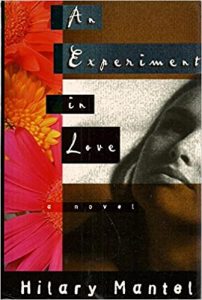
I found a hard backed copy of An Experiment in Love (1995) literally on my bookshelves. I remembered nothing about it although I must have bought and read it 26 years ago. It’s a signed copy and if I met Hilary Mantel then I’m afraid I have no memory of that either. But I was curious to read this pre-Wolf Hall novel now and to discover how I reacted to it.

The answer is – with pleasure, admiration and recognition. It is 1971.  Three young women leave home in the North to take up places at London University. They know each other from school and all go to live in the same female hall of residence. Mantel is my generation and I can confirm that her account of this period is so accurate you can reach out and touch it. My college days were spent in a city outside London but I remember the late keys, the sitting in each others rooms drinking tea or eating toast made in the hostel kitchen, smuggling boyfriends in (they are meant to leave at 11pm), trying to get some work done, longing for letters from home – and all the rest of it. Some students are very religious, some are dull, some are apparently ultra-sophisticated, Backgrounds vary enormously too. Some students come from comfortable homes with generous allowances. Others don’t. And then someone gets pregnant. Yes, yes, yes that’s exactly how it was although at my college there was plenty to eat and I don’t think we’d ever heard of anorexia.

Mantel’s narrator, Carmel, is a bright law student from a low income home with a difficult mother. She’s struggling for money (making the grant go round – remember those?) and eats less and less. Karina, the friend with whom she has a love/hate relationship remains chubbier than ever. Then there’s Julianne. Carmel’s roommate and a medical student.

In many ways this novel is a very readable fictional snapshot in time – without much overall structure although there’s a defining incident (in well worn literary tradition) at the end which dramatically sorts out a few people, attitudes and decisions. And the writing is masterly – although don’t expect anything remotely like Wolf Hall.

How on earth I managed completely to forget this compelling novel, I don’t know. It’s under my skin now and I shall remember it this time.

Mantel


Show: What The Ladybird Heard

Society: West End & Fringe

Venue: Palace Theatre, 113 Shaftesbury Avenue, Soho, London

Credits: By Julia Donaldson & Lydia Monks. Music by Jon Fiber and Andy Shaw for JollyGoodTunes. Lyrics by Jon Fiber and Howard Jacques. Produced by Kenny Wax Family Entertainment in association with Matthew Gregory.

Type: Sardines

Author: Susan Elkin

Performence Date: 17/07/2021

What the Ladybird Heard

Susan Elkin | 18 Jul 2021 00:02am

When I first saw this production in 2017 I described it as a mini-musical for pre-schoolers and I stand by that, four years later. But there are differences: I think the show has settled, the present four actors have a palpable onstage rapport with both the audience and each other and Nikita Johal is delightful as the reassuring, very smiley Lily who also sings splendidly.

The show works on the assumption that the children in the audience are already very familiar with Julia Donaldson’s rhyming adventure story about a ladybird who thwarts a burglary on an idyllic farm. But the show also offers its young audience new things which they’re not expecting: songs by Jon Fiber and Andy Shaw with additional lyrics by Howard Jacques, for instance. The words are witty, simple and clear – in the hands of four actor-musos – and the melodies very simple so that children can pick them up easily.

Another imaginative idea is the use of puppets – assembled from farmyard bits and pieces – to bring to life Donaldson’s cast of animal characters and Lydia Monks’s illustrations for the original book. Monks was involved in the development of the stage show which includes a horse created from a bicycle, an inverted long tin bath and a bucket while a hen emerges from an old brown cushion and a red rubber glove and a goose from a white watering can. It makes good theatre as children are invited to identify each animal as it is realised on stage.

Roddy Lynch is a solid, warm-voiced, comforting figure as the farmer and I enjoyed his sound effects on violin. Matthew McPherson is full of character as Hefty Hugh and a useful guitarist while James Mateo-Salt is an entertaining Mr Bean-ish comic character initially pretending to be a theatre usher drawn into the show because they are one short.

This review was first published by Sardines: https://www.sardinesmagazine.co.uk/review/what-the-ladybird-heard-2/

Show: Love’s Labour’s Lost

Society: West End & Fringe

Venue: The Plough Inn. 297 Northfield Avenue, London W5 4XB

Credits: William Shakespeare – part of the Fuller’s Shakepeare in the Garden tour

Type: Sardines

Author: Susan Elkin

Performence Date: 15/07/2021

Love’s Labour’s Lost

Susan Elkin | 16 Jul 2021 17:23pm

All photos: lhphotoshots


Whenever I see Love’s Labour’s Lost I’m struck by what a good play it is, in so many ways – so many interesting roles – and I wonder why it has never garnered the popularity of, say, Twelfth Night. It’s a pretty appropriate choice for now too since, as the opening song points out in this production, the starting point is four men choosing to self-isolate.

The King of Navarre and three courtiers vow to eschew the company of women and to live as self denying ascetics for a three year study period. Of course this doesn’t last long once a French princess turns up with three attractive ladies. Then there are subplots involving the lower born Costard and Jaquenetta and a ludicrously flamboyant Spaniard, named Don Amardo. To achieve all this with just four actors as Open Bar does is a rather stunning piece of imaginative versatility, which includes some witty homespun puppets.

It is also striking that the textual cuts are quite light so that the show runs well over  2 hours 30 minutes. That means that each member of this talented quartet has to work very hard but the energy levels are such that they make of each of them having to speak  as many lines as Hamlet seem effortless.

Each actor does a whole range of voices and the doubling is often fast and furious as well as gender-blind. Stuart Turner adeptly switches from earnest King to deliciously camp Boyet to the ridiculous Moth. Grace Kelly Miller gives us a warm princess, a hilariously pedantic Holfernes and has a field day as Don Amardo. I really liked the gently subtlety of Charlotte Worthing’s Costard alongside her deep-voiced Longaville and her determined Rosaline.

And as for Adam Courting as Berowne, he makes him plausible and charismatic although my judgement of any actor playing this role is impaired by very fond memories of seeing David Tennant do it with the RSC in 2008. Courting’s Sir Nathaniel is fun and, like all this cast, he is very good at flirting with the audience and making remarks which pretend to be out of role and off-the-cuff. Thus we get references to masks and Matt Hancock as well as nice injections of modern English and a commentary on the play as a running gag. David Knight’s jolly songs at the beginning of each half and at the end are part of this.

This engaging show is produced by Fullers and tours its pub gardens – hence the company name: Open Bar. It’s an enlightened idea which both brings people into pubs to buy food and drink while also providing work for actors and theatre creatives. I approve heartily of such an initiative given the challenges currently faced in the hospitality and performing arts industries.

This review was first published by Sardines: https://www.sardinesmagazine.co.uk/review/loves-labours-lost-5/

Show: South Pacific

Society: Chichester Festival Theatre (professional)

Venue: Chichester Festival Theatre, Oaklands Way, Chichester

Credits: Music by Richard Rodgers. Lyrics by Oscar Hammerstein II. Book by Oscar Hammerstein II and Joshua Logan. Adapted from the Pulitzer Prize-winning novel ‘Tales of the South Pacific’ by James A. Michener.

Type: Sardines

Author: Susan Elkin

Performence Date: 13/07/2021

South Pacific

Susan Elkin | 14 Jul 2021 18:04pm

Photo: Gina Beck (Nellie), Julian Ovenden (Emile) in Chichester Festival Theatre’s SOUTH PACIFIC. Photo: Johan Persson


Well it certainly was Some Enchanted Evening. The press night audience applauded loudly and at length as soon as the lights went down, so delighted were they to be – at last – in a real theatre for a much-loved old favourite.

But  there’s nothing clichéd about this production. Tt is different from the first note. As a fine fifteen piece band, high above the stage out of sight, conducted by MD Cat Beveridge, launches into Richard Rodgers’s evocatively scored overture, we watch an otherworldly solo ballet sequence by Sera Maehara alone on the big round thrust stage. Then she is surrounded by American GIs, marching. It’s a neat way of signalling the serious and dark cultural clash which lies at the heart of this ever topical piece.

Daniel Evans, Chichester Festival Theatre’s artistic director and director of this show, is a man of many talents – one of which is making vivid spectacular use of CFT’s capacious playing space and exploiting its revolve to maximum effect. The opening sequence was just one example of that.

Full as it is of hummable melodies, South Pacific is a profoundly political piece and this production brings that out: Racism and the need to overcome it is, if anything, more urgent now even than it was in 1949. Of course you can’t dismiss a man (or wash him right out of your hair) simply because his late partner was Polynesian. And despite, their need to repel the invading Japanese, what right have these Americans to be in this ocean paradise anyway – criticising local people and their culture?

Julian Ovenden is the best Emile I’ve ever seen. He is self-effacing, charming, attractive and, clearly, an attentive father. And that voice! No wonder his “This nearly was mine” – mellifluous, beautifully balanced and richly warm – won a massive round of applause of press night. Gina Beck is a lively match, shifting convincingly from loving to critical and from embarrassed to contrite. Her account of “I’m Going to Wash That Man Right Out of My Hair” is, as ever, an all singing, all dancing show stopper although I always think of Mary Martin in the original Broadway production who famously washed her hair for real on stage hundreds of time. Beck dances with a shampoo bottle and then ducks in the shower for a few drips. Radio mics (and health and safety?) have a lot to answer for.

The support cast is strong too with Joanna Ampil standing out as Bloody Mary and Keir Charles bringing oodles of character to Luther Billis. It’s good to see something which a large cast too and I note that several are recent ArtsEd graduates which is good news all round.

This sensitive show is much enhanced by Peter McKintosh’s set which consists of one hydraulically controlled balcony platform to represent Emile’s house and a series of push-on units to change scenes.

All in all a pretty remarkable achievement considering the circumstances under which this production has developed. It was originally scheduled but 2020 but had to be cancelled. Rehearsals have had to be masked and distant – and CFT has conducted 27,000 Covid tests in the making of it.

This review was first published by Sardines: https://www.sardinesmagazine.co.uk/review/south-pacific-7/