Press ESC or click the X to close this window

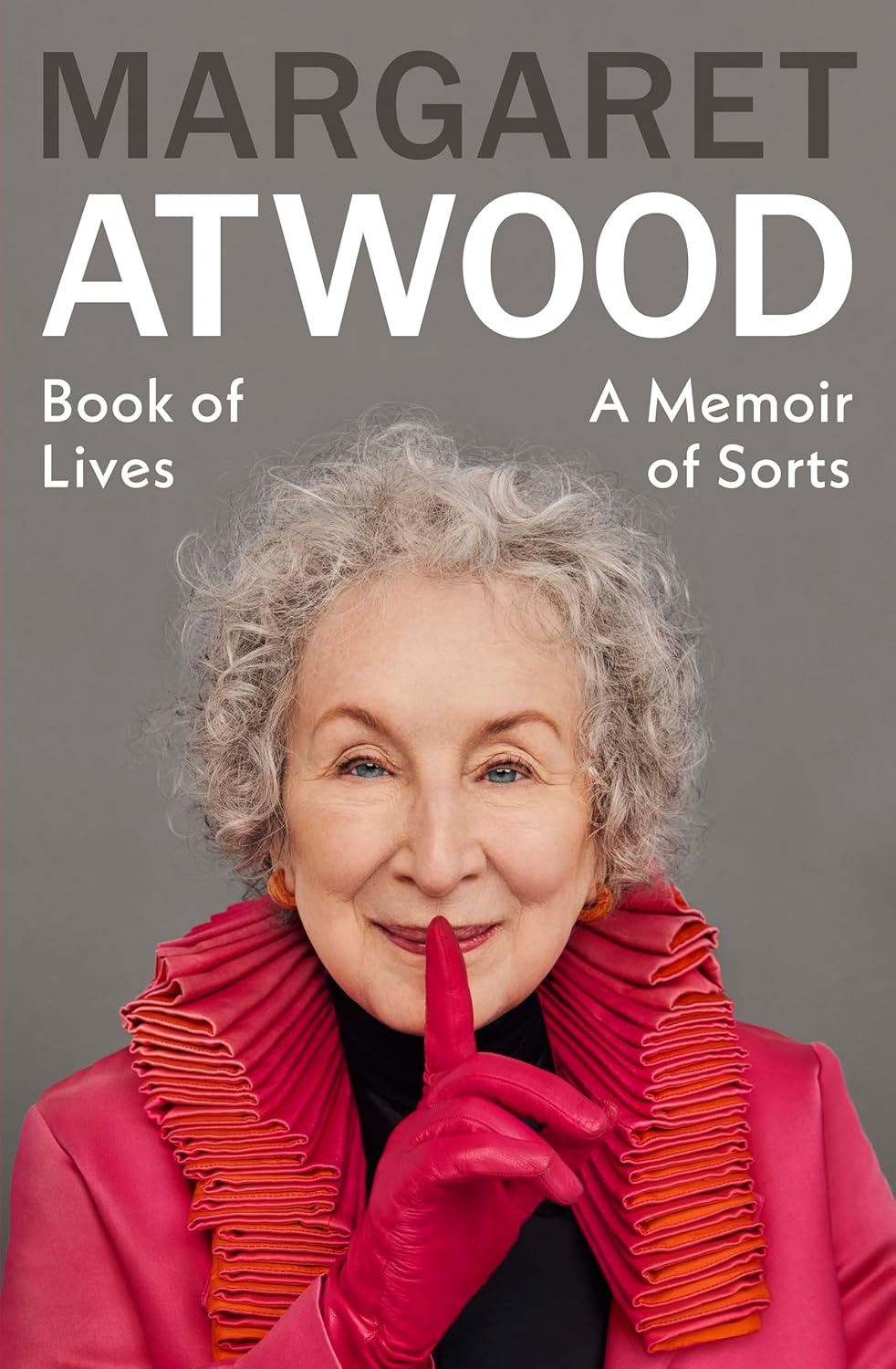
Susan’s Bookshelves: The A-Z of Independent School Leadership by Guy Holloway

I first met Guy Holloway many (thirty?) years ago when I visited the Harrodian School on a newspaper assignment, probably the Telegraph but I confess I have forgotten the details. What I do remember vividly was sitting in on a lesson in which Guy, who had co-founded the school, explored a Winfred Owen poem with nine year olds. He was riveting. The children were entranced and I was bowled over.

Afterwards I realised that Guy, whom I’ve met many times since, and I share minority views about rigorous liberal education. For example: Poetry communicates before it is (fully) understood. Treat children with respect and listen to them. Ticking boxes limits education and tends to hold children back. There’s no such thing as a “bad” child but there are troubled ones everywhere. Head teachers should know their staff colleagues like family members. Extend musical knowledge through enthusiasm and exposure.

A bit random but you get the drift … and those are only examples.

Since our first meeting, Guy has co-founded another school Hampton Court House. He was headmaster at HCH for 20 years, has worked extensively in head teacher training, written many articles and engaged in widespread advocacy for what he believes. Today he runs a China/UK  education business with his wife, Jasmine.

So he brings a wealth of experience to this wise, truthful, accessible book which I read like a novel. It’s arranged in shortish chapters each hung on a letter of the alphabet. The most serious is S for Safeguarding which he says is the very first heading which came to mind when he was planning the book. “If you work with children in any capacity whatsoever, your number one priority is safeguarding. No exceptions. No compromises” he writes adding that “There is no leeway and no room for anything other than to follow – to the letter – the mandatory reporting and referral arrangements pertaining to safeguarding.”  He then goes through the detail of how you do this, stressing that there is no scope whatsoever here for the flexibility he usually advocates.  Guy is equally unequivocal about the need for every Head to acquire financial literacy too.

His new book progresses from Advertising and Boarding all the way through to Yesteryear and Zeitgeist offering thoughts and practical advice at every turn. Personally, though, my favourite chapters though are C for Culture and L for Latin because they encapsulate most of what I believe and practised in my own 36 years at the chalkface before mainstream teachers were tightly tied down to three part lessons, every word dully pre-planned.

He wants teachers to be the sort of people who cheerfully discuss amongst themselves books which aren’t on the curriculum. Books on a teacher’s desk (I always did this) provide talking points with students too. And play them music – the Western canon, of course, but also world music. Widen the horizons of students and encourage, within reason, quirky teachers because they are often the most effective.

And as for Latin (of which I used to teach snippets in English lessons) it is now seriously out of fashion but it teaches learners how language works and deepens understanding of English and most other European languages as the connections come into focus. It’s a great loss but Guy suggests a few practical ideas for keeping awareness going. He also wants every student to know at least 50 words of Greek which gave me pause for thought because I have never formally been taught ancient Greek but, after a lifetime of reading, writing, talking and thinking I have probably picked up at least 50 words which definitely help with lexical unravelling.

Above all Guy argues that Heads must role-model what they want from students and staff so that the school becomes “us” rather than “us and them”. And surely that applies to any organisation? Yes, there’s a lot of wisdom here which goes beyond schools irrespective of sector.  Anyone leading any sort of organisation could learn from it.

Next week on Susan’s Bookshelves Rivals by Jilly Cooper

Midsomer Murders: The Killings at Badger’s Drift

Caroline Graham, adapted and directed by Guy Unsworth

Richmond Theatre and touring.


Star rating: 4


This stage version of one of ITV’s all time favourites comes with as much sunny nostalgia as a really good cream tea. The only way to carry off something quite so daft is to play it with warm affection and humour which is what Guy Unsworth does. And it works a treat from the use of the familiar theme music to the best line in the piece which is Detective Chief Inspector Tom Barnaby (Daniel Casey) declaring at the end: “I’ve worked in Midsomer county for thirty years and while I can’t pretend it boasts the lowest crime rates in England …”

It was a stroke of genius to cast Casey, once Sargeant Troy to John Nettles’s Barnaby, to play Barnaby now. He finds all the decency, intelligence and gentle wit that this most straightforward of men has and acts as quasi fixed point when nearly everyone else around him is eccentrically, maybe criminally, over the top. James Bradwell is strong as his Sergeant Troy too, often a foil for the humour.

So how does this production pack this complicated and most implausible of jolly, rural murder mysteries? The plot is so convoluted that I shall make no attempt to summarise it here. Suffice it to say that several people are killed in a tiny village community and the culprit or culprits must be found.  Five main cast members multi-role with panache and almost imperceptibly. Rupert Sadler’s slimy, camp undertaker is a caricature but it’s hilarious especially at home with his mother (John Dougall – also superb in two other roles) driving a show-stopping tea trolley.  Then Sadler reappears as grumpy artist, Michael Lacey who has an interesting sister – remember Richard, a “message” says. It’s a Wagnerian crossword clue, as it were. There’s another splendid performance from Julie Legrand who has enormous fun hamming up this feisty, querulous, bossy Miss Bellringer – as well as playing two other characters.

Although the show is a bit long and could probably shed 10 minutes, it  mostly hurtles along with slightly jokey, dramatic background music by Max Pappenheim. David Woodhead’s set is almost as witty as the script with rooms and furniture or little spaces flying in or sliding on from the side and there’s a sort of miniature village projected through a circular window on the back wall which is attractively in keeping with the whole ambience. Built into the mix is mime – oh that car with the wind down windows! – tableaux and a lot of fine timing. And what a good idea to dress the stage crew as police officers.

It’s not Hamlet but it’s highly entertaining and beautifully done:  great theatre if not Great Theatre and perfect for a winter evening. It deserves to do well on its forthcoming tour.

Director: Hettie Macdonald

Now sits expectation in the air. A new Tanika Gupta play always promises something thoughtful and original, even when, as she did in her version of The Doll’s House, she is reworking a famous classic. And this radical response to Ibsen’s Hedda Gabler (1891) more than fulfils those expectations.

It’s 1948, and we’re in a classy house in Chelsea. Film writer George Tesman (Joe Bannister) has just arrived to take possession of it with his world-famous film star wife, Hedda (Pearl Chanda), after a long honeymoon.

Chanda, whose naturalistic acting is very convincing, finds brittle vulnerability in troubled Hedda, who hides her confused feelings behind her cold, cutting manner. This Hedda has grown up in India, whose independence has just been agreed, and she is hiding her dual heritage (as Merle Oberon did in real life) because she fears it would make her unemployable. There is an even deeper, rather unexpected, secret in Hedda’s closet, which her fourth husband George, who thinks he’s the third, isn’t aware of. Ibsen and Gupta both make it subtly clear that she’s reluctantly pregnant, but there’s something else here as well – no spoilers.

The strong support cast includes Jake Mann as Leonard, the brilliant screenwriter with an alcoholic past and history with Hedda back in India. Milo Twomey gives us a suitably ruthless but superficially attractive film producer, John Brack, and Caroline Harker’s sad, earnest Aunt Julia is masterly.

The Orange Tree’s square theatre-in-the-round works well enough for this innovative play and ensures intimacy, although there are inevitable moments when, wherever you sit, you can’t see the face of the actor who is speaking and wish you could. Simon Kenny’s set includes a large, luxury-connoting white carpet, which the audience is asked to avoid walking on, and Hedda comments on it in the script. It would have been sensible to have made it slightly smaller (even 2 inches less all round) so that audience members could access the front row without touching it.

If a gun is mentioned in a play, it’s a certainty that it will eventually be fired. And, anyway, seasoned theatre goers know what happens at the end of Hedda Gabler. What Gupta does in the final moments of Hedda, however, is not quite what you’re expecting. It’s a neat way of keeping the audience on its toes, although it’s not quite clear why Hedda would do what she does here.

Nonetheless, this is a fast-paced, gripping two hours of theatre in which Gupta, once again, manages to entertain as well as ask difficult questions.

Runs until 22 November 2025

The Reviews Hub Star Rating 4

Identity, race and Ibsen

Julius Caesar

William Shakespeare

Tangle Theatre

Directed/Adapted by Anna Coombs

Omnibus Theatre, Chatham


Star rating 3


This visceral, succinct, African-inspired, five hander version of Julius Caesar plays on a richly dramatic set (designed by Colin Falconer). A pattern of huge concentric circles lit to change colour (lighting by Joe Hornsby) gleams from the back wall while a dark red circular dais sits in the centre of a stage which is framed by glittering glass walls.

It certainly sets the scene for a sinister story, dominated in this version by the soothsayer played by LAMDA-trained Ghanaian poet Yaw Osafo-Kantanka. Dressed like a tribal warrior with masses of paint on his skin he leaps, shouts, sings and talks through the traditional drum tucked under his left arm. He also plays the citizens – and yes, his muscular stage presence is quite sufficient to make us believe that he is more than one person. And the fact that he mostly uses an African language rather than Shakespeare’s English actually adds to the mystery and mystique.

The text is cut to bring the play down to well under two hours – there’s an interval and a deal of wordless stage business – which makes the story telling pretty clear. The inevitable multi-roling does not always come off, however, although Samya De Meo is terrific in all the small wifely roles and a brave, brawny, ultimately rueful female Cassius.

Remiel Farai’s Brutus convinces. He really is a man of conscience who agrees, reluctantly, to assassinate his power hunger boss/friend (Caesar, played by Roland Royal III) for the greater good of the republic. We see the thoughtfulness and, later, the self awareness in this character. The problem, though, of doing the play in this small-scale way is that we lose sight of the nature of the conspiracy: it is a group effort and that’s the point. Brutus and Cassius are not in this alone.

Although we were warned at the beginning of the performance I saw that, owing to unforeseen circumstances, Samater Ahmed would be playing Mark Antony, script in hand, he is very good indeed. He gets one of the most famous speeches in Shakespeare (“Friends, Romans, Countrymen…”) which he addresses to the audience and makes it sound completely fresh and spontaneous. Then comes the carefully orchestrated rhetoric builds as he swings the crowd his way. Later when he is leading his army against Brutus towards the Battle of Philippi we see his inner ruthlessness, despite Ahmed’s distracting physical resemblance to the young Dalai Lama.

It’s an interesting, valid response to the play from a company which specialises in radical reinventions of classical theatre texts centred on African and Caribbean communities. Supported by Mayflower Studios in Southampton and resident at Prime Theatre, Swindon, Tangle Theatre is touring this production.

REVIEW: Fanny by Calum Finlay at Kings Head Theatre 25 Oct – 15 Nov 2025

Susan Elkin • 25 October 2025

.

‘Funny, feisty, feminist farce’ ★★★★


It’s quite an achievement to create a fast-paced farce which, beneath the gales of laughter, makes some quite serious points and never quite stoops to frivolity.

We’re in the 1840s (as the witty mobile phone warning reminds us at the start) in the Mendelssohn family home in Berlin. Fanny is passionate about, and very talented at, music but because she’s female she must not flaunt this. Her destiny as a woman is to marry, run a household and preside over a family. Meanwhile her younger brother, Felix, is Queen Victoria’s favourite composer. Fanny Mendelssohn wrote a lot of chamber music (over 450 pieces)  and one orchestral work but little of it was published in her life time. Modern music scholars now believe that she had far more input into her brother’s work than was previously thought and it is known that six of her songs were published under his name.

It’s a fine premise for a feisty feminist statement, swathed in humour, and Charlie Russell’s Fanny is a force to be reckoned with – leaping on the piano to conduct an imaginary orchestra, pretending to obey her draconian mother (Kim Ismay), falling out with the serious, tiresome Felix (Daniel Abbot) and plotting with her future husband Wilhelm (Riad Richie). She talks with her eyes, does a good line in fury, places every comic word with precision and when she gets the audience to create a piece of music with her she is more in command of the room than ever.

A fine cast of six works seamlessly together. Ismay and Jeremy Lloyd (basically Paul, a talentless younger Mendelssohn sibling) are adept multi-rolers, whose continual appearance in different guises becomes part of the joke. And I loved the drinking song, led by Ismay. Danielle Phillips meanwhile gives us an enjoyable angry, shouty, scheming Rebecka Mendelssohn, the fourth sibling who is always aggrieved.

As Fanny’s long-suffering, non-musical beau, Richie is fun. His Hensel has a passion for puns and at one point launches into a whole accelerating series in Sir Humphrey style. It got well deserved spontaneous applause at the performance I saw. The running Puccini, Verdi, Rossini, Linguini gag grates a bit, though, as Puccini wasn’t born until 1858, eleven years after the early deaths of both Fanny Hensel and Felix Mendelssohn.

There’s a great deal of dashing in and out of doors and rapid on-stage shifts all done with admirable slickness usually with climactic music: Vivaldi, Beethoven and, anachronistically, Tchaikovsky all get into the mix courtesy of composer MD Yshani Perinpanayagam. It gets ever more manic as the crazy plot moves on and the scene in which most of the cast is in two colliding carriages is beautifully done although it’s strung out too long.

In short this is two hours (plus interval) of hilarious theatre. You’ll need tissues to mop the tears of laughter. You will also come away reflecting on the injustice faced by women composers in the past and rejoicing that they are, at last, getting a voice now.

Fanny by Calum Finlay

Directed by Katie-Ann McDonough

Kings Head Theatre

BOX OFFICE https://kingsheadtheatre.com/whats-on/fanny-qft1

CAST

Fanny | Charlie Russell

Felix | Daniel Abbott

Lea | Kim Ismay

Paul | Jeremy Lloyd

Rebecka | Danielle Phillips

Wilhelm | Riad Richie

Photography: Photographise

THIS REVIEW FIRST PUBLISHED BY LONDON PUB THEATRES MAGAZINE

I’ve tried reading Michael Arditti before and, frankly, not warmed to his fiction. But I was curious about The Choice because it was handed to me by a friend who said it was a novel for intelligent, grown up people. Since she clearly thinks I fit the bill, I was part amused and part flattered. And, of course, I felt obliged to read it.

Michael Arditti is deeply interested in moral and/or religious issues and clearly knows the Church of England like the back of his hand. I am a defiant and determined recusant which is partly what has put me off his writing in the past. This wide ranging 2023 novel explores women priests, male domination, relationships between parents and children at various ages, including damaged childhoods. Abuse, incest, suicide and AIDS are in the mix too. And in the end we enter the troubled realm of whether or not you can, or should, separate art from the personality of its creator, incidentally a topic I visited here with respect to Beethoven only two weeks ago. Arditti’s scope is vast and his novel intensive. It’s much more compelling than I expected.

Clarissa Phipps is Rector of Tapley, where the church houses some religious paintings by Seward Wemlock which are highly regarded, nationally and internationally. By the end of the novel you feel as if you’ve visited and studied them minutely. Wemlock also happened to be “Lord of the Manor” although long after his death, by 2019 the Big House has been sold off. Clarissa is married to an art curator, Marcus, who doesn’t share her Christian beliefs. He has a mistress in London in an arrangement which the three of them are somehow managing for the moment, although Xan, son of Clarissa and Marcus. is a pretty troubled, truculent teenager.

An ambitious novel in every sense The Choice plays with time and narrative method. When we’re in 2019 it is told in the third person but he uses Clarissa as narrator in the central section which takes us back to 1987.

Characters have serious conversations in this novel. The discursive sections sometimes remind me of Graham Greene in, for instance, Burnt Out Case (1960) although they always feel like plot drivers and are never didactic bolt-ons.

Clarissa, a former BBC Religious Affairs producer, really does believe in what she’s doing. Now she’s ordained, she’s often conflicted. There has been a troubled relationship with her father, the Bishop who commissioned the Wemlock paintings, and who does not approve of women priests. Then there’s the terrible illness of her brother Alexander who has AIDS, graphically and moving depicted. Neither of her parents ever acknowledges the truth about their son. Denial is thematic in this novel.

What should Clarissa do when she discovers a fifteen year old boy alone in the belfry in a compromising position with an older congregant who is respected by the entire community? The decision she makes has terrible repercussions. And once you discover uncomfortable truths about an artist does showing his work in a church tacitly condone his sins? Moreover what do we mean by “sin” anyway? It’s a novel full of rather fascinating, unanswered questions.

I think, on balance, my friend is right. This is an intelligent, uncompromising novel with a serious purpose and probably not one for a long flight or the beach. It is however, a powerful story which pounds on and certainly gripped me, despite my initial misgivings. It would be an excellent choice for a book club.

Next week on Susan’s Bookshelves: The A-Z of Independent  School Leadership by Guy Holloway


Safe Space

Jamie Bogyo

Directed by Roy Alexander Weise MBE  

Minerva Theatre, Chichester


Star rating: 3


Jamie Bogyo’s first stage play, is a sassy and perceptive exploration of the vexed debate about the “cancelling” of historic slavery enthusiasts. Based on real events at Harvard in 2016, Safe Space takes us to Calhoun College which, following student protests, was renamed Grace Hopper College in 2017 because John C Calhoun didn’t just own slaves but was a vociferous advocate of the slavery system. We meet five students, all of them fictitious, and follow the changing dynamic between them as events unfurl.

Khadija Raza’s effective set provides a big downstage open space dominated by a statue of Calhoun, which slides on and off and eventually gets vandalised. Behind it is a mini platform which moves in and out to forms a student dorm, a panelled corridor and a wealthy student’s bedroom.

Connor (played by the playwright) and Isaiah (Ernest Kingsley Jnr) are room-sharing best friends – until they disagree about the renaming of the college and a fellow student named Annabelle (Céline Buckens) comes between them. Then there’s  the ruthlessly determined Stacey (Bola Akeju) and Omar (Ivan Oyik) both holding influential, elected positions within the student body so they have political power. Getting the college renamed is top of their priority list, although they have very different personal agendas.  All five actors play well off each other and we get moments of humour along with the serious stuff neatly packed into fairly tight drama. Director Roy Alexander Weise ensures that the pacey dialogue packs maximum power because of course there are complicating sexual elements to the way these students relate each other.

There is a second dimension in this play in that – like many Ivy Leaf and other US universities and colleges – Calhoun has an accomplished collegiate a cappella choir. The singing is beautiful: Bogyo and Kingsley are both outstanding singers. We hear student songs, folk songs, popular melodies and hymns.  Now, the whole a capella movement is, in its many American manifestations, a very interesting subject and a play about that would be welcome. Unfortunately, it adds little to this one because it has little to do with the subject at hand and feels like a self-indulgent bolt on.

The Wanderers

Anna Zeigler

Directed by Igor Golyak

Marylebone Theatre

Novel Productions and Grapevine Shoot Productions


Star rating: 3.5


It’s a refreshing change to see a thoughtful, grown-up, dialogue-driven new play as opposed to a two-a-penny anguished/banal musical. Actually The Wanderers is not technically new. It was written in 2016 and has played in various US venues but this is the UK premiere.

Zeigler, who originally conceived this as two plays, presents two Jewish marriages. Abe (Alex Forsyth) and Sophie (Paksie Vernon) are a modern, educated New York couple, both novelists but he is dealing with inner demons. Schmuli (Eddie Toll)  and Esther (Katerina Tannenbaum) are a 1970s traditional Hassidic couple and the scene in which they are first alone together is stunningly well written in its gentle awkwardness. For a long time it seems like two separate stories. The link – yes, there is one – is slow to become apparent.

Also in the mix – and this is less convincing – is Anna Popplewell’s Julia, a movie star with a strong online presence. Abe becomes infatuated with her image and strikes up an increasingly flirtatious correspondence with her. Or thinks he does. The truth turns out to be quite fun as well as posing some pretty powerful questions about the nature of long-term marriage. Jewish culture and values prevail – even when you’re modern, sophisticated and not particularly religious. It’s an underpinning that you’re born with. Not easy, as mixed race Sophie quips, when you have both the Holocaust and slavery in your heritage.

The play features some strong acting especially from Alex Forsyth, headphoned, troubled, passionate, worried and often distanced. And Tannenbaum makes a fine job of developing Esther from a timid new bride to an assertive mother of three with a mind of her own.

The scenes melt seamlessly into each other using a table which doubles as a bed (beneath which Forsyth sometimes hides) and a versatile long bolt of white muslin. Otherwise Jan Pappebaum’s set mostly comprises some shiny chairs, a hat stand and few other bits. The back screen is a mirror which reflects the audience as we find our seats and, I suppose, makes a statement about parallels between the play’s two marriages. Less effective is the glass screen upon which characters write and draw props (such as a radio), symbols and rather tiresome chapter headings which presumably relate to the book Abe is writing but it’s not developed as an idea.

Characters in this play really are wanderers in the desert just as their ancestors were. It’s the nature of the desert which has changed.