Press ESC or click the X to close this window

Wrap Party (Susan Elkin reviews)

REVIEW: WRAP PARTY by Harry Petty at Jack Studio Theatre 11 – 15 November 2025

Susan Elkin • 13 November 2025

‘Beautifully observed hilarity’ ★★★★

This two hander was inspired by the creators running a cramped catering caravan on a busy film set and it’s terrific fun. Half the stage (right) comprises a realistic catering kitchen in a capsule so that the actors can run in and out of it, take orders and use the “outside” space which is the rest of the stage. Designers Alfie Frost and Tash Tudor have done a good job with this.


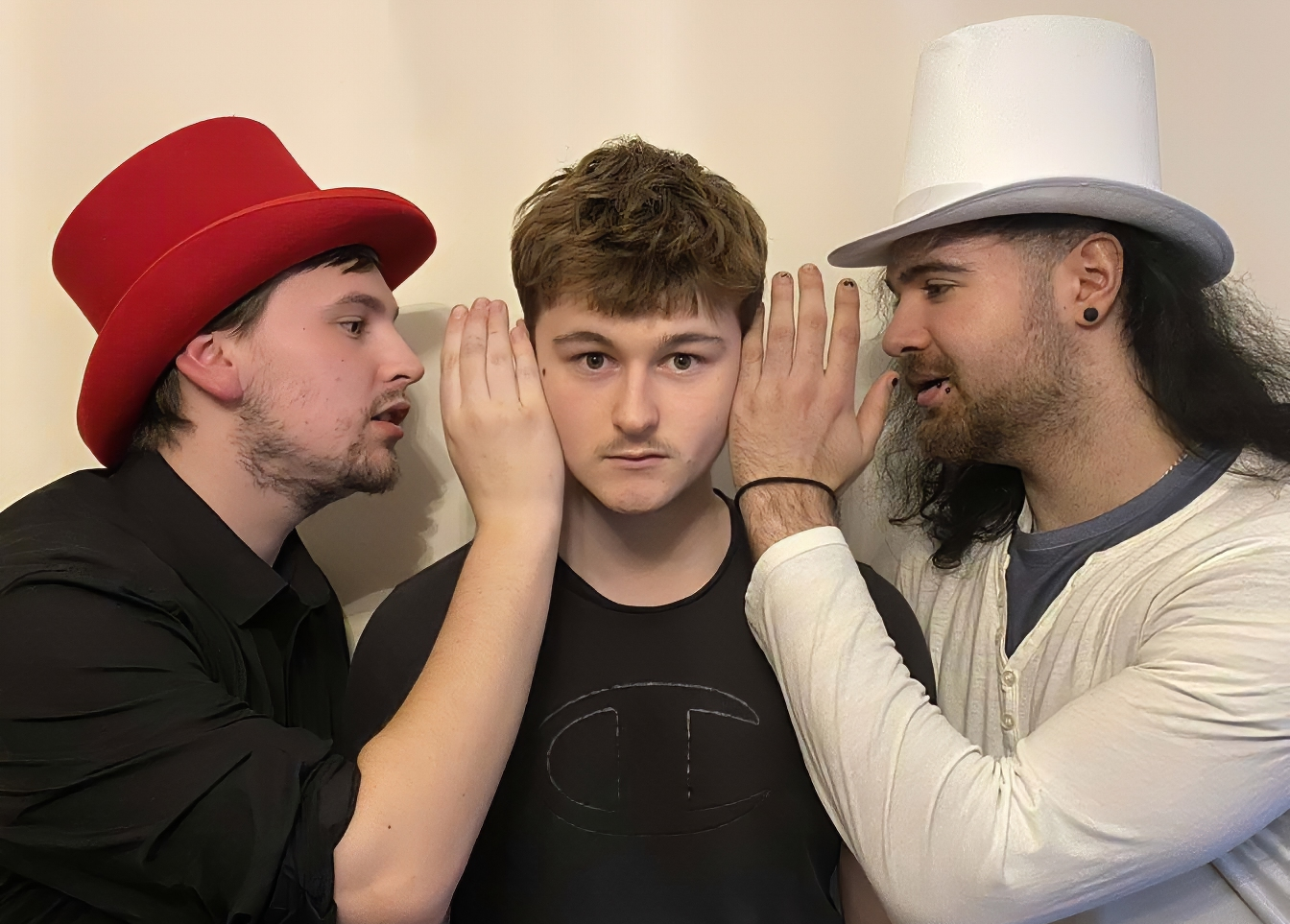
And there’s a lot of beautifully observed hilarity in Harry Petty’s play. This film set is full of outlandish characters with huge egos and Ollie Hart and Harry Warren, both fine performers, play them all with a wide range of voices, the odd hat and a couple of pairs of glasses. At one point Hart does a three way conversation all by himself and it’s very funny.

Yes, we can all sympathise with their having to deal with “Clipboard Claire” who officiously guards health and safety and eventually closes their caravan because someone has put a dog poo bag in the bin. Then there is the customer so entitled she jumps the queue and asks for six ludicrously complicated drinks – a familiar stereotype. Even the elderly director who has an accident in the loo so Olly lends him a pair of trousers has a ring of truth to it. It rattles on with as much realism as romp. And the asides to audience are nicely judged.

And yet, like all good comedies, there are some serious issues underneath to give the play a bit of depth. Harry’s relationship has just broken down and he’s hurting. He and Ollie exasperate each other but the play celebrates the strength of their friendship. It’s Harry’s catering business but he really wants Ollie to work with him. And we feel the dichotomy he faces at the end – until an unexpected piece of information ends the play and we all laugh again.

This entertaining, pleasingly original show runs just over an hour and is well worth catching.

WRAP PARTY Written and directed by Harry Petty

at Jack Studio Theatre 11 – 15 November 2025

BOX OFFICE https://brockleyjack.co.uk/jackstudio-entry/wrap-party/

Cast: Ollie Hart and Harry Warren

Written and directed by Harry Petty

Contributors: Ollie Hart & Harry Warren

Set Designers: Alfie Frost & Tash Tudor

Lighting Designer: Conor Costelloe

Sound Designer: Lauren Ayton

Composer: Josh Tidd

Graphic & Digital Media Designer: Luke O’Reilly

Stills and Videography: Toby Everett & Alicia Pocock

Producers: Lucy Ellis-Keeler & Tara Jennett

Presented by You Guys Productions Ltd.

Photography: Toby Everett

Review first published by London Pub Theatres Magazine

Lightning Beneath the Waves

David Hovatter and Company

Studio, Questors Theatre

 Star rating 2.5

It’s a strong story told with muscularity. Two determined men – an engineer and a financier –  set out, against near impossible odds, to lay a cable under the Atlantic Ocean to link America with Europe. Eventually they succeed, with a bit of help from Isambard Kingdom Brunel’s Great Eastern steamship thereby, in 1866, dramatically furthering the development of modern communications.

It’s a good example of non-professional actors working together to create something vibrant and interesting. Using physical theatre, mime, dance drama and rhythmic song the all-female ensemble of eight becomes navvies, shareholders, the ocean and a lot more. There are some talented performers in this company. And it sits quite well in the traverse space of Questor Theatre’s studio. The two acts are disjointed, however. For a long time after the interval it feels as if we have arrived in a different play.

The most impressive actor is Craig Nightingale, who like Marcus Boel (fine singer) also joins the ensemble. His Cyrus Field has gravitas, enthusiasm and is pretty convincing especially in his scenes with Boel’s passionate Frederick Gisbourne. In the second act we move to Britain and meet Brunel (Jerome Joseph Kennedy) himself, complete with trademark hat which becomes a symbol in this piece. Kennedy has commanding stage presence and the clearest diction in the cast but why on earth does he speak in rhyme? And it was a mistake to ask him to sing.

This show is effectively a folk musical. Robyn Backhouse, using guitar and voice, leads a pleasing four-piece band at one end of the space. She is also credited as “sound designer” which presumably subsumes the MD role. The songs are repetitively and tunefully haunting but “folksiness” should not be used as an excuse for poor choral singing which often lacks power and is frequently out of tune.

Hovatt admits in his programme note that it’s a challenge to make technical information feel dramatic and this is a brave effort. There is is, though, still too much wordy exposition mostly delivered in short bursts by ensemble members.

Moreover, the transverse space makes for audibility problems especially as several cast members are second language English speakers with strong accents. It was fortunate that I saw a captioned performance because without that I would have missed much of the text.

And finally, this show is billed at 90 minutes including interval. In fact it runs – with completely unnecessary post-curtain call extra song – 125 minutes including interval. I am a very busy reviewer and I routinely travel all over London and beyond: QED. However, it takes me two hours to get to Ealing and usually longer to get home because it’s harder to plan the connections. Inaccurate running times (33% longer than stated in this case) are not helpful. Courtesy issue?

Writer and Director: Marc Blake  

We’re on a private island owned by a billionaire who collects world-famous art. Rising Black artist Joan has a residency set up by the collector’s agent, David. Then a museum curator arrives with an important painting to sell. The play builds up – rather as Act 2 of The Mikado does –  to the arrival of the Great Man and his American wife Vanessa. Then the painting disappears during a thunderstorm, and that’s the central mystery of what is essentially a whodunit without a murder.

For a long time, it feels like a pretty predictable comedy of manners – Joan’s forthright gor-blimey ones contrasting with everyone else’s. She gets the funniest lines, and Oyinka Yusuff delivers them with aplomb. There are, however, some unexpected plot twists in the final third. These are totally implausible in view of what has gone before, but they trigger audience gasps and chuckles.

Alan Drake is strong as the exasperated, long-suffering dealer (who turns out to be something completely different) and Jon Horrocks is convincing as the authoritarian collector accustomed to having his own way in everything – until, inevitably, the tide turns against him. Jeremy Vinogradov is pleasing as the humourless museum curator. Naomi Bowman, however, isn’t persuasive as Vanessa with her high-pitched American whine – not quite right for her Virginian provenance and is often inaudible.

The most interesting aspect of Private View is the questions it asks about the value of art. Its real value surely has nothing to do with money, as Yusuff’s character tries to assert. It is not an argument which is fully developed, and that’s a missed opportunity.

Mark Blake’s debut play has an oddly old-fashioned feel despite the mobile phones and occasional “fuck”. It runs 90 minutes and doesn’t need its interval. It should be a straight-through play.

Moreover, the scene changes are clumsy, and that effect is worsened by an unfortunate audience decision on the opening night to applaud, 1950s-style, every time characters leave the stage and there’s hesitant presumption of a scene change.

And it’s time Greenwich Theatre did something about the sight lines (a polite misnomer) from the back row of its studio theatre. The stage is virtually invisible. Many school halls are better.

Runs until 15 November 2025

The Reviews Hub Star Rating: 2

40%

Mildly amusing, clunky whodunit

I had never read a Jilly Cooper novel nor seen any sort of dramatisation. It simply didn’t sound my sort of thing although I was aware of her “thoroughly good egg” status and admired her stoical work ethic. Then, when she died last month, I realised from the warm obituaries just how dearly loved and respected she was. So I decided it was time to throw my JC virginity (a fitting metaphor) to the winds and give her fiction a whirl. At random I picked Rivals which is definitely not to be confused with Richard Brinsley Sheridan’s similarly named 1775 play.

The titular rivals are two independent TV companies bidding for a franchise and there’s a complex network of upper crust characters who all know and fraternise (and the rest) with each other even when they’re on opposite sides in a vicious civil war.

Corinium is led by Tony Baddingham who is … well the clue is in the name.  Cf characters such as Trollope’s Doctor Filgrave or Sheridan’s Lydia Languish. Rupert Campbell-Black MP and cronies then set up Venturer to challenge Baddingham and co – all complete with dirty deals, spying, double agents with energetic bed hopping thrown in. In the midst of all this is media super star Declan O’Hara who is (more or less) faithful to his flighty actress wife and has something called integrity which rubs most of the people he works with up the wrong way.

Of course there’s a lot of sex. Cooper’s characters are nearly all randy most of the time and, after all, the term “bonkbuster” was effectively coined for her, Or maybe. an accomplished journalist and columnist, she invented it herself?  But the sex is never revoltingly graphic and often very funny. I will forgive a writer anything if she can come up with: “As he slid inside her, she felt all the joy of a canal lock suddenly finding it can accommodate the QE2”.

I enjoyed  the shameless word play too. Going into a situation with your flies open, declaring that rats should desert a rising shit and the threat to tear Corinium limb from limousine, for example, made me smile.

At another level it’s educated stuff. It’s full of casual references to, and quotes from, literature such as Shakespeare’s plays and nineteenth century novels. There’s even a passing reference to Josephine Tey’s The Franchise Affair. Cooper knows her Bach from her Bartok (see – she’s got me at it now) too. I beamed broadly at the concept of enthusiastic humping to the pounding of the Brahms B flat piano concerto.

Moreover Cooper is rather good at character (and dogs). Cameron Cook is a highly successful, glitteringly attractive producer who takes no prisoners – and yet she’s also desperately vulnerable. Her attempts to bond (would a woman like her really be so competent in the kitchen?) with Rupert’s truculent daughter are well observed. And I really liked Taggy – Declan’s daughter who is severely dyslexic, earnest, the family mainstay, a very talented chef/caterer and tantalisingly pretty. Taggy has emotions she tries to keep hidden.  And she turns out to be a pretty good advocate for Venturer – who gets her heart’s desire in the end, unlikely as it seems. Her dyslexia is a bit odd though. Maybe it was less well understood in 1985 when Rivals was written. In all my years of teaching I never met a dyslexic who was effectively unable to read anything at all.

This 720 page novel is the second volume in Cooper’s hugely popular eleven-title Rutshire Chronicles series. She eventually had me hooked me in a mild sort of way and I found myself cheering for Venturer and actually caring about the characters by the time I’d reached the 50% mark. It is, however, too long for what it is.

Rivals is marketed these days as a “classic” and yes, it’s odd to be in a world in which people fly on Concorde, vote for Regan (or not), go to Woolworths and have portable televisions, among many other period touches. I was approaching 40 and the mother of children aged 13 and 9 when this book was published. It doesn’t seem so long ago to me. And yet …

Next week on Susan’s Bookshelves: Frankenstein by Mary Shelley  

Emilia

Morgan Lloyd Malcolm

Directed by Pam Redrup

Questors Theatre Ealing


Star rating: 3.5


In 2017 I was at a press conference at Shakespeare’s Globe where Michelle Terry, new in post as artistic director announced that she had commissioned a new all-female play for 2018. This, she explained, was why she was not committing to quotas of male and female actors in casts. Thus was Morgan Lloyd Malcolm’s Emilia born. I saw it at the original production at the Globe and enjoyed it again when it transferred into the West End. Since then I have seen it at least twice more elsewhere – including a memorable production at Mountview drama school in Peckham.And now this – in the very impressive Questors Theatre which I was visiting for the first time.

Emilia is loosely based on the sketchy story of Emilia Bassano, a ground breaking 17th century published poet “known” to Shakespeare (and other chaps). It is possible that she was his “Dark Lady.”  Maybe, the play speculates, she was the inspiration for much of his work. Perhaps, given the quality of her poetry, she gave him ideas or maybe she said or wrote things which he purloined. Women, after all, were not supposed to have creative ideas or compete with men in any way.  It makes for a quirky, moving, timeless feminist statement as Lloyd Malcolm’s text dances cheerfully in an out of historic formal speech, witty modern English complete with asides, and quotations from Shakespeare.

Lloyd Malcom envisions Emila (did he really pinch her name for Desdemona’s companion in Othello?) as a richly multi-faceted character played by three characters, usually all on stage together, at different stages of her life. Shekinah Singh finds warmth, anger, passion and sheer determination to be recognised in Emilia 1. Yasimin Nankya’s measured performance of Emilia 2 gives us rueful but still passionate woman arguing for equality. And Sunita Dugal delights as the calm, reflective older Emilia narrating her life story. And Kerala McGrall’s casually charismatic Shakespeare ensures that we understand why Emilia is drawn to him, furious as she is at the way he treats her. “I am only seen when needed” she declares angrily, early in the play.

The ensemble, from which other characters emerge, does a pleasing job including much stylised shuffling on and off stage and creating shapes reminiscent of the swans in Swan Lake – movement director Sophie George. Among other cameos Stella Robinson is fun as the camper-than-camp Lord Larnier, who make a marriage of convenience with Emilia.

And all this is played out on one of the most stunning sets I’ve seen anywhere in quite a while. The Questors 300-seat theatre has a spacious thrust playing space on which Bron Blake has created a white and sepia environment made of books and writing. There are columns and a balustrade punctuated with piles of books and the downstage paving stones are covered in writing. It’s as dramatic as it is pertinent.

Emilia speaks to us all and this production articulates the message as clearly as I’ve seen it done anywhere. “As I grow I must also shrink”? Not any more.  Come on women, there’s a fucking house to burn down.

The Diary of a Provincial Lady

Adapted from EM Delafield by Ellie Ward who also directs

Bridge House Theatre, Penge


Star rating: 3.5


Disingenuous social commentary is almost always funny and works a treat if done with this production’s fast-paced panache. EM Delafield’s largely autobiographical and best known novel (1930) began as a series of articles for Time and Tide. Think Jane Austen (brought forward a century or so) crossed with Bridget Jones or Alison Pearson’s Kate Reddy. The things women have to deal with are ruefully, sometimes hilariously, timeless.

The titular lady reads dated extracts from her diary. Meanwhile two larger than life friends Lady Boxe (Rebecca Pickering) and Jasper Von Nimismeyer  (Michael Ansley) play all the people she’s describing, occasionally retreating to their “real” characters for a chat. Cue for a huge amount of nipping in an out of hats (cleverly popped onto the heads of front row audience members when they’re not required on stage) and accents. Given that sometimes the character speaks only a single line this is an impressive feat of unfaltering slickness especially since the parts are interchangeable. Pickering can do anything from an insolent gor-blimey cook to a coyly hammy French governess, devoid of tact, and a lot more. Ansley is a treat as the diarist’s mumbling husband and many other roles. It’s very funny.

At the performance I saw, the titular Provincial Lady was played by writer/ director Ellie Ward because Becky Lumb wasn’t well enough to appear. Ward stumbled once or twice over the text but generally gave a fine performance, communicating exasperation, delight, self-awareness and wit in spades. She speaks with her eyes and her audience asides are a joy.

I spent the whole of the first half (it runs just over two hours with a 15 minute interval)   thinking how unusual it is to see a play without earnest “issues”. But they arrive in the second act which is very slightly more serious. The Provincial Lady wants to work (in real life EM Delafield was an astonishingly prolific writer) and so, with reluctance, decides that her children must go to boarding school. It’s the old, very recognisable,  problem of a mother being pulled in all directions. And it never goes away.

This production is a neat, richly entertaining, way of bringing an epistolary novel to stage while never letting the audience forget that it’s a diary. The continual letters from the bank manager are fun as are the many imaginatively evoked conversations.. The recorded extracts of The Lady talking to her children, do not, however, add much.


Blood Wedding

Federico Garcia Lorca, in a version by Ted Hughes

Directed by Flavia Corina di Saverio

Tower Theatre, Stoke Newington


Star rating: 3


Of course Lorca is a 20th century theatrical monolith. He is as revered in Spain as Shakespeare is in Britain and in both cases  the fame is global and rightly so – especially in view of  his untimely death at the hands of a Fascist death squad at the age of 38. At least Shakespeare died in his bed.

Nonetheless Blood Wedding, one of his three world-renowned achievements, was – and remains – a strange play. It begins as a reasonably conventional danger-charged domestic tale fraught with threats of feudal violence and illicit relationships in rural Spain in the 1920s. Then, in its final third, it races off into the woods, reinvents itself as a densely mysterious poetic piece complete with a talking moon, an allegory for death in the shape of a peasant woman (straight from the Brothers Grimm), incantations, both spoken and sung and escalating surrealism. Lorca was, after all, influenced by Salvador Dali and symbolism was their trademark.

Flavia Corina di Saverio and her generally strong cast make a fair attempt at making sense of all this. Michael Neckham’s Bridegroom is warmly in love and then suitably puzzled/angry/ distressed when his glitteringly attractive bride (Sabrina Robinson – convincing) runs away with her former beau (Romain Mereau – charismatic). And Sangita Modgil, whom I’ve seen several times before in Tower Theatre productions, delights as the anxious, busy servant.

It’s the video design (Max Maxwell) and projection mapping (Catherine Shaw) which makes this production really atmospheric. We get olive trees (leaves wafting in the wind), vineyards and courtyards moving on the back wall along, later, with mysterious storms. And it’s pretty immersive, Sound design by Rob Ellis and composition by Vahan Salorian are excellent too – lots of rising chromatic and minor scales heighten the tension. And I don’t know whose idea it was to preface the play with the menacing sound of a knife being sharpened but it’s arrestingly effective. And, given the rising rates of knife crime in London at present, also feels startlingly topical.

Othello

William Shakespeare

Directed by Tom Morris

Theatre Royal Haymarket


Star rating: 4


In terms of story telling this production of Shakespeare’s account of a marriage which goes wrong very quickly, is the strongest Othello I have ever seen. It rolls along with commendable clarity and, on press night, you could hear the audience listening – really listening – and chuckling, not at theatrical gimmicks but at what the playwright actually wrote. Full marks to director Tom Morris for that.

This is David Harewood’s second go at “The Moor of Venice”. I first saw him in this role at National Theatre in 1997. Now, at a youthful-looking nearly 60 he brings a warmly attractive gravitas to the early scenes and a totally believable love between him and his Desdemona (Caitlin Fitzgerald – good). It makes “Farewell the tranquil mind” even more poignant than usual and there is riveting tautness in the scene between him and Iago (Toby Jones)  which ends the first half.

Jones is electrifying as Iago, dripping poison and malice. Much scholarly ink has been spent debating Iago’s motivation. Here it’s straightforward professional jealousy, exacerbated by racism. “I hate the Moor” he spits out. Jones creates wry humour out of his outrageous audience asides which highlight his manipulative duplicity and contrast powerfully with his calculatedly and increasingly venomous conversations with Othello. It’s quite a performance from an actor we’ve grown used in recent years, to seeing mostly in “good guy” roles. I’ve seen many Iagos over the years, including Ian McKellen and Simon Russell Beale. Jones definitely has the edge for sheer self-interested nastiness.

There are some nice work in this production’s support roles too. Luke Treadaway’s dim, impressionable Cassio and Felix Hayes’s benign, wise Duke of Venice are both pleasing. And Vinette Robinson as Emila really comes into her own in the second half – screaming in fury at Othello.

Ti Green’s shape-shifting set starts in the rigid, architectural formality of Venice and gradually morphs into the chaos of war-torn Cyprus and eventually the devastating anguish of Othello’s mind as he finally flips and kills Desmona. Generally speaking Jon Nicholls’s sound track is rather bitty and you can’t always tell whether what you’re hearing is him or TFL rumblings nearby but there’s terrific moment in the strangling scene.

It’s always good to see Shakespeare back in the West End reaching new audiences as well as old hands. And this relatively succinct version (the RSC production at the Young Vic in 1989 ran until 11.45!) cuts to the chase with plenty of theatrical power.