Press ESC or click the X to close this window

Sleeping Beauty (Susan Elkin reviews)

Sleeping Beauty

Chris Jarvis

Directed by Michael Gattrell

The Arts Theatre Cambridge


Star rating 3


This solid, workmanlike panto marks the reopening of The Arts Theatre Cambridge after its long closure and £17m refurb. And there was certainly a party atmosphere in the bright foyer spaces even before we entered the auditorium complete with new seating, a wrap round balcony and the smell of new carpet. Then lights flashed (some of them rather too brightly), the three piece band in the pit struck up festively and we zoomed off to Trumpington Towers – after a rather awkward introduction and welcome by the  new team at The Arts: Rachel Tackley, creative director and Victoria Beechey, executive director

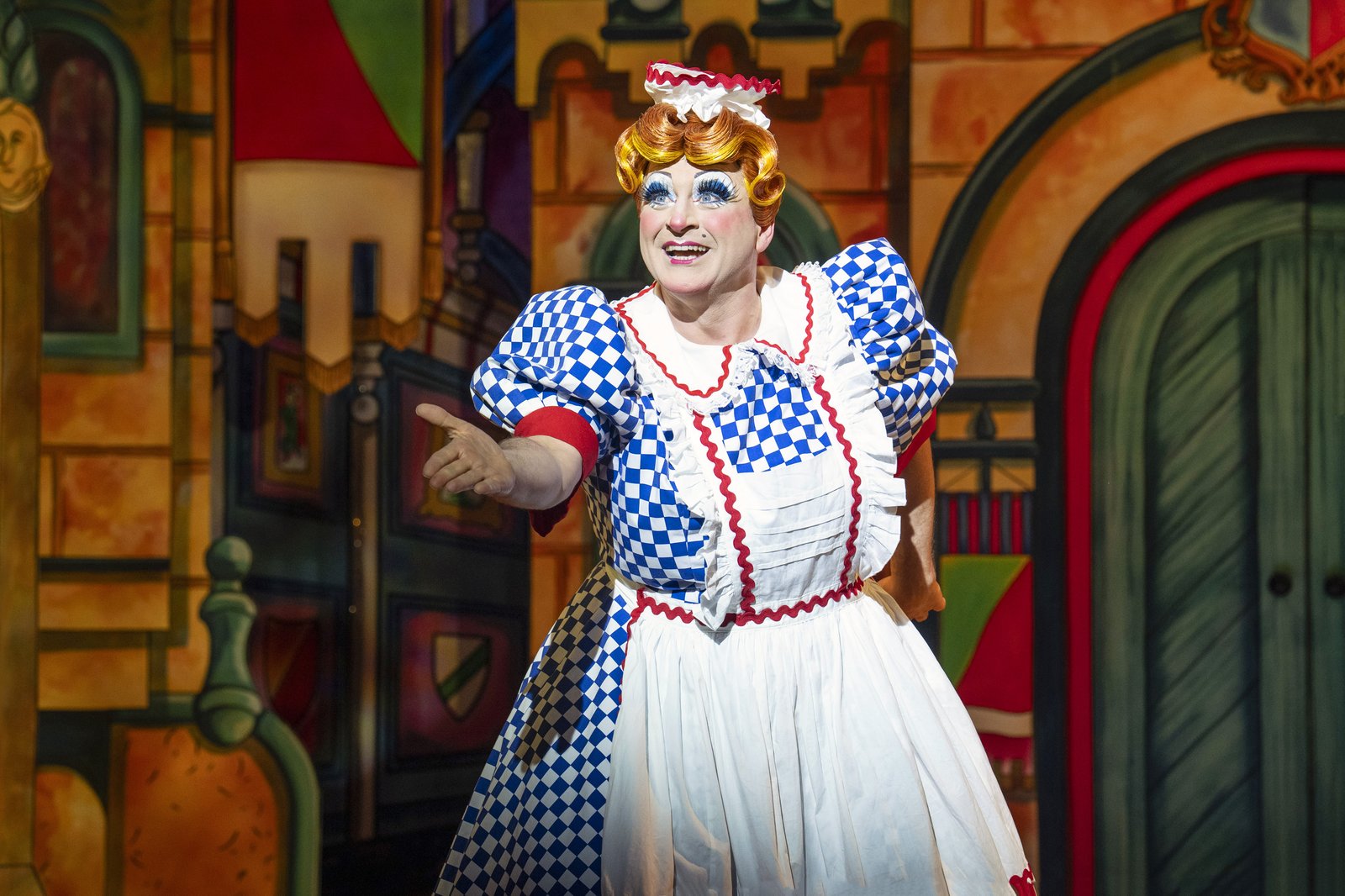
Matt Crosby, in his 20th year of panto at The Arts, commands the stage as Nanny Nutkins and is greeted by the audience as an old friend. He commands the stage, looks wonderful and times most of his jokes with aplomb. Unfortunately on press night – billed as a gala performance – this wasn’t always the case with the rest of the cast. Jarvis’s script is quite clever in that it buries some pretty lewd jokes in the dialogue for adults to chuckle at, unnoticed by children. Sadly, like the ordinary jokes, much of that was hurried over too fast and lost, possibly due to opening night nerves.

Stephen Roberts, however, is good value as Happy Harry, once he settles.  He moves his body like rubber, has a splendid range of funny faces and his patter song listing Cambridgeshire villages to the tune of the Can-Can is one of the best things in the show. Tanisha Butterfield sings well as Fairy Strawberry and evinces lots of warmth. And Tricia Adele-Turner (Carabosse) is an excellent singer so goodness knows why she doesn’t get a big number until the second half.

It’s an interesting take on a time-honoured plot –  although the Cambridge references are overdone as if everyone is trying too hard. In this version Princess Rose (Daisy Twells – suitably Barbie-like) meets her princely hunk (Joseph Hewlett as Prince Ken) before she goes into her long sleep which actually puts a different complexion on the narrative. The structure is odd too. Normally we get the birthday greetings and shout-outs, children on stage with singalong etc only once the plot is fully resolved, Here there is more story afterwards which feels a bit laboured. On reflection it’s probably best to stick to the tried and tested formula.

Nonetheless it’s a likeable enough show which will, I suspect, bed down and mellow during the run. The six person ensemble provides some very watchable dance numbers and Tom Mulliner’s lighting design adds plenty of seasonal glitz to the production.
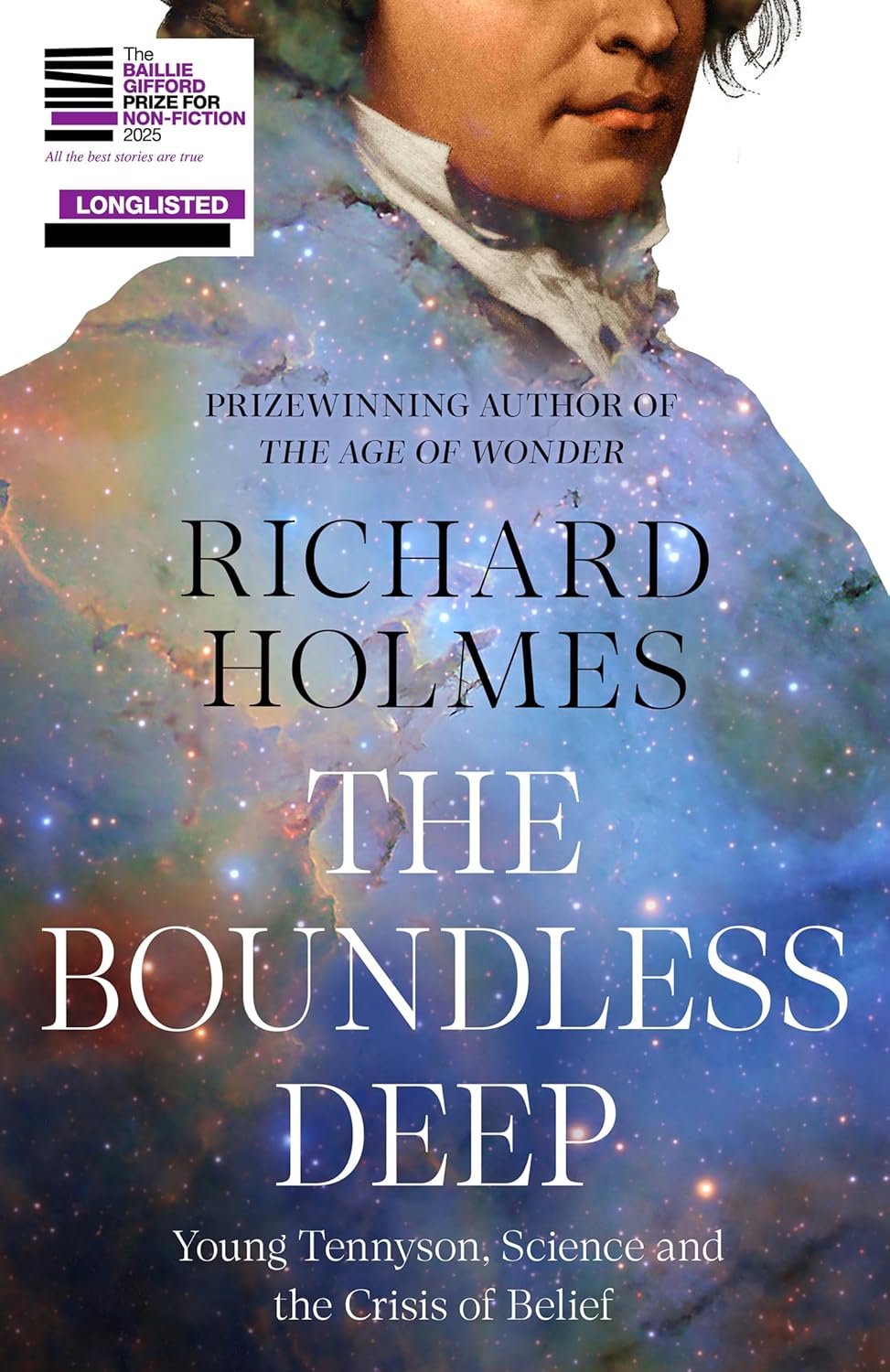
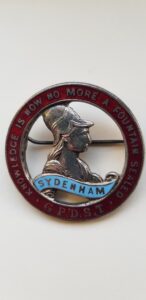
Tennyson and I go back a long way. He was my O Level poet and I remember loving the sensuous musicality of Oenone, The Lady of Shalott, Ulysess and more. So I asked for, and was given, a complete works of Tennyson for my 21st birthday, which I still have. Actually, had I but known it, I’d been carrying Tennyson around with me for a lot longer than that. “Knowledge is no more a fountain sealed” comes from Tennyson’s great plea for women’s education, The Princess (1847). It was, and is, the motto of the Girls Day School Trust (Girls Public Day School Trust in my day).  So we had that unequivocal statement on the  circumference of the hat badges we were obliged (dire penalties if we didn’t) to wear every day pinned to our velours and panamas at Sydenham High School, where I started on a London County Council-funded place in 1958.

Once I began teaching English in secondary schools, Tennyson appeared in all the anthologies through which we tried to instil a love of poetry in our students. And when I finally got round to doing a taught Masters with the Open University in my forties, the subject was nineteenth century poetry so there he was again. Yes, Alfred Tennyson and I are old friends.

No one has ever really pointed out to me however – and definitely not my very conventional Christian O level English teacher – that almost everything Tennyson wrote in the first half of his life was shot though with burgeoning new scientific ideas which challenged conventional views of “God” and his creations. Enter Richard Holmes with this hugely informative, astonishingly well researched account of Tennyson’s experience, influences and thinking in those, sometimes turbulent, years before 1850 – the year in which, aged 41 he published In Memoriam, married Emily Sellwood and became Poet Laureate. “At last …” was the feeling among his friends with regard to the first two of those events.

Holmes’s subtitle is “Young Tennyson, Science and the Crisis of Belief” and the book details, mostly, the first 40 years of his life before he morphed into the familiar heavily bearded establishment figure living in considerable comfort at Farringford House on the Isle of Wight with Queen Victoria and Prince Albert as neighbours. And the contrast is extraordinary. He even found ways of coming to terms with conventional religious belief.

Holmes uses Tennyson’s poem The Kraken, written while the poet was still at Trinity College, Cambridge, as a running metaphor for his inner demons, doubts and depressions: the terrifying sea monster “battening upon huge sea worms in his sleep”.  And of course that almost unimaginably horrifying creature links with the burgeoning interest in palaeontology which surrounded him. Tennyson read, absorbed and was influenced by Charles Lyell’s geological discoveries and theories along with Vestiges of the Natural History of Creation by Robert Chambers (1844) and many other books which confronted the roots of nineteenth century thought. Creative agnosticism was becoming almost respectable. Atheism was still feared and loathed.

The young Tennyson could be excellent company. He was good looking with a beautiful voice and a gift for mimicry. A troubled childhood – one of eleven – with an abusive father in a Lincolnshire rectory probably contributed to some of his inner turmoil but he found a strong circle of friends at Trinity College, Cambridge including, famously, his beloved Arthur Hallam. Hallam died suddenly in his early twenties and the loss devasted Tennyson for the next 20 years. The many “grief” poems he wrote over two decades eventually came together to form In Memoriam which sold enormously well and made Tennyson rich. His elder son (born 1852) was named Hallam which, Holmes speculates, probably helped to bring closure for his father.

Another theme running though this biography is Tennyson’s close friendship with the sensible, jovial Edward “Fitz” Fitzgerald who later translated/wrote The Rubaiyat of Omar Khayyan (1859 ). We share Holmes’s sadness as the two men eventually drifted apart. At the same time, though, Tennyson was beginning to meet and associate with just about every nineteenth century writer, philosopher, scientist and economist you can think of. Holmes is very good at context.

It’s richly readable, entertaining, full of things I didn’t know and offers new takes on familiar poems. If like mine, your head often rattles with the rhymes and rhythms of Mariana, The Lotos Eaters and the rest – like favourite pieces of music –  you will enjoy, and learn a lot from, The Boundless Deep.

Next week on Susan’s Bookshelves: The Most Wonderful Time of the Year by Beth Moran

Maidstone Symphony Orchestra

Conductor: Brian Wright

Violin: Mathilde Milwidksy

Mote Hall, Maidstone

29 November 2025

Entitled “Happy Holidays!” this pot-pourri of seasonal jollies marked a slight change of direction for Maidstone Symphony Orchestra. And it brought in a good audience including, pleasingly, a number of children.

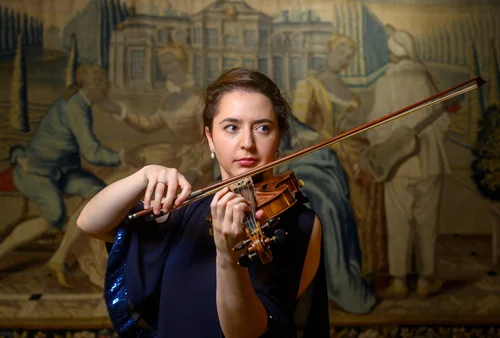
The most substantial item was Bruch’s Scottish Fantasy. We’re all used to the famous violin concerto so it was a nice change to hear this delightfully accessible work played live by Mathilde Milwidksy. It was a good idea to bring the harp (Tamara Young – excellent) forward for this work so that the Andante cantabile is celebrated as the duet that it is. Wildwidsky played with unshowy charisma and a fine sound especially in the scherzo. And her account of the Allegro guerreiro ended in a definitive, appropriately warrior-like fusillade of double stopping. For her encore Wildwidsky played the Bach Sarabande in D minor with moving elegance and it was good to hear a complete contrast

Also in the first half we got Johann Strauss II’s overture to Die Fledermaus which made a resounding opener with MSO adeptly catching the characteristic Viennese two-beats-and-a-sniff rhythm in the waltz sections as the overture dances through all those melodies and stories. And I admired the power and control in the accelerando.

The second half provided lots of Christmas and New Year sentimental cheesiness in which everything from Waldteufel’s Skaters’ Waltz though to the Radetzky March was smilingly and slickly well played – even Delius’s Sleigh Ride became fun. And it was a pleasure to hear the whole of Prokoviev’s Lieutenant Kije Suite (rather than just Troika), complete  with double bass solo, tenor clarinet, saxophone and cornet.

The hightlight of the second half for me, though, was the Blue Danube Waltz in which the shimmering opening and the brass tune at the start promised lots of warmth – and delivered it. And congratulations to the second violins and violas for whom this is fifteen minutes of exhausting  “vamp.” I had to play it myself in a concert the next day so I know what it’s like. I admire your stamina, guys.

It may have been a bit early for Christmas concert but this cheerful concert certainly lifted spirits and provided escapism, on a damp, dismal night.

PETTY MEN review Arcola Theatre 19 Nov – 20 Dec 2025

Susan Elkin • 26 November 2025

‘Ingenious but esoteric’ ★★

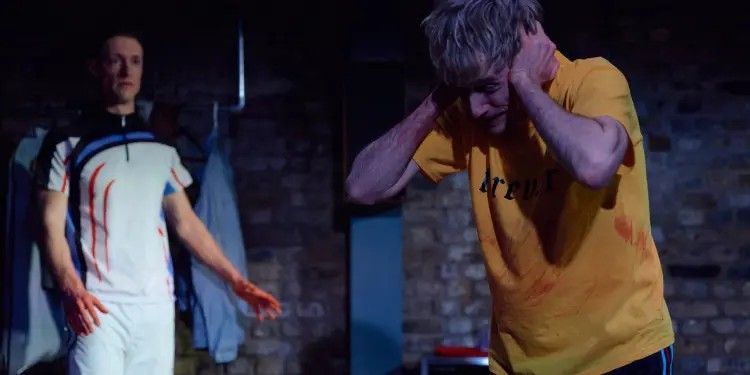
Two actors are in a gloomy theatre dressing room. The show, which rumbles in the background via relay, is Julius Caesar. They are understudies to Brutus (John Chisham) and Cassius (Adam Goodbody). “ He [Caesar] doth bestride the narrow world like a Colossus; and we petty men walk under his huge legs”.

These men are bored because there have been a hundred performances but neither has ever been on – a pretty unlikely situation in real theatrical life – so they find playful ways of amusing themselves. They are, however, so mired in Julius Caesar that conversation is often mingled with text from the play (all captioned) and they help each other with line learning so we hear a lot of Shakespeare. Thus it inches towards being the advertised “radical reworking” of Julius Caesar.

Then something happens on stage in the distance which changes everything and we see increasing tension between the understudies. A power cut adds to the drama. And don’t forget there’s a ghost scene in Julius Caesar. Petty Men is effectively a play within a play but the storytelling gets lost.

It’s an intriguing concept but it would fall pretty flat if you weren’t familiar with the plot and text of Julius Caesar. Moreover it loses plausibility on several counts. Two actors dissing the skills of their leading man amongst themselves would refer to their colleague as “Fred Blogs” not as “Caesar”. Moreover I’m pretty sure that no actor learns lines by randomly committing act, scene and line numbers to memory. Response to cues would be far more natural. And at the Petty Men press performance a chunk of dialogue was repeated and it was unclear whether this was deliberate (and if so, why?) or down to first night nerves.

This play seems to be trying to pose some interesting questions: Can actors change the world? If you commit to an acting career what are your expectations? What can Julius Caesar teach us in 2025? And more. Sadly none of them is fully explored.

And all of that is a pity because a great deal of work and thought has evidently gone into this show which certainly highlights the talents of two decent actors and their director.

Petty Men by John Chisham, Julia Levai & Adam Goodbody

Directed by Julia Levai

Presented by Buzz Studios

Arcola Theatre, Studio 2

Box Office https://www.arcolatheatre.com/event/pettymen/

Cast: John Chisham and Adam Goodbody

Direction by Júlia Levai; Set and Costume Design: Tomás Palmer; Lighting Design: Lucía Sánchez Roldán; Sound Design: Tingying Dong; Caption Design: Perri Schofield; Dramaturgy: Sofia Gallucci; Access Support: Megan Ekinsmyth; Creative Consultancy: Pinny Grylls; Technical Stage Management: Emily Darley

Produced by Tom Dixon (Buzz Studios)

Photo credits: Olivia Spencer

REVIEW FIRST PUBLISHED BY LONDON PUB THEATRES MAGAZINE

Red

Daver Carey, Ashley Driver & Sebastian Ross

Rayne Theatre, Chickenshed

 Star rating: 3.5


If you want a hip-hop folk story with all narrative expectations confounded then Chickenshed’s new show for Christmas 2025 ticks plenty of boxes. In this version of Red Riding Hood (yes, she does put one on eventually) Granny is a sort of mafiosa villainess and the wolf is a good guy, misunderstood of course. It also becomes a symbolic quest story because there are three amulets, in the possession of three different characters, which have to be found and united.
Like all Chickenshed shows it’s high octane fun with huge team-directed casts (five different juvenile rotas or casts – it was the 142-strong Blue Rota on press night) and its own, distinctive style of choreography. That means lots of lifts, leaps and leans and big actors picking up smaller ones to create architectural shapes. I’ve seen it there many times before but it still works effectively enough. What is different about this production is that most of the songs are rap style which means there isn’t a lot of choral repetition.

Blue Rota’s Maisie Packer as Red, (short for Mildred) has fine stage presence, oodles of stroppy insolence and, eventually enlightened wonder. There’s a good moment when she and Michael Bossise (who also co directs) as Wolf gaze at stars together and the lighting design (Andrew Caddies) works a bit of lump-in-the-throat magic.

The Chickenshed way of working is for talented adults in the cast to provide a framework so the inclusive theatre experience becomes richly immersive for all performers. Most of these adults are graduates of Chickenshed’s education programmes who now work for the company. Cara McInanny (who also co-directs with Bethany Hamlin and Jonny Morton) for example, is glitteringly commanding as Granny and her song “It’s Fun to Be Bad” is a almost a show stopper.

Then there’s the signing – another Chickenshed trademark. Every word spoken is simultaneously and integrally signed somewhere on stage. And when it’s a dialogue then that is replicated by a two signers. There are many signers in the company and in one of two of the ensemble numbers everyone does it at a simple level. Shiloh Maersk, whom I’ve seen in action in many Chickenshed shows, is exceptionally charismatic to watch because his movement work is so fluid that the signing and the dancing are all one. He has completed Chickenshed’s BA course and is now a mentor, performer and teacher there.

Inclusivity is Chickenshed’s raison d’être and in Red, as always, I admire the way that performers in need of support on stage get it with respectful subtlety. And as usual much of the dialogue, sung or spoken, is split amongst dozens of young performers who can be anywhere on the large stage. I can see why this is done but it often makes it difficult to work out who is singing or speaking before the moment is over and we’re on to something else – it’s a pretty busy show.

Usually at Chickenshed, the live band is hidden away so that we don’t see them. For this show part of it visibly on a platform above the back screen. It’s a massive youth band, directed by Phil Haines, and they make a terrific sound so that’s another feather in Chickenshed’s cap.

The story telling is bit weak in the first half but becomes clearer after the interval and some of the minor characters are superfluous although they’re well directed. In general, though, Red is the usual feel-good achievement we’ve come to expect from Chickenshed.


LA BELLA BIMBA! Review, Voila Festival at Barons Court Theatre 21 – 23 November 2025

Susan Elkin • 23 November 2025

‘Italian, clowning and cabaret’ ★★★

There is a lot of talent in this company whose show presents two Italian girls arriving in 1920s New York with Broadway ambitions. What they actually do is to busk outside theatre stage doors There’s no plot as such. They simply perform, argue, support each other, become elated when it goes well, cast down when it doesn’t –  and amuse the audience.

Because Carlotta (Lucrezia Galeone) and Cecilia (Sarah Silvestri)  don’t speak English we hear a great deal of high-octane Italian – and they’re clearly enjoying sending up the innate volubility of both the language and most of its native speakers. I know only “music” Italian mushed in with bits and pieces deduced over the years via French and Latin. Nonetheless Gelone and Silvestri ensure that most of what they say is comprehensible to the audience members like me and that’s quite a skill.

Working with three fine musicians on Baron Court’s tiny stage they sing – pretty well – in a range of styles including opera parody. It’s a good idea too to place them (director Molly Rolfe) between the MD on keys (Michele Maria Benvenuto) guitarist (Ben Howarth and percussionist (Tasha Fish) who sit like three points on a triangle. It ensures that the musicians can see each other very clearly so the music is punctiliously precise and when the trio become part of the action it’s seamless.

La Bella Bimba! is a 60 minute  show which is good fun and quite original but it is, by definition, small scale and fringe so it’s hard to see where its future might lie.

LA BELLA BIMBA! by Theatre Gamine

Lucrezia Galeone and Virginia Ruspini

Barons Court Theatre, part of the Voila Festival

Cast & Creatives

Director: Molly Rolfe

Producer: Elena Rigoni

Co-composer and performer: Lucrezia Galeone

Sarah Silvestri: Performer

Ben Barrow: Co-composer

The photographer credit is Isadora Baccon – @bacconfilms

REVIEW FIRST PUBLISHED BY LONDON PUB THEATRES MAGAZINE

Review: JACK AND THE BEANSTALK at Lyric Hammersmith 15 Nov 2025 – 4 Jan 2026

Susan Elkin • 23 November 2025

‘Original, thoughtful and mildly traditional’ ★★★ ½    

This hip-hop pantomime is genuinely different. Sonia Jalay tells a strong story predicated on the importance of imagination, a quality we all have in our heads but it’s vulnerable. And although most of the traditional elements (slosh scene, sing along, children on stage, calling out, two person cow)  are in, there aren’t many puns or tedious one liners. And it’s bespoke for Hammersmith. There’s a distinct, and very welcome, freshness here.

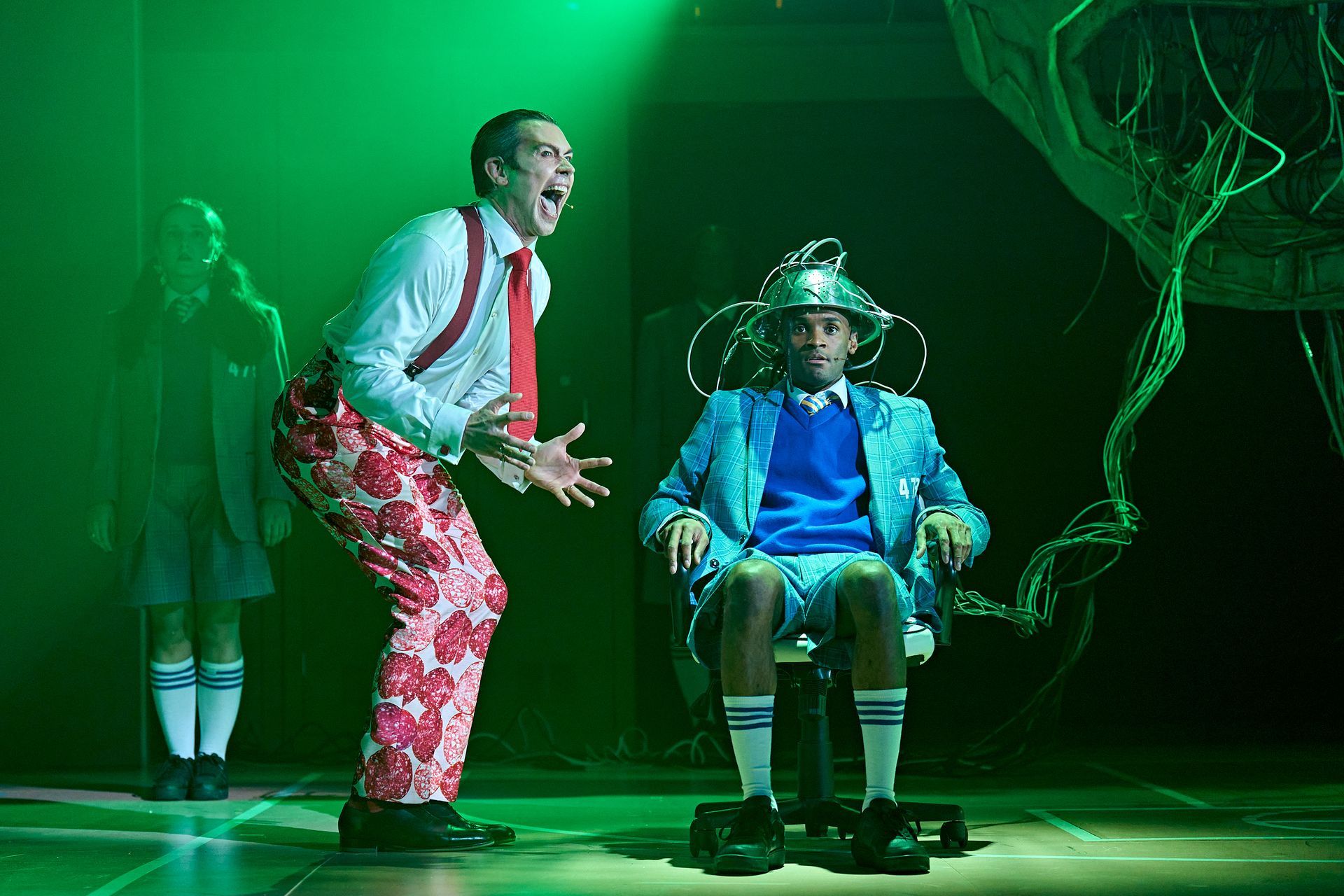
Jack Trott (Joey James), dressed in school uniform, is about to start at the Fleshcreep Academy where his sister Jill (Sienna Widd) is already established and his mother (Sam Harrison) is a dinner lady. The school is Dickensian with headteacher, Sir Fleshcreep MBE (John Partridge) coming somewhere between Mr Creakle and Miss Trunchbull as he menaces the children and their imaginations into submission. He looks and sounds like Nigel Farage too. The worst punishment is being “sent to the giant” Then in the second half, when we arrive in the giant’s kingdom, we’re effectively inside Fleshcreep’s head and it isn’t pretty.

The show opens with the terrifically talented Jade Hackett as Fairy Godfather. She sports a delicious Caribbean accent, moves like rubber, commands the stage and looks hilarious cuddling up to her love interest, Mama Trott, who is at least 18 inches taller. Sam Harrison, with all the requisite outrageous costumes (designed by Georgia Lowe) finds the right blend of camp, kindness and pathos in his take on the Dame.

Joey James also excels as the very nervous Jack gradually finding the confidence not to depend on his alter ego sock puppet and Sienna Widd’s Jill is delightful as the feisty elder sister – a very far cry from the usual “Silly Billy” brother whipping up the audience into forming gangs. And it’s all supported with some very pleasing ensemble work.

In many ways, though, this show belongs to John Partridge who cackles so unpleasantly that he really is foul rather than funny as he lords it over everyone – every word spat out with relish and spiced with some engaging body movement. Why am I not surprised to read that he trained as a dancer, initially at the royal ballet school?

The second half of this show is surprisingly dark – shades of both His Dark Materials and the Wizard of Oz. Being “sent to the giant,” as Jill has been, is seriously sinister but no spoilers.  Suffice it to say that it makes a subtle but very pertinent political point about education and what, at its worst, it does to young people.

It’s fortunate that most of the songs (Corin Buckridge) are rap because the words are inclined to disappear in the more pop-style numbers, partly because the music – well played by a four piece band led by Olivia Zacharia –  is often too loud.

For myself I really liked this reworking of the panto genre but I suspect it might not do for families looking for the sort of light-hearted seasonal romp they’re used to. The children around me were engaged and willing to yell when required but there wasn’t all that much laughter.

JACK AND THE BEANSTALK at Lyric Hammersmith

Written by Sonia Jalay

Directed by Nicholai La Barrie

BOX OFFICE https://lyric.co.uk/shows/jack-and-the-beanstalk-2025/

Photography: Manuel Harlan

REVIEW FIRST PUBLISHED BY LONDON PUB THEATRES MAGAZINE

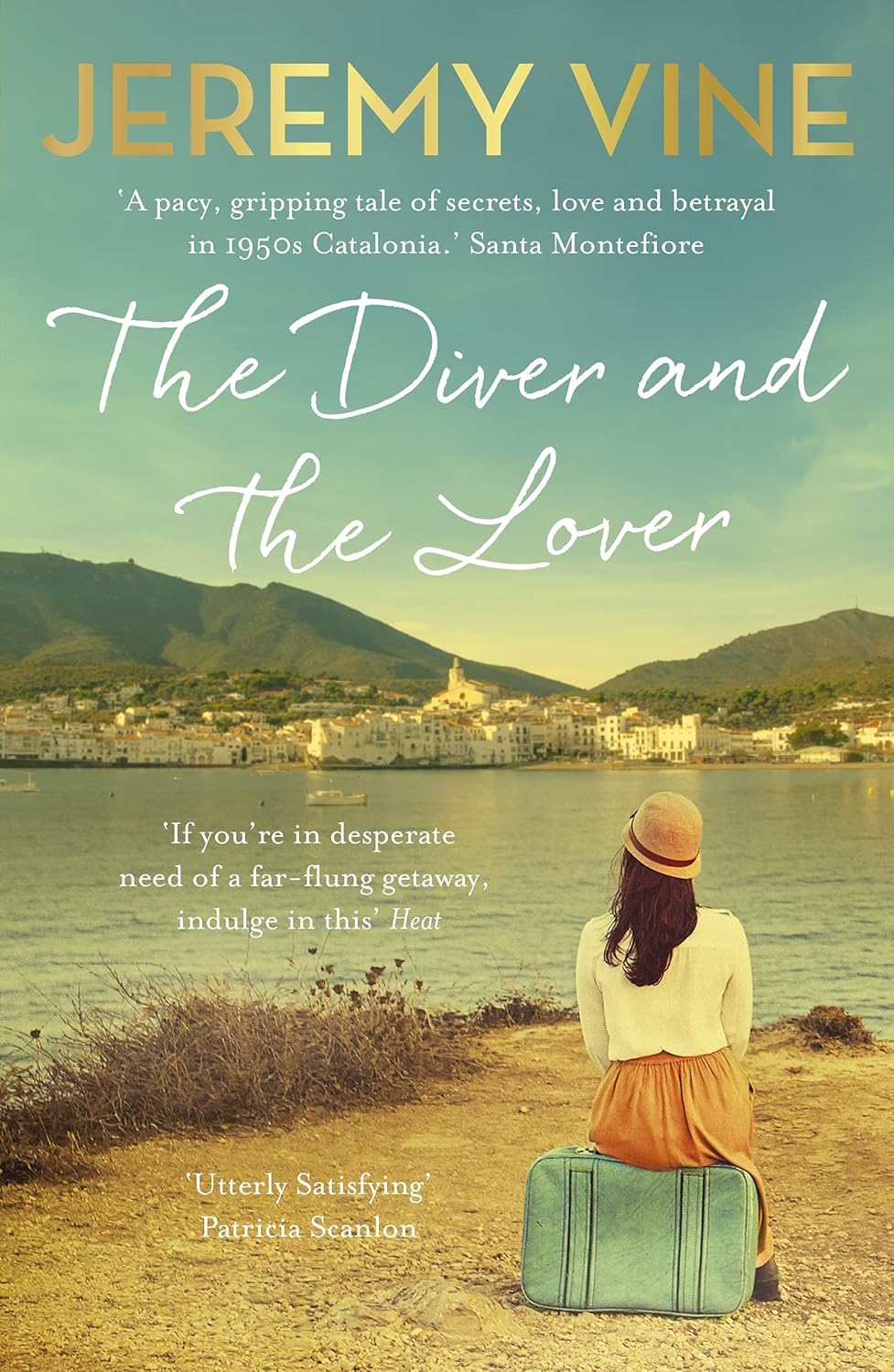
Jeremy Vine’s is not a name I had, until now, associated with novels. Neither had the surprised friend who drew my attention to The Diver and the Lover (2020). She didn’t  offer any kind of verdict – just said she’d be interested to know what I thought of it. So here goes.

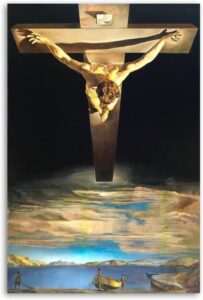
Salvador Dali’s famous, startling 1951 crucifixion painting, Christ of Saint John of the Cross hangs in the Kelvingrove Art Gallery amd Museum in Glasgow. American stuntman Russell Saunders modelled for it, suspended from a gantry. The painting was bought from the artist  by Dr Tom Honeyman for Glasgow for £8,200.

That is Vine’s starting point for a rather arresting historical novel full of time shifts. It’s a novel inspired by art ( a sub genre?)  like Tracey Chevalier’s Girl With a Pearl Earring or Irving Stone’s The Agony and the Ecstasy although Vine’s is a quite different approach from either of those.

Two (fictional) half-sisters, a fifteen year age gap between them are at Port Lligat in Spain where Dali is living. It is 1951. The elder, Meredith, has mental health issues, because of a tragically traumatised childhood, and you soon begin to wonder if she is involved in Vine’s framing device. The novel starts at Kelvingrove in the present where a gallery employee sees an elderly woman apparently trying to damage the painting and it ends with the outcome of that incident.

Back in 1951 Meredith, who loves art, wants to meet Dali. In their hotel is an attractive young man named Adam Bannerman whose build is similar to Russell Saunders – who is also around. Bannerman is a diver and the younger sister Ginny sees him dive naked off the cliffs one morning and it’s the beginning of something for them both although Vine keeps us wondering for a long time.

Eventually – it’s a bit drawn out – they do get into the house where Dali works and lives with Gala, who seems to be a wife cum housekeeper cum protective PA cum (probably) cover for his gay proclivities. The point is, eventually, which of the two men actually modelled for the painting? And there’s fraught political tension beneath everything that goes on because this is Franco’s Spain in which people the regime don’t like are summarily despatched by armed police. Vine builds in a lot of suspense, particularly when Bannerman is left alone in great danger in Dali’s deserted villa.

Vine is rather good at evoking the climate and ambience of Port Lligat and the descriptions of Dali’s surreal, eccentric home (swimming pool shaped like phallus and testicles) are fun and, presumably researched. It’s also an ingenious plot which made me call up images of the painting several times. And thank you, Jeremy Vine, for a satisfying ending. They’re too rare.

Next week on Susan’s Bookshelves: The Boundless Deep by Richard Holmes