
Press ESC or click the X to close this window

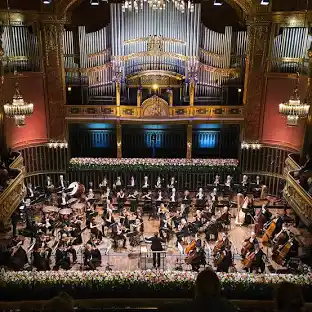
London Philharmonic Orchestra: A Hero’s Life (Susan Elkin reviews)

Conductor: Mark Elder

A concert presenting three quite different works starts with Ravel’s Mother Goose (1911), which is, of course, full of orchestral colour, most of it pastel and very French in tone. Conductor Mark Elder creates a pleasing balance between double basses and wind, and there’s strong work from contrabassoon player Simon Estell, whose instrument represents the Beast in conversation with Beauty in this medley of fairy tales. The “pecking” strings are effective, too, with the woodwind bird calls.

Next up is James Ehnes with Bruch’s second violin concerto (1877). Unlike the composer’s earlier first concerto, an instant success which has remained popular for over 150 years, this one gets very few outings. And that is a pity because it’s full of melodic interest and is, at this concert, given pleasing treatment by Ehnes and Elder who are clearly happy working together.


Ehnes makes the melodies sing out with warmth in the opening adagio and gives us a lovely last note. The middle movement is, unusually, entitled “Recitative”, in which Elder provides incisive, measured orchestral sound in dialogue with the soloist. The finale combines lyricism with well-managed musical fireworks delivered at virtuosic high speed by Ehnes. His encore – Sonata Number 3 by Eugene Ysaye – enables Enhes to demonstrate his considerable skill at double stopping, of which there isn’t a great deal in the Bruch.

After the interval comes the work by Richard Strauss, which gives this concert its title: Ein Heldenleben (1898). It’s an almost outrageously huge and flamboyant piece requiring, among other things, eight horns, five percussionists, two harps, five trumpets, three bassoons and batteries of strings. It’s a loosely autobiographical piece expressing, in six sections, the 34-year-old composer’s views about his own life and life in general.

Highlights in this performance include the sumptuous, almost sensual lower string sound in the second section and the frisson of the three off-stage trumpets (they slip off a few minutes before), which herald the dramatic Des Helben Friedenswerke part. There is a lot of work for solo violin in Ein Heldenleben delivered here with verve by LPO leader Pieter Schoeman, whose “voice” evokes Strauss’s mercurial wife Pauline. Also noteworthy is the fine cor anglais playing (Max Spiers) in the final peaceful resolution and the glorious ending, which Elder tapers away perfectly.

Travelling from wafty French impressionism to Strauss-ian grandiloquence via late German romanticism doesn’t make much narrative sense, but each item in this concert is enjoyably played in its own way.

Reviewed on 25 October 2024

THIS REVIEW WAS FIRST PUBLISHED BY THE REVIEWS HUB https://www.thereviewshub.com/london-philharmonic-orchestra-a-heros-life-southbank-centre-london/

I am working my way through the Booker Prize shortlist. This is something I routinely did when I was teaching English so that I could talk to the students about what was current. I still do it most years because it’s often a way of finding authors who are new to me but whose work I find like very much. This is how, for example, years ago I discovered David Lodge and the late, much-missed Carol Shields. I was also the only person I knew who had actually read The Satanic Verses, several months before the appalling Fatwah was announced against its author, Salman Rushdie.

Anyway, this year I have just got to Creation Lake and it’s a powerful novel. An unnamed narrator, using the fake name of Sadie Smith, is a professional, freelance spy and very good at what she does. Her current job in a remote part of western France involves penetrating a fairly peaceful group of eco-activists, the Moulinards, who live in a colony. She is tasked to the  secret setting up of the assassination of a politician who is scheduled to visit a nearby town. Her responsibility is the ground work. She is not the assassin.   That involves getting into a relationship with a man whose family own a house in the area and whose close friend leads the Moulinards – and a lot of very convincing acting. She’s American but speaks several languages including French.

The philosophy of the Moulinards is driven by the thoughts and discoveries and  of Bruno Lacombe, a recluse who sends them emails. “Sadie” hacks into these and is gradually drawn into his views about how homo sapiens and homo erectus may have interacted, overlapped and interbred with the Neanderthal. Of course caves were vital to all these people and that’s what the Moulinards are trying to prevent the destruction of, because the government plans to despoil some ecologically and anthropologically important subterranean lakes.

It’s fascinating, cerebral, impeccably researched stuff and I was intrigued to see how Kushner would end it. Surely this Villanelle-like woman wouldn’t succeed in her aims and then just drive away to safety and her next assignment? What actually happens at the placard-waving demonstration is quite neat but “Sadie” is changed by it all and chooses a denouement for herself which I didn’t see coming.

A long and meatily absorbing novel, Creation Lake is well worth reading.

Next week on Susan’s Bookshelves: Purple Hibsicus by Chimamanda Ngozi Adiche

Philharmonia

Emilia Hoving

Royal Festival Hall, Southbank Centre

27 October 2024

Emilia Hoving, one of the most fluid and manually balletic conductors I’ve ever watched, kicked off with a delightful performance of Grieg’s Peer Gynt suite which, familiar as it is, she managed to make feel enjoyably arresting. Morning was appropriated sensitive with pleasing horn work, she coaxed an evocative grey sound from the muted strings in Death of Asa and the lilting pizzicato in Anitra’s Dance was elegant. And when she got to In the Hall of the Mountain King Hoving wisely left herself plenty of scope by starting very soft and slow and delivering the whole with humour.

Outi Tarkiainen’s Mosaics (2024) was a disappointment. I’m an unrepentant traditionalist.  I do not go to a classical music concert to watch a wildlife film – a very dark and grainy one at that.  Yet a film of an endangered, bottom-trawling fish was imposed on us for the full 15 minute duration of the piece. The disparate, melody-free music meanwhile – from which we were thus distracted –  featured tubular bells, a violin solo, lots of remote string harmonics and strange percussion effects which I couldn’t always identify. The trumpet fanfares and cymbal clashes towards the end did at least signify that it was nearly over.  The applause at the end was polite but far from rapturous

Part of the Philharmonia’s Nordic Soundscapes season, the concert ended with a splendid account of Sibelius 2 – the finale of which moved my plus one to tears which is always a good sign. Hoving, a Finn so this music is in her blood, created an electric sense of expectancy right from the start with those quivering strings and joyfully worked up to the many mountainous climaxes. There was some delightful bassoon playing against the double bass pizzicato in the andante. Hoving has a knack of silently “orchestrating” the rests and pauses so that the next entry slides in seamlessly. And as for the Finale, well, it was powerful, warm and intense. The woodwind melody with solo cello was very beautiful and the wonderfully bombastic trombone writing at the end was delivered with all the fortissimo panache it needs.

It almost made up for the fish.

Kidults! The Musical continues at the Bridewell Theatre until 26 October 2024. The show is also playing at the Courtyard Theatre from 29 October to 2 November and at 229 London from 4 to 6 November.

Star rating: one star ★ ✩ ✩ ✩ ✩

Mark Tunstall’s poems about adolescence, school and growing up make a rather uneasy two hours of plotless theatre.

There’s some dialogue, spliced together with musical solos, duets and ensembles based on the words which are quite poignant and witty in places. Imagine a second-rate version of TS Eliot when he was in Old Possum’s Book of Practical Cats mode.

Lulu Chen is the composer but some of the songs have been composed by others which may, in part, account for the unevenness and lack of cohesion.

This was the first-ever performance of this show so I won’t dwell on the clunky cueing, the ragged entries to many numbers and the ensemble singing which wasn’t in tune. Presumably, these things may improve as the show beds in …

Read the rest of this review at http://musicaltheatrereview.com/kidults-the-musical-bridewell-theatre/

The Worst Witch

Adapted from Jill Murphy’s original books by Emma Reeves with music by Luke Potter

Tower Theatre

Directed by Ruth Sullivan

 Star rating 4

When Jill Murphy’s first book about an academy for witches was published in 1974, my children were aged two and minus two. JK Rowling was nine. No wonder these books featured prominently in our household and, presumably, in hers where the germ of an idea must have been forming. Emma Reeves’s  sparky adaptation enjoys a bit of amiable sideswiping to the effect that these engaging books came long before the first Harry Potter title in 1997.

And it’s in good hands with Ruth Sullivan and her fine cast of eleven along with a live five piece band, led,  at the performance I saw, by Adam Pennington.

Of course Hecate Hardbroom is a gift of a part and Janet South does it beautifully. She looks cross and unsmiling and exudes chilly authority until she is finally led by events to thaw a little. And what a well observed stereotype that is: The warm, slightly dappy headmistress (Miranda Cheeseman) all sweetness and light while her fearsome deputy actually runs the place and does the dirty work. Cheeseman gives us a fine performance too especially when she has to double as her dastardly twin sister – cue for lots of wigs and rather neat video work to present them together.

The new kid on the block at Miss Cackle’s Academy is Mildred Hubble in whom, as required in all the best school stories, Laura Fleming finds delightful naivety, decency and ultimately the strength to triumph. It’s a strong performance and, like, the other five “girls” in this production she’s satisfactorily convincing as an adult playing a child.

The really outstanding work, however, comes from Abi Cody as the sneering, bitchy Ethel Hallow. She never stops being visibly disdainful even when she’s singing or dancing. It’s a wonderfully sustained piece of work with engaging head twitches and knowing looks at the audience. She even morphs into a snail. Cody is a secondary school drama teacher. I hope her students have been to see her in action because this is exactly what teachers should be doing: ably demonstrating, in their own lives, the skills they teach,

Luke Potter’s music ranges over lots of styles and genres. “These boots are made for witching” with angel voice oohs, rhythmic clicks and oom-pah accompaniment is fun, for example.

At one point in the chanting lesson the singing is meant to be dire as part of the narrative. It isn’t. however, always quite in tune in some of the ensemble numbers even when it’s meant to be. But I doubt that any of the delighted young audience members, many clad in colourful witchy costumes for their trip to the theatre, noticed. And the children were thrilled to be invited on stage to help with the action at the end so it was resounding, rather moving, end to a piece I thought was slightly too long but it seemed to hold the attention of the little people it was meant for.

As an adult I enjoyed the affectionate teasing of theatrical convention too. At one point Mildred’s tabby cat is pulled apart at which the audience gasps in horror. “Oh for goodness sake! It’s a puppet!” snaps Miranda Cheesman’s character at the audience. “Look – she’s been there all along!” she adds pointing to puppeteer Trinidad Prieto. It’s a witty moment.

In short this was as good a piece of community theatre as I’ve seen in a while and perfect for half term.


Academy Chamber Orchestra

Trevor Pinnock

Duke’s Hall, Royal Academy of Muisc

25 October 2024

It is a real privilege to hear a talented group of young aspirant professionals working with, and responding to, a musician of Trevor Pinnock’s gentle but inspirational calibre. As he said himself, at the end of the concert, technique is only the starting point. What matters is the development of the collective thinking which leads to musical joy. “And wherever you are in your music career, we all learn at every concert. It’s infinite” he said.

In the elegance of Duke’s Hall which has a pleasing acoustic and was almost full for this concert, we began with Brahms’s variations on a theme of Haydn. I’ve never seen double basses tucked in so tightly next to first violins and a long way from the cellos but it enabled Pinnock to draw out colourful detail which might otherwise have been lost. Moreoever, the leader of the double basses, Ahouo Werenskioid Mandan, exudes engaging musical charisma.

Pinnock, batonless and unassuming, often smiling and clearly enjoying himself, delivered all the variations with fine balance. There was delightful work from contrabassoon and the piccolo worked plenty of magic at the end of this evergreen, very satisfactory and cheerful piece.

The second work was Mendelssohn’s “Scottish”  fourth symphony and I admired the clarity of the upper strings at their first entry which is very exposed. Thereafter in the first movement there was some fine bassoon work and the modulatory passages were played with exciting tension into the storm. The vivace was then distinguished by well articulated woodwind playing, particularly from the oboe.

This adagio is arguably one of the most sublime melodies ever written and it was played on this occasion by these young people with such delicacy and intelligence that I had to blink away tears, especially when we reached the climactic horn solo: splendid playing.

The Allegro vivacissimo goes like the wind and is one of those “see you at the end” movements but Pinnock ensured that it felt precise and never rushed. The woodwind pulsing was engagingly slick and Christian Inman, on timps with hard sticks, did a good job. And again there was lovely playing from the horn in the final maestoso – right at the top of the texture, exactly as it should be.

Philharmonia

Conductor: Marin Alsop

Mezzo-soprano: Sasha Cooke

Royal Festival Hall

24 October 2024


An all Mahler concert – both Gustave and Alma –  makes an interesting programme. Mahler famously didn’t want Alma to compose but eventually gave in and her four songs (1910) orchestrated by David and Colin Matthews, sung here by Sasha Cooke, formed a fascinating centrepiece.

Cooke is adept at “acting through song”, to borrow an expression often used in musical theatre, and her vocal sound is richly arresting. The gentle ending and control in Die stille Stadt was striking as were her legato notes in Bei dir ist es traut. And I enjoyed the story telling in In meines Vaters Garten which came complete with yawns, stretches and finger wagging.

The concert had begun with a piece new to me: Blumine which was originally conceived as a symphony movement which got dropped. It’s gently lyrical piece, played at this concert with some fine string work – both that pianissimo quivering, which is so hard to bring off, and the lush sound towards the end. The trumpet melody then picked up by the flute was pleasingly brought off too.

And so, after the interval, to the real meat: Mahler’s mighty fifth symphony at the end of which I imagine Alsop and all players were exhausted because it’s a long and demanding piece given, on this occasion, exceptionally energetic treatment. There were times when both Alsop’s feet left the podium at once.

The many high spots included the contrast between the brooding passages in the first movement and the grandiose drama, followed by the richness of the lower strings in the second movement especially in the beautiful passage launched by the cellos and then picked up by the violas. The shift into 3|4 melodies and the rather otherworldy ambience of the scherzo was impressive too.

There is a film of Edward Elgar, late in life, conducting his Pomp and Circumstance March number 1. “Play this as if you’ve never heard it before please” he says, briskly, setting a cracking pace. Well, the fourth movement of Mahler 5, the famous adagietto, faces similar challenges. Alsop rose to them well in this performance coaxing some lovely harp and double bass work from the orchestra and controlling the recap with tight sensitivity. It sounded really quite fresh. Then we got a rousing resolution in the Rondo finale with especially fine work from tuba, bass trombone and timps.

All in all it was a rather rewarding concert.


Well, this one is something different. A female narrator lives with her eccentric uncle in Brittany. The short novel’s title is unequivocal. It’s a wonderfully graphic account of a reclusive, war veteran given to hoarding, gluttony and geriatric eccentricity. Some of his habits are best not read about while you’re eating – which, incidentally is how I do a lot of my reading.

Gisler is an award winning author and poet who writes in both French and German and translates between the two. About Uncle is translated by Jordan Stump, a professor of French at the University of Nebraska-Lincoln. So the English is American. Stump has won prizes for translation which makes me reluctant to criticise too assertively although I did wonder whether anyone, on either side of the Atlantic, really talks about “a pair of underwear” or maybe he’s reflecting euphemism in the original French. Moreover, I have never seen the verb “to surveil” used in English although it’s common enough in French so perhaps I’ve learned something.

Uncle eventually becomes ill and is admitted to a strange hospital which doubles as a veterinary unit – or are the characters hallucinating? And the end, when Uncle wanders away from the house on his yellow crutches and she follows him, it is moving. Gisler is a talented descriptive writer.

About Uncle (2024) is published by Peirene Press, based in Bath, a company which specialises in introducing new, shortish novels by foreign writers to a new audience. My attention was drawn to its list by a French friend (not the same one who alerted me to novelist, Valerie Perrin earlier this year) who loves the fiction produced by Peirine so much that she buys them in batches as a regular subscriber.

An interesting discovery and a refreshingly long way from Times and New York Times best sellers. Variety, spice of life etc.

Next week on Susan’s Bookshelves: Creation Lake by Rachel Kushner