Press ESC or click the X to close this window

Dolls and Guys (Susan Elkin reviews)

Show: DOLLS & GUYS

Society: London (professional shows)

Venue: Bridge House Theatre. Bridge House, 2 High Street, London SE20 8RZ

Credits: By Sabean Bea and Alanna Flynn. Directed by Julia Sudzinsky.


DOLLS and GUYS

3 stars

Susan Elkin

Photo: Courtesy of Dolls and Guys.


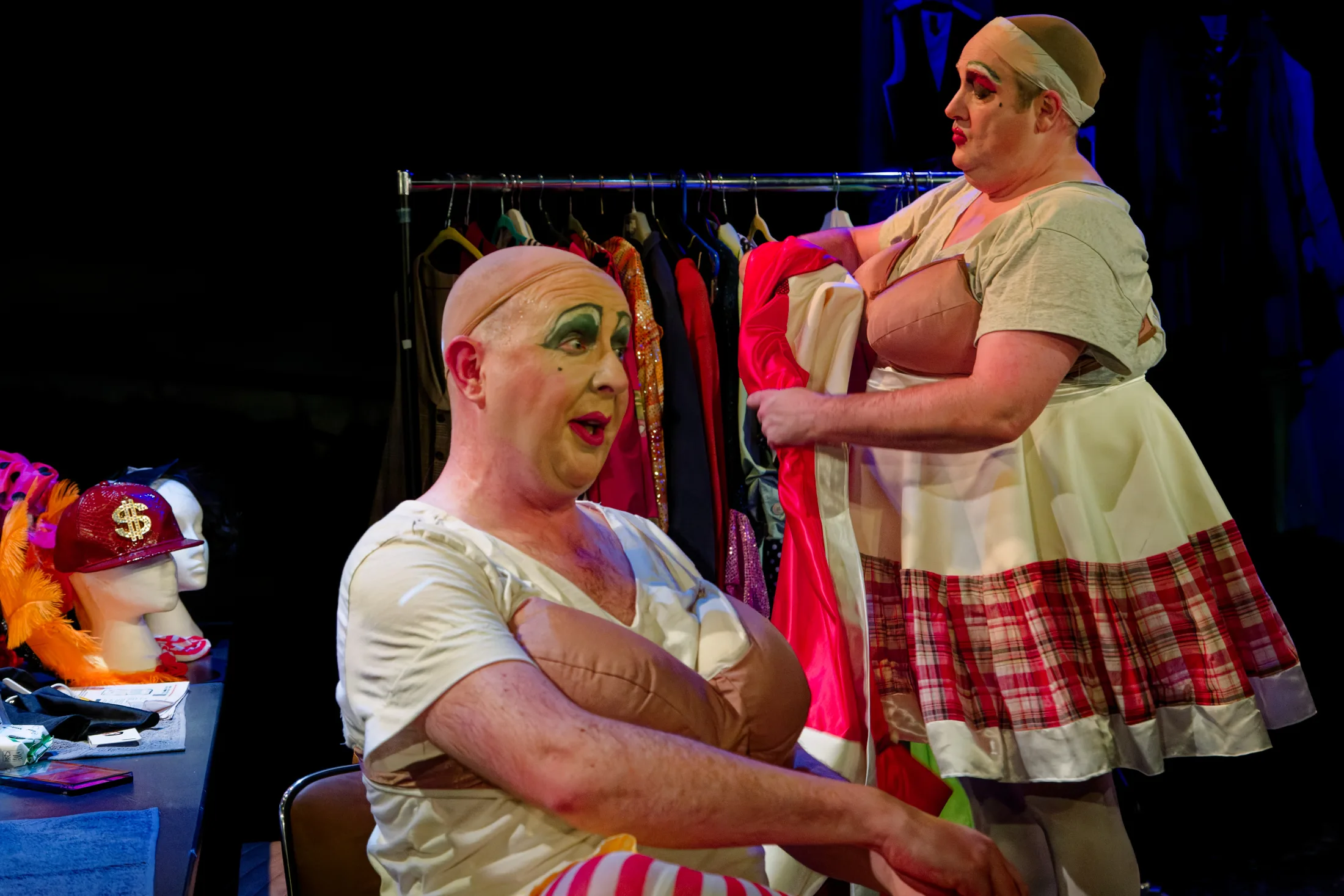
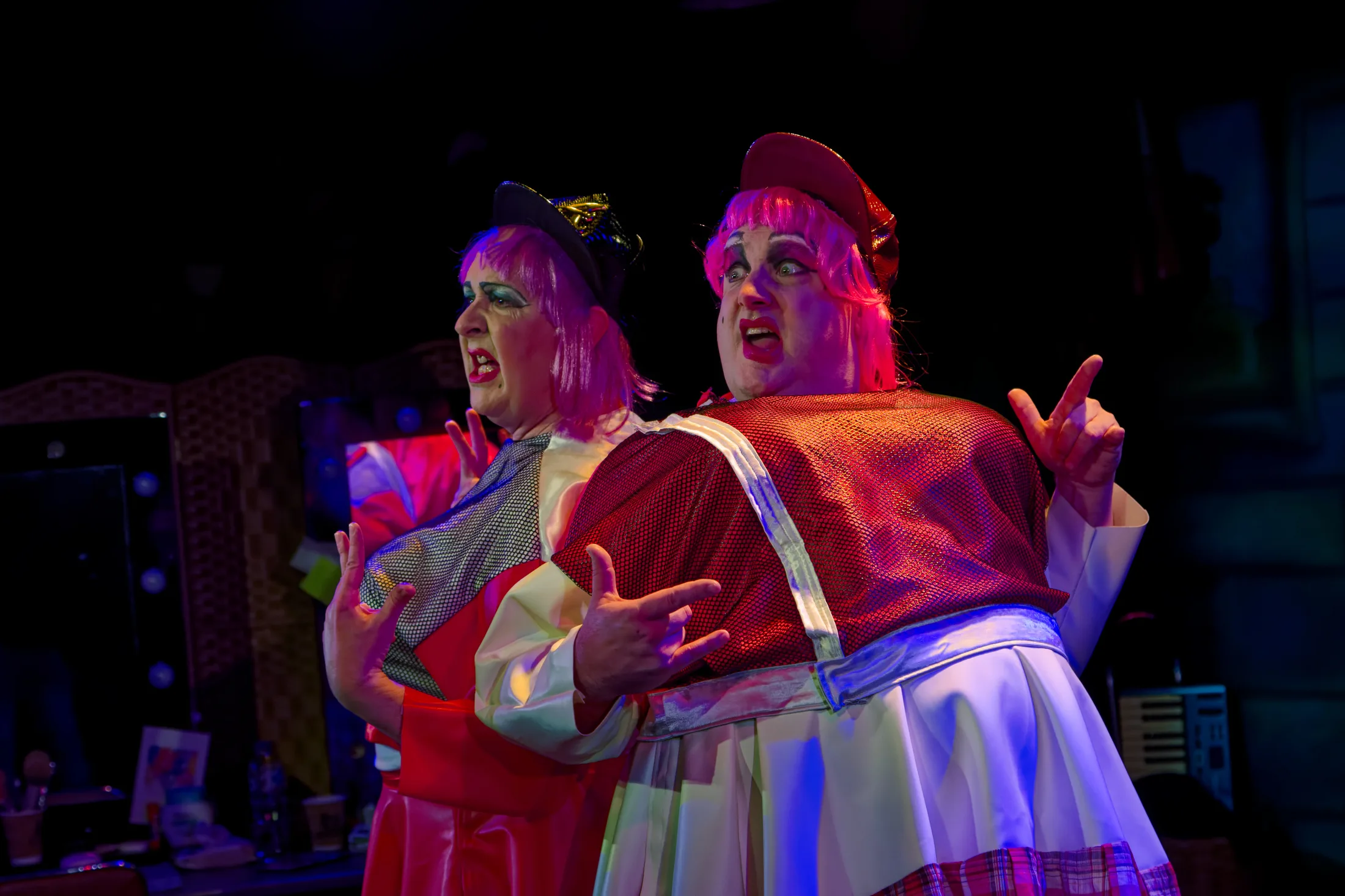
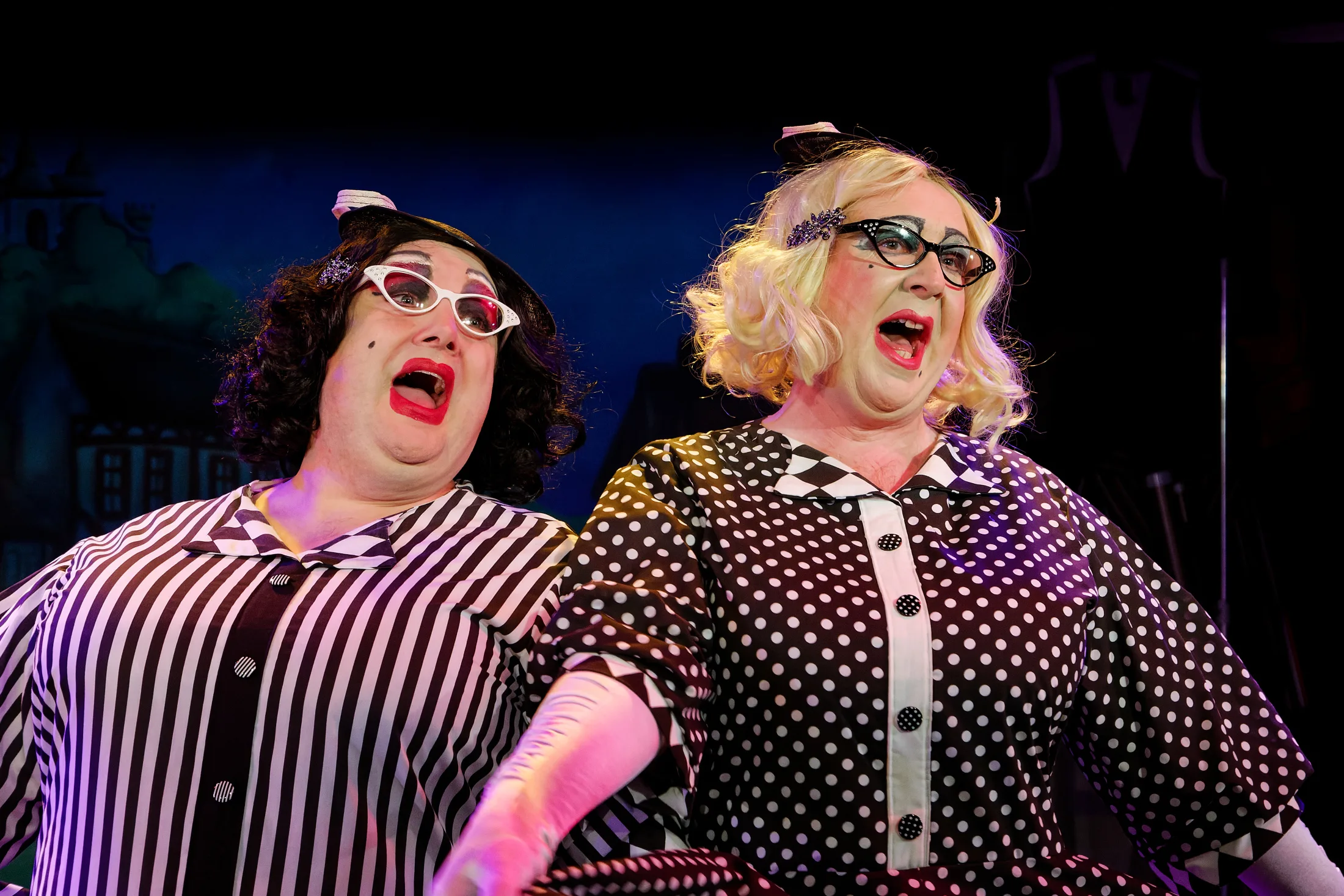
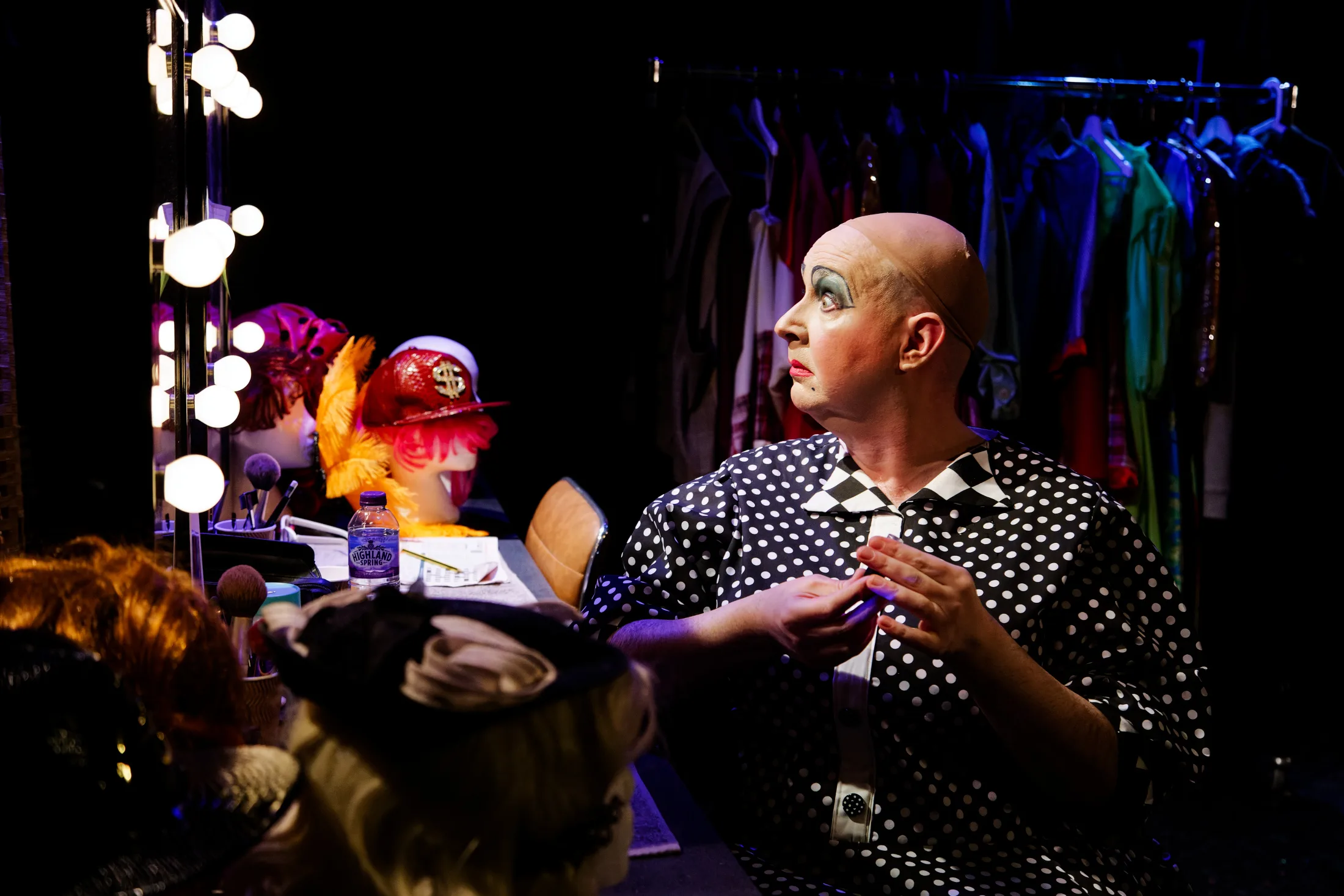
The seven hander, sixty-minute play has toured before and this revival is a good fit for the intimacy of The Bridge House. Moreover it was good to see the house almost full. There is some interesting work coming through this venue and I’m glad that word is evidently getting out.

Dolls and Guys is a quirky, surreal, but pretty telling exploration of the dating app world and the fine line between some aspects of it and the sex industry. We’re in a futuristic toyshop in which five humanoid dolls are on sale. When a customer appears, they freeze as dolls. At other times they chat, joke, dance, bitch, worry and reminisce as five very different women thrown together probably would. One by one they are purchased but always returned to the shop because, in some way, they fail to please.

It’s a good idea for a play but it’s a bit choppy with two many short scenes. It feels like work in progress and maybe it is. There are storylines which are underdeveloped. I was desperate, for instance, to know what had really happened to Lucy (Violet Verigo) who is repeatedly returned to the shop because she has broken. Then, oddly, in the last ten minutes, which is arguably the best bit of the show, we seem suddenly to be in a completely different play as Sabean Bea as Juliet and Dorothea Jones as Billie share  heartbreaking memories of their schooldays and growing up.

Dolls and Guys showcases some good acting, however. Jones has riveting intensity and Kerry Boyne is perfect as Soraya whose attention grabbing, flaunting self confidence masks a lot of vulnerability. Nicholas Pople (excellent voice work) plays a whole series of customers and Alex Akindeji is naturalistically convincing as the shopkeeper.


 Subsc

Show: A View From The Bridge

Society: Chichester Festival Theatre (professional)

Venue: Chichester Festival Theatre. Oaklands Way, Chichester PO19 6AP

Credits: By Arthur Miller. A co-production with Headlong, Octagon Theatre Bolton and Rose Theatre.


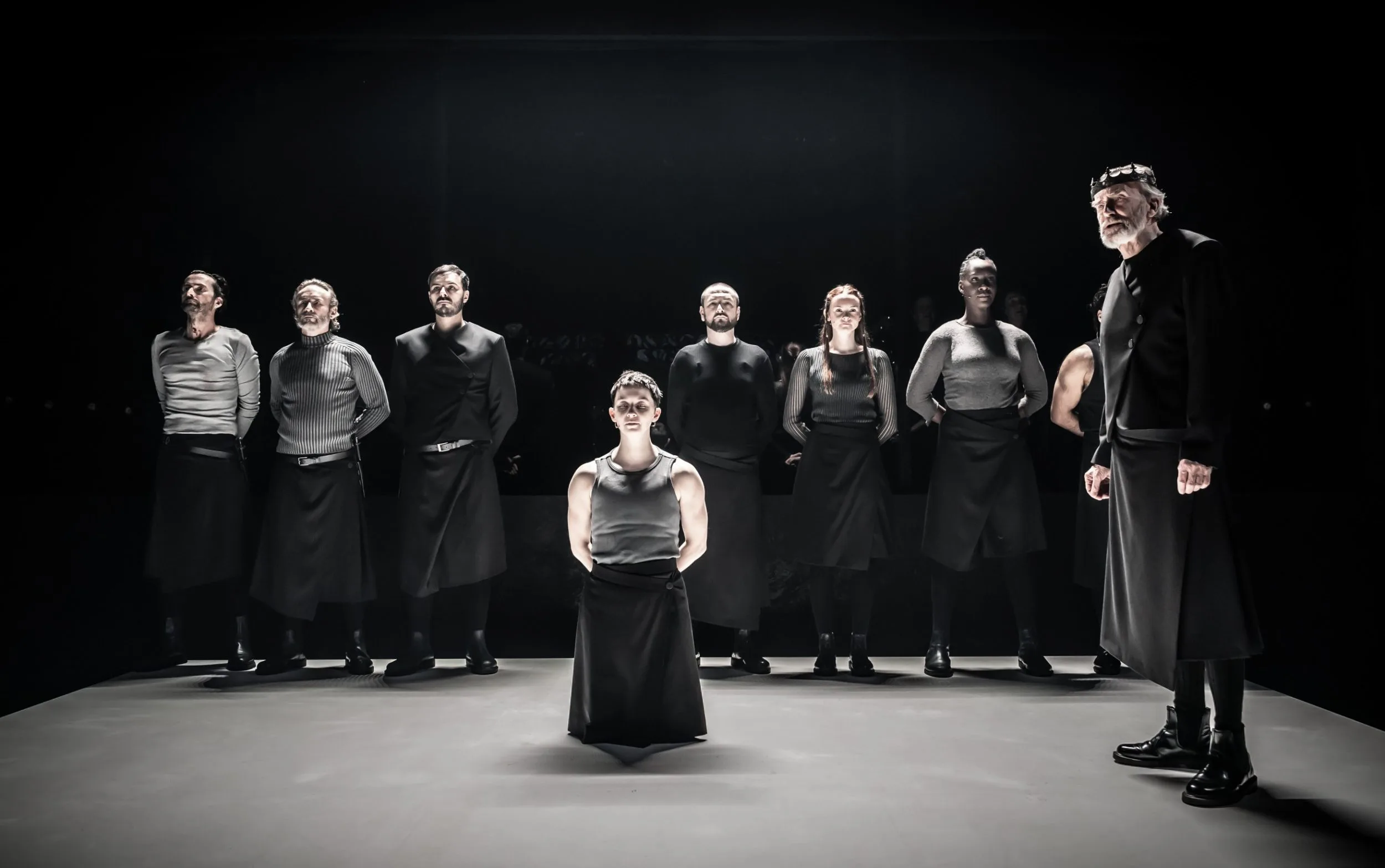
A View from the Bridge

3 stars

Susan Elkin |

Photo The Other Richard.


I watched this moving production of a powerful play in the midst of a large secondary school party – year 9, I think. They clearly didn’t know A View from the Bridge so their very fresh reactions became part of my experience too. They were, for example, shocked into stone-still horror at the visceral climax. No Arthur Miller play ends happily, after all, and the effect of Eddie’s inevitable downfall is profoundly shocking in Holly Race Roughan’s take on the play. And the spaciousness of CFT’s big stage along with Max Perryment’s menacing sound design psychs it all up effectively.

Nancy Crane is the first woman to play Alfieri, the lawyer who functions as a quasi Greek Chorus or narrator in what is effectively a Greek drama set in Brooklyn. Continuously on stage, often she’s in shadow or half-lit. She is pleasingly naturalistic particularly in the scenes when she is consulted by other characters for advice. There is an audibility issue though with her, and sometimes with other cast members, especially when she’s on the balcony/bridge which is upstage and high. The combination of the adopted flat New York accent and the inevitable masking caused by working on a big thrust stage means that words, or even whole sentences are lost – at least from Row H where I was sitting along with all those 13 and 14 year olds. This is a great pity because an audience, by definition, needs to hear the play and if they can’t then, however good the production, the experience is marred.

Famously, the play tells the story of Eddie who has lovingly but over-protectively brought up his orphaned niece Catherine (Rachelle Diedericks – good) and accommodated illegal Italian immigrants in his hard won Brooklyn home. He is appalled when she falls in love with one of the lodgers whom Eddie regards as despicably effeminate. It’s an exploration of changing patriarchal values and, of course, immigration is as topical now as it was in the mid-1950s.

It’s generally a strong cast among which Kirsty Bushell as Eddie’s wife, Beatrice, is outstanding. She pleads, frets, loses patience and completely inhabits a very three dimensional character, torn between her love for Eddie and the voice of reason and common sense. And her “pieta” tableau at the end is beautifully poignant. Beatrice is one of§ the best of Arthur Miller’s long suffering, troubled women.

There are symbolic things in this production the rationale for which isn’t clear. I could have done without the ballet dancer, the garden swing and the slow motion hefted wooden chairs. That school party certainly went home with plenty to reflect on and discuss but I’m glad I wasn’t one of the accompanying teachers attempting to explain some of the more obscure directorial decisions.


First published by Sardines: https://www.sardinesmagazine.co.uk/review/a-view-from-the-bridge-2/


The opening item in the first concert of Maidstone Symphony Orchestra’s 113th season was Smetana’s overture to The Bartered Bride. It’s one of those “lot of notes” pieces with an terrifyingly exposed second violin passage  but in Brian Wright’s warmly safe hands, MSO delivered it at a nippy tempo and with appropriate exuberance. The orchestral sound was, as ever, beautifully balanced. This is Wright’s 33rd season with the orchestra and that total, long established trust between him and the players shines through.

Brian Wright


Then came British cellist Maxim Calver to play Shostokovitch’s first cello concerto (1959) – his third concert with the orchestra. This bleak, anguished but beautiful concerto has become quite well known since at least two people (Guy Johnston and Sheku Kanneh-Mason) have won BBC Young Musician of the year with it. Calver’s playing was both intense and insouciant as he hammered out those relentless, menacing rhythms in the first movement. I loved the brooding, legato lament he dug out of the slow movement and his mellow mournfulness of tone in the cadenza – carefully applying vibrato to some notes and not others as much Shostokovitch string writing seems to demand. He followed the concerto with Pablo Casals’s  sorrowful Song of the Birds as his encore, and hinted it was a way of marking these “sad times”.

artist-maxim-calver


And so to Brahms’s first symphony, often regarded as a homage to Beethoven, although it’s a lot more than that. Wright set it going with all the grandiloquent panache it needs and brought out plenty of nicely balanced lyrical wind detail in the first movement. The andante gives us one of Brahms’s many lovely oboe melodies played here with gentle passion and the violin solo (leader Andrew Laing) with the horn at the end of the movement was arrestingly moving. After a lilting allegretto – a sort of descendant of the classical minuet and trio – Wright delivered the big Beethovenian melody in the final movement with all the right Brahmsian spin and some attractive flute work. And all this was achieved with commensurate professionalism despite a distracting problem with Mote Hall’s lighting rig in the second half.

It was a fine and enjoyable concert overall and if one or two players were, unusually for MSO, not having the best of nights the hiccoughs were pretty brief and would have passed almost unnoticed by most of the audience.


Show: A Doll’s House

Society: Tower Theatre Company

Venue: Tower Theatre. 16 Northwold Road, Stoke Newington, London N16 7HR

Credits: By Henrik Ibsen, adapted by Tanika Gupta


A Doll’s House

4 stars

Susan Elkin | 10 Oct 2023 23:03pm

Photo: Jason Harris


Tanika Gupta’s reinterpretation of Ibsen’s (1879) play takes us to Colonial India in late 19th Century so it’s the same period. When I interviewed Gupta recently she told me that although she has lived in England all her life, most of her work is rooted in her Indian heritage. Her version of A Doll’s House dates from 2019 when it premiered at Lyric Hammersmith, directed by Rachel O’Riordan. Since then it has been set as a GCSE drama option along with three other “global majority” texts. It’s a compelling but accessible exploration of racial and sexual politics.

Niru is a young Bengali woman married to Tom, an English bureaucrat. Of course he idolises her but she’s not cut out to be his plaything although she pretends she is and there are, inevitably, factors in the background. It’s a very good fit for Ibsen’s story.

At the centre of Tower Theatre’s excellent production, adeptly directed by Olivia Chakraborty (Assisted by Krishmeela Rittoo), is an outstanding performance by Vaishnavi CG as Niru, Gupta’s take on Ibsen’s Nora. Apparently the Indian trophy wife, educated and sophisticated, she pouts, flirts, worries and pleads in a very convincing way until gradually we learn of the trouble she has got herself into as a way of saving her husband when things were difficult. Vaishnavi CG finds a lot of depth and nuance in the role until she finally breaks free. It’s as good a piece of acting as you’ll see anywhere.

As her husband, Micky Gibbons – his voice patrician and his manner lofty except when he’s overcome with tender passion for his “little Indian skylark” – matches her well. Tom’s racism is, of course, only just below the surface and the small school GCSE group sitting near me winced and muttered every time he said something patronising or belittling. As a couple they look striking on stage too because Gibbons is a tall man and Vaishnavi CG’s petite stature means that she barely reaches his armpit.

There’s high level support from Arthur Davies as Dr Rank, the family friend who is ill and in love with Niru.  As the impoverished widowed schoolfriend Mrs Lahiri, Rachana Reddy is serious intense and a strong dramatic contrast to Niru.   Janak Nirmal is powerful as the glitteringly sinister, but ultimately vulnerable, Das and Nina Ali delights as Niru’s servant who has looked after her all her life. She brings charismatic, fragile warmth to the character who, whatever Tom thinks, is a much more than a mere servant.

There are lots of scene changes in this play as we move from different rooms and the garden in Tom and Niru’s house. These are ingeniously managed by placing one or two characters downstage and moving props and furniture in the shadows behind them. Lighting designer Nick Insley and Chakraborty are very good and highlighting faces and using light to build character – and ambience. I also liked the blend of Indian and European classical music which covers the scene changes. It’s a neat way of stressing the two cultures and yes, of course, Vivaldi’s A minor violin concerto is exactly the sort of thing Tom and his friends would have listened to at soirees in Calcutta.

I’d read this version of the play – in connection with a piece I wrote when it was adopted as a GCSE set text – but I hitherto I hadn’t seen it. I’m glad I now have because Tower Theatre has done it proud.


First published by Sardines: https://www.sardinesmagazine.co.uk/review/a-dolls-house-3/

Show: Iolanthe

Society: London (professional shows)

Venue: London Coliseum. St Martin’s Lane, London WC2N 4ES

Credits: Written by Gilbert & Sulivan


Iolanthe

2 stars

Susan Elkin | 06 Oct 2023 22:42pm

Photo: Craig Fuller


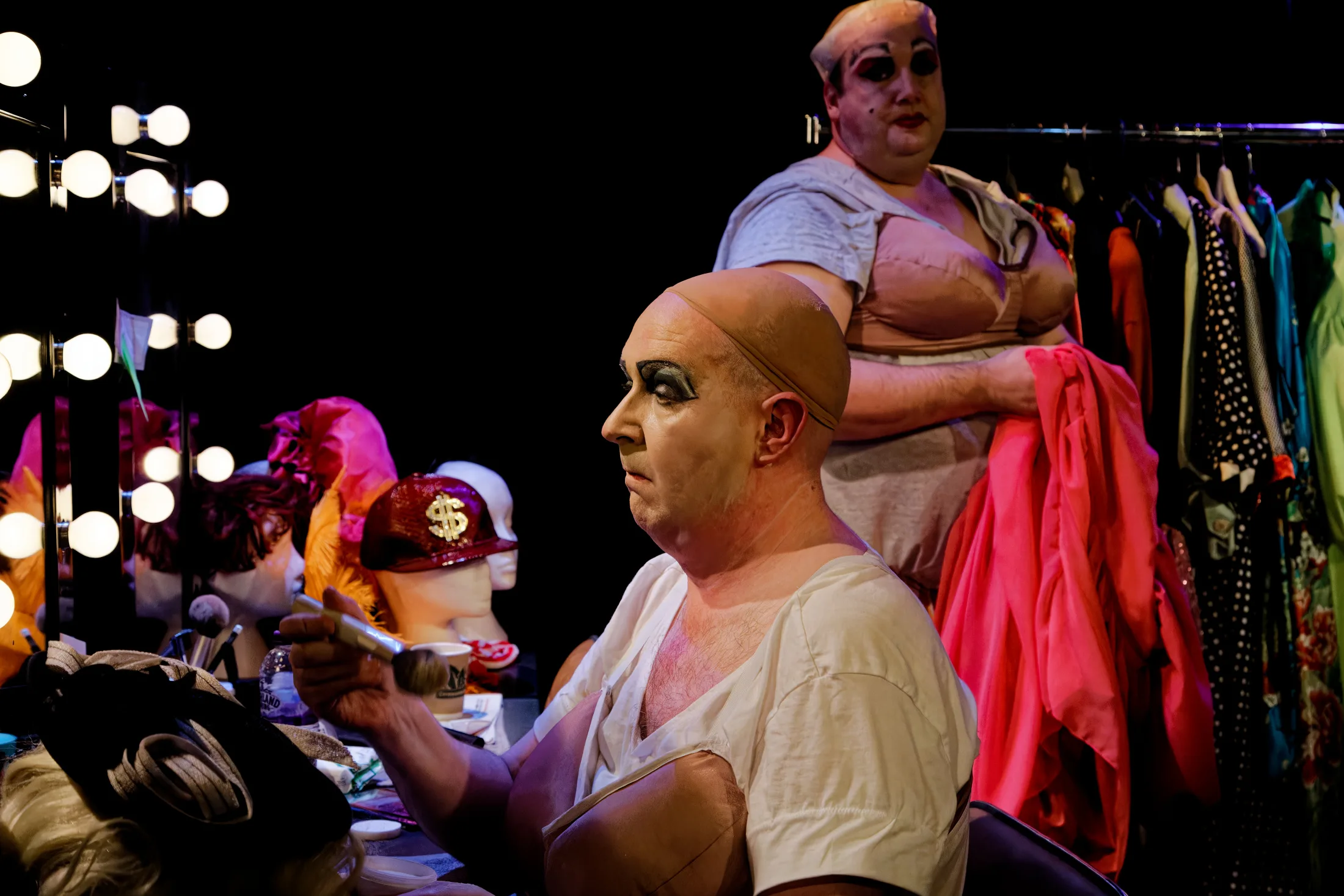
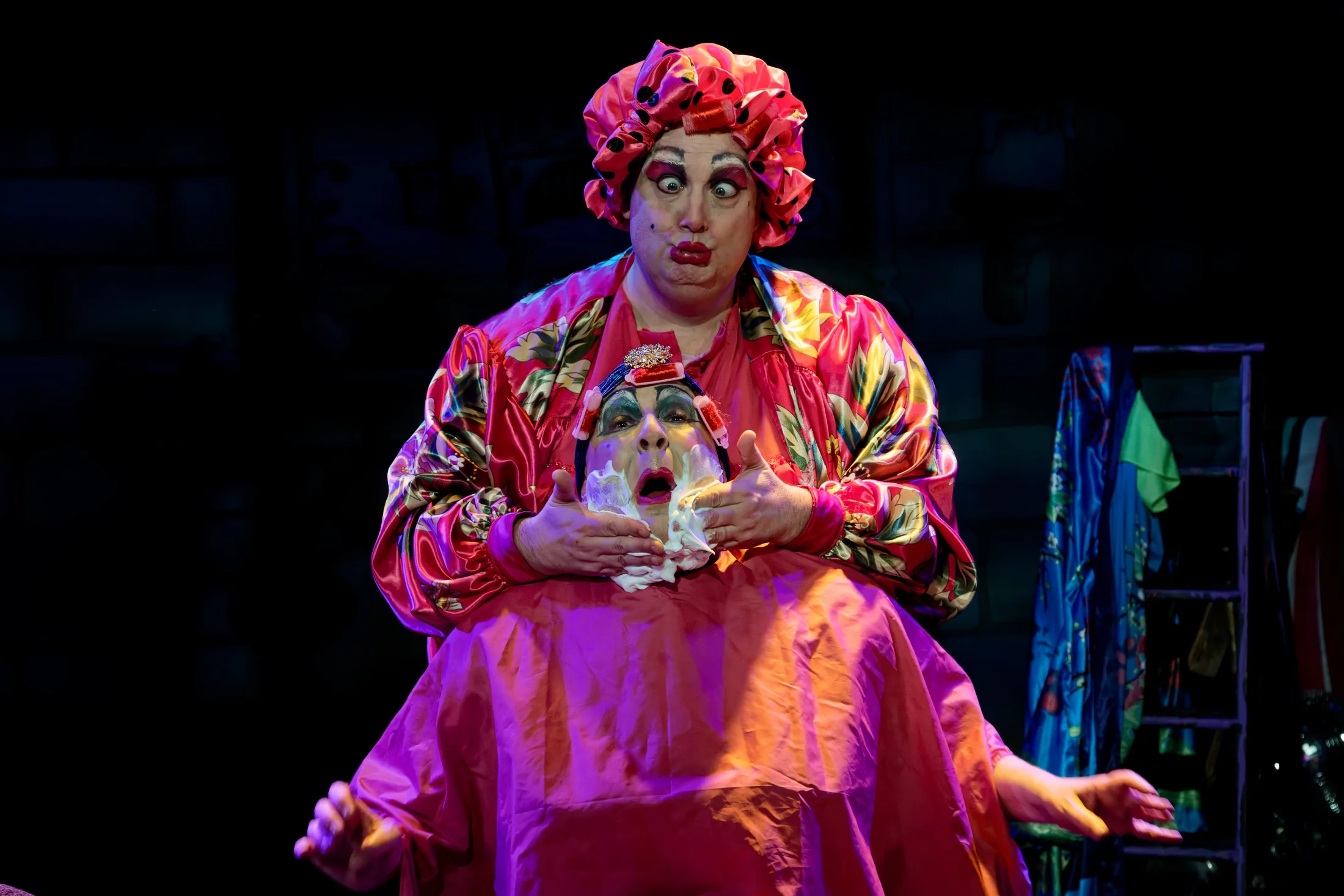
Every G&S buff knows about Captain Shaw. He was Chief of Metropolitan Fire Brigade from 1861 to 1892. On the opening night of Iolanthe at the Savoy in 1882, he was sitting in the stalls – so he got a whole chorus of the Fairy Queen’s lovely second act aria Oh Foolish Fay. The strange thing is that it stayed in for ever which means that for the last 141 years this bit of obscurity has had to be explained to anyone interested.

Cal McCrystal’s version gives a uniformed Captain Shaw (Clive Mantle in a rather amazing helmet) providing a distinctly laboured prologue – a sort of warm up bit of stand-up” – to both halves. Goodness knows why anyone thought it would be a good idea to have him self-deprecatingly running down the show but, sadly, in places his remarks are spot on.

And that’s a pity because there is a lot to like about this show. The sets (Paul Brown) are magnificent from floral “Flower Fairy” type back-drops to the wall of the House of Lords and, best of all, the Lord Chamberlain’s flamboyant throne and the screen behind it. All the chorus singing (chorus director Martin Fitzpatrick) is splendid – every word clear and every note placed with precision. They are, moreover, beautifully directed (Cal McCrystal)  to make imaginative use of the space. Most of the soloists are strong too, especially Catherine Wyn-Rogers as a grand, claret-voiced Fairy Queen making those bottom notes resonate like a vocal double bass to every corner of this huge venue. The entrance of the peers on a train is a theatrical tour do force too.

But – and I’m afraid there are plenty of “buts” – although the music is beautifully played by a full pit orchestra directed by Chris Hopkins, many of the tempi are too fast for solo numbers in a big space like the Coliseum. For example, although John Savourin (very seasoned at this) knows how to deliver the Chancellor’s Nightmare like almost no other, we lost some of the words as it accelerated. There were many people in the audience who were clearly new to G&S and were, perforce, laughing at the sur-titles rather than at what they could hear – the time delay is a giveaway.

I’m not keen on most of the additional material either – extra jokes and lines. WS Gilbert is very funny. If you deliver his lines (with a few cuts) as he wrote them, then they actually work. Some of the biggest laughs of the evening were, tellingly, at what Gilbert wrote rather than at anything added in. It’s matter of trusting your material.

Clearly no one in this production (revived from 2015) actually does trust the material. What on earth is the point of the pantomime cow? Or the flamingo?  I realise that if you’ve paid for flight technology you want value for money but there’s far too much whizzing about overhead for the sake of it in this show.

And no director should ever upstage solo singers by putting gratuitous stage business behind them. I’ve seen this very basic error in amateur opera productions and winced. ENO really should know better than to have stage hands pushing a flock of sheep on stage, falling over them etc while Phyllis (Ellie Laugharne) and Strephon (Marcus Farnsworth) are singing their love duet. That’s just an example.  There is a great deal of this sort of thing which adds nothing to the show.

In short this is a production which is simply trying too hard. Relax, chaps, let the show do the work. You don’t have to contrive silly gags as if we were in a pantomime and, by the way, if you include  three encores in the traditional G&S way they have to build up and get funnier. It’s no use doing more or less the same thing three times  as you turgidly do in “If you go in, you’re sure to win”.


First published by Sardines: https://www.sardinesmagazine.co.uk/review/iolanthe-3/


What a novel! First published in 1854, when Dickens was 42, it exudes anger about social injustice from the first page to the last.

I first read it as a set text on my English course at teacher training college, worked on it during my Open University degree and later taught it for GCSE but hadn’t, until now, revisited it for a while. And, of course, one of the great joys of rereading is that you notice different things at different stages in your life as well as responding to changing mores in your own time and culture.

For example, in chapter 3 Dickens makes it clear that Louisa is pubescent or even (in an age when girls developed later) pre-pubescent: “She was a child now, of fifteen or sixteen: but at a not distant day would seem to become a woman all at once”. A few pages later, in chapter 4, we find the repulsive, tedious hectoring, boastful, self important Bounderby who is nearly 50, begging a kiss from her. In 2023 we’d call him a paedophile and I’d never noticed that before.

Hard Times3

Another thing I wondered about a lot during this re-reading is Bounderby’s bedroom performance – or lack of it.  Louisa is almost 20 when she marries this man whom she loathes. They are together for a while but there are no children. In Victorian novels children, or absence of them, usually convey a covert message about a couple’s sexual status. At the end of Jane Eyre, for example, Charlotte Bronte pointedly tells us that Mr Rochester eventually recovers enough eyesight to see his first born son. Perhaps Louisa could have had this distastrous marriage annulled on grounds of non-consummation? Towards the end of the novel Dickens mentions, in another context, Bounderby’s “blustering sheepishness” which would make a good discussion classroom point in relation to several aspects of his character.

Hard Times is, at heart, a satirical attack on ruthless, money-driven, exploitative industrialisation and the sort of education which is required to underpin it – if you take the principles to their logical, comical extent. The opening of Hard Times is famous for its depiction of a fact-driven classroom in which one boy is commended for his long, wordy definition of a horse while Sissy Jupe, who has grown up in a circus training horses, is ridiculed for her lack of knowledge. Every modern teacher knows this passage and “Grandgrindery” has passed into the language as code for teaching/learning which over- emphasises irrelevant theory.

Hard Times2

Mr Gradgrind, who owns and funds the school, is not a bad man, however. He is initially misguided but eventually changes. He loves his children too. Characterisation in Hard Times is often beautifully nuanced. Other characters who are subtly drawn include Sissy who starts as a nervous child abruptly removed from her own environment and develops into a wise, kind, practical young woman and a worthy “sister” to Louisa especially when things go seriously wrong. Also a delight is Mr Sleary, the circus owner, who is kind, reasonable and warm although I wish Dickens had spared us the rather laboured phonetic representation of his lisp.

Both Gradgrind and Bounderby, who are good friends, have made their money – a lot of money – from the heavy industry of Coketown, the fictional northern town in which the novel is set. The subplot, which ensures sure that we really do see the divide between the rich and the poor, concerns Stephen Blackpool, an innocent and decent factory worker who loves Rachael but who is saddled with a drunken, vagrant wife who occasionally returns to distress him. (Disastrous marriage is thematic in Hard Times.) Then Mr Bounderby’s bank is robbed and suddenly, the finger of suspicion lands on Stephen but it’s clear to the reader who is actually responsible in a fairly tightly plotted novel.

Hard Times

Two other things struck me afresh. First: I love, and have always loved, Dicken’s frequent, comic use of anaphora. “No little Gradgrind had ever seen a face in the moon. No little Gradgrind had ever learnt the silly jingle, Twinkle twinkle little star, how I wonder what you are! No little Gradgrind had ever known wonder on the subject …” And so he dances on and on.  in similar mood, he compares the pistons of Coketown’s heavy industrial plant with “the head of an elephant in a state of melancholy madness” in chapter 5 and then refers to the elephants whenever he mentions the factories for the rest of the novel. Young Tom Gradgrind is continually, and rather contemptuously dubbed “the whelp”. It’s a Dickens trademark. In Great Expectations he repeatedly compares Wemmick’s mouth with a post office and who could forget Mr Carker’s teeth in Dombey and Son?

Second: how brave it was of Dickens – writing over a century before we got to post-modernism – to give us a post-modernist ending. He describes possible long term outcomes for his characters and then invites us to choose. It’s almost John Fowles territory.

Yes, Hard Times is a very worthwhile reread. If, on the other hand, it’s new to you then believe me, you have a treat in store. And if you think Dickens’s novels are always dauntingly huge then be reassured that this one is less than 300 pages.

Next week on Susan’s Bookshelves:  Heresy by SJ Parris


Show: Quiz

Society: Chichester Festival Theatre (professional)

Venue: Chichester Festival Theatre. Oaklands Way, Chichester PO19 6AP

Credits: By James Graham


Quiz

3 stars


So James Graham’s 2017 play is back in its birthplace – except that it has grown and now fills the main house, Chichester Festval Theatre, having originally debuted in the smaller Minerva Theatre. Since then this story of the man who nearly tricked Who Wants to be a Millionaire? (or did he?) out of a million pounds in 2001 has enjoyed a West End run and been developed by James Graham into an ITV three-part drama. After Chichester it now embarks on a nationwide, ten-venue tour until the end of November.

It’s tightly, wittily written as you’d expect from Graham and the play is a mildly interesting exploration of the national obsession with quiz and game shows. Rory Bremmer is crowd-pleasingly plausible as  quiz master Chris Tarrant and  there are a number of cameo roles instantly recognised by the audience which trigger lots of laughter – thereby neatly reinforcing Graham’s point about the British love affair with such programmes. Nearly everyone in the room knows the format and remembers the long fraud trial at Southwark Crown Court.

Another crux of the show is the intercutting of the trial – just another form ot drama? – with re-enactments of “Who Wants to Be A Millionaire?” and scenes with Charles Ingram and his wife, the show’s producers and other characters. Flashing screens and the right music evoke the atmosphere although the badly synched close ups of contestant’s faces on screens don’t add anything useful. Moreover, at the performance I saw, a chunk of dialogue was repeated for no apparent reason so I presume it was someone’s momentary mistake with lines. Issuing the whole audience with fobs so that they can vote is quite fun, though.

So did Major Charles Ingram (Lewis Reeve), his wife Diana (Charley Webb)  and his brother-in-law devise some scheme using coughs as a signal to ensure that he got the questions right? The play raises doubts although in real life, as in the play, he was found guilty but his sentence suspended. Reeve gives us a young, apparently naïve Ingram and Webb makes Diana determinedly cannier –  a bit Macbethian without the knives. She knows the answers and coaches him because as a character in the play cynically observes these game shows have to focus on the popular culture that the middle classes know nothing about: soaps, pop music and sport.

Other characters are less convincing and the doubling is often confusing.  Although Danielle Henry is strong as Sonia Woodley QC, Mark Benton’s Judge Rivlin who several times drops into Trial by Jury territory doesn’t work because it isn’t believable.

I liked the attention to detail, though. Co directors Daniel Evans and Sean Linnen give us, for example, cameramen lurking in the shadows and Robert Jones’s set includes upstage wooden seating for the trial scenes.

At the end, the $64,000 question (sorry) is did Ingram do what he was accused of or not? The audience vote at the performance I saw came out almost like Brexit – 47% guilty and 53% not guilty. We then see the figures for other recent shows and it’s always around 50/50.

I left the theatre wondering if the Ingrams have seen this show and what they think about and say as they drive home.

First published by Sardines: https://www.sardinesmagazine.co.uk/review/quiz/


Philharmonia_Kuusisto_Benedetti_0910_credit Camilla Greenwell

Photograph credit: Camilla Greenwell

Nicola Benedetti plays Brahms

South Bank Centre’s Royal Festival Hall

Philharmonia

Conductor: Cristian Macelaru

Sunday 01 October

The concert opener – One Line, Two Shapes by Nico Muhly – stems from Pandemic isolation and must be a very challenging piece to bring off from cold because it starts with the softest possible chorale played by two celli and two double basses. It then builds gradually before being interrupted with staccato string chords – played with commendable dramatic incisiveness. I rather enjoyed the bowed xylophone and the acoustic effect of placing a small group of lower strings behind the brass.

Then it was off to the familiar, beloved sound world of Brahms’s violin concerto – except that Nicola Benedetti, tall and elegant in her long black dress, made it seem completely fresh. Visibly and physically feeling her way into the music during the opening orchestral section, she attacked the first movement (Allegro non troppo) with warmth, energy and passion interspersed with a lot of sweetness and imaginative, dynamic colour in the cadenza. The adagio felt like a cool oasis after the heat of the allegro. The oboe solo (Timothy Rundle) was almost painfully beautiful and nicely supported by the rest of the woodwind section especially the bassoons. And from the solo violin entry there was a strong sense of conversation and rapport between Benedetti and the string section principals. Finally Macleru, clearly very much at home with Benedetti, made sure that the Allegro giocoso danced to the end of the concerto with joyful exuberance. Benedetti’s slender fingers, incidentally, are fascinating to watch as she trills effortlessly on all four fingers – surely the envy of every amateur string player in the hall?

After the interval came Rachmaninov’s third symphony with its many sections and mood changes across the unusual three movement structure. And the performance was full of things to admire – the legato string playing over the wind cross rhythms in the first movement and  impeccable solo work from leader Zsolt-Tihamer Visontay for example. In a work which changes direction so often, it’s important to find plenty of tension and Macelaru certainly did that especially in the adagio in which he stressed the detail from, for instance, harps and celeste before reaching the busier central section with its sudden, trumpet fanfares. It’s a big work (five percussionists plus timps) and here it purred along joyfully with players appearing to enjoy it as much as the rapturous audience did.