Press ESC or click the X to close this window

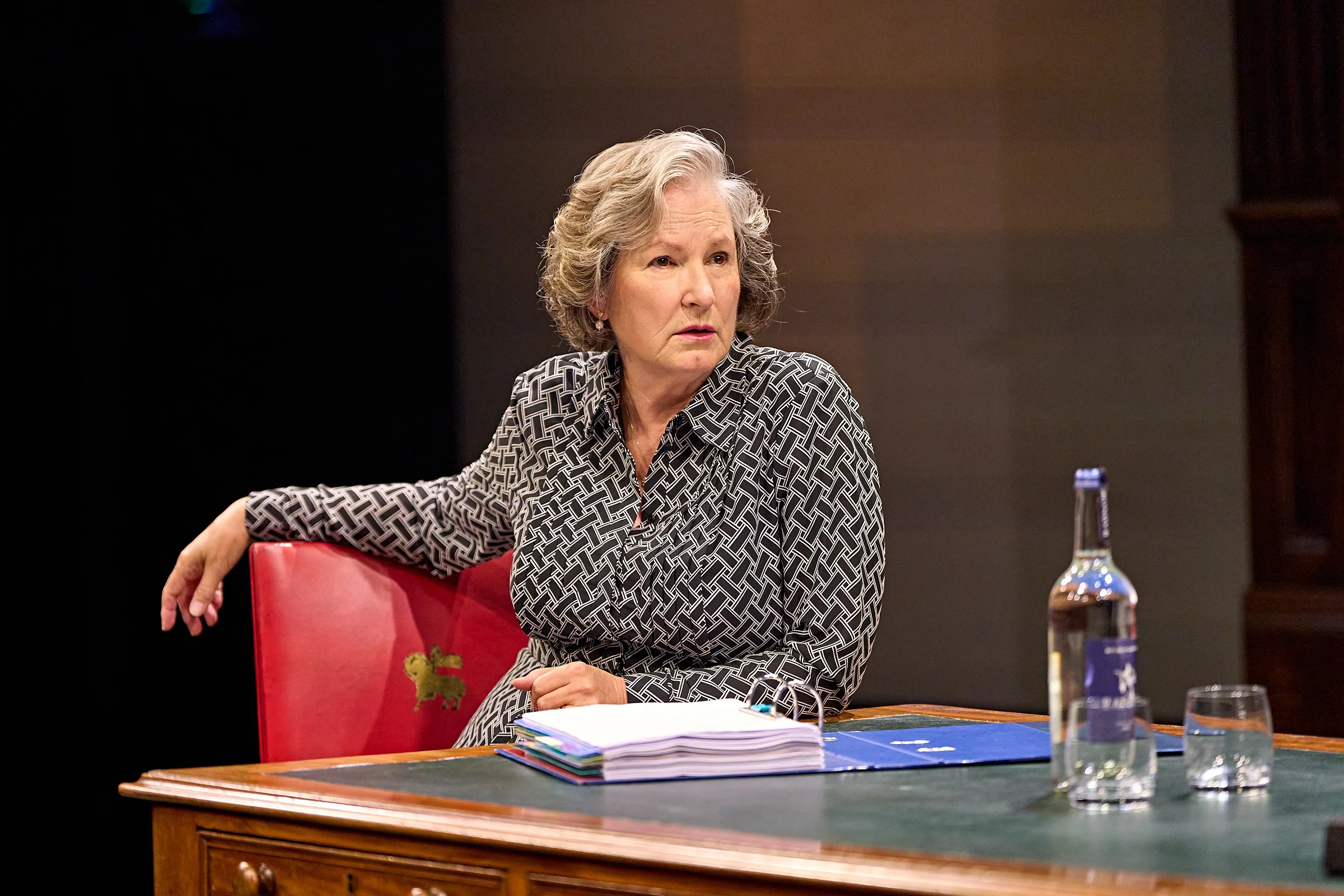
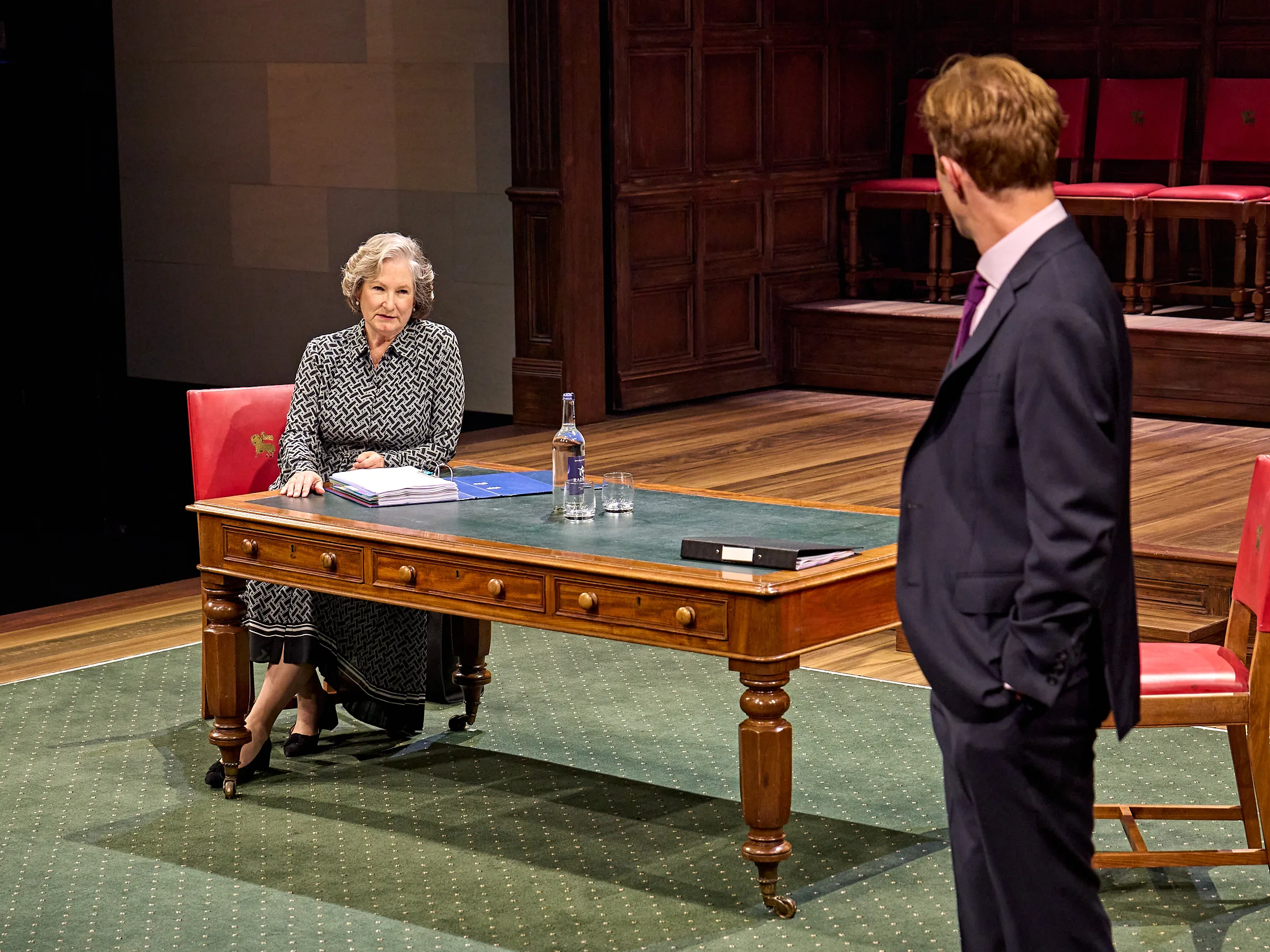
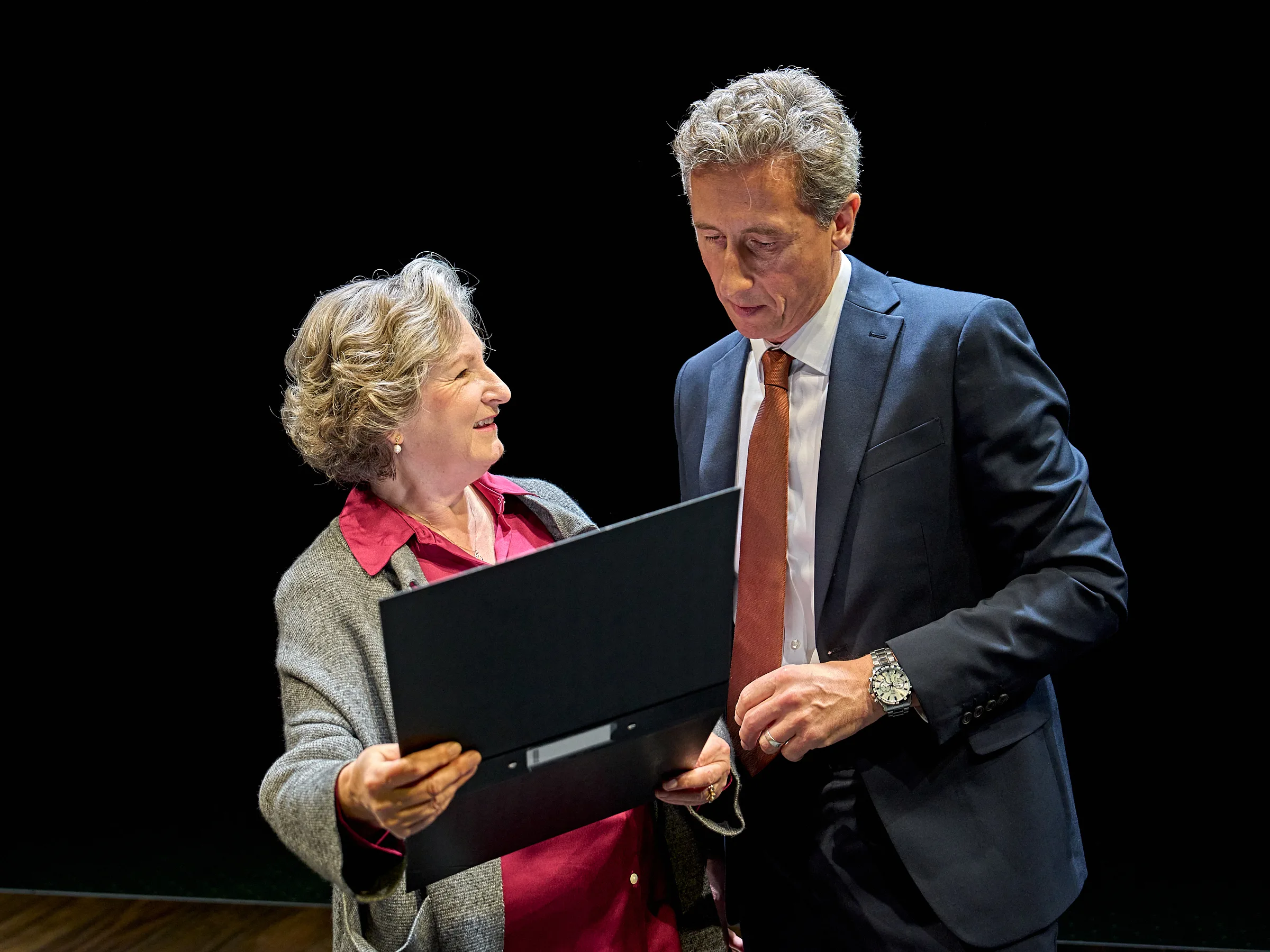
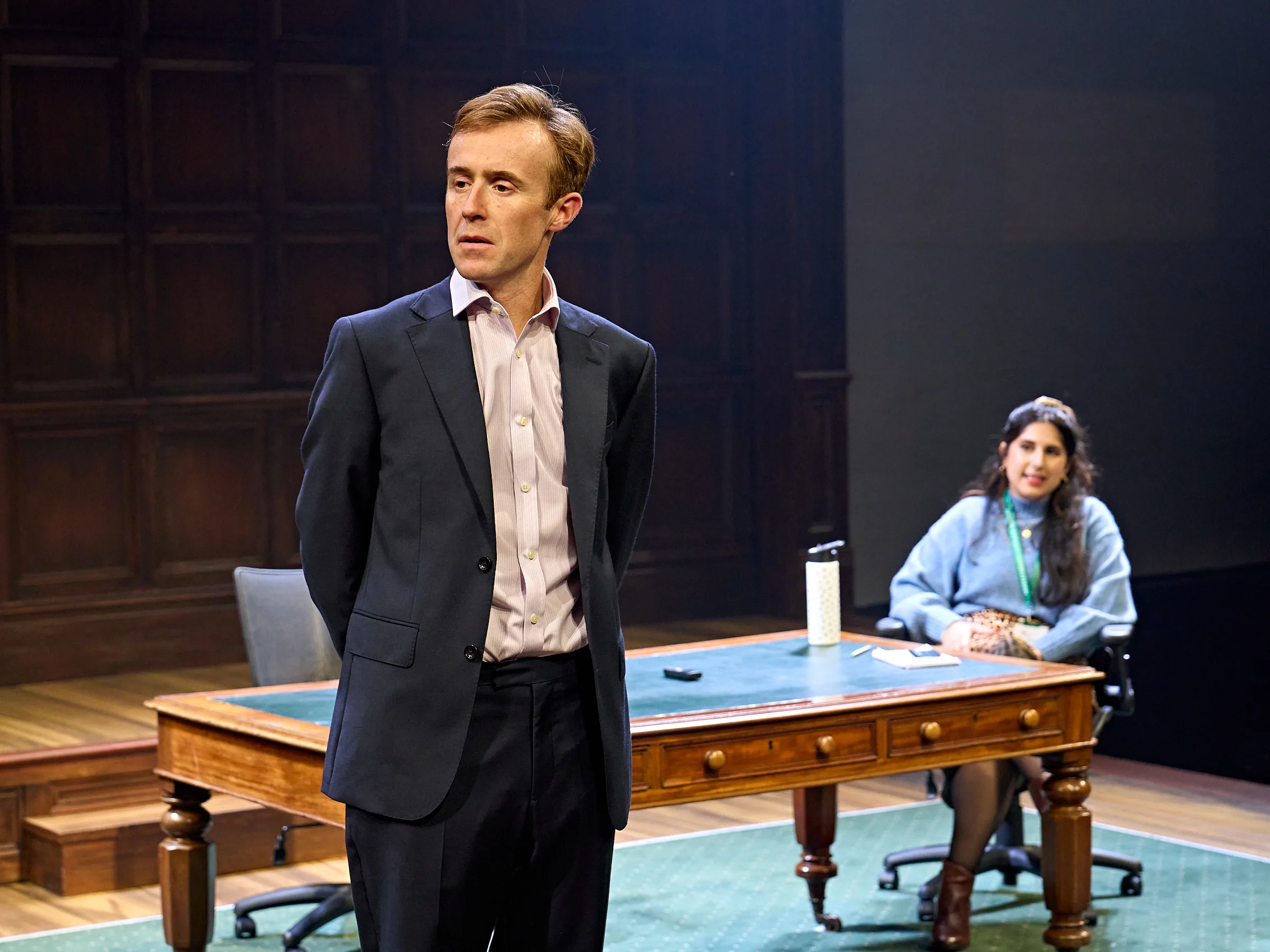
Merrily We Roll Along (Susan Elkin reviews)

Show: Merrily We Roll Along

Society: National Youth Music Theatre (NYMT)

Venue: Southwark Playhouse Elephant. 1 Dante Place, London SE11 4RX

Credits: Music and Lyrics Stephen Sondheim, Book by George Furth

Merrily We Roll Along

4 stars

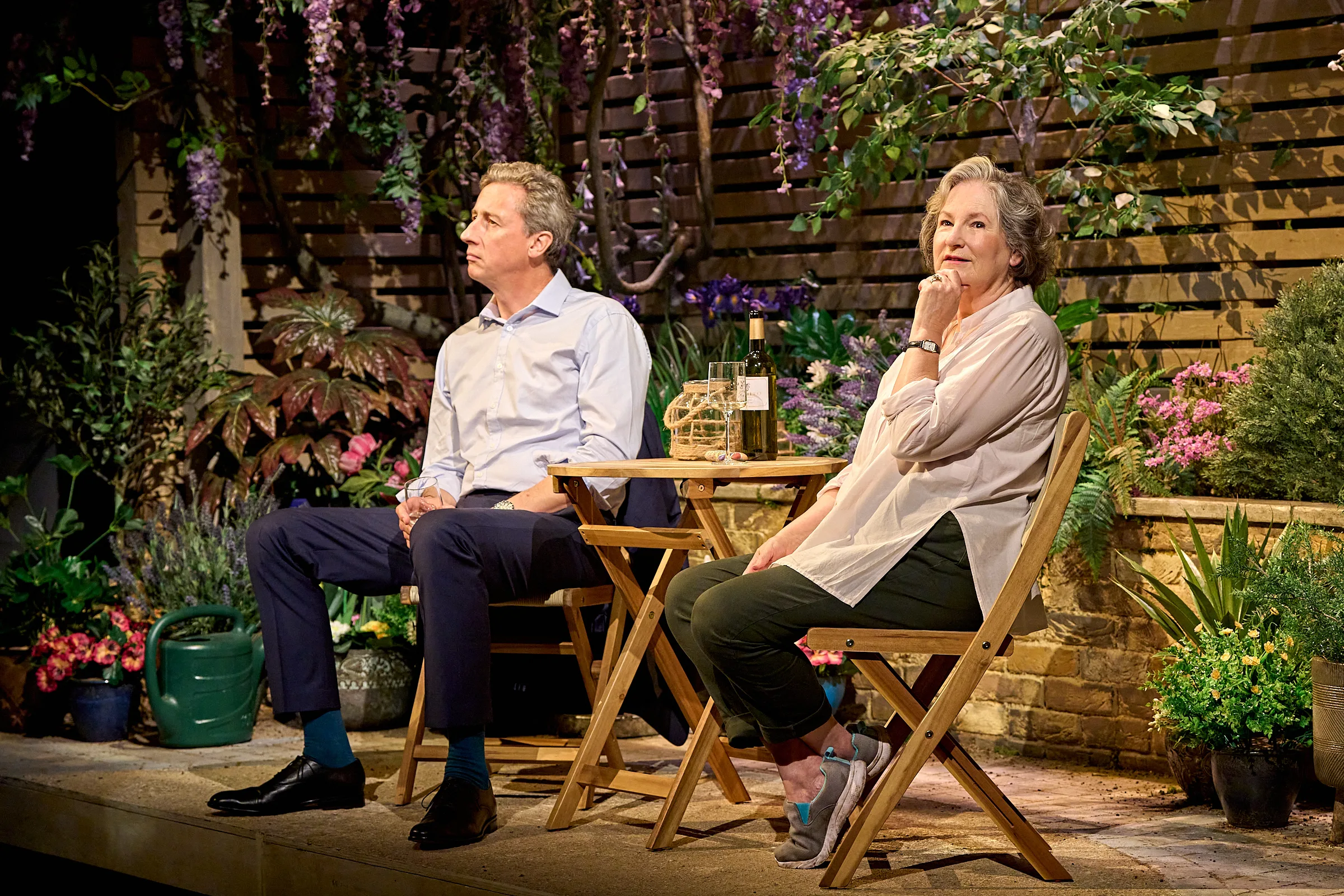
Photo: Konrad Bartelski


It fizzes with youthful exuberance and talent but Katherine Hare’s imaginative direction and Julia Cave’s sharp choreography ensure that this production of Merrily We Roll Along never lurches out of control. The level of professionalism is richly impressive.

Sondheim’s 1981 musical tells the story of a successful musical theatre composer, Franklin Shepard, from 1955 to 1980. We start with him hosting a glitzy show biz party and then wind back in a series of “transitions” so that eventually we see Franklin as a teenager – watching Sputnik on the roof of a “rooming house” where he meets his future lyricist, Charley Kringas and his soon-to-become life-long friend, Mary Flynn. George Furth’s book is strong and compelling – there’s a lot of angst and heartbreak in this story. And I was struck more than ever this time by the way the reverse narrative highlights the poignancy. Because we know what happens in the future, the hopeful teenage enthusiasm at the end is tempered with rueful sadness.

There are no weak links in this cast and the show is characterised – as anything by Sondheim needs to be – with excellent ensemble work from which lots of minor roles emerge, thus making this a good choice for a youth theatre with a company of 28.

Amongst the outstanding team of principals, Thomas Oxley as Charley, sings a fabulous patter song in the first act, sings lyrical numbers with warm musicality and has a good line in rueful looks. Madeleine Morgan excels as the troubled, eventually alcohol-dependent, tactless Mary Flynn and her wide-range singing voice allows her to cover complex moods. Matilda Shapland’s Beth is petite, pretty and joyfully supportive as the idealistic young first wife with beautiful silvery soprano voice.

Toby Owers finds plenty of nuance in Franklin who wants to compose more than anything else but is, inevitably, tainted by commercialism. And Sophie Lagden commands the stage whenever she’s on it as the over-acting, self-interested ruthless Gussie who becomes Franlin’s second wife but it isn’t going to last. Her powerful singing voice is perfect for the role.

All this is accompanied by an 11-strong youth band visible at either end of a balcony above the stage. They play with precision and passion under Leigh Thompson’s musical direction and I was delighted to see them all out of the shadows for applause at curtain call,

South Playhouse’s new Elephant venue provides a wide, inclusive playing space with audience on three sides and this production uses every inch of it including the two side aisles through the audience. The balcony between the two sections of the band is integrated into the action too.

In short, it’s a treat to see so many young people finding and exploring their (considerable) potential in a show of this quality.


 First published by Sardines: https://www.sardinesmagazine.co.uk/review/merrily-we-roll-along-7/

It was the first Jane Austen novel I read after Northanger Abbey, which was my O Level set text. Part of the Bishop Otter College English course, Persuasion inspired me to read the other four Austen novels over the next couple of years. I revisit them all fairly regularly but it’s a while since I’ve been back to Persuasion which was published in 1817, after the author’s death.

I’m immediately struck now by the precision of its setting. We’re often told that Austen completely ignored the war which raged for most of her life and wrote only about the insularity of country houses. Well Persuasion certainly debunks that. It’s set immediately after “The Peace” (Waterloo, 1815), which is often mentioned, and the novel full of naval officers who have worked together commanding war ships and are now returned home, in some cases with newfound wealth. The war is frequently referred to although it’s obviously true that Austen’s only experience comes through hearing men talk about it – so that’s what she writes about.

Persuasion

Eight years before the novel opens, Anne Elliot, Austen’s most mature heroine, fell for Captain Frederick Wentworth and he with her. She was, to her long lasting regret, “persuaded” by her family that the match was unsuitable because Wentworth had no money or title. Inevitably he shows up, still single, soon after the novel opens.  Thereafter he is a frequent presence in the Elliot social circle including at Lyme where Louisa Musgrove’s accident  becomes pivotal to the plot. Anne’s feelings haven’t changed. The question, in a third person narrative presented from her point of view, is have his? And, just to make matters convenient the war has enabled him to amass a fortune of £25,000. There is embarrassment, awkwardness and a lot of misunderstanding as the plot winds towards its conclusion and Anne, gradually, begins to detect what a 21st century woman might call “vibes”. It’s the usual Austen big scale sisters, cousins and aunts cast in which the happy ending is an inevitability from chapter 1. It’s a letter rather than a “clinch” which clinches (sorry) it and I love this terse sentence, laden with feelings, subtext and understatement, which follows Anne’s reading of it: “Such a letter was not to be soon recovered from.”

Austen’s characterisation is nine tenths of the reason we still read (and dramatise and discuss) her over 200 years after her death. Anne’s father, Sir Walter Elliot, “a foolish, spendthrift baronet,” is beautifully observed in all his shallow, judgmental, narcissistic awfulness. His other daughters, Mary, married to the long-suffering Charles Musgrove, and Elizabeth, who’s still at home are, in their different ways very much like their father. We presume that Anne’s pleasantness, quiet intelligence and sensitivity comes from her late mother – which explains why Lady Russell (wise, nuanced and willing to admit mistakes), a dear friend of the late Lady Elliot, is so fond of her.

Austen is good at cads too. Who could forget charismatic but amoral Mr Wickham in Pride and Prejudice for example – initially attractive but definitely Bad News. The man up to no good in Persuasion is Mr Elliot, a cousin who stands to inherit Sir Walter’s estate.  He rather desperately doesn’t want the silly old man to remarry and produce a direct heir so he schemes to prevent it –  but, my goodness, he’s a charmer.

People sometimes ask me to name a favourite author or book and, of course, like most voracious readers, I can’t. The truth, especially if it’s a “classic”, is that it’s usually the one I’m reading now. So this week Persuasion is getting my vote.

Persusion2


Next week on Susan’s Bookshelves: Sonnets by William Shakespeare


In 1990, a Crime Writers’ Association poll declared Josephine Tey’s 1948 novel one of the hundred best crime novels of all time. It’s hard to disagree – although maybe it’s a silly concept because no one has read every single crime novel ever written. And a tremendous number of fine crime novels have been published since 1990.

Nonetheless The Franchise Affair has long been a favourite of mine. I’ve read it several times so I know more or less where it’s going although, inevitably, one forgets the details between re-reads. The interesting thing, coming back to it now, is that, 75 years after it was first published, it still holds the attention to the end first, because Tey writes so beautifully; second, because her characterisation is intriguing; and third, because she is very good at understated tension.

Two women, an elderly mother and her middle-aged daughter, are accused of kidnapping and beating a teenage girl in their country house. Solicitor, Robert Blair, from whose point of view the story is predominantly presented, takes on their case because he is totally convinced of their innocence. And yet the girl is able to describe the women and their house with total accuracy so how could she be lying? If you haven’t read it before there’s a jolly good plot waiting for you to explore although I don’t find the final page convincing.

Marion Sharpe is gypsy-like in appearance and has unconscious sexual allure so that Robert gradually becomes enamoured. Even Nevil, his rather casual nephew – who “works” in the business – visits the Franchise more often than he need. Mrs Sharpe is entertainingly direct to the point of rudeness, intelligently perceptive and no sufferer of fools. Tey, evidently chose their surname with care.

In 2023 I’m struck too by the almost instant decision by Robert, the local police and Scotland Yard that these women are almost certainly innocent because of their social class. I suspect today the opposite might be true?  But, they’re regarded with suspicion locally because they don’t mix with the community and, of course, once the tabloid press gets hold of the story …

This enjoyable novel made an excellent TV series in 1998 with Patrick Malahide as Robert, a very young Alex Jennings as Nevil and Rosalie Crutchley unforgettable as the redoubtable Mrs Sharpe. Interestingly, it was Crutchley’s second go, so to speak, because she’d played Marion Sharpe in an earlier, 1962, version for TV. It was always a novel which cried out for dramatisation. There was a film, starring Michael Denison and Dulcie Gray, in 1951 when the novel was only three years old.

Some things date in a bad way and some things, although full of 1948 detail, stand the test of time with aplomb. This novel is one of them.

Next week on Susan’s Bookshelves: Persuasion by Jane Austen

Show: Angry Salmon

Society: British Youth Music Theatre (BYMT)

Venue: Bridewell Theatre. 14 Bride Lane, London EC4Y 8EQ

Credits: Jordan Paul Clarke music, lyrics, co-writer, musical director. Ali James, co-writer, director

Angry Salmon

4 stars

Susan Elkin | 06 Aug 2023 23:07pm

Photo: Courtesy of BYMT


It was BYMT’s youth panel who wanted this show, which was first staged last year, to be revived and further developed. Hence this short run at the Bridewell theatre with a cast of 33 and a fine 7-strong band above the stage.

The idea is distinctly wacky but, actually, this show is a warmly thoughtful piece about family values, animal welfare, capitalism, grief,  friendship, exploitation and a lot more. A large group of salmon are being factory farmed in a tank. They believe, because that’s what the company tells them, that when they’re fished out they go to a better, happier place so there’s an oblique, critical nod to the use of religion to keep adherents where you want them. Then one young salmon becomes the lone voice of reason and leads an escape. Thereafter it becomes a quest story (to join the wild salmon) spliced with the traditional overcoming the monster narrative – in this case the company boss.

It is astonishing what inspirational directing can do with youthful energy. This is a show which pounds along with high octane exuberance. Every cast member is enjoying him or herself and they carry the audience with them one hundred per cent. And although this is primarily an ensemble piece there are some strikingly strong principals who unfortunately cannot be named here because the programme merely lists the 33 cast members without giving their roles. I especially admired the timing, presence and singing of the young woman playing the villain, Miss Musk: a cross between Miss Trunchbull and Cruella de Vil, Also outstanding is the young actor playing Spike, father to Leo and Finn both of whom are also excellent.

I liked the simplicity of the concept too. The cast are mostly in black. When they’re fish they wear a pink glove with gauzy layers. Keeping these layers moving suggests gills. A group of seals wear bowler hats. Two delightful sword fish – off Scotland – sport swords and wear a tartan sash. They are dourly determined and dance a highland fling with the visiting salmon.

It’s a well written piece with some powerful songs and a lot of humour. The fishy puns come thick and fast as the salmon have to toe the fishing line, the girl band clams give a five starfish performance and someone admits to “flipperancy”. It’s a lot more than a pantomimic romp, though, There are a lot of issues in this show. I doubt that many audience members will fancy smoked salmon for a day or two.


 First published by Sardines: https://www.sardinesmagazine.co.uk/review/angry-salmon/

It’s a hard hitting story about drug addiction, parentless children who get repeatedly rejected and the horrors of fostering in 1990s/early 2000s Appalachia especially for a mixed race boy.  I was riveted, moved and disturbed from page one. I was also completely hooked. It’s a big novel but I read it in four days.

It is based on, and inspired by, David Copperfield but the fascinating thing is that if you knew nothing about Dickens and his famous semi-autobiographical novel you could simply take Demon Copperhead at face value.  And it would work brilliantly.

If you are familiar with David Copperfield, however, it’s an odd sensation because you have foreknowledge of the plot. You know who will hook up with whom, who will be ruined and who will die. And you read with a separate level of curiosity as you wonder how Kingsolver will achieve these outcomes while maintaining contextual plausibility.

She does it, very successfully, by not following her source novel too slavishly. If she needs another character she invents one.  The Peggot family, for instance live next door to Demon and his mother. They are a couple – kind, loving and decent – with an extended family who all play significant parts in the plot. Dickens simply gave us Peggoty, who eventually marries Barkis, along with her kindly brother at Great Yarmouth. Kingsolver has taken the Peggoty concept and developed it. It’s both ingenious and convincing. And Demon’s own narrative voice is richly arresting.

The novel also reinforces the point that Dickens’s character-types are timelessly true to life. We’ve all met versions of U-Haul the embezzler and Fast Forward the young man with the charisma of a god but who values no one except himself. Then there’s fragile Dori, the  first love of Demon’s life, who simply slides ever further into drug addiction and eventually fades away – her faithful dog Jip curled up on her stomach.

Dickens was not, in truth, terribly good at virtuous women. His original Agnes, like Flora Dombey and Rose Maylie, is pallid and not particularly believable. Kingsolver’s Angus is far more interesting. She’s bright, feisty, independent and perceptive. And that makes the ending – in a novel which is ultimately about redemption – arguably better than the Dickens one.

Another glorious thing about Demon Copperhead is the sheer observational exuberance of the writing. Again and again Kingsolver stopped me dead in my tracks with a phrase or  description so apt that it chimed. Consider, for instance: “Two dead wasps lay on the sill with their heads close together like a tiny murder-suicide.” Or “The moon was more egg-shaped than round, but seemed proud of itself regardless, laying out a shiny silver road across the water to our feet”. Or “Mr Peg’s people straggled in like a trail of ants carrying their casserole dishes, their sheet cakes, their green Jello rings with wrinkled Saran Wrap skin”. It’s the sort of thing which brings me out in a major attack of writer’s envy.

Demon 2

I always contend that you invariably learn facts from novels. This one packs in a lot of information about the tobacco industry because much of the action is in Virginia so that is another bonus. There’s a fair bit about American football too.

Demon Copperhead was published last year, a Pulitzer prize winner which has also won the Women’s Prize for Fiction. It is now available in paperback although I read it on Kindle. I recommend it very warmly.

Next week on Susan’s Bookshelves: The Franchise Affair by Josephine Tey

According to Amazon I have purchased Salley Vickers’ beautiful 2001 novel three times. I really can’t think why unless I gave it as presents to two other people. If I did, then it’s a sign of how much I must have liked it.  I certainly have very fond memories of a warm, tender read so returning to it now promised to be a treat. And it was.

The titular Miss (Julia) Garnet, a retired history teacher, has recently lost her live-in companion of thirty years. No, they were not an “item” but they were close, perhaps like sisters, and Julia is feeling deeply bereaved and lonely. So she decamps to a rented flat in Venice, initially for six months. While there – long story short – she becomes fixated on the paintings by Francesco Guardi of Tobias and the Angel in the church of Angelo Raffaele, reads the Book of Tobit from The Apocrypha, makes friends for the first time in her life and finds, eventually, the sort of inner peace which has always eluded her.

It’s a book which operates on more levels and layers than any lasagne made in a Venetian restaurant. First, there’s an evocation of Venice as detailed and compelling a fine guidebook. If this novek doesn’t make you want to re/visit I don’t know what will. You can see the perfectly carved figures, smell the lagoon, taste the coffee, feel the rough texture of the statuary and hear the birds wheeling over the water.

The novel is also a richly sensitive portrait of a woman who has never known sexual love but, perhaps, even at this late stage in life would like to. Carlo is very attentive and attractive but …

Then there’s the spiritual awakening. Miss Garnet has always been an atheist communist but now, to the exasperation of her “friend” Vera, who visits from Britain, she begins to recognise that there might be more than one way of looking at things – especially angels. The character of, and her conversations with, the urbane, unconventional Monsignore are one of the novel’s many delights.

Julia is inspired to explore the Book of Tobit, a version of which Vickers threads through the narrative. It includes the earliest mention of St Raphael. The themes are echoed in what is happening to Miss Garnet now especially in the characters and backgrounds of Sarah and Toby, two young art restorers working on a chapel who become Julia’s friends and whose back story is complicated.

MissG2

It’s also a doggy novel. There is a dog in the Guardi which sets Julia thinking and Monsignore’s pug, named Marco, after St Mark, is a character in his own right. Then there are the dogs she sees and hears on the street along with various other dog references. If one were studying this book with students there would be a lot of fun to be had in creating a big flow chart of themes to work out how they interlink.

This is a novel which twists and turns with such gentle elegance that it’s hard to foresee how Vickers could possibly end it. She does it with stylish lyricism –  naturally.

Next week on Susan’s Bookshelves: Demon Copperhead by Barbara Kingsolver

Show: Rock Follies

Society: Chichester Festival Theatre (professional)

Venue: Minerva Theatre, Chichester Theatre, Oaklands Park, Chichester PO19 6AP

Credits: Based on the television series written by Howard Schuman. Book by Chloë Moss Songs by Howard Schuman and Andy Mackay.

Rock Follies

3 stars

Photo: Johan Persson


It’s yet another feel-good show. We all love a bit of success against the odds, especially when it’s based on a true story. It’s the tradition of Kinky Boots, Calendar Girls and Made in Dagenham.

Three young out of work performers form a female rock band in 1976/7 when it was a revolutionary thing to do. Of course they face opposition and there are many rows, disagreements and tensions along the way – not least with their three partners. It was (is?) very hard to be taken seriously in such a male-dominated industry.  In the end they achieve success and many people will have fond memories of the TV series Rock Follies.

Of course such a show will not work without a really outstanding trio at the centre and casting directors Pippa Ailion and Natalie Gallacher have done a good job.  In their different ways Carly Bawden as Anna, Angela Marie Hurst as Dee and Zizi Strallen as Q all bring real talent and are convincing. The shifting dynamic between them is nicely caught too. Samuel Barnett makes Harry into a sensible decent pragmatic character who really does try to manage the group sensitively and Tamsin Carroll is suitably terrifying as the chain-smoking no-nonsense, snarling American manager, Kitty.

There is, of course, a lot of music (strong over-stage five-piece rock band led by MD Toby Higgins on keys) in this show. Some of the songs drive the narrative forward and others show us the girls in performance. Quite often a song segues suddenly from a work in progress being quietly composed to full performance and that’s directorially neat. It’s also pleasant to hear tuneful numbers rooted in an era before excessive bass destroyed melody. And once the group is out on the road it’s a simple but effective device to have the ensemble shouting Paris, Rome, Stockholm and so on every few bars to connote a big tour

In places Rock Follies is very funny. There’s an enjoyable scene, for instance, in which Stevie (Sebastien Torkia – good) struts his OTT, camp grunge and chauvinism while the girls are expected to pop cheerfully in and out of dustbins. Chloe Moss’s book provides plenty of acerbic, laugh-aloud lines too such as David (Fred Haig- pleasing) telling the sharply that they’re in the pop industry not the Socialist Workers’ Party.

Rock Follies is a CfT commission and this was its debut. I’m not sure that it’s likely to join the annals of Popular Shows although, if it’s published and the rights become available in due course, it could prove a  popular choice for amateur companies. Meanwhile it’s a perfectly decent show of its type and I – not generally a rock chick –  enjoyed it a lot more than I thought I would.


 First published by Sardines: https://www.sardinesmagazine.co.uk/review/rock-follies/
 Subscribe 
guest

I read it when it was first published in 1988. For a long time after The Handmaid’s Tale (1985), which is a masterpiece, I read each Atwood title as it appeared – although, apart from The Handmaid’s Tale in general I prefer her “real life” work to her dystopian titles.

Cat’s Eye is narrated by Elaine Risley, a successful painter, who has returned to her native Toronto after many years elsewhere, for a retrospective exhibition of her work. And it triggers memories.

Atwood does fractured time narrative impeccably well and we shift back and forth between  Elaine’s remembered childhood and her apparently happy but inwardly bemused  life in the present.

At elementary school she was badly bullied by three other girls which has left her with life long feelings of inadequacy. Cordelia in particular treated her so appallingly that for many years Elaine blocked it out completely until the memories come flooding back when she finds her beloved cat’s eye marble in her mother’s house while clearing it decades later.

In adult life she is haunted by images of Cordelia who, it transpires, was probably far more unhappy than Elaine. She hopes, knowing at another level that it won’t happen, that Cordelia will turn up at her exhibition. She wants to ask her why she behaved as she did and to find what a counsellor would probably call “closure”.

The writing is warmly compelling – this is Margaret Atwood, after all. Elaine isn’t simply unhappy. Her memories are mixed.  She and her brother are taken each summer by her parents to camp in the north for the whole season. Her father, like Atwood’s own, is an entomologist needing to do field work  during the long university vacation. Unsurprisingly there is a ring of real authenticity here. This is a world Atwood knows well. And Elaine is relatively happy at these times.

The novel is effectively a nuanced study of how memory works especially when there are very painful experiences in the past. It is also a moving, poignant exploration of how far it is true that child is mother of the woman, as Wordsworth didn’t quite say.

And my goodness, Atwood’s powers of description are razor-sharp. One day it snows on the way home from school: “Big soft caressing flakes fall onto our skin like cold moths; the air fills with feathers”. She describes a group of street statues as “coppery-green with black smears running down them like metal blood”.

I read it a second time a couple of years after it was published and then had to study it in detail in the 1990s because it became an A level set text on the syllabus I was teaching. There is nothing like teaching/sharing a text to sharpen one’s appreciation of it. Coming back to it now after, maybe, twenty five years, I still find it a page turner and I still marvel at Atwood’s facility with words and her ability to conjure up situations which are so ordinary you could reach out and touch them. But her gift is to spin them  wittily like an intricate spider’s web.  Yet again, I struggled to put the book down

Someone wrote on Twitter recently, that he never re-reads books and asks if he should be ashamed. Well of course it’s not a matter of shame. We can all choose what to read and how many times. Every reader, obviously, reads in his or her own way too. For myself I find rereading a huge source of pleasure because some books – and Cat’s Eye is a good example – get better each time.

Next week on Susan’s Bookshelves: Miss Garnet’s Angel by Salley Vickers