Press ESC or click the X to close this window

The Lost Art of Keeping a Secret (Susan Elkin reviews)

The Lost Art of Keeping a Secret

George Ryder and Brodie Husband

Directed by Emily Prosser-Davies

Linnet Theatre

Jack Studio


Star rating: 4


Five first year students who don’t know each other arrive at a shared house and the group dynamics are complicated. It’s a strong idea for a 95 minute straight-through play and it’s tautly written.

Bex (Emily Dilworth) is, at least on the surface, a knowing, confident good-time girl of some experience. Charlotte (Katie Emanuel) is, very different: nervous, Christian and initially keener on work and peace and quiet than drink and drugs. Later her caution is thrown to the winds and Emanuel really nails the contrast and makes it plausible.

Luke (George Ryder, co-writer of the play) is at the start worldly like Bex and Henry (Brodie Husband. co-writer) pretends to be a slobbish buffoon but actually emerges, as the play goes on, as an articulate man who knows about poetry. None of them is a stereotype.

But Ollie J Edwards gets the best role. As Kane he is a non-drinking studious, decent type who supports (and fancies) Charlotte or so it seems. Actually he is a dark – shockingly dark – horse. Edwards plays him with naturalistic nuance and it’s good to watch.

This well-directed quintet of accomplished actors play impressively off each other too. There’s a lot of alert listening and response and the aggressive arguments are convincing.

The low budget set works well. The room contains only a sofa (stage business with cushions) a table and a mini kitchen. A false back wall incorporates a locked door behind which is a chilling mystery and the main auditorium entrance is used to add depth as usual at the Jack Studio.

Long before we get to the real drama, the inconsequential awkwardness when the five first meet at the beginning is deftly observed,

Linnet Theatre is a new company and clearly one which knows its business.

Looking For Me Friend: The Music of Victoria Wood

Paulus & Michael Roulston

Directed by Sarah-Louise Young

Jacksons Lane and touring

Star rating: 3

It’s a cheerful, pleasing show with moments of poignancy. And it’s also a crowd-pleaser – providing the crowd is steeped in the comedy of Victoria Wood. She was a stalwart of TV comedy in the 1980s and 90s with a very distinctive voice which punctured the pomposity of daily life. Anyone who isn’t happily au fait with what Wood said, sung and did will feel, sadly, a bit excluded at this show. It’s like being at a lively party where you don’t know anyone.

Paulus The Cabaret Geek (Paul L Martin) is an accomplished performer who has toured this show since 2020. It features Wood’s songs with linking repartee. He knows how to work an audience, sings well and, best of all, has impeccable diction without ever being mannered. So the songs work well from Feeling in the Mood and Pam though to Fourteen Again and the hilarious The Ballad of Barry and Freda. The samey, simpering beam which he bestows on the audience at the end of each anecdote gets a bit wearing though.

Paulus is accompanied on piano by Michael Roulston who is an impressively talented musician. He and Paulus are totally at one as they have to be. Wood, after all, accompanied herself  from the keyboard, Tom Lehrer style. I really liked the way he picks up the intro to the next song as Paulus reaches the final sentence of his spiel – evidence of careful rehearsal and years of doing this show together. Roulston also contributes the occasional bit of sung harmony and he is, himself, no mean actor doing a range of voices and perfectly timed interjections.

It’s fun be reminded of all those things we’ve half-forgotten such as the mascara brush you spit on, communal changing rooms in shops, the Bunty comic and Swarfega to remove engine grease from your hands. But you need to be a certain age to identify with it. And it helps to be in the Wood cult.

Nonetheless it’s a warm, quite pleasant two hours of theatre smoothly delivered.

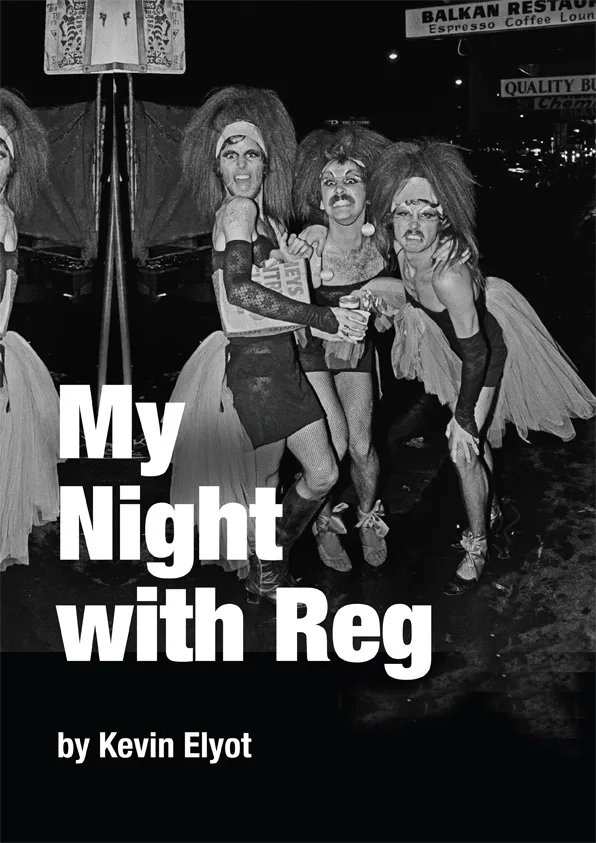
My Night With Reg

Kevin Elyot

Directed by Dan Usztan

Tower Theatre, Stoke Newington

Star rating: 4

Now almost a classic, Kevin Elyot’s thirty-two-year-old play has certainly stood the test of time. On a technical level it works partly because it’s a perfectly constructed triptych. It’s clever too because the titular Reg belongs, like Godot, with a small group of other dramatic contrivances who never actually appear. It’s also often wryly funny. In this production all six cast members bring naturalistic conviction to these anguished men as their friends and lovers die of Aids during that dreadful 1980s period when there was no medication.

Daryl Hurst, as Guy whose flat provides the setting three times over several years, is intense and anxious. Joe Lewis delights as the (younger) Eric who first appears as a painter and decorator and gradually becomes part of the group – Welsh, lithe and frank. And John Stivey’s performance as the dim, vulnerable, garrulous Bernie is very enjoyable. Nick Edwards develops John from an awkward but outwardly urbane John to the point when he reveals his troubled soul in Act 3 and I  liked Billy Knowles’s take on the irritable Benny.

Really outstanding (literally because he’s a head taller than everyone else on stage) however is Richard Patient as Daniel. He plays the first act as a ridiculously camp man, never serious, throwing out rapier-sharp bitchy remarks and posturing for Britain. Then in Act 2, after Reg’s funeral, he is sober, unhappy and talking normally because he’s utterly bereft at the death of his long-term partner who, it gradually turns out, has also slept with almost everyone else in the room. In Act 3 we see a bit of the old Daniel but years have passed and he’s much less frothy than he once was. It’s a finely nuanced performance – and, like all the acting in this show, a credit to Dan Usztan’s intelligent direction.

Jude Chalk’s set gives us a very naturalistic 1980s sitting room with conservatory at the back and what fun Lucy Moss must have had designing the costumes for an era when most men wore collars and ties most of the time – when they weren’t in silk dressing gowns,


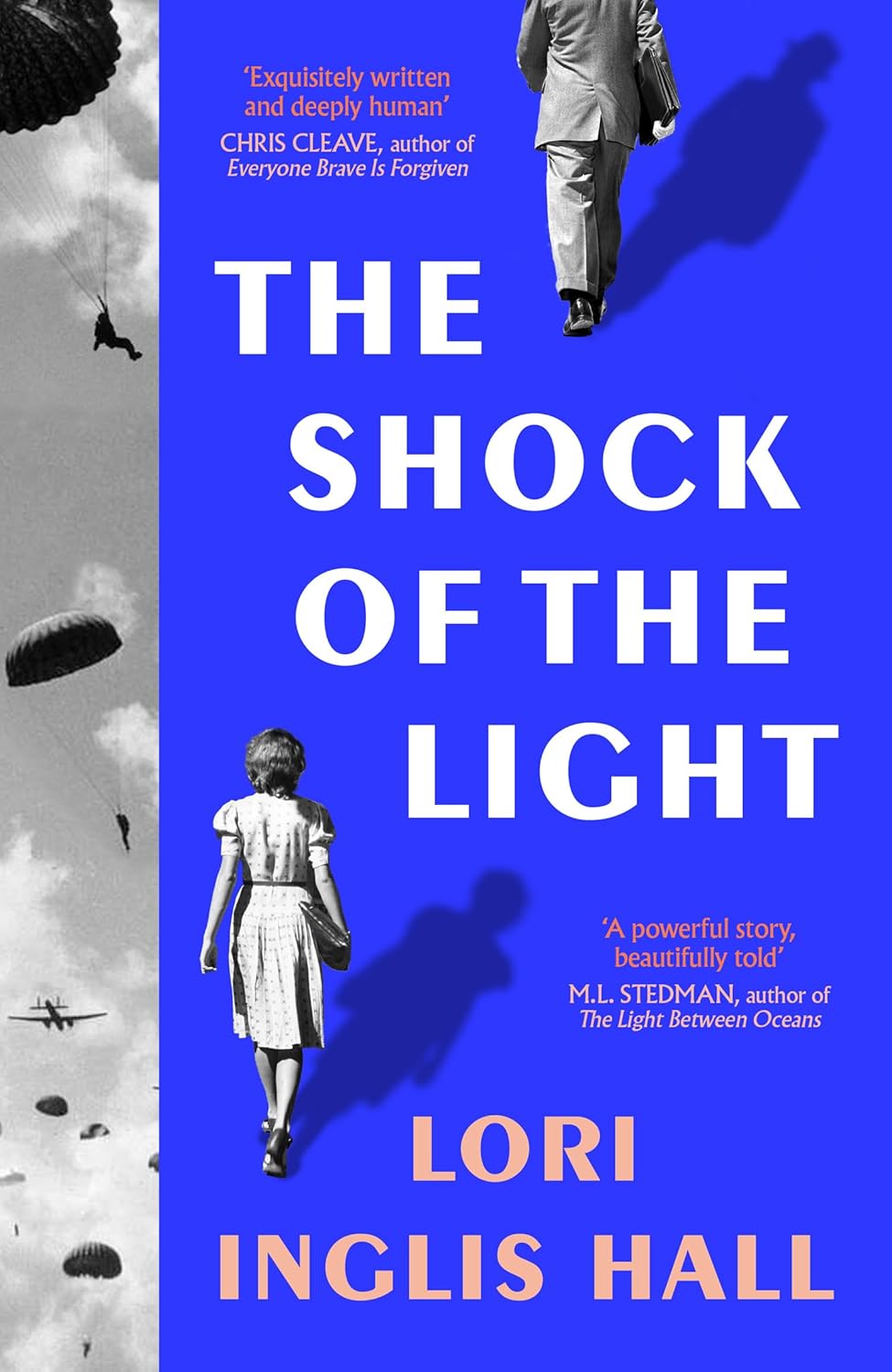
I often write here about books written in the past, usually because I have come back to them after a while. This one, published last month (12 February 2026), is hot off the press and one of the most engaging new books I’ve read in ages.

Tess and Theo are the children of a Cambridge academic and a French mother who grew up up in the 1930s. They are twins and one of the things this novel does very well is to explore the relationship between siblings who’ve been side by side since conception. That bonding is close, exclusive and almost impossible for outsiders to understand.

When they reach their late teens, Tess goes to Paris to study at the Sorbonne. There she gets in with an arty Left Bank crowd. Pregnancy follows (although the situation isn’t quite what Inglis Hall would, for a long time, have you believe) and her mother arrives in Paris to take charge. The baby is forcibly adopted which damages Tessa for life. Her mother insists that the “shameful” birth be kept secret even from Theo. This happens early in the novel.

Theo meanwhile joins the RAF – to the consternation of his family –  and sees appalling atrocities so he too has secrets, not least that he isn’t interested in women. He is permanently scarred by seeing a fellow pilot, with whom he was falling in love, shot down during D-Day. Each twin knows that things are being hidden. Meanwhile Tessa, who has taken a menial war-effort clerical job, is recruited to do something more challenging and very secret so of course she can’t discuss it with Theo. And that feels painful.

Inglis Hall unwinds and develops all this in alternating third person chapters as the narrative switches between Theo and Tess and – no spoilers – it is highly relevant that both speak fluent French because it is their mother’s first language. We pass through the war, with tantalising flashbacks and in 1947 Theo, a lawyer, by profession, is involved with the Nuremberg Trials.

Eventually we shunt forward to 2003. Enter a PhD student named Edie, who is interested in English women posted behind enemy lines during the war. Much of the detail has long been hushed up although there’s a lot of information in the Imperial War Museum. She calls on the elderly Theo, becomes a friend, and together they eventually unravel the truth.

At one level The Shock of the Light  is a gripping suspense story because Inglis Hall is brilliant at plot twists and we long to know what really happened. At another level this is a tragic, richly compelling story about human suffering and loss. And once of the things I admire most about it is the quality of research and the accuracy of the historical details. The characterisation is a treat too.  Each of these people marches off the page and into your head –  even the more minor players such as Theo’s “friend” Jeremy, the inscrutable Miss Jones and Tess and Theo’s pacifist father. It all got right under my skin.

Lori Inglis Hall is a 40 something Brit and this, astonishingly, is her first novel. I’m not surprised to learn than that there was a six-way auction between publishing houses wanting the right to publish. I hope there’s another one coming very soon.

Next week on Susan’s Bookshelves: When the Cranes Fly South by Liza Ridzen


Academy Symphony Orchestra

Sir Mark Elder

Duke’s Hall, Royal Academy of Music, 27 February 2026

It’s always a joy to hear the cream of the next generation of professional musicians working with a Big Name. And on this occasion, one could feel every single player responding to the experience and charisma of Sir Mark Elder.

Always an engaging speaker, Elder told the audience (Duke’s Hall was packed to the rafters) that he had deliberately chosen two very different pieces which have nothing in common other than that they don’t get performed very often. That makes them good learning experience for the students, he said. He also treated us to a story that I’ve never heard before. Sibelius and Elgar never met. However they conducted the two works played in this concert at an event in Birmingham in the early years of the 20th century. But no one thought to introduce them!

Then, with second violins on Elder’s right, next to the cellos, we were treated to Sibelius’s Symphony no 6.  The first movement came with rich clarity especially from the upper strings and Elder really pointed up the dramatic general pauses. I admired the smoothness of tone he coaxed in the Allegretto and the dance quality in the third movement especially in the ascending and descending scales. There were some lively mood changes in the Allegro with fine playing from double basses and harp and a very disciplined morendo ending.

For the second part of the concert, forces were enhanced by, among others, several more percussionists and a second harp. Elgar’s Falstaff is a story told in music. It takes the big. bombastic, Falstaff from both Shakespeare’s Henry IV plays, and the very beginning of Henry V and details his life. The composer called it a “Symphonic Study.” it’s effectively a musical biography. It’s full of life – as Falstaff is although, of course, he is denied a happy ending – and must be great fun to play. Highlights of this accomplished performance included the insouciant cello solos (Jae Min Kim Kang) and contra bassoon (Max Docherty) as Falstaff flirts with his favourite whore. The snoring interlude (Nona Lawrence on tuba) was witty and leader Nathan Mierdi’s solos as the ageing Falstaff dreams of his youth were played with all the poignancy they need.  Then there was some nifty snare drum playing as Falstaff recruits for the Battle of Shrewsbury and the big coronation tune for Henry V came with energy and warmth.

Finally, of course, we get to “I know thee not old man” as Henry rejects his old friend and the muted ending was nicely nuanced. As I listened and watched, I found myself wondering whether these talented young players have ever seen or read the plays which inspired this piece and second, whether it matters.


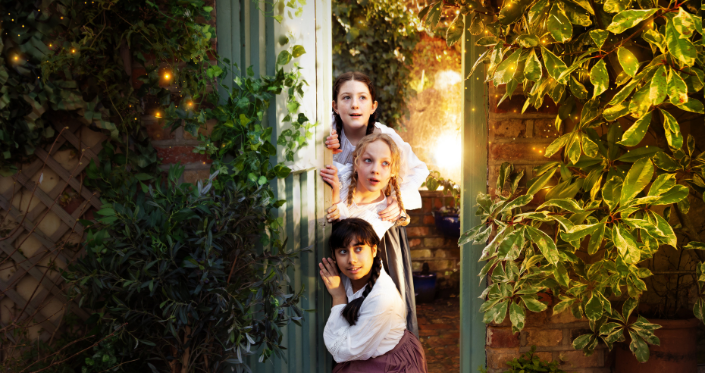
The Secret Garden

Frances Hodgson Burnett

Adapted and directed by Alex Marker

Questors Youth Theatre


Star rating: 3


Questors Youth Theatre is a fine organisation which achieves a pleasing standard. This version of Frances Hodgson Burnett’s famous and much-loved 1911 novel provides plenty of scope for a large, well-trained cast.

Alex Marker, who also directs, has adapted the novel with a three-faced Mary Lennox at its heart. Most of the time the device works reasonably well. It suggests that Mary has many moods and personality traits and inner voices. It also means a central role on stage for a trio of identically dressed young actors. All are pretty good with Advika Nair as the strongest of the three – naturalistic, cross and feisty. For Mary has lost both her parents (who neglected her anyway) in a cholera outbreak in India. She is then placed with an absentee, widowed uncle on a Yorkshire estate where she, eventually makes friends and discovers that social class is the least of her worries. She also finds the titular garden – a symbol of loss, discovery and new life, vibrantly lit (Alasdair Graebner) in this production.

Among the many smaller roles, all done thoughtfully, there’s a noteworthy performance from Noa Eloise Archer as Martha, the servant who introduces them to her large local family, especially her brother Dickon (Noah Christi – lots of warmth). Charlotte Green finds plenty of exasperated authority in the housekeeper, Mrs Medlock.  And Billy Adcock is good as the gardener, Ben Wetherall.

An ensemble of twenty yields various other roles. It also taunts and haunts Mary in chorus and shunts set items, including some rather effective door frames which line up to represent the inside of the cavernous house.

Puppets, designed by Shaan Latif, represent the wildlife in the garden –  including a robin, other birds and a fox –  and are very attractive.

It isn’t, however, a show without problems. Marker has decided to make the local Yorkshire accent and dialect a plot strand to represent the vibrant life of local people as opposed to Mary’s “privileged” isolation. Thus most characters speak in it much of the time which is a tall order for a young cast. In general they do pretty well most of the time but there is a tendency to speak too fast so that audibility is often lost.  And that is, partly down to the magnificently large thrust playing space in The Playhouse at Questors. It’s almost as large as Chichester Festival Theatre and much bigger than, say the Arcola or the Donmar. And that’s challenging for a youth theatre working with young voices.

Moreover, imaginative as Marker’s adaptation is, there are far too many short scenes which make it bitty. Some are quite peripheral anyway so it could easily have been streamlined.

Kalla and Neruda Quartets

Royal Academy of Music

Lunchtime concert, 24 February 2026

The advertised work in this pleasing concert was the Mendelssohn Octet, but it began with the Kalla Quartet playing Beethoven Op 18 no 3. Their cellist explained at the beginning that this was the fruition of a recent five-day training session at Minterne House in Dorset with Marije Johnston who teaches them at the Royal Academy of Music along with her husband Magnus (Concert master at Royal Opera House) and brother-in-law Guy who is a renowned international cellist.

That input certainly showed. Their tone, especially from the viola (who is an outstandingly collaborative player) was pleasing. They managed the rubato in the second movement with cohesion and there was some lovely cello work. The third movement, in 3/4 but not quite a minuet and trio, came with verve and the final  presto rose to an exciting climax before the witty Haydnesque ending. It was an enjoyable effort with only one or two infelicitous moments.

They were then joined by the Neruda Quartet for Mendelssohn’s remarkable Octet, famously written in 1825 when he was only sixteen,  All players apart from cellos stood for this performance which, as always, freed up the music and the interpretation because it allows much more body movement and eye contact. Highlights included the intricate, silken beauty of the second movement which came out pretty well as did the exposed first violin solos although everyone is a soloist here. I liked the way these young players brought lightness and tension (shades of A Midsummer Night’s Dream concert overture which came a year later) to the third movement and they played the finale, complete with Messiah quotes, with impressive youthful energy.

Of course these students must breathe with the music – as singers and wind players do. It’s crucial to phrasing and no doubt they’ve been encouraged in it since childhood. They should, however, not do it so loudly that the audience can hear it as if it were part of the texture of the music. At times in this concert it sounded as if there were a fault in the central heating or air conditioning.

That may have been exacerbated by the sensitive acoustic of the Angela Burgess Recital Room which I hadn’t been in before. It’s at the top of the building in the new extension and it’s a very beautiful space whose design allowed me to hear every note on every instrument without any kind of fuzziness or echo which was an unusual delight.


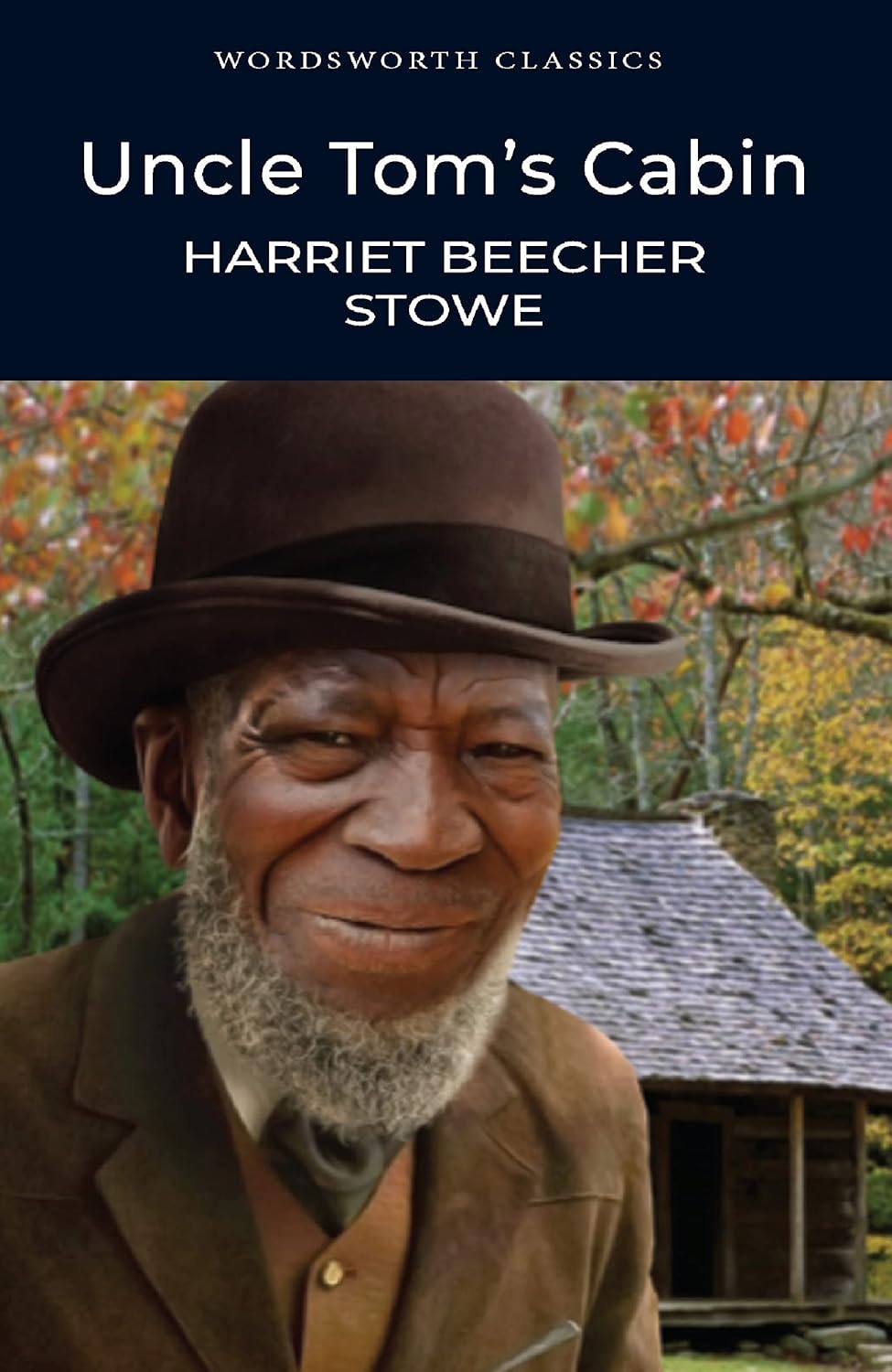
I read it as a child. And now I look at how wordy Beecher Stowe’s unexpurgated version is, I’m pretty sure that it must have must been an abridged version that the 10 or 11 year old me read.  Then  Petroc Trelawny recently remarked on Radio 3 (I can’t remember the context) that nobody reads Uncle Tom’s Cabin any more. “Watch me,” I thought and ordered a paperback, since my late husband’s old copy, inscribed by a Deptford ancestor in 1854, was too foxed to see clearly and rather too fragile to handle.

Well in literary terms it isn’t much of a novel. Published in 1852, it was written with one intention: to expose the evils of slavery. It’s overtly didactic (the final chapter is effectively a sermon), characterisation often relies on stereotype and the plotting is weak. There are far too many characters whose lives don’t really intersect. They’re there to reinforce the Beecher Stowe message – and it’s an intensely powerful, painful one.  That’s the whole point.

Moreover, it’s full of what has become the most emotive word in English because that’s how black people were referred to. It was also how most of them refereed to each other. In 1852 it was a descriptor rather than an insult. It’s no good getting vexed about it.

Harriet Beecher Stowe (I reviewed Joan D Hedrick‘s biography in 1994 when I was doing a fair amount of work for Literary Review) came from a family of evangelical preachers and married a theologian. They lived in Maine where she, aged 39, in 1850 was bringing up five children and expecting another while writing bland, pious, short stories in her spare time. Slavery had already been abolished in the British Empire in 1833 and she fretted angrily about its continuation in the southern US states. Uncle Tom’s Cabin hammers home its evangelical agenda with commendable energy, even when it lacks plausibility.

It tells many stories, often clumsily left and returned to, like a poorly structured TV soap.  The central character is the titular Tom although he disappears from view for quite long stretches. He and his family live happily together in Kentucky, the property of a Mr Shelby. Tom is decently treated, has a lot of responsibility and is, at a stretch, almost a family friend. But people in his position are never totally secure. Shelby gets into debt. Tom is his most valuable asset so, reluctantly, he is “sold down the river” – an expression I doubt I’ll ever be able to use again in the casual modern sense of being let down or conned.  And every slave knows that conditions down in, for example, New Orleans are often appalling.  Actually Tom strikes lucky with his first southern owner, a complicated man who doesn’t really believe in the system he’s trapped in so his servants/slaves have a pretty free rein. Beecher Stowe captures his position rather well although the lengthy discussions with his abolitionist cousin from the North are laboured. At least he has a sense of humour, though and that’s rare in this novel.  Then the worst happens because the benign owner dies and his unfeeling widow simply sells Tom (and others) to the highest bidder. The outcome is deeply, hideously distressing.

The thing about Tom, though, is his Christ-like commitment to forgiveness and wanting everyone to repent of their sins and go the heaven he believes in so passionately – despite the terrible things they do to him. “Father forgive them for they know not what they do”. His pious passivity gets wearing.

Punctuating this narrative are many other stories quite vividly told. Cassie, with her long experience of sexual abuse is a strong character. Eva, though, is much too saccharine for the modern reader – she takes almost us into allegory territory.  Even Dickens (Bleak House was published the same year as Uncle Tom’s Cabin) would never have sentimentalised a child quite as much as Beecher Stowe does sickly, golden haired Eva.

By far the best character in the novel is Topsy. Her defensive truculence and vulnerability are instantly recognisable to anyone who has ever worked with troubled children although her dramatic path to Christian redemption and a better life doesn’t quite ring true. It reminds me, in a sense, of Mad Margaret in Gilbert and Sullivan’s Ruddigore: “I’ve given up all my wild proceedings”. But that, of course, is meant to be a comedy.

It’s easy to find fault with Uncle Tom’s Cabin but it’s worth reading for what it achieved. It sold 10,000 copies in its first week. Within a year nearly 300,000 had been sold in America and close to a million in England – including the one bought by, or given to, my husbands’ forebear. Many translations meant that by 1860 Beecher Stowe was the most famous writer in the world. And, thank goodness, it changed the way people thought. There is a story that when she met Abraham Lincoln in 1862 he said “Oh and here’s the little lady who started this great war”. It’s probably apocryphal but it summarises the feeling during America’s Civil War which was largely predicated on the slavery issue.  Slavery was formally abolished in the US in 1865  but, as we all know,  the ensuing battle for true equality continues. The aftermath of slavery is still with us 174 years after the publication of Uncle Tom’s Cabin.

Next week on Susan’s Bookshelves: The Shock of the Light by Lori Inglis Hall