Press ESC or click the X to close this window

Susan’s Bookshelves: The Mill on the Floss by George Eliot

Although I’ve read it at least twice in the distant past I have never taught The Mill on the Floss. Reading it again now with huge pleasure I’m struck by what a good novel it would be for an A Level group. It’s so full of themes, ideas and discussion that I’d need a great deal more than a single side of A4 to list them: parenting, siblings, education, disability, female inequality, duty, loyalty, forgiveness and much more. It’s a gloriously rich novel. It’s also – by 19th century standards – a pretty accessible read.

It was her third novel – after Adam Bede and before Silas Marner – and I’m certain that there are elements of Maggie Tulliver which are modelled on Eliot’s own memories of being a fearsomelty intelligent, curious, imaginative girl growing up in a man’s world. After all Mary Ann Evans knew she had to write under a male pseudonym in order to be taken seriously.

Maggie Tulliver is a mill owner’s daughter who adores her brother, Tom who is by turns affectionate and dictatorial. She is drawn to Philp Wakem, who has been left with a minor disability by an illness. Unfortunately there is a long term feud between Wakem senior, a lawyer, and Mr Tulliver. The result of this is that Mr Tulliver loses his mill and, with a faint whiff of Romeo and Juliet, Maggie is forbidden to see Philip.

Mill 2 (2)

Years pass, Tom eventually manages to get the mill back and Maggie meets Stephen who is courting her cousin Lucy. There is, however, chemistry between Maggie and Stephen which both try to deny because of what they see as commitments elsewhere. Of course there is no happy ending for anyone. Eliot ends the novel with a gloriously symbolic flood sweeping through the community and washing things/people away both physically and metaphysically.

I love the way Eliot uses Mrs Tulliver’s very judgemental sisters as a quasi Greek chorus dispensing advice, opinion and, occasionally help although that always comes with conditions and chilly patronage which reminds me of that dreadful line in Measure for Measure: “See that she has needful but not lavish means”.  Their husbands – especially Uncle Deane who gives Tom a job when Tulliver fortunes are at their lowest ebb – are rather more attractive. You really wouldn’t want to share a cup of tea with any of Maggie and Tom’s aunts – George Eliot at her acidic best. She’s also very good (you see it strikingly in Middlemarch eleven years later) at small town group dynamics and the way distorted gossip takes a hold on communities.


OLYMPUS DIGITAL CAMERA

I was repeatedly astonished by how topical some aspects of The Mill on The Floss are too. Maggie, in a moment when her agonising self-control slips, agrees to go away with Stephen and marry him. That means they spend a night together on the river before reaching the town where Maggie’s conscience overpowers her and she insists on leaving him and going home. Of course the night together is, although full of passionate longing, sexually innocent but Maggie is castigated by the populace of St Ogg’s for immoral behaviour in a way that Stephen isn’t. 162 years after the novel was published that still rings true. Although today nobody (or almost nobody) minds much whether or not young people have sex together, women are still judged differently from men on socio-sexual issues.

The character I empathise with most is poor, “more sinned against than sinning” Mrs Tulliver. Her story is tragic. She has two challenging children. She’s a fairly simple woman who can’t make head or tail of  Maggie’s mercurial intelligence and despairs of her sallowness and dark hair. Then she loses all her treasured possessions including her home and virtually has to go into service at the behest of her bossy sisters. Finally, long widowed,  she outlives both her children – an appalling fate for any mother. There’s scope here for a spin-off novel or play about Mrs Tulliver – anyone up for it?

Mill 3

Next week on Susan’s Bookshelves: The Corfe Castle Murders by Rachel McLean


Show: A Doll’s House, Part

Venue: Donmar Warehouse. 41 Earlham Street, London WC2H 9LX

Credits: By Lucas Hnath

A Doll’s House, Part 2

3 stars

Noma Dumezweni (as Nora). Photo: Marc Brenner


So what does Nora do after she leaves Torvald at the end of Ibsen’s play? It’s a question many writers have tried to answer. In Lucas Hnath’s engaging, four hander, ninety-minute sequel Nora has spent fifteen years establishing herself as a successful independent woman but now returns – with questions and a request.

Noma Dumezweni  is stonkingly good as Nora. Statusesque, elegant and articulate she towers over everyone else in every sense. She is variously sardonic, poised, determined, distressed, reasonable and furious. Her Nora is a charismatic force to be reckoned with and I have rarely seen an actor listen so expressively.

And June Watson (87) happily refuting the notion that there are no good parts for women is a delight as the grumpy, irascible, forthright Anne Marie. Brian F O’Byrne is plausible as Torvald especially in the later scenes while Patricia Allison is suitably chirpy as his daughter, Emmy.

The other star in this show is Rae Smith’s set which gives us a house on the Donmar’s central playing space. As you take your seats you can see only its oppressive walls. Then the lights go down and the whole structure lifts off dramatically – like a doll’s house – to reveal a sparsely furnished room. It’s both neat and symbolically ingenious.

Ibsen’s play was premiered in 1890 so we’re now in 1905 – with rather lovely period costumes. Hnath’s language, however, is firmly 2022 (“kids” “I get it” etc). Although there is humour in the incongruity of Watson’s elderly character declaring that she’s pissed off, and there’s a lot of that sort of thing, it doesn’t make for convincing coherence and feels wrong.

In  A Doll’s House Ibsen explores marriage in a partriarchal society. Although the situation still isn’t perfect things are very different today with much greater equality for women, at least in the West and those improvements, in both Norway and the UK, are charted in the programme for A Doll’s House Part 2. Many of the battles are won.  So I left the theatre puzzling over why exactly we need a new play now which examines and challenges obsolete laws and attitudes – although it’s certainly entertaining.

Photo: Marc Brenner

First published by Sardines: https://www.sardinesmagazine.co.uk/review/a-dolls-house-part-2/

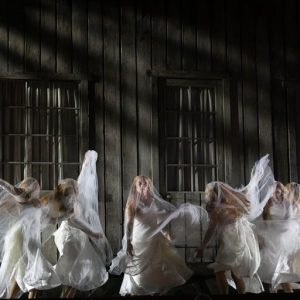
Carmen Opera Holland Park June 2022

The world’s most popular opera feels fresh and vibrant, but free from gimmickry, under Cecilia Stinton’s direction with Lee Reynolds doing excellent work with City of London Sinfonia in the pit.

Staging anything coherently is a challenge on Opera Holland Park’s enormous, very wide stage. You have to allow extra bars to get people on and off because they have to travel so far. For this production the playing space is almost doubled (design by takis) with a sloping semi-circular thrust stage so that the orchestra is effectively encircled by the action. It adds still further to the logistic challenge but it works well and makes some of the action – especially the final scene – feel intimately immersive.

Kezia Bienek is terrific as Carmen. She sings with effortless panache and finds all the right assertive, sassy, flirtatiousness while always remaining her own woman. It’s a warmly convincing performance with, among many other fine moments, a deliciously sexy Habenera (lovely balance with the cello at the beginning).

Oliver Johnston more than matches her as the hapless, love-smitten, ultimately abusive Don José, His tenor voice is magnificent and the love aria he sings to Carmen in the tavern is beautifully, mellifluously lyrical. And yet he brings coarse, fierce passion to the final scene.

Alison Langer’s troubled frumpy Micaela is a fine foil to Carmen and her claret-rich voice delights especially in the resonant bottom notes. And Thomas Mole gets – and makes real drama out of – what is, I gather, the most widely recognised music theatre tune in the world. So somehow he has to make the Toreador song feel newly minted and he does – as his flamboyant, exhibitionist character shows off and captivates Carmen.

Lee Reynolds has slightly reduced the score but the omissions don’t show. He is a very clear conductor – mouthing every word with the singers, beaming in delight at the end of the glorious accelerando number with castanets and pizzicato strings. He allows a lot of detail to shine through. Like most people, I’ve known this music all my life but there’s a sparky horn line in the Toreador song I’d never noticed before. Once or twice he lost control of the male chorus which slipped out of synch for a few bars at the performance I saw but the juggernaut soon got back on track so it didn’t matter much.

The children’s chorus – arranged through Cardinal Vaughan Memorial School – fizzes with energy and sings with conviction. It’s good to see community involvement at this level.

First published by Lark Reviews: https://www.larkreviews.co.uk/?p=6827

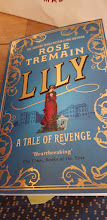
Librarians and book prize panels do not care for Michael Morpurgo because they find his writing sentimental and predictable. I doubt that he minds much because he is one Britain’s most successful authors and children love his writing just as they did that of Enid Blyton, Roald Dahl and now Jacqueline Wilson. None of them met/meet  with much literary approval.

Morpurgo is an issues man and makes no secret of it. He often writes movingly about the horrors of war ( Private Peaceful, Kensuke’s Kingdom) or animal welfare and sentience (Born to Run, Running Wild).  Sometimes, as in War Horse he combines the two. And The Amazing Story of Adolphus Tips (2006) is another compelling story about both war and an animal.

Lily, who narrates, is an elderly lady. As a farm child in Devon, at the time when land was being evacuated for D Day training, she kept a journal which she is now handing over to her grandson.

Tips was her much loved cat. Lily was  an only child and her father was away at war. A cheerful, 18 year old, black American GI, who becomes a friend, eventually returns Tips to her because the cat gets lost when the family is forced to move out of the farm house. And then – at the end of the story the Lily of 2006 tells her grandson about much more recent developments. It’s a moving ending.

The detail about how the land was taken and used is what really happened  around Slapton Sands in 1943. And, as always, Morpurgo’s characters are all totally realistic – Barry the evacuee who comes to live with them from London and wants to be a farmer is, for example, beautifully drawn as is his in-your-face but nice bus driver mother when she visits. Lily’s grumpy grandfather is someone we all know too.

And as for the cat – well, anyone who’s ever lived with a cat will be able to feel Tips’s fur under his or her fingers, see her green eyes and hear her feline voice. Morpurgo really does do animals well.

The Amazing Story of Adolphus Tips has been dramatised once or twice but seems never to caught on to the extent that some other shows based on Morpurgo’s books have. It would be great to see it done again somewhere soon so that more children (and adults) are driven back to this really rather good book.

Next week on Susan’s Bookshelves: The Mill on the Floss by George Eliot.

Show: Cancelling Socrates

Society: West End & Fringe

Venue: Jermyn Street Theatre. 16b Jermyn Street, London SW1Y 6ST

Credits: By Howard Brenton

Cancelling Socrates

4 stars

Photos: Steve Gregson


Socrates was a Greek philosopher at the turn of the Fourth Century BC. He questioned everything, was found guilty of atheism and died in prison of hemlock poisoning in his seventies – forced suicide as a form of execution – having resisted attempts to help him escape. Howard Brenton’s quite concise (two short acts) play uses these facts to create a witty, incisive commentary on 21st Century democracy, freedom to think and the function of art, among other things. And it’s rich theatre.

A four-hander directed by Tom Littler (who will be much missed at Jermyn Street when he moves to Orange Tree Theatre, Richmond later this year) it purrs along thoughtfully. It is also very funny because Brenton’s dialogue is second to none and we chuckle at mildly incongruous modern expressions, references to the plague and cynical lines such as “witch hunting and pulling down the old truths,” or “The young think it’s their right not to be upset.”

In a strong cast, Robert Mountford is outstanding as Euthyphro and then as the gaoler. He has very expressive eyes and talks with them. His Euthyphro quizzes Socrates (Jonathan Hyde) and is clearly irritated with him as well as trying to make him see sense about the management of his trial. He is variously persuasive, supportive and self-interested. When he morphs into the gaoler in the second act – coarse, forthright but gruffly sympathetic and using the strident voice of an uneducated man – we hardly recognise him. It’s masterly acting.

Hyde, using a deliciously refined voice.  finds all the right tiresome persistence in Socrates. He’s a decent enough chap but like his friend Euthyphro most of us would cross the street to avoid a long conversation with him. Hannah Morrish brings anger, passion, anxiety and dignity to Xanthippe, Socrates’s young wife and later as a rather creepy masked representation of the demon which possesses him. Sophie Ward’s account of Aspasia, an intelligent, articulate woman and former mistress, trying to help Socrates, is convincing as she manipulates the dynamic between the others. These four actors are an evidently well bonded team – different pairings occupy various scenes and they all play off each other effectively with much attentive listening.

It’s quite a treat to see a new play which manages to be both entertaingly accessible and intelligently exploratory.

First published by Sardines: https://www.sardinesmagazine.co.uk/review/cancelling-socrates/

Show: Starcrossed

Society: West End & Fringe

Venue: Wilton’s Music Hall. Graces Alley, London E1 8JB

Credits: By Rachel Garnet. Inspired by William Shakespeare’s Romeo and Juliet. Presented by Jacob Schott and Visceral Entertainment in association with Ticking Clock Theatre

Starcrossed

4 stars

Photos by Pamela Raith


An intelligent, moving, original, tangential response to Romeo and Juliet, Starcrossed  feels, in many ways, like traditional Shakespeare. The three actors are in Elizabethan dress. And I was constantly impressed by the language. Rachel Garnet’s text weaves Shakespeare’s  familiar verse and her own so neatly together that it’s seamless fusion. Most of the play is in iambic pentameter, complete with occasional rhyming couplets and contemporary usage such as “Art thou” and “Go forth”. It’s clever stuff which pounds along with great clarity.

The narrative conceit is that, at the same time as Juliet and Romeo  meet and fall for each other in the background, Tybalt (Tommy Sim’aan) and Mercutio (Connor Delves) realise they are in love. Tybalt tries very hard to resist it but eventually succumbs. The scene in which they wake up after spending the night together, uses Shakespeare’s beautiful lark/nightingale dialogue. Thereafter – when they’re almost caught together – we get a hilarious traditional bedroom farce with much hiding under the bedclothes and quick fire on stage misdirection. It’s a very well paced play.

Gethin Alderman plays almost all the parts except Tybalt and Mercuitio and he is a magnificent, often very funny, actor, Among other incarnations he finds a lofty, gobbled voice for Capulet, a light soppy one for Romeo and a rough bellow for Salvatori, a character not in Shakespeare’s play but essential to the plot here. Alderman exploits his towering height too.

Delves makes Mercutio mercurial and very seductive and Sim;ann brings serious gravitas tempered with warmth to Tybalt. And the  three cast members are finely attuned to each other.

The piece is peppered with wistful folk songs and Elizabethan ballads – mostly in minor keys led by Delves on small guitar, They feel atmospherically appropriate.

Many Shakepeare spin offs – and Juliet or Matthew Bourne’s Romeo and Juliet ballet for instance move a very long way from the source material. Starcrossed is refreshing and enjoyable because, despite its plot twist, it actually celebrates Shakespeare’s play. When Mercutio dies, for instance, we’re straight back to the lines we’re all familiar with. Of course there’s room for both approaches.

First published by Sardines: https://www.sardinesmagazine.co.uk/review/starcrossed/


I first read Chocolat twenty three years ago when it was first published in 1999 and getting huge amounts of acclaim. All I remembered was that it was about chocolate making in a French village – with lots of colourful characters.

Having reread it now, I realise and remember that it’s about a great deal more than that. Chocolate is the novel’s metaphor for pleasure and free will and it’s pitted against the bigotry of some corners of the Catholic church which clings to its doctrines of sin and the need to forgo all sensual pleasure.

Vianne – with her young daughter Anouk and many memories of travelling the world with her otherworldly, perhaps psychic mother – arrives in the fictional Lansquenet-sur-Tannes, near Agen in south-west France at the beginning of Lent. There she decides to use her newly acquired skills as a chocolatière by opening a shop –  to the horror of the local priest, Reynaud. Vianne and Reynaud alternate as narrators.

Vianne is wise, kind and exceptionally perceptive. During the six weeks of the novel’s span with Easter as its climax she befriends a spirited elderly woman with a mind of her own – wonderful creation. She also supports the River People who arrive nearby and are met with a pretty solid wall of, as it turns out, criminal, vigilante prejudice. She takes in the wife of local café owner helping her to escape from a brutally abusive marriage. And she makes friends with locals who come to her café to drink her chocolate, eat her near-magical concoctions and bathe in her calm alternative to the church across the village square.

Reynaud’s chapters are addressed to his predecessor priest in the village – effectively his mentor and now comatose in care. Gradually we realise that there are dark secrets in the past which partly explain why he is as he is although Harris doesn’t exactly forgive him for the unhappiness he has caused. It’s just one of the many well drawn and nicely paced sub plots. Lovely old Armande’s relationship with her difficult bossy daughter and delightful poetry-loving grandson is another. So is the development of Josephine from terrorised wife into a confident, independent woman.

The writing is extraordinarily sensuous. You really can taste the chocolate and feel it texture in your mouth: “I poured a glass for myself, with noisette liqueur and hazelnut chips. The smell is warm and intoxicating, like that of a woodpile in the late autumn sun” or “I went into the kitchen and very slowly prepared the chocolate espresso. By the time I’d poured it, added cognac and chocolate chips, put the cups onto a yellow tray with a wrapped sugar lump in each saucer, she was calm again.” And at the end of the novel is a dinner party at which every dish is lovingly described – it’s climactic in more ways than one but no spoilers in case you haven’t read it.

In short I loved Chocolat  and admired it all over again. I don’t think I have ever seen the 2000 film in which Juliet Binoche played Vianne – if I have it must have made very little impression on me. I shall now however, having reread the book and thought a lot about it, give the film a whirl. I doubt that it manages to convey the chocolate experience as well as Harris’s words do but we’ll see.

Chocolat

Next week on Susan’s Bookshelves: The Amazing Story of Adolphus Tips by Michael Morpurgo

Show: The Lion

Society: Southwark Playhouse

Venue: Southwark Playhouse. 77-85 Newington Causeway, London SE1 6BD

Credits: BOOK, MUSIC & LYRICS BY BENJAMIN SCHEUER. Produced by DANIELLE TARENTO IN ASSOCIATION WITH ARIZONA THEATRE COMPANY

The Lion

4 stars

Susan Elkin | 02 Jun 2022 13:59pm

Photos: Pamela Raith Photography


This warmly engaging show is a one-man, song-based autobiographical piece. First aired in 2014, it was originally produced at Manhattan Theatre Club and toured all over the US with the author/composer performing it himself. The 2022 revival features the very talented Max Alexander-Taylor as Ben.

Ben’s life story is eventful. The son of an American father and British mother, he grew up in New York. When he was 14,  his father died suddenly after which his mother returned to the UK with his two younger brothers and Ben who was sent to an English boarding school. As soon as he could he returned to New York, established himself as a musician, had a long relationship with a girl (“freckled face and eager mind”) and, before he was 30, survived Stage 4 Hodgkin’s Lymphoma – a very serious form of blood and bone cancer.

We start with Ben as a child playing a home-made toy guitar with his musically accomplished, mathematician father who eventually gets the boy a proper guitar and shows him one chord from which the rest develops. The relationship with his father is troubled because Ben fails to live up to expectations and Scheuer senior is very short tempered. He and Ben were locked in an unresolved  quarrel at the time of his death so the boy is wracked with guilt and feelings he doesn’t understand. And those feelings are later threaded through the love for Julia and the cancer as we watch, and listen to, Ben unpicking his emotions.

Effectively a musical monologue, this show has some very beautiful songs especially the loving one about how Julia makes him laugh. Alexander-Taylor is perfectly cast. He is an accomplished guitarist (the five instruments on stands behind him are the only props). We are way beyond anything like strumming and the “three chord trick”. He uses plectrum and/or plucks the strings like a harpist to create some complex rhythms and riffs. He plays a lot of melody – often in chords as a pianist would. His high tenor voice does wistful sweetness well and his diction is very clear. He uses an English accent except when he is voicing an American such as his father. It’s a very balanced and impressively sustained 75 minute performance.

He’s also unflappable. Because Lion is performed on a small, intimate thrust stage it makes some use of aisles and the audience is very close. When a  front-row audience member was taken ill on press night, Alexander-Taylor – thrusting his guitar into the hands of a front of house person – was the first to reach him. Once the man had been helped out, Alexander-Taylor simply took back the guitar and continued from where he had stopped, almost without missing a beat. What a pro!

First published by Sardines: https://www.sardinesmagazine.co.uk/review/the-lion/