Press ESC or click the X to close this window

Susan’s Bookshelves: Wuthering Heights by Emily Bronte

I’ve just finished it. Again. That must have been my ninth or tenth reading of Wuthering Heights and it still got right under my skin. It really is an extraordinarily powerful novel – and unique. It’s now 173 years since it was published in 1848 but that just falls away almost from the first paragraph because it’s so fast paced that it doesn’t feel like a nineteenth century novel. One is left wondering what on earth Emily Bronte would have gone on to achieve if she hadn’t died of tuberculosis in December 1948, aged 30.

The structure is complex and ambitious but neat – we begin and end with H and C Earnshaw at Wuthering Heights. The self-obsessed, “entitled” Lockwood is the main narrator but that’s almost a framing device. The main narrator is housekeeper Nellie Dean who grows up with the (first) Earnshaws and is much more part of the family than a servant. She is effectively mother to several characters and sister to others. Nellie’s narrative is punctuated with accounts told her by other people and by the occasional letter. In anyone else’s hands it might be clumsy but Bronte carries it off in spades.

Heathcliff is the adopted son of Mr and Mrs Earnshaw and grows up with their son Hindley, who loathes him, and Catherine who loves him passionately. Hareton dismisses Heathcliff as soon as the older Earnshaws are dead and Catherine marries Edgar Linton at nearby Thrushcross Grange but Heathcliff returns three years later to find his beloved pregnant and dying. Heathcliff cheats the now widowed and feckless Hindley out of the ownership of Wuthering Heights and brutalises the latter’s son, Hareton. Heathcliff meanwhile has married and abused Edgar’s sister Isabella who takes their son away to the south. After her death her son, the physically and mentally week Linton, is brought back to Wuthering Heights and married, almost by force, to the younger Cathy. This, through iffy wills and so forth, eventually gives Heathcliff the ownership of Thrushcross Grange as well as of Wuthering Heights.  Finally Heathcliff dies and Cathy and Hareton marry freely.

That banal summary is a travesty but it might help if you’re new to Wuthering Heights. I used to tell my students that it’s a novel which needs reading quickly so that you don’t lose track of the narrative method or who the characters are, given the duplication of names.

Several things stuck me afresh on this latest reread. Who exactly is Heathcliff? Why on earth does Mr Earnshaw walk 60 miles (60 miles!) home from a Liverpool business trip  with a wriggling toddler under his coat? We’re told repeatedly that Heathcliff is physically (as well as figuratively) “dark”. I’ve always assumed he is mixed race which would have made him pretty exotic in rural Yorkshire in the late 18th century – it’s a historical novel set back 50 years. If so, does Mr Earnshaw really see him sitting on the harbour and take pity on him? More likely, surely, that he is the child of a black mistress (or prostitute) so that Earnshaw feels responsible. It would explain the latter’s fondness for the child. It would also mean that Catherine is Heathcliff’s half sister and complicate things still further.

A lot of ink has been devoted to debating whether or not the relationship between Heathcliff and Catherine is ever consummated – other than after death by melting into each other through the sides of their open coffins. I found myself wondering again this time. There is no textual evidence. It’s a case of draw your own conclusion. They certainly spend a lot of time alone together but the usual Victorian signal is a child and there isn’t one although both have children in other relationships – he with Francis and she with Edgar.

Note too (if I’ve persuaded you to read or reread it) that this is a novel about outsiders and insiders in which windows have massive symbolic significance. The ghost Catherine famously terrifies Lockwood trying to come through the window at the beginning. Children look through windows. People who are shut in look despairingly out of them. Windows (casements, lattices etc) are continually referred to.

Wuthering Heights is in a long tradition of novels named for houses in which the house itself becomes a almost another character: Mansfield Park, Bleak House, Howards End and The Dutch House are other examples. The wind in the trees rattling the doors and windows and the evocative darkness of the setting are part of what makes Wuthering Heights the punch between the eyes that it is.

There’s nothing remotely pretty about this novel. Many people, particularly children, are treated with hideous, mindless cruelty. But, by golly, it’s an arresting page turner.

Wuthering H old

Show: The Merchant of Venice

Society: Tower Theatre Company

Venue: Tower Theatre. 16 Northwold Road, London N16 7HR

Credits: William Shakespeare. Directed by David Taylor

Performance Date: 02/09/2021

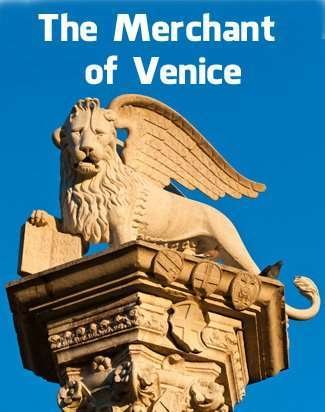
The Merchant of Venice

Four stars

We’re very clearly in Italy – with espresso coffee cups, red wine street noise, a swimming pool and some very stylish clothes. And to signal that it’s the 1930s we start with soldiers marching under an Italian Fascist flag. But it’s not a gimmicky production. The textual cuts are just enough to keep it fast paced and almost every actor speaks the lines with clarity and conviction so that the story telling is as clear as I’ve ever seen it.

The Merchant of Venice is a widely misunderstood play which many people dismiss as racist. In fact it is a play about racism and therefore arrestingly topical. Moreover, it’s always a treat to come back to in my view because it’s one of the best structured of all Shakespeare’s plays.

There is a much to like in Tower Theatre Company’s take on it. Nisha Emich’s Portia is reminiscent of Michelle Dockery’s Lady Mary in Downton abbey, darting from bitchiness to warmth and from total command in the trial scene to her return to Belmont and union with the man she fancies. It’s a very plausible performance.

Ian Recordon resists all temptation to present Shylock as a stereotypical villainous Jew. Instead we get a reasonable, be-suited old man trying to make a living in a city which loathes him and his kind. One feels faintly surprised at his sense of humour in coming up with the bond idea in the first place. It is only after the appalling desertion of scheming thieving Jessica (Cymbre Barnes – gently good) that the worm turns and he becomes vindictive  for which no reasonable person could blame him.

I liked Nick Hall’s take on Antonio too – a world weary Merchant and “tainted wether of the flock”. Yes, he’s probably a gay man in love with Bassanio but director David Taylor and his cast don’t stress that especially. We feel his pain strongly at the end as the three couples smooch-dance into the dawn and he is left alone.

Other noteworthy performances include Rahul Singh, a natural comedian I suspect, who coaxes every possible laugh out of Launcelot Gobbo. Dale Robertson – looking very much like Freddie Fox – brings an appropriately untrustworthy dimension to Bassanio and Alison du Cane and Fiona Costello are good value as Solania and Salania enjoying Shylock’s predicament and sharing their gossipy tabloidesque headlines with each other and the audience.

Peter Foster’s set is neat too: based on two rows of moveable boxes which look vaguely like weathered marble and can be pushed round the stage to suggest almost anything. And what a good idea to turn the caskets into a mechanical musical device so that they teeter forward each born by a black clad figure.

I enjoyed this show for 139 minutes categorising it in my mind as a very decent, watchable show of its type – and therefore three star. It was the final 15 seconds which won it the fourth star. I won’t spoil it here but it hit me right between the eyes and gave me something to reflect on all the way home.

First published by Sardines: https://www.sardinesmagazine.co.uk/review/the-merchant-of-venice-6/

Prom 3rd September BBC Symphony Orchestra Semyon Bychkov

This concert presented High Romanticism in several guises. And that meant lots of emotion and more beautiful melodies than you could shake a stick at – all under the baton of a holistically inclined conductor who places the music centre stage rather than resorting to showy, look-at-me gesturing.

We began with the angry majesty of Beethoven’s Coriolan interspersed with passages of gossamer lightness before the most dramatic of pianissimo endings – a fine performance of an old favourite which still managed to sound fresh and interesting.

The central work was Schumann’s piano concerto which written for and premiered by his wife, Clara, in the early 1840s. Kirill Gerstein played it like a glorious duet with orchestra. In the first movement, for example, his incisive A minor rippling was perfectly punctuated with orchestral interjection with Bychkov paying loving attention to every nuance, The delicacy of dialogue between piano and orchestra was like an intimate conversation in the middle movement too.

A big orchestra like the BBC Symphony Orchestra, on this occasion spaced out 2021-style, somehow filters the sound so that you hear everything separately and clearly. Sometimes that feels a bit disparate but here it brought out to good effect elements such as the horn entries in the first movement and the clarinet continuo in the second.

Gersteins’s encore was a virtuosic delight too. I was expecting a jazz piece because that’s his other field of interest. In the event we got a Bussoni transcription of a Bach chorale. Only the (very) nimble fingered need apply – but Gerstein made it sound effortless.

And so, finally, with Mendelssohn to Scotland for an intelligent performance of the delightful third symphony. High spots included the clarinet solo in the second movement, a deliciously crisp Allegro vivacissimo and a rousing maestoso at the end with lovely horn work.

For me, though, the crowning glory was the third movement, the adagio. Based as it is round one of the most sublime melodies ever written it is all too easy to wallow. Bychhov, however, knows exactly how to make it movingly, poignantly tuneful without ever descending to gush – even when we get to the simple account of the melody on the horn.

I left the Royal Albert Hall, my head happily rattling with Mendelssohn, and pondering the current problems orchestral players have to grapple with. When are we going to stop this rule about not allowing string players to share a desk? From my seat in Block H, I could almost read the music on the back first violin stands. Much evidence of tedious photocopying, pasting and stapling lay thereon in order to make the page turns work. I think it’s time to get back to normal.
First published by Lark Reivews  https://www.larkreviews.co.uk/?p=6618

Prom 1st September Monteverdi Choir English Baroque Soloists Sir John Eliot Gardi

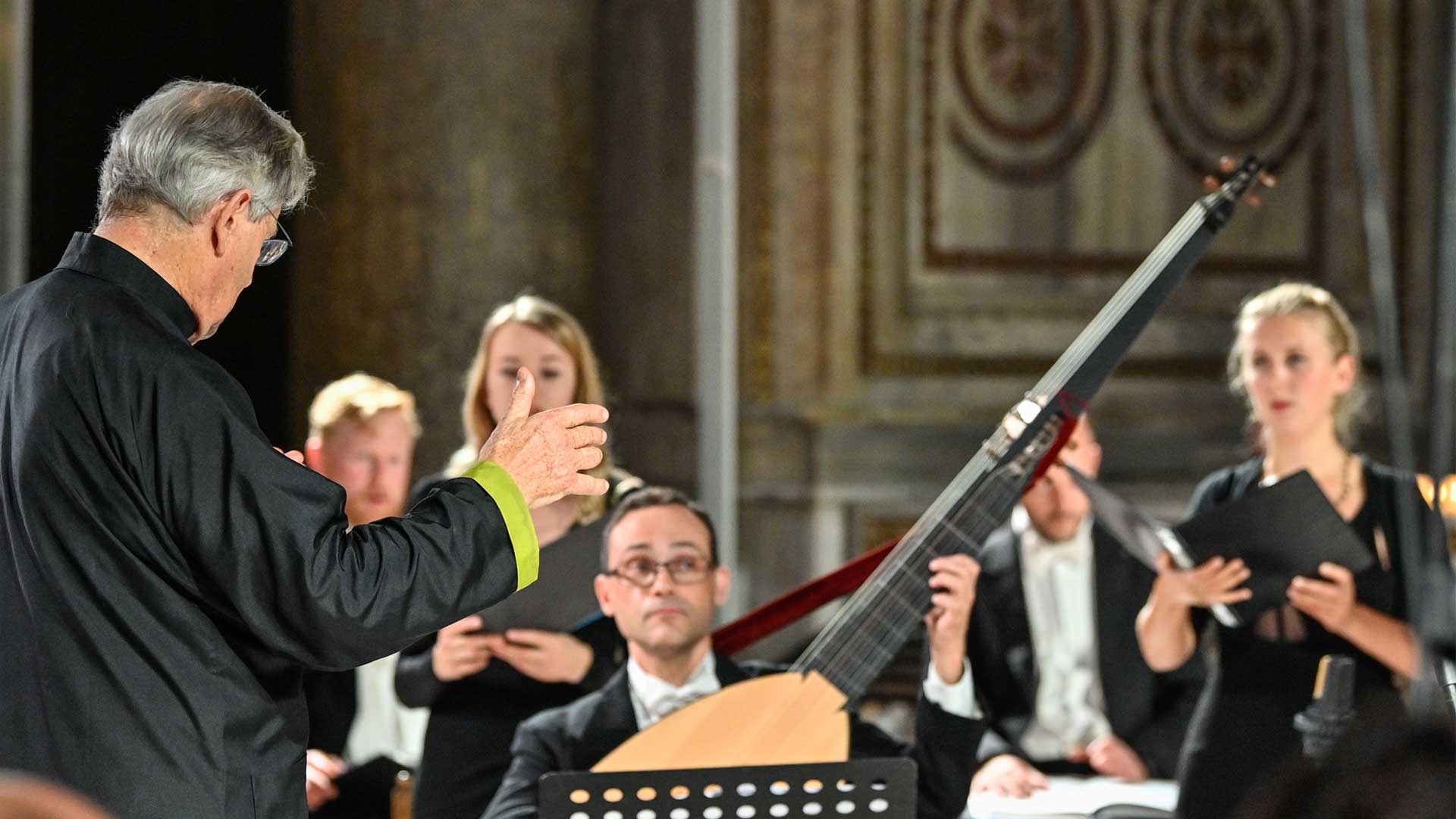
Sir John Eliot Gardiner is, quite literally an inspiration. He breathes music into his players and singers with wondrous results. As someone said to me afterwards it would have been worth the ticket price just for the Conquassabit passage in Handel’s Dixit Dominus – with its dramatic announcement pause and then a whole series of superbly articulated, staccato entries. It was an edge of the seat moment. And Sir John achieves all this without fuss or flamboyance – just fluidity of the wrists, mouthing the words and the unfussy force of personality. This, astonishingly, was his 60th appearance at the Proms.

The concert began with Handel’s Donna, che in ciel, an early cantata probably written in 1707 for a thanksgiving service to mark Rome’s having escaped damage from the terrible 1703 earthquakes in central Italy. It was new to me, and I suspect, to many of the Proms audience. Scored for solo alto (Ann Hallenberg in this performance) and string orchestra it has some very memorable sections such as the simple but mesmerising Tu sei la bella. Hallenberg, who can scoop out wine-dark low notes as well as sailing gloriously through high ones, found drama, passion and excitement in the piece. Some of it went so fast – Sorga pure dall’irrodo averno, for instance – that it was almost like a Rossini patter song and I was struck, yet again, by the innate musicality of the Italian language. Handel contrasts these passages with lyrical legato ones and Hallenberg compelled you to pay attention to every note.

And then we turned to Bach for Christ lag in Todes Banden, This, like Donna, che in ciel, was written in 1707. With a neat parallel, both composers were 22 that year. As for the opening work, Eliot Gardiner had violas on the outside with cellos at 2 o’clock from the rostrum. After a momentarily ragged start we were bombarded with contrasts and ideas including some delightful chorus duets between different sections. The basses bringing warm passion to the long dark brown notes echoing out over the strings in Hier ist das rechte Osterlamm was a particular high spot.

After the interval Handel’s Dixit Dominus was much more familiar territory and the orchestra had moved round with second violins now on the outside and soloists emerging from within the ranks of the choir. It was a treat to hear it sung with such sensitivity and panache – anyone who’s ever tried to sing Dixit Dominus in, say, a local choral society will know just how difficult it is with so many subsections and rapid passages interspersed with lyricism (was Messiah already in Handel’s head?) but this performance was masterly.

Apart from the arresting Conquassabit moments to treasure included Julia Doyle and Emily Owen (and chorus) singing De Torrente in via bibet with such vibrant emotion that Eliot Gardiner gave it to us a second time as an encore in acknowledgement of the rapturous applause at the end.

On a trivial note, understated as Sir John Eliot Gardiner is, he clearly doesn’t mind a tiny touch of tasteful, theatrical fun. I loved the scarlet cuffs on his velvet jacket which moved, fell and caught the light as he conjured all that magic with his hands.

First published by Lark Reviews: https://www.larkreviews.co.uk/?p=6613

Show: 13

Venue: Cadogan Hall, 5 Sloane Terrace, London SW1X 9DQ

Credits: Music and Lyrics by Jason Robert Brown. Book by Dan Elish & Robert Horn. Performed by The British Theatre Academy

Performence Date: 31/08/2021

13

Susan Elkin | 01 Sep 2021 13:28pm

All photos: Eliza Wilmot


There’s a lot to be said for a musical about being thirteen and wanting a really good Bar Mitzvah being done by young performers who are exactly the right age. When this show, which dates from 2007, ran on Broadway the cast were adult. On the other hand it’s a huge challenge for a single actor  (Edward Flynn-Haddon – as Evan) to take centre-stage alone at the beginning and somehow kick it off, especially when there’s an initial problem with sound balance and his words are inaudible. Or at least that was the case from my seat in the third row.

Because his parents have just divorced, Evan is whisked from busy New York, where his friends are, to make a new start with his mother in a small town in Indiana, “The Lamest Place in the World”. What follows is very recognisable story about making friends, burgeoning obsessive interest in the opposite sex and finding ways of surviving in the rough and tumble of everyday teenage life with all its awkwardness.  Everybody wants to go out with the Kendra (Rebecca Nardin – charismatic). There’s also a gentle inclusion story because one of the boys, Archie (Ethan Quinn – interesting) is disabled by a degenerative disease.

Cadogan Hall is, of course, a concert hall not a theatre and this is a semi-staged production with the very large ensemble seated on chairs in angled rows with the band (immaculately led by MD Chris Ma on keys but sometimes too loud) upstage at the apex. The action takes place in the downstage triangular space without props or set – apart from the occasional use of chairs already there.

Songs are interspersed with spoken dialogue which comes with the usual problem of young actors grappling with American accents and often losing clarity. Some of Jason Robert Brown’s songs are lovely, however: “Tell Her”,  well sung by Eward Flynn-Haddon and Ivy Pratt as Patrice, for example, really delivers some evocative harmony.

Timi Akinyosade stands out as Malcolm. His dancing draws the eye and he sings with gusto as well as being convincing as a lad about school closely bonded with Samuel Mehinick’s Brett. The latter gives a fine performance too – snarling, threatening and eyeing up to conceal his vulnerability.

The choreography is this show is magnificent. Despite the huge ensemble and the limitations of the space Corin Miller makes every single movement shine with joie de vivre and I was impressed by the professional stillness of the ensemble when seated.

This show starts rather creakily, probably because of youthful nervousness and inexperience, but warms up pretty rapidly so that 90 minutes later the post curtain call, full cast, dance is exuberantly, infectiously vibrant – and exhausting to watch for anyone over the age of about 16!

First published by Sardines: https://www.sardinesmagazine.co.uk/review/13-2/

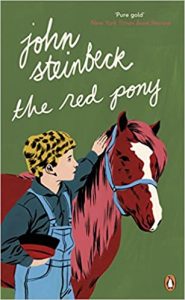
The Red Pony is one of John Steinbeck’s gut-wrenching novellas. I don’t know whether it’s still taught much in UK schools but we used to use it a lot as a key stage 3 class reader because it’s short, beautifully written (well it’s Steinbeck – enough said) and it’s about growing up and coming to terms with the imperfections of the adult world.

And it’s treat to go back to.

It was written, interestingly, as a serial for magazines – in the time honoured Dickensian manner except that this little novel (published 1937) is effectively short stories about Jody Tiflin rather than a series of cliff hangers.

Jody is ten at the beginning when his stern, taciturn farmer father brings home a red pony for his son on their tough, remote,  inland California farm. Billy Buck, the right hand man on the farm, lovingly teaches Jody what he needs to know but as Jody, soon learns, Billy – for all his experience and knowledge – is not infallible. It’s a powerful lesson as Jody creeps into adolescence.  Later incidents bring us the arrival of Gitano – born near the Tiflin ranch – but now homeless and old and a visit from Jody’s paternal grandfather. Then comes the promise of a new colt for Jody to rear which means getting the old mare, Nellie, in foal and then safely delivered – or not.  Much of this is really about the trust between adults and child as the latter learns that no adult can guarantee a perfect world and that some adults have a real struggle.

Part of Steinbeck’s genius is his ability to evoke nature and atmosphere: “He saw a hawk fkying so high that it caught the sun on its breast and shone like a spark.” “The ranch cats came down from the hill like blunt snakes.” “There was a rim of dawn on the mountain-tops”.  He also adept at the spareness of language usually associated with Hemingway so fussy subordinate clauses and compound and complex sentences are rare. Thus: “Billy droppped the knife.”  “At last she understood.” “Jody was tired.” Such incisiveness heightens the drama and adds to the poignancy.

I visited Salinas, where Steinbeck was born and where there’s a fine Steinbeck centre about his work, a few years ago while staying on the coast at Monterey. It was 35 degrees (Farenheit – this the USA)  hotter at Salinas on an August day than at Monterey and suddenly I was with Jody mopping the sweat.  I also watched vultures at work and vividly remembered The Red Pony although, of course, farming in California is much more industrialised now than it was in the 1930s.  So, apart from its being a  moving piece of literature it’s also worth reading The Red Pony (and Of Mice and MenEast of Eden and the rest)  for the colourful evocation of how things were 90 years ago.

51QtU1aXqeL._SX305_BO1,204,203,200_

Next week on Susan’s Bookshelves: Wuthering Heights by Emily Bronte

Show: Billy the Kid

Society: National Youth Music Theatre (NYMT)

Venue: The MCT at Alleyn’s, Alleyn’s School, Townley Road, East Dulwich SE22 8SU

Credits: Music by Ben Morales Frost. Book & Lyrics by Richard Hough

Type: Sardines

Performence Date: 26/08/2021

Billy the Kid

Susan Elkin | 27 Aug 2021 12:40pm

Commissioned by NYMT in 2017, this revival showcases the talents of an enthusiastic, talented young company and, as ever, it’s the imaginative direction (lots of slow motion with chairs, for instance) which really lifts it.

Richard Hough’s feel-good, happy ending story is a long way from the historical facts about Henry McCarty – aka Billy the Kid – an outlaw who shot and killed eight men before being shot at age 21. Instead we meet a very young Billy (Charlie Wright) who, in a neat framing device is trying to find the courage to face down an aggressive group of bullies in his 21st century school.

Daydreaming as an escape, while the teacher recounts the events of the 1860s, Billy becomes a forceful, but ultimately moral, hero in his own story as we flash back colourfully to the saloon bar and the sauve-qui-peut of the days when the whole town was under a protection racket. With a hint of the Wizard of Oz the bullies and the nineteenth century gang are all played by the same actors. Other school characters reappear in different guises in his dream – a group of five leggy, sporty, all-American cheerleader types become a very good troupe of saloon bar dancers, for example.

And behind all this is Ben Morales Frost’s enjoyable score with all the off beat sequences and lyricism which evoke the world of late nineteenth century cowboy country. The inevitable hoe down scene is a delight. It isn’t quite Aaron Copland but it’s great fun.

Charlie Wright – only 14 and physically quite small – steals the show as Billy. He gives us wistfulness spliced with strength and pragmatism finally overcome by wisdom. It’s quite a nuanced performance and his singing is both sensitive and mature.

The support cast is strong and the piece is written to give lots of characters a moment in the spotlight so we hear a number of good soloists amongst whom Sophie Muringu stands out as Mary, the bar co-owner who becomes a moral support in Billy’s life. She sings beautifully and her acting is totally convincing.

We’re in Lincoln County, New Mexico and the atmosphere is spot on with some sultry lighting and wheel-on-and-off sets, the movement of which is integrated into ensemble action. The southern accents are harder for a young cast to nail and some of the vowel sounds are inappropriately distorted but these young people have worked together for only a short time and it really doesn’t matter much.

One of the things I like very much about NYMT  shows is the use of a vibrant youth band  and the habit of bringing them all on stage at curtain call. They play beautifully in this show and Olivia Howdle’s eloquent violin work really stood out for me.

This review was first published by Sardines: https://www.sardinesmagazine.co.uk/review/billy-the-kid/

I first read Fingersmith first in 2002, curious because it had been shortlisted for both Booker and Orange prizes. I remember vividly gasping aloud when I reached one of the best plot twists I have ever read – on pages 173 to 175, about a quarter of the way in to this brick of a novel. A week or two later my husband was reading it. I watched his reaction when he reached the same point. He too, visibly jumped and said “Oh!” aloud.

Well of course, when you re-read it seventeen years later you know the twist is coming but it’s still just as compelling. I found myself reading agitatedly, wanting to pull the characters off the page and shout “No, no – don’t go there! ” It’s intensely powerful story telling.

It’s not easy to summarise the plot without giving too much away  Let’s just say that it’s the story of two young women from very different backgrounds in mid Victorian Britain, who are confronted by a colourful band of beautifully drawn characters some of whom have a bit of moral grit but most don’t.

It’s clearly meant to be a 21st century riposte to 19th century blockbuster novels and other fiction. Hardly a page goes by when Waters doesn’t deliberately remind you of something else: Middlemarch (Mr Casaubon), The Woman in White (lookalikes and madhouse), Oliver Twist (thievery), Jane Eyre (mysterious attics), Mary Barton (illegitimacy)  HMS Pinafore (baby farming) and so on. The result is an intelligent, glorious melange and a magnificent page turner – I sat up until 2.00am to finish the reread even though I already knew how it ended.

And there’s another dimension. Whatever Queen Victoria may have thought about it, Waters, who is gay herself, is very interested in the experience of gay women in the past. She argues that they were always there, obviously, but are hidden from view in most fiction and historical accounts. She explores this in all her novels – bringing such women into the foreground. Fingersmith is no exception. There’s an unlikely, unexpected love story at the heart although that’s not the main plot driver.

The other unforgettable section of this novel are the “madhouse” scenes which are utterly horrifying. You read them hoping desperately that Waters has exaggerated the ghastly, condoned cruelty for dramatic purposes, only to reach her end notes and see the acknowledgement to Marcia Hamilcar’s book Legally Dead: Experiences During Seven Weeks’ Detention in a Private Asylum (London 1910). Then you realise what the reality of a 19th century “madhouse” was and recognise just how humane was Charlotte Bronte’s Mr Rochester who refused to put his wife in one.

Fingersmith was televised – fairly decently for BBC in 2005 – with a cast including David Troughton, Imelda Staunton and Sally Hawkins but of course, as always, the book is incomparably better.

Fingersmith2