Press ESC or click the X to close this window

Design competition inspires teenagers

finchley-pupils-large_transqvzuuqpflyliwib6ntmjwfsvwez_ven7c6bhu2jjnt8

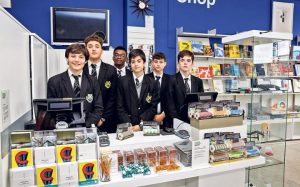
Had you visited the Design Museum shop in London earlier this year with £10 to spend, you might have bought an intriguing children’s toy called Dazzle Racer.

A self-propelled cylinder, it included a wind-up, elastic-band-powered mechanism, minimal parts (all 100 per cent recycled) and lots of stickers. It was good fun, simple, eye-catching, nostalgic and very original ….

Read the rest of this article in The Daily Telegraphhttp://www.telegraph.co.uk/education/2016/10/22/the-race-is-on-to-get-young-minds-into-design/

5616

A recent study has shown what every teacher and parent knew: most boys read less enthusiastically and thoroughly than girls. Sue Palmer, in her book 21st Century Boys attributes this to brain development. Testosterone accelerates right brain growth and makes boys more interested in overview, movement and space for longer. The effects have now been confirmed in two big studies led by Keith Topping, professor of education and social research at the University of Dundee.

So what can we do to stimulate the left brains of squirmy boys and get them reading with as much commitment as their sisters? …]

For the rest of this article published by The Guardian see:https://www.theguardian.com/books/booksblog/2016/oct/31/how-to-get-your-boy-reading-susan-elkin#comments

Brighton Philharmonic

Brighton Dome, 6 November 2016

What a good idea to open a concert whose main work is Ein Deutsches Requiem with Schicksalsleid. The choir is already there and it creates a valuable opportunity to hear a live performance of something which doesn’t get too many outings although, as James Morgan told the audience at the beginning, Schicksasleid is one of the finest things Brahms ever wrote. This rendering of it was eloquent, mellow and nicely paced – and it clearly showed how well The Dome works for a large, impressively competent, choir such as Brighton Festival Chorus. The acoustic is warm but also allows for an incisive edge against which Morgan’s tempi were well judged.

Morgan is a perky and insouciantly witty presenter as well as a conductor and he treated us to an unadvertised education workshop on the Requiem between Schickalsleid and the interval, drawing attention to some of former’s most interesting moments. I’ve sung it many times but still learned from this entertaining 15 minutes. The best was the “historical re-enactment” of the first performance when a piano marking was omitted from the timpani part so the player played forte throughout the third movement which put the public off so much that Brahms didn’t risk a second performance for a whole year. Morgan gave us a sample of what this would have sounded like and it was very funny.

And so to the marvels of the Requiem itself with its seven movements, musical and narrative symmetry and emphasis on comforting the living.  Morgan has a real gift for bringing out the detail, such as the double bass pedal in the opening, allowing the harp to dominate briefly where it’s appropriate, letting us enjoy the contra-bassoon and making sure we noticed the beautiful pizzicato passages in the central fourth movement. The final, peace and resolution-bringing movement was particularly fine with some enjoyable flute work.

Leigh Melrose, bass, has some of the clearest, best articulated German diction I’ve ever heard in any account of this work. His style is dramatic with plenty of passion particularly in the third movement. It was a cutting edge performance. Soprano Sarah Tynan has a mellifluous tone and managed to temper the anguish with sweetness in the fifth movement – her big moment

There was excellent singing from the choir too with nearly all entries tidy and very little strain even on demanding high notes. And Morgan’s dynamic control was well observed so that there were some moments of real Verdi-style tension.

First published by Lark Reiviews http://www.larkreviews.co.uk/?cat=3


images images


George Bernard Shaw’s one and only foray to the southern hemisphere

 Arrival

It’s a fine March  day in 1935  and in Wellington, for once the leaves are still and the sun is shining warmly.   A British ship has just  docked and an elderly  couple is processing regally down the gangway while dockers and other admirers  on shore cheer wildly.  He is lanky, bearded, very upright  and wearing a woollen cycling suit – old  fashioned even then.  She is hatted and stately. They wave to their admirers.

Welcome

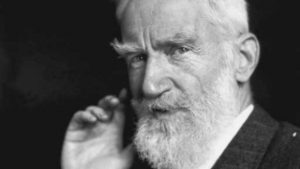
Royalty? No, not quite. This is the 78 year old George Bernard Shaw, socialist, playwright, critic, wit, vegetarian, spelling reform enthusiast and fresh air fiend, accompanied  by his wife Charlotte. They are beginning their only visit to the Antipodes. So near and yet so far.  They didn’t quite make Australia   although they nipped round America a couple of times in 1933 and in 1936.

While  in Wellington the Grand Old Man made a national broadcast  with the grand title ‘Shaw speaks to the Universe’ which  was also eagerly relayed across the water in Oz.

Funny family

Born in Dublin in 1856 Shaw came from a dysfunctional family which included a drunken father and a whole battery of inebriate  aunts  and  uncles one of whom played the ophecleide (an ancient  ancestor of the trombone) and repeatedly tried to commit suicide by putting a carpet bag on his head.

Eventually, the young Shaw escaped to London where his musically-inclined mother had set up home with a singing  teacher, George Lee, from whom Shaw indirectly  received a  pretty thorough education in the subject – enough to enable him  to keep himself for many years as a  freelance music critic before he began writing successful plays.

Man of discipline

He also taught himself, from scratch, to play the piano – by studying the printed music and working out which keys on the piano corresponded. Who needs a piano teacher?  It took him, he said many years later, ten minutes to find the first chord, but he eventually became a competent pianist able to accompany choral societies and to play informal duets with professionals. Who but Shaw could have been discovered by a friend  in the British Library studying both Das Kapital, Marx’s communist textbook, and the score of Wagner’s opera Tristan and Isolde – at the same time?

Determination was this man’s middle name. He worked to overcome his shyness and became a fine public speaker on economics and socialism before he was 30.  Having become a vegetarian when he was 25, he believed that his high energy levels came from all those healthy nuts, fruits and vegetables.

Drama

He turned to the theatre in the 1890s. Arms and the Man, The Devil’s Disciple, Caesar and Cleopatra, Man and Superman,  Major Barbara and all the rest followed. They were played in New York and, in time, also in in the ‘far flung’ sunny corners of the British Empire.   Shaw made a lot of money and fame became his passport. He could go wherever he liked.   Everyone wanted to meet him. His original views were often highly entertaining.

Nearly turned away

The rapturous  welcome in New Zealand was partly  because the country  had recently passed a law which meant that the government could refuse entry to any recent visitor to a communist country. Shaw had been to Russia and some New Zealanders had argued against his admittance. His arrival, he wrote gleefully, had been preceded by  ‘some pretty lively press discussion as to what would  happen to me.’

Give ‘em milk

Then he told socialist politicians in New Zealand – including two future Labour prime ministers – to stop acting as a dairy for the rest of the world ‘which is learning to milk its own cows.’  Instead of exporting their ‘remarkable milk supply’  New Zealand should distribute  it freely, like water, to their own people.  They listened. When the first Labour government  came to power at the end of 1935 it gave half a pint of free pasteurised milk to every school child  every day in a scheme which lasted for 30 years.  Mothers wrote to Shaw to thank him. It’s not said how much  the children appreciated their daily compulsory dose of the white stuff.

Touring

After a three week jaunt round North and South Island in a chauffeur-driven car,  the Shaws visited a children’s hospital in Wellington where GBS  enthusiastically  discussed his pet topics of fresh air, light, warmth and good food  with Sir Truby King, the child care expert. Lack of personal experience never daunted Shaw.  A little thing like not having had children  of his own was never enough to stop him  from having and expressing a forthright and  unorthodox view.

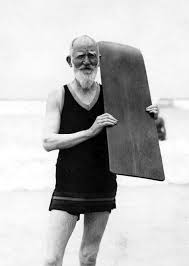
When Shaw and Charlotte were ready to set sail for home on board the Rangitane on 14 April, well-wishers pushed  bouquets of flowers through their portholes. And no one knows whether, as legend has it, he borrowed a lady’s scarlet bathing suit and plunged into the waves at Mount Maunguni or if he really did give Auckland’s  Turnbull Library a  copy of Hitler’s Mein Kampf.

The end

The adventure down under  was one of Shaw’s last big trips. ‘I am too old  for these feats of endurance’ he said.  Charlotte died in 1943.  Shaw  followed her in 1950 at the age of 94.They were both cremated – another of his little eccentricities  – and their ashes scattered in the  garden of their home at Ayot St Lawrence in Hertfordshire.  The house is now owned  by the National  Trust and is open to the public.

Much of his fortune  went in taxes but the lion’s share  of what was left was willed to a movement to reform spelling .  Shaw thought English spelling was absurdly complicated and he detested  the apostrophe. His wishes might have been popular with English speaking school children everywhere – but they didn’t catch on.
george-bernard-shaw


I’ve been thinking about Shakespeare. Not unusual. I probably think about him at least once every two minutes as chaps are supposed to do about … but never mind that.

I used to tell my A Level English Lit students that the material is so strong that whatever you do it, it simply bounces back. And I stand by that. I seem to be seeing or reading about a wider range of Shakespeare interpretations and angles than ever just now. Emma Rice’s riotously adventurous A Midsummer Night’s Dream at The Globe this summer may not have pleased everybody (and it clearly worried the Globe’s Board)  but many critics were blown away by it – although whether it was right for that venue is another matter.

I’ve just accepted an invitation to review Salon Collective’s The Tempest (on cue) at the Cockpit next month. The company is experimenting – rather fascinatingly – with following 15th and 16th century practice and not allowing the actors to rehearse together before the show. They simply have cues. Well, I’ll reserve judgement until I’ve seen it but it’s a brave and potentially very enlightening idea.

That Tempest is bound to be very different from the participative one I saw earlier this year done by Kelly Hunter and her Flute Theatre colleagues for young people with autism. The level of engagement and participation the company skilfully managed to build was extraordinary.

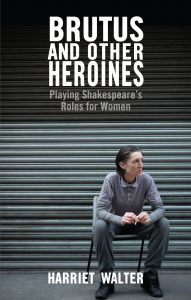
Then there’s the growing trend for gender-blind casting. Harriet Walter’s very compelling book Brutus and other Heroines is hot off the press from Nick Hern Books.

She discusses not only her experience of playing Brutus and Henry IV at the Donmar Warehouse but also decades of playing roles such as Viola, Beatrice and Imogen all of whom would originally have been played by boys. It’s quite a read. And presumably we’re all going to beg, borrow or steal to get a ticket to see Glenda Jackson as Lear at the Old Vic?

Children are at it too. Shakespeare’s School Festival is very busy this term enabling primary, secondary and special schools to present 30 minute versions of various plays in regional festivals. I’m booked in to see my own old secondary school (Sydenham High School) in a festival with three other schools at Broadway Theatre in Catford later this month. And SSF is raising funds with a celebrity (including Meera Syal, Christopher Ecclestone and others) Trial of Hamlet at Wyndhams Theatre on 27 November. That’s preceded by a warm up public engagement event – Evidence Release Flashmobs outside Royal Courts of Justice and Middle Temple on 9 November.

I’ve just interviewed Jacqui O’Hanlon, the RSC’s Director of Education too (not for the first time) and she is very passionate about the power of Shakespeare to transform the lives of young people provided that they start it younger, do it on their feet and see it live. The Globe thinks that too. Witness its vibrant annual 90 minute Shakespeares supported by Deutsche Bank and offered free to state schools in London and Birmingham. You can now buy editions of those abridged versions – published by Hodder Education. I recently reviewed Macbeth.

Perhaps it’s the flexibility of Shakespeare which has made him the world’s most iconic playwright as well as the universality. “He’s global property and I can think of no other writer who occupies that position” says Jacqui O’Hanlon. So let’s keep pushing the boat out and approaching the plays open mindedly and eclectically. One of Shakespeare’s many strengths is that he can accommodate all points of view, attitudes and takes.

Tutti Frutti in co production with York Theatre Royal. Albany Theatre, Deptford and touring

2604_1477535175

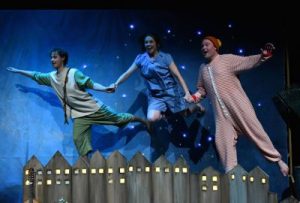
JM Barrie’s iconic Peter Pan is so multi-facted and robust that it can withstand almost any interpretation. And it’s in reliable hands with author Mike Kenny, director Wendy Harris and Tutti Frutti who rework it as a three hander. Three children – loosely 21st Century – Wendy, John and Michael are enjoying a sleep out in their own “very ordinary back yard”. When they can’t get to sleep they begin an imaginative game of make believe acting out the Peter Pan story. They use garden artefacts as improvised props so that a wheelbarrow becomes the Jolly Roger and a big plant clip stands for Hook’s hook. Best of all is the “clockodile” puppet which emerges from a pair of fearsomely toothed garden rakes and couple of flower pots.

The cast are a talented trio of actor musos whose instruments, both in movement and sound, become an integral part of the characterisation or action. Ivan Stott’s music is tuneful and resonant. Children in the audience were beginning to join in the catchy Ticking Song uninvited at the performance I saw.

Grace Lancaster as Wendy – often with clarinet, saxophone, ukulele or accordion – ricochets convincingly between playful little girl and bossy conscientious quasi-mother and she sings hauntingly. In this version – nice feminist touch – it is she, not Pan, who has the final fight with Hook. Chris Draper is a splendidly boyish John complete with an enjoyable petulant wiggle and strong as the dastardly whining Hook, clad in an old red dressing gown found in the garden. Jack Brett finds innocence and vulnerability in a mildly camp Michael and does entertaining things with the obligatory teddy bear.

All in all it’s a show with lots of charm and some original theatrical ideas (sleeping bags for mermaid tails and symmetrical clarinets for Peter’s shadow). It works both as a commentary on a well known story and, billed for 3+, as an introduction for very young children who are new to it.

First published by Sardineshttp://www.sardinesmagazine.co.uk/reviews/review.php?REVIEW-Albany,%20The-Underneath%20a%20Magical%20Moon&reviewsID=2604


2607_1477608117

Author: Hugh Whitemore. Cast: Edward Fox. Oxford Playhouse and touring.

How good a poet was John Betjeman whose work I used to teach to O level students? He loved rhyme and rhythm – and jokes. Some of his work is very fine indeed although like all poets he had his banal moments which some critics took delight in being sniffy about even after Betjeman’s appointment as Poet Laureate.

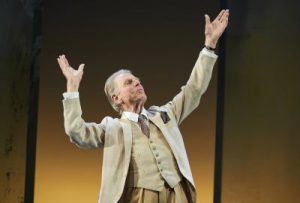
Edward Fox – who gives us an entertaining single handed account of Betjeman’s work in this entertaining 100 minutes of theatre – makes no attempt to look, or even sound like Betjeman. Wisely he lets the words do the work. The delivery is ponderous but clipped and the vowel sounds elegantly twisted. When did you last hear anyone pronounce the second syllable of “Edwardian” to rhyme with “card” or “yard”? The consonants are unfashionably precise. Looking and sounding more like WF “Bill” Deedes than Betjeman, Fox conveys plenty of forthright irreverence. Sand in the Sandwiches is often very funny. It is also wistfully poignant in places. As you’d expect from an actor of Fox’s stature, calibre and experience he knows exactly how to pace it and how to deliver punchlines in character for maximum effect. The piece looks good in a simple, minimalist way too. The chairs and table Fox sits at are framed by a back screen is lit to change colour with the mood and to mark the ends of episodes.

Hugh Whitemore’s script unravels the sense of Betjeman’s life, work, relationships, achievements and views by seguing in and out of the poems seamlessly linked by monologue. He has resisted the temptation to include all the obvious crowd pleasers. Most of the included verse was new to me and, I suspect to most of the audience, which ensures that you listen properly. I shall long treasure the Gloria limerick, for instance. It’s hardly great poetry but it’s certainly great fun.

One actor shows depicting literary figures seem to have gone out of fashion. Remember Alec McCowen’s Kipling and Geraldine McEwan’s Austen? so it’s a refreshingly welcome change to have a new piece of gentle, thoughtful theatre in this genre.

First published by Sardines http://www.sardinesmagazine.co.uk/reviews/review.php?REVIEW-Oxford%20Playhouse%20(professional)-Sand%20in%20the%20Sandwiches&reviewsID=2607


rose-bruford-college-ba-hons-costume-production-photograph-by-michael-oreilly

Last week I was  variously accused (good old Twitter) of marginalising, undermining, undervaluing and failing to respect technical theatre professionals in general and stage managers in particular.

Yes, as the author of So You Want to Work in Theatre? (Nick Hern Books. 2013) which cheerfully spells out dozens of theatre practitioner options and pathways and champion of all things back stage for decades, I was a bit taken aback too.

Trying not to sigh, let me spell it out once more as simply as I can. Theatre is like an iceberg. For everyone you see performing there are several more working in invisible but vital roles as stage managers, lighting technicians, designers and all the rest. Without them there wouldn’t be a show.

It’s so obvious to industry people that I apologise for labouring it. The point is that the general public – and young people who want towork in the industry –  often don’t understand the multifaceted structure of theatre making. The frequent perception is that if you want to be in the industry at all you have to be out front acting, singing and dancing. Well of course that isn’t true and we need much better careers advice for young people in schools and colleges because, for the most part, they just don’t know about the options. People – usually the ones working in back stage jobs – tell me all the time that when they were at school no one, but no one, told them anything useful.

Enter TheatreCraft the annual London event for “non performance roles”. (And a note to my detractors: Don’t you dare tell me that phrase is derogatory or negative. It’s the one TheatreCraft itself uses and I can’t better it)

This year’s TheatreCraft (the eleventh event) is on 14th November at the Waldorf Hotel. Aldwych London. It runs from 9.30-4.00 and is always a marvellous FREE information gathering opportunity to visit stands and talk to a wide range of people in the know about a wide range of theatre career options. At the same time there are workshops – all free – but you have to register at http//www.theatrecraft.org.  Last year’s event welcomed over 1000 people and included 75 workshops.

The upper age limit seems to have been dropped but you do have to be over 16.

In the spirit of helpfulness (and because some of my best friends are stage managers, sound techies, directors, producers and so on) I’ve appended the list of the workshop options that I’ve been sent below.

I shall be there for part of the day, as usual, and hope to meet lots of you there on 14 November.

Workshops at TheatreCraft 2016 will include:

  • Behind the Scenes tours of Theatre Drury Lane
  • How to Market a Show from Scratch with the Dewynters team
  • Charlie And The Chocolate Factory on stage automation demonstrations
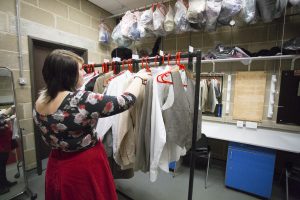
  • Wardrobe with Mamma Mia at the Novello
  • How The National Theatre Works  with Jonathan Suffolk, Technical Director
  • Armoury led by the Royal Opera House
  • Lighting Visualisation with James Simpson, Royal Opera House
  • Careers in Casting with the Ambassador Theatre Group
  • Festival Making with the Southbank Centre
  • Directing with Blanche McIntyre
  • A Provocation for Writers with Barney Norris
  • Producing Site Specific Theatre with Emma Brunjes
  • Theatre Photography with Nobby Clark
  • How to Design a Theatre led by Charcoal Blue Theatre Consultancy
  • New Writing with Paines Plough
  • How to Produce and Tour Your Show with James Quaife, English Touring Theatre
  • Millinery with English National Opera
  • Theatre Criticism with Tom Wicker
  • How to Raise Theatre Investment with James Seabright
  • Press and Marketing with TargetLive
  • Taking Part at the Young Vic
  • Creating Your Own Pathway with the Barbican
  • Manning Your Online Presence with Stage Jobs Pro
  • General Management with Peter Huntley
  • Stage Management with LAMDA