Press ESC or click the X to close this window

10 things every drama school applicant should know

‘Tis the season … to be applying to drama school if working as a performing arts professional is your career plan. Well, on the assumption that you may be still at school or not long left, here are ten things you should know before you go any further.
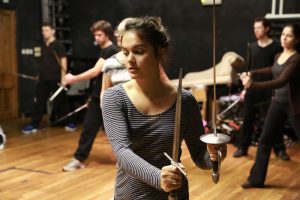
drama-studio-london-stage-combat-class-photo-martin-richardson

1.Let’s get the obvious one out of the way first. Yes, unemployment rates are famously – notoriously –  high among professional performers. So you need an alternative way of paying the bills to tide you over the quiet times. Get a drama teaching qualification so you can run, for example, after school clubs. Qualify as a life guard or tennis coach. Get a driving licence so that you can drive taxis – or whatever.

2.Don’t assume that the only drama school your granny has heard of is necessarily the best for you. It’s a wide field and different schools suit different people and their talents. Sometimes a newer school is better than an older one or a small one better than a large, for example.

3.Teaching performance is a different skill from performing. Nonetheless, in a good training organisation, staff should have current or very recent hands-on experience of the skills they’re trying to develop in you. This industry changes rapidly and continuously. You don’t want to spend costly three years being fed out of date information and ideas.

4.There is no longer a unified accreditation process for drama schools since Drama UK folded earlier this year. So you have to research, ask the right questions and be as informed as you possibly can in order to make the right choices. The key question is: What are the graduates of the last three years doing now? And if the school can’t answer that question in detail, then strike it off your list and apply to a different one.

5.Some drama schools – East 15, GSA and BSA for example – have merged with universities which sometimes mean less autonomy than they enjoyed when they were independent although it often means that they have state of the art buildings so there are pros and cons. You cannot train properly in less than 30 hours a week classroom time with tutors which is a very different requirement from most university subjects. Make absolutely sure that this is the deal at any school you apply to.

6.Drama school discipline is very different from 6th form or college. Typically your classes will start punctually at 9.00 and you won’t be admitted – often for the whole day which means you are letting down everyone in your group – if you’re more than five minutes late. And you will probably be required to wear a uniform (black, loose etc) and to have your hair tied back.

7.Drama training is physically very hard work. You’re in training, using your muscles all the time and you need to keep yourself as fit as you can. Ideally start now by ditching the junk food, reconsidering your relationship with alcohol and tobacco and getting regular, ample sleep.

8.There’s a lot more to working in theatre, film or TV than acting, singing and dancing. There are skills shortages in many aspects of technical theatre and the bigger schools all have substantial technical theatre departments. Are you really sure you want to tread those precarious boards? There’s good money – and loads of theatre buzz – to be found in, for instance, stage management, costume, make-up, lighting or scenic construction.

9.Drama School is not, definitely not, just for “posh kids”. You know – those lads from Eton the press constantly lists. When I visit drama school I’m always told about the eclectic cultural and socio-economic mix of the students. Many schools have bursaries and other support mechanisms to enable students from less well off backgrounds to train and RADA gives a free midday meal to over half its students.

10.Drama School develops a wide range of skills including communication, teamwork, analysis, confidence and much more. It set you up for life as well as for a performance career. Remember that – even if your career doesn’t pan out as you hope now – nothing is lost. Everything you’ve have learned and learned to do is transferable. You can assure your parents that whatever happens in the future you will be employable.

Globe Education Shorter Shakespeare: Macbeth (Hodder Education)

Shakespeare’s Globe has produced a vibrant annual education production via its Playing Shakespeare With Deutche Bank series for several years. Now it has teamed up with Hodder to produce glossy, accessible editions of these plays. Macbeth, based on the cut produced by Bill Buckhurst in 2011 is one of the first. A Midsummer Night’s Dream, Romeo and Juliet and Twelfth Night are also available. They look attractive – lots of full colour photography from the 2011 production – and I’m sure they will prove useful to schools. I like, for example, the quite searching questions posed along the way to give students plenty to think about. The trouble is that it’s a short step from “accessible” to “dumbed down”.  This edition is over-glossed. Young people do not need every word “translated”. That isn’t how they learn language. And as the late great Shakespeare education guru, Rex Gibson used to say: no child needs “hurly-burly” explained. It’s obvious from the context. I also worry about the emphasis on GCSE. Surely Hodder, as an education publisher, isn’t now saying that you can succeed in your exams without reading the whole play?

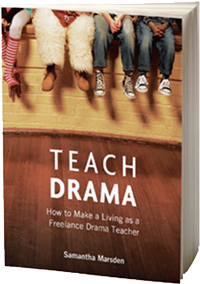
Teach Drama: How to Make a  Living as Freelance Drama Teacher by Samantha Marsden (Drama Fountain)

teach-drama

RCSSD-trained Samantha Marsden has taught drama extensively: from Stagecoach academies in leafy suburbia to deprived schools in East London as well as working for theatre companies, youth theatres and schools of all sorts. She has run her own youth theatre since 2012. This is a woman who knows what she’s talking about.  Her book covers all the practicalities of teaching drama professionally including how to make lesson plans, establish classroom discipline, set up after-school clubs and more along with essential information about insurance and health and safety.  I particularly like the interviews – also full of down-to-earth tips and advice – which Marsden includes on the way. She features experienced teachers such as Liz Hague (Artistic Director at the Story Cellar) Holly Dabbs (freelance participatory artist) and Lauren Senatore (MD at Bigfoot Arts Education). Everything is practical and refreshingly free of gush. “Your client is the person who pays you” Marsden reminds the reader simply and “keep all your invoices together in a safe place, as you’ll need them for your tax return”. Best of all is the chapter on contacts, which lists and gives information about all the major companies, including Pauline Quirke Academy, Helen O’Grady, Debutots, Little Voices and many more which might employ you.


Stage Combat Unarmed by Roger Bartlett (Nick Hern Books)

 combat-1

Roger Bartlett is a master teacher for BASSC and a professional fight director. He has worked at Liverpool Everyman, Theatre Royal Bath, Finborough Theatre and for Paines Plough, Sell a Door and Iris Theatre, among many others.  His new book – spiral bound and with black and white photographs for ease of use and clarity – covers slapping, punching, kicking, strangling, pulling and pushing, falling, locking and blocking. And there are links to online videos (slow motion and full speed) to make the moves even clearer. As always with this particular form of acting the emphasis is on how to create and perform stage fights which work theatrically but which keep the participants safe. “There is never any excuse to compromise your personal safety or that of your fellow actor” he says firmly. The instruction is very precise and detailed. For a backhand slap, for example, you should sweep your hand around past the victim’s face maintaining the slightly bent arm with the fingers pointing up. Make sure you accelerate the movement through to the end. Then he teaches you how to create the same illusion when the actors are in profile to the audience. This book has the potential to help drama student consolidate what they’ve learned in class and/or to be a useful manual to anyone – amateurs, or school students for instance – coming to this for the first time.


2572_1475140325

Photo: Helen Murray

This vibrant energetic show is a manifesto for young people growing up in challenging inner cities where terrible things can happen but there’s also plenty of good and a surprising amount of humour. I don’t know Stephen Kelman’s 2011 Man Booker shortlisted novel upon which Gbolahan Obisesan’s imaginative ensemble adaptation is based so for me, the story telling is very important. I found it profoundly convincing.

Young people meet at school, in the street, at a community centre and elsewhere. A boy has just been stabbed and there has been a funeral. There is also a lot of bravado, rumour and unease in the community where bullying is rife.

At the heart of all this is Harri, a ten year old boy newly arrived from Ghana with his mother and sister, played by Seraphina Beh. It’s a terrific performance which combines innocence, perception, child-like glee, and a lot of disingenuous humour because the character is a shrewd and forthright observer of others. There’s a hilarious scene in which Arianna Beadie as Maquita (good value) tries to initiate Harri sexually and the child’s comic commentary is great fun. But this is also a pretty dark piece and the ending – immaculately acted by Beh – took me by surprise and moved me as much as anything in Shakespeare.

Daisy Fairclough is compelling as Harri’s troubled older sister Lydia and Chinenye Ezeudu gives a nice performance as their salt-of-the-earth no-nonsense mother. Nearly all the other minor roles are adeptly seized and run with by the talented young ensemble, which is also immaculately directed (by Anna Niland) in the well paced chorus work. There are several pulsing dance scenes and I loved the steel pan number at the carnival. Charlotte Law does her best with the Never Normal Girl, who speaks in verse – part of the action as well as outside it – as a commentator and narrator. It isn’t Law’s fault that this is the only part of this otherwise fine show which feels pointless and contrived.

This is the first of NYT Rep’s three play 2016 West End season and I can report that the standard established in previous years seems to be holding up pretty well.

First published by Sardines

http://www.sardinesmagazine.co.uk/reviews/review.php?REVIEW-National%20Youth%20Theatre%20of%20Great%20Britain%20(NYT)-Pigeon%20English%20-%20National%20Youth%20Theatre%20REP%20season.&reviewsID=2572


GDS Productions, 08 October 2016

2587_1476012674

Never before have I heard an audience collectively sigh in disappointment as the interval lights come up – a very clear indicator of the high quality of this show which marks GDS Productions’s first foray into the cavernous space of Central Theatre Chatham.

Sister Act is a fine, box ticking show – powerful story, fabulous libretto and book (all those witty Catholic puns – bravo Glen Slater who can right lines such as “celibate nuns shaking their buns”) along with Alan Menken’s melodious music and real depth of characterisation. It is also ideal for a non-professional company because there’s so much focus on the ladies’ chorus and it doesn’t matter too much if talented men are thin on the ground. GDS producions, directed by Francene Harris, has really taken all this on board and created a vibrant, hugely enjoyable piece of musical theatre.

Carly Caller gives a highly accomplished, quasi professional performance as Dolores, the wannabe night club singer who has to be hidden in a convent for her own protection by the policemen who fancies her (Scott Highway – good actor). Caller makes believable all the complex nuances of her troubled, torn, charismatic, caring, talented character, sings beautifully and looks terrific. Debbie Brennan as the traditional, defensive Mother Superior – so often in tension with glitzy Delores – is equally credible and creditable. Brennan’s ‘I haven’t Got a Prayer’ is a high spot for its sensitivity and humour. So is the impeccably hammed up Lady in the Long Black Dress by Lewis Matthews as Joey, Glenn Atkinson as Pablo and Aaron Ramsden as TJ. Ramsden, 16, in particular is elastic bodied, exudes stage presence and has an entertaining repertoire of goofy looks.

The ensemble work from the nuns – full marks to Bethany Kember and Emma Hodge for the exuberant, joyful choreography – hums along once the show gets going. The show itself is a slow burn start but that’s not the fault of GDS Productions. Each nun is fully characterised. Millie Longhurst as Sister Mary Robert provides a real show stopper with her wistful, assertive ‘The Life I Never Led’. Jeni Boyns sustains a gruff, gravelly voiced persona for Sister Mary Lazarus, and Rachel-Ann Crane- Herbert delights as the easily tempted, very appealing Sister Mary Patrick.

Behind all this – literally because they’re screened off, upstage – is a tight, twelve piece band under the baton of MD, Peter Bailey. They make a lovely sound and everything coheres musically as well as dramatically.

All in all then, this is another zinger for GDS Productions. My only tiny gripe is that it would flow better without the laborious, old fashioned scene changes by crew under near blackout. This show does not use complex staging. The minimalist props and other items could easily be carried on and off by the cast which would make it smoother. The breaks are a distraction.

 First published by Sardines


2571_1475141092

Photo: Helen Murray

Set in 1956, this version of Shakespeare’s most famous love story is colourful and atmospheric. And if you see it on the same day as Pigeon English, the other opening play in the repertory, it becomes a very revealing showcase for the talents of these versatile young actors. Natasha Heliotis as a very effete upper crust Lady Capulet, for example, is in marked contrast to her earlier hobbling, mumbling old ladies.

James Mace is an appealing boyish Romeo, especially when he sits downstage on the steps in the second half and laments his fate in Mantua. Shakespeare gives Juliet the finest poetry but here Mace seems rather more eloquent than Shalisha James-Davis’s Juliet who does anger and emotion better than she speaks the lines.

Felix Mackenzie-Barrow’s Capulet speaks with deliciously strangled upper middle class vowel sounds and does a seriously impressive anger scene. Joshua Lyster-Downer is a charismatic, calm Friar Lawrence and Nathaniel’s American County Paris is an effective contrast. Arianna Beadle’s bespectacled Nurse, less vulgar than sometimes, is a good fit and Kwami Odoom is a warmly convincing Mercutio. And behind all of this is a powerful ensemble whose movement work is striking especially at the Capulet party. The underpinning Teddy Boy flavour really suits the play.

Shakespeare’s prologue promises us the “two hours’ traffic of our stage” and this production delivers it. The text is neatly edited and it nips along smartly, not least because of imaginative, seamless segueing of scenes so that sometimes two bits of action happen simultaneously on stage. And I really liked the idea of the Capulets planning Juliet’s wedding with Paris while Romeo and Juliet are in bed on stage with dawn is about to break. It highlights the tension.

There’s a lot of use of filmic music and movement in place of dialogue which works pretty well especially in the final scene which is unusually short. It is one of the many occasions in this show when director Kate Hewitt simply cuts to the chase.

 First published  Sardines
 

20161012_091023


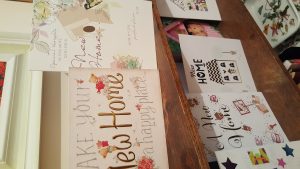
As many of you know, Mr E and I have just moved house. We’ve downsized, sold a biggish house in a Kent town centre and moved to a smaller one in the London suburbs which is where we came from in the first place. Perhaps we should have called the new house “Full Circle”. Anyway, all of this – after almost 39 years at the same address – has been a huge learning curve. Here are ten things I have learned:

  1. Don’t judge others by your own standards or expect people to behave as you do. We had a buyer who failed to produce the deposit on contract exchange day and a vendor who was still running round the house packing chaotically at 8pm on completion day despite being contractually obliged to be clear by early afternoon.
  1. Hire the best removers you can find and afford. You are putting everything you’ve worked for and everything you own into their hands. Bournes of Rye – yes, I’m naming names and deservedly so – cost us £3,000 but did a fantastic job (under difficult circumstances) and were worth every single penny. Nice guys too.
  1. Go though every cupboard before you move. There is no point in paying someone to move stuff you’re going to chuck out anyway.
  1. Accept that it will take time to get the new house as you want it and to make it feel like home. We have some sort of builder/odd job man/ installer/ helpful sons with tool boxes et al here almost every day this month. Meanwhile the bedrooms, in particular, are a bit of a tip. You have to look positively towards the future. If you’re systematic it gets better every day.
  1. Be prepared to sort each cupboard twice more on arrival – once when you throw stuff in piecemeal to get it out of sight and a second time when you organise it as you actually want it. I’m planning to “do” the shed later today.
  1. Put your animals into a cattery/kennel or get them looked after by someone else for a week across the moving date. We put our cat in a cattery near our new house and it was a very good decision. When we collected him we had some semblance of a home to settle him into.
  1. Some things will go to earth in storage boxes in the new house and won’t emerge for a while. I haven’t seen my dressing gown, light-up cosmetic mirror or toothbrush charger since we left the old house. (Don’t worry – I’ve improvised!)
  1. Photograph your utility meters both when you leave your old place and when you take possession of your new one so that you have evidence in the case of disputes – a useful tip from our younger son.
  1. Your selling agent and your solicitor are your friends – stressful as it is to feel that your life is out of your own control. Get good ones (and we made a mistake initially by signing up with a crummy agent before we changed to an excellent one) and they can make your life a whole lot easier.
  1. Stock up with arnica. Adjusting to a new space and humping bits of furniture when you change your mind about where to put it is a painful business. I have bruises on every limb from walking into furniture – and one on my nose where the unfamiliar wheelie bin closed unexpectedly and bit me with its lid.


marlowe5_091016-065


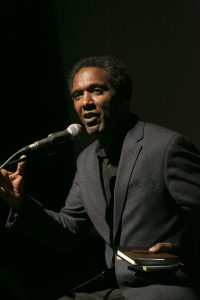
Lemm Sissay

Happy birthday Marlowe Theatre which is, this month, celebrating the first five years in its new venue.

I attended an enjoyably upbeat celebratory gala concert (all proceeds to the new Creative Opportunities fund) there at the weekend. It included samples and representations of work presented in the theatre over the last five years and one simply couldn’t help being struck by the eclectic breadth. We started with the rivetingly charismatic Lemm  Sissay performing one of his own poems and ended with a reprise of part of Stacked!, the hugely ambitious community piece which delighted audiences last summer.

In between we got three young musicians playing classical solos (beautifully) to represent the partnership with the Philharmonia and feature its Emerging Artists scheme alongside the Marlowe’s Young Musician of the Year competition. Then there was a pas-de-deux from Northern Ballet’s Jane Eyre, a vibrant duet from Chicago and Lauren Fagan from Glyndebourne singing Debussy, Mozart and Puccini.  It was my first encounter with Kate Prince’s ZooNation Youth Company’s hip hop theatre and by golly, they’re jaw droppingly good.

Artistes had given their time including Stephen Mulhern and Phil Gallagher who did some good knockabout stuff with regular Marlowe panto (Evolution productions) dame, Ben Roddy The latter, in his dinner suit rather than frock and outrageous hat, hosted the event and it is probably churlish to point out that he seemed to be reading his script without having seen it before and was rather less than professional until he went into joshing mode with Gallagher when it was like a light coming on.

The show looked forward as well as back. The National Theatre is developing and opening its tour of War Horse at the Marlowe next year and it was moving to have a few minutes with Joey and Topthorn. The Marlowe is also looking forward to the Mama Mia tour in 2017 so we got a fine trio as a warm up.

Best of all was the emphasis on participation, learning, youth and community work. Because the Marlowe began again five years ago it was able to put community at the heart of its work from the word go and that approach really shines through. We saw several film clips between acts and heard repeatedly that the Marlowe is changing lives by helping people – of all backgrounds and abilities –  to act, write and get involved. The icing on the cake, for me, was the extract from the RSC’s Dream for the Nation in which Canterbury Players, an amateur company, played the rude mechanicals. It was a real joy to see Lisa Nightingale, the RSC’s first female Bottom, in action again. Nightingale, now 43, trained professionally but failed to get enough work to sustain a career. She would love to go back, she told me afterwards, but still doesn’t have an agent. What’s the matter with them? I have rarely seen an actor more castable. Someone should snap her up – today.

I’ve seen the Marlowe through three venues. I can remember taking my children to the old old Marlowe (where the Marlowe Arcade now stands) in the 1970s, to a panto Wizard of Oz, a Yetties concert and to see Jess Conrad in Joseph and His Amazing Technicolour Dreamcoat. Then came many visits during the 25 years of the new Marlowe, a converted cinema which stood on the same site as the present building.  And I reviewed several shows in the big tent which acted as a part-time temporary theatre during the re-build. It’s quite a story.

The Marlowe now has fourteen of its former trainees working in the theatre industry. 3340 people have taken part in community workshops in the last five years. Over 95,000 saw last year’s pantomime and 1.7 million tickets have been sold for the main house since the re-opening.

Congratulations to all concerned. Here’s to the next five years and beyond.

ben-irish-new-headshot

I’m always nervous when I’m about to make an entrance. Then came Cambridge and the opening night of the tour on 20 April in the Arts Theatre.  I stood in the wings. It’s Sasha Reagan’s All Male HMS Pinafore and I play Josephine, the lead soprano.  The level of my nervousness that night was off the Richter scale and it was a real struggle to keep it down. In the event I missed a note and was very cross with myself. It was an easy note and I’d never missed it before. I was mortified – although comforted in the wings by reassuring mates – and immediately texted the director to apologise.

Nothing in my musical theatre training at Arts Ed had prepared me for this role. I’m a natural baritone and they say it’s easier for us to sustain a falsetto than it is for tenors but nonetheless it is very hard work and you have to exercise the muscles of the voice, rest it and gradually build stamina. I suspect that the tension of the opening night coming at the end of three weeks of rehearsals and a week of tech meant that my voice and I were just tired. I was vocally shattered. In fact it is actually much easier to do eight performances a week than to rehearse because you have time to rest during the day.

It’s a great company to work in because All Male HMS Pinafore is conceived as an ensemble piece and everybody supports everyone else. We’re all of an age too – actually ranging from 19 to 35 in years – but all at about the same level of professional maturity. It’s one of the nicest casts I have ever worked in. I’m 27, and have played in all male shows before, but only as ensemble or cover and without the pressure of getting onto the stage and singing those leading solos.

Of course I’m still very nervous and I don’t think it will go away but it’s better than it was on that first night and, of course, nerves settle as each performance progresses.  And in the scheme of things that missed note didn’t matter much. The audience chuckled supportively and no one held it against me.

Ben Irish was talking to Susan Elkin. Sasha Reagan’s All Male HMS Pinafore toured in summer 2016.