Press ESC or click the X to close this window

Eunoia (Susan Elkin reviews)

Show: Eunoia

Society: Chickenshed

Venue: Chickenshed Theatre – Studio. Chase Side, Southgate, London N14 4PE

Credits: Various – Chickenshed’s season of new writing

Eunoia

3 stars

Eunoia – a Greek word meaning beautiful thinking – is the name of Chickenshed Theatre’s 2022 new-writing festival. Nine duologues and monologues have been selected for professionally directed performance in two separate evenings during the ten-day season. I saw group 2 – in the simple intimacy of Chickenshed’s upstairs studio theatre.

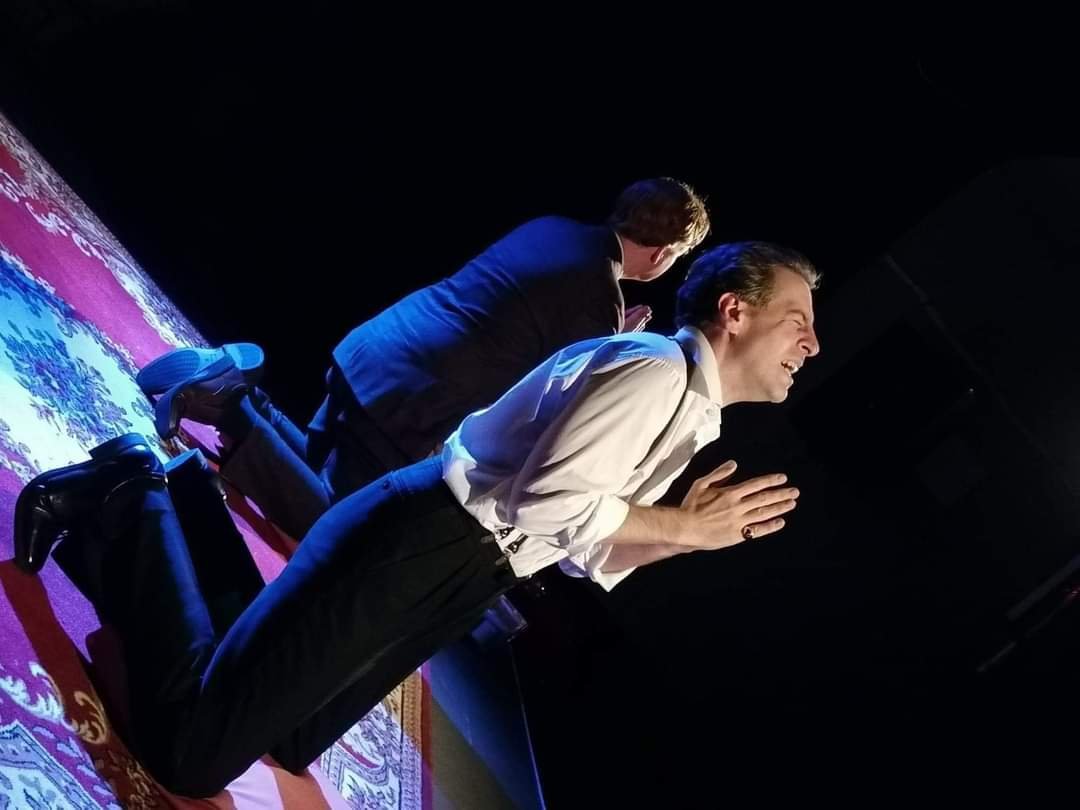
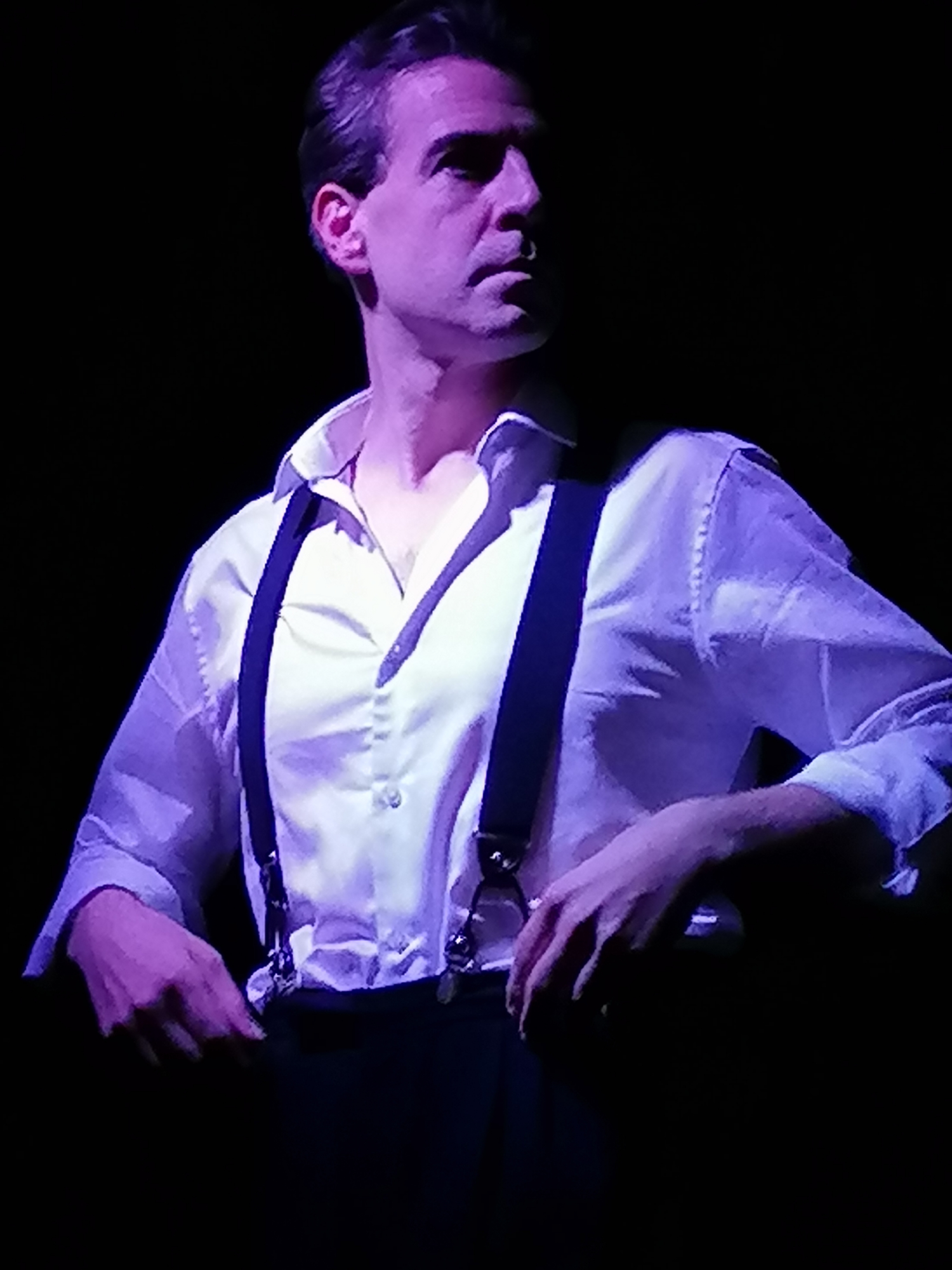
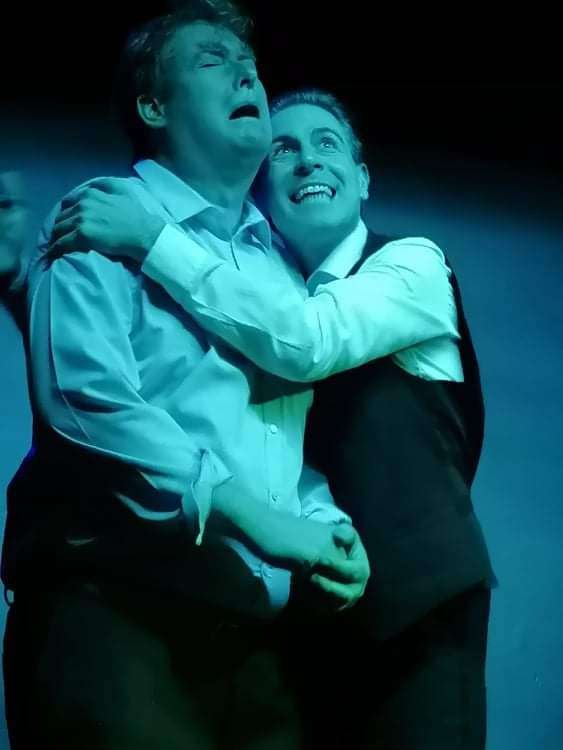
The most striking of the four pieces came last in Answer the Call by Ashley Driver who also directs. I knew nothing whatever about the 1,500 men from the West Indies who volunteered their services in the First World War – willingly giving their all for their colonial “masters”.  Some of them died of disease before they reached the front. Nathaniel Leigertwood and Demar Lambert play two such men, bantering in their rich, golden accents and wondering just how equal they are and, if they’re not, what they could or should do about it. Then one on them becomes ill. The questions remain topical and this powerful, immaculately written and thoughtfully acted fifteen minutes had me thinking hard about the issues all the way home.

Before that we had Sara Chernaik’s Just Imagine, a monologue which invites us to think about immigration, identity and the personal stories which underpin us all. “Come. Listen to my Story” is the refrain as Brahms’s German Requiem fades away in the background.

I didn’t personally like Never Have I Ever, the opening duologue (by Sophie White) which featured two people in an untidy bedroom, one very drunk and the other very sober, gay and distressed. Stevie Shannon’s drunk voice work is, however, well studied although I missed some of what she said.

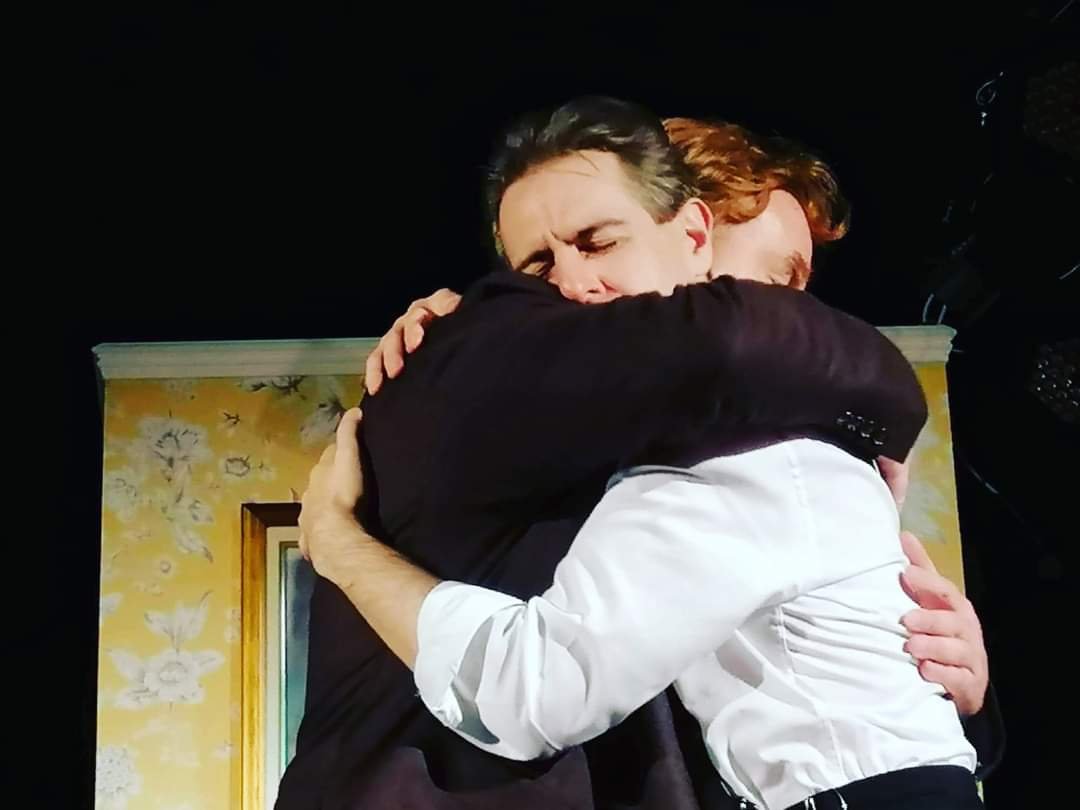
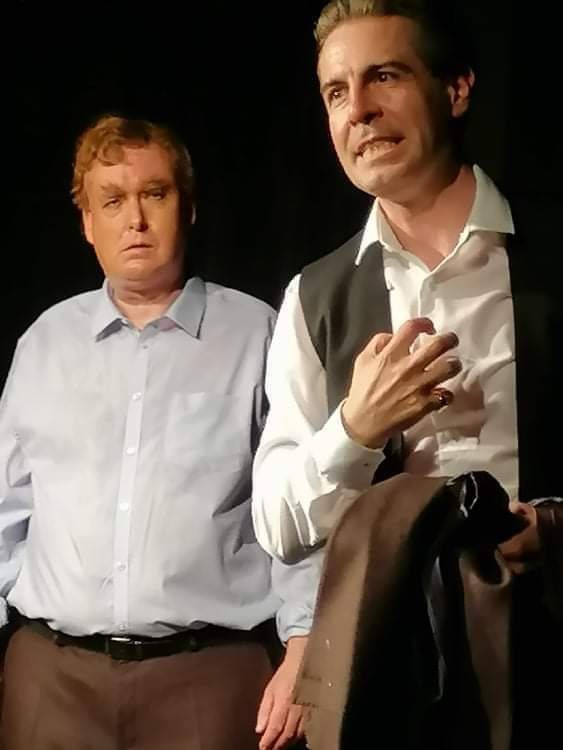
Body awareness amongst men is an interesting topic and Astonishing Light by Cathy Jansen-Ridings explores it with both horror and humour. Having your body surgically altered is not, ultimately, going to make you happier – which is what the rather annoying Gabe tries to make Benedict see when they meet in a Cosmetic Surgery waiting room.

It’s an uneven evening but it certainly offers some accomplished acting and plenty to reflect on.

 First published by Sardines: https://www.sardinesmagazine.co.uk/review/eunoia/

Show: Wind in The Willows

Society: Bromley Little Theatre

Venue: Bromley Little Theatre

Credits: Alan Bennett


The Wind in the Willows

5 stars

Susan Elkin | 12 Feb 2022 22:41pm

This charming, witty moving show – just in time for half term – is as good a piece of non-pro family theatre as I’ve seen anywhere. There are many adaptations of Kenneth Grahame’s 1908 classic about. (I even dramatised a scene myself for a Zoom Christmas party in 2020 when we were all pretty desperate for entertainment) But Alan Bennett’s version for National Theatre in 1990 is probably the best there is and that is what Bromley Little Theatre gives us.

Aneria Knight’s bespectacled, innocent but perky Mole is a delight and there’s real theatrical chemistry between her and Jessica-Ann Jenner (who also directs) as plain-speaking, down-to-earth, grown up Rat. Jenner uses a rich Yorkshire accent (her own?) for Rat. It’s as comforting as Yorkshire pudding and reminds us of who wrote this piece.

Howie Ripley’s broad south London Badger is another joy. It’s gravitas spliced with earthiness as he takes command of the other animals representing decency, common sense and authority without cant. In this version he forges a little friendship with Mole which makes Rat a bit miffed. Ripley strides about the stage in a black sweat-shirt with a few stripes and sporting a stripy scarf. All the costumes in this show are suggestive rather than graphic – no silly tails or ears because as Jenner says in her programme note she wants to focus on the human traits of these characters.

And so to the outstandingly talented Joshua Williams-Ward as Toad. He commands and lights up the stage for every second he’s on it – reminding me of a young Alex Jennings. Williams-Ward overacts in character and gets lots of laughs, timing his click back to “normal” impeccably  especially in the jail scene. It’s an astonishingly mature performance. Like several members of this cast of fourteen, he has come through Bromley Little Theatre Youth Group which Jenner co-leads.

This show is an ensemble piece with much slick multi-roling, scene changing and a handful of songs. When they morph into scenery shifters cast members simply don high viz jackets to “disguise” whatever costume they’re wearing. Amongst many excellent things I was especially struck by Chris Nelson’s body wagging, richly voiced Indian washerwoman, Hana Rae Corvin’s Sloaney Otter and Isabella Zufolo’s gentle Jailer’s daughter.

The set almost deserves a review of its own. Bromley Little Theatre is committed to green issues and works with local organisations to help tackle them. Designed by Tony and Jessica-Ann Jenner, the set for The Wind in the Willows is ingeniously built entirely from recycled materials. Thus Badger’s front door is actually part of an old fridge, a “fire” is created from an inverted supermarket basket threaded with orange paper, Rat’s boat is an old bath and so on. Cars are created from wooden cartons with ensemble members rolling wheels and the barge is built from big cardboard boxes. The effect is atmospheric and convincing. And just to remind us of the message a “human” occasionally wanders past the animal action and throws down a drink can or crisp packet.

If you can get to Bromley Little Theatre before 19 February this is a show well worth catching.

First published by Sardines: https://www.sardinesmagazine.co.uk/review/the-wind-in-the-willows-7/

It may be 45 years old now but, for me, The French Lieutenant’s Woman remains one of the most thoughtful and intelligent books of the second half of the twentieth century. I admired it when I first read it and it speaks to me even more compellingly now. It is effectively a critique of the “standard” (if there is such a thing) Victorian novel with its omniscient author and morally acceptable happy ending which usually means marriage.

John Fowles presents a lonely woman with – so the locals think – a murky past. She works as a companion for a seriously nasty widowed bigot in Lyme Regis (where, incidentally, the author lived in real life)  and whenever she can get away she waits silently on the famous Cob for the return of her French lover. Or at least that’s how it seems. Enter Charles Smithson, a comfortably-off and well educated amateur palaeontologist  and the pretty, pleasant but shallow heiress he intends to marry. Her father owns a thriving Oxford Street department  store. Trade! Cue for the usual shock and horror but this is 1867 and times are changing. Of course Charles is very curious about the strange woman he sees around the town or walking on the Undercliff and is gradually drawn in.
FLWold (1)

Nothing, however, is as it seems. The truth about who has done what, who feels what and why slips and slides around like quicksand. And Fowles never allows you to forget that this is a novel which he is controlling like a puppeteer. He is making choices and does so against a much discussed background of Victorian customs and mores – many of them fascinatingly contradictory. Why, for example, are “respectable” 19th century women expected to feel, need or demonstrate no sexual desire while prostitutes are trained to fake orgasms? There’s a fair amount of discursive comparison of then with “now” as it was in 1977.

At one point, near the end of the novel, Fowles wanders into the narrative as a character sitting near Smithson in a railway carriage – all done with insouciant wit. As the story, which has so gradually unwound, nears its conclusion he stands back and asks what he the author should do now? He concludes that he’ll simply have to write two endings and does – one very flat, quick and conventional and the other longer and much more plausible.

I love the characters in the world of this novel. Doctor Grogan, for instance, becomes a sort of mentor to Charles and shows us another, enlightened, Darwinist way of thinking. Charles’s servant Sam, modelled  – Fowles tells us –  on Sam Weller, is a rounded, quite complicated character too. Famous people of the period wander in and out too including Dante Gabriel Rossetti.

A couple of years after it was written a film was discussed. But this is no straightforward story. How on earth do you film such a complex, multilayered novel? In the end Harold Pinter came up with the idea of making it a narrative about making a film so that twentieth century actors could move in and out of their 19th century roles on set with relationships at both levels. It was an inspired, and I think, successful idea which, unusually, adds to what the book has already said rather than detracting from it which is what tends to happen when novels are dramatised.

FLWFILM

Next week on Susan’s Bookshelves: Because of You by Dawn French

An unusual five work programme, this concert began and ended with Mendelssohn via two contrasting Ravel favourites and a dip into Fauré – all of it very familiar territory.

Barry Wordsworth is a poised figure on the podium. As Conductor Laureate and Music Director and Principal Conductor here for 26 years, he knows the Brighton Philharmonic very well. With little fuss he drew out all the melodic calm and storm in Mendelssohn’s The Hebrides with some nicely pointed brass interjections and well balanced string work.

Then in completely different mood came Fauré’s Pavanne, lovingly played. The rippling pizzicato was allowed to resonate beneath the melody without rushing. The solo wind passages, especially the horn were sweet and evocative.

Of course for Ravel’s Piano Concerto in G, the showiest work in this concert, you need four percussionists all now in place ready for that arresting opening whip crack. Soloist Junyan Chen with her shiny dress and scarlet striped hair looked as glitzy as she and Wordsworth made the music sound. It’s a piece which changes mood frequently and I liked the accurate but sensitive way the cross rhythms, alternating with rich lyricism was delivered. Chen has a knack of watching Wordswoth almost continuously which made for an exhilaratingly coherent performance especially in the incisive framing movements. In contrast her long solo passages in the middle adagio assai movement were gently impassioned.

It’s hard to believe that the five component movements of Ravel’s Mother Goose Suite were originally written as piano pieces to be played by the Godebski children with whose family he was close friends. What talented children they must have been! Brighton Philharmonic’s rendering of the orchestral version of these colourful fairy tales in music showcased especially pleasing work from flute, xylophone harp, celeste and contrabassoon. It also made me realise – thanks BPO – how unusual it is to hear the entire suite, used as we are to exterpolated movements on, for example, radio.

And so finally to the glorious ebullience of Mendelssohn’s Fourth Symphony. I played in a performance of this work just a few weeks ago and know how essential if is to get the rapid string work crisp. Wordsworth did it with aplomb – as he did the eloquent rests and pauses. He also gave us plenty of minor key tip-toeing mystery in the andante and lilting warmth in the third movement nothwithstanding the occasional ragged entry. The saltarello presto finale whipped along excitingly, as it must, with some pleasing decisive playing from the strings and attractive wind sound especially from flute and bassoon.

First published by Lark Reviews: https://www.larkreviews.co.uk/?cat=3

Show: Animal Farm

Society: Cambridge Arts Theatre

Venue: Cambridge Arts Theatre. 6 St Edward’s Passage, Cambridge CB2 3PJ

Credits: by George Orwell. Adapted by Robert Icke


Animal Farm

3 stars

Toby Olié’s puppetry is the star of this show. For life sized puppets to live, they must never be still. Designed and directed by Olié, these jointed creations are magnificently controlled by a team of fourteen skilled puppeteers. They move continuously in a convincingly equine, canine, feline, bovine – or whatever – way. And the birds are a delight. Judged for that alone, this would be a four or even five star review.

Unfortunately there’s more to a show than its puppetry, even when it’s a fable about animals and almost all the main characters are “beasts of England” as their revolutionary hymn puts it.

Robert Icke’s adaptation (he also directs) tells the familiar story fairly straightforwardly as the animals take over the farm, evict the farmer and set up a communist society based on total equality. Of course it doesn’t work. The pigs assume the lead, gradually begin to exploit the other animals and are eventually indistinguishable from human beings. George Orwell’s  famous, spare and impeccably observed 1943 novel is, of course, a response to developments in Soviet Russia from the revolution in 1917 to the Second World War.

Theatrically I found the disembodied voices unsatisfactory. Although the animals are voiced by fine actors such as Juliet Stephenson, Amaka Okafor, Robert Glenister and David Rintoul, it isn’t always clear which animal is speaking so your eyes are constantly searching on stage. The visual and aural elements don’t quite integrate.

The music is a distraction too. Someone (sound and music designer Tom Gibbons?) has evidently decided to use “classical” music for the big action scenes such as the Battle of the Cowshed. I suppose it’s meant to be crowd pleasingly filmic. And the many young people in the audience at the performance I saw were clearly happy. But for someone who recognises most of it, it’s very off putting suddenly to be bombarded with  a burst of Elgar’s Enigma Variations, The Verdi Requiem and part of a Mahler symphony among many other things. It feels contrived and each time it happened it set me off on a train of thought trying to work out why each piece had been used when it was – when I should have been concentrating on the action.

This is the third adaptation of Animal Farm I’ve seen in a year – all by different people. This is partly because Orwell’s writing came out of copyright in 2020 (he died in 1950) so there’s scope for a free for all.

But there’s another reason, much closer to home. I doubt that Orwell foresaw in the 1940s just how topical this tale would be nearly 80 years later. It’s about power, dictatorship, propaganda, authoritarian lies and ruthless selfishness. I doubt that I was the only Brit, less trusting than Clover, who muttered a few weeks ago  “And all the time, the pigs were boozing in the farmhouse”.

Nothing in this show overtly draws attention to 2020/22 parallels but they’re pretty obvious. Sur-titles flash up the name, age and breed of each animal who dies and that’s moving whether we’re thinking of Covid victims or a different sort of war.

First published by Sardines: https://www.sardinesmagazine.co.uk/review/animal-farm-2/

I prepared this talk for Bromley u3a Theatre Group in February 2022. A number of people seemed interested  when I mentioned it on Twitter etc so I’m sharing the text here for general interest. Of course, I’m willing to do talks for other groups too. Message me if you want to follow that up.

Susan

The Merchant of Venice: An anti-Semitic play or a play about anti-Semitism?

We think that The Merchant of Venice was written between 1596 and 1599 – in the twilight years of Elizabeth’s reign. It was printed in 1600 and so had, one assumes, already been performed by then. The first performance of which reliable records survive was at the Court of King James in the spring of 1605 by which time the new king had arrived from Scotland and been on the throne for two stormy years – the Gunpowder Plot came close to undoing him in the November of 1605.  So we are talking about a period of great change as the 16th century gave way to the 17th and Tudors gave way to the Stuarts.

So let’s remind ourselves what happens in this play for anyone who hasn’t read or seen it lately. Antonio, the titular Merchant, borrows 3,000 ducats from a Jewish money lender, Shylock, in order to bankroll a friend in need. The (arguably jokey) deal is that if he defaults, Shylock will be able to claim a pound of Antonio’s flesh. Inevitably Antonio’s ships, and the fortune which depends on them, do not come in on time and Shylock gets his knife out. Then follows the famous court scene which ends in Shylock’s downfall. All this is closely bound up with Antonio’s friend Bassanio who needs money to marry a wealthy heiress (yes – that’s always seemed odd to me too) and the elopement of Shylock’s daughter, Jessica with a Christian.

Every character in this play, except Shylock’s friend Tubal and even he doesn’t come out of it well, is what we would now call strongly anti-Semitic. They all – even his own daughter – loathe Shylock for what he is. The big – and most interesting question – is does Shakespeare loathe him too? I think not.

Our greatest playwright was a lot more nuanced than that. After all he makes Shylock say:

`Hath not a Jew eyes? Hath not a Jew hands, organs, dimensions, senses, affections, passions? Fed with the same food, hurt with the same weapons, subject to the same diseases, healed by the same means, warmed and cooled by the same winter and summer as a Christian is? If you prick us do we not bleed? If you tickle us shall we not laugh? If you poison us shall we not die?”

… which is a pretty strong plea for what we would now call racial equality.

On the other hand Shakespeare probably didn’t know many – or any – Jews personally. The 2000 or so Jews who were living in England in the 13th century were exiled by Royal Decree issued by Edward 1 in 1290.  Not until Oliver Cromwell changed the law in 1656 were Jews permitted to live, and freely practise their faith in England – and that was 40 years after Shakespeare’s death.

As far as we know, Shakespeare never went abroad either but there’s always the mystery of the 7 lost years. Shakespeare’s presence is recorded at the baptism of his twins in Stratford in 1585. He then disappears from all forms of historical record until he turns up in London as a jobbing playwright in 1592. Where did he go and what was he doing? We shall probably never know. Some scholars argue that he might have gone abroad and served as a mercenary- which would explain his in-depth understanding of soldiers, armies and battles. Perhaps he passed through Venice – where the original Jewish ghetto was. Maybe he met some Jews. Or maybe he was just holed up quietly in some garret in, say, Staines or Chelmsford – or Bromley! –  reading books about all the places and situations he later wrote about.

Of course, Shylock is no paragon but I think like another of Shakepeare’s tragic figures, King Lear, Shylock is more sinned against than sinning. I’ll return to that shortly.

“Racist” is very much a 20th/21st century term but there are plenty of them in this play and Shakespeare makes absolutely sure you notice their behaviour – with disdain.

Take Portia who’s obliged to marry a man of her late father’s choice through a fairy-tale like lottery of choosing the right one of three caskets. The Prince of Morocco knows what he’s up against. The first thing he says is “Mislike me not for my complexion”. When he, inevitably, picks the “wrong” one. Portia comments “A gentle riddance – draw the curtains, go / Let all of his complexion choose me so”.  So much for tolerance and acceptance. It’s so stark I can’t believe  thoughtful, perceptive Shakespeare actually approved of such an attitude. He would have certainly have encountered people of colour of the streets of London – by 1600 there were more of them around than many people now realise.

Then there’s Antonio’s anti-Semitism  which is astonishing under the circumstances, He’s asking Shylock for a favour. Shylock quite mildly lists some of the insults he has received from Antonio in the past. “You call me misbeliever, cut-throat dog / And spet upon my Jewish gabardine/And all for the use of that which is mine own” he says.  You’d expect Antonio to back down and mutter something conciliatory. Instead he snarls : “I am like to call thee so again/To spet on thee again. To spurn thee too.”  The sense of overbearing superiority is revolting and I know which of these two men I’d rather have a cup of tea with … Incidentally, notice too how Shakespeare subtly reinforces that point. Antonio is using the familiar “thou” pronoun ( a leftover from the French which merged with English after the Norman Conquest) Here it’s patronising overfamiliarity. Shylock uses the more formal “you” when he speaks to Antonio.

MVeniceGlobe

New production opening at  Shakespeare’s Globe in March 2022

Or what about Jessica who is, I would argue, one of the most unpleasant people in this play. She clearly has no love, loyalty or respect for her father and his Judaism at all. She has, somehow, met Lorenzo before the play opens and decided he is the ticket to the freedom she clearly craves. She abuses her father’s trust – when he leaves her in charge of his keys – steals jewels and money and leaves. Lorenzo is, apparently, delighted with the loot. What happened to the eighth commandment “Thou shalt not steal” which applies to both Jews and Christians?  One of the most heartbreaking lines in the play comes when Shylock is told that Jessica is racing round Europe throwing his money about. She has apparently exchanged a ring for a monkey. “It was my turquoise. I had it of Leah when I was a bachelor. I would not have given it for a wilderness of monkeys” weeps her anguished father. Did Jessica actually know this was her father’s engagement ring and treasured for its great sentimental value? One hopes not but I’m not holding my breath. Arguably Jessica is a worse anti-Semite than most of the others despite having been born into and brought up in Jewish family.

So how do you interpret this on stage because there’s much about Shylock to dislike too? The pound of flesh proposal is repugnant by any standards, irrespective of race and/or religion, although one wonders how serious it is when it’s first proposed. Antonio is a prosperous man and the chance of all his ships miscarrying at once is very slight. It is only when the ships do not come in (actually they do eventually but it looks as if they’re all lost when the money is needed critically) that Shylock realises he’s on to something. And he’s goaded into revengeful madness by the desertion of Jessica and the sense that the whole world is now against him. Even his servant Lancelot has waltzed off to work for the newly enriched Bassanio because the uniform and conditions of service look better. Shylock is alone, bitter, hurt, outraged and doesn’t Judaism teach “an eye for an eye, a tooth for a tooth”?  Revenge is about the only thing this beleaguered man has left – and by the time Portia has finished with him in court he has absolutely nothing. He is penniless and stripped of his religious and racial identity- to the glee of everyone else.

The Merchant of Venice by Shakespeare engraving 1870

The Merchant of Venice by Shakespeare engraving 1870

When you teach this play to young people, as I have done many times, there is a problem with the word Christian. It’s a slippery word. In Shakespeare’s day and play it means anyone who is not Jewish, Muslim or anyone else who is not signed up to the Church. Note the unequivocal language. “But who comes here? Lorenzo and his infidel” says Gratiano cheerfully when he and Nerrisa have just announced their engagement. The Book of Common Prayer used in the reformed Anglican churches included a Collect for Good Friday which prayed for “Jews, Turks and Infidels”. Christianity was a cultural assumption. Atheism was heresy. So everyone in The Merchant of Venice is “Christian” except Shylock, Tubal and Jessica until she converts and marries Lorenzo. That’s a very far cry from the kindness, humility and deep seated conviction about the divinity of Christ which modern teenagers – and to an extent the rest of us – associate with Christianity today.

Traditionally Jewishness was symbolised by circumcision and Christianity by baptism. Just what and where is Shylock proposing to cut when he brandishes and sharpens that knife in court? For decades, from when I first read the play in school at about age 12, I assumed it was Antonio’s heart as Shylock hints in the court scene. In recent years I’ve realised that it might not be. There are several references in the play to “flesh” which in Elizabethan English – and in Shakespeare –  was often a euphemism for penis.  And the worst part of Shylock’s punishment and downfall is that he is “condemned” to be baptised. In other words his Jewish identity is to be erased – another tricky thing to explain to 21st century young people who can’t quite see how you can be baptised against your will.

As in most of Shakespeare’s plays the plot is not, for the most part, original. A lot of it came from Silvayn’s The Orator and other contemporary or earlier texts – written during eras when Jews were either outlawed or ghettoised in most of Europe. The most famous ghetto – the one from which we derive the word – was in Venice which we assume Shakespeare knew about.  Not that  the setting is very Italian – apart from careful references to the Rialto and one of two other things, we could just as easily be in London although – as we’ve seen, Shylock would not have been able to work openly as a money lender in London at this date.

It used to be all too easy – given the cultural disapproval – to stereotype Jews throughout the centuries.  Mendelssohn’s father converted with his family in 1822 and his son Felix was baptised at age 7 – this so that they’d have better opportunities. And it’s worth rereading Oliver Twist published in 1838.  Fagin, thief, exploiter of children and maybe paedophile is a relentlessly foul character. Look at the original illustrations by George Cruikshank which depict him as a hook-nosed villain. Do not be distracted by Lionel Blair’s musical and film Oliver! which is a distinctly sanitised and  saccharine 1968 take on it.

Dodger_introduces_Oliver_to_Fagin_by_Cruikshank_(detail)

Gradually actors – especially Charles Macready (1793-1873) – began to soften the edges of Shylock, reading the text for its ambiguities. And,  this continued during the 20th century particularly after 1945 for obvious reasons

The key point is that The Merchant of Venice is a play not a novel. In a sense it doesn’t exist at all until a director and group of actors bring it to life. Like all plays it’s meant to be interpreted – unlike novels which communicate via hotline from say, the Dickens brain to the Elkin brain. So the honest answer to the question I used to title this talk is actually: That depends entirely in how the director and actors choose to present it. And of course, there are many ways of doing it.  Bear in mind too that it’s very rare to see an uncut Shakespeare play these days. Most directors cut quite substantially – which means they can cut the bits which don’t quite suit their interpretation.  And they often alter the order of scenes as well as choosing a setting which is, more often than not, a very long way from Elizabethan England or even Venice. I have no problem with any of that. I’m merely pointing out that a production’s emphasis depends on many directorial decisions.

I’ve seen many productions of The Merchant of Venice over the years and I’ve never seen one which didn’t make me loathe most of the non-Jews and feel a lot of sympathy for Shylock. As far back as 1970 for example, Jonathan Miller directed it at The Old Vic with Laurence Olivier as Shylock. Talking of cuts, Old Gobbo’s comic moment was omitted. Presumably Miller thought it trivialised the seriousness of the play which is certainly no comedy in the modern sense.  That production was later filmed. At the end we see Jessica – maybe feeling remorse – as the Jewish mourning prayer The Kaddish sounds compellingly over the soundtrack.

The BBC filmed every Shakespeare play in the 1980s – not always successfully – but I’ve long been haunted by the memory of Warren Mitchell as Shylock, helpless and forced to his knees by hideously, gleefully violent Christians. Henry Goodman played Shylock (directed by Trevor Nunn) at National Theatre in 1999 (that too was later filmed). This time the setting was a 20th century office block where Shylock endured a very moving unseating. And Antony Sher, for RSC in 1987/8 was rivetingly charismatic. Dustin Hoffman did it very sympathetically in The Peter Hall Company at Phoenix Theatre in London in 1989 as did Al Pacino in Michael Radford’s 2004 film.
Al Pacino Me


Al Palcino as Shylock

But oddly, the most interesting and most moving take on The Merchant of Venice I’ve seen in recent years was an unassuming amateur production at Tower Theatre in Stoke Newington last autumn. Set firmly in 1930s Italy it opened with Fascist soldiers marching menacingly, had all the gossipy minor characters sipping espressos and staged wealthy Portia’s opening scene with Nerissa in a spa. At the very end, after the trial scene, and the gentle waltzing of three happy couples off to bed and a glimpse of Antonio as a solitary, lonely figure there was a very brief blackout. Then – lights up and we saw Shylock sitting on a suitcase with the sound of a train. Wow! I thought it was an extraordinarily powerful ending which told another complete story in just a few seconds. It got the production a fourth star in my review.

Just as I was adding my final notes to this talk actor Juliet Stephenson said in an interview that she thought some Shakespeare plays should be laid to rest because they deal with topics which are no longer acceptable. She was actually talking about the misogyny in The Taming of the Shrew but mentioned the anti-Semitism in The Merchant of Venice in passing. Well, sorry, Juliet but I think you’re completely wrong. Art can and does explore unpleasant things and expose them for what they are – and that’s what, I think a good production of The Merchant of Venice does. After all I don’t approve, obviously, of murder, kidnapping and extortion but it doesn’t stop me watching and enjoying TV crime dramas. If you took Ms Stephenson’s view to its logical extent you wouldn’t do most of Shakespeare actually: A Midsummer Night’s Dream features drugging people against their will, Macbeth is about regicide, King Lear includes torturers and Othello a lot of racism … and so on.

Judi Dench is on record as saying that she dislikes The Merchant of Venice because all there are no fully likeable characters. And I can see where she’s coming from. They are all on the make – except poor Old Gobbo, whose son gulls him in a scene which is often cut. But, in my view that’s no reason for ignoring them.

Shockingly, anti-Semitism has never gone away – look at the problems in the Labour party a couple of years ago. So we must resist it and we won’t do that unless we confront it. And The Merchant of Venice is not a bad place to start.


It’s one of those novels in which the setting broodingly, atmospherically underpins the action to such an extent that it almost becomes a character in its own right. In that sense it reminds me of Wuthering Heights and Of Mice and Men – the former played out over a few miles of Yorkshire moorland and the latter on a blisteringly hot Californian farm.

Hardy’s novel, which could just as easily have been called Egdon Heath, fictionally evokes the ancient heathland of Dorset which was always environmentally special. Today the National Trust and other organisations are working hard to conserve the small stretches which are left. In Hardy’s version – no doubt how he observed it in 19th century Dorset –  the heath teams with amphibians, snakes (one character is bitten by an adder) birds and plants. Furze (gorse) cutting is the main rural occupation of the few people who live there.

Coming back  to The Return of the Native now – it’s probably 40 years since I last read it – I was instantly absorbed by the tight plotting and by Egdon Heath itself. Three men and three women – all socially a little above the furze cutters who form a sort of chorus –  live a few miles from each other on the heath in four houses, one of which is an inn. They are Mrs Yeobright, her son Clym (the titular returner –  from Paris) and her niece Thomasin. Then there’s Eustacia Vye, a mesmerizingly but disconcertingly attractive girl who longs to escape the heath. Damon Wildeve is a weak willed, easily swayed and therefore dangerous chap and Diggory Venn, the reddleman sells red sheep dye to farmers from his mobile horsedrawn van and lurks helpfully and benignly on the heath. Don’t you just love the names Hardy finds for his characters? Not a Joe or Mary in sight.

The lives of these six people intersect and change through two ill-judged marriages, three deaths and one birth. There’s a great deal of fancying the “wrong” person. Even Eustacia’s servant Charley is at it. Eventually the survivors settle to lives which are liveable and the sun comes out. And it’s all played out on the heath – the first 84 pages take place on a dark November 5th with bonfires and there’s a lot of rain later in the novel. John Ruskin called paralleling outside forces such as the weather with the emotions of characters “pathetic fallacy” and Hardy does a great deal of that.

Of course Hardy is challenging Victorian moral attitudes in this 1878 novel. Why is it such a disgrace for Thomasin to return home unmarried because Wildeve has, apparently, made a mistake with the licence? Not her fault at all. I remember being annoyed on her behalf even back in the 1960s when I first read it.

Hardy went on knocking at the doors of moral unreasonableness. Twelve years later in 1895 his Jude the Obscure offended people so much that he wrote no more novels for the remaining 33 years of his life, sticking to poetry instead.  He was thus, as I used to point out to my students, a rather unusual figure: a nineteenth century novelist but a twentieth century poet. Hardy died in 1928.

Composer Gustav Holst (1874-1934) was a generation younger than Hardy who was born in 1840.  His tone poem Egdon Heath, first performed in 1927 is subtitled “A Homage to Thomas Hardy”. The music captures all the darkness of the heath along with the lurking sexual desire and natural beauty.

ReturnNative2 (1)

Next week on Susan’s Bookshelves: The French Lieutenant’s Woman by John Fowles


Show: Hamlet

Society: Shakespeare’s Globe (professional productions)

Venue: Sam Wanamaker Playhouse, Shakespeare’s Globe. 21 New Globe Walk, Bankside, London SE1 9DT

Credits: William Shakespeare


Hamlet

3 stars

Photo: Johan Persson


This is a very wet Hamlet. A circular, shallow, well centre stage leads to a lot of paddling, wet clothes and mopping up by stage management – no spoilers but it also serves as a neat device for getting round the potential farce of four dead bodies on stage at the end.

There is plenty to admire in this mixed-bag of a show. Although the use-your-own accent decision grated at the beginning, once I got used to George Fouracres as Hamlet speaking in a strong West Midlands accent I found his performance mesmerizingly natural. He makes the great soliloquies sound like slow, jerky thinking aloud – sometimes almost too much so. He is at times deliciously sardonic and that sits well.

The chandeliers swinging tensely like pendula in the closet scene are a fine touch as Polly Frame as Gertrude (good) slogs it out with Fouracres below – and the death of Polonius (Peter Bourke – well judged performance) is imaginatively done. Ophelia’s (Rachel Hannah Clarke) first mad scene in which she sings a risqué song – not the one assigned her by Shakespeare –  is suitably disturbing and I really like the decision to drop in the odd modern line. Claudius (Irfan Shamji) shouting angrily “Fuck Fortinbras!” and Hamlet calling Laertes a “dickhead” during the fencing scene are good moments.

Ed Gaughan does a lovely job as on stage musician and MD – sometimes on floor level and at others on the balcony. He plays filmic guitar music and creates evocative sound effects. Moreover, this production includes the funniest gravedigger’s scene I’ve ever seen. Like the Porter in Macbeth the chances are that this scene was meant to be a few moments of ad-libbed “light relief” and that the version we know is just one which happens to have survived. Director, Sean Holmes has entertainingly embedded that idea here with a climax which reminded me, oddly, of the end of Act 1 in The Mikado – before we return to the serious business of Hamlet’s reappearance in Denmark.

On the other hand, this leisurely 3 hour 15 minute show is occasionally self-indulgent with some strange decisions. The water, for example, is a distraction rather than contributing anything much. And the costuming initially seems to be elaborately 1600 – except that Hamlet, after his first appearance in black wears a 1970s hippy-ish holiday shirt. Once she’s lost her sanity Ophelia sports  baggy shorts and a hoody and one of the players looks as if she’s been dressed by Mary Quant. If it’s meant to feel timeless it doesn’t.

And, of course there’s no good reason why you can’t cast a woman as Laertes but Nadi Kemp-Sayfi is too much like a pantomime principal boy to be seriously convincing even when she momentarily leaves the text and bellows “Where the fuck is my father?” and gets a well deserved laugh. Also very odd is Peter Bourke’s take on Horatio. He is far too staid and not youthful enough. Think Richard Briers in The Good Life –  fine but he doesn’t belong in Hamlet.

I have problems too with the relationship between Hamlet and Ophelia. We surely need to understand that there is, or has been, some chemistry between them. Here we don’t – we just see a rather stiff, troubled girl with a bullying boyfriend. Even when late in the play he declares in anguish “I loved Ophelia” he isn’t believable.

The candlelit Sam Wanamaker playhouse is exquisite but it’s very cramped and there are “authentic” sight line issues. The word “audience” derives from the Latin verb for to hear because people traditionally went to hear a play rather than see it. Seated in the gallery (seat A6) I  did, perforce,  a great deal of hearing because I could see only one half of the stage.

First published by Sardines:https://www.sardinesmagazine.co.uk/review/hamlet-6/